Why Honey Garlic Green Beans Beat Plain Steamed Beans
Dry the trimmed beans before searing them. Surface water cools the pan and makes it harder to get blistered spots, while too many beans at once can steam in their own moisture.
The sauce is ready in a small bowl before the beans enter the skillet. Once the beans are nearly tender, reduce the heat for garlic and honey so the coating can thicken without scorching.
Recipe
Honey Garlic Green Beans
Cook tender-crisp green beans in a skillet, then coat them with honey garlic glaze. A 15-minute side with four variations and a weighed ingredient estimate.
7Ingredients
Yield: 4 servings
- 453.6 g green beans, trimmed and dried
- 42 g honey (2 tablespoons)
- 32 g soy sauce (2 tablespoons)
- 12 g garlic, minced
- 13.5 g olive oil (1 tablespoon)
- 4.5 g sesame oil (1 teaspoon)
- 0.25 g ground cayenne pepper
Ingredient amounts scale; instructions show the original batch. Cooking times and pan sizes may need adjustment. Season to taste. Honey grams use US measures at 20°C and 17.5% moisture, a density estimate; weigh your honey for precision.
Instructions
- 1Prepare the beans and sauceTrim and dry the beans, then weigh the edible amount. Whisk the honey, soy sauce and sesame oil in a small bowl. Keep the minced garlic and cayenne ready beside the stove.
- 2Sear the beansHeat olive oil in a large skillet over medium-high heat until shimmering. Add beans in one layer and leave for 2–3 minutes. Turn and cook for another 3–4 minutes until blistered and crisp-tender. Lower the heat if the outside darkens before the centers soften.
- 3Add garlic and glazeReduce the heat to medium. Push the beans aside and stir the garlic and cayenne in the pan for about 30 seconds. Add the mixed sauce and toss for 1–2 minutes, just until it coats the beans.
- 4Serve four portionsScrape the beans and sauce into a serving dish and divide into four portions. Sesame seeds, bacon and other finishing additions belong to the variations and are not in the measured base.
Estimated nutrition per serving
115.76 calories · 4.82 g fat · 17.98 g carbohydrate · 2.96 g protein · 447.02 mg sodium
Serving: 1 of 4 servings
Calculated from ingredient weights and USDA FoodData Central: 169961, 169640, 174277, 169230, 171413, 171016, 170932. Estimates use ingredient input weights; actual portions, brands and cooking losses vary. Omitted nutrient values are unavailable, not zero.
Choose the honey by flavor
Compare the best honey for roasted vegetables. Clover honey gives a mild coating; wildflower honey varies with its nectar sources and can taste more floral. Choose one jar for the measured base.
This map is an editorial flavor guide using a relative 1–5 intensity scale. It is not a measured sweetness, quality or nutrition score. The variations below change the ingredients and their estimate.
1 = mild, 5 = bold. Editorial pairing guidance, not laboratory measurements; jars vary.
- Clover
- Garlic and mild savory sauces
- Wildflower
- Roasted vegetables and buttery glazes
- Buckwheat
- Strongly spiced or smoky variations
Matching a honey to another dish: the honey flavor map
Get the Honey Buyer's Cheat Sheet (free PDF)
16 varieties on one page — color, flavor, best use and what a fair price looks like — from the 304 honeys we track.
Choosing the Best Honey for Green Beans
Since the sauce has only a few ingredients, your honey choice makes a noticeable difference in flavor.
- Wildflower honey — Our top pick. Multi-floral complexity adds depth to the simple sauce. Medium sweetness balances the soy and garlic perfectly.
- Clover honey — Clean, neutral sweetness that creates a crowd-pleasing, familiar flavor. The safe choice for picky eaters.
- Orange blossom honey — Subtle citrus brightness that lifts the glaze and pairs beautifully with the citrus-ginger variation.
- Buckwheat honey — Dark, bold, molasses-like depth for a richer, more complex glaze. Outstanding with the sesame variation.
- Sourwood honey — Buttery caramel notes with a slight tang that add sophistication to the simple sauce.
4 Flavor Variations
Each variation adds ingredients to the base sauce while keeping the same quick sear-and-glaze method.
- Sesame Honey Garlic: Double the sesame oil to 2 teaspoons and add 1 tablespoon toasted sesame seeds to the sauce. Use buckwheat honey for a deeper, nuttier glaze. Garnish with extra sesame seeds.
- Citrus-Ginger Honey Garlic: Add 1 tablespoon freshly grated ginger with the garlic and the zest of 1 orange or lemon to the sauce. Use orange blossom honey for complementary citrus notes. Bright and aromatic.
- Spicy Honey Garlic: Add 1 tablespoon sambal oelek or 1/2 teaspoon crushed Calabrian chili peppers with the garlic. Use hot honey instead of regular honey for extra heat layers. The sweet-spicy combination is addictive.
- Bacon Honey Garlic: Cook 4 strips of diced bacon in the skillet first, remove to a plate, then sear beans in the rendered bacon fat instead of olive oil. Add crumbled bacon back with the sauce. The smoky pork fat adds a savory depth that makes the sweet-garlic sauce taste richer throughout.
What to Serve with Honey Garlic Green Beans
These glossy, caramelized beans complement a wide range of main dishes.
- Honey garlic chicken — The complementary glaze creates a cohesive meal. Use the same honey variety in both dishes.
- Honey mustard chicken — The tangy mustard glaze contrasts nicely with the soy-forward green beans.
- Honey glazed salmon — Light, bright salmon with rich, savory beans makes a balanced dinner.
- Honey garlic pork chops — Classic pairing. Cook the pork chops first, then use the same skillet for the beans to pick up the fond.
- Steak — Simple grilled or pan-seared steak with honey garlic green beans as the star side dish.
- Rice bowls — Spoon beans and extra sauce over steamed rice for a simple, satisfying meal.
Tips for Perfect Results
- Use fresh beans, not frozen. Frozen green beans release too much water and will steam instead of sear. If using frozen, thaw completely and pat very dry first — but the texture won't match fresh.
- Don't overcrowd the pan. Beans need contact with the hot surface to char. If they're piled up, they steam. Cook in batches if your skillet can't hold them in a single layer.
- Work fast with the sauce. Once honey and soy hit the hot pan, the sauce reduces in about 60 seconds. Toss continuously to coat evenly before it reduces too much and becomes sticky.
- Leave beans whole. Cut beans release more moisture and don't sear as well. Whole beans also have better presentation and a more satisfying crunch.
- Dry the beans thoroughly. Wet beans + hot oil = splattering and steaming. Pat dry with paper towels or use a salad spinner after washing.
Serving the finished dish
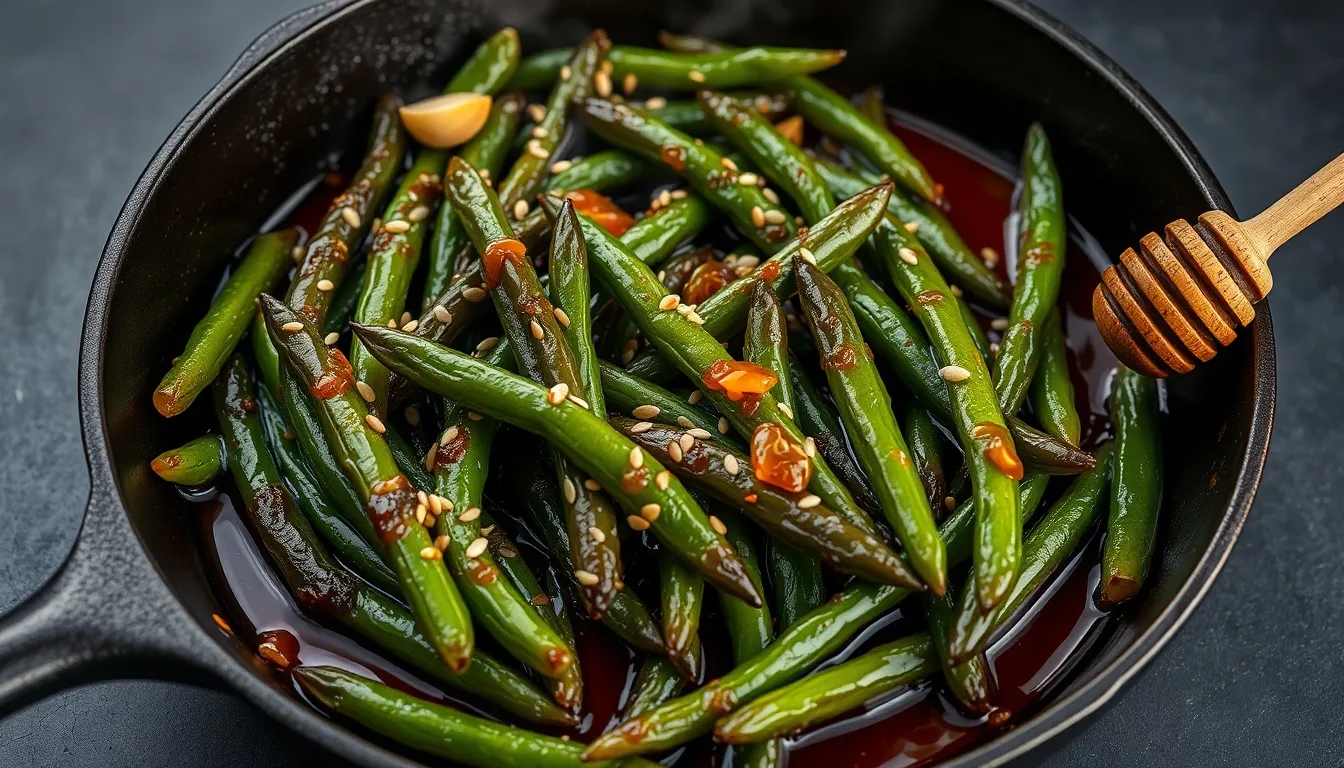
Illustration of the finished dish. Optional garnishes and serving additions may be shown; the recipe card gives the measured base quantities.
Storage and reheating
Refrigerate cooled leftovers in covered containers. Reheat gently with a small splash of water if the sauce has thickened; the original crisp edges will soften after storage. Keep added cheese, cream or extra garnishes separate until serving.
USDA ingredient-input nutrition estimate
The green-bean weight is after trimming. The estimate includes all of the measured oil and sauce, with cayenne specified by weight rather than an undefined pinch. Seeds, bacon or extra salt change the base estimate.
USDA input edible weights divided by yield; no cooking-loss or discarded-food adjustment assumed.
These are calculated ingredient estimates rather than laboratory values or evidence of recipe testing. Added sides and flavor variations need their own ingredients; the precision of the displayed number does not make every serving identical.