Why Honey and Salmon Are a Perfect Match
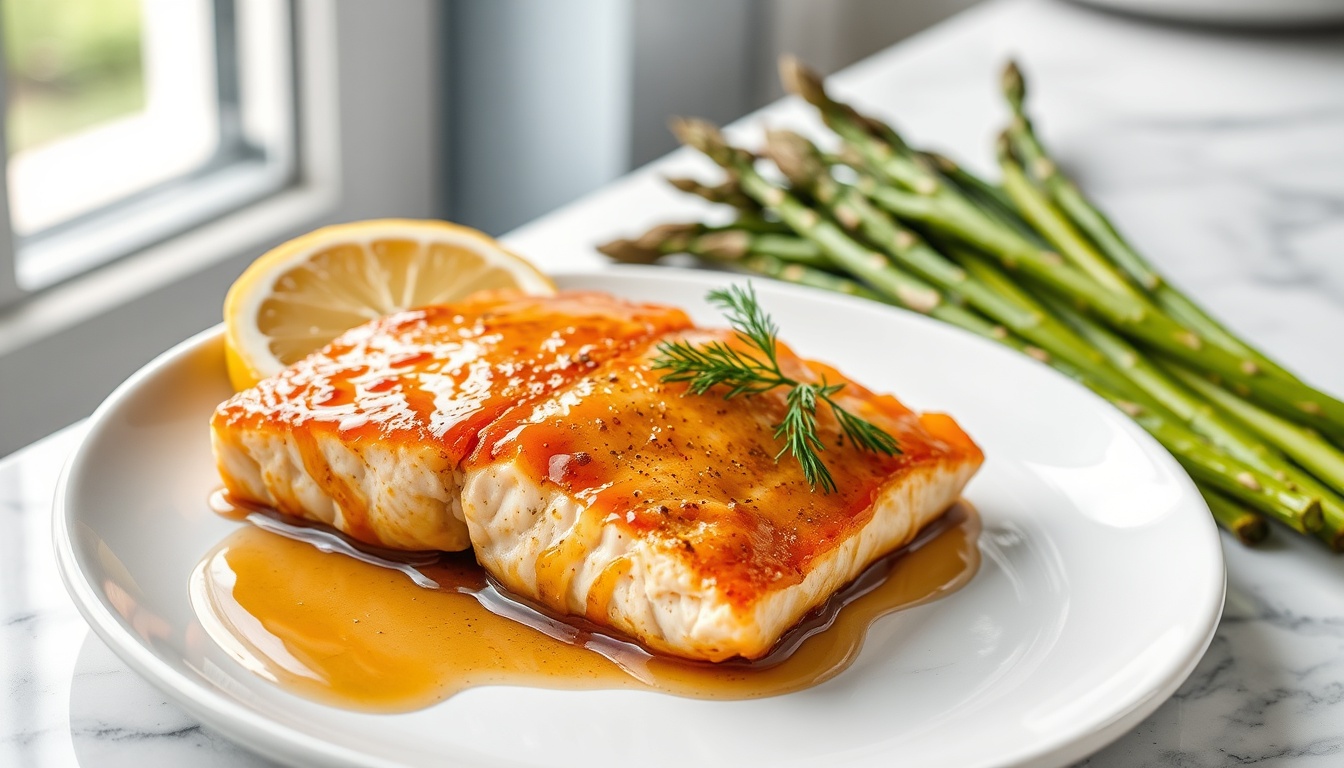
Honey glazed salmon is a restaurant staple that's surprisingly easy to make at home. The combination works because honey's natural sugars caramelize under high heat, creating a glossy, amber crust that contrasts with the tender, flaky fish beneath. The sweetness balances salmon's natural richness without overpowering it.
This recipe uses a simple broiler method that caramelizes the glaze in just 3-4 minutes — faster and more reliable than pan-searing, which risks overcooking the fish before the glaze sets. The result is restaurant-quality glazed salmon with minimal effort and a single sheet pan to clean.
Beyond flavor, this pairing makes a complete dinner. Salmon provides omega-3 fatty acids (EPA and DHA), high-quality protein, and vitamin D, and raw honey adds floral sweetness that tastes indulgent.
Honey Glazed Salmon Recipe
This recipe serves 4 and takes about 20 minutes, including prep time.
- **Ingredients:** 4 salmon fillets (6 oz each, skin-on or skinless); 3 tablespoons raw honey — wildflower ($13-24) or clover ($9-15) recommended; 2 tablespoons low-sodium soy sauce; 1 tablespoon Dijon mustard; 2 cloves garlic, minced; 1 tablespoon olive oil; salt and pepper to taste.
- **Step 1: Make the glaze** — Whisk together honey, soy sauce, Dijon mustard, and minced garlic in a small bowl until smooth. Set aside.
- **Step 2: Prep the salmon** — Pat salmon fillets dry with paper towels. Season with salt and pepper. Place skin-side down on a foil-lined, lightly oiled sheet pan.
- **Step 3: Bake the salmon** — Bake in a preheated 400°F (200°C) oven for 10-12 minutes until the salmon is almost cooked through (it should still look slightly translucent in the center).
- **Step 4: Apply the glaze and broil** — Remove from oven. Brush the honey glaze generously over each fillet, using all of it. Switch oven to broil on high. Return the salmon and broil 3-4 minutes until the glaze caramelizes and turns golden-amber. Watch closely — the honey sugars can go from perfectly caramelized to burned in 30 seconds.
- **Step 5: Rest and serve** — Let rest 2-3 minutes. The glaze will thicken and become sticky as it cools. Serve with lemon wedges and fresh herbs.
Pro Tip
The two-stage cooking method (bake then broil) is key. Baking gently cooks the salmon to almost-done, then the brief broil caramelizes the glaze without overcooking the fish. This is how restaurants achieve that perfect golden crust.
Get the Honey Buyer's Cheat Sheet (free PDF)
16 varieties on one page — color, flavor, best use and what a fair price looks like — from the 304 honeys we track.
Choosing the Best Honey for Salmon
Different honey varieties pair with salmon in distinct ways. The honey flavor comes through clearly in the glaze, so your choice matters.
- **Wildflower honey ($13-24)** — Our top recommendation for honey glazed salmon. The complex floral notes from diverse nectar sources create depth without overwhelming the fish's natural richness, while the balanced sweetness caramelizes beautifully under the broiler. Best for: the classic recipe as written.
- **Clover honey ($9-15)** — Mild, clean sweetness that creates a neutral glaze highlighting the Dijon and garlic. Best for: kids, picky eaters, delicate fish preparations.
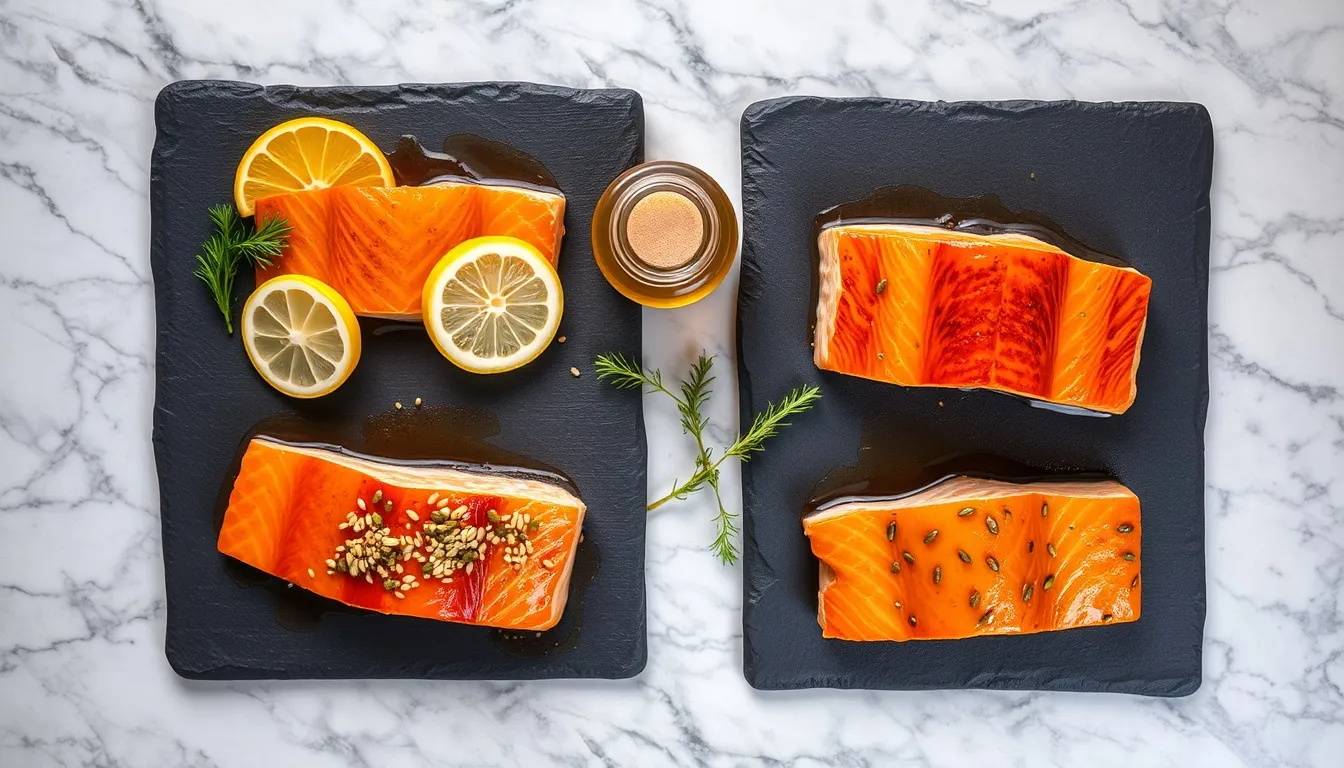
- **Orange blossom honey ($12-24)** — Citrus notes naturally complement salmon. The floral brightness pairs especially well with the lemon-dill variation below.
- **Buckwheat honey ($9-23)** — Dark, malty, and bold — creates a richer, deeper glaze reminiscent of teriyaki. are more heat-stable than enzymes, so many survive broiling. Best for: the soy-ginger variation, bold flavor lovers.
- **Acacia honey ($9-16)** — Very light and delicate, producing a clean, barely-sweet glaze. Best for: letting the salmon's natural flavor take center stage.
4 Glaze Variations
Each variation starts with the base glaze (honey + soy sauce + Dijon + garlic) and adds a twist.
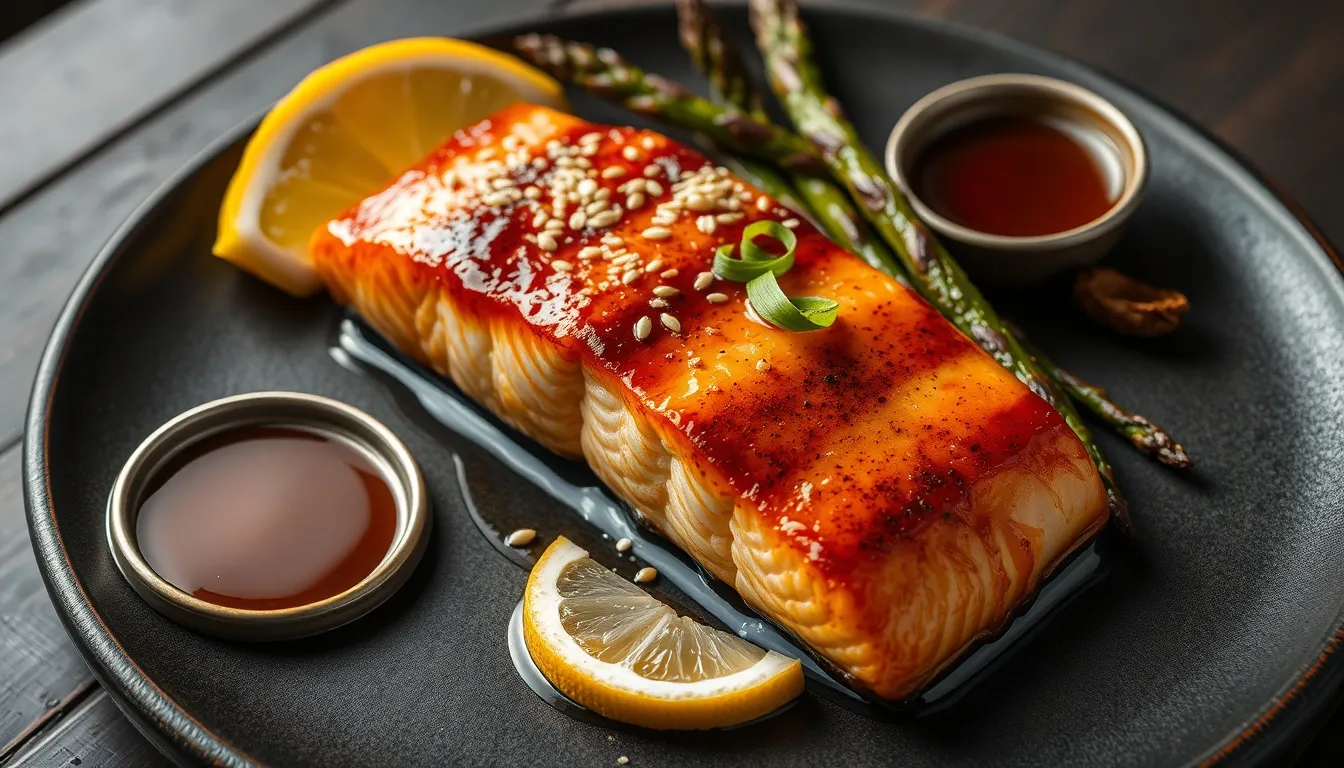
- **Honey soy-ginger salmon** — Add 1 tablespoon freshly grated ginger, 1 tablespoon rice vinegar, and 1 teaspoon toasted sesame oil to the glaze. Garnish with sesame seeds and scallions. The ginger and honey combination adds warmth and anti-inflammatory benefits.
- **Honey lemon-dill salmon** — Replace soy sauce with 2 tablespoons fresh lemon juice and add 1 tablespoon chopped fresh dill. The honey-lemon pairing creates a bright, herby glaze that's lighter than the original.
- **Spicy honey salmon** — Add 1 tablespoon sriracha or 2 tablespoons hot honey to the glaze plus 1/2 teaspoon red pepper flakes. The sweet-spicy-savory profile is exceptional on fatty fish like salmon.
- **Honey mustard-herb salmon** — Double the Dijon to 2 tablespoons, add 1 tablespoon whole-grain mustard and 1 teaspoon each fresh thyme and rosemary. A French-inspired variation with a more complex, herby glaze.
What to Serve with Honey Glazed Salmon
The sweet, savory glaze pairs best with sides that provide contrast — something green, something starchy, or something acidic.
- **Roasted asparagus** — The classic restaurant pairing. Toss with olive oil and roast at 425°F for 10-12 minutes. The slight bitterness contrasts beautifully with the sweet glaze.
- **Steamed rice** — White or brown rice soaks up any extra glaze that drips off the salmon. Coconut rice is an especially good match with the soy-ginger variation.
- **Quinoa or couscous** — Lighter grain options that work well for a balanced weeknight meal. Toss with lemon juice and fresh herbs.
- **Roasted sweet potatoes** — Their natural sweetness harmonizes with the honey glaze. Dice small and roast with the salmon for a one-pan meal.
- **Simple arugula salad** — Peppery arugula with lemon vinaigrette cuts through the richness. Add shaved parmesan and toasted pine nuts.
- **Sautéed green beans** — A quick, neutral side that lets the salmon be the star. Finish with a squeeze of lemon and garlic.
Tips for Perfect Glazed Salmon
A few key techniques ensure restaurant-quality results every time.
- **Start with dry fish** — Pat fillets thoroughly with paper towels. Moisture prevents the glaze from sticking and causes steaming instead of caramelizing.
- **Use the right salmon** — Atlantic salmon (farmed) is fattier and more forgiving. Sockeye and coho (wild) are leaner and cook faster — reduce bake time by 2 minutes. King salmon is the richest and most luxurious for this recipe.
- **Don't skip the Dijon** — Mustard acts as an emulsifier, helping the honey and soy sauce combine into a smooth, clingy glaze rather than separating on the fish. It also adds subtle heat.
- **Watch the broiler closely** — Honey caramelizes quickly under high heat. Stay by the oven during the broil step and remove the salmon the moment the glaze turns deep amber. Golden is perfect; dark brown is burned.
- **Check for doneness** — Salmon is done at 145°F (63°C) internal temperature. For medium (slightly translucent center), pull at 125-130°F — the fish continues cooking during the rest period.
- **Line the pan with foil** — Honey glaze will cement itself to an unlined pan. Foil makes cleanup effortless. Parchment works too but can char under the broiler.
Meal Prep and Storage
Honey glazed salmon stores and reheats better than most fish recipes thanks to the protective glaze.
- **Refrigerator (3 days)** — Store in airtight containers. Reheat gently in a 275°F oven for 8-10 minutes — low and slow prevents overcooking. Microwaving works but softens the glaze.
- **Freezer (2 months)** — Cool completely, wrap individual fillets in plastic wrap, then foil, then a freezer bag. Thaw overnight in the fridge. Reheat in a 300°F oven.
- **Meal prep bowls** — Flake the salmon over grain bowls with roasted vegetables and extra drizzle of honey-soy sauce. Excellent cold over salads too.
- **Make the glaze ahead** — The honey-soy-Dijon-garlic mixture stores in the fridge for up to 5 days. The honey acts as a natural preservative that keeps the glaze fresh.
Honey Glazed Salmon Nutrition
One serving (one 6-oz fillet with glaze) contains approximately 380 calories, 18g fat (including 3g omega-3s), 14g carbohydrates, and 38g protein. The carbohydrates come from the honey and soy sauce.
This dish delivers an exceptional nutrient profile: salmon provides over 100% of the daily recommended omega-3 intake, vitamin D, B12, and selenium. The honey adds floral depth that refined-sugar glazes lack, and the garlic adds savory punch.
For a lower-carb version, reduce the honey to 2 tablespoons and increase the Dijon mustard to 2 tablespoons. This cuts the carbs to about 9g per serving while maintaining a flavorful glaze.