Why Honey Makes the Best Pork Chop Glaze
Pork chops and honey are a natural match. Pork's mild, slightly sweet flavor provides a blank canvas for honey's 200+ aromatic compounds, while honey's fructose caramelizes at a lower temperature than table sugar — around 230°F versus 320°F — creating that deeply bronzed, sticky glaze without burning.
The garlic and honey combination adds another layer: garlic's allicin undergoes Maillard reactions in the hot pan, producing dozens of savory flavor compounds that complement honey's sweetness. The result is a complex sweet-savory glaze that tastes far more sophisticated than its simple ingredient list suggests.
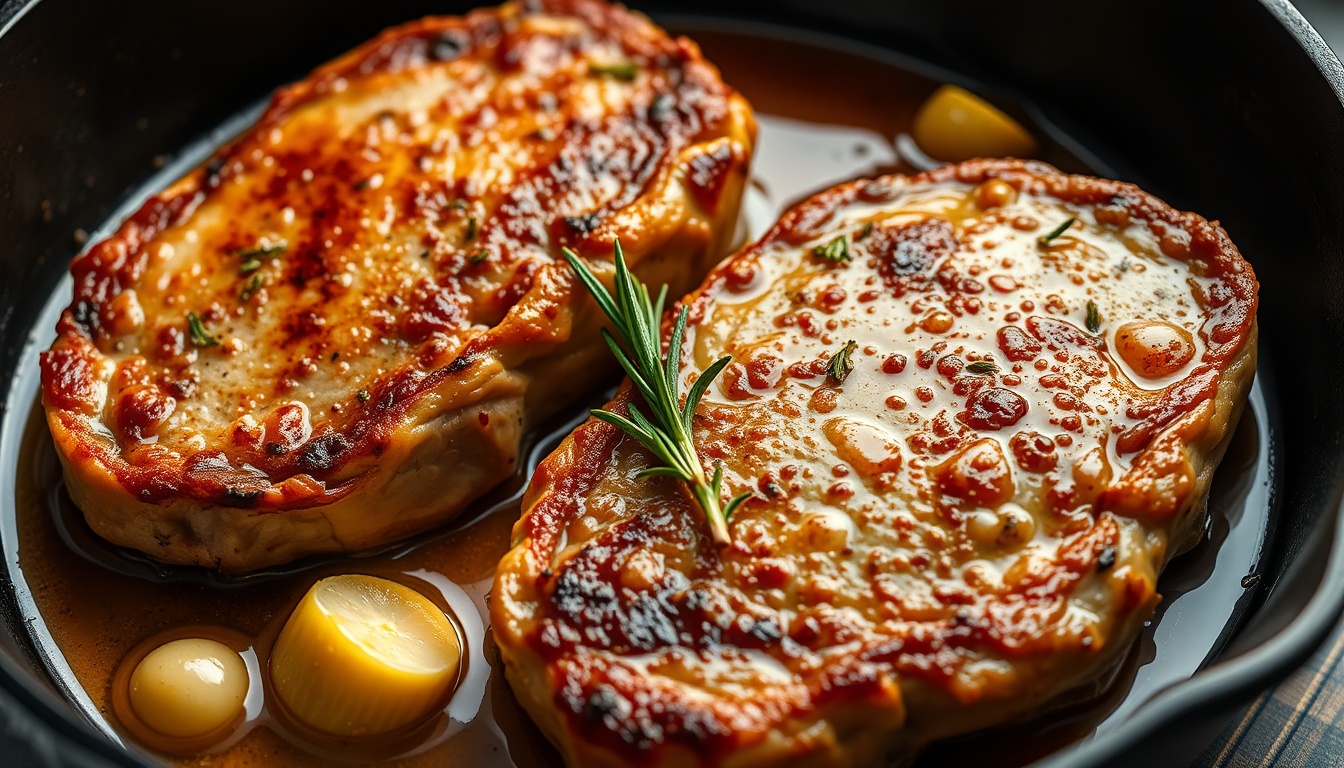
This recipe uses a sear-then-glaze method that produces juicy, perfectly cooked pork chops with a caramelized exterior in about 25 minutes total — a true weeknight dinner that's equally at home on a summer patio as it is on a Tuesday night. Toss them on the grill for an outdoor cookout, or keep it simple in a cast iron skillet.
Choosing the Best Honey for Pork Chops
The honey variety affects the glaze's flavor profile significantly, since it's a prominent ingredient rather than a background sweetener.
- **Wildflower honey** ($13-24) — Our top choice. Multi-floral complexity that adds depth and pairs naturally with pork's mild sweetness. The most versatile option for any variation, from skillet to summer grill.
- **Clover honey** ($9-15) — Clean, neutral sweetness that lets the garlic shine. The most approachable flavor for families and picky eaters, and the best value for a weeknight dinner.
- **Orange blossom honey** ($12-24) — Citrus notes that brighten the glaze and cut through pork's richness. Outstanding for the citrus variation below.
- **Buckwheat honey** ($9-23) — Bold, molasses-like depth for a more intense, almost barbecue-style glaze. Pairs exceptionally with the bourbon variation and summer grilling.
- **Acacia honey** ($9-16) — Delicate, almost clear sweetness for a lighter, more refined glaze. Best when you want the garlic to dominate.
Pro Tip
Add the honey to the pan off heat or over low heat to prevent burning. Honey's lower caramelization point means it goes from perfectly glazed to bitter char quickly over high heat.
Get the Honey Buyer's Cheat Sheet (free PDF)
16 varieties on one page — color, flavor, best use and what a fair price looks like — from the 304 honeys we track.
The Complete Recipe: Honey Garlic Pork Chops
This recipe serves 4 and takes about 25 minutes from start to plate. Use bone-in or boneless chops — bone-in stays juicier but boneless cooks faster.
Ingredients
- 4 bone-in pork chops (about 1 inch thick, 6-8 oz each) or 4 boneless chops (5-6 oz each)
- 3 tablespoons raw honey
- 4 cloves garlic, minced
- 2 tablespoons soy sauce (or coconut aminos for gluten-free)
- 1 tablespoon olive oil
- 1 tablespoon unsalted butter
- 1 teaspoon Dijon mustard
- 1/2 teaspoon smoked paprika
- 1/4 teaspoon black pepper
- 1/4 teaspoon red pepper flakes (optional)
- Salt to taste
- Fresh thyme or parsley for garnish
Step-by-Step Instructions
**Step 1: Prepare the pork chops.** Pat the pork chops completely dry with paper towels — this is critical for a good sear. Season both sides with smoked paprika, black pepper, and a pinch of salt. Let them sit at room temperature for 10-15 minutes while you prep the garlic and mix the sauce ingredients.
**Step 2: Mix the glaze.** In a small bowl, whisk together the honey, soy sauce, and Dijon mustard. Set aside. Having the glaze ready means you can work quickly once the pork chops are seared.
**Step 3: Sear the pork chops.** Heat olive oil in a large oven-safe skillet over medium-high heat until shimmering. Add the pork chops and sear without moving for 4-5 minutes until a deep golden crust forms. Flip and sear for another 3-4 minutes. Remove the chops to a plate. For boneless chops, reduce each side by about 1 minute.
**Step 4: Build the glaze.** Reduce heat to medium-low. Add butter to the same skillet. Once melted, add the minced garlic and red pepper flakes. Sauté for 30-60 seconds until fragrant — do not let the garlic brown. Pour in the honey-soy mixture and stir, scraping up any browned bits from the bottom of the pan. These fond bits add enormous savory depth.
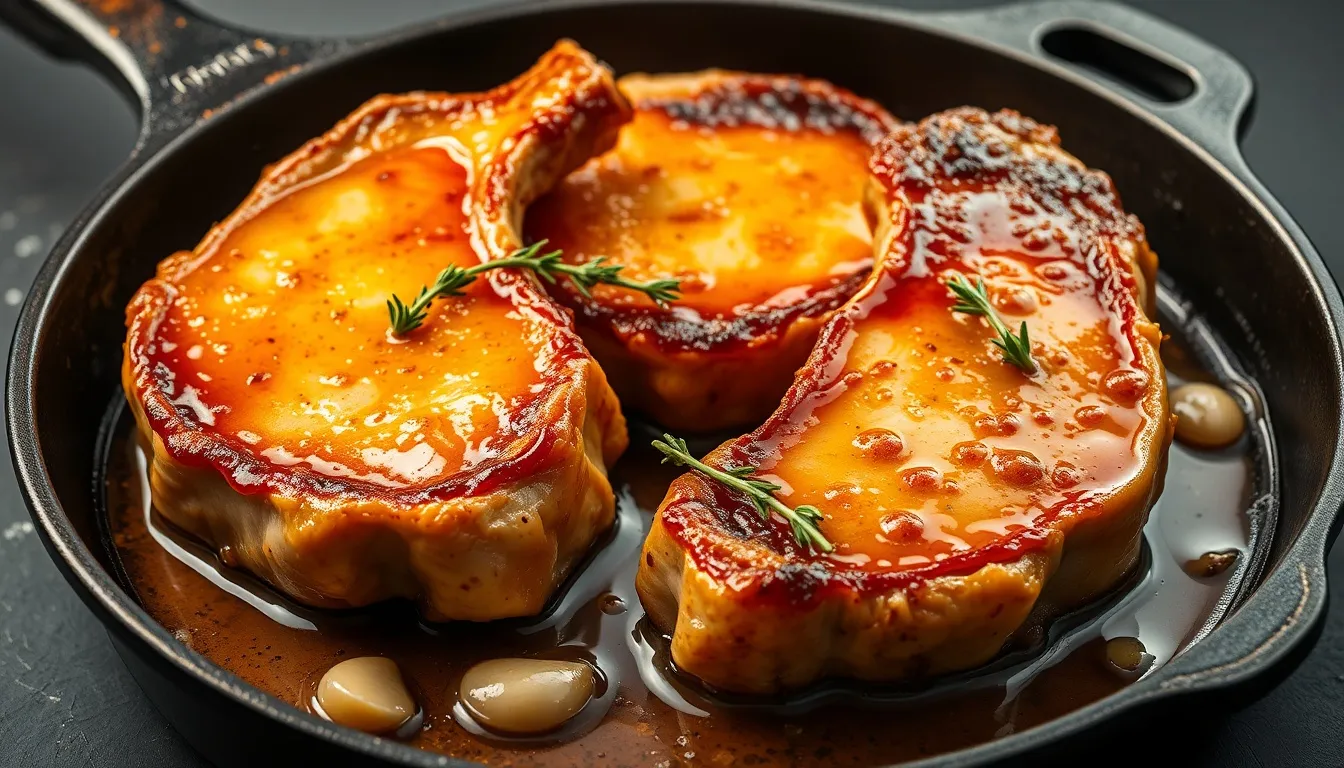
**Step 5: Finish the pork chops.** Return the pork chops to the skillet, nestling them into the sauce. Spoon the glaze over the top of each chop. Cook for 2-3 minutes, spooning the glaze over the chops every 30 seconds, until the sauce thickens and the pork reaches 145°F internally (use an instant-read thermometer). The USDA recommends 145°F with a 3-minute rest for safe pork.
**Step 6: Rest and serve.** Transfer the pork chops to plates and spoon the remaining pan sauce over the top. Let rest for 3 minutes — the temperature will rise another 5°F and the juices will redistribute. Garnish with fresh thyme or parsley.
Pro Tip
The single biggest mistake with pork chops is overcooking. At 145°F they're juicy and slightly pink in the center — perfectly safe. At 165°F they're dry and chalky. An instant-read thermometer is the difference between restaurant-quality and disappointment.
5 Flavor Variations
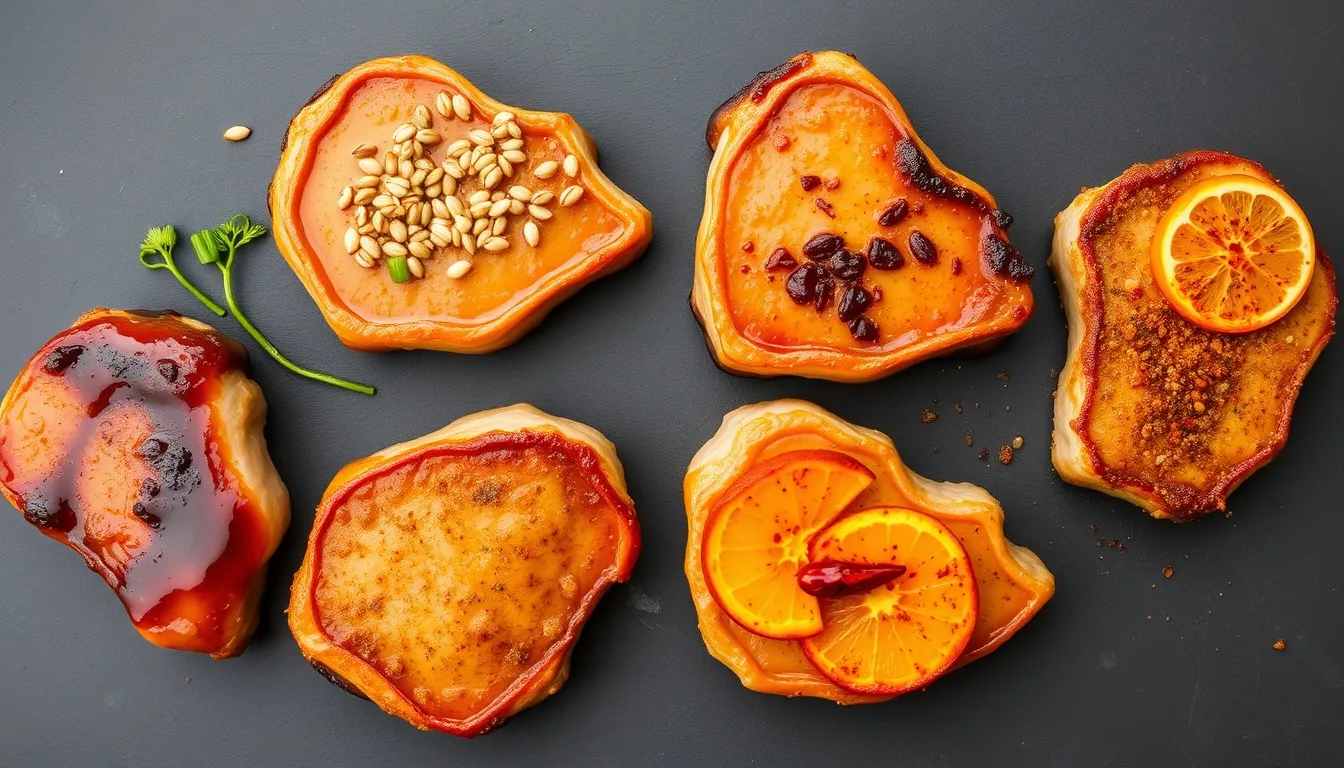
All variations use the same sear-then-glaze technique. Just swap or add ingredients to the glaze.
- **Sesame Ginger:** Add 1 tablespoon grated fresh ginger with the garlic. Replace Dijon with 1 tablespoon rice vinegar. Finish with 1 teaspoon toasted sesame oil and a sprinkle of sesame seeds. Use clover honey for clean sweetness.
- **Bourbon Honey:** Add 2 tablespoons bourbon to the skillet after removing the pork chops (careful — it may flame briefly). Let it reduce by half before adding the honey-soy mixture. Use buckwheat honey for deep, molasses-like complexity.
- **Honey Mustard:** Increase Dijon to 2 tablespoons and add 1 tablespoon whole-grain mustard. Skip the soy sauce, adding 1 tablespoon apple cider vinegar instead. See our honey mustard sauce guide for more variations.
- **Citrus Honey:** Add the zest of 1 orange and 2 tablespoons fresh orange juice to the glaze. Use orange blossom honey to amplify the citrus notes. Garnish with orange slices.
- **Spicy Honey Garlic:** Double the red pepper flakes and add 1 teaspoon sriracha or 1 minced Fresno chili to the glaze. Use hot honey instead of plain honey for layered heat.
Side Dish Pairings
The sticky-sweet glaze pairs best with sides that provide contrast — something starchy to absorb the sauce, and something fresh to balance the richness.
- **Mashed potatoes** — The classic partner. The sauce pools into the potatoes like gravy.
- **Honey roasted carrots** — Doubles down on the honey theme with complementary caramelized sweetness.
- **Steamed rice or cauliflower rice** — Absorbs every drop of the pan sauce.
- **Roasted broccoli** — The charred, slightly bitter florets contrast beautifully with the sweet glaze.
- **Simple green salad** — A vinaigrette-dressed salad cuts through the richness and balances the plate.
- **Honey cornbread** — A natural Southern-inspired pairing for a complete summer cookout plate.
Tips for Perfect Results
- **Choose the right thickness.** Pork chops thinner than 3/4 inch overcook too quickly for the glaze to develop. Aim for 1-inch thick for the best sear-to-cook ratio.
- **Dry the surface thoroughly.** Moisture on the surface creates steam instead of searing. Pat with paper towels immediately before seasoning.
- **Don't crowd the pan.** If your skillet can't hold 4 chops with space between them, cook in two batches. Crowding causes steaming, which prevents browning.
- **Use an instant-read thermometer.** Pork chops vary in thickness and density. A thermometer removes all guesswork — pull at 145°F for juicy results every time.
- **Rest the meat.** Those 3 minutes after cooking allow the muscle fibers to relax and reabsorb the juices that were pushed to the center during cooking. Cutting immediately loses up to 30% of the juices onto the plate.
- **Deglaze the pan.** The browned bits (fond) stuck to the skillet after searing contain concentrated savory flavor. The honey-soy mixture dissolves them, adding enormous depth to the glaze.
Meal Prep and Storage
**Refrigerator (3-4 days):** Store pork chops and sauce separately in airtight containers. Reheat gently in a skillet over medium-low heat with a splash of water to loosen the glaze — microwaving tends to dry out pork.
**Freezer (2-3 months):** Freeze cooled pork chops with sauce in freezer bags, pressing out air. Thaw overnight in the refrigerator. Reheat in a skillet as above.
**Meal prep tip:** Cook a double batch of the glaze separately and store it in the fridge for up to 2 weeks. On busy nights, sear fresh pork chops and add the pre-made glaze for a 15-minute dinner.