Why Honey Makes the Best Ham Glaze
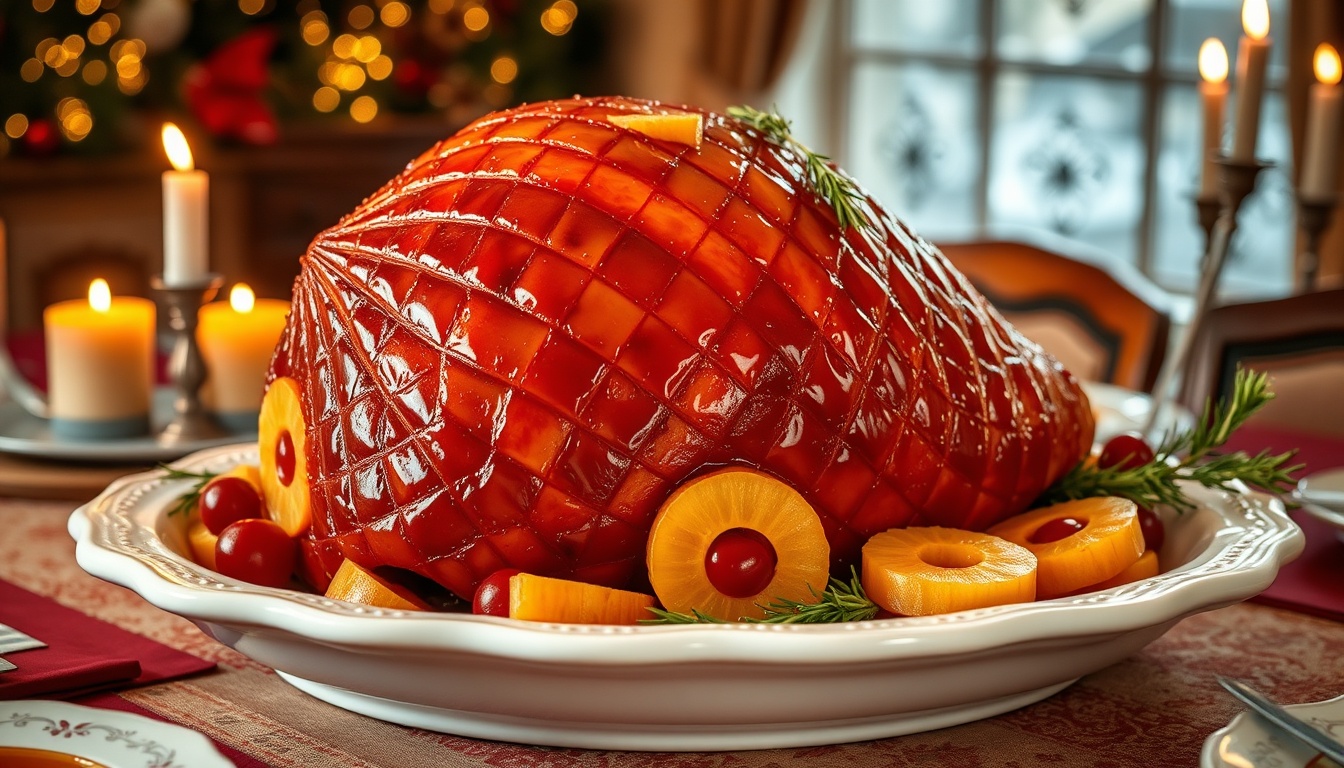
A honey glazed ham is the Thanksgiving 2026 centerpiece (Thursday, November 26). Honey’s fructose starts to brown at 230 °F, so a 325 °F oven still needs the glaze in the last 30–45 minutes. Fully cooked ham: reheat to 140 °F internal (USDA FSIS ham safety).
Fructose caramelizes at 110 °C / 230 °F; glucose and table sugar at 160 °C / 320 °F (Belitz, Grosch, Schieberle). Typical U.S. honey is 38.19% fructose (White 1978), so it browns earlier than a brown-sugar glaze. An 8 lb ham uses 12 tablespoons (¾ cup) honey — 1.5 tablespoons per pound.
This recipe works with bone-in spiral-cut, bone-in whole, or boneless ham. The scoring technique creates pockets that trap the glaze, and the basting method builds layer upon layer of sticky, caramelized flavor. Total hands-on time is under 15 minutes — the oven does the rest.
Choosing the Best Honey
Since honey is the star of the glaze, the variety you choose genuinely affects the final flavor.
- **Wildflower honey** ($13–24) — Our top pick for all-purpose ham glaze. Multi-floral complexity adds depth without competing with the ham's smokiness. Medium sweetness, balanced finish.
- **Clover honey** ($9–15) — Clean, straightforward sweetness that produces a classic, crowd-pleasing glaze. The most neutral option that lets the ham and spices shine. Best value for large-batch glazing.
- **Orange blossom honey** ($12–24) — Subtle citrus notes that pair beautifully with the citrus-mustard variation. Produces a lighter, more aromatic glaze.
- **Buckwheat honey** ($9–23) — Rich, molasses-like depth that creates a darker, more assertive glaze. Outstanding for the bourbon and BBQ variations. Bold enough to stand up to heavily smoked hams.
- **Sourwood honey** ($14–23) — Buttery caramel with a slight tangy finish. The special-occasion Thanksgiving glaze.
Pro Tip
For maximum flavor depth, use raw honey — it contains enzymes and aromatic compounds that processed honey lacks. While heat will deactivate the enzymes, the aromatic compounds survive and contribute to the glaze's complexity.
Get the Honey Buyer's Cheat Sheet (free PDF)
16 varieties on one page — color, flavor, best use and what a fair price looks like — from the 304 honeys we track.
The Complete Recipe: Honey Glazed Ham
This recipe works with a 7-10 lb pre-cooked bone-in ham (spiral-cut or whole). Serves 12-16 people with leftovers. Total time: 2.5-3 hours.
Ingredients
- 1 bone-in ham, 7-10 lbs (3.2-4.5 kg), fully cooked
- 3/4 cup (255g) raw honey
- 3 tablespoons Dijon mustard
- 2 tablespoons unsalted butter, melted
- 1 tablespoon apple cider vinegar
- 1/2 teaspoon ground cloves
- 1/4 teaspoon ground cinnamon
- 1/4 teaspoon black pepper
- Optional: 1/4 cup packed brown sugar for extra crust
- Whole cloves for studding (optional, decorative)
Step-by-Step Instructions
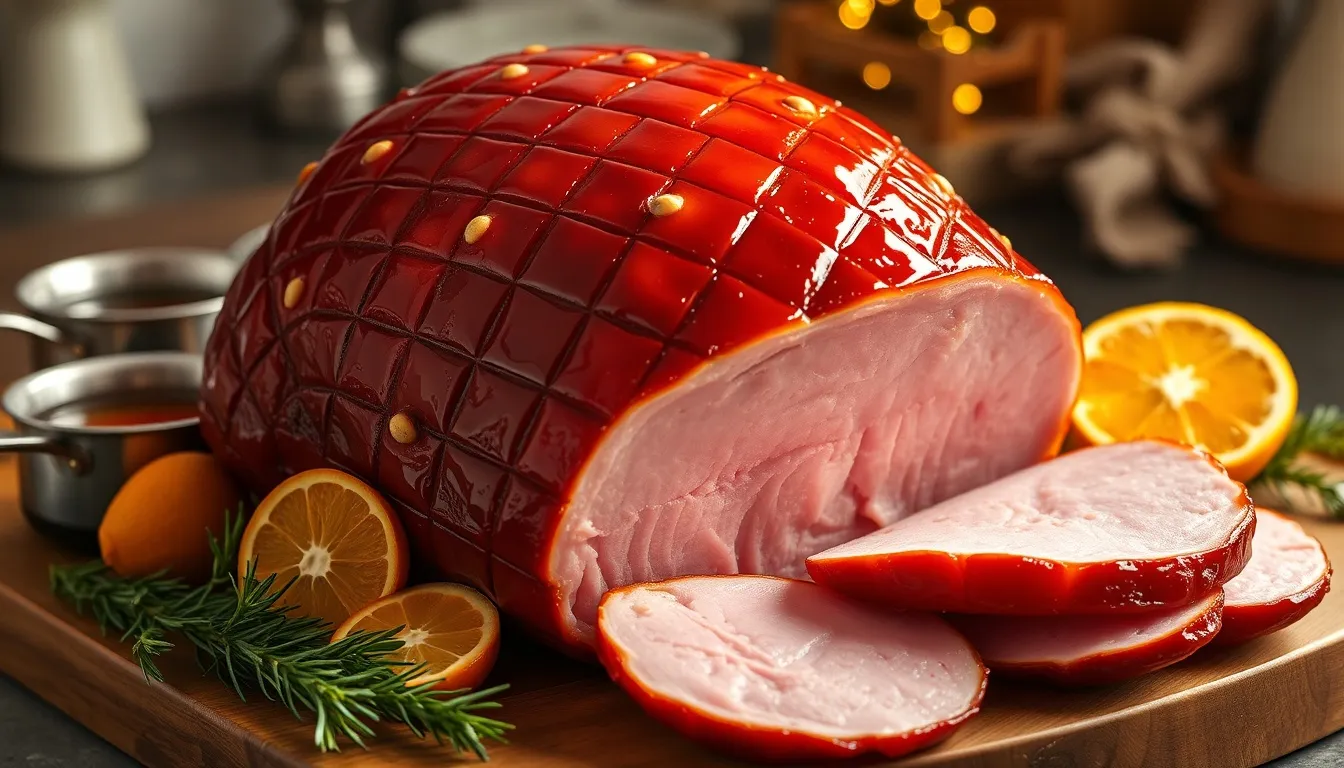
**Step 1: Prep the ham.** Remove ham from packaging 1 hour before cooking to take the chill off — a cold ham heats unevenly. Preheat oven to 325°F (165°C). If using a whole (non-spiral) ham, score the surface in a diamond pattern about 1/4 inch deep. The scoring creates pockets that trap the glaze and increases surface area for caramelization. Optionally stud intersections with whole cloves.
**Step 2: Initial bake.** Place ham cut-side down in a roasting pan. Add 1/2 cup water to the bottom of the pan to prevent drippings from burning. Cover tightly with aluminum foil. Bake for 1.5 hours (about 12-15 minutes per pound). This gentle covered bake heats the ham through without drying it out.
**Step 3: Make the glaze.** While the ham bakes, whisk honey, Dijon mustard, melted butter, apple cider vinegar, ground cloves, cinnamon, and black pepper in a saucepan over medium-low heat. Warm until combined and pourable, about 2-3 minutes. Do not boil — you want a thick, pourable glaze, not a reduced one.
**Step 4: First glaze.** Remove the foil. Brush the ham generously with about 1/3 of the glaze, making sure it gets into all the score marks and between spiral slices. Return to oven uncovered.
**Step 5: Build the glaze.** Baste with another 1/3 of the glaze every 15 minutes for the next 30-45 minutes. Each layer builds upon the previous one, creating a thick, lacquered coating. The honey caramelizes more deeply with each application.
**Step 6: Final glaze and rest.** Apply the last of the glaze 10 minutes before removing from oven. The ham is done when the internal temperature reaches 140°F (60°C) and the glaze is deeply caramelized and sticky. Remove from oven, tent loosely with foil, and rest 15-20 minutes before carving. The resting period allows juices to redistribute and the glaze to set.
Pro Tip
Save the pan drippings — they make an incredible sauce. Strain into a saucepan, skim fat, and reduce by half over medium heat. The concentrated honey-ham juice is liquid gold for drizzling over carved slices.
5 Glaze Variations
Each variation modifies the base glaze to create a different flavor profile. All produce a beautiful, glossy finish.
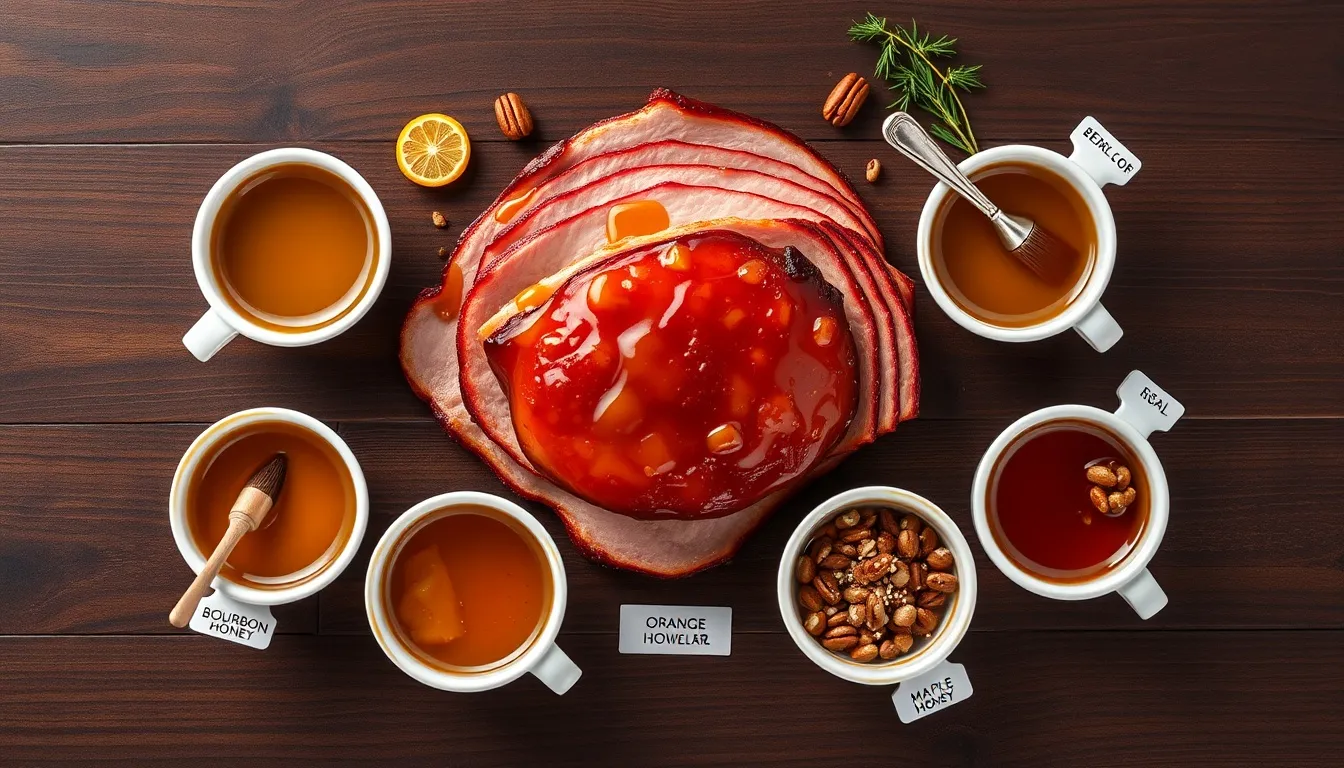
- **Bourbon Honey Glaze:** Add 3 tablespoons bourbon and 1 tablespoon dark brown sugar to the base glaze. The alcohol cooks off, leaving vanilla-oak depth. Use buckwheat honey ($9–23) on a smoked ham.
- **Citrus Honey Mustard:** Add the zest and juice of 1 large orange and increase Dijon to 4 tablespoons. Bright, tangy, and less sweet — pair with orange blossom honey ($12–24).
- **Pineapple Honey Glaze:** Replace apple cider vinegar with 1/4 cup pineapple juice and add 1/4 teaspoon ground ginger. Arrange pineapple rings on the ham during the final 30 minutes. Classic retro presentation with legitimate flavor payoff — the bromelain in pineapple juice tenderizes the surface.
- **Maple-Honey Spice:** Add 3 tablespoons pure maple syrup and increase cinnamon to 1/2 teaspoon, plus 1/4 teaspoon ground ginger and pinch of nutmeg. Double the warm spice profile for a cozy, autumnal ham perfect for Christmas dinner. See how honey and maple syrup compare.
- **Honey BBQ Glaze:** Add 2 tablespoons tomato paste, 1 teaspoon smoked paprika, 1 teaspoon Worcestershire sauce, and 1/4 teaspoon cayenne. Creates a smoky, tangy, slightly spicy glaze that works beautifully for summer BBQ gatherings. Pair with honey cornbread.
Ham Selection Guide
The type of ham you choose affects both cooking time and final results.
- **Spiral-cut, bone-in (recommended):** Pre-sliced for easy serving, bone adds flavor. The spiral cuts create more surface area for glaze to penetrate. Most forgiving option — hard to overcook since it's already fully cooked.
- **Whole bone-in:** More dramatic presentation, stays moister since it isn't pre-sliced. Score the surface in a diamond pattern to create glaze pockets. Requires carving skill but produces the best leftovers.
- **Boneless ham:** Convenient for carving, uniform slices. Less flavorful than bone-in options. Apply glaze more frequently since there are no natural pockets to trap it.
- **Fresh (uncooked) ham:** Raw pork leg that requires full cooking to 145°F internal. Much longer cook time (3-4 hours for 8 lbs). More pork roast than traditional glazed ham, but the honey glaze works beautifully on it.
- **Smoked vs city ham:** Smoked ham has a stronger flavor that stands up to bolder glazes (bourbon, BBQ). City ham (wet-brined) is milder and lets the honey glaze shine as the primary flavor.
Serving and Carving
**Carving spiral-cut ham:** Simply slice along the bone to release pre-cut slices. Serve with a spoonful of reduced pan drippings.
**Carving whole ham:** Place cut-side down on a cutting board. Slice parallel to the bone, then cut along the bone to release slices. Turn the ham and repeat on the other side.
**Serving temperature:** Honey glazed ham is excellent warm, room temperature, or cold. The glaze keeps the surface moist at any temperature.
- **Side dishes:** Scalloped potatoes, roasted honey carrots, green bean casserole, honey cornbread, biscuits with honey butter.
- **Condiments:** Honey mustard is the classic pairing. Also excellent with whole-grain mustard, cranberry sauce, or reduced pan drippings.
- **Leftover ideas:** Ham sandwiches, ham and bean soup, ham fried rice, ham and cheese quiche, split pea soup, or chopped into omelets.
Storage and Leftovers
**Refrigerator (5-7 days):** Wrap leftover ham tightly in plastic wrap or store in airtight containers.
**Freezer (up to 2 months):** Slice and freeze in portions for easy thawing. Wrap individual portions in plastic, then foil, then place in freezer bags. Thaw overnight in the refrigerator. Glazed ham freezes better than unglazed because the honey coating protects against freezer burn.
**Bone:** Save the ham bone for split pea soup, bean soup, or stock. Wrap and freeze for up to 6 months.
Common Mistakes and Fixes
- **Ham is dry:** Almost always caused by overcooking uncovered for too long. Keep the ham covered with foil for the first 1.5 hours. Only remove the foil for the final glazing phase (30-45 minutes). Adding water to the pan creates steam that keeps the ham moist.
- **Glaze burns before ham is done:** Oven temperature too high. Stay at 325°F — higher temperatures caramelize the honey glaze too quickly before the ham heats through. If the glaze is darkening too fast, tent loosely with foil.
- **Glaze slides off:** The ham surface may be too wet. Pat the surface with paper towels before the first glaze application. Also, make sure the glaze is warm and thick enough to cling — if it's too thin, whisk in 1 tablespoon more honey.
- **Not enough glaze:** This recipe makes enough for a 7-10 lb ham. For larger hams, scale up by 50%. It's always better to have too much glaze than too little — extra can be reduced into a drizzling sauce.
- **Ham is too salty:** Soak the ham in cold water for 4-12 hours in the refrigerator before cooking, changing the water once. This draws out excess salt. Pat dry before glazing.