Why Homemade Honey BBQ Sauce Is Worth Making
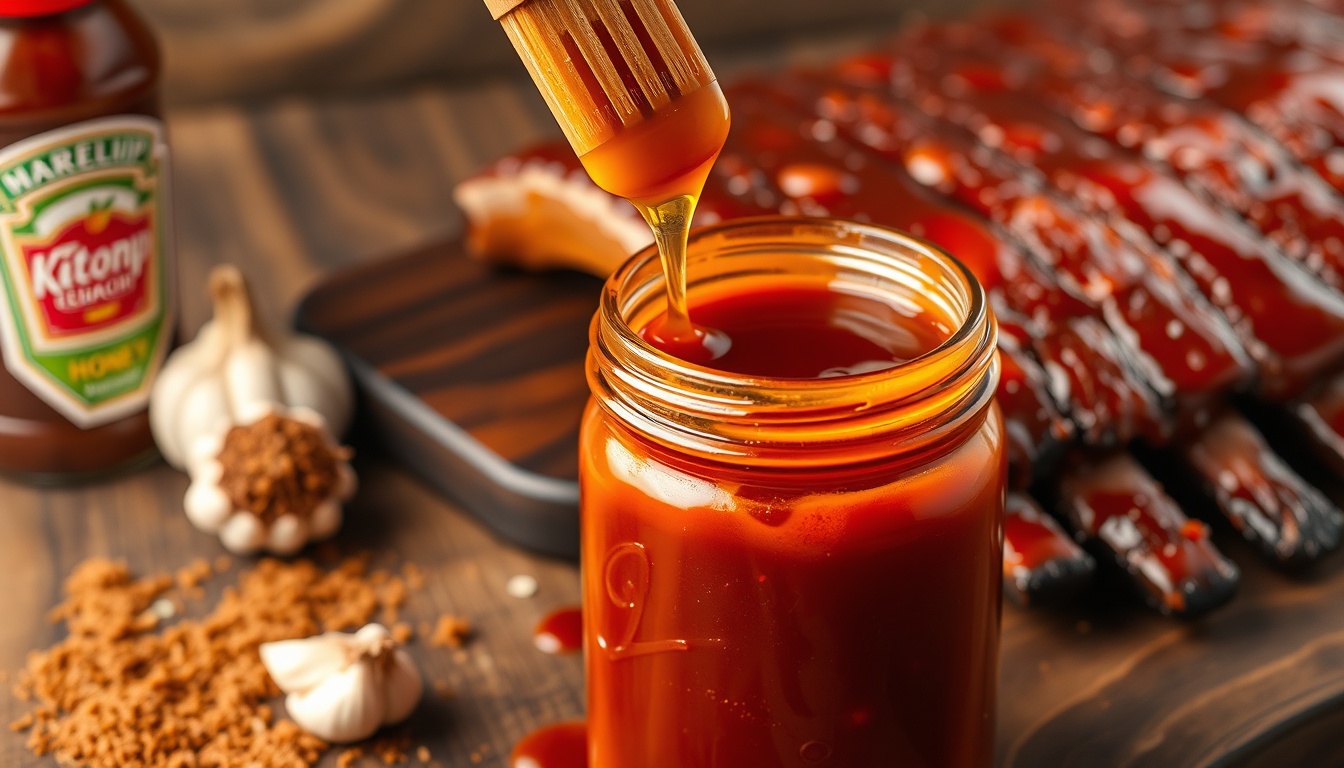
Most bottled BBQ sauces list high-fructose corn syrup as the first or second ingredient. Homemade honey BBQ sauce replaces that with real honey — which brings more than just sweetness. Honey caramelizes differently than refined sugars, creating a deeper, more complex glaze that clings to ribs, chicken, and brisket without the cloying sweetness of commercial sauces.
This recipe takes 20 minutes, uses pantry staples, and produces a sauce that's genuinely better than anything in a bottle. Perfect for Father's Day 2026 grilling (June 15) or any weekend cookout, the natural sugars in honey interact with the acids in tomato and vinegar to create a balanced sweet-tangy-smoky profile that refined sugars simply cannot replicate.
Beyond flavor, honey keeps its floral aroma in sauces served at lower temperatures or used as finishing glazes. Compared to the corn syrup in commercial sauces, honey is a meaningful upgrade.
Classic Honey BBQ Sauce Recipe
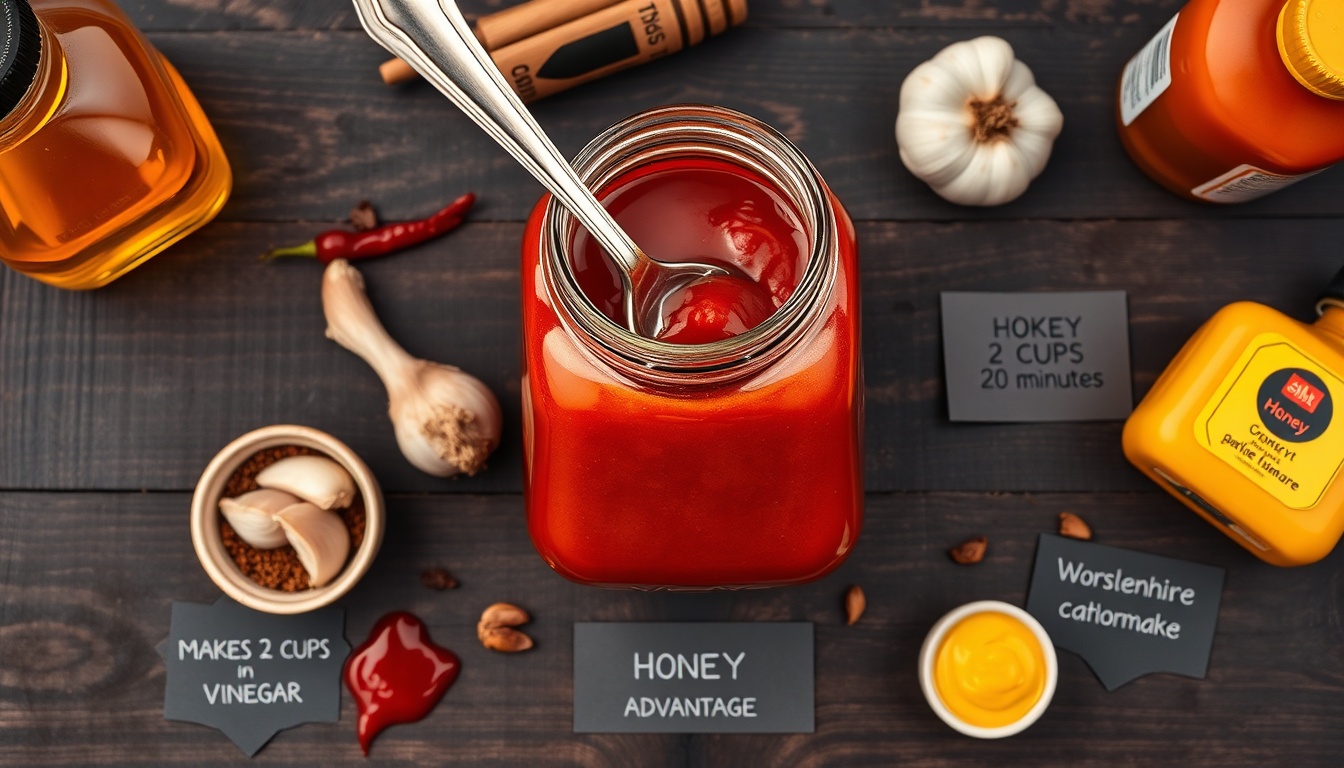
This Kansas City-inspired base recipe makes about 2 cups of thick, rich BBQ sauce. It's the foundation for all six variations below.
- **Ingredients:** 1 cup ketchup (or 6 oz tomato paste + 2 tablespoons apple cider vinegar + 2 tablespoons water); 1/3 cup raw honey (wildflower or clover); 2 tablespoons apple cider vinegar; 1 tablespoon Worcestershire sauce; 1 tablespoon yellow mustard; 2 teaspoons smoked paprika; 1 teaspoon garlic powder; 1 teaspoon onion powder; 1/2 teaspoon black pepper; 1/2 teaspoon salt; pinch of cayenne pepper (optional).
- **Step 1: Combine ingredients** — Whisk all ingredients together in a medium saucepan until smooth.
- **Step 2: Simmer** — Bring to a gentle simmer over medium heat, stirring frequently. Reduce heat to low and cook 15-20 minutes, stirring occasionally, until the sauce thickens and the flavors meld together.
- **Step 3: Taste and adjust** — Add more honey for sweetness, more vinegar for tang, or more cayenne for heat. The sauce will thicken further as it cools.
- **Step 4: Cool and store** — Let cool to room temperature. Transfer to a jar or squeeze bottle. The honey's natural preservative properties help this sauce keep for 2-3 weeks in the fridge.
Pro Tip
For a smoother sauce, blend with an immersion blender after simmering. For a chunkier texture with more character, leave it as-is. The sauce thickens significantly as it cools — don't reduce it too far on the stove.
Get the Honey Buyer's Cheat Sheet (free PDF)
16 varieties on one page — color, flavor, best use and what a fair price looks like — from the 304 honeys we track.
Choosing the Best Honey for BBQ Sauce
The honey variety you use creates noticeably different sauces. Wildflower honey offers the most versatile profile for Father's Day grilling, buckwheat honey creates the richest depth for beef applications, clover honey provides clean reliable sweetness for family cookouts, and orange blossom honey adds bright citrus notes excellent for chicken and seafood. Since honey is a primary flavor component (not just a sweetener), variety selection matters more here than in most recipes.
- **Wildflower honey** — The best all-around choice. Complex, earthy sweetness that balances smoke and acid without dominating. Creates a well-rounded, classic BBQ flavor.
- **Buckwheat honey** — Dark and malty with a molasses-like richness that deepens the smokiness. Outstanding for ribs and brisket. Creates a more complex, adult-flavored sauce.
- **Clover honey** — Mild and clean, producing a balanced sauce where the tomato and spices lead. Best for: families, picky eaters, chicken.
- **Orange blossom honey** — Light citrus notes that brighten the sauce and pair beautifully with grilled seafood and chicken. Best for: Carolina-style and lighter meats.
- **Sourwood honey** — Caramel and anise notes that create a uniquely Southern BBQ sauce. Best for: pulled pork, competition-style sauces.
- **Hot honey** — Use our homemade hot honey in place of regular honey for a sauce that brings heat from the sweetener itself. Creates layered spiciness rather than one-note heat.
6 Regional BBQ Sauce Variations
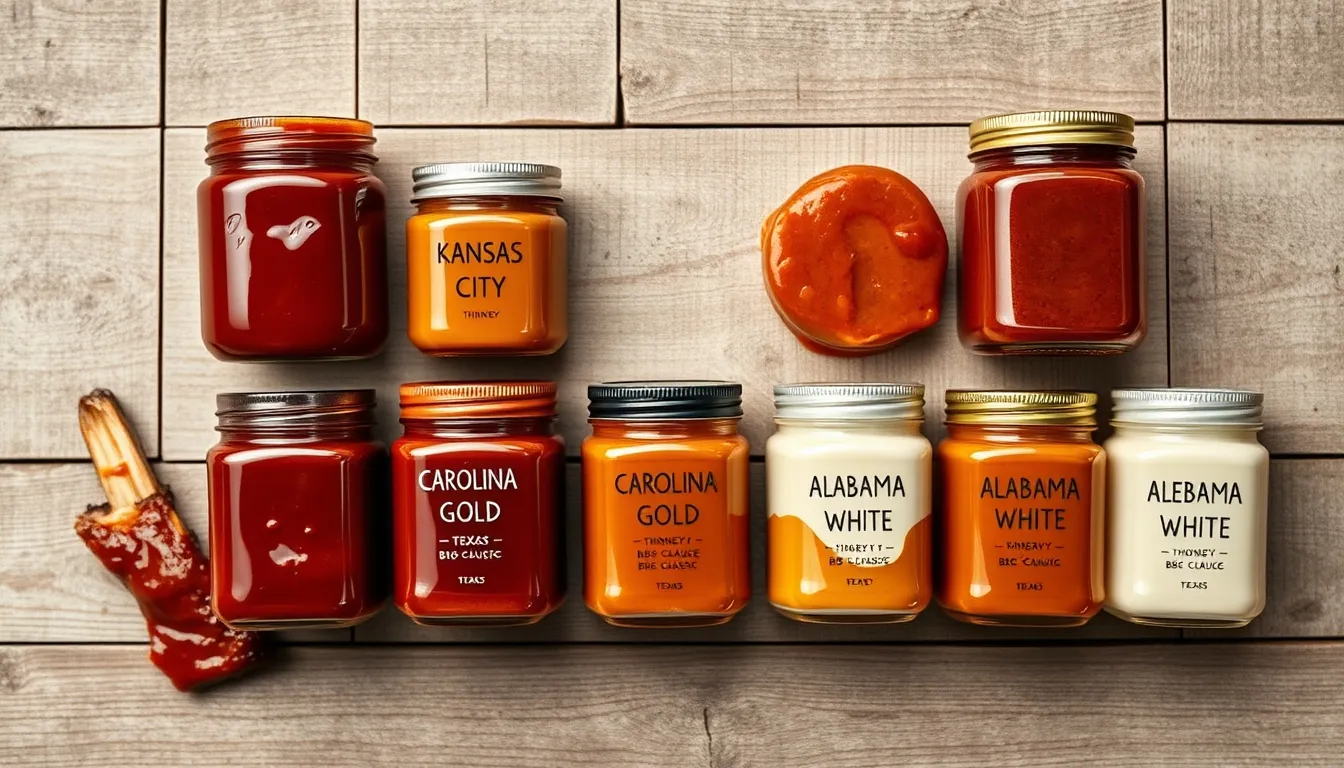
American BBQ sauce varies dramatically by region. Each variation below modifies the base recipe to capture a regional style.
- **Kansas City (thick and sweet)** — The base recipe as written. Add 2 tablespoons brown sugar and 1 tablespoon molasses for extra richness. This is the thick, coat-the-back-of-a-spoon style that most people picture when they think of BBQ sauce.
- **Carolina Gold (mustard-based)** — Replace ketchup with 1/2 cup yellow mustard + 1/4 cup apple cider vinegar. Add 1/4 cup honey, 1 tablespoon brown sugar, 1 teaspoon turmeric. Thin, tangy, and perfect for pulled pork. The honey and mustard combination creates something magical.
- **Texas (peppery and thin)** — Reduce honey to 2 tablespoons. Add 2 tablespoons chili powder, 1 tablespoon cumin, 1 tablespoon black pepper, and 2 minced chipotle peppers in adobo. Use beef broth instead of water. Designed for brisket, not chicken.
- **Alabama White (mayo-based)** — Skip the base recipe entirely. Whisk 1 cup mayonnaise, 1/4 cup apple cider vinegar, 2 tablespoons honey, 1 tablespoon prepared horseradish, 1 teaspoon black pepper, 1/2 teaspoon cayenne, 1/2 teaspoon salt. No cooking required. Serve with smoked chicken.
- **Memphis (vinegar-forward)** — Reduce honey to 3 tablespoons. Add 1/4 cup extra apple cider vinegar, 1 tablespoon celery salt, and 2 teaspoons dry mustard powder. Thinner and tangier than Kansas City. Best for dry-rubbed ribs.
- **Hawaiian (tropical)** — Add 1/4 cup pineapple juice, 2 tablespoons soy sauce, and 1 tablespoon fresh grated ginger. Replace regular honey with orange blossom honey for citrus brightness or wildflower honey for tropical floral complexity. The bromelain in pineapple helps tenderize meat as a marinade.
Pro Tip
For a honey garlic BBQ variation, add 6 minced garlic cloves (sautéed in butter for 30 seconds) and 1 tablespoon soy sauce to the base recipe. The allicin compounds in garlic provide antimicrobial properties that can also help extend shelf life.
10 Ways to Use Honey BBQ Sauce
This sauce works far beyond the grill. Here are the best applications.
- **Grilled or smoked ribs** — Brush on during the last 15-20 minutes of cooking to prevent burning. Perfect for Father's Day 2026 BBQ celebrations, wildflower honey or buckwheat honey caramelizes beautifully at grill temperatures.
- **Pulled pork sandwiches** — Mix 1/4 cup sauce per pound of shredded pork. Serve extra on the side.
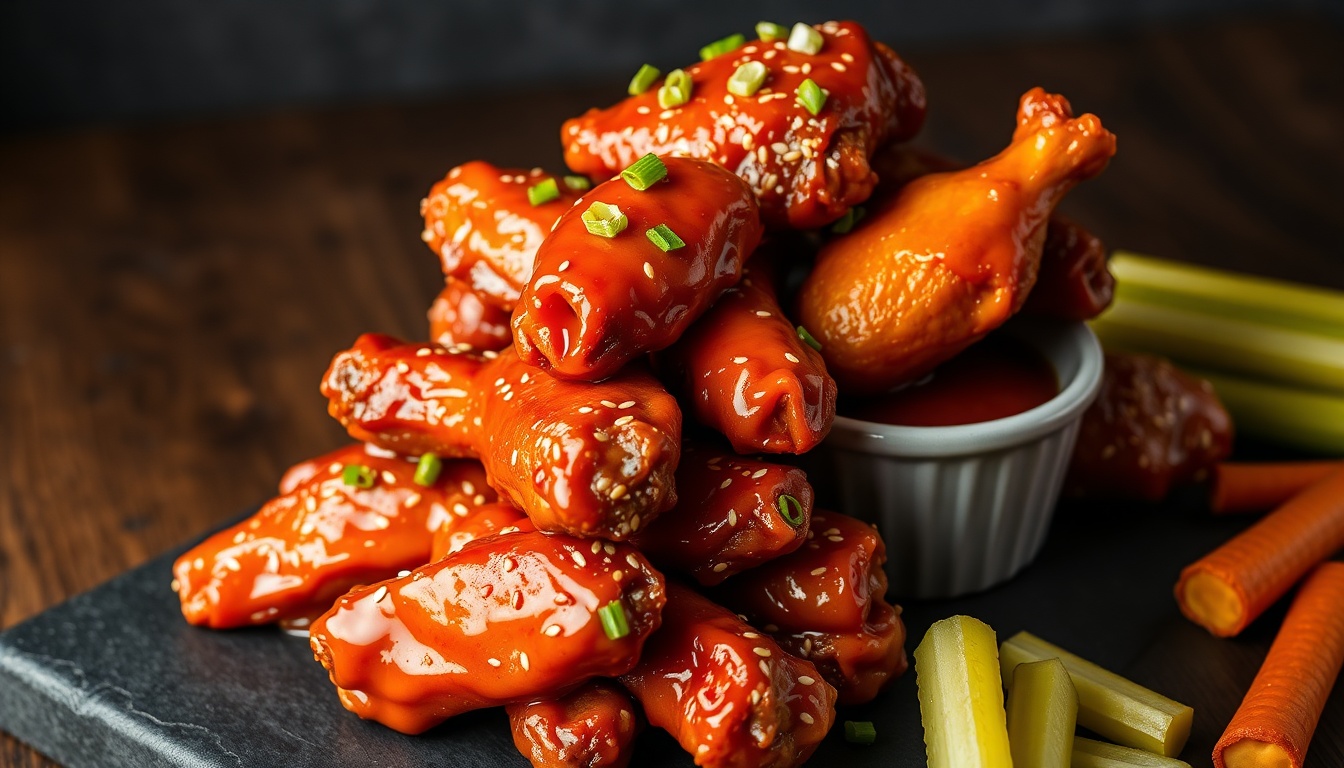
- **Chicken wings** — Toss fried or baked wings in warm sauce. Garnish with sesame seeds and chopped green onions.
- **Brisket glaze** — Brush on sliced brisket just before serving. The Texas variation works best here.
- **BBQ pizza** — Use as a pizza sauce base, top with mozzarella, grilled chicken, red onion, and cilantro.
- **Meatball glaze** — Simmer meatballs in sauce for 20 minutes for sweet, smoky party appetizers.
- **Burger topping** — Replace ketchup with honey BBQ sauce on your next burger. Add pepper jack cheese.
- **Dipping sauce** — Serve alongside fries, onion rings, chicken tenders, or honey cornbread.
- **Sheet pan dinner** — Toss chicken thighs, sweet potatoes, and broccoli with sauce before roasting at 400°F.
- **Marinade** — Thin with equal parts olive oil for a marinade. The acid in the vinegar and natural enzymes help tenderize meat over 2-4 hours.
Storage and Shelf Life
Homemade honey BBQ sauce keeps well thanks to the natural preservative properties of honey, vinegar, and the acidic tomato base.
- **Refrigerator (2-3 weeks)** — Store in an airtight jar or squeeze bottle. The honey's low water activity and natural antimicrobial properties help preserve the sauce. Always use clean utensils.
- **Freezer (6 months)** — Freeze in ice cube trays for individual portions, then transfer frozen cubes to a freezer bag. Thaw in the fridge overnight or microwave individual portions.
- **Canning (12 months)** — Process in sterilized half-pint jars using a water bath canner for 15 minutes. The high acid content (vinegar + tomato) makes this safe for water bath canning.
- **Batch cooking** — Double or triple the recipe when tomatoes or honey are in season. A single batch from the base recipe makes about 2 cups — enough for one cookout.
Homemade vs Store-Bought BBQ Sauce
The nutrition label tells the story. A typical commercial honey BBQ sauce lists: high-fructose corn syrup, tomato paste, distilled vinegar, natural flavors, molasses, modified food starch, salt, dried garlic, dried onion, caramel color, sodium benzoate. The actual honey content, if any, is minimal.
This homemade version uses real honey as the primary sweetener, with a floral aroma and trace minerals (potassium, iron, zinc). See the comparison of honey and corn syrup for how the two differ in flavor and cooking behavior.
Per serving (2 tablespoons), homemade honey BBQ sauce contains approximately 45 calories, 10g carbohydrates, 0g fat, and 180mg sodium — compared to 60-70 calories, 15g carbohydrates (mostly HFCS), and 280-350mg sodium in commercial versions.