About This Recipe
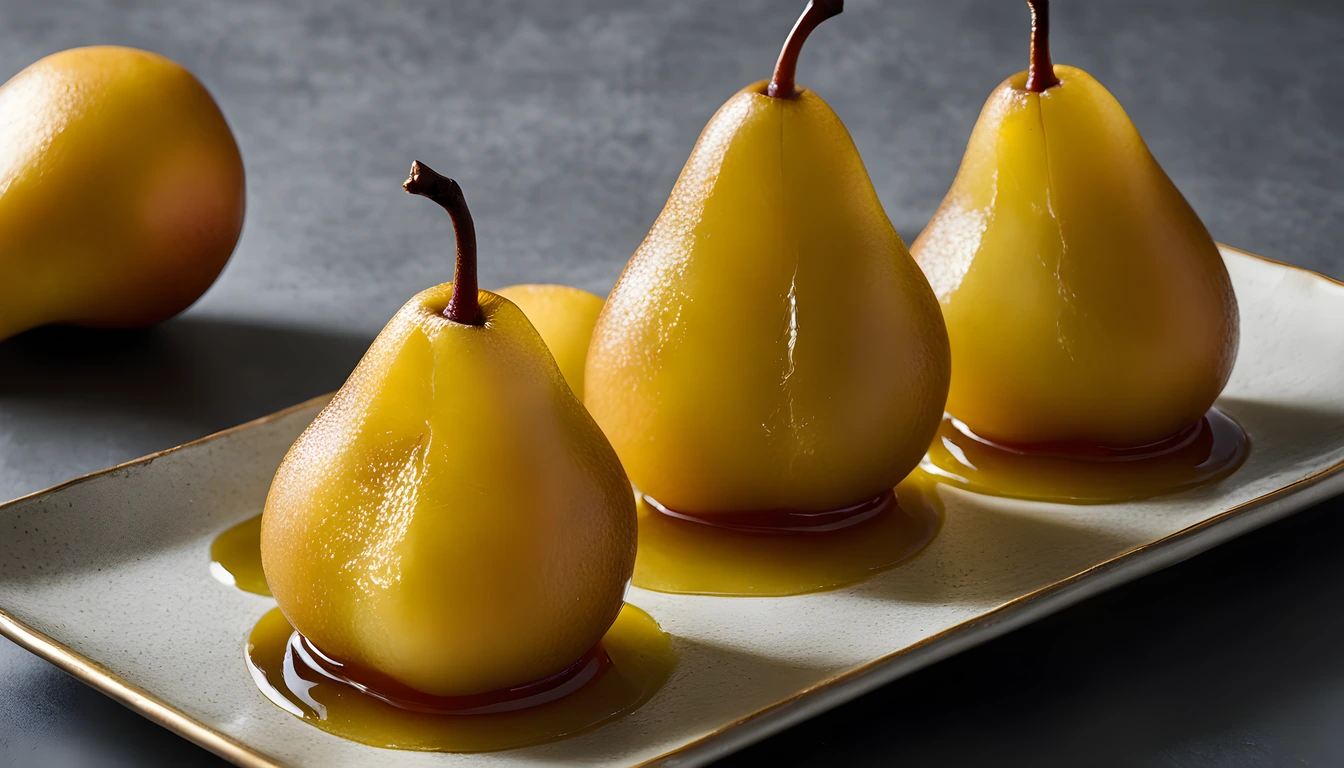
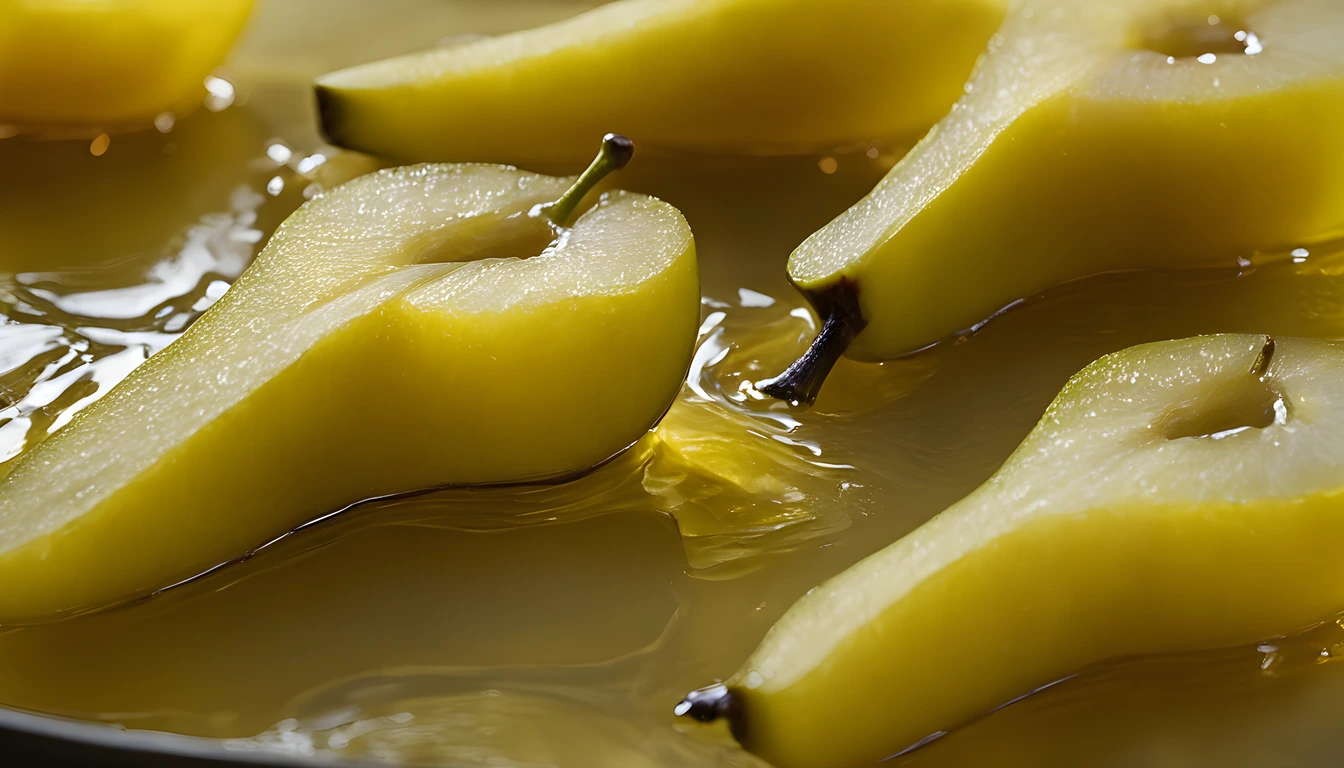
Honey, lemon and vanilla flavor these gently poached pear halves. The skins remain on to help the fruit hold its shape; the cut faces soften in the simmering liquid. Once the pears are tender, reduce the liquid into a light sauce and spoon it over the fruit.
It is a stovetop dessert from start to finish, not a crumble and not roasted fruit. Firm Bosc pears are the practical choice, and the fruit is cut into halves so it settles into a wide pan in one layer.
Recipe
Honey-Poached Pears Recipe
Firm Bosc pear halves poached skin-on in a honey-vanilla liquid on the stovetop, then reduced to a light golden sauce. A simple warm winter dessert served in four portions.
5Ingredients
Yield: 4 servings
- 600 g firm ripe Bosc pears, halved and cored, skins left on, stems and seeds removed before weighing
- 480 g water
- 120 g honey
- 30 g fresh lemon juice
- 5 g vanilla extract
Ingredient amounts scale; instructions show the original batch. Cooking times and pan sizes may need adjustment. Season to taste. Honey grams use US measures at 20°C and 17.5% moisture, a density estimate; weigh your honey for precision.
Instructions
- 1Prepare the pearsHalve the pears lengthwise and scoop out the cores with a melon baller or small spoon, removing stems and seeds. Leave the skins on. Weigh the prepared halves to 600 g.
- 2Build the poaching liquidChoose a wide, shallow saucepan that holds the pear halves cut side down in a single layer. Add the water, honey, lemon juice and vanilla, then stir briefly to combine.
- 3Poach gentlySet the pears in the pan cut side down; the liquid should come partway up their sides. Bring just to a bare simmer, cover, and cook 20 to 25 minutes, turning once. Keep the heat low so the liquid never boils hard. The pears are done when a skewer meets slight resistance and the fruit is tender but still holds its shape.
- 4Reduce the sauceLift the pears out with a slotted spoon and set them aside. Raise the heat slightly and simmer the liquid uncovered for 10 to 15 minutes, until it looks like a light glossy sauce. Stop before it turns thick like caramel or hardens; a cooled drop on a plate should stay syrupy, not set firm.
- 5Serve and storeDivide the pears into 4 equal portions and spoon all of the sauce over them. Serve warm. Refrigerate leftovers promptly, keeping the fruit in its sauce, and use within 3 days.
Estimated nutrition per serving
181.95 calories · 0.23 g fat · 48.19 g carbohydrate · 0.66 g protein · 7.69 mg sodium
Serving: 1 of 4 servings
Calculated from ingredient weights and USDA FoodData Central: 169118, 173647, 169640, 167747, 173471. Estimates use ingredient input weights; actual portions, brands and cooking losses vary. Omitted nutrient values are unavailable, not zero.
Why skin-on Bosc pears work here
Bosc pears are firm and hold a clean shape through gentle simmering. The skins are deliberately kept on: they help the halves stay intact and add a thin, slightly tan edge against the pale cut face.
No specific count of whole pears is promised. Fruit size varies, so the recipe starts from 600 g of prepared halves: halved, cored, stems and seeds removed, skins left on. That prepared weight is what goes into the pan.
Flavor intensity uses an editorial culinary scale: 1 is mild and 5 is bold. These are tasting suggestions, not laboratory measurements.
Sources: Using Honey in Cottage Foods; Using Honey in Cottage Foods; 4 Steps to Food Safety.
- Halve and core before weighing; discard stems and seeds.
- Firm ripe fruit, not soft or overripe pears.
- Cut side down in the pan, in one layer.
Pro Tip
If your pan is smaller than your pears, use a wider pan rather than crowding the halves into two layers.
1 = mild, 5 = bold. Editorial pairing guidance, not laboratory measurements; jars vary.
- Clover honey
- Mild, clean sweetness that lets the pear come through
- Orange blossom honey
- Citrus-forward notes that echo the lemon juice
- Wildflower honey
- Floral, varied character for a more pronounced sauce
- Buckwheat honey
- Dark, molasses-like depth that can overpower delicate pears
Get the Honey Buyer's Cheat Sheet (free PDF)
16 varieties on one page — color, flavor, best use and what a fair price looks like — from the 304 honeys we track.
The poaching liquid and the gentle simmer
Honey sweetens the water, lemon juice adds tartness, and vanilla gives a rounded aroma. The sauce is made from this same liquid after the pears have softened. No separate sugar syrup is needed.
Keep the covered pan at a bare simmer. Vigorous bubbles can break the tender edges and toss the halves around before the centers soften. Turn the fruit once, gently, then test the thickest part with a skewer. The skewer should slide in easily with only slight resistance.
- 480 g water
- 120 g honey
- 30 g lemon juice
- 5 g vanilla extract
- 20 to 25 minutes covered, turning once
Pro Tip
Listen for a quiet murmur rather than a rolling boil; lower the heat if the surface starts churning.
Reducing all of the liquid
Lift the fruit from the pan and simmer the entire remaining liquid uncovered for 10 to 15 minutes. The target is a light glossy sauce that coats a spoon thinly, not a hard candy or a thick caramel. Taste it as it reduces and pull the pan off the heat once it looks syrupy.
All of that sauce is poured over four equal portions. The nutrition estimate accounts for the full amount of honey and liquid; there is no separate absorbed-syrup figure and no draining of liquid away before serving. The final sauce volume is not stated as a fixed number because it depends on your pan and heat.
- Reduce uncovered, watching closely near the end.
- Pour every spoonful of sauce over the pears.
- Cooled sauce should stay glossy, not set firm.
Pro Tip
If the sauce thickens too far, loosen it with a spoonful of hot water.
Serving, storage and a note on peeled pears
Serve the pears warm, with the sauce spooned over the tender cut faces. Keep the presentation plain: no whipped cream, ice cream or spice garnish is part of this recipe.
Refrigerate leftovers promptly in a shallow covered container and use within three days. Keep the fruit coated with its sauce rather than storing the halves dry. This recipe uses the USDA raw-pear reference with skin included; peeled fruit would be a different preparation from the written skin-on base.
- Divide the prepared pears and all the sauce into four portions.
- Refrigerate within two hours, or one hour when the surroundings exceed 90°F (32°C).
- Keep covered and use within three days.
Pro Tip
Rewarm gently in a covered pan with a splash of water rather than boiling the sauce again.
Choosing the Honey
Use Clover honey or Orange blossom honey or Wildflower honey or Buckwheat honey for the flavor described in this recipe. See our honey selection guide for other culinary choices.