Why Honey Makes a Better Lemon Cake
Lemon cake is one of the best recipes to swap honey for sugar because the two flavors are natural partners.
Honey is about 17% water, which creates extra moisture in the crumb. This is why honey lemon cake stays soft and tender for 3-4 days while sugar-based lemon cake starts drying out within 24 hours. The hygroscopic nature of fructose means it actively pulls moisture from the air, keeping the crumb from going stale.
The flavor pairing is not accidental. Honey contains over 180 aromatic compounds, many of which are floral and citrus-adjacent. When combined with fresh lemon zest and juice, honey amplifies the citrus rather than competing with it. The effect is a cake that tastes more intensely lemony than one made with sugar, because the honey harmonizes with the citrus notes instead of simply adding neutral sweetness.
Orange blossom honey is the standout choice here — its natural citrus undertones double down on the lemon flavor. But any mild, light-colored honey works well.
The Role of Each Ingredient
Every ingredient serves a specific purpose in creating the texture and flavor balance.
- Greek yogurt — adds tanginess that amplifies the lemon flavor and provides acidity that reacts with baking soda for lift. The fat in full-fat yogurt keeps the crumb tender. Do not substitute low-fat yogurt — the cake will be drier and less flavorful
- Lemon zest — contains the essential oils that provide most of the lemon flavor. The juice adds tartness, but the zest adds aroma. Zest before juicing, and use a microplane for the finest shreds that distribute evenly through the batter
- Baking powder plus baking soda — the dual leaveners work together. Baking powder provides the main lift, while baking soda reacts with the acidity in honey, lemon juice, and yogurt for additional rise and browning. This combination produces a lighter crumb than either leavener alone
- Room temperature eggs — cold eggs will cause the honey-butter mixture to seize and become lumpy. Room temperature eggs emulsify smoothly, trapping more air for a lighter cake. Set eggs out 30 minutes before starting, or warm them in a bowl of warm water for 5 minutes
- Softened butter — not melted. Creaming softened butter with honey traps air bubbles that expand during baking, creating the tender crumb structure. Melted butter produces a denser, more bread-like texture
Pro Tip
For maximum lemon flavor, add 1/2 teaspoon lemon extract along with the vanilla. The extract provides a concentrated citrus punch that survives baking better than juice alone.
Get the Honey Buyer's Cheat Sheet (free PDF)
16 varieties on one page — color, flavor, best use and what a fair price looks like — from the 304 honeys we track.
The Honey Lemon Glaze
The glaze is not optional — it transforms this from a good cake into an exceptional one.
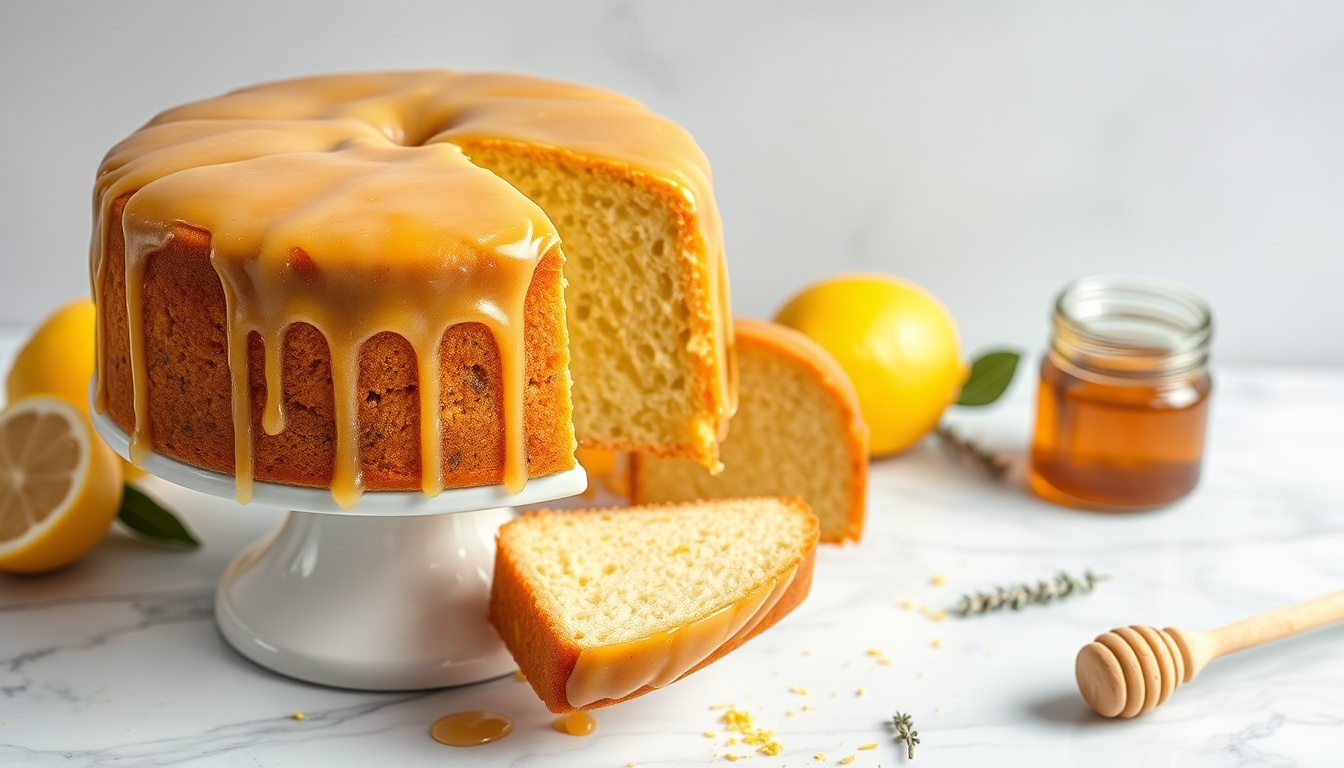
Poking holes in the hot cake and pouring the warm glaze over it creates a soaking effect similar to a tres leches cake. The honey-lemon mixture seeps into the crumb, making the top inch of the cake intensely moist and tangy. As the cake cools, the glaze sets into a sticky, slightly crystallized finish on the surface.
The glaze also solves the common problem of lemon cakes tasting flat. Baking mutes lemon flavor — the heat drives off volatile citrus oils. The raw lemon juice and zest in the glaze reintroduce bright, fresh lemon flavor after baking, so you get both baked lemon warmth from the cake and fresh lemon zing from the glaze.
Best Honey Varieties for Lemon Cake
The honey choice matters since you are using 1 full cup across the cake and glaze.
- Orange blossom honey — the top choice. Its natural citrus and floral notes create a seamless bridge between the honey sweetness and lemon tang. The result tastes like the honey and lemon were made for each other
- Clover honey — mild, clean, and affordable. Lets the lemon be the dominant flavor. The best all-purpose option and the safest choice if you are making this for guests with varied palates
- Acacia honey — very mild with a delicate floral quality. Produces the lightest, most subtle honey flavor. Excellent if you want the cake to read as "lemon cake" with just a hint of honey warmth
- Wildflower honey — adds a more complex, multi-dimensional sweetness. The variety of floral sources creates depth that pairs well with the bright acidity of lemon. A good middle-ground option
- Avoid dark honeys like buckwheat or manuka — their strong, molasses-like or pungent flavors overpower the delicate lemon. Save those for chocolate or spiced baked goods
Variations
The base recipe adapts easily to different flavor profiles and occasions.
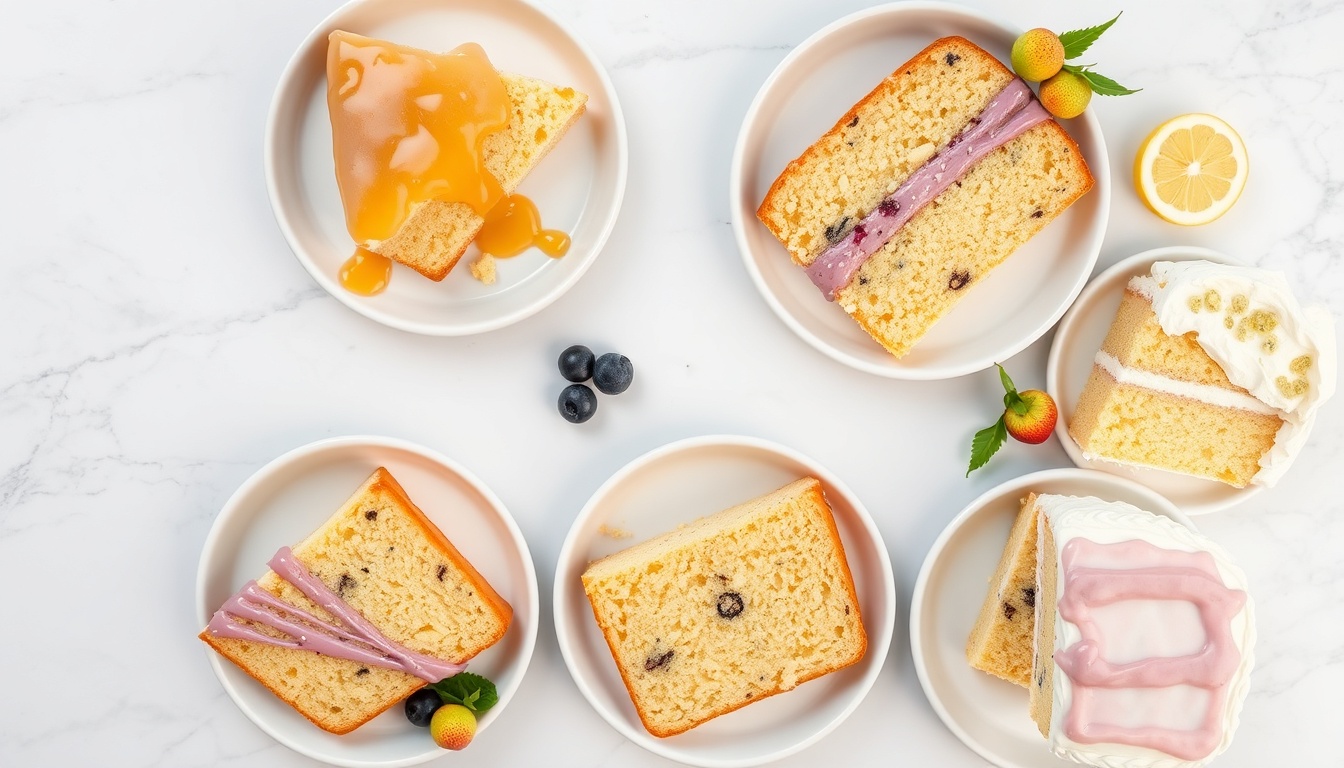
- Honey lemon poppy seed — fold 2 tablespoons poppy seeds into the batter. The tiny seeds add a subtle nutty crunch and the classic bakery look. They also provide a visual contrast against the golden crumb
- Honey lemon blueberry — fold 1 cup fresh blueberries tossed in 1 tablespoon flour into the batter. The flour coating prevents the berries from sinking to the bottom. The sweet-tart blueberries burst during baking, creating pockets of fruit throughout the cake
- Honey lemon lavender — add 1 tablespoon dried culinary lavender (finely chopped) to the batter with the lemon zest. The floral lavender and citrus lemon combination is classic Provencal. Use lavender honey to triple down on the floral notes
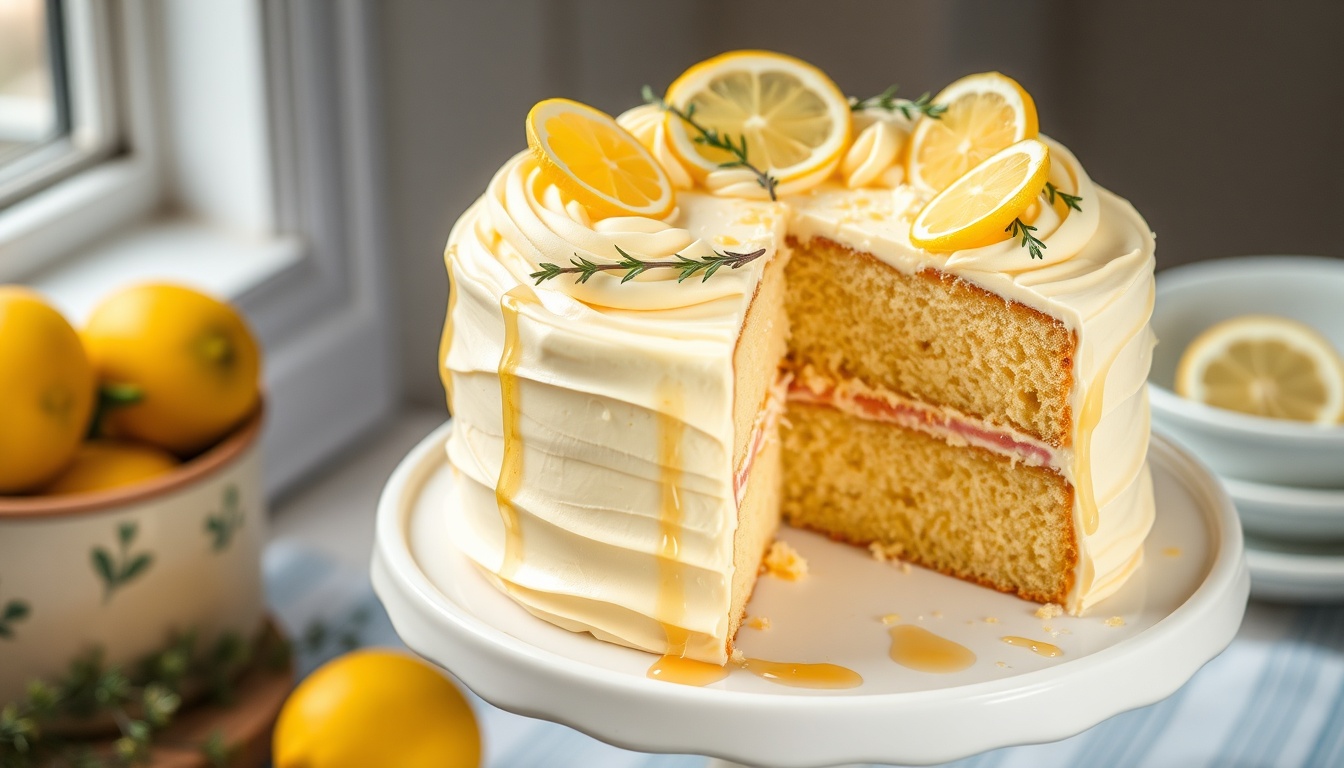
- Honey lemon layer cake — double the recipe and bake in two 9-inch rounds. Stack with honey lemon cream cheese frosting: 8 oz cream cheese, 1/4 cup honey, 2 tablespoons lemon juice, zest of 1 lemon, beaten until fluffy. A stunning celebration cake
- Honey lemon bundt cake — bake in a greased and floured bundt pan for 40-45 minutes. The decorative shape makes a beautiful presentation, and the center tube ensures even baking. Drizzle the glaze over the ridges for a dramatic cascade effect
Storage Tips
Honey lemon cake stores exceptionally well because honey is a natural humectant — it draws and retains moisture.
- Room temperature — up to 3 days in an airtight container or under a cake dome. The cake actually tastes best on day two, when the flavors have fully melded and the glaze has soaked in completely
- Refrigerator — up to 7 days sealed. Bring to room temperature for 20 minutes before serving, as cold dulls the lemon flavor. The glaze may become slightly sticky when cold, which is normal
- Freezer — up to 3 months, wrapped tightly in plastic wrap and then aluminum foil. Freeze without the glaze for best results, then make fresh glaze and apply after thawing. Thaw overnight in the refrigerator
- Individual slices — wrap slices individually in plastic wrap for easy grab-and-go portions. Frozen slices thaw in about 30 minutes at room temperature
Common Mistakes
These errors are the most common reasons honey lemon cakes fail.
- Overbaking — honey browns faster than sugar because fructose caramelizes at a lower temperature. Start checking at 28 minutes. The top should be golden, not dark brown. A toothpick should come out clean but not dry
- Skipping the hole-poking for the glaze — without the holes, the glaze sits on top and runs off the sides. The holes let it soak in, creating that moist, intensely flavored top layer. Use a toothpick, not a fork — you want small channels, not tears in the crumb
- Using bottled lemon juice — fresh lemons only. Bottled juice has a metallic, preservative taste that comes through clearly in baking. You need 2-3 lemons total for the cake and glaze
- Overmixing after adding flour — stir until the flour streaks just disappear and stop. Overmixing develops gluten, which turns a tender cake into a tough, chewy bread. A few small lumps are fine
- Not letting eggs come to room temperature — cold eggs curdle the honey-butter mixture, creating a lumpy batter that does not trap air properly. The result is a dense, heavy cake instead of a light, fluffy one