Why Honey Makes Better Lemon Bars
Traditional lemon bars use a cup or more of white sugar in the filling, but honey creates a superior result in every way that matters.
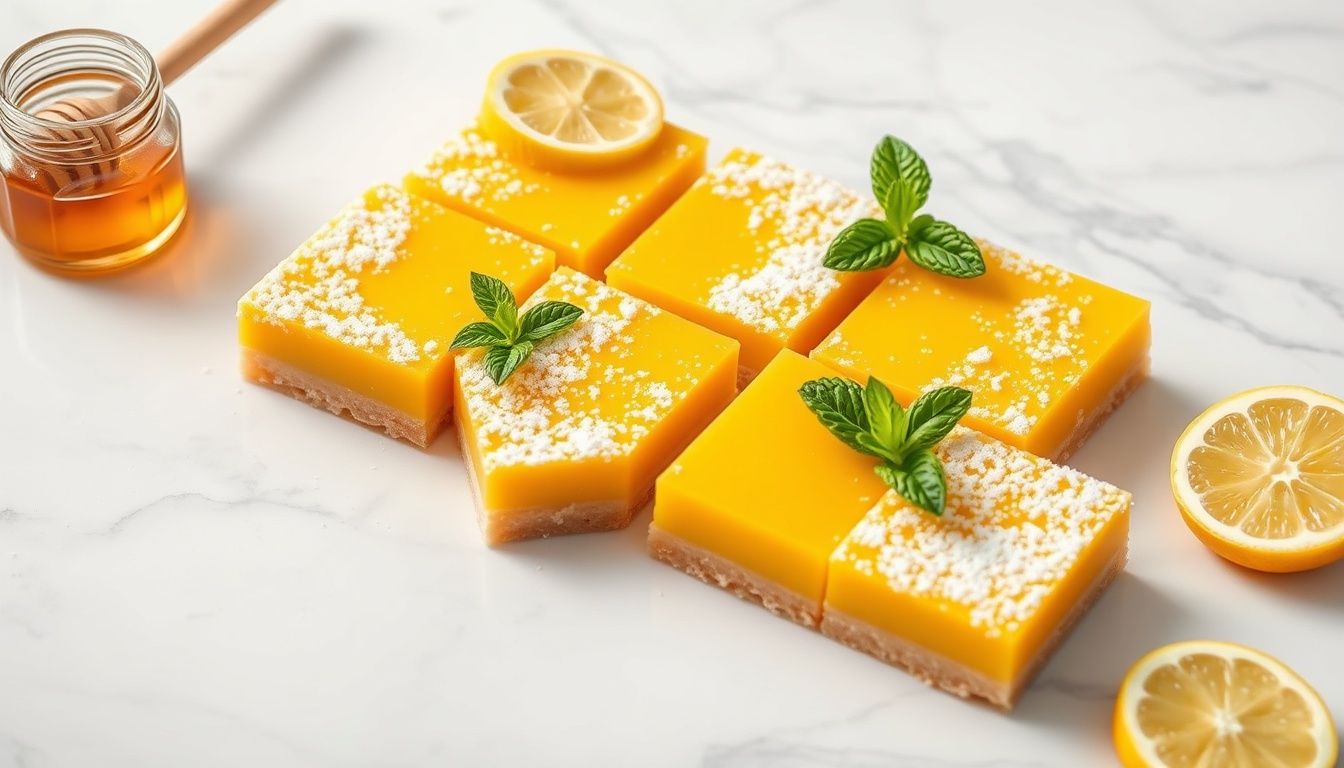
Honey is hygroscopic — it attracts and retains moisture. In lemon bar filling, this means a creamier, silkier custard that stays soft for days instead of drying out and cracking on top. Sugar-sweetened lemon bars develop that chalky, dried-out surface within 24 hours; honey lemon bars stay smooth and glossy.
The flavor difference is equally significant. Honey brings over 180 aromatic compounds that add floral depth to the citrus, creating a more complex sweet-tart balance. White sugar provides one-dimensional sweetness that competes with the lemon rather than complementing it. And because honey is sweeter per tablespoon than sugar, the filling needs less sweetener overall — letting the lemon flavor come through more clearly.
Classic Honey Lemon Bars: The Complete Recipe
This recipe produces bars with a buttery shortbread crust and a tangy, creamy custard filling. The key: bake the crust first, then add the filling.
- **Crust ingredients:** 1 cup all-purpose flour; 1/4 cup powdered sugar; 1/8 teaspoon salt; 1/2 cup (1 stick) cold unsalted butter, cut into small cubes.
- **Filling ingredients:** 3 large eggs; 1/2 cup raw honey (acacia or clover); 1/3 cup fresh lemon juice (about 3 lemons); 1 tablespoon lemon zest; 2 tablespoons all-purpose flour; 1/4 teaspoon salt.
- **Step 1: Make the crust** — Preheat oven to 350°F (175°C). Line an 8x8-inch baking pan with parchment paper, leaving overhang on two sides for easy removal. Pulse flour, powdered sugar, and salt in a food processor. Add cold butter cubes and pulse until mixture resembles coarse sand with a few pea-sized pieces. Press firmly and evenly into the prepared pan.
- **Step 2: Blind-bake the crust** — Bake for 18-20 minutes until the edges are light golden and the center looks dry. The crust must be fully baked before adding the filling — an underbaked crust becomes soggy.
- **Step 3: Make the filling while crust bakes** — Whisk eggs until smooth. Add honey and whisk until fully incorporated. Add lemon juice, lemon zest, flour, and salt. Whisk until the flour is completely dissolved with no lumps.
- **Step 4: Pour and bake** — Reduce oven to 325°F (165°C). Pour the filling directly onto the hot crust (this helps it start setting from the bottom). Bake for 20-25 minutes until the filling is set — it should jiggle slightly in the center like Jell-O when you gently shake the pan, but not ripple like liquid.
- **Step 5: Cool completely** — Let cool in the pan for 30 minutes at room temperature, then refrigerate for at least 2 hours (overnight is ideal). The filling continues to set as it cools. Cutting warm bars produces a messy, oozing result.
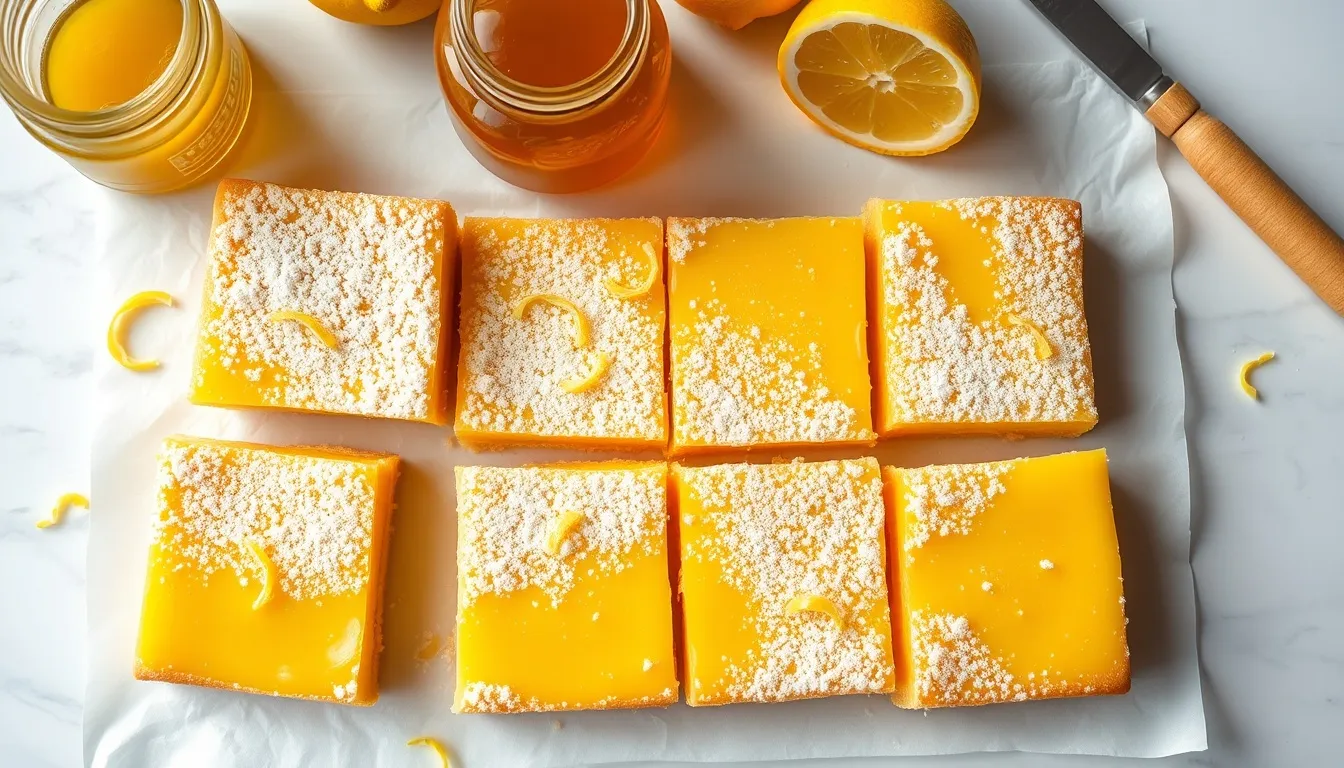
- **Step 6: Cut and dust** — Use the parchment overhang to lift the slab out of the pan. Cut into 16 squares with a sharp knife, wiping the blade between cuts. Dust lightly with powdered sugar just before serving.
Pro Tip
Use a Microplane or fine grater for the lemon zest and avoid the white pith underneath — it adds bitterness. Roll each lemon firmly on the counter before juicing to break the internal membranes and release more juice.
Get the Honey Buyer's Cheat Sheet (free PDF)
16 varieties on one page — color, flavor, best use and what a fair price looks like — from the 304 honeys we track.
Choosing the Best Honey for Lemon Bars
The honey variety you choose significantly affects the flavor profile. Since lemon bars are delicate, the honey flavor comes through clearly in every bite.
- Carbohydrate note — Honey remains an added-sugar carbohydrate. Include the amount used in this recipe when counting total carbohydrate per serving.
- **Clover honey** — Mild and widely available. Adds gentle sweetness with very faint floral undertones. Best for: everyday baking, feeding guests with varying tastes.
- **Orange blossom honey** — Light citrus notes that amplify the lemon flavor, creating a more complex citrus experience. Best for: when you want extra citrus depth. A standout choice for this recipe.
- **Lavender honey** — Floral and slightly herbal. Creates a French patisserie-style lemon bar with sophisticated lavender-citrus notes. Best for: the lavender lemon bar variation below.
- **Avoid dark honeys** — Buckwheat, chestnut, and other dark honeys have strong, malty flavors that overwhelm the delicate lemon custard. Save them for recipes where their boldness is an asset, like honey bread or honey oatmeal cookies.
5 Honey Lemon Bar Variations
Each variation modifies the base recipe. All produce 16 bars in an 8x8-inch pan.
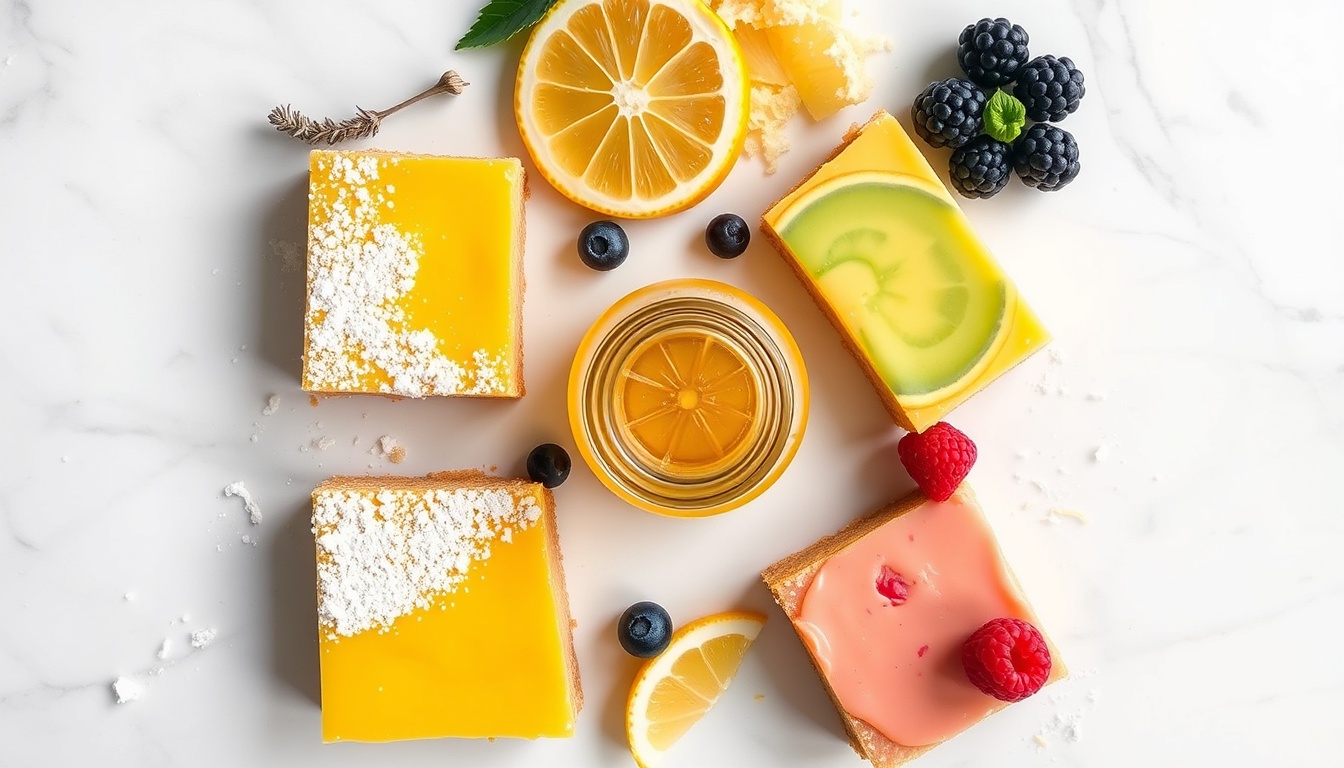
- **1. Lavender honey lemon bars** — Use lavender honey in the filling. Add 1 teaspoon dried culinary lavender buds to the crust (pulse with the flour). The lavender-lemon combination is a classic French pairing. Garnish with a single lavender bud on each bar instead of powdered sugar.
- **2. Lemon-lime bars** — Replace half the lemon juice with fresh lime juice (use 2 lemons + 2 limes). Add lime zest alongside the lemon zest. The lime adds a sharper, more tropical tang. Use orange blossom honey to bridge the citrus flavors.
- **3. Meyer lemon bars** — Substitute Meyer lemons for regular lemons. Meyer lemons are sweeter and more floral with mandarin orange notes, so reduce honey to 1/3 cup. The result is a softer, more perfumed bar. Meyer lemons are seasonal (December-May) — buy extra and freeze the juice.
- **4. Honey lemon bars with almond crust** — Replace 1/4 cup of the flour in the crust with 1/4 cup almond flour. Add 1/4 teaspoon almond extract to the crust mixture. The almond adds a nutty richness that complements the tart filling. Top with sliced almonds pressed into the filling before baking.
- **5. Coconut honey lemon bars** — Add 1/3 cup sweetened shredded coconut to the crust. Use coconut cream (2 tablespoons) in the filling for extra richness. Toast additional coconut and sprinkle on top after cooling. The coconut-lemon-honey combination tastes like a tropical vacation.
The Science of Perfect Lemon Bar Filling
Understanding the science behind the filling helps you troubleshoot problems and adapt the recipe confidently.
The filling is essentially a baked custard: eggs provide structure through protein coagulation, lemon juice provides the acid and flavor, honey provides sweetness and moisture retention, and the small amount of flour acts as a stabilizer to prevent the custard from weeping or cracking.
Egg proteins begin to coagulate (set) at around 160°F (71°C) and fully set by 180°F (82°C). The lower baking temperature (325°F) ensures the filling sets gently and evenly. At higher temperatures, the outer edges overcook before the center sets, producing a rubbery ring around a liquid center.
Honey plays a crucial role in texture. Its fructose interferes with egg protein bonding, producing a more tender, less rubbery custard than sugar does. This is the same mechanism that makes honey cakes moister — the fructose molecules physically get between the protein strands, keeping them from tightening up.
The flour (just 2 tablespoons) absorbs excess moisture from the lemon juice and creates a slight starch gel that prevents the filling from weeping liquid after cutting. Without it, the bars would ooze lemon juice when sliced — technically edible, but messy and unappealing.
Storage and Make-Ahead Tips
Honey lemon bars are ideal make-ahead desserts because honey's moisture-retaining properties keep them fresh longer than sugar-sweetened versions.
- **Refrigerated (5-6 days)** — Store cut or uncut bars in an airtight container in the refrigerator. The cold firms the filling to a perfect sliceable texture. This is the best way to store them — they taste better cold than at room temperature.
- **Room temperature (2-3 hours max)** — Lemon bars can sit out for serving at a party or potluck, but refrigerate any leftovers promptly. The egg-based filling should not sit at room temperature for extended periods.
- **Frozen (2-3 months)** — Freeze the uncut slab wrapped tightly in plastic wrap, then aluminum foil. Thaw overnight in the refrigerator before cutting. You can also freeze individual bars wrapped in plastic for single-serving convenience.
- **Powdered sugar tip** — Only dust with powdered sugar right before serving. The sugar absorbs moisture from the filling and dissolves into a sticky glaze if applied too early. For a longer-lasting dusting, mix 1 tablespoon powdered sugar with 1/2 teaspoon cornstarch.
- **Make-ahead timeline** — Bake the bars 1-2 days ahead and refrigerate uncut. The flavor actually improves overnight as the lemon and honey flavors meld. Cut and dust with sugar within an hour of serving.
Common Mistakes and How to Fix Them
Even experienced bakers run into lemon bar problems. Here are the most common issues and their solutions.
- **Filling is runny after baking** — The bars were either underbaked or not cooled long enough. Return to the oven for 5-10 more minutes at 325°F if the center still ripples like liquid. If they look set but are soft, refrigerate for at least 4 hours — the filling continues firming as it cools.
- **Crust is soggy on the bottom** — The crust was not fully blind-baked before adding the filling. It should be light golden and dry to the touch. Also ensure you are pressing the crust firmly and evenly — thin spots become soggy first.
- **Filling cracked on top** — The oven temperature was too high, or the bars were overbaked. Reduce to 325°F and check at 18 minutes. Minor cracks disappear under powdered sugar. For crack-free bars, avoid opening the oven during baking.
- **Bars taste too sweet** — Reduce honey by 1-2 tablespoons and increase lemon juice by the same amount. The sweet-tart balance is personal — some prefer more tang, others more sweetness. You can also zest an additional lemon for more citrus punch without more liquid.
- **Filling weeps liquid after cutting** — This usually means not enough flour in the filling or cutting while still warm. Always refrigerate for at least 2 hours before cutting, and ensure you used the full 2 tablespoons of flour.