About This Recipe
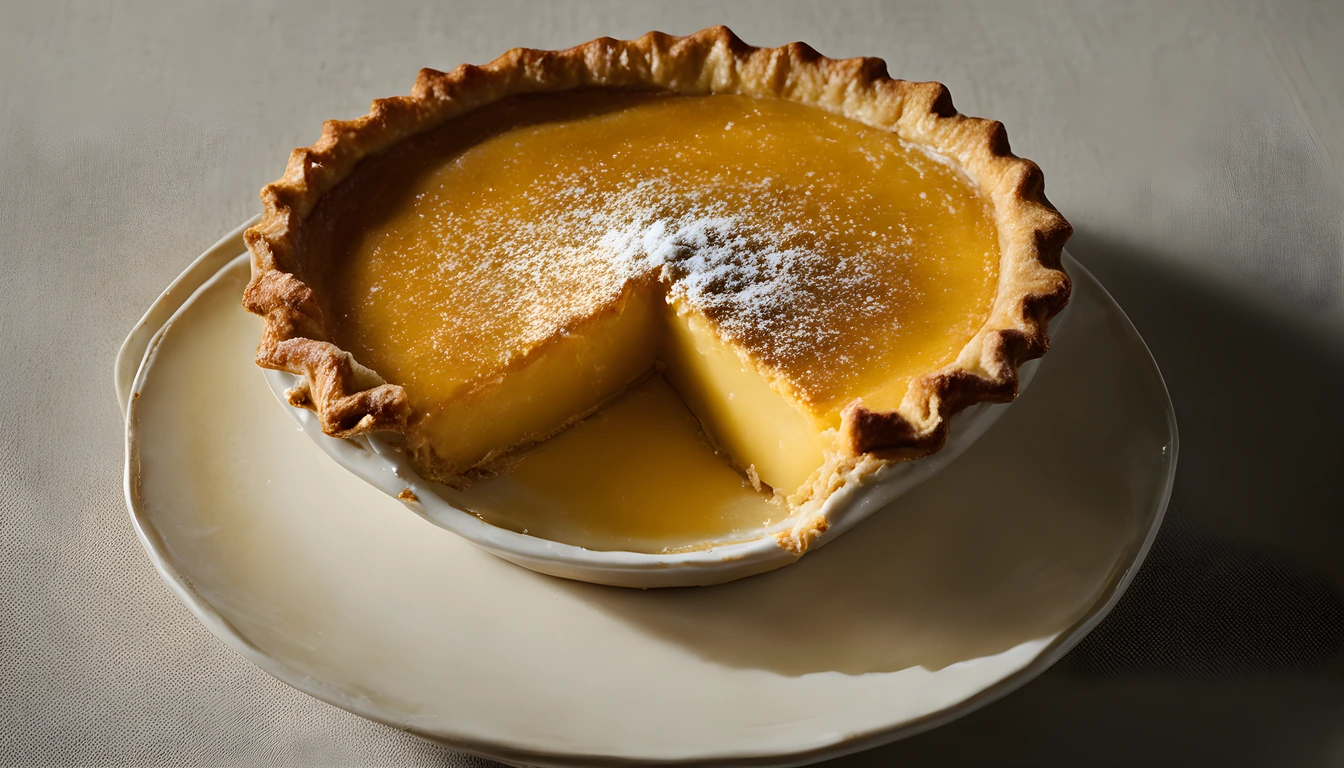
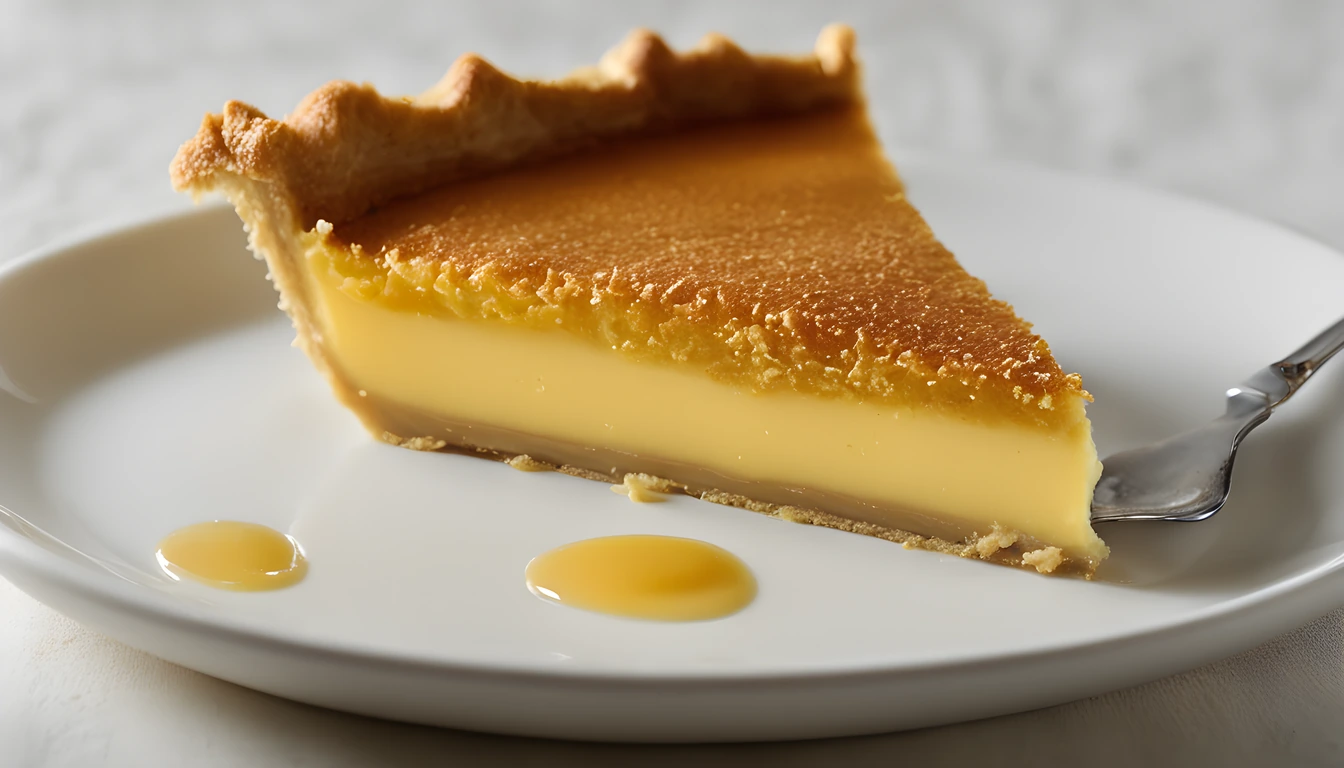
This honey custard pie has a buttery homemade crust. The filling uses honey, eggs and cream, with a little cornstarch to help it set. Weighed salt keeps the sweetness from tasting flat. There’s no granulated sugar in this formula. Let the pie cool before slicing.
Recipe
Salted Honey Pie with a Buttery Homemade Crust
Make a salted honey custard pie with a homemade butter crust, measured honey filling and clear chilling, blind-baking and cooling steps. Serves 8.
9Ingredients
Yield: 8 servings
- 160 g all-purpose flour
- 135 g unsalted butter, divided
- 45 g water, cold
- 2 g table salt, divided
- 230 g honey
- 150 g whole eggs without shells
- 120 g heavy cream
- 12 g cornstarch
- 1 teaspoon vanilla extract
Ingredient amounts scale; instructions show the original batch. Cooking times and pan sizes may need adjustment. Season to taste. Honey grams use US measures at 20°C and 17.5% moisture, a density estimate; weigh your honey for precision.
Instructions
- 1Mix and chill the pastryMix the flour with 1 g salt. Cut 85 g cold butter into small cubes and rub or cut it into the flour until the mixture has pea-sized pieces. Add the 45 g cold water and gather into a dough without kneading it smooth. Flatten into a disk, wrap and refrigerate for 30 minutes.
- 2Line the pie plateRoll the dough between sheets of baking paper into a circle large enough for a 23 cm (9 inch) pie plate. Fit it into the plate without stretching, fold the edge under and crimp. Refrigerate the lined plate for 15 minutes while heating the oven to 375 F (190 C).
- 3Blind-bake the crustLine the pastry with baking paper and fill with reusable pie weights. Bake for 20 minutes. Lift out the paper and weights carefully, then bake for about 10 more minutes, until the base looks dry and lightly golden. Reduce the oven to 325 F (165 C). The weights are equipment and are not ingredients in the finished pie.
- 4Whisk the honey fillingMelt the remaining 50 g butter and let it cool until warm rather than hot. In a bowl whisk the honey, cornstarch and remaining 1 g salt until smooth. Whisk in the eggs, then the cream, vanilla and melted butter. Stir gently enough to avoid a thick layer of foam.
- 5Bake the filled piePlace the warm crust on a baking sheet and pour in the filling. Bake at 325 F (165 C) for 35 to 45 minutes. The outer filling should be set, and the center should move in one soft wobble when the plate is nudged, rather than ripple like liquid. A thermometer in the center should read at least 160 F (71 C). Shield the crust edge if it gets dark before the filling is ready.
- 6Cool before slicingCool the pie on a rack for 1 hour, then refrigerate for at least 2 hours before cutting into eight slices. Refrigerate sooner if the room is hotter than 90 F (32 C). Do not leave this custard pie unrefrigerated for more than 2 hours. The total recipe time includes the pastry chilling and the 3-hour rack-and-refrigerator cooling period.
Estimated nutrition per serving
366.23 calories · 21.08 g fat · 40.96 g carbohydrate · 5.08 g protein · 131.49 mg sodium
Serving: 1 of 8 servings
Calculated from ingredient weights and USDA FoodData Central: 168894, 173430, 173647, 173468, 169640, 171287, 170859, 169698, 173471. Estimates use ingredient input weights; actual portions, brands and cooking losses vary. Omitted nutrient values are unavailable, not zero.
Let the Honey Supply the Flavor
A mild clover honey makes a clean, rounded custard, while wildflower honey gives a more distinct floral note. Taste the honey before measuring it for the pie: a dark, strongly flavored honey will remain noticeable beside the butter and cream. The chart shows editorial pairing ideas rather than measured flavor chemistry.
Liquid honey blends most evenly into the eggs and cream. If your jar is crystallized, gently loosen the honey in warm water before weighing it, then allow it to cool until just warm before making the filling.
Flavor intensity uses an editorial culinary scale: 1 is mild and 5 is bold. These are tasting suggestions, not laboratory measurements.
Sources: UC Agriculture and Natural Resources: Honey flavor and cooking; USDA: all-purpose flour; FoodSafety.gov: egg-dish cooking temperatures; FoodSafety.gov: refrigerating perishable foods.
1 = mild, 5 = bold. Editorial pairing guidance, not laboratory measurements; jars vary.
- Clover
- Butter and cream
- Wildflower
- Salted custard
- Buckwheat
- A deeply flavored filling
Get the Honey Buyer's Cheat Sheet (free PDF)
16 varieties on one page — color, flavor, best use and what a fair price looks like — from the 304 honeys we track.
Separate the Butter and Salt Before You Start
The single butter quantity covers two jobs: 85 g stays cold for the pastry, and 50 g is melted for the filling. Divide it before mixing anything. The 2 g salt is also split evenly, with 1 g in the crust and 1 g in the honey custard. Weighing the salt makes the seasoning easier to repeat.
Flaky finishing salts vary widely in crystal size and are not interchangeable by spoonful with table salt. This version gets its salted flavor from the weighed salt inside the pie. If you add a decorative pinch later, that is extra seasoning beyond the stated formula and nutrition estimate.
Why This Crust Is Blind-Baked
The honey filling is liquid before the eggs set. Giving the crust a head start helps its bottom stay distinct rather than becoming a layer of wet dough. Keep the weights against the sides during the first bake so the pastry holds its shape, then remove them to let the base dry.
For rolling, use the baking-paper method rather than adding unmeasured handfuls of bench flour. If the dough becomes soft, return it to the refrigerator for a few minutes. Stretching soft dough into the plate encourages it to pull back as it bakes.
Read the Center, Not Just the Crust Color
Honey darkens during baking, so a well-colored edge does not tell you whether the center is ready. Bake the filling gently at the lower temperature, and look for a set outer ring with a small, unified wobble in the middle. Broad liquid ripples mean it needs more time; a puffed, cracked center usually means it has gone farther than intended.
Give the pie its cooling time. Cutting a warm custard pie can send a loose filling across the plate even when it will slice more cleanly later. A slightly warm knife, wiped between cuts, helps keep the edges tidy once the pie has cooled.
The 160 F (71 C) center-temperature target follows the FoodSafety.gov egg-dish guidance. Its chilling guidance is why the cooling plan moves the pie into the refrigerator after 1 hour rather than leaving it out until completely cold.
Serving and the Ingredient-Based Estimate
Serve small slices on their own, with unsweetened coffee, or alongside fruit. If you want a nut-filled honey dessert instead, use the honey pecan pie recipe. For a simpler bake, the honey cornbread has a much shorter cooling schedule.
The displayed estimate divides all listed ingredients into eight servings and includes the whole homemade crust. It assumes the filling and crust are eaten together, with no whipped cream, ice cream or finishing salt added. It does not infer the final water content or the weight of a cooled slice.
Choosing the Honey
Use Clover Honey or Wildflower Honey for the flavor described in this recipe. See our honey selection guide for other culinary choices.