Fall Harvest Honey: Seasonal Varieties & Guide
Fall honey is darker, bolder, and richer in antioxidants than spring or summer varieties. Discover the unique floral sources, flavors, and traditions of autumn's honey harvest.
Last updated:
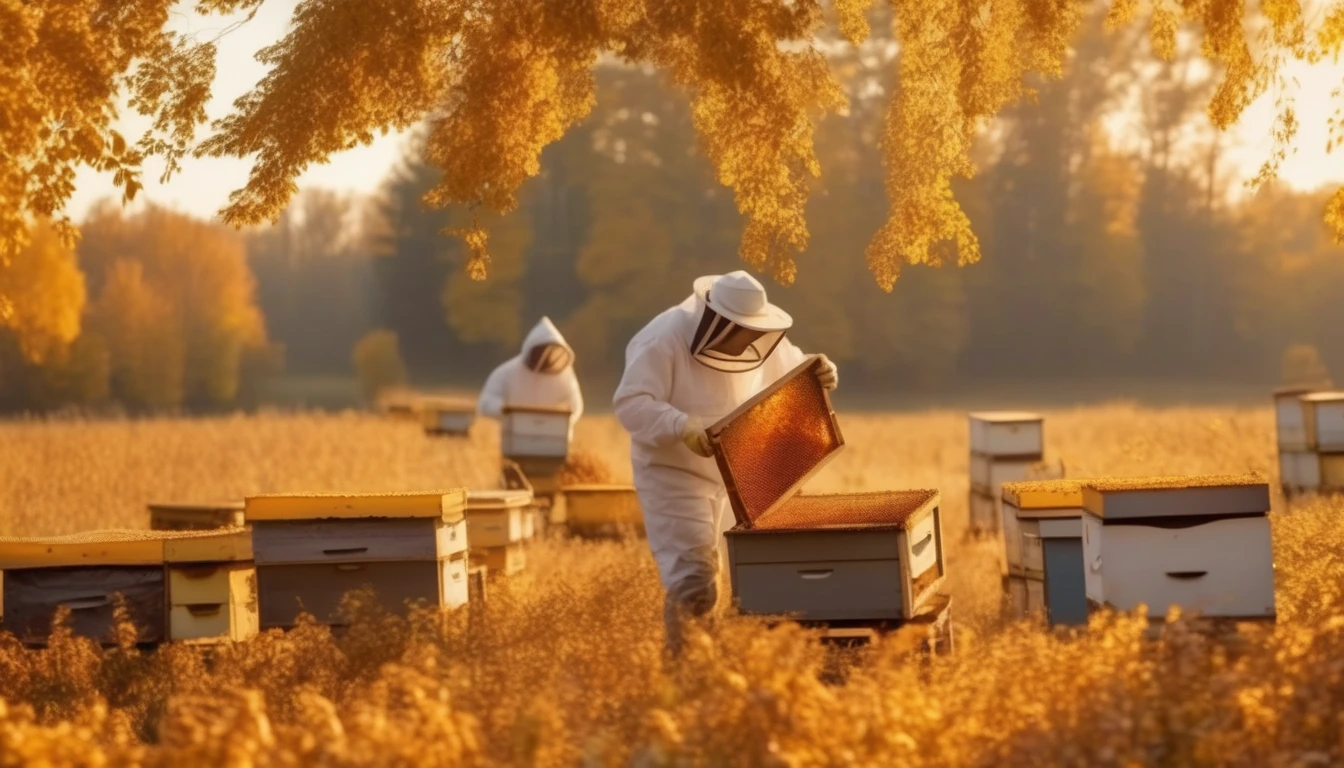
Fall honey is harvested September through October from late-blooming flowers like goldenrod, aster, buckwheat, and sunflower. It's noticeably darker and more robust than spring honey, with up to 20 times more antioxidants. Find fresh harvest honey at local farmers' markets and beekeeping associations in the fall.
Key Facts
Primary extraction window
Goldenrod, aster, buckwheat, sunflower
Higher antioxidant content
What Makes Fall Honey Different from Spring and Summer Varieties?
Fall honey is distinctly different from spring and summer honey in color, flavor, and mineral content — and these differences are entirely driven by the floral sources available to bees in autumn. As the growing season shifts from the light, delicate blooms of spring and early summer to the hardier, late-season flowers of fall, the honey produced takes on noticeably darker colors and bolder, more complex flavors. Spring honeys — sourced from [clover honey](/honey/clover-honey) light amber mildness, [acacia honey](/honey/acacia-honey) delicate floral character, [orange blossom honey](/honey/orange-blossom-honey) citrus notes, and [wildflower honey](/honey/wildflower-honey) diverse botanical complexity — tend to be light amber, mild, and floral. Summer honeys are typically medium amber with moderate sweetness. Fall honeys, by contrast, are often dark amber to nearly black, with robust, earthy, sometimes slightly bitter flavor profiles that reflect the late-season plants from which they're made. The mineral content of fall honey is also significantly higher. Research has shown that darker honeys contain more antioxidants, iron, and trace minerals than lighter varieties. A study published in the Journal of Agricultural and Food Chemistry found that dark honeys like [buckwheat honey](/honey/buckwheat-honey) can have up to 20 times the antioxidant content of light honeys like [clover honey](/honey/clover-honey). This makes fall honey particularly valued not just for its bold flavor but for its nutritional profile. The increased mineral content comes from the plants themselves — late-season flowers like goldenrod and aster have deeper root systems that pull more minerals from the soil. Fall honey also tends to crystallize faster than spring or summer honey because many fall floral sources produce honey with a higher glucose-to-fructose ratio, which accelerates the crystallization process. This isn't a flaw — it's a natural characteristic that many honey connoisseurs appreciate, as crystallized fall honey has a rich, spreadable texture that's perfect on toast or in oatmeal.
Which Floral Sources Produce the Best Fall Honey?
Four major floral sources dominate fall honey production in North America, each contributing unique characteristics to the final product. Goldenrod honey is arguably the most common fall variety, produced from the ubiquitous goldenrod plants (Solidago species) that blanket fields and roadsides from August through October across most of the United States. Fresh goldenrod honey has a somewhat spicy, pungent aroma that mellows considerably after a few weeks, developing into a rich, buttery flavor with hints of anise. It crystallizes quickly into a firm, opaque paste that spreads beautifully. Despite its strong initial smell, aged goldenrod honey is highly regarded among beekeepers and honey enthusiasts. Aster honey comes from the late-blooming aster flowers (Symphyotrichum species) that flower from September through the first frost. It's lighter than goldenrod honey, with a delicate floral sweetness, but it crystallizes extremely quickly — sometimes within days of extraction — making it less commercially common but prized in crystallized form. [Buckwheat honey](/honey/buckwheat-honey) is harvested from buckwheat cover crops, typically in late summer through early fall. It's one of the darkest, most intensely flavored honeys available — thick, malty, and almost molasses-like, with a slight bitterness that pairs excellently with sharp cheeses and dark breads. Nutritionally, it's one of the highest-antioxidant honeys you can buy with exceptional ORAC 16,000+ density, making it 9× more antioxidant-rich than [clover honey](/honey/clover-honey). [Sunflower honey](/honey/sunflower-honey) comes from late-summer and early-fall sunflower fields, particularly in the Great Plains states. It's medium-dark with a wet, slightly waxy flavor and crystallizes rapidly due to its high glucose content. While not as widely celebrated as the other three, sunflower honey is a reliable fall staple in many regions. Additional fall contributors include Japanese knotweed (produces a dark, bamboo-like honey), [sourwood honey](/honey/sourwood-honey)'s late bloom in Appalachian mountain forests above 2,500 feet creating sophisticated spice complexity, and ivy honey in temperate coastal areas.
When Is Honey Harvest Season?
Honey harvest season varies by region, but in most of the United States, the primary extraction happens between late August and mid-October. This timing is determined by the natural beekeeping cycle: bees spend spring and summer building up their colonies, drawing out comb, and storing honey from the succession of blooming flowers. By late summer, the major nectar flows have ended, and beekeepers begin assessing how much surplus honey the hives have produced beyond what the bees need to survive the coming winter. In northern states (New England, Upper Midwest, Pacific Northwest), harvest typically occurs in late August to mid-September before the first hard frosts. In the Southeast and Mid-Atlantic, harvest extends through September and sometimes into early October, as longer growing seasons provide more fall nectar. In the Deep South and Southwest, some beekeepers do a second or even third harvest well into October. The process itself involves pulling honey supers (the boxes where bees store surplus honey) from the hives, uncapping the wax-sealed honeycomb with a heated knife or uncapping fork, and spinning the frames in a centrifugal extractor to separate the liquid honey from the comb. Most small-scale beekeepers extract honey within a day or two of pulling the supers and bottle it with minimal processing — straining through a mesh filter to remove wax particles but not fine-filtering or heating. This is why "fresh harvest" fall honey is so prized: it goes from hive to jar with almost nothing removed or altered. Many beekeepers mark their fall harvest with the year and season on the label, and this freshly extracted honey will have the most vibrant flavor. If you want the freshest fall honey, visit local beekeepers or farmers' markets in September and October. Many apiaries also hold harvest festivals or open houses where you can watch the extraction process and buy honey still warm from the extractor.
What Are the Best Fall Honey Recipes?
Fall honey's bold, robust flavors make it the perfect ingredient for seasonal recipes that celebrate the warmth and richness of autumn cooking. Honey apple cider is the quintessential fall drink: heat 4 cups of fresh apple cider with 3 tablespoons of dark fall honey, 2 cinnamon sticks, 4 whole cloves, and a few slices of fresh orange. Simmer for 10 minutes and serve warm — the honey adds a depth of sweetness that refined sugar simply can't replicate. For Thanksgiving, a honey-glazed turkey is showstopping: whisk together 1/2 cup of [buckwheat honey](/honey/buckwheat-honey) or goldenrod honey with 2 tablespoons each of Dijon mustard and melted butter, plus a teaspoon of fresh thyme. Brush it over the turkey during the last 45 minutes of roasting for a lacquered, mahogany skin. Honey-roasted root vegetables are another Thanksgiving staple: toss cubed butternut squash, carrots, parsnips, and sweet potatoes with 3 tablespoons of fall honey, 2 tablespoons of olive oil, salt, pepper, and fresh rosemary, then roast at 425 degrees for 35 to 40 minutes until caramelized. For baking, substitute fall honey for sugar in pumpkin bread, gingerbread, or oatmeal cookies — use 3/4 cup of honey for every cup of sugar, reduce other liquids by 2 tablespoons, add 1/4 teaspoon baking soda, and lower the oven temperature by 25 degrees. The dark color and malty flavor of fall honey actually enhances these baked goods. A simple but elegant appetizer: drizzle warm [buckwheat honey](/honey/buckwheat-honey) over a wheel of baked brie, top with toasted walnuts and fresh thyme, and serve with sliced baguette — the buckwheat's robust molasses character creates perfect harmony with aged cheese. For breakfast, stir goldenrod honey into hot oatmeal with cinnamon, diced apples, and pecans, or use [wildflower honey](/honey/wildflower-honey) for a milder option with diverse botanical compounds. And don't overlook honey in savory dishes — a glaze of [chestnut honey](/honey/chestnut-honey) or [buckwheat honey](/honey/buckwheat-honey) with balsamic vinegar over pork chops or salmon adds an irresistible sweet-tart complexity that lighter honeys like [clover honey](/honey/clover-honey) simply can't achieve.
How Do You Find Fresh Fall Harvest Honey?
Finding fresh fall harvest honey requires knowing where to look and when to look for it, since fall honey has a narrower availability window than spring or summer varieties. The absolute best source is a local beekeeper who harvests in September or October. Farmers' markets are your first stop — visit markets in late September through November and look for vendors specifically advertising "fall harvest" or "autumn honey." The honey should be dated with the harvest season, and the beekeeper should be able to tell you exactly which floral sources the bees foraged on. Ask about goldenrod, aster, and buckwheat — these are the telltale fall sources. If the beekeeper can identify the primary floral source, that's a sign of a knowledgeable producer who tracks nectar flows closely. Local beekeeping associations are another excellent resource. Most associations have membership directories and some organize group honey sales in the fall. Search for "[your state] beekeeping association" to find one near you. Many apiaries and honey farms host fall open houses, harvest festivals, or "extraction day" events where you can watch the honey being extracted, taste different varieties, and buy jars directly. These events are typically advertised on the farm's social media pages starting in late August. Online, look for small-batch honey producers who sell through their own websites or platforms like Etsy and LocalHarvest.org. Filter for "fall harvest" or seasonal varieties. Be prepared to pay a premium for fresh fall honey — it typically runs $12 to $18 per pound compared to $8 to $12 for commodity honey. The price reflects the limited production window, the intensity of flavor, and the fact that many beekeepers produce less fall honey than spring or summer honey because they must leave sufficient stores for the bees to survive winter. One important tip: buy your fall honey in October or November while it's freshest. Fall honey crystallizes faster than other seasonal varieties (especially goldenrod and aster), so buying early gives you the longest window to enjoy it in liquid form, though many fall honey fans actually prefer the crystallized texture.
Edited by Sam French · Raw Honey Guide Editorial Team
Source reviewed against primary literature and official guidance where available. Health content is educational, not medical advice, and does not replace a licensed clinician.
Related Guides
Seasonal Honey Guide
How seasons affect honey production.
Read GuideFloral Sources Guide
Learn about honey varieties by floral origin.
Read GuideHow Bees Make Honey
The journey from flower to jar.
Read GuideRelated Articles
Fall Beekeeping Checklist 2026: Preparing Your Hives for Winter
Prepare your hives for winter with this fall beekeeping checklist. Varroa treatment, feeding, insulation, and more.
Read ArticleWhen Is Honey Harvest Season? A Complete Guide by Region
When is honey harvested? Harvest seasons by US region, how timing affects flavor and price, and the best time to buy.
Read ArticleHoneydew Honey Benefits: Why This Forest Honey Stands Apart
Honeydew honey is made from tree sap, not flowers. Exceptional minerals, antioxidants, and prebiotics. European favorite.
Read ArticleFind fresh fall harvest honey near you
Find Fall Harvest Honey Near You