What Is Honeydew Honey? A Fundamentally Different Honey
Honeydew honey is unlike any other honey on this site — because bees do not make it from flower nectar. Instead, honeydew honey comes from honeydew: the sweet, sap-based secretions produced by aphids, scale insects, and other plant-sucking insects as they feed on tree phloem. Bees collect these droplets from leaves and bark, process them with their enzymes, and produce a distinctly different type of honey.
This distinction is not trivial. Because honeydew originates from tree sap rather than floral nectar, its chemical composition differs significantly from blossom honeys. Honeydew honey contains higher mineral content, more complex oligosaccharides, different sugar ratios, and a unique polyphenol profile derived from tree compounds rather than flower compounds. It is darker, less sweet, more complex in flavor, and — as research increasingly shows — nutritionally superior in several measurable ways.
Also known as forest honey, pine honey (meli peuko in Greece), fir honey (sapin in France), metcalfa honey (in Italy), or Waldhonig (in Germany/Austria), honeydew honey has been prized in European and Middle Eastern food traditions for centuries. In countries like Germany, Greece, Turkey, and New Zealand, honeydew honeys often command higher prices than blossom honeys — a reversal of the typical American market where lighter, milder honeys dominate.
The Science Behind Honeydew Honey's Unique Composition
The tree-sap origin of honeydew honey creates a chemical profile that is consistently different from blossom honeys across multiple studies:
**Higher mineral content:** A 2009 study in Food Chemistry analyzing 36 honeydew and blossom honey samples found that honeydew honeys contained significantly higher levels of potassium (2-3x more), magnesium, calcium, iron, manganese, and zinc compared to blossom honeys of the same geographic origin. The elevated mineral content comes directly from tree phloem sap, which transports minerals from soil through the vascular system of the tree. See our honey nutrition guide for how these minerals contribute to health.
**Different sugar composition:** Honeydew honey typically has a higher proportion of complex sugars — melezitose, erlose, and raffinose — and a lower glucose-to-water ratio than blossom honeys. This different sugar profile means honeydew honey is generally less sweet than clover or acacia honey, crystallizes more slowly (or differently, sometimes into a grainy texture), and provides a different glycemic response.
**Elevated oligosaccharides:** A 2004 study in the Journal of Agricultural and Food Chemistry found that honeydew honeys contained significantly higher levels of prebiotic oligosaccharides than blossom honeys — particularly raffinose-family oligosaccharides. These complex sugars resist digestion and function as prebiotics, feeding beneficial Bifidobacterium and Lactobacillus in the gut. See our honey and gut health guide.
**Lower pH and higher acidity:** Honeydew honeys generally have a lower pH (3.2-4.0) than blossom honeys (3.4-6.1), along with higher electrical conductivity — a standard laboratory marker used to distinguish honeydew from blossom honey. The European Union uses electrical conductivity above 0.8 mS/cm as one criterion for classifying honey as honeydew.
Get the Honey Buyer's Cheat Sheet (free PDF)
16 varieties on one page — color, flavor, best use and what a fair price looks like — from the 268 honeys we track.
Antioxidant Power: Why Darker Means More
Honeydew honey consistently ranks among the highest-antioxidant honeys tested in comparative studies — often matching or exceeding buckwheat honey and chestnut honey, the two darkest blossom honeys.
A 2010 study in the Journal of the Science of Food and Agriculture comparing 26 honey samples from different floral and honeydew sources found that honeydew honeys had significantly higher total phenolic content, DPPH radical scavenging activity, and FRAP (ferric reducing antioxidant power) values than blossom honeys. The dark amber-to-black color of honeydew honey correlates directly with its antioxidant density — see our dark vs light honey guide for the color-antioxidant relationship.
The specific polyphenols in honeydew honey reflect their tree origins. Pine honeydew is rich in gallic acid and protocatechuic acid (from pine bark compounds). Fir honeydew contains elevated quercetin and myricetin. Oak honeydew tends toward higher ellagic acid content. These tree-derived polyphenols have been individually studied for anti-inflammatory, cardiovascular, and neuroprotective effects.
A 2017 study in the journal Molecules analyzed Greek pine honeydew honey and identified 32 distinct phenolic compounds, including several not typically found in blossom honeys. The researchers noted that the tree-sap origin provides access to a different pool of secondary plant metabolites than floral nectar — giving honeydew honey a polyphenol profile that is complementary to, rather than duplicative of, blossom honey polyphenols.
Health Benefits of Honeydew Honey
The unique composition of honeydew honey translates into several evidence-supported health benefits:
**1. Superior prebiotic effects:** The higher oligosaccharide content of honeydew honey makes it potentially more effective as a prebiotic than most blossom honeys. A 2005 study in the International Journal of Food Sciences and Nutrition found that honeydew honey stimulated the growth of Bifidobacterium and Lactobacillus more effectively than blossom honey at equivalent concentrations. The raffinose and melezitose in honeydew honey are particularly effective substrates for beneficial gut bacteria — see our honey and gut health guide for why this matters.
**2. Anti-inflammatory activity:** The concentrated polyphenol content gives honeydew honey strong anti-inflammatory properties. A 2012 study in the Journal of Medicinal Food found that honeydew honey inhibited NF-κB activation and reduced pro-inflammatory cytokine production (TNF-α, IL-1β, IL-6) in human immune cell models. These anti-inflammatory pathways are the same ones implicated in chronic conditions from arthritis to cardiovascular disease.
**3. Antimicrobial properties:** Honeydew honeys show broad-spectrum antimicrobial activity. A 2011 study in BMC Complementary and Alternative Medicine tested multiple honey types against clinical wound pathogens and found that some honeydew honeys showed antimicrobial activity comparable to medical-grade manuka honey — through different mechanisms (hydrogen peroxide plus tree-derived antimicrobial compounds rather than methylglyoxal). See our honey wound healing guide.
**4. Cardiovascular support:** The elevated mineral content (particularly potassium and magnesium) combined with high antioxidant levels makes honeydew honey relevant to cardiovascular health. Potassium helps regulate blood pressure through sodium-potassium balance, while the polyphenols reduce LDL oxidation — a key step in atherosclerosis development. See our honey and blood pressure guide and honey and cholesterol guide.
**5. Respiratory support:** Pine honeydew honey has a long traditional use in European folk medicine for coughs and respiratory conditions. While large-scale clinical trials specifically on honeydew honey for cough are limited, the general evidence for honey as a cough suppressant is strong (2020 BMJ Evidence-Based Medicine meta-analysis of 14 studies), and honeydew's elevated anti-inflammatory content may provide additional respiratory benefit. See our honey for sore throat and cough guide.
Types of Honeydew Honey: Forest by Forest
Not all honeydew honey is the same. The tree source significantly affects flavor, color, and composition:
- **Pine honeydew (Greece, Turkey):** The most commercially important honeydew honey globally. Greek pine honey accounts for 60-65% of total Greek honey production. Dark amber color, moderately sweet with resinous, woody notes and a slightly medicinal finish. Rich in gallic acid and protocatechuic acid from pine bark. The insect source is typically Marchalina hellenica (pine scale). Greek pine honey has PDO (Protected Designation of Origin) status for several regions
- **Fir honeydew (France, Germany, Greece):** Often called "sapin des Vosges" in France or "Tannenhonig" in Germany. Very dark with a complex, malty, caramel flavor and low sweetness. Silver fir honeydew (Abies alba) in the Vosges Mountains has AOP (Appellation d'Origine Protégée) status — the highest European quality certification for food products. Among the most expensive European honeys
- **Oak honeydew (Mediterranean, Central Europe):** Dark brown to nearly black. Bold, earthy, slightly bitter flavor with malt and molasses notes. High in ellagic acid and tannin-derived compounds. Less common commercially but prized by connoisseurs
- **Metcalfa honeydew (Italy):** Produced from secretions of the citrus flatid planthopper (Metcalfa pruinosa), an invasive species from North America now established in Southern Europe. Medium-dark with a distinctive caramel-butterscotch flavor. Has become an important honey in Italian regions where blossom sources are limited
- **Beech honeydew (New Zealand, Germany):** New Zealand beech honeydew from Nothofagus forests in the South Island has gained international recognition. Extremely dark with complex malty, earthy flavors. New Zealand beech honeydew has been studied for particularly high antimicrobial activity due to the unique sooty mold and scale insect ecosystem in these forests
- **Mixed forest honeydew (Central Europe):** "Waldhonig" in German-speaking countries. Dark amber, complex flavor blending multiple tree sources (spruce, pine, fir, oak, linden). The most common honeydew honey sold in Germany and Austria, where it outsells most blossom honeys
Honeydew Honey vs Blossom Honey: Key Differences
Understanding how honeydew honey compares to common blossom honeys helps buyers make informed choices:
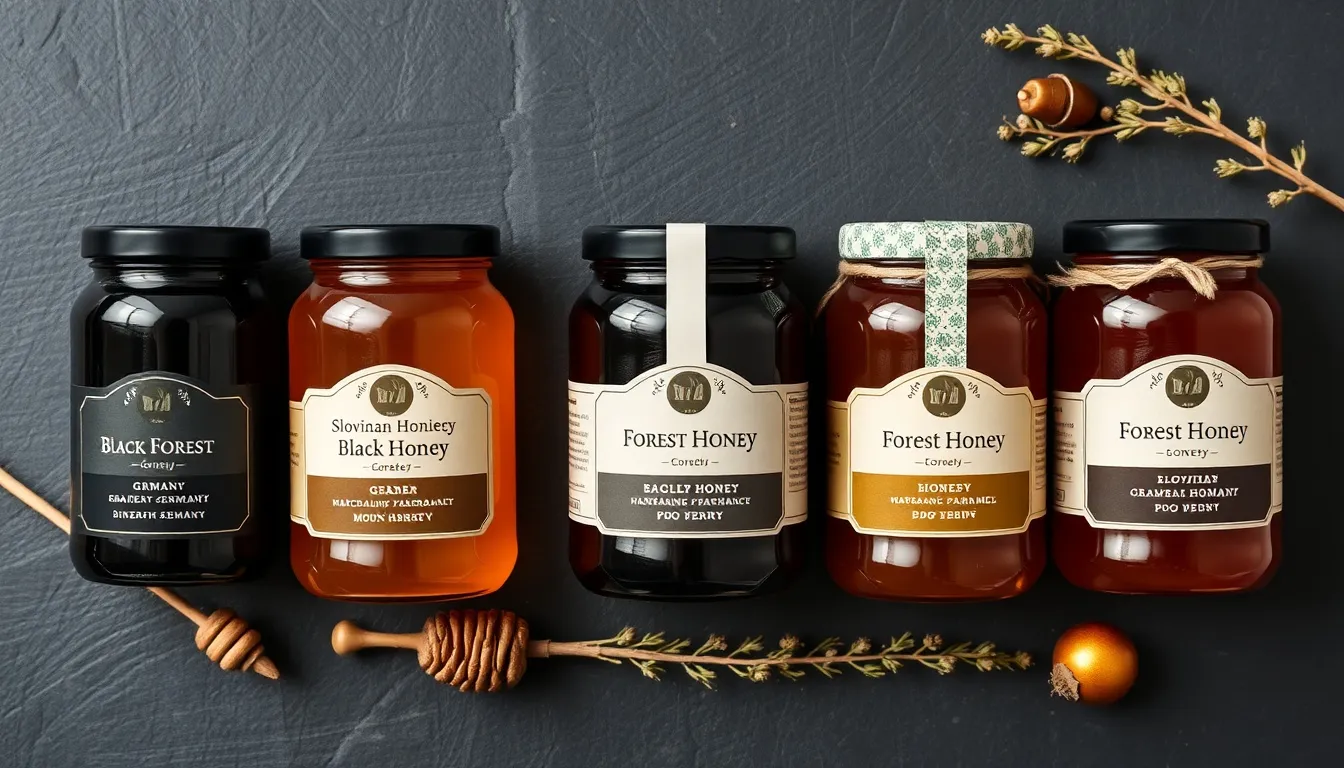
- **Color:** Honeydew honeys are typically dark amber to nearly black, significantly darker than most blossom honeys except buckwheat and chestnut
- **Sweetness:** Less sweet than blossom honeys due to different sugar ratios (higher melezitose, lower glucose). More complex, with savory and malty notes
- **Minerals:** 2-3x higher mineral content on average, particularly potassium, iron, and manganese
- **Antioxidants:** Generally higher total phenolic content and DPPH scavenging activity than light blossom honeys. Comparable to or exceeding buckwheat honey in many studies
- **Prebiotics:** Higher oligosaccharide content, potentially making honeydew honey a more effective prebiotic than most blossom honeys
- **Crystallization:** Variable — some honeydew honeys (high-melezitose types) crystallize rapidly into a firm, grainy texture that can be difficult to work with. Others (lower melezitose) remain liquid for months
- **Glycemic index:** Generally lower than light blossom honeys due to different sugar composition and higher mineral content. Estimated GI 40-55 for most honeydew honeys vs 55-69 for clover
- **Price:** In most European markets, honeydew honeys are premium-priced (20-50% above equivalent blossom honeys). In the US, they are niche products typically $15-30 per pound from specialty importers
Flavor Profile and Culinary Uses
Honeydew honey has a distinctive flavor profile that sets it apart from the floral sweetness most people associate with honey:
**Tasting notes:** Malty, woody, resinous, with notes of caramel, molasses, dark fruit, and sometimes a slightly medicinal or herbal quality. Lower sweetness than blossom honeys, with more complexity and depth. Some varieties (fir, beech) have an almost savory quality. The flavor is more reminiscent of dark maple syrup or aged balsamic than of clover or acacia honey.
Honeydew honey excels in applications where its bold, complex flavor is an asset:
- **Cheese pairing:** Outstanding with aged cheeses — pecorino, aged gouda, blue cheese, and aged cheddar. The low sweetness and complex flavor complement rather than overwhelm savory cheeses
- **Dark bread and baking:** Excellent on rye bread, pumpernickel, and whole grain sourdough. Works well in dark baked goods like gingerbread, spice cakes, and honey baking
- **Marinades and glazes:** The malty depth adds complexity to meat glazes, game marinades, and roasted root vegetables. Pairs particularly well with duck, venison, and lamb
- **Coffee:** Better match than light honeys for dark roast and espresso due to complementary flavor intensity
- **Health drinks:** In warm water with lemon for a rich, complex version of honey water, or in golden milk where its depth pairs well with turmeric and spices
- **Charcuterie boards:** Use alongside dried figs, walnuts, prosciutto, and dark chocolate. The savory-sweet complexity makes it ideal for sophisticated pairings
Pro Tip
Honeydew honey is not ideal for delicate applications where mild floral sweetness is desired (light teas, fruit desserts, whipped honey). For those uses, acacia, clover, or orange blossom honeys are better choices.
Buying Guide: How to Find Authentic Honeydew Honey
Honeydew honey is less commonly available in the US than in Europe, but it is accessible through specialty retailers:
- **Look for specific labeling:** Authentic honeydew honey should state "honeydew honey," "forest honey," "Waldhonig," "miel de miellat," "miel de sapin," or "pine honey" on the label. Generic "dark honey" or "raw honey" labels rarely indicate honeydew origin
- **European origin is most reliable:** Greece, Germany, Austria, France, Turkey, and New Zealand produce the most honeydew honey. Greek pine honey and German Waldhonig are the most widely exported varieties
- **Check electrical conductivity (if available):** Some premium producers list electrical conductivity on the label. Values above 0.8 mS/cm indicate honeydew honey per EU standards. This is the most reliable laboratory test for honeydew origin
- **Expect premium pricing:** Genuine honeydew honey costs $15-30/lb imported to the US, and $8-15/250g in European markets. Prices below this range for imports may indicate blending with cheaper blossom honeys
- **Verify raw and unfiltered:** Like all honeys, choose raw and unfiltered honeydew honey to preserve the enzymes, oligosaccharides, and polyphenols that provide health benefits. Ultrafiltration removes pollen that can confirm geographic and botanical origin — see our how to tell if honey is real guide
- **Specialty retailers:** Look in European specialty food stores, Greek or Turkish import shops, specialty honey retailers, and high-end grocery stores. Online specialty honey retailers are often the easiest US source
Safety and Considerations
Honeydew honey has the same general safety profile as blossom honey:
- **Infants under 12 months:** Never give any honey, including honeydew, to babies due to infant botulism risk — see our baby honey safety guide
- Diabetes note — Honey is a fast-acting carbohydrate, and no honey variety is medically preferred. Use the honey carbohydrate and label guide to compare serving-size total carbohydrate and added sugars within an individualized care plan.
- **Bee and pollen allergies:** Honeydew honey contains bee enzymes and may contain traces of tree pollen. People with bee allergies should exercise caution — see our honey for allergies guide
- **Melezitose crystallization:** Some honeydew honeys (especially from certain tree sources) contain high melezitose levels that cause rapid, firm crystallization. This is natural and does not indicate spoilage — gently warm to decrystallize if desired. See our crystallization guide
- This comparison does not establish a recommended daily honey serving. Use the daily added-sugar guide to count honey with other added or free sugars.