Honey & Cheese Pairings: A Complete Guide
The honey-cheese pairing is one of gastronomy's oldest and most perfect combinations. Learn which honeys complement which cheeses, how to build a stunning honey cheese board, and the science behind why it works.
Last updated:
Match honey intensity to cheese intensity: acacia with Brie, buckwheat with aged cheddar, manuka with blue cheese, chestnut with Parmesan, lavender with goat cheese. Build a board with 3-5 cheeses and 3-5 honeys spanning mild to bold. Serve cheese at room temperature for the best flavor.
Honey Cheese Board Essentials
Proven honey-cheese combinations
Bring cheese to room temp
Ideal range per board
Why Do Honey and Cheese Pair So Perfectly?
The honey-cheese pairing works because of fundamental principles of flavor science. Cheese delivers three dominant taste sensations: saltiness from its brine or aging process, umami from the breakdown of proteins during maturation, and fat from its dairy base. Honey contributes sweetness, floral aromatics, and acidity. When combined, these elements create what food scientists call "dynamic contrast" — the sweet-salty interplay triggers more taste receptors simultaneously than either ingredient alone, making the combined experience feel richer and more complex than the sum of its parts. The fat in cheese coats the palate and acts as a carrier for honey's aromatic compounds, allowing you to taste subtle floral, herbal, and fruit notes in the honey that you might miss when eating it alone. Honey's acidity also serves a practical purpose: it cuts through the richness of fatty cheeses, preventing palate fatigue and resetting your taste buds between bites. This is the same principle that makes fruit preserves, chutneys, and wine work with cheese boards. The texture contrast matters too — honey's smooth, viscous consistency against cheese's varying textures (creamy, crumbly, firm, crystalline) creates a multi-dimensional eating experience. Historically, this pairing has existed for millennia. Ancient Roman cuisine regularly combined honey with fresh cheeses, and the tradition persisted through medieval European cooking into modern Italian, French, and Spanish gastronomy. There's a reason drizzling honey over cheese has never gone out of fashion — the science behind the pairing is genuinely perfect.
What Are the Best Honey and Cheese Pairings?
The most celebrated honey-cheese pairings follow a principle: match intensity to intensity. Manuka honey, with its bold, medicinal, almost savory depth, is extraordinary with blue cheese like Roquefort, Gorgonzola, or Stilton. The honey's intensity stands up to the cheese's pungent, salty character, and the sweetness tames the blue mold's sharpness into something remarkably balanced. Acacia honey, the mildest and most delicate variety, is the perfect partner for soft, creamy cheeses like Brie and Camembert. Its gentle, almost vanilla-like sweetness enhances the cheese's buttery richness without competing for attention. Chestnut honey brings a distinctive bitterness and tannic quality that pairs brilliantly with aged Italian cheeses — drizzle it over Pecorino Romano or a well-aged Parmigiano-Reggiano and the interplay of bitter-sweet-salty-umami is spectacular. Wildflower honey, with its medium complexity and seasonal variation, is a natural match for Gouda, especially aged versions where the caramel notes in both the honey and cheese amplify each other. Buckwheat honey's dark, molasses-like intensity pairs wonderfully with sharp aged cheddar — the bold flavors are equals, creating a combination that's savory, sweet, and deeply satisfying. Lavender honey's perfumed floral character is beautiful with fresh goat cheese (chevre), where the honey's aromatics contrast with the cheese's tangy brightness. Orange blossom honey brings citrusy sweetness that transforms plain ricotta — spoon it over fresh ricotta on toast with a crack of black pepper and the citrus-herbal brightness makes it taste like a deliberate Italian dessert.
How Do You Build a Honey Cheese Board?
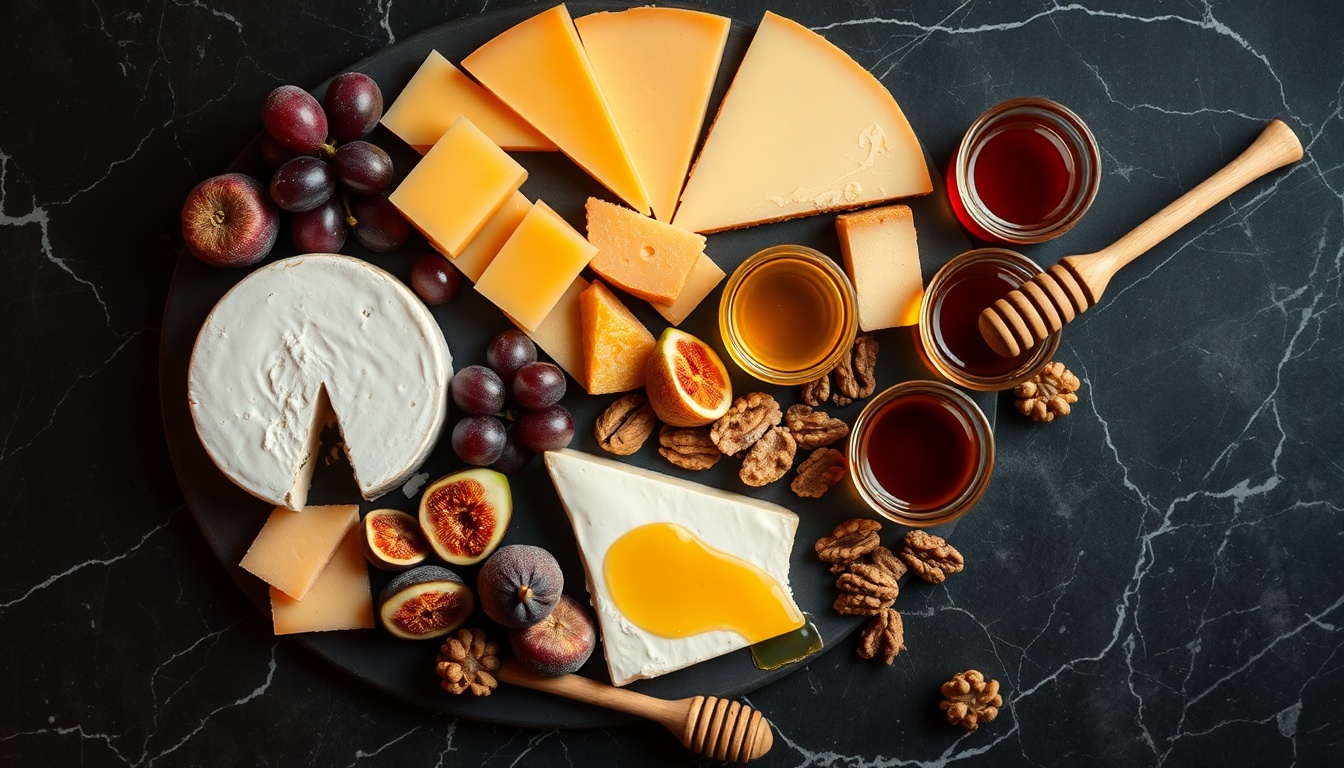
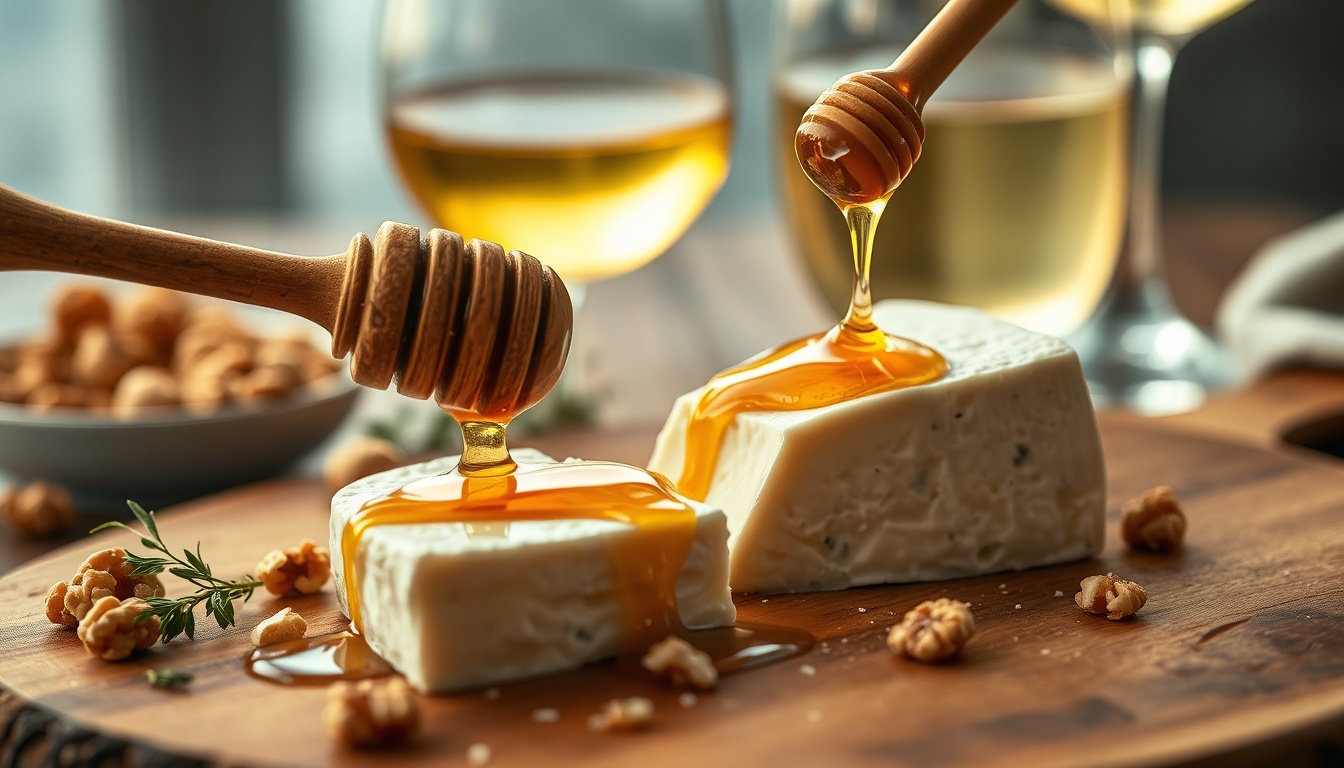
A well-composed honey cheese board follows the rule of threes and fives: aim for 3 to 5 cheese varieties spanning different textures and milk types, paired with 3 to 5 complementary honeys, plus supporting accompaniments. Start with your cheeses. Select one soft cheese (Brie, Camembert, or fresh goat cheese), one semi-firm (Gouda, Gruyere, or Manchego), one hard (aged Parmesan, Pecorino, or aged cheddar), and optionally one blue (Roquefort, Gorgonzola) and one washed rind (Epoisses, Taleggio). This gives guests a journey from mild to intense. For the honeys, provide variety in both flavor and appearance. A light acacia or clover honey, a medium wildflower, and a dark buckwheat or chestnut create a visually striking and flavorfully diverse trio. Present honeys in small bowls or ramekins with individual honey dippers or small spoons to prevent cross-contamination of flavors. Accompaniments should bridge the honey-cheese connection: fresh and dried fruits (figs, grapes, apricots, apple slices), nuts (walnuts, almonds, Marcona almonds, pistachios), crackers and crusty bread, and optionally cured meats like prosciutto or salami. Place small labels identifying each honey variety and its suggested cheese pairing — guests genuinely appreciate the guidance. Temperature matters enormously: remove cheeses from the refrigerator 30 to 45 minutes before serving, as cold cheese has muted flavors and firm, unappealing texture. Honey should be at room temperature for the best pour and most expressive aromatics. Arrange the board with visual appeal in mind — alternate colors and textures, cluster complementary pairings near each other, and leave enough space for guests to cut and serve without crowding.
Which Honeys Work with Soft vs Hard Cheeses?
Soft and hard cheeses demand fundamentally different honeys, and knowing why makes every cheese board decision easier. Soft cheeses — Brie, Camembert, fresh mozzarella, burrata, ricotta, mascarpone, and fresh chevre — have high moisture content, mild to moderate flavors, and creamy, yielding textures. They need gentle honeys that complement without overwhelming. Acacia honey is the universal soft cheese honey: its clean, almost transparent sweetness lets the cheese's subtle dairy flavors remain the star. Orange blossom honey works beautifully with ricotta and mascarpone, adding a whisper of citrus that brightens the cheese. Lavender honey transforms plain goat cheese into something elegant and complex. Sage honey, with its herbal undertones, is lovely with fresh mozzarella. The general rule for soft cheeses: choose honeys that you'd describe as "delicate," "floral," or "light." Hard and aged cheeses — Parmigiano-Reggiano, aged Gouda, Manchego, Pecorino, aged cheddar, Gruyere — have concentrated flavors developed through months or years of aging. The moisture loss during aging intensifies saltiness and umami, and crystalline tyrosine formations add crunch. These robust cheeses can handle equally robust honeys. Chestnut honey's bitter edge creates a stunning contrast with the sweet-salty crystals in aged Parmesan. Buckwheat honey's dark intensity matches aged cheddar's sharpness perfectly. Wildflower honey, especially late-season varieties with more complex flavor profiles, pairs well with aged Gouda and Manchego. Forest honey (honeydew honey), with its malty, less-sweet character, is a hidden gem with Gruyere and Comte. For hard cheeses, choose honeys you'd describe as "bold," "dark," "complex," or "earthy." The one exception to the intensity-matching rule is blue cheese, which despite being soft-textured has intensely bold flavor — it needs a honey with equal intensity, making Manuka and buckwheat the ideal choices.
What Wines Complete the Honey Cheese Experience?
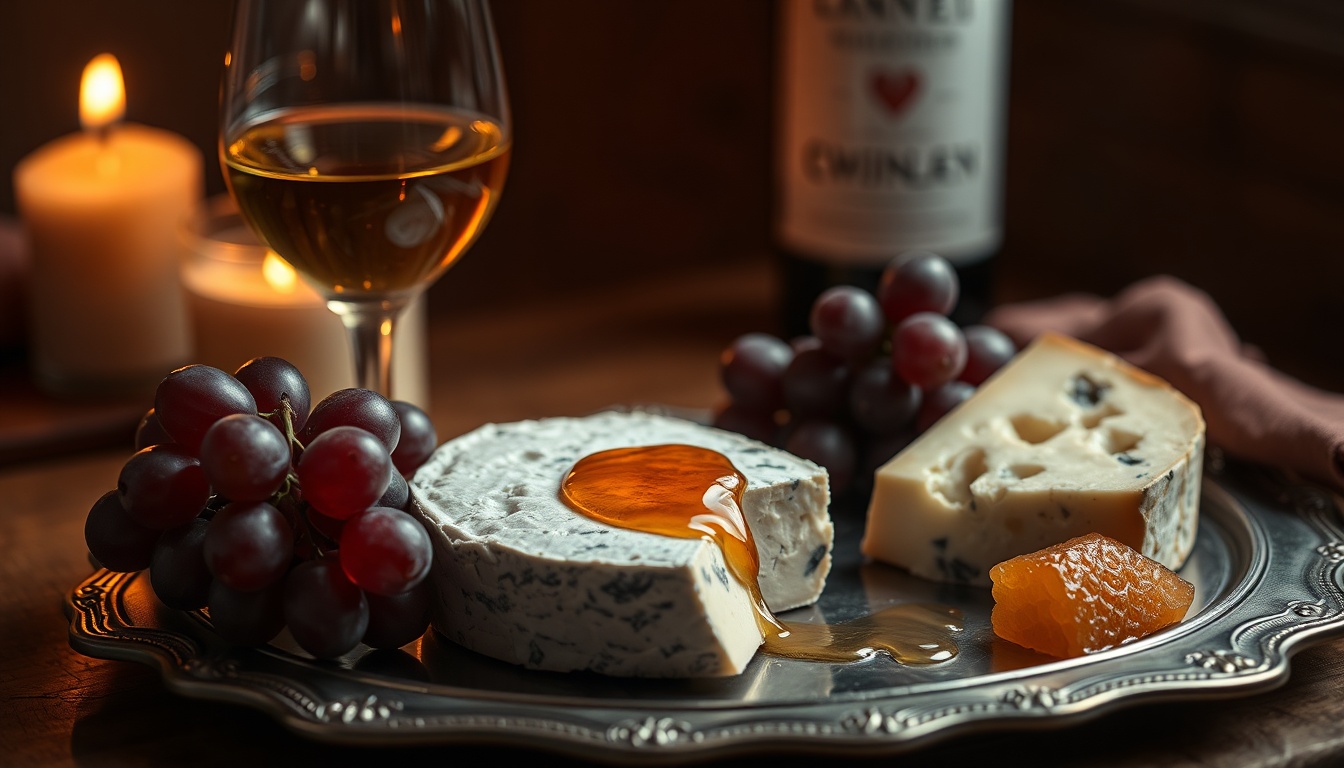
Adding wine to a honey-cheese pairing creates a triangle of flavors that can be transcendent when all three elements harmonize. The foundational principle is that the wine should complement both the cheese and the honey without clashing with either. Sweet and off-dry wines are natural partners for honey-cheese combinations because they echo and amplify honey's sweetness. A late-harvest Riesling or Gewurztraminer pairs magnificently with blue cheese drizzled with buckwheat honey — the wine's residual sugar, the honey's sweetness, and the cheese's salt create an extraordinary sweet-salty-savory trinity. Sauternes, the legendary French dessert wine, alongside Roquefort and chestnut honey is considered one of the world's great gastronomic combinations. Port (both tawny and vintage) works beautifully with aged cheddar and wildflower honey — the wine's dried fruit character bridges the honey's floral notes and the cheese's nutty sharpness. For lighter pairings, a crisp Sauvignon Blanc or dry Chenin Blanc cuts through Brie's richness while allowing acacia honey's delicate sweetness to shine. Prosecco's bright bubbles and gentle sweetness make it a versatile cheese board wine that works with almost any honey-cheese combination. If you prefer red wine, choose lighter, fruit-forward options like Pinot Noir or Beaujolais rather than heavy, tannic wines — tannins can clash with honey's sweetness and create a metallic or bitter sensation. Sparkling wines are arguably the most versatile choice for honey-cheese boards because their acidity and effervescence cleanse the palate between bites, preventing the richness of cheese and honey from becoming overwhelming. A general rule: the sweeter the honey and stronger the cheese, the sweeter or more aromatic the wine should be.
Frequently Asked Questions
What is the best honey for blue cheese?
How many honey varieties should a cheese board have?
Should cheese be cold or room temperature with honey?
What wine goes with honey and cheese?
Edited by Sam French · Raw Honey Guide Editorial Team
Source reviewed against primary literature and official guidance where available. Health content is educational, not medical advice, and does not replace a licensed clinician.
Related Guides
Cooking with Honey
Tips for baking, glazes, and pairings.
Read GuideHoney Marinades & Glazes
Glazes, marinades, and dressings.
Read GuideHot Honey Guide
Make spicy honey at home — recipes, peppers, and pairings.
Read GuideRelated Articles
Honey and Yogurt: Benefits for Gut Health, Skin, and More
Honey and yogurt: synbiotic gut health benefits, probiotic survival, immune support. Plus 5 recipes and a face mask DIY.
Read ArticleEating Honeycomb: Benefits, Taste, Safety, and How to Enjoy It
Yes, you can eat honeycomb — and it's packed with enzymes, propolis, and beeswax. Taste, benefits, 10 ways to enjoy it.
Read ArticleHoney and Walnuts: 7 Benefits Backed by Science
Honey and walnuts: benefits for heart health, brain function, male fertility, and gut health. Recipes and healthy pairing ideas.
Read ArticleHoney Roasted Almonds: Easy Oven Recipe (6 Flavor Variations)
Crunchy honey roasted almonds with just 4 ingredients. Oven-baked in 20 minutes.
Read ArticleExplore honey varieties for your cheese board
Browse Honey Varieties