The South Caucasus Gradient: Azerbaijan's Honey Geography
Azerbaijan is geographically one of the most vertically compressed countries on Earth. The Caspian Sea coastline that defines its eastern border reaches −28 metres below sea level — the lowest point in Eurasia outside the Dead Sea basin. The Greater Caucasus range along its northern frontier peaks at Bazardüzü (4,466 m), one of the highest summits in the former Soviet Union. Within a linear distance of roughly 300 kilometres from coast to mountain crest, Azerbaijan traverses semi-arid lowland steppe, temperate broadleaf forest, subalpine meadow, and permanent snowfield — a vertical range of nearly 4,500 metres in a country of only 86,600 square kilometres. This compression creates an extraordinary botanical diversity for beekeeping: the same seasonal calendar that brings wildflower bloom to the alpine meadow in July sees cotton fields in the Kura-Araks lowland at full crop, producing simultaneous honey flows at opposite ends of the altitude spectrum.
The country's geography divides into four distinct honey production zones. The Greater Caucasus range and its southern foothills — covering the Sheki-Zagatala, Quba-Khachmaz, and Ganja-Dashkasan regions — form the premium mountain honey belt, where sainfoin, alpine wildflower, linden, and acacia grow in succession from valley floor to tree line. The Talysh Mountains and Lankaran lowland in the far southwest create a subtropical microclimate unique in the Caucasus, sheltered by the mountains from continental cold and fed by the Caspian's moisture: a relict humid broadleaf forest producing chestnut, linden, and diverse forest wildflower honey. The Kura-Araks lowland — the central agricultural plain running through the heart of the country — produces cotton, sunflower, and alfalfa honey at scale. And the Nakhchivan Autonomous Republic, an exclave entirely separated from the rest of Azerbaijan by Armenian territory, maintains its own highland beekeeping tradition in the Zangezur and Sharur mountain ranges.
Azerbaijan's climate ranges from subtropical humid in the Lankaran lowland to temperate continental in the mountain valleys, arid semi-desert in the Kura plain, and alpine tundra above 3,000 metres. The Caspian Sea's moderating influence is felt across the eastern lowland. The diversity of climate zones, combined with a floristic richness estimated at over 4,000 vascular plant species — significant for a country of this size — makes Azerbaijan's botanical honey substrate more varied than almost any neighbouring country. Georgia to the northwest, Armenia to the west, Iran to the south, and Russia's Dagestan republic to the north each produce honey from similar ecological templates but without Azerbaijan's full vertical range from below sea level to high alpine.
Apis mellifera caucasica: The Caucasian Grey Bee and Its Global Journey
Apis mellifera caucasica — the Caucasian grey bee, also called the grey mountain Caucasian bee — is the native subspecies of the Greater Caucasus range, with its original homeland spanning the high-altitude meadows and forested valleys of Georgia and Azerbaijan. The subspecies is genetically and behaviourally distinct from the Western European black bee (Apis mellifera mellifera), the Italian bee (Apis mellifera ligustica), and the Carniolan bee (Apis mellifera carnica): its workers are uniformly silvery-grey, with darker body coloration than the Italian and a longer tongue than any other Apis mellifera subspecies — averaging 6.4 to 7.0 mm, compared to 6.0–6.4 mm for Carniolan and 5.7–6.4 mm for Italian. This tongue length advantage allows the Caucasian bee to work red clover (Trifolium pratense) and other narrow-tubed flowers that shorter-tongued bees cannot efficiently forage, a trait that made it commercially extraordinary during the 20th-century mechanisation of agriculture.
The Caucasian grey bee's most distinctive behavioural trait is its exceptional gentleness. Unlike many mountain bee subspecies that evolved defensive aggressiveness in response to predators, the Caucasian bee maintains a calm, deliberate temperament that makes it manageable with minimal protective equipment. It is also characterised by intense foraging behaviour during warm periods, early morning flight activity in cool conditions, and a tendency toward propolis use that substantially exceeds most other subspecies — Caucasian bee colonies produce propolis in quantities two to four times greater than Italian colonies, giving the honey a slightly higher propolis-compound content. Soviet apiculture documentation from the 1940s–70s describes the Caucasian bee as the finest mountain honey producer in the USSR, and its queens were exported to beekeeping programmes across Eastern Europe, the Middle East, and eventually North America, Australia, and East Asia as Soviet scientific exchange facilitated the genetic transfer.
The global journey of Apis mellifera caucasica from the Greater Caucasus to apiaries on six continents represents one of the most remarkable livestock dispersal events in 20th-century agriculture. Soviet-era breeding programmes in Tbilisi (Georgia) and Baku (Azerbaijan) selected for honey production, comb-building efficiency, and mite resistance, creating a commercial strain refined over decades before international distribution. After the USSR's dissolution, the controlled breeding infrastructure collapsed, and many Caucasian bee populations outside the original range interbred with local subspecies, losing some of the defining characteristics. Within Azerbaijan, the original wild Caucasian bee population persists in the Greater Caucasus mountain valleys — particularly in the forests of the Sheki and Quba districts — in forms that represent the genetic source from which the global commercial strain derived. This is the Caucasian equivalent of the Slovenian position with the Carniolan bee: the homeland of a bee that shaped global beekeeping, yet the honey produced in that homeland commands almost no international recognition.
Pro Tip
The tongue-length advantage of Apis mellifera caucasica is measurable in honey yield: in crops like red clover, Caucasian-bee colonies in controlled trials produced 20–40% more honey than Italian-bee colonies working the same fields, because the Caucasian bee can extract nectar from the flower tube's full depth while shorter-tongued bees can only surface-forage. In Azerbaijan's sainfoin meadows — where Onobrychis viciifolia has a similarly narrow-tubed flower — this forage efficiency is the historical basis of the region's sainfoin honey reputation.
Get the Honey Buyer's Cheat Sheet (free PDF)
16 varieties on one page — color, flavor, best use and what a fair price looks like — from the 304 honeys we track.
Greater Caucasus Mountain Honey: Alpine Meadows and the Summer Flow
The mountain belt of northern Azerbaijan — the Sheki-Zagatala region, the Quba-Khachmaz district below the Shahdag massif, and the Ganja-Dashkasan highlands — produces what is universally regarded as Azerbaijan's highest-quality honey. Mountain wildflower honey from the Greater Caucasus foothills at 1,000–2,200 metres is typically a dense, dark amber product of complex botanical origin. The altitude range above 1,500 metres is dominated by subalpine meadow flora: Caucasian rhododendron (Rhododendron caucasicum), various Trifolium clover species, Phacelia, Geranium phaeum, Centaurea, Campanula, and dozens of endemic or near-endemic herbs and forbs. The combination of short growing season, high UV intensity, and minimal agrochemical exposure produces nectar with elevated flavonoid content — a pattern documented across alpine honey-producing regions from the Alps to the Himalayas, driven by the plants' own increased antioxidant production under high-radiation low-temperature conditions.
The summer honey flow in the Greater Caucasus typically runs from late June through August, coinciding with the peak alpine meadow bloom. Beekeepers in the Sheki and Quba districts practice altitudinal transhumance — moving colonies up the mountain slopes in June to capture the subalpine flow, then returning to valley apiary sites for the autumn acacia or linden harvest. This vertical migration follows the same logic as the Kyrgyz jailoo system or the Swiss alpine Wanderimkerei, using mountain geography as a temporal amplifier of the honey season. Traditional Azerbaijani beekeeping in these mountain regions used log hives (kovuq) of hollowed linden or walnut trunk sections, a technology with centuries of documented use in Caucasian beekeeping literature, now largely replaced by Langstroth and Dadant frames but still maintained by some traditional practitioners in the Sheki district.
The Sheki region deserves specific mention as Azerbaijan's historic beekeeping centre. Sheki — a UNESCO World Heritage city for its 18th-century Khan's Palace with shebeke glass lattice windows — sits at the base of the Greater Caucasus foothills at approximately 700 metres and has been documented as a honey production hub since at least the medieval period. Arabic geographer al-Masudi (10th century) and later Ottoman traveller Evliya Çelebi (17th century) both mention the Caucasian lowland towns as honey trading centres. The Sheki "şahdil balı" — sainfoin honey, a local designation meaning "heart of the king honey" — historically commanded a price premium in regional markets reflecting both the flower's altitude and the native Caucasian bee's efficient forage of its narrow-tubed flowers. This commercial tradition has weakened significantly since the Soviet period but is maintained by small-scale artisanal producers.
Sainfoin Honey: Azerbaijan's Premier Monofloral
Sainfoin — Onobrychis viciifolia, known in Azerbaijani as gülümbahar or esparcet (the latter from Russian, itself derived from French esparcette) — is a leguminous perennial of the pea family that grows wild across the limestone and clay-rich foothills of the Greater Caucasus at 400–1,800 metres, and is also cultivated as a forage crop and soil-improver on difficult terrain. In the Sheki-Zagatala and Ganja-Goygol districts of Azerbaijan, sainfoin meadows cover significant areas on the foothill slopes, and the plant's bloom in late May and June creates one of the most reliable nectar flows in the Caucasian honey calendar. Onobrychis flowers are rich in nectar — producing approximately 0.5–0.8 mg nectar per flower per day, comparable to white clover — but the tubular shape of the corolla restricts access: only bees with tongue length of approximately 6.5 mm or greater can reach the nectar base efficiently. The native Caucasian grey bee's tongue advantage, documented since 19th-century Russian apiculture literature, is directly expressed in the sainfoin honey yield advantage.
Azerbaijani sainfoin honey is pale to medium amber, with a clean bright sweetness and a light floral character described as mildly herbal with a faintly grassy undertone. It is significantly less sweet on the palate than acacia and crystallises within two to three months to a medium-fine grain with a cream-to-pale-gold colour. The crystallised product has a smooth, spreadable texture prized in domestic use. Sainfoin honey's flavonoid content is moderate — the flower is a legume, and legume-family honeys typically have a simpler polyphenol profile than heather or buckwheat — but its pollen count per gram is relatively low (sainfoin pollen is underrepresented in honey for entomological reasons that remain partly debated in palynology), which means pollen-analysis authenticity verification is challenging for commercially produced sainfoin honey.
Outside Azerbaijan, sainfoin honey is produced in southern Russia (particularly Bashkortostan and the Volga region), parts of Central Asia, and some Alpine regions of France and Switzerland. The Azerbaijani sainfoin honey is not internationally branded or certified, and virtually no product labelled as Azerbaijani sainfoin honey reaches European or North American specialty markets. The honey exists in regional Azerbaijani bazaars — the tezye bazar markets of Sheki, Ganja, and Quba are the primary domestic retail points — and is exported informally to Russia and neighbouring CIS countries. The price difference between authentic foothills-sourced sainfoin honey at Sheki bazaar prices (2–3× commercial cotton honey) and its invisibility in international specialty markets illustrates the same institutional gap that constrains premium honey from many post-Soviet countries: the honey's intrinsic quality and the market infrastructure for it are entirely decoupled.
Talysh Mountains and Lankaran: The Subtropical Relict Forest Honey
The Talysh Mountains and the Lankaran lowland in Azerbaijan's far southwest form the country's most ecologically anomalous region. Protected from continental air masses by the Talysh range and fed by moisture from the Caspian Sea, the Lankaran-Astara climate zone receives 1,200–1,700 mm of annual precipitation — three to five times the aridity of the central Kura plain — creating subtropical humid conditions that support a forest unlike any other in the Caucasus. The Hyrcanian forest, named for the Hyrcanian Sea (classical Greek name for the Caspian), is a relict of the Tertiary-period forest that covered Eurasia before the Pleistocene glaciations. While most of this ancient forest was extinguished by ice-age conditions, the Talysh-Alborz mountain ranges along the Caspian's southern shore acted as a climatic refugium, allowing the Hyrcanian forest to persist through the glacial periods and survive to the present.
The Hyrcanian forest contains tree species found nowhere else in the Caucasus or Iran: ironwood (Parrotia persica, a relict genus with no close living relatives), Caspian locust (Gleditsia caspica), Caucasian wingnut (Pterocarya fraxinifolia), and Caspian pontic rhododendron understory. The canopy is dominated by Oriental beech (Fagus orientalis), common hornbeam (Carpinus betulus), Caucasian oak (Quercus castaneifolia), and in the lower elevations, Caspian Hyrcanian linden (Tilia begonifolia) — the last being a significant honey plant whose bloom in June–July creates a linden flow in the Lankaran foothills. Chestnut (Castanea sativa) grows in the mid-altitude Talysh slopes and produces a dark, bitter, mineral-rich honey characteristic of chestnut-forest zones across Europe. The Lankaran lowland itself — one of the only subtropical lowlands in the former Soviet Union — supports tea cultivation, feijoa, pomegranate, and citrus orchards alongside the forest, creating an agricultural-forest mosaic that diversifies the honey flora further.
Hyrcanian forest honey from the Lankaran-Talysh zone is dark amber to brown, with a complex bitter-sweet character reflecting the chestnut and forest-wildflower botanical mix. Linden honey from Talysh linden is lighter — pale amber to straw, with the characteristic minty-linden aroma and mild sweetness associated with Tilia-family honeys worldwide. Pomegranate blossom honey, produced from cultivated Punica granatum orchards, is a specialty of the Lankaran lowland: pale pink to golden, with a mild floral character and a slightly tannic quality from the pomegranate's polyphenol-rich flower structure. The Hyrcanian forest's UNESCO World Heritage status — inscribed in 2019, covering the Azerbaijani and Iranian portions — has not yet translated into any branded protection or certification scheme for honey from the zone, though the ecological narrative could support a premium equivalent to what Manuka's UMF certification provides in New Zealand.
Pro Tip
The Hyrcanian forest of the Lankaran-Talysh region is the only place in Azerbaijan where ironwood (Parrotia persica) grows. Local beekeepers distinguish "orman balı" (forest honey) from "dağ balı" (mountain honey) — the forest honey, with its chestnut-linden-wildflower complexity, is considered medicinal in the Talysh traditional herbal system. At Lankaran bazaar, it commands a price approximately double that of plain wildflower honey.
Acacia and Linden Honey: The Valley Belt
Between the mountain foothills and the Kura-Araks plain, the valleys and lower slopes of northern and western Azerbaijan support significant populations of black locust (Robinia pseudoacacia) — the false acacia — and multiple Tilia species (linden/lime), both of which produce some of the most highly regarded monofloral honeys in European and Caucasian beekeeping. Robinia pseudoacacia was introduced to the Caucasus from North America during the 19th century as a fast-growing timber, erosion-control, and agricultural boundary species, and has naturalised extensively across the valley floors and lower hillsides of Sheki, Quba, and Ganja districts. Its bloom in late April and May creates a reliable, high-volume nectar flow.
Azerbaijani acacia honey (akasiya balı) is pale straw to water-white, with an exceptionally low sucrose content that keeps it liquid for extended periods — among the slowest-crystallising of all honeys, with liquid shelf life of 18–24 months under cool storage conditions. The flavour is clean, mild, and delicately floral, without the strong botanical character of the mountain wildflower honeys. In the domestic Azerbaijani market, acacia honey is the premium everyday honey — bought as a gift, used in tea, given as a wedding offering — because its clarity and mildness are culturally associated with purity and refinement. In international honey markets, Robinia honey from Romania and Hungary is the benchmark — Azerbaijani acacia honey is chemically and sensory-profile equivalent but entirely absent from the specialty export market.
Linden honey (cökə balı) from Caucasian linden species — Tilia cordata (small-leaved linden), Tilia platyphyllos (large-leaved), and the endemic Tilia begonifolia of the Talysh zone — is pale amber with a characteristic cool menthol-mint aroma and a slightly caramel sweetness. It is the most prized honey for cold and respiratory use in traditional Azerbaijani medicine (tibb-i-xalq), used hot with black tea and combined with quince or fig. Linden bloom in the Sheki-Zagatala district occurs in late June and July, just after the sainfoin flow completes and before the late-summer mountain wildflower peak — creating a sequential monofloral calendar that experienced beekeepers in the region exploit through careful hive placement at different altitudes along the same valley.
The Kura-Araks Lowlands: Cotton, Sunflower, and Agricultural Honey
The Kura-Araks River basin — the broad agricultural plain that forms the geographic and demographic core of Azerbaijan, running through the centre of the country from the Georgian border to the Caspian — is the country's primary zone of large-scale agricultural honey production. The dominant crops that drive commercial honey flows in the lowland are cotton (Gossypium hirsutum and Gossypium barbadense), sunflower (Helianthus annuus), alfalfa/lucerne (Medicago sativa), and in irrigated areas along the Araks River near the Nakhchivan border, some pomegranate and fig. Cotton honey has historically been the largest-volume single-source honey in lowland Azerbaijan, produced from the mid-summer cotton bloom that covers hundreds of thousands of hectares across the Aran (lowland) agricultural zone.
Cotton honey (pambiq balı) is light amber to pale golden, with a mild, slightly herbal sweetness that lacks the distinctive character of mountain varieties. It crystallises within weeks to a smooth, fine-grained cream — cotton honey is among the fastest-crystallising of all honeys, reflecting its high glucose content relative to fructose. In the domestic market, cotton honey is the everyday lower-cost variety used for mass consumption — sweetening tea, cooking, and large-quantity gifting — while mountain wildflower, sainfoin, and linden are reserved for premium use. Sunflower honey from the lowland follows the same quality positioning: light amber, fast-crystallising, mild, commercially valuable for volume but without the botanical distinction of higher-altitude varieties.
The Kura-Araks plain's honey production is significantly constrained by agrochemical exposure. The agricultural intensification of the Soviet period and subsequent decades has resulted in pesticide and herbicide use levels that affect bee mortality and honey contamination risk in intensive-cultivation zones. Water stress from the Kura River's reduced flow — which has declined significantly since Soviet-era irrigation development — has also altered the regional botanical composition, reducing some wild-flowering riparian vegetation that historically supplemented the cotton flow. Some lowland beekeeping operations have shifted toward the foothills to avoid the most heavily treated agricultural areas, a transition that incidentally improves honey quality but reduces production volume on the most accessible, transportable terrain.
Nakhchivan: The Isolated Exclave and Its Mountain Honey Tradition
Nakhchivan Autonomous Republic is one of the geopolitically unusual territories of the post-Soviet world: an Azerbaijani autonomous republic with its own parliament and government, completely separated from the rest of Azerbaijan by Armenian territory and sharing borders with Iran and Turkey. The Nakhchivan-Armenia border has been closed since the early 1990s conflict, and the exclave is accessible from mainland Azerbaijan only by air or through Iran and Turkey. Despite its isolation from the main Azerbaijani economy and market, Nakhchivan maintains a beekeeping tradition that draws on the ecology of the Zangezur and Sharur mountain ranges along its eastern and northern borders, where the terrain rises to over 3,900 metres and the alpine meadow flora is comparable in diversity to the Greater Caucasus belt.
Nakhchivan honey is primarily mountain wildflower, with notable thyme (kəklikotu, Thymus species) honey from the dry limestone slopes that characterise much of the exclave's terrain. The Nakhchivan lowland along the Araks River valley — which forms the border with Iran — is significantly drier and more continental than the Lankaran zone, and produces some cotton and alfalfa honey. The mountain belt above 1,500 metres, however, generates a darker, more aromatic wildflower honey with a high proportion of thyme, Centaurea, and Caucasian herb flora. Thyme honey from Nakhchivan is not commercially differentiated from mainland Azerbaijani production in export markets, but local producers in Ordubad district — where the terrain includes some of the most rugged and botanically rich highlands in the exclave — maintain a reputation within Azerbaijan for high-quality mountain honey.
The political geography of Nakhchivan has shaped its honey market in ways invisible to outside observers. With the Armenian border closed and direct overland connection to Azerbaijan impossible, Nakhchivan honey reaches the Baku market primarily by air — a transport cost structure that makes bulk commodity honey economically unviable and implicitly favours the higher-value mountain and thyme varieties that justify the freight cost. The exclave's connectivity to Turkey via the Alat-Nakhchivan highway through Iran (and as of 2023 planning, potentially via the Zangezur Corridor through Armenian territory) affects its commercial future, but current market isolation has the unintended effect of preserving small-scale traditional beekeeping on mountain terrain that would otherwise be subject to commercial intensification pressure.
Soviet Beekeeping and Post-Soviet Collapse
Azerbaijan's beekeeping sector was substantially shaped by its seven decades as a Soviet republic. The Azerbaijani Soviet Socialist Republic maintained a formally organised apiculture sector from the 1930s onward, with state-run collective beekeeping enterprises (kolkhoz apiaries), breeding stations in the Sheki and Quba districts focused on Apis mellifera caucasica queen production, and production targets for honey tonnage that made Azerbaijan one of the Transcaucasian republics' significant honey producers. Soviet documentation from the 1960s–80s records annual honey production from the Azerbaijani SSR at approximately 3,500–5,000 metric tonnes, with the Sheki-Zagatala region consistently the highest-yield district. Caucasian queen bees were exported from Azerbaijani and Georgian breeding stations to Soviet republics from Byelorussia to Kazakhstan and internationally to fraternal socialist states.
The Soviet system's collapse in 1991 was catastrophic for Azerbaijani beekeeping. Collective apiaries that had been the production backbone were privatised or dissolved, breeding stations lost funding and infrastructure, and the organised market for queen bees and bulk honey disintegrated. The Nagorno-Karabakh conflict that erupted in 1991–94, displacing over a million Azerbaijanis from occupied territories, further disrupted rural communities — including beekeeping households — in the conflict-affected western and southwestern regions. By the mid-1990s, Azerbaijan's honey production had declined to an estimated 1,000–1,500 metric tonnes annually from the Soviet-era peak, a collapse comparable to the post-Soviet beekeeping declines in Armenia, Georgia, and Ukraine. Many large-scale apiary operations had contracted to family-scale keeping or dissolved entirely.
Recovery since the 2000s has been gradual and uneven. The government of Azerbaijan, through the Ministry of Agriculture, has implemented small-scale beekeeping development programmes — subsidised equipment provision, technical training, and attempts to revive queen-breeding operations in traditional districts. Some Sheki and Quba district beekeepers have reconstructed viable operations, exporting honey to Russia and Turkey. However, the institutional infrastructure of the Soviet period — breeding stations, quality-control laboratories, organised cooperative marketing, export logistic chains — has not been recreated. What remains is primarily family-scale keeping for domestic sale, with some informal export. The annual production figure is estimated at 2,000–3,500 metric tonnes for recent years — still well below the Soviet peak — and the honey sector receives less state investment than viticulture, pomiculture, and the oil-dependent industrial economy that dominates Azerbaijani economic policy.
Traditional Honey Culture: Language, Medicine, and Novruz
The Azerbaijani word for honey is bal — the same root used across Turkic languages from Turkey (bal) to Kazakhstan (бал, bal) and Uzbekistan (asal/bal), reflecting the deep shared vocabulary of steppe and mountain pastoralism across the Turkic-speaking world. The compound word balhana means bee house or apiary; balqabaq (literally "honey gourd") is pumpkin; and the expression "baldan şirin" — sweeter than honey — is a common comparative for anything exceptionally pleasant. In Azerbaijani oral poetry (aşıq poetry, the minstrel tradition of the Caucasian highlands), honey appears frequently as a metaphor for beauty, for the beloved's words, and for the sweetness of the homeland — a usage pattern that mirrors the parallel role of honey in Georgian and Armenian traditional poetry, suggesting a shared Caucasian aesthetic framework that transcends the distinct linguistic families.
Traditional Azerbaijani medicine (tibb-i-xalq, folk medicine) uses honey extensively, drawing on both the broader Islamic medical tradition (which cites the Quranic verse on honey's healing properties from Surah An-Nahl 16:68–69) and the indigenous Caucasian herbal system. Linden honey with black tea is the standard cold and respiratory remedy. Mountain wildflower honey combined with walnut and dried fig is used as a general tonic and "strengthener" for winter preparation — a combination marketed as a ready-made paste (murabbə or "honey-nut mix") in Azerbaijani bazaars. Propolis from Caucasian bee colonies — whose high propolis production is a defining subspecies characteristic — is used as an antimicrobial in wound treatment in traditional village medicine, a use supported by broad evidence from propolis biochemistry literature across bee subspecies.
Novruz — the Persian and Azerbaijani new year celebration at the spring equinox (March 20–21) — is the most important cultural festival in Azerbaijan, with UNESCO Intangible Cultural Heritage status. The traditional Novruz table (xonça or sufra) includes symbolic foods: wheat grass (səməni), coloured eggs, pakhlava (baklava), shekerbura pastries, and múm (candied nuts in honey syrup). Honey's presence at the Novruz table is both sweet and symbolic: it is associated with the sweetness of the incoming year, the abundance of spring, and the renewal of the bee colony after winter. Beekeeping families traditionally inspect and document the health of their colonies at Novruz — checking winter survival, brood pattern, and queen presence — framing the seasonal inspection as part of the new year's renewal ritual. Gifting honey at Novruz, particularly premium mountain or linden honey in decorative jars, is a custom documented across both urban and rural Azerbaijan.
Standards, Export Development, and the Premium Gap
Azerbaijan's honey quality standards are defined under AZGOST (the Azerbaijani State Standards Organisation, successor to the Soviet GOST framework). The current standard, AZGOST R 54644-2011 (harmonised with the Russian national standard of the same year), sets parameters broadly aligned with Codex Alimentarius Stan 12-1981: moisture ≤20%, HMF ≤80 mg/kg (significantly more permissive than the EU's 40 mg/kg limit for most honeys), diastase ≥8 DN, sucrose ≤5% for most varieties, reducing sugars ≥60%. The higher HMF limit reflects the Soviet GOST tradition and is consistent with the Russian export market, which remains Azerbaijan's primary honey destination. Honey destined for the EU market must meet the stricter EU 2001/110/EC parameters, requiring re-testing and often quality improvement at the processing stage.
Azerbaijani honey exports — estimated at 100–300 metric tonnes annually in recent years — flow primarily to Russia, Ukraine, and Turkey, with some reaching the Azerbaijani diaspora communities in Germany, France, and the United States. The export volume represents a small fraction of production, with most honey consumed domestically. The Russian market, which has historically absorbed bulk Azerbaijani honey without demanding high traceability or variety-specific certification, is the primary commercial partner. Turkish market access, which has grown with improved bilateral relations, provides a complementary channel for premium mountain honey reaching specialty food retailers in Istanbul's expanding artisanal food sector.
The institutional gap between Azerbaijan's honey quality potential and its international market presence is analogous to Georgia's — a country with whom Azerbaijan shares ecological and cultural frameworks. Georgia has made more progress in honey branding through EU approximation agreements, organic certification schemes, and Geographic Indication development for regional honey varieties. Azerbaijan's honey sector has not yet developed comparable institutional infrastructure. No Azerbaijani honey variety has protected designation of origin (PDO) or protected geographical indication (PGI) status under Azerbaijani law or international frameworks, though the Sheki sainfoin honey, Lankaran chestnut-forest honey, and Greater Caucasus mountain wildflower each have the botanical specificity and geographic boundedness that a strong PDO application would require. The sector's development is constrained by the dominance of oil revenues in the Azerbaijani economy, which reduces the policy urgency of agricultural premium-market development.
Pro Tip
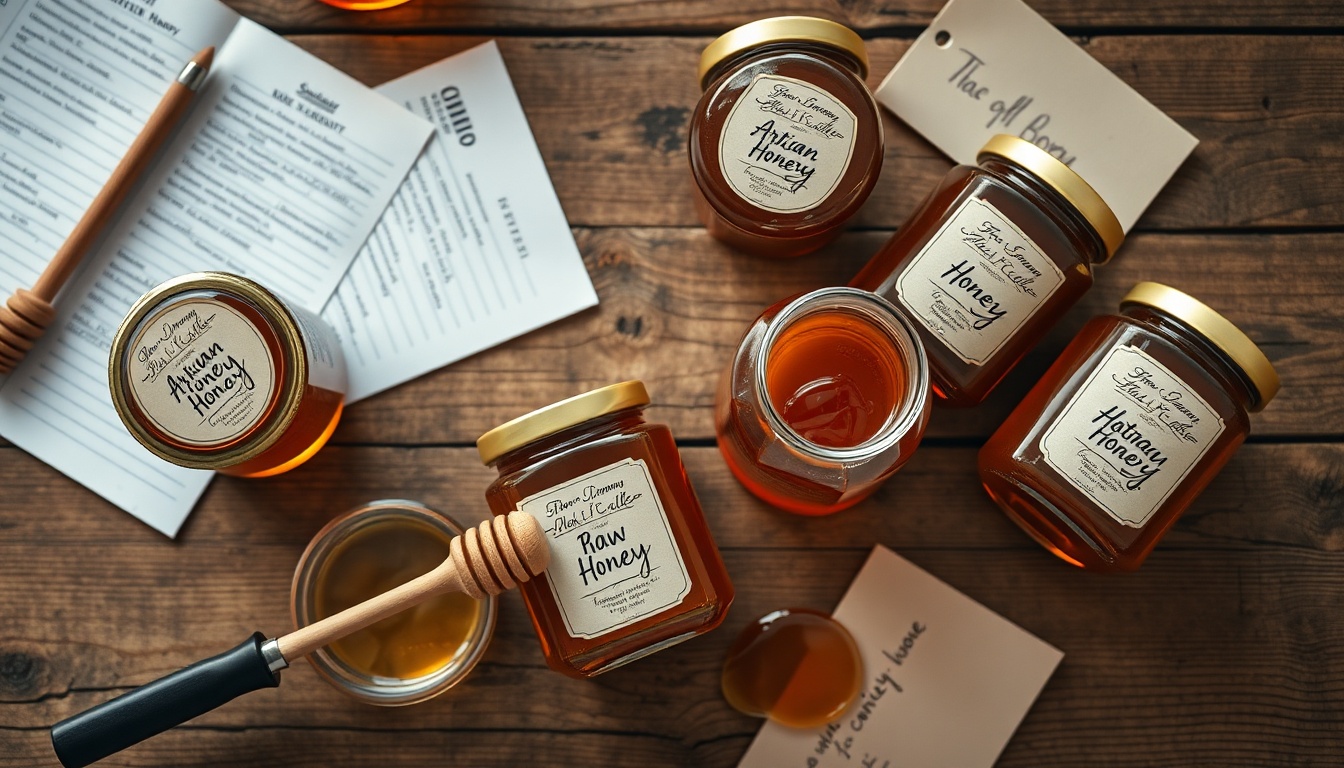
For buyers seeking Azerbaijani honey outside the CIS market, Sheki district mountain honey (dağ balı) and Lankaran chestnut-forest honey (fıstıq balı) are the varieties most likely to appear through diaspora food retailers in Germany, France, and the United States. Verify provenance through the seller's supply chain documentation: authentic small-producer Sheki mountain honey is typically sold in 0.5–1 kg glass jars at Sheki bazaar with handwritten labels; repackaged bulk honey relabelled as mountain honey is the most common adulteration practice in the Baku wholesale market.
Azerbaijan in the Caucasian Honey Cluster
The Caucasian honey cluster — Azerbaijan, Georgia, and Armenia — represents a geographic unit defined by shared ecological heritage (the Greater Caucasus range and its forested southern slopes), shared bee genetics (the original range of Apis mellifera caucasica), and the shared legacy of Soviet apiculture infrastructure now in various stages of post-Soviet reconstruction. Each country contributes a distinct specialisation. Georgia's honey sector has the most developed international positioning: Megrelian honey traditions, the Svaneti mountain wildflower, and a growing export relationship with the EU market through Eastern Partnership trade frameworks. Armenia's high-altitude honey — from the Dilijan forest zone, the Geghama Mountains, and the highland districts above 1,500 metres on the Armenian plateau — has the botanical pedigree of alpine meadow honey comparable to Azerbaijan's Greater Caucasus belt, and is beginning to attract specialty export interest.
Azerbaijan's contribution to the cluster is the native range of the Caucasian grey bee itself — the Greater Caucasus foothills where the original wild Apis mellifera caucasica populations persist, and where the honey production tradition associated with this bee's exceptional tongue length and gentleness is continuous from at least the medieval period. The sainfoin honey of the Sheki-Zagatala district, the linden and chestnut of the Talysh-Lankaran zone, and the alpine wildflower of the high mountain belt each represent botanical-geographic specificities that are genuinely bounded: they cannot be replicated outside the specific combination of Caucasian geology, climate, and bee genetics that produces them. The Hyrcanian forest honey of Lankaran, in particular, stands on ecological ground as unique as any honey in the world: produced from the last relict of a Tertiary forest that survived the ice ages in a narrow climatic refugium, now UNESCO World Heritage, unreachable by commercial apiculture at meaningful scale.
The development gap is real but the potential is documented. The same altitude gradient and botanical diversity that makes the Greater Caucasus one of the most productive honey-generating systems in Eurasia — recognised in Soviet apiculture literature, in Russian honey trade data, and in the international reputation of the Caucasian bee itself — has not translated into the branded, certified, internationally visible specialty honey that the raw material quality warrants. A jar of authenticated Sheki sainfoin honey, produced by native Caucasian-bee colonies in the original bee subspecies homeland, with pollen analysis documentation and cooperative certification, should carry a provenance narrative as compelling as any European PDO honey. The infrastructure and institutional will to build that narrative represent the sector's primary development challenge — one that Georgia is beginning to address and Azerbaijan has the botanical and genetic substrate to follow.