Turkey: The Overlooked Giant of World Honey
Most honey buyers know Manuka from New Zealand or thyme honey from Greece. Far fewer know that Turkey is the world's second-largest honey producer — behind only China — generating approximately 115,000 metric tons of honey per year. Turkey has more registered beehives than any other country in Europe, with an estimated 8 to 9 million colonies and over 80,000 commercial beekeepers. It is also home to one of the world's most expensive honeys (Anzer), one of the most distinctive honey traditions in the Middle East (karakovan log-hive honey), and the largest single source of pine honeydew honey on the planet.
What makes Turkey's honey output remarkable is not volume alone — it is the extraordinary botanical diversity that underlies it. Anatolia is one of the world's most floristically rich regions. Turkey has approximately 12,000 plant species, roughly 3,000 of which are endemic (found nowhere else on earth). That endemism rate — about 35 percent — rivals the Canary Islands and the Cape Floristic Region of South Africa, and it reflects Turkey's position at the crossroads of three major biogeographical zones: Mediterranean, Irano-Turanian, and Euro-Siberian. The result is a country where bees can draw from coastal thyme and sage, alpine meadow wildflowers, pine forest, clover and linden plains, and subtropical Black Sea forest within distances of a few hundred kilometers.
This guide covers the major Turkish honey varieties, the regions that define them, what peer-reviewed research says about their quality, and how to find and buy authentic Turkish honey outside Turkey. For comparison with other premium regional honeys, see our guides to Greek thyme honey, German forest honey, Sidr honey, and New Zealand Manuka. Understanding Turkish varieties alongside Italian acacia honey, Spanish orange blossom honey, and French lavender honey provides comprehensive Mediterranean honey market context impossible to achieve through isolated regional focus.
What Makes Turkish Honey Exceptional: Geography and Tradition
Turkey's honey diversity flows directly from its landscape. The country spans 783,000 square kilometers across three distinct climatic zones. The Aegean and Mediterranean coasts are classically Mediterranean: hot, dry summers and mild, wet winters, with dense stands of wild thyme (Thymus capitatus and T. vulgaris), oregano, sage, and lavender that produce intensely aromatic blossom honeys. The Black Sea coast — Turkey's northern fringe — is dramatically different: humid, heavily forested, with alpine meadows above 1,500 meters that bloom in a compressed six to eight week season, producing rare mountain honeys of extraordinary complexity. The interior Anatolian plateau combines continental climate with steppe vegetation, producing diverse polyfloral honeys from clover, sainfoin, and hundreds of native wildflowers. And the northeast — where the Kaçkar Mountains and the Pontic Alps approach the Georgian border — is among the most biodiverse temperate forest regions in the world.
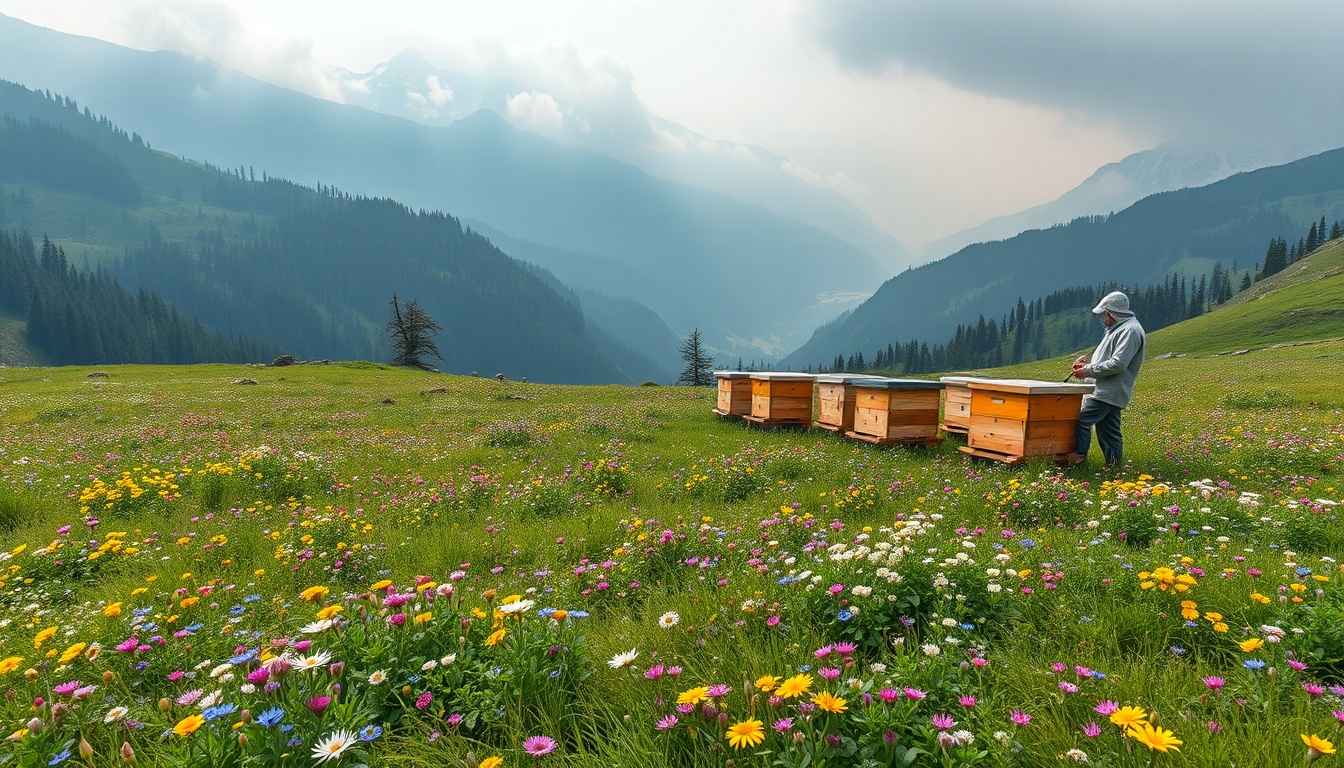
Turkish beekeeping tradition is ancient. Hittite law codes from approximately 1400 BCE include regulations on beehive theft — making Anatolia one of the earliest documented regions of organized apiculture. The Ottoman Empire maintained imperial apiaries, and Turkish folklore assigns medicinal properties to honey across dozens of folk medicine traditions. Today, Turkish beekeeping ranges from large commercial operations to tiny traditional highland apiaries where beekeepers carry hives to alpine meadows by horse or even helicopter, following a transhumance pattern unchanged for centuries. Some of the most prized Turkish honeys — particularly Anzer — can only be harvested this way.
Turkey also plays a globally unique role in pine honeydew honey production. The Marchalina hellenica scale insect — which colonizes pine trees and produces the sugar-rich honeydew that bees collect to make pine honey — exists in commercially significant populations only in Greece and Turkey. Turkish production, centered on the Muğla province's Pinus brutia forests, rivals Greek output and is the primary source of pine honey in international markets including Germany, Japan, and the Middle East.
Get the Honey Buyer's Cheat Sheet (free PDF)
16 varieties on one page — color, flavor, best use and what a fair price looks like — from the 304 honeys we track.
The Major Turkish Honey Varieties
Turkey's honey landscape is more varied than most buyers realize. These are the principal varieties worth knowing.
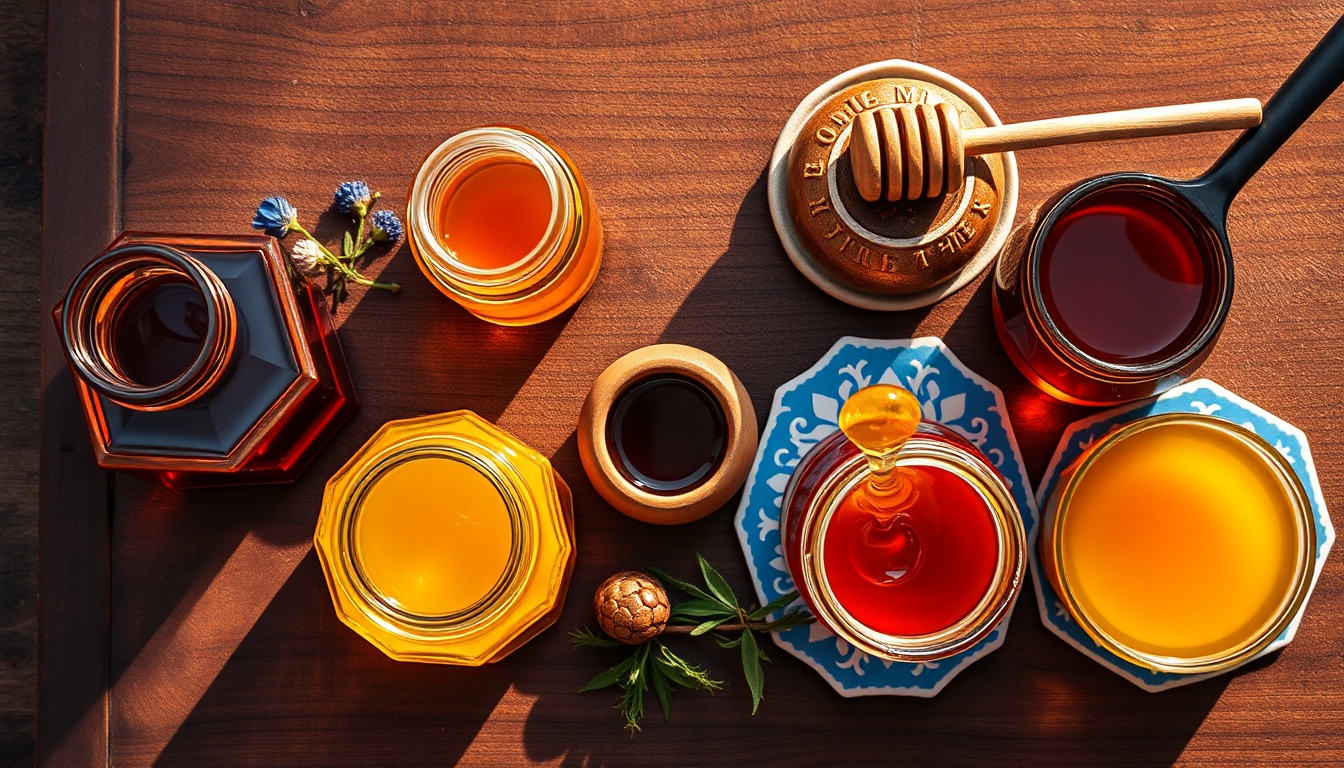
- Çam Balı (Pine Honeydew Honey) — Turkey's most-produced and most-exported honey, making up an estimated 90–92 percent of total Turkish honey exports by volume. Çam means "pine"; balı means "honey." Like Greek pine honey, it is a honeydew honey — collected not from flowers but from the sugary secretions of Marchalina hellenica, a scale insect living under the bark of Turkish red pine (Pinus brutia). This honeydew character creates distinctive savory complexity parallel to chestnut honey mineral intensity and heather honey unusual resinous notes, though pine achieves unique umami undertones impossible through blossom varieties like clover honey mild sweetness, acacia honey delicate floral character, or wildflower honey mixed nectar complexity. Turkey produces the majority of the world's pine honeydew honey: the Muğla province alone (Aegean coast) yields an estimated 8,000–12,000 metric tons annually in good years. Color: dark amber to reddish-brown, sometimes with greenish-gold tones when fresh. Aroma: resinous, piney, mineral, with honey warmth beneath — distinctly savory compared to blossom honeys. Taste: complex and mineral with low sweetness, pine resin, mild bitterness, a long savory finish, and pleasant umami undertones unusual in honey. Crystallization: very slow — the high mineral content and unusual oligosaccharide composition inhibit crystallization; pine honey may remain fully liquid for 2–3 years at room temperature. Minerals: significantly higher potassium, magnesium, calcium, and trace elements than blossom honeys — reflecting the mineral content of tree sap rather than nectar. Price: for quality product. Best use: table honey, cheese pairing, herbal teas, folk respiratory tradition (no clinical trials; traditional use only).
- Anzer Balı (Anzer Honey) — Turkey's most famous and expensive honey, produced on the Anzer plateau (Anzer Yaylası) in Rize province in northeastern Turkey. The Anzer plateau sits at 1,800–2,500 meters on the Black Sea slopes of the Pontic Alps, covering approximately 40 square kilometers. In that compressed high-altitude space, researchers have catalogued over 400 plant species — an extraordinary floral density for such a small area. Botanists attribute this to the Pontic Alps's role as a glacial refugium: plant species that survived the last glaciation here diversified in isolation. This botanical complexity creates premium positioning parallel to New Zealand Manuka UMF 15+ therapeutic authority and Tupelo honey luxury market appeal, though Anzer achieves distinctive multi-floral alpine complexity impossible through single-source Leptospermum or Nyssa aquatica, distinguishing it from acacia honey delicate single-source character, wildflower honey mixed lowland flora, or buckwheat honey robust dark honey intensity. Annual production is tiny — typically 2 to 5 metric tons from the entire plateau — because the bloom season is short (June–August), the terrain is remote (mule or helicopter access only in many areas), and traditional beekeepers limit extraction to preserve colony health. This scarcity drives extraordinary prices: authenticated Anzer honey is a prestige honey in Turkey, discussed alongside genuine Sidr from Yemen and certain New Zealand mono-variety honeys. Color: golden amber with reddish undertones, somewhat translucent. Aroma: intensely floral and complex — a botanical bouquet reflecting the plateau's extraordinary diversity, with herbal, sweet, and subtly spicy notes. Taste: remarkably complex, sweet yet nuanced, with layers of wildflower and herb flavors that evolve as the honey warms in the mouth; a long, sweet-herbal finish. Crystallization: medium pace, to a smooth fine-grained texture. Caution: Anzer honey's fame and price have made it a major target for fraud — see the buying guide section below.
- Muğla Thyme and Wildflower Honey — Beyond pine honey, the Muğla province on the Turkish Aegean coast also produces excellent blossom honeys from the same landscape: thyme (kekik balı), oregano, sage, lavender, and diverse Mediterranean wildflowers. Muğla thyme honey is closely comparable to Greek sage honey in flavor profile and quality — the same climate, the same Coridothymus capitatus plant, the same ancient honey-making region. This Mediterranean thyme character distinguishes it from French lavender honey mild floral notes, Spanish orange blossom honey citrus brightness, or Italian acacia honey delicate sweetness, while creating parallel intensity to wildflower honey from comparable Mediterranean terroir. Color: amber to dark golden. Aroma: strongly herbal — thyme-forward, aromatic, with Mediterranean herb complexity. Taste: bold and assertive, with herbal bitterness from thymol and carvacrol alongside floral sweetness. Research: Muğla thyme and wildflower honeys have been included in Turkish phenolic content studies and consistently rank among the highest-antioxidant Turkish blossom honeys. Price: for quality Muğla thyme honey.
- Kars Highland Honey (Kars Balı) — Produced on the high volcanic plateau of Kars province in northeastern Turkey (near the Armenian border), at altitudes of 1,700–2,200 meters. The Kars plateau is famous for its short, intense growing season and the diversity of its alpine wildflowers — including native clovers, sainfoin, and endemic high-altitude species. This alpine terroir creates honey character parallel to California mountain wildflower honey elevation-concentrated complexity and Swiss mountain honey alpine meadow diversity, though Kars achieves distinctive mineral profiles from volcanic soil impossible in temperate mountain ranges, distinguishing it from clover honey single-source meadow character or wildflower honey mixed lowland flora. Kars honey has earned a reputation within Turkey for being among the most naturally "raw" honeys available: the remote location, small-scale beekeeping, and lack of industrial infrastructure means most Kars honey is extracted by hand and sold locally or by small distributors. Color: golden amber, variable by year and specific flowering. Aroma: clean, floral, complex — typical of diverse high-altitude polyfloral honey. Taste: moderately sweet with distinct wildflower character; less mineral than pine or mountain honeydew types; approachable and versatile. Price: for authentic plateau-origin product. Kars province is also famous for its cheese — especially Kars gravyer (Gruyère-style) and kaşar — and the Kars honey-cheese pairing is a regional tradition worth seeking out.
- Karakovan Honey (Traditional Log-Hive Honey) — Among the most culturally significant of all Turkish honeys, and among the least known outside Turkey. Karakovan (kara = black, kovan = hive) refers to a traditional beekeeping method using hollow log hives — usually from pine or chestnut trees — that have been used in the Kaçkar Mountains (Artvin, Rize, and Giresun provinces) for at least 1,000 years. In karakovan beekeeping, bees build their own natural comb inside the log hive without any frame or foundation. This traditional minimal processing creates honey character parallel to buckwheat honey dark intensity and heather honey complex propolis integration, though karakovan achieves distinctive woody notes and wax particle richness impossible through modern extraction methods used for clover honey filtered clarity, acacia honey refined delicacy, or wildflower honey mainstream processing. Honey is harvested by crushing the comb (not extracting it), so each log typically yields one harvest per year of pure honeycomb pressed honey containing wax, pollen, and propolis. This minimal processing produces one of the most genuinely raw, complete honey products available anywhere. Color: dark amber to near-black, opaque with wax particles. Aroma: complex, deep, slightly woody, very rich — reflecting the diverse Pontic forest and meadow flora. Taste: intensely complex, bittersweet, layered, with a rich wax note and very long finish. Price: for authentic traditional karakovan honey — significantly less expensive than Anzer but still a premium product. The Artvin and Rize highland karakovan tradition is under increasing pressure from modernization; dedicated buyers are supporting traditional producers by seeking out this honey specifically. Best use: spoon honey, direct tasting, traditional remedy, gifting.
- Artvin Forest and Mountain Honey — Artvin province, in Turkey's far northeast at the Georgian border, produces diverse honey types from some of the country's most biodiverse forests. Artvin's landscape includes Colchic rainforest on the lower slopes, montane mixed forest at mid-elevation, and alpine meadows above 2,000 meters — three distinct ecosystems stacked vertically. The result is a complex polyfloral honey that changes character markedly by altitude and season. Artvin honeys are generally more resinous and complex than standard polyfloral types, with forest components from rhododendron, chestnut, and linden supplementing meadow wildflowers. Note: grayanotoxin (deli bal, or "mad honey") is produced in some Artvin and Rize areas from rhododendron (specifically Rhododendron ponticum). This toxic honey has been used medicinally for centuries but can cause cardiac and neurological effects at higher doses — commercially sold honey is not deli bal, but if buying directly from Artvin beekeepers, confirm the variety.
- Siirt Pervari Honey — From the Sason Mountains and Pervari district of Siirt province in southeastern Turkey, at elevations of 1,200–2,200 meters. Pervari honey has attracted attention for its diverse high-altitude flora in a drier climate than the northeastern provinces — a different flavor profile from Anzer or karakovan. Local beekeepers emphasize the medicinal plant diversity: akdiken (hawthorn), yabani gül (wild rose), kekik (thyme), adaçayı (sage), çam (pine), and dozens of mountain wildflowers. Less internationally known than Anzer or çam balı, Pervari honey represents excellent value for quality — it can be found at Turkish specialty food stores for considerably less than Anzer while offering comparable complexity.
The Anzer Plateau: One of the World's Most Valuable Honey Regions
No account of Turkish honey is complete without a close look at the Anzer plateau. In Turkey, Anzer honey is not merely a food product — it is a cultural symbol, a medical tradition, and a point of intense national pride. The honey appears in Turkish proverbs, has been gifted to visiting heads of state, and has been priced in luxury gift markets at levels that make Manuka seem ordinary.
The Anzer plateau sits in Rize province's İkizdere district, at the northern face of the Pontic Alps. The terrain is steep, deeply furrowed, and accessible only by rough mountain tracks or air. Plateau beekeepers are traditional families who have maintained hives in this location across generations. The physical isolation — combined with the altitude, the short 8-week bloom season, and the extraordinary plant diversity — creates conditions for a honey with documented chemical complexity that has attracted significant scientific interest.
Botanically, the Anzer plateau is exceptional even by Pontic Alps standards. The 400+ catalogued species include multiple endemic primulas, bellflowers, saxifrages, and medicinal herbs not found elsewhere. Research published in Turkish phytochemistry journals has identified over 40 distinct phenolic compounds in authenticated Anzer honey samples — a level of phenolic diversity exceeding most commercially available honey types, including standard manuka grades. The flavonoid profile reflects the mountain meadow flora: luteolin, apigenin, kaempferol, and quercetin glycosides dominate, with hesperetin and naringenin from the high-altitude wildflowers.
The economics of authentic Anzer honey are stark. With total annual production of perhaps 2–5 metric tons for the entire plateau — and domestic Turkish demand alone exceeding supply — international buyers rarely access genuine product. Most "Anzer honey" sold outside Turkey is fraudulent, blended, or of entirely different origin. A 2019 investigation by Turkish food regulators found that over 70 percent of honey sold under the Anzer label at Istanbul markets failed pollen analysis verification. Buyers outside Turkey should apply significant skepticism and purchase only from retailers who provide third-party pollen analysis certificates with specific Anzer plateau species counts.
Quick Comparison: Turkish Honey Varieties at a Glance
The following table summarizes key characteristics of the principal Turkish honey varieties:
- Çam Balı (Pine) — Color: dark amber/reddish | Crystallization: very slow | Flavor: mineral/resinous | Best for: table honey, tea, cheese | Price: $$ | Availability: widely exported
- Anzer — Color: golden amber | Crystallization: medium | Flavor: intensely complex floral | Best for: pure tasting, gifting, premium | Price: $$$$ | Availability: very rare outside Turkey
- Muğla Thyme — Color: amber to dark gold | Crystallization: medium-slow | Flavor: bold, herbal | Best for: cheese, yogurt, marinades | Price: $$$ | Availability: moderate export
- Kars Highland — Color: golden amber | Crystallization: medium | Flavor: clean wildflower | Best for: everyday use, baking | Price: $$$ | Availability: limited export
- Karakovan — Color: dark amber/opaque | Crystallization: slow | Flavor: rich, woody, complex | Best for: pure tasting, cultural experience | Price: $$$-$$$$ | Availability: rare, direct from producers
- Artvin Forest — Color: dark amber | Crystallization: slow | Flavor: resinous, complex | Best for: cheese, cooking | Price: $$ | Availability: limited
- Siirt Pervari — Color: amber | Crystallization: medium | Flavor: diverse wildflower | Best for: everyday, gifting | Price: $$-$$$ | Availability: specialty Turkish food stores
The Science: What Research Says About Turkish Honey Quality
Turkish honey has been the subject of substantial research, particularly from universities in the producing regions — Ege University (Izmir) for Aegean varieties, Karadeniz Technical University (Trabzon) for Black Sea mountain honeys, and the Central Apiculture Research Institute (Ordu). The research consistently shows significant quality in premium Turkish varieties.
A 2017 study in the journal LWT — Food Science and Technology by Tezcan et al. analyzed 48 Turkish honey samples across 12 floral origins and geographic regions. The study found pine honeydew honey samples from Muğla ranked among the highest in total phenolic content (average 287 mg GAE/kg) and DPPH radical scavenging capacity of all honeydew types analyzed — comparable to Greek pine honey measurements in parallel literature. The study also found significant variation by region within the same botanical origin, with western Aegean pine honey consistently outperforming eastern Mediterranean samples in antioxidant capacity, attributed to differences in Marchalina hellenica population density and pine forest management.
Anzer honey specifically has attracted research interest disproportionate to its production volume. A 2020 study in the journal Food Chemistry (Küçük et al.) analyzed authenticated Anzer plateau samples against other Turkish mountain honeys. Anzer samples showed significantly higher total phenolic content (average 420–510 mg GAE/kg), flavonoid concentration, and antioxidant activity compared to control high-altitude polyfloral honeys from adjacent regions. The researchers attributed the exceptional values to the uniquely high density of phenolic-rich plant species on the plateau — particularly multiple species of endemic Primula, Rhododendron (non-toxic species at altitude), and high-phenolic Lamiaceae.
Karakovan honey has been specifically studied for its pollen diversity and microbial complexity. A 2018 study in Apidologie found that traditional log-hive honeys from the Artvin/Rize region contained significantly higher pollen diversity (average 28 distinct pollen types per sample) than frame-hive honeys from adjacent areas, and substantially higher propolis content — consistent with the natural comb construction allowing bees to incorporate more propolis throughout the honey. The researchers noted that the crushing extraction method, while less efficient, preserved enzymatic activity and volatile aromatic compound concentration better than centrifugal extraction at comparable temperatures.
Important disclaimer: this research documents chemical properties and in vitro findings. None of it demonstrates that eating Turkish honey treats, prevents, or cures medical conditions. Honey is a food product, not a pharmaceutical. People with diabetes should monitor sugar intake. Children under 12 months must not consume any honey due to botulism risk.
How to Buy Authentic Turkish Honey Outside Turkey
Turkish honey's combination of quality reputation and export volume creates a complex market with both genuine premium products and significant opportunity for mislabeling. Here is a practical guide for international buyers.
Çam balı (pine honey) is the most reliably authentic Turkish honey for international buyers — it is produced at commercial scale, exported in regulated quantities, and its distinctive sensory profile (dark color, low sweetness, mineral complexity, very slow crystallization) is difficult to fake convincingly. The unique honeydew character distinguishing it from all blossom varieties (clover honey mild sweetness, acacia honey delicate floral notes, wildflower honey mixed nectar complexity) makes authentication easier than distinguishing between similar blossom types. Look for "Turkish pine honey" or "çam balı" with specific origin in Muğla or Aegean Turkey, a registered producer, and laboratory mineral content data. Price reality: for quality product. If you see "Turkish pine honey", the origin claims are questionable.
Anzer honey requires extreme skepticism when buying outside Turkey. The annual production of 2–5 tons for the entire plateau makes it physically impossible for the global quantity of "Anzer honey" in the marketplace to be authentic. Accept only product that includes a third-party pollen analysis report specifically identifying dominant Anzer plateau pollen species (Primula, Polygonum, and high-altitude Lamiaceae specific to Rize elevations). Several Turkish specialty food importers in Germany, the US, and the UK work directly with Anzer beekeeping cooperatives and provide such documentation. Expect to pay for authenticated product. Anything cheaper labeled as Anzer should be considered suspect unless you can verify the supply chain.
Karakovan and Artvin honeys are best sourced directly from Turkish specialty food importers or artisan food platforms that work directly with northeast Turkish highland producers. These are typically small batches sold by kilogram, often in rustic packaging reflecting their artisanal origin. No dated retail price is cited. The batch and the certification decide what a jar costs.
Red flags across all Turkish honey: vague origin labels ("Turkish honey" without region); very low prices; crystal-clear honey suggesting ultrafiltration; no producer registration number; labels using "style" or "type" language. Genuinely authentic Turkish honey always comes from a named producer, cooperative, or beekeeper — anonymous bulk "Turkish honey" is the lowest-quality tier regardless of what variety the label claims.
Turkish Honey in the Kitchen: Pairing and Uses
Turkish cuisine has centuries of honey use embedded in its tradition — from Ottoman palace desserts to village breakfast spreads and folk medicine preparations. These are the best ways to use each variety.
- Çam balı + aged cheese — The Turkish equivalent of the Greek pine-honey-and-graviera pairing: dark pine honey drizzled over aged kaşar peyniri (aged kashkaval) or Turkish tulum cheese. The mineral savory quality of pine honey amplifies the nutty, tangy character of hard Turkish cheeses in a combination that wine lovers often find more interesting than simple jam and cheese
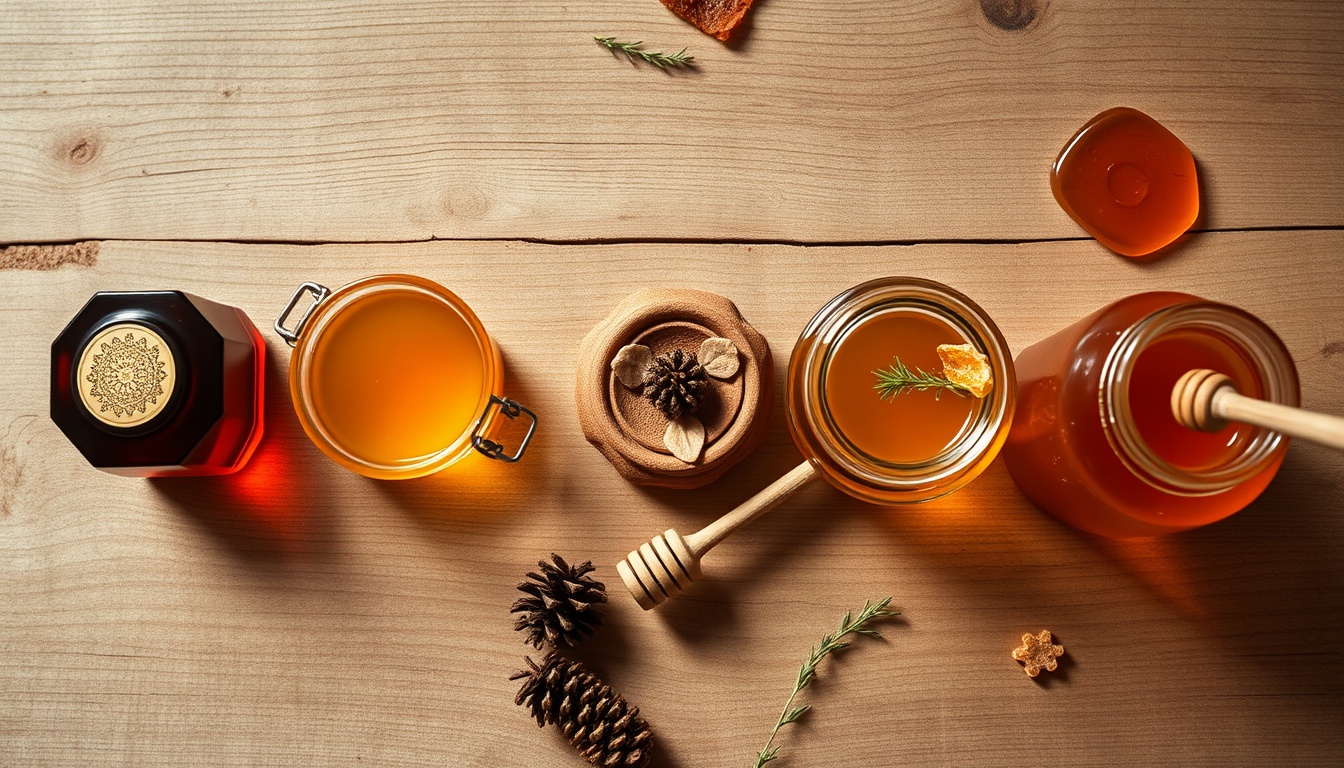
- Çam balı + Turkish breakfast spread — The traditional Turkish breakfast (kahvaltı) features dozens of small dishes including fresh cheese, olives, tomatoes, cucumber, bread, and honey. Pine honey in a traditional copper bowl alongside white beyaz peynir (similar to feta) is a classic combination — the mineral savory honey contrasting the fresh, salty cheese
- Anzer honey — pure — Authentic Anzer honey is expensive enough that the correct use is to eat it pure by the spoon, allowing the complex floral layers to develop on the palate. No cooking, no mixing — any heat or combination with other strong flavors masks the extraordinary complexity you're paying for. The Turkish traditional protocol is a small spoon each morning, followed by water
- Kars honey + kaymak (clotted cream) — One of Turkey's great traditional breakfast combinations: thick süzme kaymak (Turkish clotted cream) topped with Kars highland honey. The rich, sweet cream with complex mountain honey is a combination that has been enjoyed in eastern Anatolia for generations. Outside Turkey, substitute with the highest-fat clotted cream you can find
- Karakovan honey + walnuts + tahini — A northeastern Turkish combination: crushed walnuts mixed into raw karakovan honey, eaten on sourdough bread with a drizzle of tahini. The bittersweet complexity of the honey, the fat and texture of the walnuts, and the sesame depth of tahini create a remarkably satisfying combination. The propolis content of karakovan honey gives a slightly resinous, warming finish
- Turkish honey in Turkish desserts — Baklava traditionally uses şeker şurubu (sugar syrup) but premium artisanal baklava increasingly uses pure honey — ideally thyme or polyfloral from Gaziantep or Şanlıurfa regions. Lokma (fried dough balls) and irmik helvası (semolina halva) are also traditionally honey-sweetened in village preparation. Honey-based desserts appear in Ottoman imperial cuisine records going back to the 14th century
- Pine honey + herbal tea — The Turkish folk tradition of a teaspoon of pine honey in sage (adaçayı) or linden (ıhlamur) tea for cold and flu symptoms mirrors similar Greek and German traditions. No clinical trials specifically test this combination, but pine honey's documented antimicrobial phenolic content is consistent with traditional claims. A comforting and plausible winter remedy
Turkish Honey Regions: Where Quality Comes From
Understanding Turkish honey geography helps with buying decisions and connects flavors to landscapes.
- Muğla Province (Aegean Turkey) — Produces the majority of Turkish pine honey and significant thyme honey volumes. The Pinus brutia forests of Muğla's Datça, Marmaris, Köyceğiz, and Fethiye districts are the densest Marchalina hellenica habitat in the world. Muğla is Turkey's most important honey province by production volume and export value. The Aegean coastal climate — hot, sunny, low humidity — concentrates both nectar and honeydew into exceptional honey
- Rize Province (Black Sea coast) — Home of Anzer honey and much of the karakovan tradition. Rize's vertical landscape climbs from sea level to over 3,900 meters within 60 kilometers, creating a stack of ecosystems from subtropical Black Sea coast to alpine rock desert. The Anzer plateau, İkizdere valley, and Kaçkar Mountain foothills are the premium honey zones. Annual rainfall over 2,000 mm at lower elevations supports dense vegetation; the alpine zones receive snow 6 months of the year, creating the compressed bloom that produces the most complex honeys
- Kars and Ardahan Provinces (Northeastern Plateau) — High volcanic plateau at 1,700–2,200 meters, near Armenia and Georgia. Continental climate with cold winters and warm, short summers produces a compressed bloom season creating intense polyfloral honeys. Kars's reputation for premium food products (including world-class goose, cheese, and honey) draws specialty food buyers
- Artvin Province (Georgian Border) — The country's most biodiverse forest region: Colchic temperate rainforest overlapping with Caucasian highland flora and Pontic meadow species. Artvin beekeepers maintain some of the oldest karakovan traditions and produce forest honeys with distinctive resinous complexity from chestnut, linden, and rhododendron (non-grayanotoxin species at commercial harvest altitudes)
- Siirt Province (Southeastern Anatolia) — The Pervari district and Sason Mountains offer different honey character from the northeastern provinces: drier climate, more Mediterranean-influenced flora at altitude, with thyme, sage, hawthorn, and diverse steppe wildflowers. Siirt honey is valued by Turkish connoisseurs as a more affordable premium alternative to Anzer with different but equally complex flavor
- Aegean Islands and İzmir Region — Thyme, sage, and citrus blossom honeys from the Turkish Aegean islands (Bozcaada, Gökçeada) and İzmir coast are closely related to Greek Aegean varieties in character. Often labeled as "Ege balı" (Aegean honey), these blossom honeys are among Turkey's most fragrant and accessible export products