Why New Zealand Honey Is Unlike Any Other
New Zealand produces some of the world's most scientifically scrutinized and commercially valuable honey, for reasons rooted in 80 million years of geographic isolation. The New Zealand archipelago separated from Gondwana before mammals evolved, leaving it with an extraordinary flora of more than 2,000 native plant species — approximately 80 percent of which are endemic, found nowhere else on Earth. European honeybees (Apis mellifera) arrived with British settlers in the 1830s and discovered a botanical landscape they had never evolved alongside: ancient trees from Gondwanan lineages producing nectar with novel chemical profiles that differ fundamentally from anything in European or North American experience — nothing like the mild sweetness of clover honey or acacia honey, the balanced complexity of wildflower honey, or even the bold intensity of buckwheat honey.
The result is a group of native mono-floral honeys — manuka, kamahi, tawari, rewarewa, rata — with flavor profiles and chemical properties that have no direct parallel elsewhere. Manuka honey's methylglyoxal content, first characterized by German researcher Thomas Henle and colleagues at Dresden University in 2008 (published in Molecular Nutrition & Food Research), turned out to be a genuine biochemical novelty: a stable, non-hydrogen-peroxide antimicrobial compound that survives digestion, heat, and time in ways that the peroxide-based activity of conventional honey cannot. The ensuing two decades of research have made New Zealand honey — particularly manuka — the most scientifically studied honey type in the world, with over 1,000 peer-reviewed papers.
But the manuka story, while commercially dominant, has overshadowed a group of rare, deeply special native mono-floral honeys that most consumers outside New Zealand have never encountered. This guide covers all the major New Zealand varieties — the famous and the obscure — explains the science behind what makes them unique, and tells you how to buy authentic product from one of the world's most tightly regulated honey industries. For context from other premium regional honeys, see our guides to Manuka honey benefits, Jarrah honey from Australia, Greek honey, and Turkish honey.
What Makes New Zealand Honey Exceptional: Geography, Flora, and Standards
Three factors converge to make New Zealand an exceptional honey environment. The first is floral isolation. New Zealand's 80 million years of evolutionary separation produced plants whose nectar chemistry has never been shaped by co-evolution with honeybees — meaning those nectars were not "designed" by evolution to attract bees efficiently, and may contain chemical profiles (like manuka's dihydroxyacetone, the precursor to MGO) that would be filtered out of the gene pool in a more competitive, co-evolved flora.
The second factor is regulatory rigor. New Zealand implemented mandatory testing standards for manuka honey exported under that label — a response to international fraud that saw cheap honey from multiple countries sold as "manuka." The Ministry for Primary Industries (MPI) established a four-test definition for monofloral and multifloral manuka honey in 2018: pollen microscopy, DNA testing of the honey, chemical marker profiling (four unique chemical compounds), and freshness indicators. This standard, while imperfect (critics note DNA testing can detect pollen from processed honey that doesn't genuinely derive its properties from manuka), is the most rigorous government-backed definition of any mono-floral honey variety in the world.
The third factor is pristine environment. New Zealand's beekeeping regions — particularly the South Island's West Coast, Fiordland, Marlborough, and Northland — are among the least industrially polluted farming environments on Earth. Many manuka harvesting areas are remote wilderness accessible only by helicopter. This low-input, natural-forage environment produces honey with minimal pesticide residue and a clean, uncontaminated character that New Zealand's biosecurity systems actively protect.
Get the Honey Buyer's Cheat Sheet (free PDF)
16 varieties on one page — color, flavor, best use and what a fair price looks like — from the 304 honeys we track.
The 8 Major New Zealand Honey Varieties
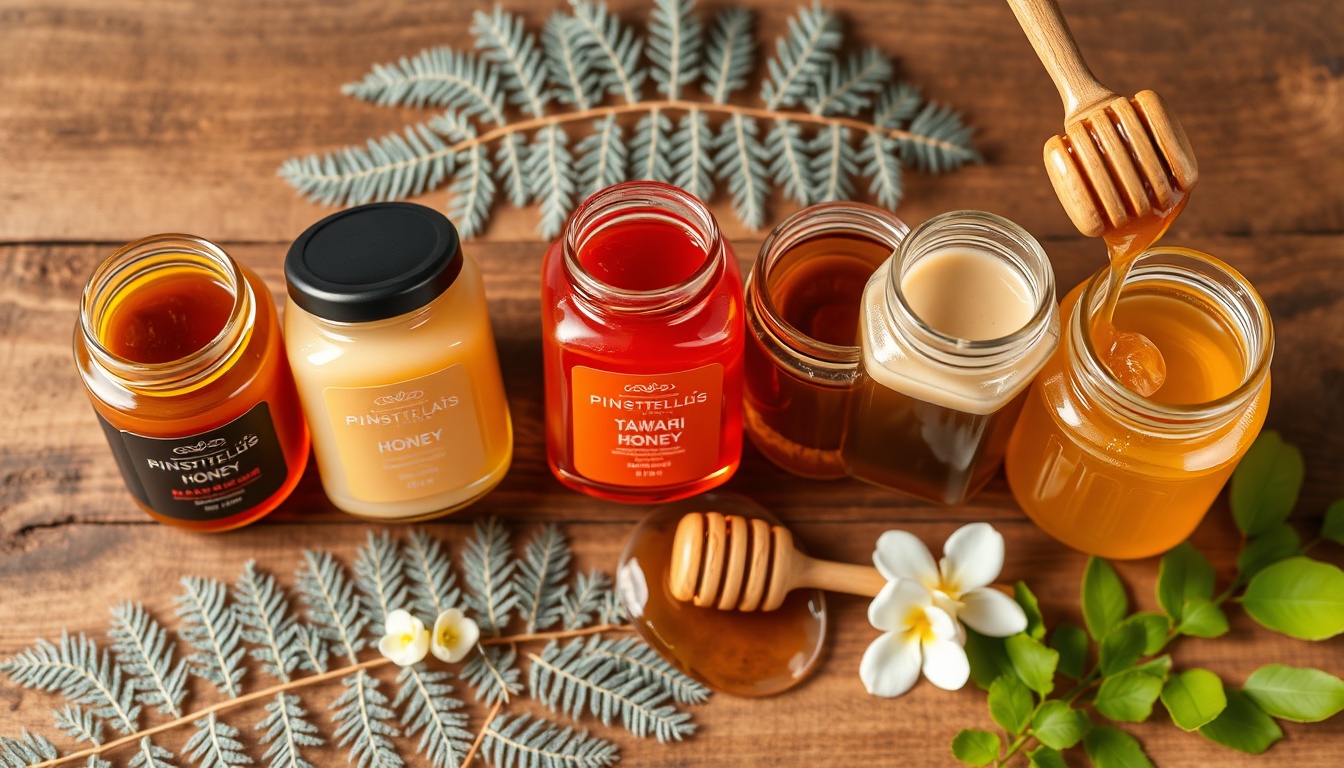
While New Zealand produces dozens of regional blends and polyfloral bush honeys, eight varieties stand out as the most distinctive and widely available on the international market.
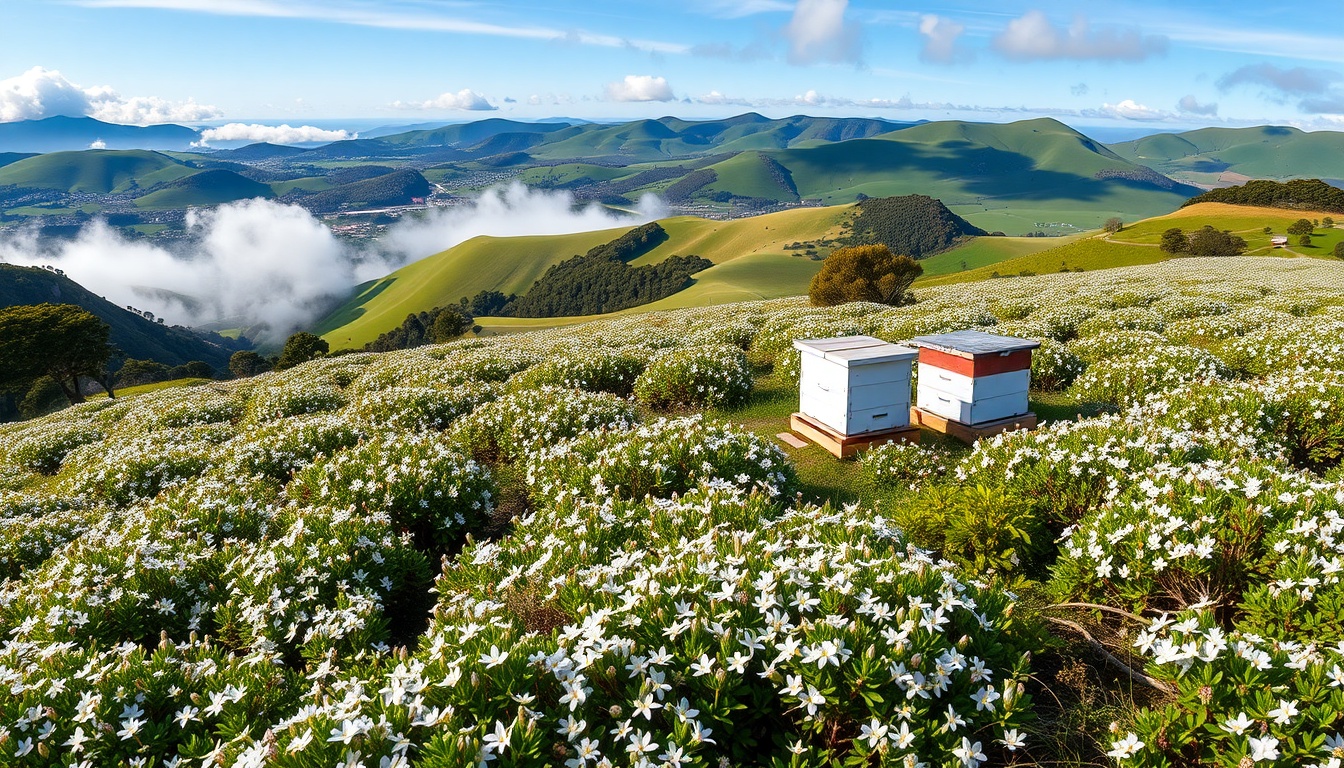
- Manuka Honey (Leptospermum scoparium) — New Zealand's most famous export and one of the most researched foods on Earth. Produced from the small white five-petaled flowers of the manuka shrub, a hardy pioneer plant that colonizes regenerating and marginal land throughout New Zealand. The defining characteristic is methylglyoxal (MGO) — a reactive dicarbonyl compound derived from the conversion of dihydroxyacetone (DHA) in manuka nectar. Unlike the hydrogen peroxide-based antimicrobial activity found in all honeys (which is destroyed by light, heat, and catalase), MGO is stable, persistent, and heat-resistant. Color: dark caramel to dark brown. Aroma: rich, earthy, herbal, distinctive — some detect medicinal notes, dried herbs, or a slight bitterness. Taste: complex and assertive — less sweet than clover honey or acacia honey, with earthy and herbal depth far beyond wildflower honey complexity, approaching but distinct from buckwheat honey intensity. Crystallization: relatively fast to medium, to a thick creamy consistency. Grading: UMF (Unique Mānuka Factor) is the premium certification grade from the UMFHA, correlating MGO and other markers to a UMF number. MGO alone is also used (e.g., MGO 100+, 250+, 400+, 550+). Standard equivalences: UMF 5+ ≈ MGO 83+; UMF 10+ ≈ MGO 263+; UMF 15+ ≈ MGO 514+; UMF 20+ ≈ MGO 829+. Research: a 2011 study by Jenkins et al. in the European Journal of Clinical Microbiology found manuka honey inhibited both methicillin-susceptible and methicillin-resistant Staphylococcus aureus at minimum inhibitory concentrations achievable in wound care applications. Important: these are laboratory findings, not clinical treatment guidance. Price range: UMF 5+; UMF 15+; UMF 20+.
- Kānuka Honey (Kunzea ericoides / K. robusta) — Often confused with manuka, kānuka is a related but distinct native shrub. To the casual eye, the white-flowered kānuka plant resembles manuka; botanically, it belongs to the genus Kunzea while manuka is Leptospermum. The critical difference: kānuka nectar does not contain significant DHA, so kānuka honey does not develop the high MGO levels that define manuka's distinctive properties. Color: pale to medium golden amber. Aroma: lightly floral, mildly earthy, clean. Taste: mild, pleasant, slightly herbal, considerably less complex than manuka. Crystallization: medium rate, creamy texture. Research: kānuka honey does show some antimicrobial activity (largely hydrogen-peroxide based) and has been investigated for anti-inflammatory properties in skin studies (Harnett et al., Journal of Natural Medicines 2019), but its activity profile differs fundamentally from manuka. Labeling concern: some kānuka honey is sold with vague descriptions that imply manuka-like properties — look for specific species identification on the label. Price: for genuine labeled kānuka. Best: everyday table honey, cooking, general use where manuka is not required.
- Kamahi Honey (Weinmannia racemosa) — One of New Zealand's most beloved native honeys among those who know it, yet almost unknown internationally. Kamahi is a forest tree of the ancient Gondwana family Cunoniaceae, growing in the beech and mixed forests of the South Island and lower North Island. Its small cream-white flower clusters produce nectar abundantly in late spring and early summer. Color: creamy pale amber to light golden, sometimes almost white when fresh. Aroma: warm, buttery, distinctive — notes of butterscotch and vanilla cream. Taste: gentle, sweet, with unmistakable butterscotch and toffee notes, medium body, no bitterness. The flavor is widely described as the most approachable and universally pleasing of native NZ honeys — more complex than clover honey yet gentler than wildflower honey, with distinctive character that surpasses acacia honey delicacy. Crystallization: medium-slow, fructose-rich, crystallizes to a smooth pale cream. Production: limited to beech forest zones, primarily the West Coast and Fiordland areas of the South Island. Price. Best: toast, breakfast use, light baking, pairing with mild cheese, gifting as an accessible introduction to native NZ honey.
- Tawari Honey (Ixerba brexioides) — Perhaps the rarest and most sought-after of native New Zealand honeys among connoisseurs. Tawari is a small endemic tree endemic to the northern North Island, found in isolated remnant forests and regenerating bush. It produces an unusually abundant honey flow, but tawari trees are relatively rare and production is tightly limited by the tree's restricted range. Color: exceptionally pale — near-white to very light gold, one of the palest honeys produced anywhere in the world. Aroma: delicate, clean, faintly floral, with almost no dominant note — subtle and refined. Taste: clean, gently sweet, with a light buttery quality and extraordinary purity of flavor. The honey's extreme paleness and delicacy make it comparable in style to New Zealand's answer to acacia honey refinement or Greek fir honey — a premium collector's item valued for its rarity and exceptional cleanness that surpasses even linden honey subtlety. Crystallization: slow to medium, crystallizes to a very smooth pale paste. Production: extremely limited — tawari forests cover a small area of the upper North Island; annual production is perhaps a few thousand kilograms nationally. Price: for genuine labeled tawari. Best: pure tasting, premium gifting, pairing with very mild cheeses, drizzling over fruit.
- Rewarewa Honey (Knightia excelsa) — One of New Zealand's most striking native honeys, produced from the New Zealand honeysuckle tree (rewarewa) — a tall, narrow-canopied forest tree belonging to the ancient Gondwana family Proteaceae (related to Australian banksias and grevilleas). Rewarewa flowers are unusual — spectacular red tubular blooms produced in dense racemes — and generate substantial nectar flows in late spring. Color: distinctive dark reddish-amber to deep amber, richer and darker than kamahi. Aroma: rich and complex — notes of burnt caramel, toffee, dark brown sugar, with a slightly floral undertone. Taste: full-bodied with prominent butterscotch and caramel flavors, a pleasant tartness, and a long warming finish. Less sweet-forward than kamahi, with more complexity. Crystallization: medium rate, to a reddish-amber cream. Production: primarily North Island, from surviving kauri and mixed podocarp forests in Northland, Waikato, and the Coromandel. Price. Best: strong cheese pairings (aged cheddar, blue cheese), cooking with game, spreading on dark wholegrain bread, as a complex sweetener in marinades.
- Rata Honey (Metrosideros robusta / M. umbellata) — Rata honeys come from two New Zealand rata trees: northern rata (Metrosideros robusta), an epiphytic tree that eventually envelops its host, and southern rata (Metrosideros umbellata), which forms distinctive red-flowering forests along the South Island's West Coast mountain edges. Both produce spectacular scarlet or crimson flowers and provide short but intense nectar flows. Color: pale to light golden, cleaner and lighter than expected for such vivid flowers. Aroma: clean, delicately floral and slightly sweet, with a subtle character. Taste: mild, sweet, clean — less assertive than rewarewa or manuka, more similar in gentleness to kamahi. Southern rata honey from the remote West Coast beech forests is particularly prized for its exceptional purity. Crystallization: medium, creamy. Production: limited by the restricted flowering habitat — southern rata honey in particular comes from some of the most remote and inaccessible terrain in New Zealand. Price: for authenticated single-variety rata honey. Best: premium gifting, cheese boards, pure tasting.
- New Zealand Clover Honey (Trifolium repens — white clover) — New Zealand is one of the world's largest exporters of pure white clover honey, and it is the variety that built the country's honey export industry before manuka became globally famous. White clover arrived with European settlers and now carpets New Zealand's pasture lands, providing bees with enormous, reliable nectar flows throughout spring and summer. Color: very pale — water-white to light golden when fresh, crystallizing to white. Aroma: clean, mildly floral, with a gentle sweetness — the archetypal "light honey" aroma shared with clover honey worldwide. Taste: mild, clean, sweet, universally pleasant — the honey equivalent of a blank canvas, comparable to acacia honey neutrality but with distinctive New Zealand terroir character. Crystallization: medium to fast, producing a smooth white cream that many consumers recognize as "creamed honey." Research: NZ white clover honey has been extensively studied as a reference standard in honey research precisely because of its consistent, well-characterized composition and mild activity. It is the baseline against which manuka's exceptional properties are compared. Price. Best: everyday baking and cooking, beverages, children's use, anyone seeking classic mild honey flavor.
- Bush/Wildflower Honey (Native polyfloral) — New Zealand bush honey is produced from the diverse assemblage of native flowering plants in regenerating scrubland and established native forest — a mix that may include manuka, kānuka, rewarewa, kamahi, clover, and dozens of other native and naturalized species. Quality and character vary substantially by region and season. The best bush honeys from remote South Island or Northland wilderness areas have exceptional depth and complexity from the diverse native flora. Color: varies widely — golden to dark amber. Aroma: complex, herbal, sometimes with earthy or floral notes. Taste: variable but often more complex than pure clover; some NZ bush honeys have a wild, earthy depth that reflects the botanical diversity of the area. Price. Best: everyday use, cooking, anyone wanting NZ flavor at accessible price points.
Quick Comparison: New Zealand Honey Varieties at a Glance
Use this table to choose the right New Zealand honey for your purpose:
- Manuka (UMF 5-10+) — Color: dark caramel | Crystallization: medium | Flavor: bold, earthy, herbal | Best for: direct use, wellness applications | Price: $$$ | Availability: widely exported
- Manuka (UMF 15-20+) — Color: dark brown | Crystallization: medium | Flavor: very bold | Best for: therapeutic applications | Price: $$$$ | Availability: widely exported
- Kānuka — Color: pale-medium gold | Crystallization: medium | Flavor: mild, floral | Best for: everyday use, cooking | Price: $$ | Availability: moderate export
- Kamahi — Color: pale cream/butterscotch | Crystallization: medium-slow | Flavor: butterscotch, gentle | Best for: breakfast, gifting, mild cheese | Price: $$ | Availability: specialty importers
- Tawari — Color: near-white | Crystallization: medium-slow | Flavor: delicate, pure | Best for: connoisseur gifting, premium pairing | Price: $$$$ | Availability: very limited export
- Rewarewa — Color: dark reddish amber | Crystallization: medium | Flavor: caramel, complex | Best for: strong cheese, dark bread, cooking | Price: $$$ | Availability: specialty importers
- Rata — Color: pale golden | Crystallization: medium | Flavor: mild, sweet, clean | Best for: gifting, pure tasting | Price: $$$$ | Availability: rare, direct/specialty only
- NZ Clover — Color: white to pale gold | Crystallization: medium-fast | Flavor: mild, clean, classic | Best for: everyday use, baking, children | Price: $ | Availability: widely exported
The Manuka Science: MGO, UMF, and NPA Explained
The scientific story of manuka honey is one of the more compelling examples of how traditional knowledge eventually found molecular-level explanation. Māori people used manuka leaves and bark medicinally for generations — as a steam bath for fevers, a bark poultice for wounds, a tea for urinary complaints. When Peter Molan, a biochemist at Waikato University, began studying honey's antimicrobial properties in the 1980s, he found that manuka honey showed exceptional antimicrobial activity that was not destroyed by an enzyme (catalase) that normally eliminates hydrogen peroxide — the primary antimicrobial compound in most honey. He called this "non-peroxide activity" (NPA) and spent two decades documenting it without knowing the exact compound responsible.
The identity of the compound was published in 2008 by Henle and colleagues at Dresden University: methylglyoxal (MGO), a reactive dicarbonyl formed by the spontaneous non-enzymatic conversion of dihydroxyacetone (DHA) — a unique compound found at high concentrations in manuka nectar. DHA concentrations in manuka nectar are many times higher than in any other honey plant studied, which is why this phenomenon appears to be specific to Leptospermum scoparium. Once in the honey, DHA converts to MGO over time — meaning aged manuka honey can actually increase in MGO content for up to two years after extraction. A 2008 paper by Adams et al. in Carbohydrate Research confirmed the DHA-MGO pathway and showed the conversion is temperature- and time-dependent.
The UMF (Unique Mānuka Factor) grading system, developed and trademarked by the UMF Honey Association (UMFHA), measures three chemical markers: MGO (methylglyoxal), Leptosperin (a unique marker found only in genuine manuka nectar), and DHA (confirming fresh, unconverted precursor). The Leptosperin test is the most fraud-resistant, as Leptosperin can only come from authentic Leptospermum scoparium nectar and cannot be added artificially. A UMF grade therefore reflects both the MGO level and proof of genuine manuka origin.
What does the research actually show? Multiple peer-reviewed studies have documented that manuka honey with UMF 10+/MGO 263+ or above shows meaningful inhibition of a broad range of bacteria in laboratory settings, including MRSA (methicillin-resistant Staphylococcus aureus), Pseudomonas aeruginosa, Helicobacter pylori, and others. A 2016 systematic review by Carter et al. in PeerJ found that manuka honey's antibiofilm activity — its ability to disrupt the protective structures that make antibiotic-resistant bacteria so difficult to treat — was particularly notable and deserving of further clinical investigation. Clinical trials for wound healing and gastric ulcer support remain an active area of research.
Important caveat: the proven properties of manuka honey are laboratory and limited clinical findings. Manuka honey is not an approved pharmaceutical treatment for any disease. Do not use honey instead of prescribed medications. People with diabetes should monitor blood sugar carefully. No honey of any type should be given to children under 12 months due to botulism risk.
How to Buy Authentic New Zealand Honey
The premium reputation of New Zealand honey — particularly manuka — has made it one of the most heavily frauded food products in the world. A 2018 UMF Honey Association analysis estimated that more manuka honey was exported globally than New Zealand could physically produce, meaning a substantial portion of "manuka honey" sold internationally contained little or no genuine manuka. Here is how to protect yourself.
For manuka specifically: insist on UMF certification from a licensed UMFHA member (the UMF trademark is legally protected in key markets). A UMF number (5+, 10+, 15+, 20+, 25+) printed with the honeybee logo on the front label, plus a batch number traceable to a licensed producer, is the gold standard. Alternatively, look for MGO grading with independent laboratory certificate and a Leptosperin test result — the Leptosperin test is the only marker that truly proves genuine manuka origin. Avoid: vague labels like "active manuka," "bioactive manuka," "manuka blend," or UMF numbers without the UMFHA logo. These labels exploit the manuka premium without meeting verified standards.
For native varieties (kamahi, tawari, rewarewa, rata): production volumes are small and fraud is less structured, but quality variation is significant. Look for: specific tree species named on the label (not just "bush honey" or "native honey"); New Zealand beekeeper or producer name and contact; pollen analysis certificate for mono-floral claims (laboratory-verified pollen percentages); and genuine NZ postal address. Kamahi and rewarewa from reputable NZ producers are increasingly available at specialty food retailers and direct-to-consumer NZ honey shops that ship internationally.
Price reality check for manuka: UMF 5+ / MGO 83+ costs more. UMF 10+ / MGO 263+ costs more. UMF 15+ / MGO 514+ costs more. UMF 20+ / MGO 829+ costs more. UMF 25+ / MGO 1200+ costs more. If prices are dramatically below these ranges, verify credentials carefully. The raw material — manuka flowers blooming briefly once a year in remote New Zealand wilderness, harvested by helicopter-accessible hives — does not allow for cheap production of verified-grade product.
Pairing New Zealand Honey with Food
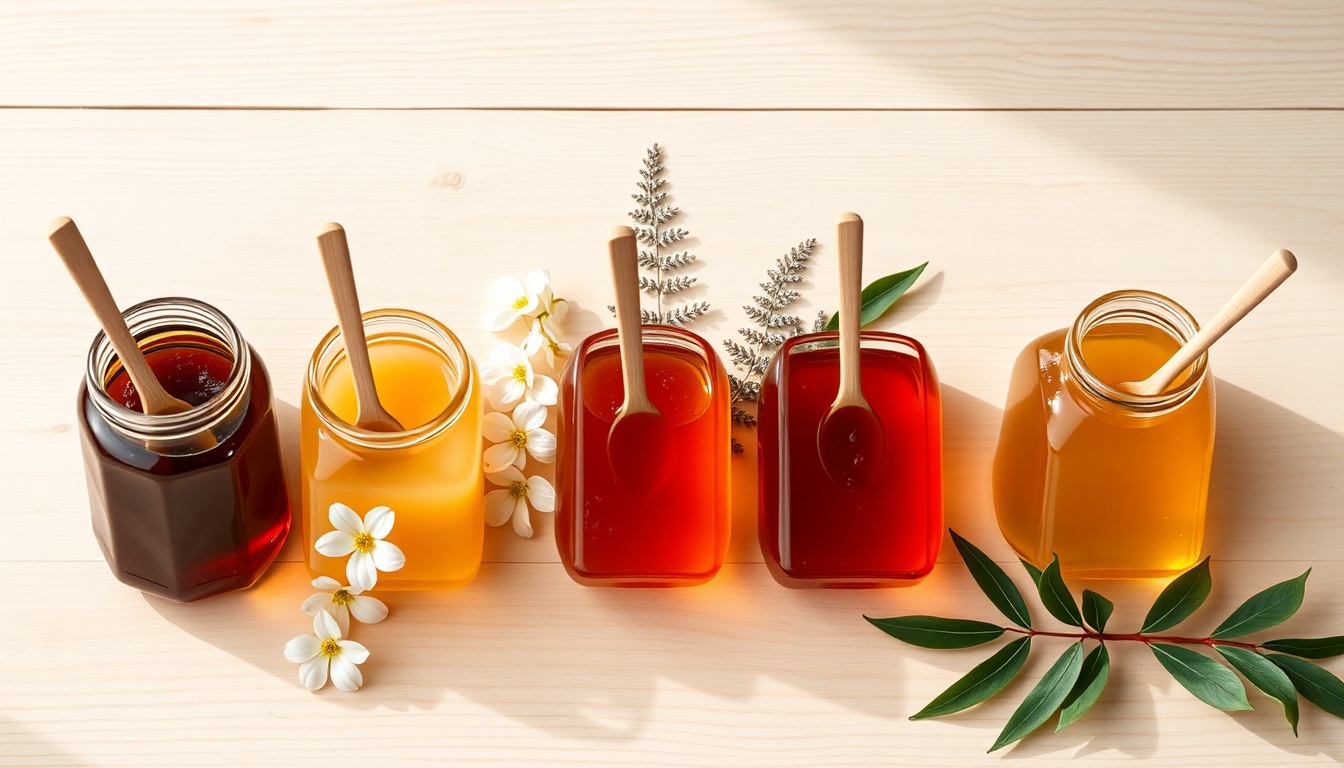
New Zealand's honey spectrum spans from mild (clover) to extremely assertive (high-grade manuka), making food pairing an important consideration.
- Manuka (UMF 5-10+) + Greek yogurt or labneh — At low-to-medium UMF grades, manuka is distinctive but approachable. Its earthy, herbal depth contrasts beautifully with the clean tartness of Greek yogurt or Middle Eastern labneh. Add a handful of toasted almonds and the combination is one of the most satisfying, nutritionally dense breakfasts imaginable
- Manuka (UMF 15+) + Aged cheddar or Manchego — High-grade manuka is too complex and expensive for casual cooking. Its bold, medicinal depth pairs best with assertive hard cheeses where both components can hold their ground. A small amount on a cheese board with aged NZ Mainland cheddar or Spanish Manchego is a surprisingly elegant combination
- Kamahi + Toast with butter or ricotta — Kamahi's butterscotch gentleness is the ideal everyday honey for toast, scones, or crumpets with real butter. Its mild sweetness and vanilla-cream note elevate even simple bread without overwhelming it
- Rewarewa + Blue cheese or aged gouda — Rewarewa's rich caramel-toffee depth can stand up to strong cheese flavors. Drizzle over a wedge of NZ blue (Kapiti or Whitestone), aged gouda, or a sharp Lancashire. The slightly tart finish of rewarewa cuts the fat and creates a layered combination
- Tawari + Fresh goat cheese or brie — Tawari's extreme delicacy needs the lightest possible canvas. A log of fresh chèvre or a room-temperature wedge of double-cream brie, drizzled with tawari and served with crackers and fresh fig, highlights the honey's extraordinary purity of flavor without obscuring it
- NZ Clover + Baking and beverages — NZ clover honey's mild, neutral sweetness makes it the workhorse of the kitchen, sharing the reliable baking performance of clover honey and acacia honey varieties worldwide. It substitutes 1:1 for sugar in most baking (use approximately 3/4 cup honey per cup sugar, reduce liquids slightly, and lower oven temperature by 10°C), sweetens tea without competing with the tea's flavor like wildflower honey might, and dissolves readily in cold drinks
- Manuka + Mānuka-smoked salmon — A beloved New Zealand food tradition: smoked salmon cured with manuka wood chips, glazed with manuka honey, is served at high-end Auckland restaurants and food events. The earthiness of manuka honey echoes the wood-smoke character and cures the salmon's richness with herbal depth. Can be replicated at home with hot-smoked salmon, a brush of medium-grade manuka honey glaze, and a finishing grind of black pepper
New Zealand's Honey Landscape: Regional Origins
New Zealand's diverse landscapes — from subtropical Northland to subarctic Fiordland — produce dramatically different honey profiles depending on region.
- Northland (Te Tai Tokerau) — New Zealand's most northward region, subtropical and warm. The heartland of tawari honey (tawari trees are largely restricted to Northland and Waikato), and a significant producer of rewarewa honey from the native forest remnants. Manuka of high quality but not the most extreme MGO grades. Also produces excellent NZ clover and kānuka
- Waikato and Bay of Plenty — Central North Island agricultural heartland, major clover honey belt. Also produces kamahi and rewarewa from surviving native forest. Some manuka production, though the focus is volume clover honey for export. Home to the University of Waikato where Peter Molan conducted his foundational manuka research
- East Cape / Gisborne — One of New Zealand's most remote and biodiverse regions, with intact native forest. Known for producing some of New Zealand's highest-MGO manuka honey, benefiting from dense manuka stands in regenerating scrubland and the isolation that keeps the forage pure
- Marlborough (South Island) — New Zealand's famous wine region is also a quality honey zone. Clover honey from the Wairau plains, manuka from the hill country, and some bush honey from the Marlborough Sounds native forests. The dry Marlborough sun concentrates nectar and produces clean, characterful honeys
- West Coast (South Island) — Perhaps the most pristine honey environment in New Zealand. Dense southern rata forests (Metrosideros umbellata) cascade down the mountain edges in spectacular red blooms. Kamahi is abundant in the beech forests. The extreme remoteness and minimal human activity produce honeys of exceptional purity. Many West Coast producers are accessed only by helicopter
- Fiordland — UNESCO World Heritage site, arguably the world's most isolated beekeeping environment. Very limited honey production due to difficulty of access. Southern rata, kamahi, and bush honey from this region are extraordinarily rare and command premium prices when available. Mānuka from the northern edges of Fiordland is among New Zealand's most valued
- Canterbury and Otago (South Island) — The drier east coast produces good clover honey from the Canterbury Plains and some manuka from the hill country. The Central Otago goldfields region, New Zealand's driest area, produces thyme honey from wild thyme that naturalized there in the 19th century — a surprising and distinctive NZ variety little known internationally