Ethiopia: Africa's Oldest and Largest Honey Country
Ethiopia is the largest honey producer on the African continent — generating between 50,000 and 60,000 metric tonnes annually according to FAO data — and one of the most important honey-producing nations on Earth in terms of diversity, genetic resources, and the antiquity of its beekeeping tradition. Yet Ethiopian honey is almost entirely absent from the premium international honey market, a paradox that makes it one of the world's most undervalued honey origins and — for the informed buyer — one of its most compelling opportunities.
The reasons for Ethiopia's extraordinary honey character are structural: the country contains ten distinct subspecies of Apis mellifera, the Western honeybee, more than any other nation on Earth. While European commercial beekeeping uses a single domesticated stock (predominantly Apis mellifera ligustica or its hybrids), Ethiopian honey is produced by a genetic mosaic of indigenous subspecies — including Apis mellifera monticola in the highland mountains, Apis mellifera jemenitica in the hot arid lowlands, and several additional population groups in the forests, savannahs, and Rift Valley — each adapted to its local environment and foraging resources over thousands of years. This genetic diversity, combined with Ethiopia's extraordinary botanical richness, produces honeys of a complexity that monoculture commercial beekeeping simply cannot replicate.
Ethiopia's botanical context is equally remarkable. The country contains the world's largest area of Afromontane forest — the highland forests of the western escarpment, including the Kaffa region of Southwest Ethiopia, which is the evolutionary origin of Coffea arabica, coffee itself. The word "coffee" derives from "Kaffa." The wild and semi-wild coffee forests of Kaffa, Jimma, Bale, and Illubabor produce a honey of extraordinary complexity from coffee blossoms, wild forest floor plants, native Afromontane tree species, and dozens of botanical inputs that have no equivalent in any other country. This is a terroir story as compelling as any in the wine world.
Ethiopia is also one of the world's oldest beekeeping nations. Traditional Ethiopian beekeeping is documented in ancient Aksumite manuscripts, and traditional log hives (constructed from hollow logs or bark cylinders hung in trees or mounted on hive supports) are still the dominant production method across rural Ethiopia, producing raw, minimally processed honey extracted by traditional methods that yield a genuinely wild product. For comparison with other historically rich honey traditions, see our guides to Greek honey, Turkish honey, Indian honey, and the World Honey Guide.
Ethiopian White Honey: The Highland Jewel
The most internationally recognized and premium Ethiopian honey variety is known as "Ethiopian white honey" — a category that refers specifically to the pale, often cream-to-white crystallized honey produced from highland wildflower sources, primarily in the Tigray, Amhara (particularly the Welo and North Shewa zones), and Oromia highland regions at elevations between 1,800 and 3,000 metres above sea level.
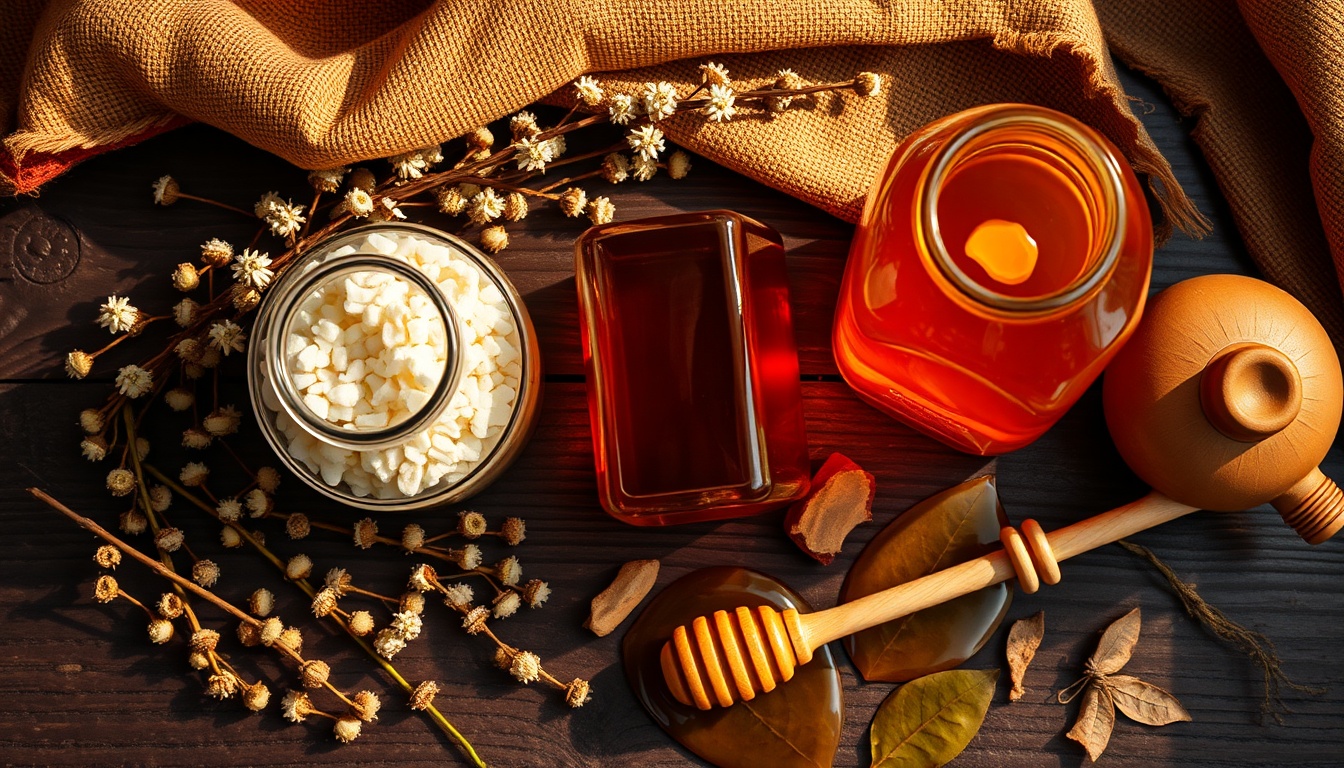
The name "white honey" is earned at the jar: when freshly extracted, Ethiopian highland honey is pale golden to very pale amber, lighter than most European multifloral honeys. After natural crystallization — which occurs within weeks at highland temperatures — it forms an exceptionally fine-grained, creamy white to off-white paste of remarkable uniformity and smoothness. This distinctive appearance, unusual enough in any honey, is caused by the botanical composition of the highland flora: nectar sources dominated by indigenous highland wildflowers, legumes, and Eucalyptus — the introduced Australian genus which, after over a century of large-scale planting in Ethiopian highlands, now constitutes a major landscape feature and significant nectar source.
Eucalyptus honey in the Ethiopian highlands differs meaningfully from Eucalyptus honey produced in other countries. Australian eucalyptus honey from Eucalyptus marginata or E. regnans carries a distinctive medicinal note characteristic of its origin species. Ethiopian highland eucalyptus honey — primarily from Eucalyptus globulus, the species planted most heavily across the Amhara and Oromia highland regions beginning in the late 19th century — is lighter, less pungent, and mixed with the nectars of surrounding indigenous highland wildflowers: wild thyme (Thymus schimperi — an Ethiopian endemic), white clover (Trifolium species), phacelia relatives, native Albizia, and dozens of indigenous highland shrub and tree species. The resulting highland honey has a floral, mildly sweet character with herbal undertones — clean, pleasant, and accessible — quite different from the more assertive character of single-origin eucalyptus honey.
Ethiopian highland white honey has attracted attention from European and American specialty honey importers since the early 2000s. Development organizations including USAID, the Sustainable Trade Initiative (IDH), and various EU trade development programs have invested in quality improvement and export certification infrastructure for Ethiopian honey, recognizing its commercial potential. Today, small volumes of authenticated Ethiopian white honey reach specialty retailers in the Netherlands, Germany, the UK, and the United States, typically at premium prices reflecting the logistical cost of small-scale artisan production and fair-trade certification programs.
Flavor profile: pale gold to cream-white, fine-grained crystallized texture; aroma of light wildflower sweetness with mild eucalyptus and native Ethiopian highland herb notes; flavor smooth, mildly floral-sweet, clean, gentle — approachable and versatile. An excellent table honey for all uses. Pairs well: green tea, yogurt, light pastry, mild cheeses. Price: at specialty importers for verified Ethiopian highland honey, higher for single-origin artisan sources.
Get the Honey Buyer's Cheat Sheet (free PDF)
16 varieties on one page — color, flavor, best use and what a fair price looks like — from the 304 honeys we track.
Kaffa Coffee Forest Honey: The Most Complex Honey on Earth?
The southwestern highlands of Ethiopia — the regions of Kaffa, Sheka, and Bench-Maji, collectively known as the "coffee forest zone" — contain some of the last remaining wild Coffea arabica forest on Earth. This is the birthplace of coffee as a beverage: the wild coffee trees growing in these highland forests are the genetic ancestors of every cup of coffee consumed in the world. UNESCO has recognized the Kaffa Biosphere Reserve for its global biological significance.
The forest honey produced from these coffee zones represents what may be the world's most complex terroir honey in terms of botanical diversity. Wild Apis mellifera colonies — primarily the large-bodied, highly productive highland subspecies Apis mellifera monticola — forage across a landscape that includes wild Coffea arabica in full bloom (small white star-shaped flowers with an intense jasmine-like fragrance), dozens of native Afromontane tree species (Podocarpus falcatus, Prunus africana, Hagenia abyssinica, Aningeria adolfi-friderici, Syzygium guineense), highland herbaceous species, native Rubus (Ethiopian raspberry), Hypericum species, and forest floor flora of extraordinary diversity. The nectar input is essentially the entire botanical composition of one of the world's most biodiverse forest ecosystems.
Coffee forest honey's flavor is transformative for those who encounter it for the first time. Experienced honey tasters consistently describe it as: dark amber to dark brown in color, intensely aromatic with a complex wild floral depth, notes of coffee blossom (a distinct jasmine-citrus-sweet character quite different from roasted coffee), warm forest floor earthiness, and a slightly resinous quality from the forest canopy species. The sweetness is bold but not simple — layered, with multiple evolving taste phases that recall aged wine or complex cheese rather than commercial honey. Crystallization is slow to very slow due to the high fructose composition of the diverse forest nectar sources.
Coffee forest honey is produced primarily by traditional beekeeping communities in the Kaffa, Sheka, and Bench-Maji regions using traditional log hives mounted in forest trees — a practice that dates back centuries and is documented by ethnographic researchers including those from the Institute of Ethiopian Studies at Addis Ababa University. Volumes are genuinely small: the forest honey is not commercially scalable in the way plantation-sourced honey is, as it depends on the integrity of wild forest ecosystems and traditional production methods. Beekeeping in these forest zones also contributes directly to forest conservation — beekeepers who earn income from wild honey have strong economic incentives to protect the forest habitat that their hives depend on, a fact recognized by international conservation organizations working in the region.
Finding authentic Kaffa coffee forest honey outside Ethiopia requires working with specialty importers who maintain direct relationships with forest beekeeping cooperatives. A small number of European and North American specialty honey companies — including some certified under Fair Trade or Rainforest Alliance standards — carry authenticated Ethiopian forest honey at prices reflecting both its rarity and the genuine production costs involved. This is not a mass-market product; it is among the world's most genuinely rare artisan honeys. Price: at specialty importers for authenticated Kaffa forest honey; significantly higher for small-batch artisan-direct imports.
Bale Mountains Honey: Highland Forest and Afroalpine
The Bale Mountains of southeastern Ethiopia — a UNESCO World Heritage tentative site, home to the largest area of Afroalpine habitat in Africa and one of the world's most endemic-rich mountain ecosystems — produce a category of honey that is as botanically distinct as any on Earth. The Bale Mountains contain the world's largest surviving population of Ethiopian wolf (Canis simensis, the rarest canid on Earth) and the Bale monkey (Chlorocebus djamdjamensis), species that exist nowhere else — a measure of the ecosystem's biological uniqueness.
Bale Mountains honey is produced from two distinct zones: the montane forest belt (2,300–3,200m elevation), where traditional log hive beekeeping using Apis mellifera monticola yields a dark, complex, multi-floral forest honey; and the higher Sanetti Plateau Afroalpine zone (3,800–4,300m), which is too cold for permanent bee colonies but is grazed by wild Apis mellifera populations during the brief summer flowering season. The primary floral sources in the mountain forest zone include wild Hagenia abyssinica (a large endemic Afromontane tree with distinctive flowers used in traditional Ethiopian medicine for tapeworm treatment — the plant's dried flowers are called "kosso"), Erica arborea (tree heather — the same genus as Scottish heather — forming extensive heath zones on the mountain slopes), Hypericum revolutum (giant St. John's wort, reaching 5 metres tall in the Bale forests), and native Alchemilla (lady's mantle) species covering the subalpine meadows.
Erica heather in the Bale Mountains produces a honey component that shares characteristics with European heather honeys — thixotropic gel-like consistency, rich, slightly astringent depth — mixed with the complexity of the diverse Afromontane flora. The resulting honey is typically dark amber to amber-brown, with a robust, multi-layered character. Among Ethiopian honey varieties, Bale Mountains honey is regarded by specialists as among the most complex and characterful, comparable in its depth to Greek fir honeydew or Tasmanian leatherwood. It remains very difficult to source internationally.
A note on altitude and quality: the cool temperatures of the Bale highlands produce bees that are highly productive and well-adapted to the short but intense highland flowering season. Honeys from high-elevation Ethiopian sources — Bale, Simien, and other mountain zones — generally contain lower moisture content than lowland Ethiopian honey, which is significant for quality: honey with moisture above 20% ferments readily in storage. Traditional highland honey from Bale and similar zones is often at 17–19% moisture, within the range of European standards, making it a stable, high-quality product.

Traditional Ethiopian Beekeeping: Log Hives, Bark Cylinders, and an Ancient Craft
Ethiopian beekeeping is among the world's oldest continuous agricultural traditions. The practice is referenced in pre-Christian Aksumite texts and Ge'ez manuscripts, depicted in traditional Ethiopian Orthodox religious paintings, and embedded in customary law systems that govern forest access, hive ownership, and honey trade relationships across dozens of distinct ethnic communities. The Ethiopian Orthodox Church has historically maintained gardens and forests specifically for bees, and monasteries on islands in Lake Tana — including the famous Zege Peninsula monasteries — have kept bees for centuries.
The dominant production method across rural Ethiopia — accounting for the vast majority of the country's honey output — is traditional hollow-log hive beekeeping. Traditional hives (called "gojo" in Amharic, though terminology varies by region) are constructed from sections of hollow tree trunk, sealed at both ends with cow dung mixed with straw or clay, and fitted with small entrance holes. These hives are typically mounted horizontally in trees or on wooden poles at heights that discourage disturbance by predators, arranged in clusters of 10–50 hives per farm. Bees colonize these hives naturally through swarming, without purchased package bees or induced splits. The beekeeper's primary management role is harvest timing — cutting the comb at optimal ripeness — and protecting the hives from honey badgers (Mellivora capensis), which are among the most persistent honey robbers in Africa and have driven the development of traditional hive placement strategies across generations.
Honey extraction from traditional log hives is a nighttime activity in many regions — both for tradition and practicality, as bees are less defensive at night and smoke from fire torches is used to manage the colony during harvest. The comb is cut, placed in a traditional pressing basket or cloth strainer, and squeezed or gravity-drained to separate honey from wax. This process produces honey that is lightly filtered (leaving pollen and minimal wax particles) but not heated — genuinely raw by any reasonable definition. A portion of every harvest is traditionally retained for tej production (see below), and the wax is traded separately — Ethiopian beeswax is one of the country's important export commodities, historically traded to Europe for candle manufacturing.
Traditional beekeeping knowledge in Ethiopia is primarily passed through apprenticeship within families and communities, with significant regional variation in techniques, hive construction, seasonal management, and the botanical knowledge of local bee forage. Ethnobotanical studies of Ethiopian beekeeping communities — including field research by the Institute of Ethiopian Studies and international researchers — have documented the extraordinary depth of this traditional ecological knowledge: beekeepers can identify 40–80 local plant species by their nectar value, flowering timing, and colony population effects, and manage hive placement, harvest timing, and colony health through accumulated multi-generational observation that constitutes a sophisticated applied biology.
Transition to modern frame hives — introduced by government extension programs and development organizations since the 1970s — has improved honey quality and moisture control where successfully adopted, but traditional log hive beekeeping remains dominant for practical and cultural reasons: log hives require no specialized materials, no frame fabrication, and no technical inputs beyond local wood and traditional knowledge, making them resilient and accessible in rural areas with limited market access.
Tej: Ethiopia's Ancient Honey Wine
No discussion of Ethiopian honey is complete without tej — the ancient fermented honey beverage that has been Ethiopia's traditional social and ceremonial drink for at least two thousand years and remains the defining fermented drink of Ethiopian culture. Tej is Ethiopia's mead.
Unlike European mead traditions, which use honey diluted with water and fermented with wine yeasts, tej is distinguished by a single uniquely Ethiopian ingredient: gesho (Rhamnus prinoides — Ethiopian buckthorn), a thorny shrub whose dried leaves, stems, and bark are added to the fermenting honey-water must to contribute bitterness, tannins, and antimicrobial compounds that both control fermentation and impart a distinctive bitter-herbal character unlike any European mead. Gesho is to tej what hops are to beer: a bitterness agent, a preservative, and a botanical signature of the drink's cultural identity.
Traditional tej is produced in clay vessels (birille — the bulbous clay flask that serves as both fermentation vessel and serving container), using raw honey diluted with water at ratios that vary by tradition and regional custom (typically 1:3 to 1:5 honey:water by volume), with gesho added in bundles and removed before drinking. Fermentation occurs naturally from wild yeasts present in the raw honey and the gesho material. The resulting beverage has an alcohol content typically between 7% and 12% ABV, a warm golden to amber color depending on the honey used, and a flavor that combines honey sweetness, floral complexity, and a pleasantly bitter herbal depth from the gesho — drier and more complex than a simple sweet mead.
Tej has significant religious and ceremonial importance in Ethiopian Orthodox Christian tradition — it is served at religious celebrations, weddings, funerals, and holiday gatherings across the country. Tej-houses (tej bet) are traditional social gathering spaces in Ethiopian towns and cities, often decorated with colorful tablecloths and serving tej from the traditional birille flask alongside injera and stews. Addis Ababa has hundreds of traditional tej-houses, and tej remains the preferred drink of traditional hospitality across the highlands.
Research interest in tej has grown internationally with the global craft fermentation and ancient beverage revival movements. Ethiopian tej is produced in increasingly sophisticated forms by a small number of Ethiopian-American brewers in the diaspora (particularly in Washington D.C., which has the world's largest Ethiopian diaspora population), and by experimental mead makers in the US and Europe who work with imported gesho. For honey buyers, tej production is also practically relevant: the honey varieties historically considered finest for tej — specifically well-ripened, aromatic wild forest honey from highland sources — are the same varieties most prized for direct eating, and traditional honey quality standards in Ethiopian communities are partly defined by tej-making suitability.
Afar Desert Honey: Wild Honey from the Danakil
Ethiopia's Afar Depression — the geological triple junction where three tectonic plates meet, producing the lowest point in Africa outside of sea level and some of the hottest surface temperatures recorded on Earth — seems an unlikely honey country. Yet the semi-arid and arid lowlands of the Afar and Somali regional states in eastern Ethiopia support significant wild honey populations adapted to extreme conditions.
The bee species dominant in these lowland zones is Apis mellifera jemenitica — the Yemeni bee or Arabian bee, a small-bodied subspecies (smaller than the highland Apis mellifera monticola) that is native to the Arabian Peninsula and the Horn of Africa arid zones. Apis mellifera jemenitica has evolved specific adaptations for life in hot, dry environments: smaller colony size (typically 10,000–20,000 workers versus 40,000–80,000 for highland subspecies), highly efficient water management, aggressive swarming behavior to track seasonal forage availability, and foraging on the sparse but productive flowers of acacia species, wild sidr (Ziziphus species), and other drought-adapted trees and shrubs that bloom following seasonal rains.
Afar and Somali lowland honey is dominated by nectar from native Acacia (now taxonomically Vachellia and Senegalia) species — particularly Vachellia tortilis (umbrella thorn acacia), Vachellia nilotica (gum acacia), and Vachellia oerfota — plus sidr/jujube (Ziziphus spina-christi — the same species as Yemeni sidr honey), wild Commiphora (myrrh tree, whose flowers produce significant nectar for bees that also collect the resin commercially), and seasonal desert wildflowers following the brief rains. The resulting honey is typically dark amber to near-black, intensely aromatic with a warm, earthy, resinous quality from the Commiphora and acacia-dominated landscape, with a depth of flavor that reflects extreme foraging conditions.
Acacia honey from Ethiopian lowlands — particularly from the Afar and Somali regions — has been studied by Ethiopian researchers for its potential as an export commodity, distinct from the more commonly known acacia honeys of Europe (which come from the introduced false acacia, Robinia pseudoacacia — a different species entirely). Wild Ethiopian acacia honey is darker, more complex, and more resinous than European "acacia" honey, which is pale and mild. This distinction is important for buyers: the international premium for "acacia honey" refers to Robinia pseudoacacia honey from Hungary, Romania, or China — a completely different product from wild Ethiopian Vachellia honey, which is more akin to wild Yemeni sidr or desert bush honey than to the pale liquid European acacia variety.
The Afar Region's traditional pastoral communities — including the Afar people, who are primarily camel and goat herders — have an ancient relationship with wild honey. Wild honey gathering (as opposed to traditional hive beekeeping) is practiced alongside pastoral activities in the Afar lowlands, with wild bee colonies in rock crevices and acacia tree hollows harvested seasonally. This is genuinely wild honey in the strictest sense — collected from self-established feral colonies in their natural environment — and represents one of the most archaic forms of human honey use still practiced.
Ethiopia's Major Honey Varieties at a Glance
The following comparison covers the most important Ethiopian honey varieties for buyers and honey enthusiasts:
- Ethiopian Highland White Honey (Tigray / Amhara / North Shewa) — Color: pale gold to creamy white (crystallized) | Source: Apis mellifera monticola and local highland subspecies on mixed highland wildflowers, Eucalyptus globulus, wild Thymus schimperi, highland legumes | Crystallization: fine-grained, forms smooth white cream | Flavor: mild, clean, delicately floral-sweet, gentle herbal undertone; approachable and versatile | Elevation: 1,800–3,000m | Export status: limited but growing; specialty retailers in Netherlands, Germany, UK, USA | Price: at specialty importers
- Kaffa / Southwest Coffee Forest Honey — Color: dark amber to amber-brown | Source: Wild Apis mellifera on wild Coffea arabica, Afromontane forest trees (Podocarpus, Hagenia, Prunus africana), native understory flora in UNESCO Kaffa Biosphere Reserve | Crystallization: slow | Flavor: intensely complex — wild floral depth, coffee blossom notes (jasmine-citrus-sweet), forest floor earthiness, resinous forest canopy notes; evolving multi-phase flavor like aged wine | Elevation: 1,500–2,200m | Export status: very limited; small-batch artisan importers only | Price:
- Bale Mountains Forest Honey — Color: dark amber to amber-brown | Source: Apis mellifera monticola on Erica arborea tree heather, Hagenia abyssinica, Hypericum revolutum, subalpine wildflowers in the Bale Mountains National Park zone | Crystallization: medium-slow | Flavor: robust, complex, multi-layered — heather astringency, wild forest depth, floral wildflower notes; among Ethiopia's most characterful varieties | Elevation: 2,300–3,200m | Export status: very rare; research and specialist collector levels | Price: not widely traded internationally
- Oromia / Amhara Wildflower Honey (mid-altitude) — Color: medium to dark amber | Source: Apis mellifera on mid-altitude wildflowers, Eucalyptus, indigenous Acacia, coffee plantation borders, seasonal wildflowers | Crystallization: medium | Flavor: warm, multi-floral, slightly earthy, complex wildflower character | Elevation: 1,200–2,000m | Export status: the most commercially available Ethiopian honey variety; widely traded to Middle East and Europe | Price: at fair-trade importers
- Afar / Somali Lowland Honey (Acacia / Sidr) — Color: dark amber to near-black | Source: Apis mellifera jemenitica on Vachellia species (wild Ethiopian acacia), Ziziphus spina-christi (sidr), Commiphora (myrrh) | Crystallization: slow | Flavor: bold, warm, earthy, resinous, complex desert character; intense and assertive; related in character to Yemeni sidr tradition | Elevation: below 1,000m | Export status: limited; occasionally available through horn-of-Africa specialty importers | Price: variable
- Traditional Log Hive Honey (nationwide, unspecified variety) — Color: varies widely by season and region | Source: Various indigenous subspecies; whatever regional flora is available | Crystallization: varies | Flavor: highly variable — the most authentic and "wild" Ethiopian product; often darkens and deepens with season | Extraction: traditional press/drainage, genuinely raw | Export status: rarely labelled by source; forms basis of most commercial Ethiopian honey exports in bulk | Notes: quality extremely variable; NMR testing recommended for premium purchases
The Science: What Research Says About Ethiopian Honey
Ethiopian honey has been the subject of growing scientific interest, driven by its remarkable botanical and genetic diversity. Several areas of research are particularly well-developed:
Genetic diversity of Ethiopian Apis mellifera: Ethiopian bees are among the most genetically important wild populations in the world for conservation of Apis mellifera genetic resources. A 2009 study by Jaffé et al. in PLOS ONE identified African Apis mellifera populations — particularly those from Ethiopian highlands — as carrying high levels of genetic diversity that may be critical for the long-term adaptive capacity of honeybees globally, particularly in the context of disease resistance, climate adaptation, and colony fitness. Ethiopian highland subspecies (particularly A. m. monticola) are studied as potential sources of traits including Varroa mite resistance and thermal tolerance. Ethiopia is not affected by Varroa at the same devastating levels as European commercial beekeeping, partly because native subspecies and traditional hive management maintain a different host-parasite equilibrium.
Honey quality and characterization studies: Ethiopian researchers, including teams from Addis Ababa University, Jimma University, and Bahir Dar University, have published multiple studies characterizing Ethiopian honey from different regions. A 2019 study by Birhanu Tesfa et al. in the journal Heliyon examined physicochemical properties of Ethiopian honey from Tigray, Amhara, and Oromia regions, finding that highland honey varieties consistently met Codex Alimentarius standards for moisture (below 20%), HMF (hydroxymethylfurfural — a heat damage marker), and diastase activity. The study noted that honey from traditional log hives at high elevations showed superior quality parameters to lowland sources. Research has also characterized the pollen composition of major Ethiopian honey varieties, contributing to botanical origin verification methodologies.
Antibacterial properties: Several Ethiopian universities have conducted in vitro studies on the antimicrobial activity of Ethiopian honey varieties against common wound pathogens. Studies from Jimma University have found that dark Ethiopian forest honey varieties — particularly those from Kaffa and western forest zones — show above-average minimum inhibitory concentrations (MIC) against Staphylococcus aureus and Escherichia coli, consistent with high polyphenol content from diverse forest botanical sources. As with all honey antibacterial research, these are in vitro findings and do not constitute clinical evidence for wound treatment application without medical supervision.
Tej (Ethiopian honey wine) fermentation research: The fermentation biochemistry of tej has attracted research interest for its distinctive use of gesho (Rhamnus prinoides). Studies from Addis Ababa University (Abegaz et al., 2002, published in World Journal of Microbiology and Biotechnology) characterized the microbial ecology of traditional tej fermentation, identifying wild Saccharomyces cerevisiae and related yeasts as primary fermentation agents, with gesho's antimicrobial tannins (particularly proanthocyanidins) suppressing spoilage organisms while shaping the yeast community toward desired fermentation characteristics. This work has contributed to the broader field of traditional fermented beverage ethnomicrobiology.
Important general disclaimer: All health-related statements in this guide describe chemical properties, nutritional characteristics, or summarize peer-reviewed research findings. Nothing in this guide constitutes medical advice or implies that consuming Ethiopian honey treats, cures, or prevents any disease. Honey of any type must not be given to children under 12 months due to risk of infant botulism. People with diabetes should monitor consumption of any honey variety as all honeys are primarily sugars.
Quick Comparison: Ethiopian Honey vs. Other International Varieties
Ethiopian honey holds a distinctive position in the global premium honey landscape:
- Ethiopian Forest Honey vs. Greek Fir Honeydew — Both are dark, complex, high-polyphenol honeys with above-average antibacterial activity. Greek fir is more minerally; Ethiopian forest honey is more botanically complex with greater aromatic depth from diverse forest flora. Greek fir is more consistently available internationally with established PDO protection. Ethiopian coffee forest honey is rarer and arguably more unique in flavor profile.
- Ethiopian White Honey vs. Italian Acacia Honey — Both are pale, mild, approachable multi-floral honeys. Italian acacia (from Robinia pseudoacacia) is liquid at room temperature due to high fructose; Ethiopian highland white honey crystallizes to a fine cream. Italian acacia has greater market familiarity and price premium internationally; Ethiopian white honey offers comparable quality at lower price points and with the added narrative of traditional log-hive production.
- Ethiopian Highland Honey vs. Canadian Fireweed — Both are premium highland honey varieties with strong botanical terroir narratives. Canadian fireweed is a monofloral honey with a distinctive elderflower-like profile; Ethiopian highland honey is multi-floral, more complex and earthier. Both are genuinely excellent; Ethiopian honey offers a global-south origin story and fair-trade context that resonates with ethically-minded buyers.
- Afar Desert Honey vs. Yemeni Sidr Honey — Genuine Ziziphus spina-christi sidr is present in both Yemen and Ethiopia's Afar/Somali lowlands. Yemeni sidr has greater international brand recognition and premium price infrastructure due to decades of luxury honey marketing. Ethiopian sidr from Afar/Somali zones is essentially the same botanical origin at a fraction of the price — but is rarely labelled clearly as "sidr" and requires informed sourcing. See our Sidr Honey Benefits guide for the full sidr tradition.
- Ethiopian Honey vs. New Zealand Manuka — These are fundamentally different products serving different markets. New Zealand manuka is produced from a single genus (Leptospermum) and sold with a documented antibacterial activity rating (UMF/MGO); Ethiopian forest honey is botanically diverse with no equivalent certification infrastructure. Manuka has the global brand recognition and a scientifically rigorous marketing framework; Ethiopian honey has botanical depth and origin story complexity that manuka cannot match. For wound care with documented activity: manuka. For the world's most complex terroir honey experience: Ethiopian forest honey. See our New Zealand Honey Guide.
How to Buy Authentic Ethiopian Honey
Ethiopian honey is one of the global honey market's most authentic products — it is rarely faked or adulterated at origin, because the production costs are so low and the honey is genuinely wild that there is little economic incentive for adulteration at the producer level. The authenticity challenges come elsewhere in the supply chain: blending (Ethiopian honey mixed with cheaper third-country honey and relabelled), generic "African honey" categorization that obscures specific origin, and moisture issues from improperly ripened honey in lower-quality commercial supply chains. Here is how to navigate this:
Look for specific regional origin: Vague "Ethiopian honey" labels often indicate bulk-blended commercial product. Look for specific regional designations — "Tigray highland honey," "Kaffa forest honey," "Welo wildflower honey," "Oromia multifloral" — that indicate sourcing from specific regions with traceable producers. Specialty importers who maintain direct farmer/cooperative relationships can usually provide this information.
Certification programs: Several certification programs have been established specifically for Ethiopian honey. The "Ethiopian Honey Alliance" producer network and various fair-trade and organic certification programs (IFOAM-accredited organic certification is available in Ethiopia) provide third-party verification of production methods. GIZ (German development cooperation) and other agencies have developed quality standards and certification support for Ethiopian honey exports. These certifications are imperfect but meaningful indicators of supply chain transparency.
Moisture is the key quality parameter: Ethiopian honey quality varies primarily by moisture content — well-ripened highland honey at 17–19% moisture is stable and high-quality; improperly collected or lowland honey at 21–24% moisture will ferment in storage. Artisan importers who buy Ethiopian honey know their moisture data; if a supplier cannot tell you the moisture content of their Ethiopian honey, that is a meaningful quality red flag.
A named region, a fair-trade or organic certificate, and a moisture number are the buying signals. Ethiopian honey priced like a bulk supermarket jar is likely a blend with limited traceability.
For comparison with other internationally sourced premium honeys with strong origin stories, see our guides to Australian honey (leatherwood, jarrah), Indian honey (Himalayan cliff, Sundarbans), Greek honey (thyme, fir), and Spanish honey (La Alcarria, rosemary).