Spain: Europe's Largest Honey Producer
When specialists discuss the world's great honey nations, Greece and New Zealand dominate the conversation — Hymettus thyme honey and Manuka are globally famous brands. Yet Spain, which produces more honey than any other EU country, remains almost entirely unknown to international buyers. Spain generates approximately 30,000–37,000 metric tons of honey annually (figures vary by year and survey methodology), ahead of Germany, Romania, and France in European production rankings. With over 29,000 registered beekeepers — approximately 5,500 operating professionally — and a landscape spanning eight distinct biogeographical zones from Atlantic rainforest to semi-arid Mediterranean scrub, Spain offers a diversity of honey types that few countries can match.
Spain's relative invisibility in the international premium honey market is partly a marketing gap and partly structural: much of Spain's honey production has historically gone into industrial blending, particularly for German and French buyers, rather than being bottled under origin designations. This is changing. A growing artisan segment, catalyzed by the success of La Alcarria DOP, is bringing Spanish monofloral honeys — rosemary, thyme, lavender, heather, orange blossom, chestnut, eucalyptus — to specialty food markets worldwide. For the buyer willing to seek them out, Spanish honeys represent one of the best combinations of quality and value in the premium honey market.
This guide covers Spain's major honey varieties, the regions that produce them, what peer-reviewed research says about their quality, the importance of La Alcarria DOP, and how to find and buy authentic product. For context across the international honey landscape, see our guides to Greek honey, Italian honey, Turkish honey, New Zealand honey, and Canadian honey.
Spain's Honey Geography: Eight Zones, Eight Palettes
Spain's extraordinary honey diversity stems from its position at the intersection of Atlantic, Mediterranean, and continental climates, and from a topography that spans from sea-level river deltas to 3,400-meter mountain peaks. The country divides into distinct honey-producing zones, each with characteristic floral sources.
Atlantic Spain — Galicia, Asturias, Cantabria, and the Basque Country — is the country's wettest and greenest region. Abundant rainfall supports dense eucalyptus plantations (planted for paper pulp throughout the 20th century), heather-covered moorlands, chestnut woodland, and riverside wildflower meadows. Galicia alone accounts for the majority of Spain's eucalyptus honey production and significant heather honey output. This is Spain's most productive zone by volume.
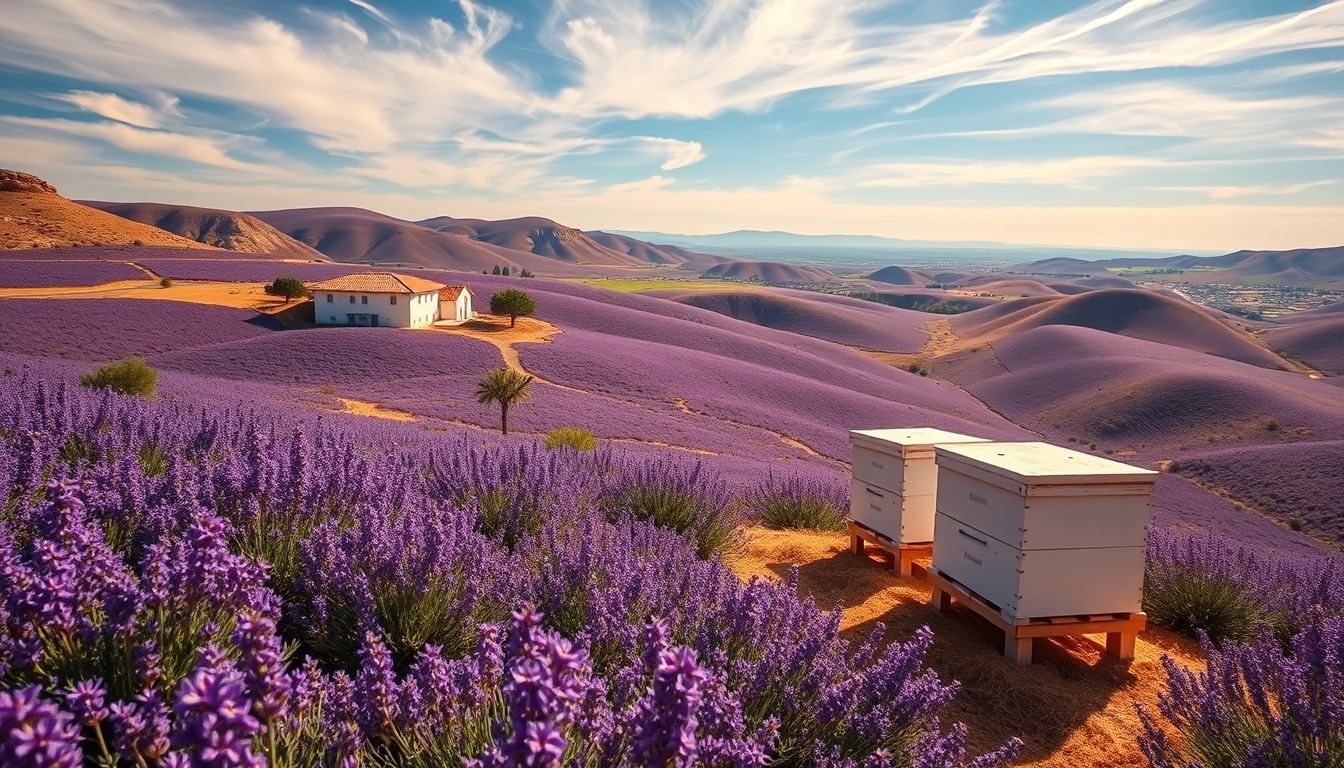
The Castilian Meseta — the vast central plateau of Castilla y León, Castilla-La Mancha, and Madrid — is Spain's heartland honey zone. At elevations of 700–1,100 meters, the limestone upland plateaus are covered in rosemary, lavender, thyme, cistus, and other Mediterranean scrub species. La Alcarria, on the Guadalajara–Cuenca border at the eastern edge of Castilla-La Mancha, is Spain's most celebrated honey region.
Mediterranean Coastal Spain — Valencia, Murcia, Catalonia, and Andalucía's coastal strip — is orange blossom and thyme country. Vast citrus orchards produce azahar honey in spring. Inland limestone sierras from Valencia to Almería support outstanding thyme (tomillo) honey production comparable in quality to Greek mountain thyme honey.
Extremadura and Sierra Morena — the dehesa (cork-and-holm-oak parkland) landscape of western Spain — produces Spain's most distinctive and least known honey type: dark, mineral holm-oak and cork-oak forest honey, often sold as polyfloral mountain honey (miel de montaña). These landscapes are among the most biodiverse in western Europe, and their honey reflects that complexity.
The Canary Islands and Balearics each have distinct floral profiles that produce island-specific honeys — particularly in the Canaries, where endemic species including Teide pine (Pinus canariensis), tabaiba (Euphorbia regis-jubae), and native flora produce honeys found nowhere else. Canary Islands honey is almost entirely consumed within the archipelago.
Get the Honey Buyer's Cheat Sheet (free PDF)
16 varieties on one page — color, flavor, best use and what a fair price looks like — from the 304 honeys we track.
The Major Spanish Honey Varieties
Spain's botanical diversity produces at least 20 commercially recognized monofloral honey types. These are the principal varieties international buyers should know.
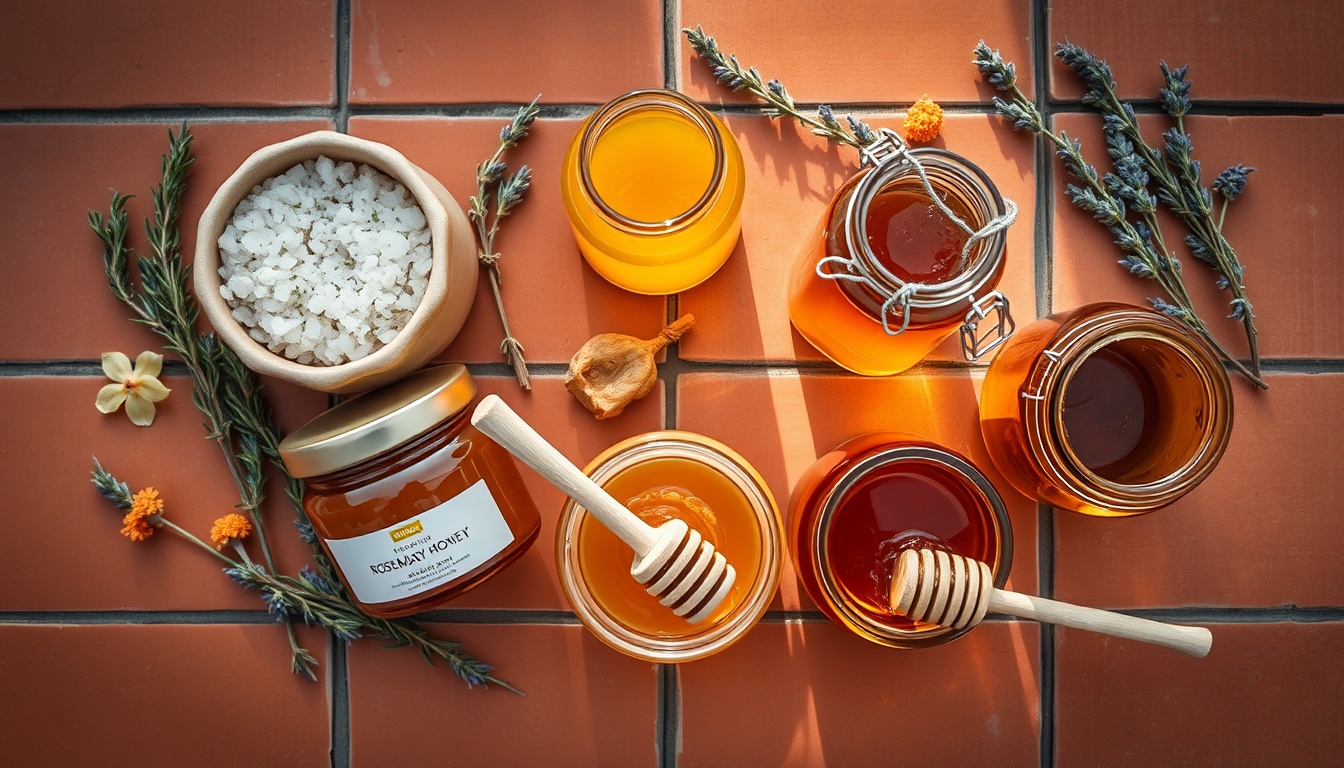
- Miel de Romero (Rosemary Honey) — Spain's most prestigious monofloral honey, especially from the La Alcarria plateau. Produced from Rosmarinus officinalis (common rosemary), which covers vast areas of the Castilian limestone meseta and coastal Mediterranean mountains. Rosemary blooms in late winter and early spring (February–April depending on altitude and latitude), providing one of the earliest major nectar flows of the Spanish beekeeping year. Color: white to pale cream, almost milky-opaque; one of the palest honeys in Europe. Aroma: delicate and herbal — a gentle rosemary freshness without the sharpness of the live plant, with floral undertones of vanilla and fresh-cut flower. Taste: light, clean, subtly herbal; less sweet-tasting than clover despite similar sugar content; gentle with a soft, warm finish. Crystallization: fast — rosemary honey granulates quickly (4–8 weeks) into a very fine, smooth, dense white cream. This rapid crystallization to a white paste is one of rosemary honey's defining characteristics and an important authenticity marker, contrasting with Italian acacia honey which maintains liquid consistency for years due to its fructose-dominant sugar profile and Alpine foothills terroir creating exceptional crystallization resistance. Price: for quality monofloral rosemary honey from a named Spanish producer; La Alcarria DOP commands a premium at €14–28. Best: fresh cheeses (Queso Manchego, fresh goat cheese — the classic La Mancha pairing), mild breakfast breads, yogurt, herb-forward culinary applications, tea. Spanish rosemary honey is the most studied Spanish variety, with extensive peer-reviewed research on its polyphenol profile. Note: mass-market "rosemary honey" sold internationally often contains only a small percentage of actual rosemary nectar; look for monofloral certification or La Alcarria DOP designation.
- Miel de Eucalipto (Eucalyptus Honey) — Spain's highest-volume monofloral honey by volume of production, dominated by Galicia, Asturias, and Cantabria where 20th-century afforestation programs planted millions of hectares of Eucalyptus globulus (blue gum) for the paper pulp industry. Eucalyptus blooms in late spring and summer; its abundant nectar supports large apiaries and high yields. Color: amber to dark amber, with warm reddish-brown tones. Aroma: distinctive and immediately recognizable — sharp, mentholated, slightly medicinal-pungent; the eucalyptus oil character is present in the aroma even when muted in the flavor. Taste: moderately sweet with eucalyptus's characteristic menthol-camphor note; medium body; pleasant but assertive; less sweet than acacia or clover; slight woody-medicinal aftertaste. Crystallization: medium-fast, granulating to a moderately coarse amber paste in 2–4 months. It is a commodity variety often sold at lower prices than artisan monoflorals. Best: herbal teas (a common folk pairing in Galicia and Asturias); strong-flavored aged cheeses; savory marinades; recipes where a eucalyptus note is an asset. Spanish eucalyptus honey is broadly similar to Sardinian eucalyptus honey (also E. globulus) and can substitute for it in cooking and cheese pairing applications. It is Spain's most exported bulk honey variety.
- Miel de Tomillo (Thyme Honey) — One of Spain's most aromatic and complex monoflorals, produced in the inland Mediterranean sierras from wild thyme (Thymus vulgaris and related species including T. zygis — a Spanish endemic particularly valued for its honey quality). Key production zones: Sierra Nevada foothills (Granada, Almería), inland Valencia and Murcia (sierras above the coastal plain), and the Ebro basin uplands. Thyme blooms May–July on rocky, sun-exposed limestone slopes. Color: amber to golden amber, sometimes with a slight reddish tint. Aroma: intensely aromatic — powerful thyme herbal character, floral, slightly medicinal, persistently complex; considered by many specialists to rival Greek thyme honey in aromatic intensity. Taste: rich and assertive — full-bodied, strongly herbal, long finish; similar to Greek thyme honey in style and comparable quality; moderate sweetness with a warm, slightly spicy aftertaste from thyme phenols. Crystallization: medium-fast, to a granular firm amber paste in 2–4 months. Price. Best: aged hard cheeses, charcuterie boards, strong-flavored bread, yogurt, grilled meats (glaze), herbal teas. Spanish thyme honey — particularly from wild Thymus zygis, an endemic subspecies studied by Spanish researchers — is an excellent and often overlooked alternative to Greek thyme honey at lower prices. It is well-suited to any recipe calling for thyme honey.
- Miel de Azahar / Naranjo (Orange Blossom Honey) — Produced from the blossom of orange trees (Citrus sinensis — the "azahar" or "naranjo" nectar) and other citrus (lemon, mandarin, bergamot) in Valencia, Murcia, and Andalucía. Spain is one of the world's largest orange producers, and its vast citrus orchards supply one of Europe's most abundant orange blossom honey flows in April–May. Color: pale cream to pale amber, slightly milky. Aroma: intensely floral and fragrant — fresh orange blossom, neroli, citrus zest; one of the most immediately appealing honey aromas and strongly recognizable. Taste: delicately sweet with a pronounced but gentle citrus-floral character; light-bodied, clean, moderate sweetness; low bitterness; long fragrant finish. Crystallization: medium, granulating in 2–4 months to a smooth, fine white-cream paste. Price: for quality monofloral product. Best: desserts (panna cotta, custard, ice cream pairing), fresh ricotta, herbal teas, Middle Eastern pastries (where orange blossom water is used — the honey version provides a similar note), Moroccan-influenced Andalucían cooking, chicken marinades, baking. Spanish azahar honey shares essential Citrus sinensis nectar characteristics with Florida orange blossom honey, though Spanish varieties often develop more complex mineral undertones from Mediterranean limestone terroir compared to Florida's sandy coastal soil conditions. Spanish azahar honey closely parallels Italian Sicilian arancio honey and Moroccan orange blossom honey; the Spanish version is often more readily available and competitively priced. It is one of Spain's most exported premium honey varieties.
- Miel de Brezo (Heather Honey) — Produced from ling heather (Calluna vulgaris) and bell heather (Erica cinerea and related species) across the Atlantic north — Galicia, Asturias, Cantabria, and parts of the Basque Country — and from isolated highland heathland in central and southern Spain. Heather blooms in late summer and autumn (August–October), after most other nectar flows have ended. Color: dark amber to reddish-amber, thick and opaque. Aroma: intense and distinctive — heathery-floral with a slightly astringent, herbal, resinous character; complex and somewhat polarizing. Taste: rich and assertive — strong heather character, moderate sweetness, significant tannin-like bitterness and astringency; long and complex finish; similar to Scottish heather honey (the UK benchmark) and Irish heather honey, from the same Calluna vulgaris plant. The most distinctive physical property of ling heather honey: thixotropy — it is gel-like in the jar (due to specific protein compounds from Calluna vulgaris) and liquefies only when stirred or agitated. This thixotropic property is diagnostic: only Calluna heather honey shows it; Erica heather honey does not. Crystallization: very slow due to the gel structure; granulation may take many months. Price. Best: strong aged cheese (Idiazábal, Manchego añejo), game meat glazes, dark bread, paired with walnuts, mead making. Spanish heather honey is closely comparable to Scottish and Irish heather honey in flavor and character; Galician brezo honey is considered by some producers to rival its British counterparts. It is a classic artisan variety increasingly appreciated internationally.
- Miel de Castaño (Chestnut Honey) — Produced from chestnut trees (Castanea sativa) in Galicia, Asturias, and Extremadura (the Vera comarca of Cáceres is particularly well known). Chestnut woodland is extensive in wet Atlantic Spain, and the brief but abundant June–July bloom produces a honey virtually identical in character to Italian miele di castagno or French châtaignier. Color: very dark amber to near-black, with reddish-brown overtones. Aroma: strong and somewhat pungent — musty, woody, barn-like; the chestnut pollen character is unmistakable and divisive. Taste: bittersweet and complex — pronounced bitterness from chestnut tannins and pollen, moderate sweetness, persistent finish; similar in character across all European chestnut honey producing regions. Crystallization: slow, remaining semi-liquid for many months. Spanish chestnut honey shares the assertive, bittersweet profile of New York buckwheat honey, though chestnut's Atlantic maritime terroir creates distinctive woody-tannic complexity versus buckwheat's molasses-like intensity from glacial till soil minerals in Northeastern American farming valleys. Price. Best: aged Manchego, Idiazábal, Tetilla, and other Spanish cheeses; charcuterie (particularly with jamón serrano); dark bread; game meat glazes; honey-forward cocktails. Spanish chestnut honey is excellent value compared to its Italian or French equivalents and often easier to find in Spanish specialty food stores.
- Miel de Lavanda (Lavender Honey) — One of the most aromatic Spanish monoflorals, produced from wild lavender (Lavandula latifolia — the broader-leaved "aspic" or Portuguese lavender) and garden lavender (L. angustifolia) across the Castilian meseta. La Alcarria's designation covers both rosemary and lavender honey; the Guadalajara and Teruel highlands around Brihuega (the "capital of lavender" in Spain) produce significant quantities of lavender honey in June–July. Color: pale to light amber, often with a slightly greenish tint when freshly extracted. Aroma: distinctly floral and aromatic — lavender's characteristic floral-herbal scent, somewhat lighter and more perfumed than rosemary honey. Taste: clean, fragrant, floral-herbal; moderate sweetness; less intensely flavored than thyme honey; light body. Crystallization: medium, granulating in 1–3 months to a smooth, fine-grained cream. Price. Best: mild and soft cheeses, yogurt, floral desserts (lavender panna cotta, shortbreads), teas, light-flavored recipes where a floral note is desirable. Spanish lavender honey is closely related to Provençal lavender honey from France — both derive from Lavandula spp. on limestone terrain.
- Miel de Mil Flores (Polyfloral / Thousand Flowers) — Spain's most common honey type by volume, equivalent to Italian millefiori or French miel toutes fleurs. Made from whatever is blooming in the area, its composition and character vary enormously by region and season. A Galician mil flores draws on heather, eucalyptus, wildflowers, and bramble; a Castilian mil flores reflects rosemary, lavender, cistus, and meseta wildflowers; an Andalucían mil flores incorporates Mediterranean scrub, citrus margins, and wildflower meadows. Color, aroma, crystallization speed, and flavor vary accordingly. Price. Best: everyday table use, cooking, baking, recipes where specific floral character doesn't matter. Quality mil flores from named Spanish producers with regional origin is a significantly better value than generic supermarket honey, as it captures real Spanish floral terroir even without monofloral designation.
- Miel de Montaña / Bosque (Mountain / Forest Honey) — Spain's version of the French miel de montagne or German Waldhonig — a category covering darker, more complex honeys from high-altitude wildflower meadows, mixed forest, and occasionally forest honeydew. The Pyrenees, Cantabrian Mountains, Sierra Nevada, and Sierra de Gredos all produce mountain honey with distinct character. In some areas, particularly the holm-oak and cork-oak dehesa of Extremadura, bees collect forest honeydew (melaza) from scale insects and aphids on evergreen oaks, producing very dark mineral honey comparable in character to Italian melata di bosco or Turkish pine honey. Price. Best: mountain cheese pairing, charcuterie, dark bread, grilled meats. Extremaduran mountain honey is one of Spain's most underrated honey types and deserves wider recognition.
La Alcarria DOP: Spain's Landmark Honey Designation
Spain's most famous honey geographical indication — and one of the first honey DOP designations in the European Union — is Miel de La Alcarria, which received its Protected Designation of Origin under Spanish national law in 1993, subsequently recognized under EU Regulation 2081/92. La Alcarria was among the first honey DPOs in the EU, predating the formalization of the European DOP system for honey and reflecting Spain's early recognition of honey as a regional product deserving geographical protection.
La Alcarria is a natural subregion on the high limestone plateau of Guadalajara and Cuenca provinces in Castilla-La Mancha, centered around the town of Brihuega. The name comes from Arabic (al-Qarriya — "the settlement") and reflects the region's importance since the Moorish period. The territory is defined by its limestone geology, relatively harsh continental climate (cold winters, hot dry summers, spring wildflower abundance), and characteristic vegetation: rosemary (romero), lavender (lavanda), wild thyme, sage, cistus, rockrose, and diverse scrubland species. The plateau sits at 700–1,200 meters elevation.
The Miel de La Alcarria DOP covers two honey types produced within the defined geographical zone: Miel de Romero (rosemary honey) and Miel de Lavanda (lavender honey). Both must be produced by registered beekeepers keeping their hives within the territory during the relevant bloom season. The Regulatory Council (Consejo Regulador) maintains a registry of authorized producers and establishes quality parameters: pollen analysis requirements (minimum 10% rosemary pollen for romero, minimum 10% lavender pollen for lavanda), physicochemical standards (HMF limits, diastase activity, moisture content), and sensory standards.
Authentic La Alcarria DOP honey carries a back-label counter-mark with a numbered bottle seal from the Consejo Regulador. Each bottle is individually numbered and traceable. The DOP seal guarantees not just geographical origin but compliance with the production and quality standards of the regulation. For the buyer, it is the most reliable quality and authenticity guarantee for Spanish rosemary and lavender honey.
The success of La Alcarria DOP has inspired other Spanish regions to pursue similar recognition. Several applications are in various stages of development, including regional honey designations from Extremadura, Galicia, and the Canary Islands. The broader EU quality mark framework (DOP/IGP under EU Regulation 1151/2012) provides the legal mechanism.
Miel de La Alcarria has a centuries-long literary and historical reputation in Spain. It appears in Camilo José Cela's 1948 novel "Viaje a la Alcarria" (Journey to the Alcarria) — considered a classic of 20th-century Spanish literature — where the author documents the region's honey traditions on his travels. This literary association gives La Alcarria honey a cultural resonance in Spain beyond its quality profile.
Quick Comparison: Spanish Honey Varieties
The following table summarizes key characteristics of Spain's major honey varieties:
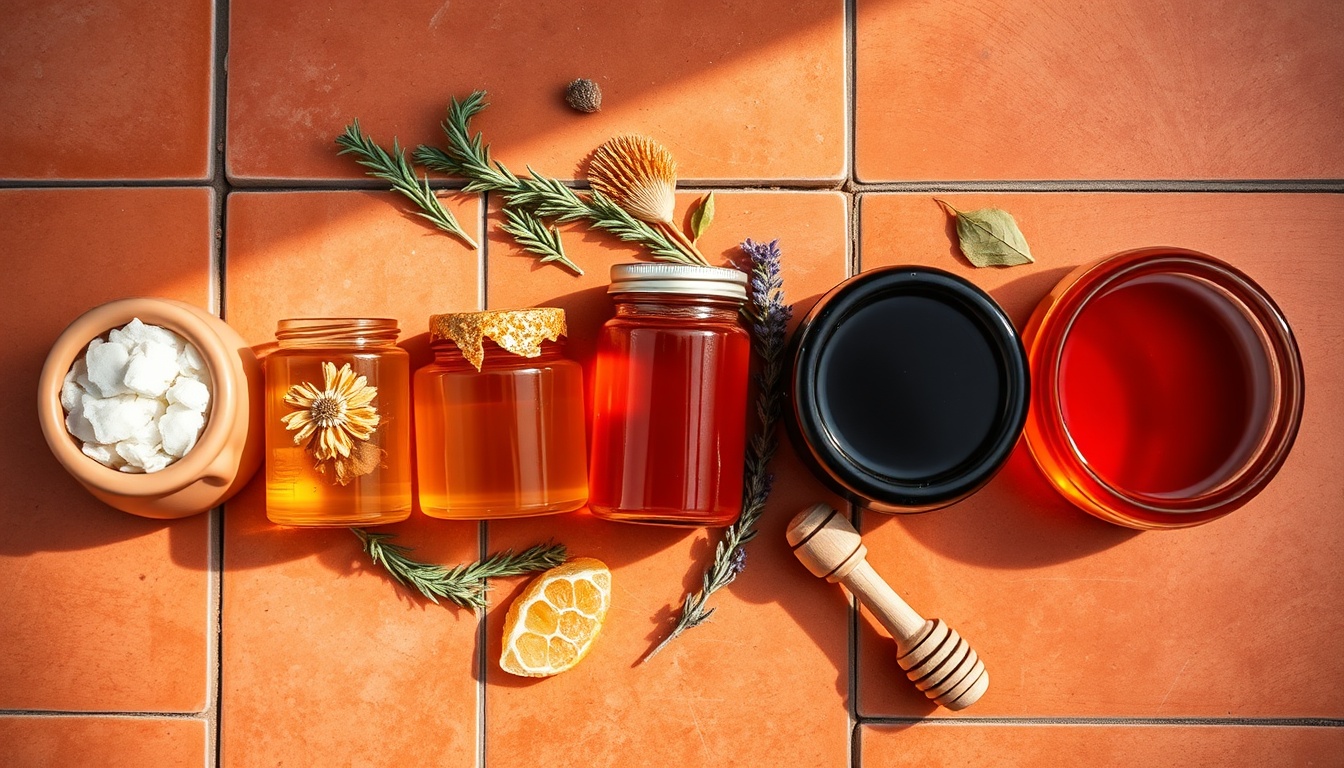
- Romero (Rosemary) — Color: white/pale cream | Crystallization: fast (4–8 weeks) | Flavor: delicate, herbal, clean | Best for: fresh cheese, tea, yogurt | Price: $$-$$$ | Availability: specialist importers, Spanish delis
- Eucalipto (Eucalyptus) — Color: amber to dark amber | Crystallization: medium-fast | Flavor: pungent, menthol, distinctive | Best for: aged cheese, tea, savory | Price: $ -$$ | Availability: Spanish bulk exporters, delis
- Tomillo (Thyme) — Color: amber-golden | Crystallization: medium-fast | Flavor: rich, aromatic, herbal | Best for: aged cheese, charcuterie, meats | Price: $$-$$$ | Availability: specialist Spanish food stores
- Azahar (Orange Blossom) — Color: pale cream to amber | Crystallization: medium | Flavor: fragrant, citrus-floral | Best for: desserts, fresh cheese, tea | Price: $$-$$$ | Availability: good in Mediterranean food stores
- Brezo (Heather) — Color: dark reddish-amber | Crystallization: very slow (thixotropic) | Flavor: intense, astringent, complex | Best for: aged cheese, game, dark bread | Price: $$-$$$ | Availability: specialty stores, artisan importers
- Castaño (Chestnut) — Color: dark amber to near-black | Crystallization: slow | Flavor: bittersweet, tannic, assertive | Best for: aged cheese, charcuterie | Price: $$-$$$ | Availability: Spanish specialty stores
- Lavanda (Lavender) — Color: pale to light amber | Crystallization: medium | Flavor: floral-herbal, fragrant | Best for: mild cheeses, yogurt, desserts | Price: $$-$$$ | Availability: La Alcarria DOP sources
- Mil Flores (Polyfloral) — Color: golden to amber (varies) | Crystallization: variable | Flavor: complex, regionally diverse | Best for: everyday table use, cooking | Price: $-$$ | Availability: widely available
The Science: What Research Says About Spanish Honey
Spanish honey has been the subject of extensive peer-reviewed research, primarily conducted at Spanish universities and research institutions including the Universidad Complutense de Madrid (UCM), Universidad de Extremadura, Universidad de Granada, Universidad Autónoma de Barcelona, and the Consejo Superior de Investigaciones Científicas (CSIC). Spanish honey science has contributed significantly to the international understanding of honey authentication, polyphenol analysis, and geographical origin markers.
Spanish rosemary honey (miel de romero) has received particular research attention. A 2007 study published in the Journal of Agricultural and Food Chemistry by researchers at the Universidad Autónoma de Madrid characterized the phenolic profile of La Alcarria rosemary honey, identifying rosmarinic acid and its derivatives as distinctive markers alongside standard honey phenolics (luteolin, apigenin, kaempferol). A 2013 study from UCM confirmed that rosemary honey from La Alcarria has a consistent and characteristic spectroscopic fingerprint allowing reliable authentication from non-geographic Spanish rosemary honeys. Antioxidant activity of rosemary honey is moderate relative to darker Spanish varieties (chestnut, heather, mountain) — consistent with the well-established correlation between honey color and polyphenol content established in multiple European honey studies.
Spanish thyme honey research has compared the endemic Thymus zygis (Iberian thyme) with Greek Thymus capitatus honey. A study published in Food Chemistry (Terrab et al., 2003) compared the chemical composition of Spanish thyme honeys from multiple regions and found Thymus zygis honey has a unique pollen profile and phenolic composition distinguishable from other thyme species. Research from the Universidad de Sevilla found Spanish thyme honey has antibacterial activity against a range of pathogenic bacteria in vitro (MIC studies) — comparable in direction but not identical in spectrum to Greek thyme honey. Important caveat: these are in-vitro findings that do not establish clinical efficacy; all honeys have some antibacterial activity in concentrated form.
Heather honey authentication has been an active area of Spanish research. The thixotropic gel behavior of Calluna heather honey is caused by a specific proteinaceous compound, first characterized biochemically by Dustmann and Glatthaar (1982) and confirmed repeatedly in Spanish samples. Research from the University of the Basque Country on Galician and Cantabrian heather honey confirmed that protein concentration in Calluna honey is 5–10× higher than in blossom honeys, explaining the gel texture. The physical gel test (stirring the honey causes it to liquefy; leaving it undisturbed causes it to re-gel) is a reliable in-field authentication check for Calluna heather honey.
La Alcarria honey geographical authentication using melissopalynology (pollen analysis) has been extensively studied. Spanish researchers established reference pollen profiles for Alcarria rosemary honey, showing that authentic product contains rosemary (Rosmarinus/Salvia rosmarinus) pollen at ≥10% with supporting pollen from lavender, Cistus, Echium, and other Alcarria scrubland species. Studies from the Universidad de Alcalá showed that pollen profile alone correctly classifies Alcarria honey origin in over 90% of samples — one of the highest geographic authentication rates for any honey DOP in Europe.
Important disclaimer: all cited research describes chemical properties and in-vitro or observational findings. None establishes that consuming Spanish honey treats, cures, or prevents any medical condition. Honey is a food, not a pharmaceutical. People with diabetes should monitor sugar intake when consuming any honey variety. Children under 12 months must not consume honey of any kind due to Clostridium botulinum spore risk.
Buying Authentic Spanish Honey: A Practical Guide
Spain's honey market faces the same authenticity challenges as other premium food origins: blending, mislabeling, substitution with cheaper imported honey from Argentina, Ukraine, or China, and vague geographical claims. Finding authentic Spanish monofloral honey requires some navigation.
La Alcarria DOP as anchor: The most straightforward way to guarantee authentic Spanish rosemary or lavender honey is to buy with the La Alcarria DOP counter-mark. Bottles carry numbered counter-seals from the Consejo Regulador. The DOP designation is legally enforceable under EU law and carries criminal penalties for fraudulent use. It is not a marketing badge — it is a verifiable regulatory status. Authentic La Alcarria DOP honey is available from Spanish specialty food importers and some European online retailers. Note: La Alcarria DOP honey is more expensive than unlabeled rosemary honey but represents genuine guaranteed quality.
Crystallization as authentication: As with Italian rosemary and French lavender honey, crystallization behavior is a useful field check. Spanish romero honey should crystallize relatively quickly (within 4–8 weeks at room temperature) into a smooth, dense white cream. Rosemary honey that remains fully liquid for months is suspicious — unless it has been warmed to re-melt the crystals, which is common. Conversely, Calluna heather honey should show the thixotropic gel behavior: gel-like in the jar, liquefying when stirred. Spanish eucalyptus honey should crystallize to an amber paste in a few months.
Geographic specificity: Quality Spanish monofloral honey labels should specify the variety (romero, tomillo, eucalipto, azahar, brezo, castaño, lavanda) and ideally a region or province. "Miel española" or "Product of Spain" alone is insufficient. Look for "Guadalajara," "Galicia," "Valencia," "Sierra Nevada," or similar regional origin. Producers who name their specific comarca or beekeeping operation are generally more trustworthy than those who give only country-level provenance.
Where to buy: Authentic Spanish monofloral honeys are found: (1) Spanish food importers and delicatessens, particularly in cities with significant Spanish communities; (2) specialty food retailers with a strong European artisan section; (3) directly from Spanish producers, many of whom now ship internationally; (4) Spanish grocery chains with international delivery (El Corte Inglés food hall carries several excellent Spanish honey brands). Prices for quality Spanish monofloral honey from named producers run — significantly cheaper than comparable Greek or Italian premium honeys for similar quality.
Red flags: Be cautious of "Spanish honey" priced below (likely heavily blended with non-Spanish honey), honey with no variety stated, honey from "Spain" with no further regional information, and honey labeled "romero" or "azahar" with no pollen analysis available. Spain is also a significant processor of imported honey from Argentina and elsewhere; some "packaged in Spain" honey has minimal Spanish content.
Price expectations: Authentic La Alcarria DOP romero/lavanda. Non-DOP monofloral rosemary, thyme, orange blossom: €10–20. Eucalyptus (commodity variety): €8–14. Heather (brezo): €14–25. Chestnut: €12–22. Mountain / polyfloral: €8–16. Prices are lower than comparable Greek or Italian monoflorals, reflecting Spain's larger production volumes and less developed premium export market.
Spanish Honey in the Kitchen
Spain's honey culture is deeply integrated into regional cuisine, though it operates differently from the honey-as-centerpiece traditions of Greece or Italy. Spanish culinary use of honey is often understated — honey as a component of sauces, marinades, and traditional baked goods rather than a prominent single-ingredient feature. Understanding the culinary uses helps match Spanish honey varieties to specific applications.
Queso y miel (cheese and honey): The most central Spanish honey application. La Alcarria rosemary honey with cured Manchego (curado or añejo, aged 3–12 months) is perhaps Spain's most iconic honey pairing — the honey's delicacy and herbal freshness contrasting with the firm, nutty, slightly sharp sheep's milk cheese. The pairing is ubiquitous in Madrid restaurants and Castilian homes. Galician chestnut honey with Tetilla (Galicia's mild, creamy semi-soft cow's milk cheese) is another classic regional pairing. Strong heather or mountain honey pairs with Idiazábal (smoked Basque sheep's milk cheese). Orange blossom honey and fresh Burgos cheese (a mild, fresh cheese similar to ricotta) is a classic Andalucían dessert.
Carnes y asados (meats and roasts): Spanish honey has a long tradition in meat glazes and marinades, particularly for cordero asado (roast lamb), cochinillo (suckling pig), and pato (duck). Thyme honey glaze on rack of lamb is a classic Castilian preparation. Heather or mountain honey appears in traditional Asturian and Cantabrian recipes for game (venison, wild boar) as a balancing element in rich sauces.
Traditional sweets: Spain has a distinct honey-based confectionery tradition, particularly in Andalucía and around religious festivals. Tortas de anís, pestiños (fried dough soaked in honey and sesame), polvorones (shortbreads sometimes including honey), turrón (some versions), and alfajores (North African-influenced honey cookies still made in Andalucía) all involve honey. Orange blossom honey is particularly traditional in Andalucían sweets. Pan de higo (fig bread from Almería) uses honey as a binding element.
Honey and cava / wine: A growing segment of Spanish gastronomy pairs regional honey with cava (Catalan sparkling wine) or regional wines in cocktails and pairings. Orange blossom honey with cava brut is a well-known combination; thyme honey appears in Spanish vermouth cocktails. These pairings are worth exploring if you want to experience Spanish honey in its most contemporary culinary context.
Related Guides and Internal Resources
Spanish honey connects to the broader tradition of European artisan honey. For comparison and context, see: our guide to Greek honey — particularly the thyme honey comparison, as Greek and Spanish thyme honeys are close rivals; our guide to Italian honey — for comparison with sulla, orange blossom, rosemary (Sicilian), and eucalyptus; our guide to Turkish honey — for another Mediterranean honey tradition, particularly for pine honeydew; and our guide to New Zealand honey — for a comparison with manuka, the world's most documented functional honey.
For honey varieties closely related to Spanish types, see: Heather Honey Benefits — for the full profile of Calluna heather honey; Lavender Honey Benefits — for a deeper look at lavender honey (the French Provençal version and Spanish versions are closely comparable); Thyme Honey Benefits; and Eucalyptus Honey Benefits. For culinary applications, see Honey and Cheese Pairings and Honey Marinades and Glazes. Spanish honey diversity contrasts notably with pure clover honey, representing American honey traditions' emphasis on clean, mild sweetness versus Spain's focus on complex terroir-driven monofloral varieties from Mediterranean limestone scrubland and Atlantic forest ecosystems.