Canada: The World's Fourth-Largest Honey Exporter
When honey enthusiasts discuss the world's great honey nations, conversation usually lands on New Zealand (manuka), Greece (thyme), Italy (acacia and millefiori), or Turkey (Anzer). Canada rarely enters the frame — yet the country ranks among the world's top four honey exporters by volume, consistently shipping 25,000–38,000 metric tons annually to markets across Asia, Europe, and the United States. Canadian honey is not a single product but a vast portfolio of regional varieties shaped by geography spanning subarctic forests, temperate Pacific rainforest, Prairie grassland, mixed Great Lakes farmland, and Atlantic blueberry barrens.
Canada's approximately 10,000–12,000 commercial beekeepers (Statistics Canada) operate across every province and territory, though production is heavily concentrated in the Prairie provinces: Alberta, Saskatchewan, and Manitoba together produce roughly 80–85% of Canada's total honey output. Alberta alone is responsible for approximately 40–45% of national production — making it one of the most productive honey regions per capita anywhere in the world. The combination of vast monofloral agricultural crops (clover, canola, alfalfa) and pristine native prairie wildflower gives Alberta and its Prairie neighbours a unique honey profile unavailable anywhere else.
Yet Canada's most celebrated and premium honeys come not from the Prairies but from its forests and wild margins: fireweed honey from post-wildfire British Columbia and Yukon, buckwheat honey from Ontario and Quebec, and wild blueberry honey from Nova Scotia's barrens and Quebec's lake country. These wild-sourced honeys represent the best of Canada's artisan honey market — limited production, distinctive flavors, and genuine geographic character. This guide covers Canada's major honey varieties, the science behind them, and how to find and buy authentic Canadian honey. For international context, see our guides to Greek honey, Italian honey, New Zealand honey, and Spanish honey.
Canada's Honey Geography: Six Distinct Regions
Canada's enormous geographic span — from Pacific rainforest to Atlantic maritime coast, from temperate Great Lakes farmland to subarctic boreal forest — produces honey varieties with widely differing characters. Understanding the regional landscape is essential for understanding what you're buying.
The Prairie provinces (Alberta, Saskatchewan, Manitoba) are Canada's honey heartland by volume. An agricultural landscape of almost unimaginable scale, the Prairies support vast fields of canola (rapeseed), sweet clover, red and white clover, alfalfa, and sunflower — all major nectar sources. The July–August nectar flows across Prairie cropland and natural prairie wildflower (goldenrod, wild bergamot, phacelia, wild mustard) are among the most productive in the world. Prairie honey is typically light to medium amber, mild to moderately complex depending on floral mix, and produced at industrial scale.
British Columbia and Yukon occupy the opposite end of the spectrum: wild and artisan-scale production in diverse mountainous terrain. The BC Interior (Okanagan, Kootenay, Thompson) supports mixed orchard and wildflower honey. The northern forests and post-wildfire landscapes of BC, Yukon, and northern Alberta produce fireweed honey — Canada's most prized and internationally recognized premium variety. BC's Pacific Coast contributes coastal wildflower and berry blossom honeys with a distinct maritime character.
Ontario and Quebec are Canada's eastern agricultural heartland and home to its most distinctive darker varieties. Ontario's limestone-plateau regions (Simcoe County, Hastings County, Prince Edward County) support extensive buckwheat cultivation and mature basswood (linden) forest — the two most flavor-distinctive Ontario honey types. Quebec produces significant quantities of blueberry, buckwheat, and polyfloral wildflower honey, particularly from the Saguenay–Lac-Saint-Jean and Laurentide regions where traditional farming landscapes remain relatively intact.
Atlantic Canada (Nova Scotia, New Brunswick, Prince Edward Island, Newfoundland) specializes in wild berry and fruit blossom honeys: wild blueberry from Nova Scotia's Annapolis Valley and Cumberland County, apple blossom from Nova Scotia and New Brunswick orchards, and mixed Atlantic wildflower from coastal meadow landscapes. Nova Scotia's wild blueberry barrens are among the most important wild bee forage habitats in eastern North America.
Get the Honey Buyer's Cheat Sheet (free PDF)
16 varieties on one page — color, flavor, best use and what a fair price looks like — from the 304 honeys we track.
The Major Canadian Honey Varieties
Canada's climatic and botanical diversity yields a wide portfolio of commercially available honey types. These are the varieties Canadian honey buyers and international importers should know.
- Fireweed Honey (Epilobium angustifolium) — British Columbia / Yukon / Northern Alberta. Canada's most prestigious and internationally recognized premium honey variety. Fireweed (also called great willowherb or rosebay willowherb) is a tall, magenta-flowered perennial native to boreal and subalpine zones across the Northern Hemisphere. In the Pacific Northwest and Yukon, it is a vigorous post-disturbance colonizer — the first major plant to establish after wildfires, logging, or avalanche. Within one to three years following a significant forest fire, vast monofloral fireweed stands can produce exceptional nectar flows, covering cleared hillsides in magenta bloom from July through September. The result is one of North America's most singular honeys. Color: water-white to very pale amber when freshly extracted — almost invisible in a glass jar; one of the palest commercial honeys in the world. Aroma: exceptionally delicate and fragrant — a clean, light sweetness with caramel undertones and a very subtle floral note; understated elegance rather than assertive character. Flavor: smooth and buttery — mild caramel, hints of vanilla and light brown sugar, gentle floral background; clean finish with no bitterness or astringency. The flavor complexity is in its refinement rather than its power; fireweed honey achieves an elegance that makes it stand out among pale honeys. Crystallization: very slow — fireweed honey has a high fructose-to-glucose ratio (F/G approximately 1.4), meaning it resists granulation and often remains liquid for one to two years. This is a useful authenticity check: fireweed honey sold in creamed form has been deliberately force-crystallized. Production: highly variable year to year, depending on wildfire patterns and summer weather. Exceptional fire years (such as the large BC Interior wildfire seasons) can produce significant fireweed flows; quiet fire years reduce output substantially. Limited supply keeps prices elevated. Price: for verified single-origin BC or Yukon fireweed honey; some small-batch artisan producers command higher prices. Best: pancakes and waffles (a classic BC pairing — the honey's buttery caramel note amplifies without overpowering); chamomile tea; mild fresh cheeses; yogurt; delicate desserts (panna cotta, crème brûlée topping); anywhere that a refined, elegant sweetness is desired without assertive floral character.
- Buckwheat Honey (Fagopyrum esculentum) — Ontario / Manitoba / Quebec. Canada's most flavor-distinctive honey and one of the world's most well-studied honey varieties in peer-reviewed literature. Buckwheat is a fast-growing flowering grain crop cultivated in Ontario's mixed farmland regions (Hastings, Renfrew, Frontenac counties) and Manitoba's Red River Valley. It blooms in July–August, producing a dense flow of dark, strongly aromatic nectar that produces one of the world's most polarizing honeys. Color: very dark amber to near-black — darker than most other honeys; unmistakably distinctive in a lineup. Aroma: intense and complex — dark, slightly musty, malt and molasses character with a barn-like undertone; the aroma is pungent and assertive. Flavor: rich, bittersweet, and assertive — molasses, dark malt, dried fruit (raisin, dark plum), moderate sweetness balanced by a significant bitterness; long, complex finish. Not a honey for those who prefer mild sweetness; a honey for those who want genuine flavor depth and character. Crystallization: medium — forms a dark, grainy to medium-grained paste in 2–4 months. Antioxidant content: buckwheat honey is consistently one of the highest-antioxidant honeys commercially available. A 2002 study by Gheldof et al. published in the Journal of Agricultural and Food Chemistry compared the antioxidant capacity (ORAC) of 14 honey types and found buckwheat honey had the highest antioxidant activity — higher than acacia, clover, and other pale honeys by a significant margin. This is consistent with the well-established color–antioxidant correlation: darker honeys are generally richer in polyphenols, flavonoids, and phenolic acids. Important note: these are in-vitro findings. No clinical trials establish that consuming buckwheat honey confers specific health benefits beyond general honey consumption. Price. Best: gingerbread and dark spice breads (the molasses character pairs naturally with warming spices); aged sharp cheddar and blue cheese; barbecue glazes and marinades for red meat; mead and melomel making (produces one of the most flavor-rich honey wines); oatmeal; strong-flavored coffee beverages.
- Clover Honey (Trifolium repens, T. pratense) — Prairie Provinces (Alberta / Saskatchewan / Manitoba). Canada's dominant commercial variety and its primary honey export commodity. White Dutch clover (Trifolium repens) and red clover (T. pratense) grow abundantly across Prairie farmland, roadsides, and natural meadows throughout the July–August growing season. The Prairie provinces' combination of scale, dry-warm summer climate, and clover-dominated agricultural landscape makes them among the world's most productive clover honey regions. Alberta is effectively Canada's "clover honey capital." Color: light golden to pale amber. Aroma: mild and classically sweet — light floral, clean honey character; the scent most people recognize as "honey." Flavor: mild and sweet — gentle floral with vanilla undertones, moderate sweetness, clean finish; essentially the defining template for "what honey tastes like" in North American food culture. Crystallization: good — forms a smooth, firm white to pale golden cream in 1–3 months. Canadian clover honey is often sold in creamed form, which is one of Canada's distinctive honey-packaging traditions. Prairie clover honey dominates Canadian grocery shelves and much of what is exported to the US, Japan, and Europe as "Canadian honey." Quality range is wide: industrial bulk clover honey is mild and reliable if unexciting; artisan single-producer Prairie clover honey can be notably more complex, with floral, alfalfa, and native wildflower notes that reflect the specific farm landscape. Price. Best: everyday table use, tea, baking, cooking, children (mildness makes it universally accessible); sandwiches and toast; applications where neutral sweetness is desired. The single best honey for anyone seeking a reliable, mild, all-purpose variety.
- Canola Honey (Brassica napus) — Alberta / Saskatchewan. Canada's most agriculturally distinctive honey and one of its least internationally celebrated. Canola (an acronym for "Canadian oil, low acid" — derived from selective breeding of rapeseed in the 1970s at the University of Manitoba) became Canada's most economically important oilseed crop from the 1980s onwards. Alberta and Saskatchewan grow millions of hectares of Brassica napus annually, and the brief but intense yellow-flowered bloom in May–June produces a major nectar flow that coincides with beekeepers' spring expansion period. Color: very pale cream, nearly white — the palest of Canadian honeys by far. Crystallization: extraordinarily rapid — canola honey granulates within days to weeks of extraction, faster than almost any other commercial honey variety. Beekeepers must extract it within days of the nectar flow or it sets solid in the comb; extraction timing is more critical for canola than for any other Prairie crop. The crystallized form — smooth, white, spreadable — is the form most commonly sold in Canadian retail, often labeled as "creamed honey." Aroma: mild and slightly grassy-waxy; less floral than clover, with a faint Brassica character. Flavor: very mild and sweet — neutral honey sweetness with a faint waxy-floury note; less complex than clover; not assertive in either floral or bitter directions. The mildness can read as blandness to honey connoisseurs but is a significant asset in cooking and baking applications where honey flavor should be background rather than foreground. Canola is Canada's most affordable commonly available honey. Best: toast (the creamed form spreads like butter); baking (neutral flavor integrates without competing with other ingredients); sauces and dressings; cooking applications where mild sweetness is needed. Note: canola honey is distinct from European rapeseed (Brassica rapa) honey — different plant species produce meaningfully different nectar profiles and crystallization rates.
- Blueberry Honey (Vaccinium angustifolium, V. corymbosum) — Nova Scotia / Quebec. From the blossom of wild and cultivated blueberry bushes — primarily low-bush wild blueberry (Vaccinium angustifolium) in Atlantic Canada and Quebec. Nova Scotia's Annapolis Valley and Cumberland County are Canada's primary blueberry honey regions; Quebec's Saguenay–Lac-Saint-Jean and Charlevoix regions also produce significant quantities. Blueberry bushes bloom in May–June, producing a dense flow for 2–3 weeks. Color: golden amber, often with warm yellow undertones and occasionally a subtle reddish tint. Aroma: mild and delicately fruity — a gentle, subtle blueberry note that is more evident in the aroma than in the taste; clean and pleasant. Flavor: honey-sweet with a subtle berry suggestion — mild, clean, gently fruity finish; less assertive than one might expect from the name. The blueberry character in the honey is a genuine reflection of the nectar source but is subtle rather than prominent — a perfume more than a flavor statement. Crystallization: medium, granulating in 1–3 months to a medium-grained golden paste. Nova Scotia blueberry honey plays an important dual role: as a premium artisan honey variety and as a critical service to Nova Scotia's wild blueberry crop, which depends on managed honeybees for pollination of 60,000+ acres of wild barrens. This symbiosis means blueberry honey production is closely tied to the commercial pollination calendar. Price. Best: pancakes and waffles (especially blueberry pancakes, where the honey echoes the fruit); yogurt and granola; oatmeal; mild cheese pairings; fresh fruit desserts; anywhere a delicately fruity honey character complements rather than competes.
- Basswood (Linden Honey) (Tilia americana) — Ontario / Quebec. From American linden or basswood (Tilia americana), a large native tree found in rich woodland throughout southern Ontario and Quebec. Basswood blooms for only 2–3 weeks in late June to mid-July, producing one of the most intense nectar flows of the Canadian beekeeping year — experienced beekeepers describe the basswood flow as a "stampede," with supers filling at exceptional speed when conditions align. Color: water-white to very pale amber — one of the palest commercially available Ontario honeys. Aroma: immediately distinctive and striking — a fresh, minty, slightly herbaceous character that surprises first-time tasters; the "mint" note is one of Tilia nectar's defining aromatic features. Flavor: initially clean and sweet, with rapid development of a pleasant minted-herbal note — cooling, slightly menthol-fresh, with a distinctive lingering character unlike any other honey variety. Medium body; moderate sweetness. The mint quality comes from aromatic compounds in Tilia nectar (including farnesol and other sesquiterpenes), not from any mint plant. Beekeepers prize basswood honey for its distinctive character; it is considered one of Ontario's finest honeys by artisan producers. Crystallization: forms a very fine-grained white cream in 1–3 months. Artisan basswood honey is considerably less expensive than European linden honey from the same genus (Tilia cordata, the small-leaved lime), which commands premium prices in France, Germany, and Hungary. Best: herbal teas — basswood honey is exceptional with chamomile, mint, lemon verbena, or any herbal tea where a minted-floral note is welcome; lamb and poultry; fresh and soft cheeses; lemon-forward desserts; anywhere a distinctive, lightly minty sweetness is desired. Note: basswood honey closely parallels European linden/tilleul honey from Tilia cordata — both derive from the same genus and share the characteristic Tilia aroma, making Canadian basswood an excellent and more affordable alternative.
- Prairie Wildflower Honey (Polyfloral) — Alberta / Saskatchewan / Manitoba. Canada's most diverse honey category — a multi-floral blend of whatever is blooming on the Prairie landscape at any given moment. Beyond the major monofloral crops (clover, canola, alfalfa), Prairie beehives collect from a wide range of native and naturalized wildflowers: sweet clover (Melilotus officinalis and M. alba), goldenrod (Solidago canadensis and relatives), wild bergamot (Monarda fistulosa), phacelia (Phacelia tanacetifolia, grown increasingly as a dedicated bee pasture crop), dandelion (Taraxacum officinale — the spring opener), purple coneflower (Echinacea purpurea), sunflower (Helianthus annuus, where grown commercially), and various native Asteraceae. The resulting honey is seasonal and producer-specific. Spring batches are lighter and more floral — pale, gentle, driven by early clover and dandelion; midsummer batches are more complex — golden, with layers of sweet clover, phacelia, and native wildflower; late summer batches are darker and richer — amber, with goldenrod's distinctive warmth and sunflower's full-bodied sweetness. Color: golden to amber, variable by season and location. Flavor: genuinely complex and rewarding — far more interesting than monofloral clover alone, with layered sweetness and shifting floral and herbal notes that reflect the Prairie landscape's seasonal progression. Crystallization: variable depending on floral composition. Price. Best: those seeking an authentic Canadian honey experience beyond the mild uniformity of commercial clover; cooking and baking where honey character is a feature; cheese boards; tea; mead making.
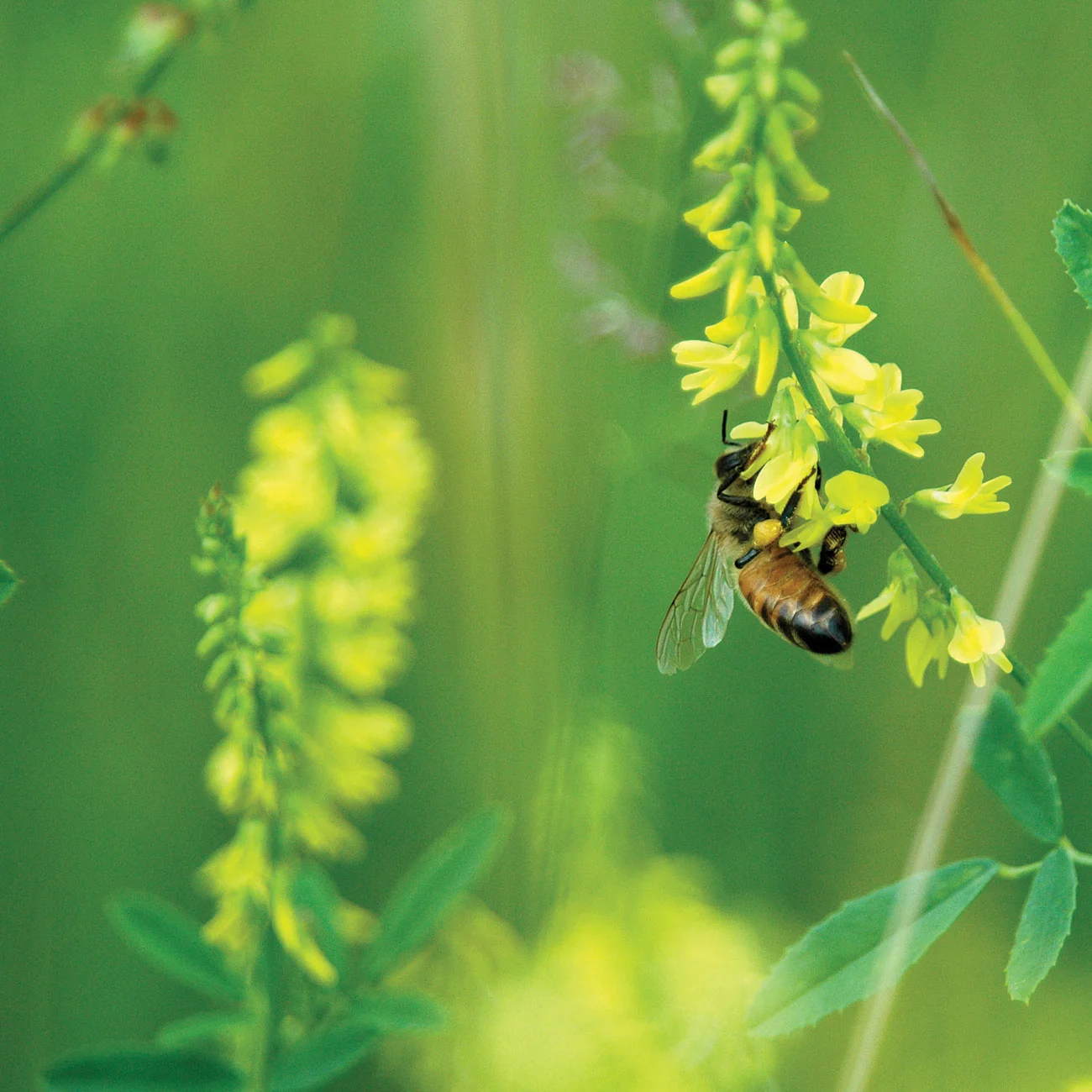
Photo: Queen Right Colonies, used with permission
The Science: What Research Says About Canadian Honey
Canadian honey has generated a meaningful body of peer-reviewed research, primarily focused on buckwheat honey's antioxidant properties and antimicrobial characteristics, as well as compositional studies of Prairie monofloral varieties. Several landmark studies have used Canadian honey as test material for broader questions about honey's functional properties.
Buckwheat honey antioxidants: A 2002 study by Gheldof, Wang, and Engeseth published in the Journal of Agricultural and Food Chemistry compared the antioxidant activity of 14 honey varieties using multiple assays (FRAP, ABTS, and protein oxidation inhibition). Buckwheat honey had the highest total antioxidant capacity of all varieties tested — significantly higher than acacia, clover, sage, and other pale honey varieties. The study contributed to establishing the well-supported principle that darker honey colors correlate with higher phenolic content and antioxidant activity. Buckwheat honey's polyphenol profile includes chlorogenic acid, quercetin, luteolin, apigenin, and caffeic acid, among other phenolics.
Buckwheat honey and childhood cough: A frequently cited 2007 randomized controlled trial by Paul et al., published in the Archives of Pediatrics and Adolescent Medicine (now JAMA Pediatrics), enrolled 105 children with upper respiratory infections in Pennsylvania. Children received buckwheat honey, artificial honey-flavored dextromethorphan, or no treatment. The buckwheat honey group showed significantly greater improvement in cough frequency and sleep disruption than the dextromethorphan group. The study was widely reported as evidence for honey's superiority over common cough syrup. Important caveats apply: the study used buckwheat honey specifically (not other honey types), the mechanism proposed is non-antibiotic (demulcent soothing and antibacterial properties at mucosal contact), children under 12 months must never be given honey of any type due to Clostridium botulinum spore risk, and the study does not establish that honey treats the underlying infection. The WHO subsequently included honey as an option for cough symptom management in children over 1 year in resource-limited settings.
Fireweed honey composition: Fireweed honey's distinctive slow crystallization rate has been studied in the context of fructose-glucose ratio analysis. Research on Epilobium angustifolium nectar (primarily from plant physiology literature rather than honey-specific studies) establishes its high fructose content, consistent with the observed low crystallization tendency. The pale color reflects low polyphenol content — fireweed honey is not an antioxidant-rich variety; its value lies in flavor elegance and rarity rather than functional properties.
Prairie honey authenticity: Canadian researchers at Agriculture and Agri-Food Canada (AAFC) and the University of Manitoba have contributed to honey authentication science, developing pollen analysis profiles for Prairie monofloral varieties and investigating isotopic methods for detecting adulteration with cane sugar or high-fructose corn syrup. Canadian Food Inspection Agency (CFIA) enforces compositional standards for honey sold in Canada, including moisture content, HMF (hydroxymethylfurfural) limits, and country-of-origin labeling — the last of which is more strictly enforced for domestic products than for imports.
Important disclaimer: all cited research describes chemical properties or observational and in-vitro findings. None establishes that consuming Canadian honey treats, cures, or prevents any medical condition. Honey is a food. All health statements in this guide are descriptions of nutritional properties or summarized research findings and should not be interpreted as medical advice. Children under 12 months must not consume honey of any variety due to botulism risk. People with diabetes should monitor intake of any honey variety as all honeys are primarily sugars.
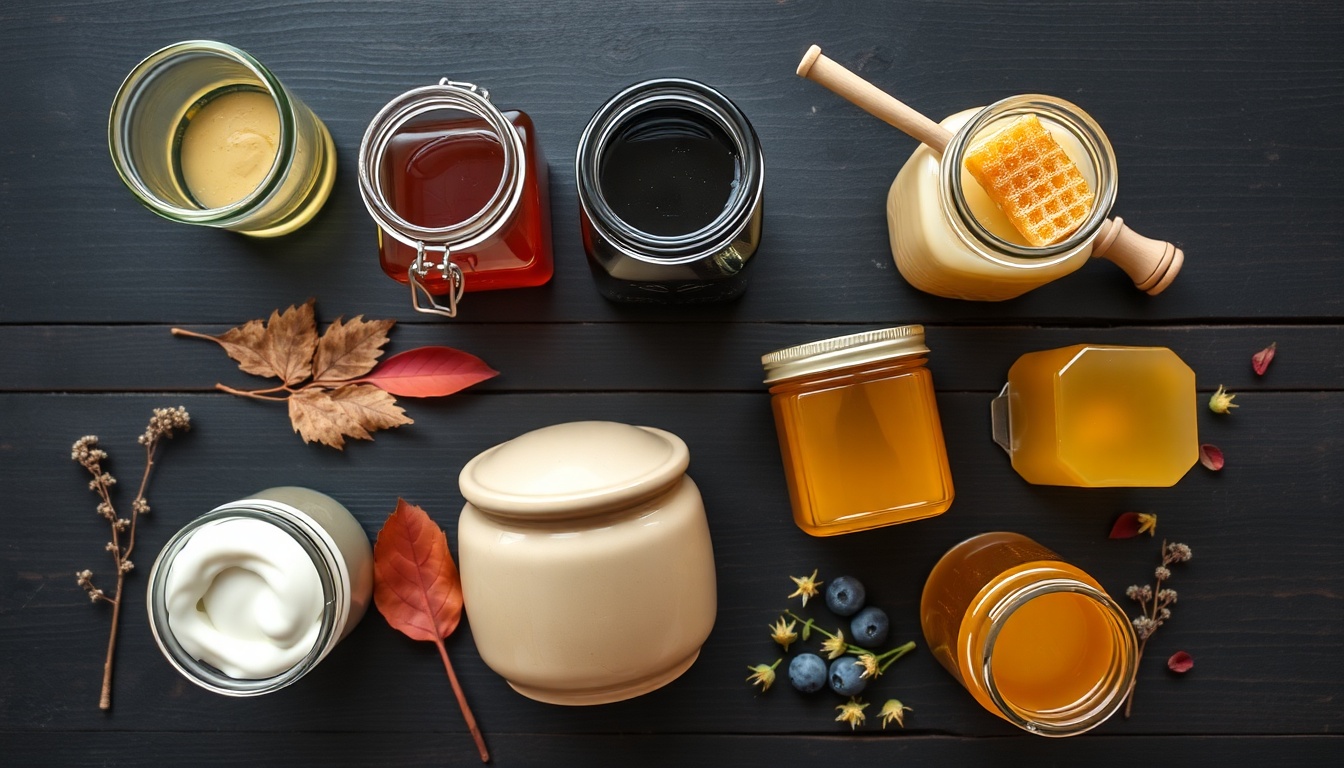
Quick Comparison: Canadian Honey Varieties
The following table summarizes the key characteristics of Canada's major honey varieties:
- Fireweed — Color: water-white to near-clear | Crystallization: very slow (1–2 years liquid) | Flavor: delicate, buttery caramel, refined | Region: BC/Yukon | Price: $$$ | Availability: artisan specialty stores, online
- Buckwheat — Color: near-black to dark reddish-brown | Crystallization: medium (2–4 months) | Flavor: bold, molasses, bittersweet | Region: Ontario/Manitoba/Quebec | Price: $$-$$$ | Availability: natural food stores, farmers markets
- Clover — Color: pale golden to light amber | Crystallization: good (1–3 months to cream) | Flavor: mild, sweet, clean | Region: Prairie provinces | Price: $-$$ | Availability: widespread — grocery stores, specialty
- Canola — Color: white to near-white | Crystallization: extremely fast (days to weeks) | Flavor: very mild, neutral, sweet | Region: Alberta/Saskatchewan | Price: $ | Availability: widespread — grocery stores (creamed form)
- Blueberry — Color: golden amber | Crystallization: medium (1–3 months) | Flavor: mild, gently fruity | Region: Nova Scotia/Quebec | Price: $$-$$$ | Availability: Atlantic Canada specialty, farmers markets
- Basswood (Linden) — Color: water-white to pale amber | Crystallization: fine-grained cream (1–3 months) | Flavor: distinctive, minted-herbal, cooling | Region: Ontario/Quebec | Price: $$-$$$ | Availability: Ontario specialty stores, farmers markets
- Prairie Wildflower — Color: golden to amber (variable) | Crystallization: variable by season | Flavor: complex, layered, seasonal | Region: Prairie provinces | Price: $$-$$$ | Availability: farmers markets, specialty stores
Canadian Honey Industry and Quality Standards
Canada's honey industry is organized around the Canadian Honey Council (CHC), the national industry association representing commercial beekeepers, packers, and processors. The CHC advocates with federal government, supports research through partnerships with Agriculture and Agri-Food Canada (AAFC), and sets voluntary standards that complement mandatory federal regulations.
Quality and labeling regulation: The Canadian Food Inspection Agency (CFIA) enforces the Honey Regulations under the Canada Agricultural Products Act (CAPA). Key standards include: moisture content maximum of 20%; diastase activity minimum (ensuring the honey has not been excessively heated); HMF (hydroxymethylfurfural) limit of 40 mg/kg for honey not declared as being from a tropical country; mandatory country-of-origin labeling for single-origin honey ("Product of Canada" is legally meaningful for domestic production). The CFIA also conducts surveillance testing for veterinary drug residues (oxytetracycline, tylosin, streptomycin), which were used historically in Canadian beekeeping and remain subject to tolerance limits.
Grading: Canadian honey is graded under the Honey Regulations into Canada No. 1 (the premium grade: white, extra light amber, or light amber; moisture ≤17.8%; good flavor; no off-flavors), Canada No. 2 (amber or dark amber; moisture ≤20%; minor off-flavors permitted), and Canada No. 3 (substandard for grade above). Most artisan and specialty honey is Canada No. 1.
Alberta Honey Producers Co-operative (AHPC): Alberta's major honey cooperative represents a large proportion of Prairie honey producers and is one of Canada's largest honey packers. The AHPC's "Pure Canadian Honey" brand — and similar Alberta-origin labels — represents reliable commercial Prairie honey. Look for AHPC or member-producer labels for quality assurance on Prairie honey.
Organic certification: Certified organic honey is available from several Canadian producers. Canadian organic honey must be produced under CFIA-recognized organic production standards, which restrict the use of synthetic pesticides near hive locations and prohibit use of most synthetic veterinary medications. True organic certification requires a significant buffer zone around hives free of conventional agriculture — easier to achieve in isolated northern or forested locations than in the heart of Prairie cropland.
What "Product of Canada" means: Under Canadian law, honey labeled "Product of Canada" must originate from Canadian hives. Unlike some jurisdictions where "packed in" and "product of" are conflated, the CFIA' s standard requires genuine Canadian origin for this claim. This gives Canadian country-of-origin labeling more reliability than some international equivalents. However, blended honey sold as "Canadian honey" can legitimately contain honey from multiple Canadian provinces — which is fine for commercial grade product but obscures the regional character that distinguishes fireweed (BC) from buckwheat (Ontario) from Prairie wildflower (Alberta).
Buying Authentic Canadian Honey
Canadian honey's quality and character vary enormously by variety, producer, and marketing channel. The same country produces both industrial bulk commodity honey and genuine artisan single-origin honey of international caliber. Navigating the difference requires knowing what to look for.
Specify variety and region: The single most important step when buying Canadian honey is to look beyond "Product of Canada" to a stated variety and regional origin. "Fireweed honey from the BC Interior" and "clover honey from Alberta" are very different products at different price points for different uses. Honey labeled only "Canadian wildflower honey" or "pure Canadian honey" gives you no information about what variety you're actually buying.
Fireweed honey authentication: Fireweed honey has a moderate fraud risk because its premium price and distinctive appearance (nearly colorless) make it an attractive target for adulteration with lighter-colored cheaper honeys. Reliable authentication: the honey should be nearly water-white to very pale amber; it should remain fully liquid at room temperature for 12+ months without significant granulation (high F/G ratio); it should have a delicate buttery-caramel aroma rather than a sharp floral scent. Reputable BC and Yukon fireweed producers label with their specific geographic origin and often provide batch or season information.
Buckwheat honey: Buckwheat honey's very dark color, distinctive aroma, and strong flavor make it essentially self-authenticating — no mild honey can impersonate it convincingly. However, quality ranges from excellent (full-bodied, complex, rich) to mediocre (thin, flat, musty-off). Quality buckwheat honey has a balanced bitter-sweet profile and a long complex finish; poor quality reads as simply harsh or flat. Ontario artisan producers and Manitoba small-batch packers generally offer better quality than industrial-grade buckwheat honey blended with other dark varieties.
Prairie clover and canola: These are commodity varieties where price is the primary signal of quality tier (not variety authenticity). Quality commercial Prairie clover and canola honey from Alberta, Saskatchewan, or Manitoba are reliable, consistent products. Look for labels specifying province of origin if you want geographic specificity. Alberta Honey Producers Co-operative, Manitoba Keepers' Co-operative, and similar provincial-scale labels are reliable commercial quality indicators.
Where to buy: Authentic Canadian artisan honey (fireweed, buckwheat, basswood, blueberry) is found at: provincial and local farmers markets (the best source for direct-from-producer authenticity); natural and specialty food retailers with an artisan honey section; directly from BC, Ontario, Nova Scotia, and Quebec producers who sell online; Canadian specialty food stores. Commercial Prairie honey (clover, canola, wildflower) is available at virtually all Canadian grocery retailers and internationally through honey distributors.
Price expectations: Fireweed (BC/Yukon artisan). Ontario buckwheat. Ontario basswood. Nova Scotia blueberry. Alberta/Saskatchewan prairie wildflower. Alberta/Saskatchewan clover. Alberta/Saskatchewan canola (creamed). Prices significantly higher than these ranges may reflect artisan or organic premium; significantly lower may indicate industrial-grade or blended product.
Red flags: Be cautious of "Canadian honey" priced below (likely heavily blended with imported honey, often from Argentina or China); honey labeled "Product of Canada" with no variety stated; "fireweed" honey that granulates rapidly (inconsistent with fireweed's known chemistry); and honey from unverifiable online sources claiming exceptional qualities without producer identification.
Canadian Honey in the Kitchen
Each of Canada's major honey varieties has distinct culinary strengths shaped by its flavor profile. Matching variety to application is the most direct way to upgrade cooking and baking with Canadian honey.
Fireweed honey: BC's delicate signature honey is at its best in applications where its refined buttery-caramel character can express itself without competition. Drizzle over buttermilk pancakes or waffles; stir into chamomile or white tea; pair with mild soft cheeses (fresh chèvre, mild brie); use as a finishing glaze for lightly prepared poultry or fish. The neutral paleness and smooth flavor also make fireweed honey an excellent baking substitute when you want honey's moisture-retaining properties without strong floral flavor impact.
Buckwheat honey: This is a honey for robust applications. Excellent in gingerbread, spice cookies, dark bread, and honey cake (where the molasses note deepens the spice profile). Exceptional as a barbecue glaze for beef brisket, pork ribs, or chicken thighs (the bitterness caramelizes beautifully under heat). Pairs powerfully with aged Ontario cheddar, Quebec blue cheese, or strong aged gouda. Makes outstanding mead — buckwheat melomel is rich, dark, and complex. Buckwheat honey is one of the few honey varieties where a small quantity has significant flavor impact on a dish.
Prairie clover and canola: Canada's most versatile everyday honeys. Clover is the right choice for any application where neutral sweetness is required and specific honey character is not the point — tea, baking, sauces, dressings. The creamed canola format is superb for toast and bread, where its spreadable texture and mild sweetness make it more practical than thinner liquid honey.
Basswood honey: Particularly prized in tea culture — the distinctive minted herbal note makes basswood honey a transformative addition to chamomile, lemon verbena, or ginger tea. Also excellent as a glaze for lamb (the mint undertone complements lamb's richness naturally), in simple salad dressings where a herbal honey note is desirable, and as a topping for Greek yogurt or labneh.
Blueberry honey: Nova Scotia's artisan variety is an ideal pancake and waffle honey — it complements blueberry compotes and fresh berry toppings with a gentle resonance rather than competition. Stir into oatmeal or granola for a mildly fruity background note. Pairs well with brie and camembert. Use in blueberry muffin or tart glazes where you want the fruit character reinforced.
Related Guides and Resources
For international context, see our guides to Greek honey — particularly for thyme honey comparison; Italian honey — for acacia and chestnut comparison with Canadian clover and buckwheat; New Zealand honey — manuka compared to Canadian buckwheat for antimicrobial properties; Spanish honey — heather comparison with Ontario basswood; and Turkish honey — for another major international exporter's variety profile.
For honey varieties closely related to Canadian types, see: Buckwheat Honey Benefits for the full research profile on buckwheat honey's antioxidant properties; Linden Honey Benefits for a deeper look at the basswood/linden honey profile; Fireweed Honey Benefits for fireweed honey's flavor chemistry and uses; Clover Honey Benefits for a full profile of this versatile staple. For culinary applications, see Honey Marinades and Glazes, Baking with Honey, and Honey and Cheese Pairings.