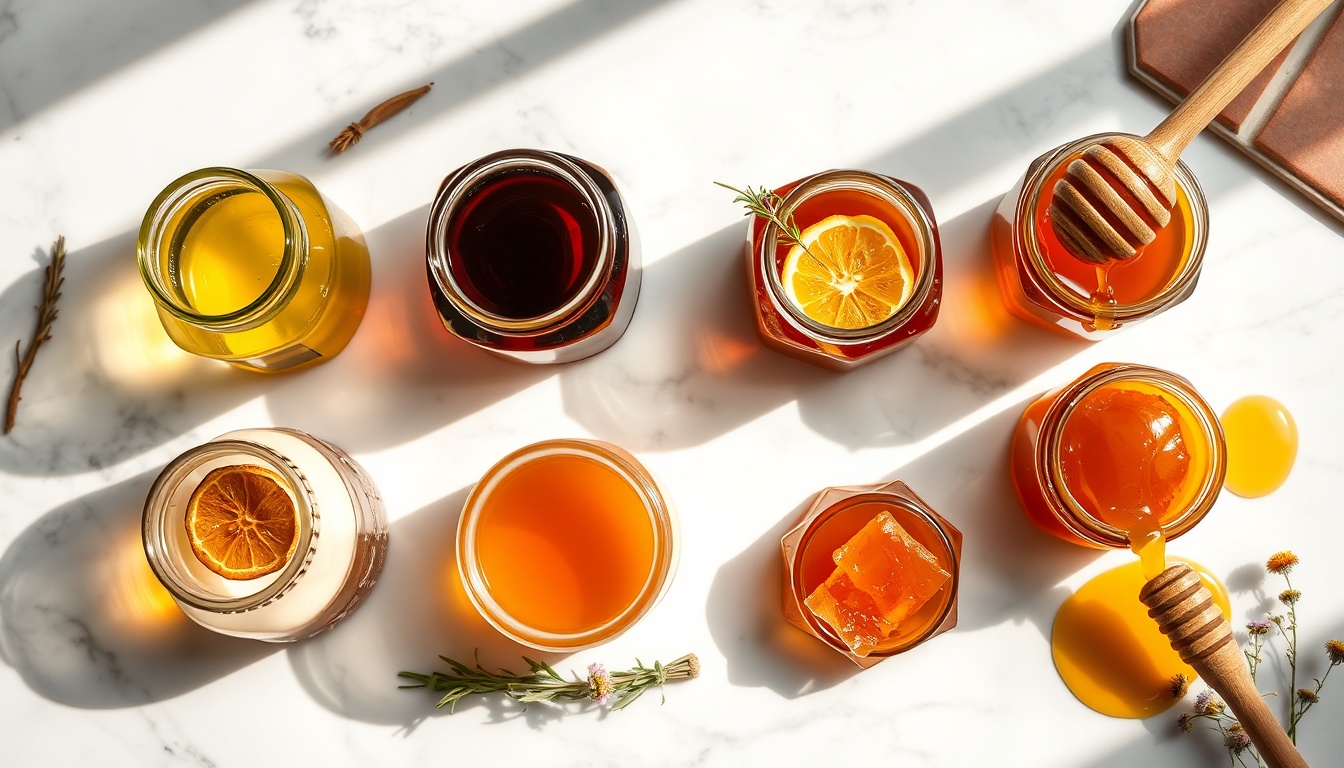
Italy: Europe's Most Diverse Honey Nation
When most consumers think of artisan honey, Manuka from New Zealand or thyme honey from Greece comes to mind. Few realize that Italy is among the most botanically diverse honey-producing nations in Europe — a country where you can find honey made from wild Sicilian orange blossoms, Alpine linden trees in the Dolomites, chestnut forest in the Apennines, eucalyptus in Sardinia, and Mediterranean wildflower meadows all within a single national border. Italy produces an estimated 12,000 to 20,000 metric tons of honey annually (production varies considerably year to year due to weather and Varroa mite pressure), with over 60,000 registered beekeepers — approximately 8,000 of them professional — and more than 30 distinctly characterized honey varieties officially registered as traditional agricultural products.
Italy's honey diversity is not accidental. The Italian peninsula stretches across 10 degrees of latitude, from Alpine mountains in the north to subtropical coastlines in the south. It encompasses three distinct biogeographical zones: the Alpine zone (coniferous forest, high meadows, beech woodland), the Continental zone (Po Valley, chestnut woodland, linden groves, sunflower fields), and the Mediterranean zone (garrigue, citrus groves, olive orchards, eucalyptus, sulla clover, rockrose). Add to this the major islands — Sicily and Sardinia both have significantly distinct flora — and Italy becomes a country where a single honey term like "millefiori" (polyfloral) encompasses wildly different products from Piedmont to Calabria.
Italy is, paradoxically, a net importer of honey. Domestic demand — driven by strong food culture and culinary use — exceeds what Italian beekeepers can supply. This makes authentic, origin-verified Italian honey valuable and slightly harder to find abroad than the volumes might suggest. This guide covers Italy's major honey varieties, the regions that produce them, what peer-reviewed research says about their quality, and how to buy genuine product. For comparison with other premium European honeys, see our guides to Greek honey, Turkish honey, and Waldhonig (German forest honey).
Italy's Honey Geography: North to South
Italy's honey landscape divides cleanly into distinct climatic and botanical regions, each producing characteristic varieties.
The Alpine North — Piedmont, Valle d'Aosta, Lombardy, Trentino-Alto Adige, Veneto — is linden and acacia country, with high-altitude millefiori, forest honeydew (melata), and exceptional chestnut honey from pre-Alpine woodland. The Dolomites produce their own style of polyfloral alpine honey from high meadows blooming with bellflower, gentian, and alpine clover. Lombardy's Pianura Padana (Po Valley flatlands) is one of Italy's highest-volume production zones for acacia and linden.
Central Italy — Tuscany, Umbria, Marche, Lazio, Abruzzo — is extraordinarily diverse. The Apennines running the length of the peninsula supply chestnut honey from extensive managed forests; sunflower honey from rolling agricultural valleys; acacia from river corridors; and complex polyfloral millefiori from slopes covered with dozens of wild species. Tuscany's Lunigiana zone, where Apennines meet pre-Alps near the Ligurian border, produces honey under Italy's most recognized honey geographical indication.
The South — Campania, Basilicata, Calabria, Sicily — is the Mediterranean honey zone. Here, orange blossom (arancio), sulla (a leguminous meadow plant), carob, citrus (agrumi or zagara), and diverse Mediterranean wildflower honeys define the palette. Sicily is the single most important Italian region for orange blossom honey and sulla production; Calabria rivals it. Sardinia stands apart with its extensive eucalyptus plantations, which produce some of Italy's most distinctive and identifiable honey.
Get the Honey Buyer's Cheat Sheet (free PDF)
16 varieties on one page — color, flavor, best use and what a fair price looks like — from the 304 honeys we track.
The Major Italian Honey Varieties
Italy's honey landscape is more varied than most buyers realize. These are the principal varieties worth knowing, from the most common to the rarest.
- Millefiori (Polyfloral — "Thousand Flowers") — Italy's most common honey type, accounting for the majority of domestic production by volume. Millefiori means "thousand flowers" — it is made from the nectar of whatever happens to be blooming when bees are foraging, rather than from a single dominant source. The resulting honey varies enormously by region, season, and altitude. A northern Italian millefiori from Piedmont — drawing on linden, alpine clover, wildflowers, and herbs — will look and taste completely different from a Sicilian millefiori drawing on Mediterranean garrigue, wild fennel, borage, and citrus. Color ranges from light amber to golden to reddish amber. Crystallization varies from quick to slow. Flavor: complex, layered, regionally distinctive — the terroir of Italian countryside captured in a jar. Price: for quality product with clear regional origin. Best use: everyday table honey, yogurt, bread, baking, cheese boards. Note: Millefiori label alone guarantees nothing about quality — regional origin and beekeeper credibility matter enormously.
- Acacia (Robinia pseudoacacia — Black Locust) — Italy's most economically prestigious honey and the variety most frequently found in specialty food stores outside Italy. Despite the name "acacia," Italian acacia honey comes from Robinia pseudoacacia (black locust), an American tree introduced to Europe in the 1600s that naturalized so thoroughly that it now covers over 800,000 hectares of Italian land — a significant portion of the deciduous forest zone. Robinia bloom occurs in May–June, lasting only 2–3 weeks. Color: water-white to barely perceptibly golden, almost transparent. Aroma: delicate, clean, faintly floral — vanilla bean and fresh-cut flower undertones. Taste: purely sweet with gentle floral complexity; notably mild compared to almost all other Italian varieties; light in body. Crystallization: extremely slow — robinia honey's unusual fructose-to-glucose ratio (approximately 44% fructose vs. 28% glucose) means it can remain liquid at room temperature for 1–3 years. This slow crystallization is a key authentication marker; fast-crystallizing "acacia" honey is adulterated or mis-labeled. Price: for quality monofloral product with origin documentation. Best: drizzling over fresh ricotta, mild cheeses, yogurt, fruit; use in tea; serving as a table honey where visual clarity matters. Research: Italian acacia honey has been characterized in multiple European honey databases and shown to have consistently low HMF (hydroxymethylfurfural) content when properly stored — a quality marker in European honey regulations (EU Directive 2001/110/EC sets 40 mg/kg maximum; fresh premium Italian acacia routinely tests under 5 mg/kg).
- Castagno (Chestnut — Castanea sativa) — One of Italy's most distinctive and polarizing honey types, produced wherever managed chestnut forest exists — throughout the Apennines, pre-Alpine zones, and parts of the Alps. Chestnut trees bloom in June–July with tiny cream flowers with a striking odor. Color: very dark amber to near-black, with reddish undertones. Aroma: powerful, almost aggressive — musty, woody, barn-like, fermentive, with unmistakable pollen notes; it divides opinion sharply between those who love it and those who don't. Taste: assertive and complex — bittersweet with tannic notes from tannin-rich chestnut pollen, moderate sweetness, a persistent bitter finish; umami-adjacent. Crystallization: very slow due to high fructose content; it may remain semi-liquid for months. Chemical profile: Italian chestnut honey consistently ranks among the highest in total polyphenol content and antioxidant activity of any Italian variety — a pattern confirmed repeatedly in peer-reviewed Italian honey research. The characteristic bitterness comes partly from the chestnut pollen (which bees incorporate in quantity as the tree produces abundant pollen despite relatively modest nectar flow). Price. Best: strong aged cheeses (Parmigiano-Reggiano, aged Pecorino, Grana Padano), charcuterie boards, game meat glazes, mead making, honey-forward cocktails where bitterness is an asset.
- Sulla (Hedysarum coronarium — Italian Sainfoin / French Honeysuckle) — Italy's most beloved southern honey, practically unknown outside Italy but considered by Italian beekeepers as their finest light honey. Sulla is a leguminous meadow plant (technically Italian sainfoin or French honeysuckle) that covers the hillsides and meadows of Sicily, Sardinia, Calabria, Basilicata, and Campania in spring (March–May). Its bloom is spectacular and brief — typically 3–5 weeks — and a single good sulla harvest can supply a Sicilian apiary's primary income for the year. Color: white to very pale amber, sometimes nearly translucent with a greenish tint when fresh. Aroma: delicate and clean — soft floral with a faint grass and vanilla note; lacks the sharp character of thyme or chestnut. Taste: gently sweet, clean, floral, mild — the least assertive and most universally appealing of the southern Italian honeys; sometimes described as "pristine." Crystallization: medium-fast, crystallizing to a smooth, dense white paste in 1–3 months. Price: for quality Sicilian sulla. Best: fresh sheep's milk ricotta and fresh Pecorino (a traditional Sicilian pairing — sulla's mildness complements fresh cheese without overwhelming it), yogurt, mild desserts, porridge. Sulla honey is rarely found at supermarkets outside Sicily and southern Italy; specialty Italian food importers are the primary route for international buyers.
- Arancio / Zagara (Orange Blossom / Citrus Blossom) — Produced from citrus orchards across Sicily, Calabria, and Campania, primarily during the April–May orange blossom season. The term "arancio" refers to orange specifically; "agrumi" and "zagara" (the Arabic-derived Sicilian word for blossom) are broader terms covering the full citrus family including lemon, mandarin, and bergamot. Sicily's citrus belt — the Conca d'Oro near Palermo, the Etna slopes, the Catania plain, the Agrigento coast — produces the most substantial volumes. Color: pale cream to pale amber. Aroma: unmistakably fragrant — fresh orange blossom, neroli, citrus zest with floral sweetness; one of the most immediately recognizable honey aromas. Taste: delicately sweet with a pronounced but gentle citrus-floral character; light-bodied, low bitterness. Crystallization: medium — granulates in 2–4 months to a smooth, fine-grained white cream. Price: for authentic Sicilian orange blossom honey. Best: ricotta desserts, panna cotta, fruit salads, herbal teas, chicken marinades, Sicilian cannoli filling, spreading on brioche. Note: "orange blossom honey" sold in supermarkets is often a blend or blend-derived product; authentic Sicilian arancio honey from small producers is significantly more aromatic.
- Eucalipto (Eucalyptus) — Italy's most geographically concentrated monofloral honey, produced almost exclusively in Sardinia and to a lesser extent coastal Calabria and Sicily, wherever extensive eucalyptus (Eucalyptus spp., primarily E. camaldulensis — river red gum) plantations exist. Eucalyptus was planted extensively in Sardinia and southern Italy through the 20th century for wood production and land drainage, creating a distinctive honey niche unique in Europe. Color: amber to dark amber, with a slightly brownish tint. Aroma: very distinctive — sharp, pungent, menthol-medicinal, with resinous eucalyptus oil notes; polarizing. Taste: complex and assertive, with eucalyptus's characteristic menthol-camphor note, a moderate bitterness, some resinous aftertaste, and underlying sweetness; more savory and pungent than most Italian varieties. Crystallization: medium-fast, to a firm, somewhat coarse grain. Price. Best: herbal teas (particularly popular in Italy's folk respiratory tradition — note: no clinical evidence for therapeutic claims), strong aged cheeses, game meats, honey-forward savory dishes, cheeseboards where bold contrast is desired. Sardinian eucalyptus honey has an immediately recognizable aroma that makes adulteration relatively straightforward to detect organoleptically.
- Tiglio (Linden / Lime Blossom — Tilia spp.) — Produced across northern Italy wherever linden trees are established: Po Valley parks and gardens, pre-Alpine valleys, Lombardy and Piedmont countryside. Linden (Tilia cordata, T. platyphyllos) blooms in June–July for only 10–14 days, making linden honey production highly dependent on weather alignment. Color: pale to light amber, often slightly greenish when fresh (from chlorophyll in the nectar). Aroma: very distinctive — fresh and mentholated, with a linden-flower fragrance that is simultaneously herbal, floral, and slightly medicinal; often described as smelling of linden tea. Taste: strongly flavored with linden's characteristic menthol-herbal quality, medium sweetness, light bitterness, a warming aftertaste; some find it similar to mild peppermint. Crystallization: medium — granulates in 2–4 months to a dense, sometimes slightly coarse white-cream paste. Price. Best: herbal teas (linden honey dissolved in linden flower tea is a classic Italian home remedy for colds; folk use only, not clinically established), yogurt, strong cheeses, baking. Italian linden honey is sometimes difficult to find even within Italy because the bloom is brief and weather-dependent; many Italian beekeepers consider a good linden harvest a lucky year.
- Melata di Bosco (Forest Honeydew) — Italy's version of the German Waldhonig — dark, mineral honeydew honey collected not from flowers but from the sugary secretions of aphids, scale insects, and other sap-feeding insects colonizing forest trees. Italian forest honeydew is primarily produced in the Alps, Dolomites, Apennines, and pre-Alpine forests of northern and central Italy from fir, spruce, oak, beech, and chestnut trees. Production is weather-dependent and varies dramatically year to year — in good years, beekeepers in Trentino or Friuli can harvest substantial melata from silver fir; in drought years or after cold springs, it fails entirely. Color: very dark brown to near-black, sometimes with greenish undertones, essentially opaque. Aroma: deep and complex — molasses, dark caramel, roasted grain, forest resin, earthy-mineral; the savory depth characteristic of all high-quality honeydew honeys. Taste: rich and complex with low sweetness, significant bitterness, mineral notes, and a long savory finish; significantly different from blossom honeys. Crystallization: very slow to nearly absent — the high mineral content and unusual oligosaccharide composition (same mechanism as Waldhonig and Turkish pine honey) prevent crystallization. Price. Best: cheese pairing (extraordinary with hard mountain cheeses — Fontina, Asiago, aged Taleggio), charcuterie, honey glaze for roasted meats, mead. Italian melata di bosco is closely comparable to Austrian Tannenwaldhonig and is excellent value relative to its German/Austrian equivalents.
- Girasole (Sunflower — Helianthus annuus) — Produced from the vast sunflower fields of the Po Valley and central Italian agricultural zones during the July–August bloom. Sunflower honey is one of Italy's highest-volume monofloral honeys but is less prized commercially than acacia, sulla, or millefiori — it is considered a commodity variety, largely used for blending or bulk sale. Color: bright golden yellow. Aroma: pleasantly floral with a mild sunflower character. Taste: sweet, straightforward, clean, with moderate complexity. Crystallization: very fast — granulates within 3–6 weeks of extraction to a firm, coarse, bright yellow mass; this rapid crystallization is diagnostically reliable and a quick authentication test. Price. Best: baking (granulated sunflower honey re-melts well), everyday spreading, industrial food use. Italian artisan beekeepers rarely specialize in sunflower honey; it is mainly a volume product.
Miele della Lunigiana: Italy's Landmark Honey Designation
Italy's most recognized honey geographical indication is Miele della Lunigiana DOP (Denominazione di Origine Protetta — Protected Designation of Origin under EU law). Lunigiana is a historic sub-region at the intersection of Tuscany, Liguria, and Emilia-Romagna, centered on the upper Magra River valley and named for the ancient city of Luni. The territory encompasses roughly 1,000 square kilometers of steep Apennine valleys, chestnut woodland, and mixed rural landscape at elevations from 100 to 1,800 meters.
Miele della Lunigiana DOP covers two distinct variety types: acacia (robinia) honey, harvested in May–June from the black locust trees that line the river valleys and lower slopes; and multiflora (polyfloral millefiori) honey, harvested from the diverse mix of wildflowers, herbs, and woodland plants on the higher slopes. Both must be produced within the defined geographical territory, by beekeepers registered with the Lunigiana DOP Consortium, using hives that remain within the zone during the relevant bloom period. The DOP seal guarantees not just geographical origin but also compliance with production standards, harvest practices, and quality parameters including HMF limits and enzyme activity thresholds.
The Lunigiana DOP designation, awarded in 2004, was one of the first honey DOP certifications in Italy and remains the most visible example of how Italy's DOP system applies to honey. The Italian government's National Catalog of Traditional Food Products (PAT — Prodotti Agroalimentari Tradizionali, maintained by the Ministry of Agricultural, Food and Forestry Policies) lists over 40 traditional honey varieties from regions across the country, covering specific varieties, production methods, and geographical areas — though PAT listing is a traditional product recognition rather than a legally protected quality mark under EU law.
Other Italian regions have pursued similar recognition. Sardinian honey producers have been working on geographical specifications for Sardinian varieties. Sicilian sulla and orange blossom honey producers are increasingly organized around quality consortia. The broader Italian quality mark system — including DOCG, DOC, DOP, and IGP designations — is administered through the Italian Ministry of Agriculture, and its application to honey has grown in the 2010s and 2020s as artisan beekeepers recognized its value in differentiating premium product from bulk imports.
Quick Comparison: Italian Honey Varieties at a Glance
The following table summarizes the key characteristics of Italy's major honey varieties:
- Acacia (Robinia) — Color: water-white | Crystallization: very slow (1–3 years) | Flavor: delicate, clean, floral | Best for: drizzling, cheese, tea | Price: $$-$$$ | Availability: widely exported
- Millefiori — Color: golden to amber (varies) | Crystallization: variable | Flavor: complex, regionally diverse | Best for: everyday table, cooking | Price: $-$$ | Availability: common
- Castagno (Chestnut) — Color: dark amber to near-black | Crystallization: slow | Flavor: bold, bitter, tannin-rich | Best for: aged cheese, charcuterie | Price: $$-$$$ | Availability: moderate
- Sulla — Color: white to pale amber | Crystallization: medium (1–3 months) | Flavor: delicate, clean, floral | Best for: fresh cheese, yogurt | Price: $$-$$$ | Availability: specialty stores, Sicilian import
- Arancio (Orange Blossom) — Color: pale cream to amber | Crystallization: medium | Flavor: fragrant, citrus-floral | Best for: ricotta, desserts, tea | Price: $$-$$$ | Availability: specialty Italian food stores
- Eucalipto — Color: amber to dark amber | Crystallization: medium-fast | Flavor: pungent, menthol, resinous | Best for: aged cheese, tea | Price: $$-$$$ | Availability: specialty Sardinian import
- Tiglio (Linden) — Color: pale to light amber (greenish) | Crystallization: medium | Flavor: herbal-menthol, floral | Best for: herbal tea, yogurt | Price: $$-$$$ | Availability: limited, northern Italy
- Melata di Bosco (Forest Honeydew) — Color: very dark brown/black | Crystallization: very slow | Flavor: mineral, caramel, savory | Best for: mountain cheese, meats | Price: $$-$$$ | Availability: specialty stores, northern Italy
The Science: What Research Says About Italian Honey Quality
Italian honey has been the subject of extensive peer-reviewed research, primarily from Italian academic institutions including the University of Bologna, the University of Catania, the Polytechnic University of Marche, and the CREA-ZA (Council for Agricultural Research and Economics — Animal Production Research Centre, Bologna), which serves as Italy's national center for honey research and quality standards.
Italian chestnut honey has attracted particular research interest because of its consistently high polyphenol and flavonoid content. A 2007 study by Gheldof et al. published in the Journal of Agricultural and Food Chemistry compared the antioxidant capacity of 14 honey types and found dark Italian chestnut honey (miele di castagno) among the highest performers in DPPH radical scavenging and phenolic content — a finding replicated multiple times in subsequent Italian studies. A 2014 study by Frankel et al. and a 2018 Italian university consortium study both confirmed that dark Italian honeys (chestnut, forest honeydew) consistently outperform light honeys (acacia, sulla) in antioxidant activity by factors of 5–10x, consistent with the well-established correlation between honey color and polyphenol content across all honey types.
Italian acacia honey has been used as a reference standard in European honey research because of its chemical consistency and purity. Its characteristic optical properties — near-transparent with very low absorbance at 450nm — and its unusual fructose-to-glucose ratio (typically ~1.40–1.52, significantly higher than most honeys; White 1975) are used as baseline measurements against which other varieties are compared. The CREA-ZA has published the most comprehensive spectroscopic and chemical databases for Italian monofloral honeys, covering pollen profiles, diastase activity, invertase activity, HMF content, electrical conductivity, and phenolic fingerprints for all major Italian varieties.
Sulla honey has been studied for its probiotic-interaction properties in a 2019 Sicilian university study (Universita degli Studi di Catania), which examined how sulla honey's specific phenolic composition affected Lactobacillus and Bifidobacterium growth in model systems — relevant to its long folk use with fresh fermented dairy. The researchers found sulla honey's effect on probiotic cultures was significantly milder (less inhibitory) than chestnut or thyme honey, consistent with its pale color and low polyphenol load.
Forest honeydew research has been conducted collaboratively between Italian and Austrian researchers given the shared Alpine production zone. Studies published in Food Chemistry (Piana et al., 2004; Bosi et al., 2010) established the pollen profile, electrical conductivity (typically >0.8 mS/cm for authentic melata, vs. <0.6 for blossom honey — a standard quality test in EU regulations), and oligosaccharide composition of Italian melata di bosco, providing standards for authentication and distinguishing fir honeydew from other tree-source honeydew.
Important disclaimer: all cited research describes chemical properties and in vitro findings. None of it establishes that eating Italian honey treats, prevents, or cures any medical condition. Honey is a food, not a pharmaceutical. People with diabetes should monitor sugar intake when consuming any honey variety. Children under 12 months must not consume honey of any kind due to Clostridium botulinum spore risk.
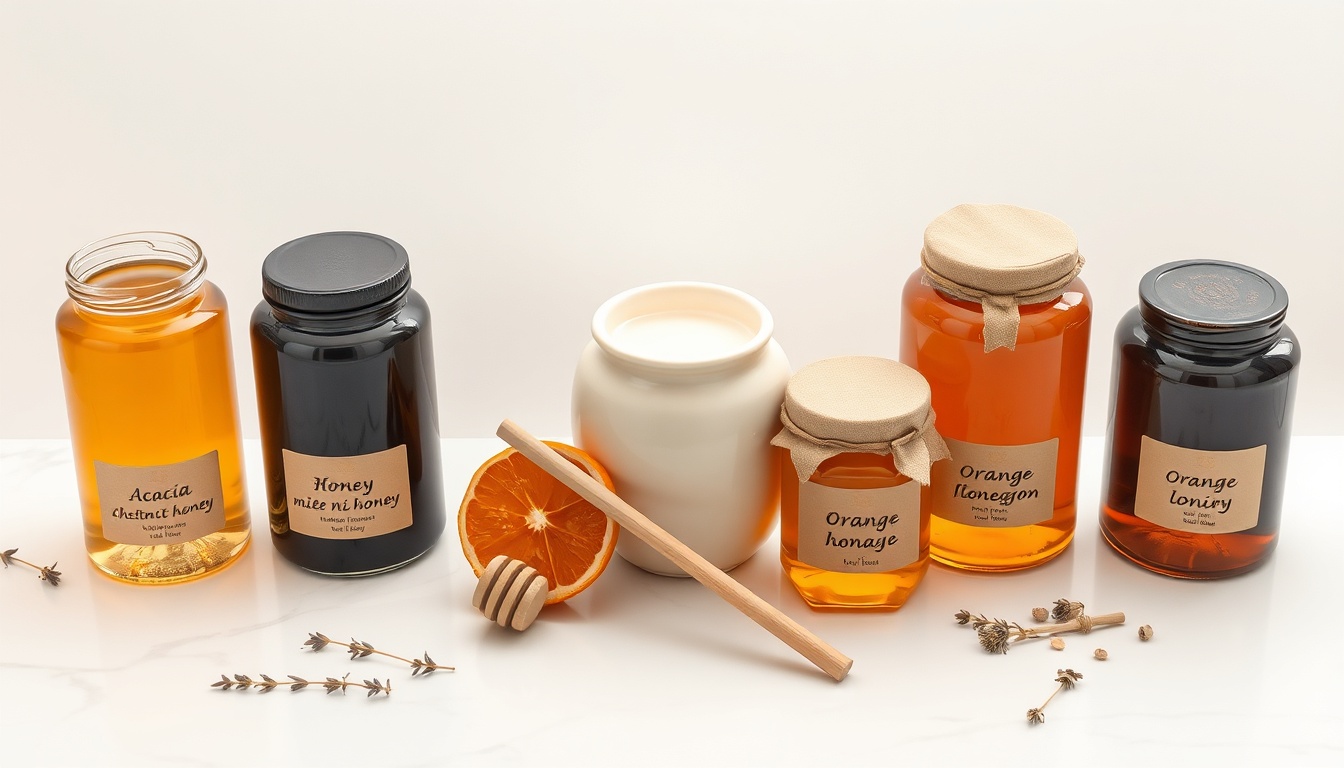
Buying Authentic Italian Honey: A Practical Guide
Italian honey faces the same authenticity challenges as any premium food product: blending, mislabeling, substitution with cheaper imports, and fraudulent geographical claims. Navigating these challenges requires understanding what authentic Italian honey looks like and where to find it.
Crystallization as an authentication signal: One of the most reliable field tests for Italian honey is crystallization behavior relative to the stated variety. Authentic Italian acacia honey should NOT crystallize for at least 6–12 months (often 1–3 years) at room temperature — if an "acacia" honey is granulated when purchased, it is almost certainly adulterated or misidentified. Conversely, authentic sunflower honey crystallizes within weeks; authentic sulla crystallizes within a few months; authentic chestnut and forest honeydew remain liquid for many months. A honey that doesn't crystallize according to its variety's expected pattern deserves scrutiny.
Geographic specificity: Quality Italian honey should name a specific region or, ideally, a specific beekeeper's location — not just "Product of Italy." Look for labels that specify "Toscana," "Sicilia," "Sardegna," "Lunigiana," or a named commune. The Miele della Lunigiana DOP carries a specific DOP logo with EU seal; this is the most legally guaranteed Italian honey provenance mark.
Pollen analysis: Professional authenticity verification for monofloral Italian honey uses melissopalynology (pollen counting). Regulations for Italian monofloral designations specify minimum pollen percentages from the declared source: typically 45–70% of a single pollen type is required to claim monofloral status. Reputable Italian producers selling internationally can usually provide pollen analysis certificates on request.
Where to buy: Authentic Italian honey is most reliably found from: (1) specialist Italian food importers who source directly from producers, (2) online from verified Italian producers — many small Sicilian, Sardinian, and Tuscan beekeepers ship internationally, (3) Italian delicatessens in major cities, particularly in areas with significant Italian-American or Italian communities, (4) specialty food retailers (Dean & DeLuca type) that carry named-producer Italian honeys. Supermarket "Italian honey" is frequently a blend of EU honeys with minimal Italian content and is not a reliable representation of what authentic Italian monofloral varieties taste like.
Price signals: Authentic Italian monofloral honey from a named beekeeper in a named region costs for standard varieties (millefiori, sulla, acacia), $20–40 for premium varieties (chestnut, forest honeydew, linden, orange blossom from small producers), and significantly more for rare or limited-production types. Honey priced below claiming Italian monofloral origin deserves skepticism.
Seasonal awareness: Italian honey is typically harvested once per year per variety, in the relevant bloom window (acacia in May–June, orange blossom in April–May, chestnut in June–July, forest honeydew in July–August, sunflower in July–August). Fresh-harvest honey is often sold beginning in late summer or autumn. Look for honey with a harvest year on the label — this is standard practice among quality Italian producers.
Italian Honey in the Kitchen
Italian cooks have integrated honey into their culinary tradition for millennia — from ancient Roman apicius recipes to Renaissance confectionery to today's modern Italian kitchen. Understanding which honey varieties pair with which foods is part of Italian food literacy, and it reflects how different Italy's honey culture is from the generic "just use honey" approach common in English-language cooking.
The fundamental Italian pairing principle is contrast and complement: mild honeys (acacia, sulla) pair with mild fresh foods where you want the honey's delicacy to shine (fresh ricotta, burrata, mild cheeses, fresh fruit, plain yogurt); strong honeys (chestnut, forest honeydew, eucalyptus) pair with robust foods that can match their intensity (aged hard cheeses, cured meats, game, strong-flavored bread). Orange blossom and linden occupy a middle register — fragrant enough to be distinctive, mild enough to work with both light and medium-weight foods.
Classic Italian honey applications worth knowing: Ricotta con miele — a drizzle of high-quality Sicilian sulla or acacia honey over fresh sheep's milk ricotta is one of the simplest and most satisfying Italian desserts. Miele e pecorino — Sardinian tradition pairs aged Pecorino Sardo with eucalyptus or wildflower honey; Tuscan Pecorino pairs well with chestnut honey. Lardo di Colonnata with honey — the extraordinary cured pork fat from Colonnata (Tuscany) is sometimes served with a drop of local millefiori or chestnut honey. Pane e miele — thick-crusted Altamura bread or Pugliese bread with a generous spread of strong monofloral honey is a Southern Italian breakfast tradition. Italian honey-based desserts include mostaccioli (honey cookies), struffoli (fried honey balls, a Neapolitan Christmas tradition using local honey), and various regional variations of honey cake.
Related Guides and Internal Resources
Italian honey connects to a broader world of European artisan honey traditions. For additional context and comparison, see: our guide to Greek honey — thyme, pine honeydew, fir, and Hymettus region; our guide to Turkish honey — Anzer, çam balı pine honey, karakovan; our guide to Spanish honey — La Alcarria rosemary/lavender DOP, thyme, heather, and orange blossom; and our guide to Waldhonig (German and Austrian forest honey), which closely parallels Italian melata di bosco in origin and flavor profile.
For honey varieties with particularly high antioxidant content comparable to dark Italian varieties, see our guides to Manuka honey, Buckwheat honey, and Sidr honey. For Italian honey's role in charcuterie and cheese pairing, our Honey and Cheese Pairings guide covers the principles. For cooking substitution (using Italian honey in place of sugar), see Baking with Honey.
