Portugal: Europe's Most Underrated Honey Country
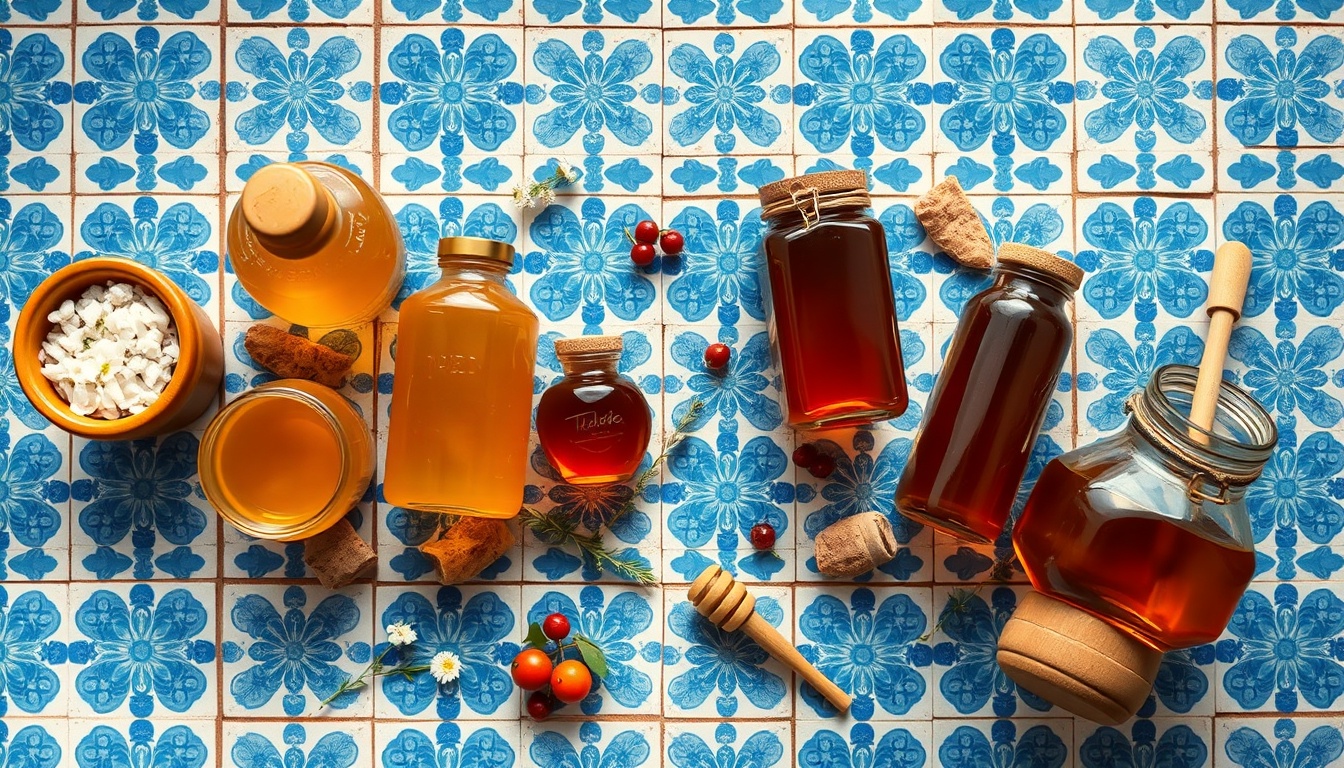
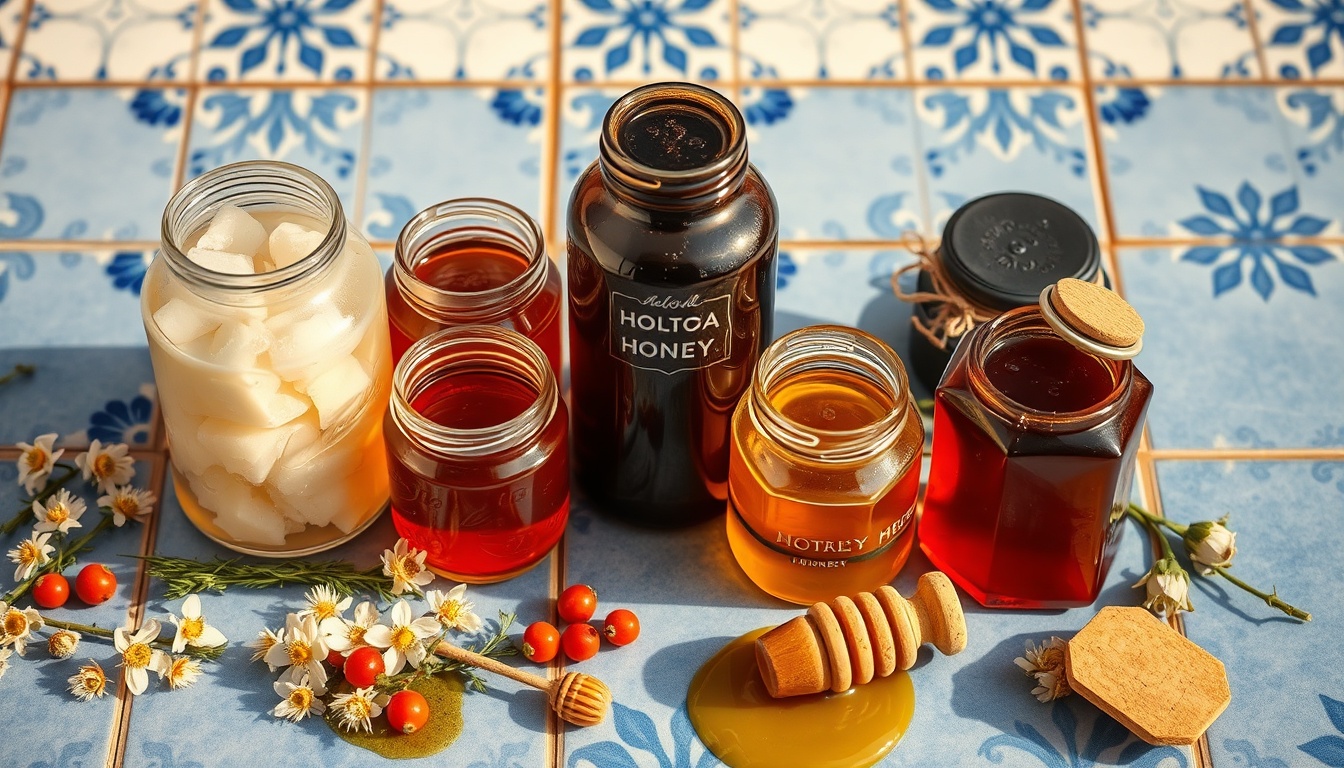
Portugal is one of Europe's most exceptional honey-producing nations — and one of the least known internationally. While Greek thyme honey and Italian acacia have established global reputations, Portuguese honey remains largely invisible in the export market despite possessing some of the continent's most distinctive and botanically unusual varieties: the bitter strawberry tree honey that blooms in December when everything else has stopped; the resinous white cistus honey produced from millions of hectares of wild rock rose that colonize Portugal's abandoned hillside farmlands; and the deeply aromatic urze heather honey from Atlantic mountain ranges that rivals Scottish heather in character and complexity.
Portugal's honey diversity is structural. The country spans three distinct climate zones in a surprisingly small geographic area: the wet Atlantic north (the Minho, Trás-os-Montes, and Serra do Gerês, where annual rainfall exceeds 2,000mm and flora resembles Celtic Britain more than Mediterranean Europe), the transitional centro (the Serra da Lousã, Alentejo highlands, and Ribatejo Norte, where Atlantic and Mediterranean influences meet), and the hot semi-arid south (the Alentejo plain and the Algarve, where cork oak savannah, carob orchards, and citrus groves create a North African botanical character). A beekeeper moving 300 kilometres from the northern Gerês mountains to the southern Algarve coast passes through a botanical transformation as radical as crossing from Scotland to Morocco.
What makes Portugal additionally significant for honey research and quality is the native bee. Portugal is home to Apis mellifera iberiensis — the Iberian honeybee, a subspecies distinct from the Italian A. m. ligustica used in most European commercial beekeeping. Apis mellifera iberiensis has a genetic profile that reflects the Iberian Peninsula's role as a glacial refugium during the Pleistocene: isolated and differentiated over millennia, with documented African genetic introgression in southern Portuguese populations from Apis mellifera intermissa, the North African bee, which crossed the Strait of Gibraltar naturally. This genetic distinctiveness is ecologically significant: Iberian bees are better adapted to the extreme weather variability of Portugal's climate — drought-tolerant, productive in short intense flowering seasons, and capable of surviving on marginal forage — than imported Italian stocks. Research from the University of Évora and INIAV (the National Institute for Agricultural and Veterinary Research) has documented the genetic structure of Portuguese bee populations and their regional honey characteristics.
Perhaps most impressively for a country its size, Portugal has seven EU-protected DOP (Denominação de Origem Protegida — the Portuguese equivalent of PDO) honey designations, among the highest density of DOP honey certifications in Europe. Each represents a geographically specific honey with legally defined standards for origin, flora, bee population, and quality. This guide covers all of Portugal's major honey varieties and DOP designations. For context with other European honey traditions, see our guides to Spanish honey, Italian honey, Greek honey, and the World Honey Guide.
Urze Honey: Portugal's Alpine Heather
Urze is the Portuguese name for Calluna vulgaris — common heather — and urze honey is Portugal's most prestigious and botanically distinctive honey variety. It is produced primarily in the highland mountain ranges of the north and centre: the Serra da Lousã (470km² of ancient granite uplands in Coimbra district), the Serra do Gerês (the core of Portugal's only national park), the Serra de Montemuro (the isolated mountain massif between the Douro and Vouga rivers), and the highland zones of Trás-os-Montes. At these northern Atlantic altitudes — between 600 and 1,500 metres — Portugal's climate becomes genuinely Celtic: cool, wet, mist-prone, and dominated by vast heather moors that turn deep violet-pink from August through October when the Calluna blooms.
Urze honey has the defining characteristic of all fine Calluna heather honey: thixotropy. Like Scottish heather honey, Welsh heather honey, and the finest Dutch and Belgian heather honeys, Portuguese urze exhibits gel-like behaviour — it sets firm at rest but becomes liquid under agitation, reverting to gel when left undisturbed. This thixotropic texture is caused by a high-molecular-weight protein (12,000 Da) that cross-links honey molecules into a reversible gel network; the same protein is responsible for the characteristic small air bubbles trapped throughout heather honey that give it its slightly opaque, alive appearance. When you stir Portuguese urze, it becomes briefly fluid, coats a spoon beautifully, and gradually returns to its firm, slightly gelatinous body.
Beyond texture, urze honey has exceptional flavour depth. The colour ranges from rich amber to dark amber with reddish-brown tints; the aroma is strongly heathery — a complex blend of dried fruit, warm spice, wildflower, and a distinctive slightly bitter-floral depth characteristic of Calluna. On the palate, urze is full-bodied, round, and persistent, with a lingering aftertaste and a natural bitterness that prevents it from feeling cloying. Portuguese producers, like their Scottish counterparts, often describe good urze as honey with structure — it holds its shape on cheese, complements strong flavours rather than being overwhelmed, and makes exceptional mead (medronheira is also produced in Portugal, though less systematically than tej in Ethiopia or Scandinavian mead traditions).
The Mel da Serra da Lousã DOP designation protects urze honey produced in the Serra da Lousã mountain range, and the Mel das Terras Altas do Minho DOP covers urze and multifloral mountain honeys from the highland Minho districts. Both specifications require the honey to meet minimum Calluna pollen thresholds (typically ≥45% Calluna pollen in melissopalynological analysis) and comply with moisture, HMF, and diastase standards consistent with EU honey regulation. Authentic DOP urze carries a numbered certification counter-seal from the respective Conselho Regulador (Regulatory Council). Flavor profile: dark amber, thixotropic gel consistency; heathery-floral aroma with dried fruit and warm spice; full-bodied, mildly bitter, persistent aftertaste. Pairs brilliantly with strong cheese (queijo da Serra da Estrela, aged manchego), game meat marinades, dark chocolate. Price: at specialty importers; higher for DOP-certified single-origin lots.

Get the Honey Buyer's Cheat Sheet (free PDF)
16 varieties on one page — color, flavor, best use and what a fair price looks like — from the 304 honeys we track.
Cistus Honey (Mel de Esteva): Iberia's Resinous White Honey
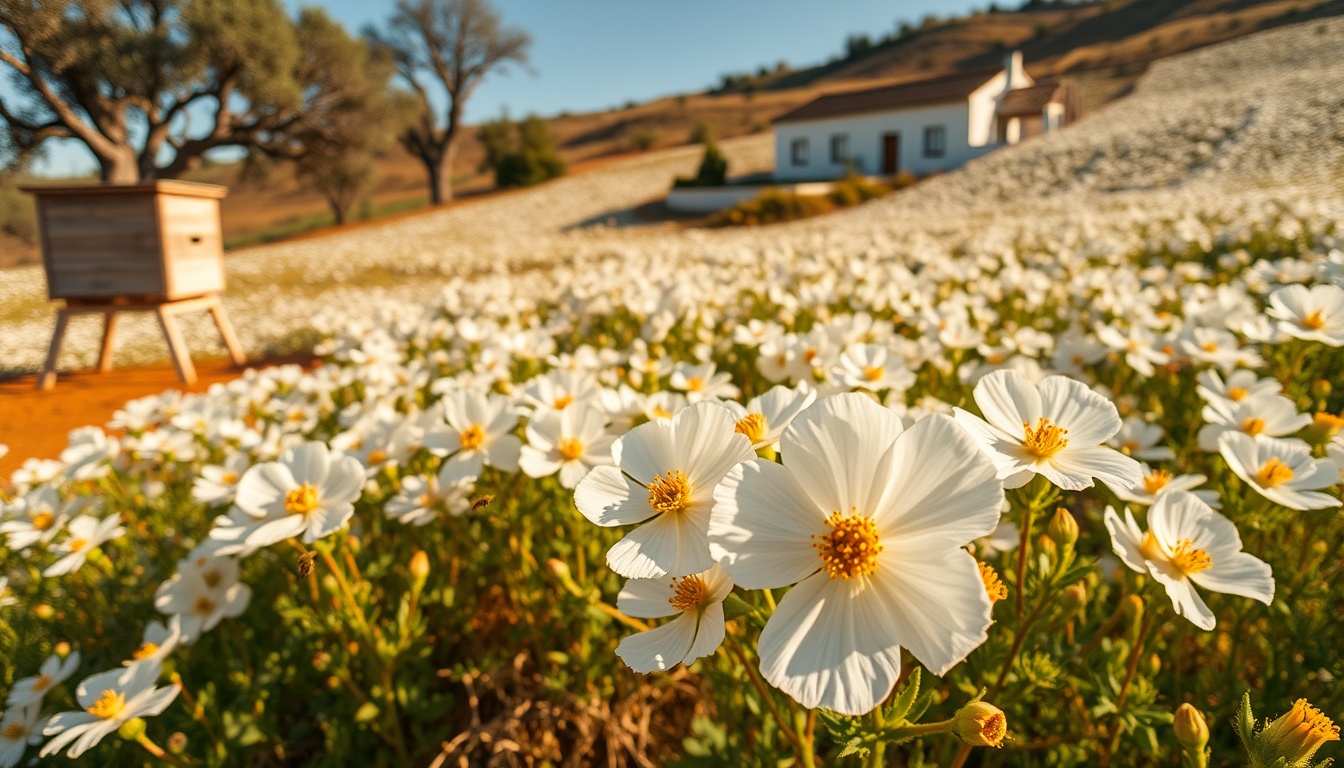
Of all Portugal's honey varieties, none is more uniquely Iberian than mel de esteva — cistus honey, produced from Cistus ladanifer, the common rock rose or labdanum cistus. This medium-to-large shrub, with showy white five-petalled flowers with dark crimson basal spots, is the dominant pioneer plant across Portugal's vast abandoned interior agricultural landscapes. Over the second half of the 20th century, Portugal experienced one of Europe's most dramatic rural depopulation events: millions of people left the interior terraced hillside farmlands of the Alentejo, Ribatejo, Beira Interior, and Trás-os-Montes for coastal cities (Lisbon, Porto) and emigration to France, Germany, and Brazil. The terraced farmland they left behind — built over centuries of careful stone wall construction — was rapidly colonized by natural vegetation succession, and Cistus ladanifer emerged as the dominant first-stage colonizer across millions of hectares of central and southern Portugal.
Each April and May, these vast cistus populations bloom simultaneously across the Portuguese interior: a sea of white flowers with gold pollen centres, covering whole mountain slopes and extending to the horizon. The spectacle lasts only four to six weeks — Cistus flowers fall within a single day of opening — but in that brief window, bee colonies in cistus-dominated landscapes can produce extraordinary volumes of highly distinctive honey. Cistus honey is unusual from the first moment: freshly extracted, it is pale to very pale amber — almost white — with a faint resinous golden tint. It crystallizes within weeks of extraction into an exceptionally fine-grained, brilliant white paste with a smooth, almost lotion-like texture. Its aroma is unmistakable: clean, fresh, slightly resinous, with a floral-sweet character overlaid by the distinctive labdanum note — a warm, slightly balsamic scent that recalls the labdanum resin used in European perfumery since antiquity. In fact, Cistus ladanifer was harvested for labdanum resin (used as a fragrance fixative and incense base) in Portugal and Spain for centuries before synthetic substitutes appeared.
On the palate, cistus honey is delicate rather than bold — lighter in sweetness than acacia, with a clean floral note and a subtle resinous depth that sets it apart from all other honeys. Its high fructose content (typically F/G ratio >1.2) produces very slow, fine-grained crystallization and a relatively long shelf life. Research from the University of Évora (Estevinho et al., International Journal of Food Science and Technology, 2011) documented the antimicrobial activity of Portuguese cistus honey and found significant inhibitory activity against Staphylococcus aureus and Escherichia coli, consistent with the honey's high polyphenol content from the labdanum-rich floral source. Ferreres et al. (Journal of Agricultural and Food Chemistry, multiple papers) have characterized the polyphenol profile of Cistus ladanifer honey from Portugal and Spain, identifying unique flavonoids including pinobanksin, kaempferol derivatives, and labdanum-specific phenolic compounds not found in other honey varieties.
The Mel do Ribatejo Norte DOP designation (covering the rolling transitional landscape of northern Ribatejo, inland from Lisbon) and the Mel do Alentejo DOP both encompass significant cistus monofloral honey production. Authentic cistus honey is occasionally exported by specialty Portuguese honey importers but remains largely unknown outside the Iberian Peninsula. It represents one of the few genuinely distinctive European honey varieties with no equivalent in the global market. Flavor profile: very pale amber to white; fine-grained crystallized texture; resinous-floral aroma with balsamic depth; delicate, clean, slightly resinous palate. Pairs with: mild fresh cheese (queijo fresco), light yogurt, fruit tarts, gin cocktails where the floral-resinous note complements citrus. Price: for authentic Portuguese cistus honey.
Medronheiro Honey: One of the World's Few Genuinely Bitter Honeys
If Portuguese honey has one truly unique ambassador in the world of premium specialty honeys, it is medronheiro honey — produced from the flowers of Arbutus unedo, the strawberry tree (so called for its round red-orange fruit, which resembles a strawberry but tastes quite different — sweet-tart, slightly astringent, used in Portugal to produce the famous medronho aguardente, or strawberry tree brandy). The strawberry tree is a striking broadleaf evergreen shrub-to-tree native to the Atlantic Mediterranean coastal zone of Portugal, Spain, and southern France, and it has a phenological quirk that makes it botanically unusual and commercially valuable: it blooms in November and December — in the heart of autumn, after the summer drought has ended and most other nectar sources have finished.
Medronheiro honey is consequently among the most unusual honeys produced in Europe, distinguished by a quality rare in any honey variety: genuine, pronounced bitterness. Most honeys have no bitter component — sweetness, acidity, and floral notes, but no bitterness. Medronheiro contains arbutin (a glycoside of hydroquinone found in Arbutus and related Ericaceae) in sufficient concentration that experienced honey tasters consistently describe it as notably bitter — not unpleasantly so, but distinctly and persistently bitter in a way that persists through the aftertaste. The colour is dark amber to reddish-brown; the texture is unusually fluid for a raw honey (late-season arbutus nectar produces honey with high water-activity that requires careful moisture management); the aroma is intense, complex, slightly medicinal, with a warming herbal depth.
The bitterness of medronheiro honey has made it a traditional folk medicine honey in Portugal, particularly in the Algarve and Alentejo regions. Traditional Portuguese apothecary literature (documented by ethnobotanical researchers at the University of Algarve and UTAD) describes medronheiro honey as a specific remedy for kidney and urinary tract complaints — an application with plausible pharmacological basis, since arbutin is the active compound in bearberry (Arctostaphylos uva-ursi) leaves, which are used in contemporary herbal medicine for urinary antisepsis. Whether medronheiro honey contains sufficient arbutin to replicate this effect is debated; Almeida et al. (Journal of Apicultural Research, 2017) documented arbutin in Portuguese Arbutus honey and found bioactive levels sufficient to warrant further clinical investigation, though no therapeutic claims are substantiated by clinical trial evidence.
From a food perspective, medronheiro honey's bitterness is its selling point for the sophisticated palate. It pairs powerfully with strong aged cheeses (queijo da Serra da Estrela is the classic pairing — a raw ewe's milk cheese with its own pungent intensity), dark rye bread, bitter-chocolate desserts, espresso, and game meat. Portuguese beekeepers and chefs in the Algarve and Alentejo regions use it as a marinade component precisely because its bitterness adds a depth dimension that sweet honeys cannot provide. It is one of the few honeys that works as a replacement for molasses or bitter cooking syrup in braised dishes. The Mel da Serra de Monchique DOP designation — covering the Monchique highlands of northern Algarve at 400–900m elevation — includes significant medronheiro honey production, as Arbutus unedo is dominant in the Monchique acidic silicate soil landscape. Price: for authentic medronheiro, when available; export volumes are very small.
Portugal's DOP Honey System: Seven Protected Designations
Portugal has one of the highest densities of EU-protected honey designations in Europe. Seven Portuguese honeys carry DOP (Denominação de Origem Protegida) status — the EU's Protected Designation of Origin system, which legally restricts use of the designation name to honey produced, processed, and prepared in a defined geographical area according to specification standards registered with the EU. These DOP honeys represent the gold standard of Portuguese honey quality and traceability.
The seven DOP designations, their regions, and primary honey types are: **Mel do Parque de Montesinho** (northeastern Trás-os-Montes; the Montesinho Natural Park, one of Portugal's most remote and biodiverse landscapes on the Spanish border; primary varieties: lavender, chestnut, and wildflower honeys from a flora combining Atlantic and continental Mediterranean influences); **Mel do Barroso** (Trás-os-Montes; the Barroso highland plateau, a granite landscape of moorland, wetlands, and traditional extensive livestock farming; primary varieties: heather, lavender, and wildflower); **Mel das Terras Altas do Minho** (northern Minho highlands; Atlantic mountain flora with heather, bilberry, and wildflower varieties; the wetter northern zone with a distinctly Atlantic botanical character); **Mel da Serra da Lousã** (Serra da Lousã, Coimbra district; the flagship urze heather honey DOP, covering the granite uplands of central Portugal with Europe's finest Calluna vulgaris stands); **Mel do Ribatejo Norte** (northern Ribatejo; transitional landscape of rolling limestone hills and cistus-covered plateaux; primary variety: cistus monofloral and wildflower); **Mel do Alentejo** (the vast Alentejo region covering southern Portugal's cork oak savannah and extensive lavender/rosemary/cistus landscapes; Portugal's largest honey-producing region by volume); and **Mel da Serra de Monchique** (Monchique highlands, northern Algarve; the DOP most associated with medronheiro/Arbutus honey, also eucalyptus and wildflower from this unique silicate soil upland zone).
Each DOP honey is managed by a Conselho Regulador (Regulatory Council) that certifies production, maintains producer registers, and issues numbered certification seals. DOP honeys must meet specific melissopalynological standards (pollen profile confirming geographic and botanical origin), moisture limits (typically ≤18–19%), HMF (hydroxymethylfurfural) limits confirming minimal heat exposure, and diastase activity levels confirming freshness. Honey sold with a DOP label but without the Conselho Regulador counter-seal is not genuine DOP — this is the primary authentication check when buying Portuguese DOP honey.
The DOP system creates a quality pyramid in Portuguese honey: at the base, standard commodity honey (primarily from eucalyptus, which dominates Portugal's commercial production); in the middle, regional varietals without formal DOP certification; and at the apex, authenticated DOP honeys representing the finest expressions of each regional terroir. For buyers outside Portugal, the DOP system provides the most reliable quality and traceability assurance available.
Rosemary, Carob, Orange Blossom, and Other Varietals
**Rosemary honey (mel de alecrim):** Produced from Salvia rosmarinus (formerly Rosmarinus officinalis) in the drier interior regions of Trás-os-Montes, Beiras, and Alentejo. Portuguese rosemary honey is pale amber to golden, finer in flavour than Spanish La Alcarria rosemary, with a delicate herbal-sweet character and relatively quick fine-grained crystallization. The Mel do Parque de Montesinho DOP includes significant rosemary monofloral production. Best uses: desserts, light cheeses, tea, and as a mild everyday honey.
**Carob honey (mel de alfarrobeira):** One of Portugal's most Algarve-specific honeys, produced from the autumn bloom of Ceratonia siliqua — the carob tree, which forms extensive orchards and wild populations throughout the Algarve and southern Alentejo. Carob blooms September through November, providing a critical late-season nectar source when most other flowers have finished. Carob honey is dark amber to dark brown, with a distinctive rich, slightly earthy-sweet character and a lingering caramel note. Its flavour has been compared to mild molasses or Demerara sugar by some tasters — robust and complex, excellent for baking and pairing with strong cheese. Not widely exported; primarily available from Algarve producers directly.
**Orange blossom honey (mel de laranjeira):** The Algarve's Mediterranean citrus coast (primarily the coastal band from Silves to Tavira) produces Portugal's orange blossom honey from February-March flowering of Citrus sinensis orchards. Portuguese orange blossom is pale amber, with the classic citrus-floral perfume characteristic of orange blossom honeys worldwide — bright, lightly sweet, with a clean fresh aroma. Portugal's version tends toward a slightly fuller body than Florida or Spanish orange blossom due to the native bee's foraging patterns. Excellent for desserts, yogurt, and light culinary applications.
**Eucalyptus honey (mel de eucalipto):** The most commercially dominant Portuguese honey variety, not for quality but for volume. Eucalyptus globulus — the Tasmanian blue gum, introduced from Australia in the 19th century for paper pulp production — now covers over 900,000 hectares of Portugal, making Portugal one of Europe's most eucalyptus-afforested countries. The summer bloom (June-August) produces massive nectar flows that dominate Portuguese commercial honey production. Standard Portuguese eucalyptus honey is light to medium amber, with a mildly medicinal character softer than Australian Eucalyptus honey. As the lowest-cost Portuguese honey variety, it is the basis for most blended and commodity export honey from Portugal. Not considered a premium product — its primary value is as a commercial honey at accessible price points.
**Chestnut honey (mel de castanha):** Produced from the abundant chestnut (Castanea sativa) forests of Trás-os-Montes and the Beiras in June-July. Dark amber, with pronounced bitterness and tannin astringency similar to Italian castagna honey. The Mel do Parque de Montesinho DOP includes chestnut monofloral honey production. Rich polyphenol content and traditional use as a winter tonic honey make it a sought-after speciality. Pairs with aged cheese, dark meat, and hearty bread.
The Science: Portuguese Honey Research and Quality Standards
Portuguese honey has attracted significant scientific attention from Portuguese universities and research institutes, particularly INIAV (National Institute for Agricultural and Veterinary Research), UTAD (University of Trás-os-Montes e Alto Douro), the University of Évora, and the University of the Algarve. This research base provides robust quality documentation for Portuguese honey varieties.
Estevinho et al. (International Journal of Food Science and Technology, 2011) conducted a systematic characterization of antimicrobial properties across eight Portuguese honey varieties, finding significant antibacterial activity against Staphylococcus aureus, Bacillus subtilis, Escherichia coli, and Pseudomonas aeruginosa. Cistus and chestnut honeys showed the strongest inhibitory activity; rosemary and eucalyptus the weakest. This activity pattern correlates with the polyphenol content of each variety — a consistent finding across honey antimicrobial research internationally.
Ferreres et al. (Food Chemistry, 2010; Journal of Agricultural and Food Chemistry, multiple years) conducted detailed polyphenol profiling of Portuguese honeys by HPLC-DAD-MS. The research identified variety-specific marker compounds: for cistus honey, kaempferol and its glucosides plus labdanum-derived phenolics serve as botanical authentication markers. For urze heather, ericoid polyphenols including chlorogenic acid and quercetin derivatives dominate. For chestnut, gallotannin-type compounds produce both the characteristic bitterness and the antimicrobial activity. These polyphenol fingerprints now underpin laboratory authentication methods for Portuguese DOP honey claims.
Portuguese honey regulation follows EU Honey Directive 2001/110/EC as implemented in Portuguese law (Decreto-Lei 214/2003). DOP honeys additionally comply with their individual product specifications registered with the European Commission under Regulation (EU) No 1151/2012 on quality schemes for agricultural products. Key quality thresholds: moisture ≤20% (DOP varieties typically ≤18%); HMF ≤40mg/kg (≤15mg/kg preferred for premium honey); free acidity ≤50mEq/kg; diastase number ≥8 (Schade scale); reducing sugars (glucose + fructose) ≥60g/100g for blossom honey. Buyers should look for harvest-year labelling, producer name and location, and DOP certification number where applicable.
The Iberian bee (Apis mellifera iberiensis) has been the subject of population genetic research since the 1990s. Franck et al. (Molecular Ecology, 2000) documented the genetic distinctiveness of Iberian bee populations and the African genetic introgression in southern Iberian populations. Subsequent research at the University of Córdoba and UTAD has confirmed that native Iberian bee populations exhibit significantly better fitness and honey production than Italian bee imports under Iberian climate conditions — an argument for maintaining native stock that has influenced Portuguese beekeeping practices and DOP specification requirements.
Comparison Table: Portugal's Major Honey Varieties
A quick-reference guide to the most important Portuguese honey varieties:
**Urze (Calluna heather)** — Color: dark amber to reddish-amber. Texture: thixotropic gel. Flavor: full-bodied, heathery-floral, mildly bitter. Season: August-October bloom. DOP: Serra da Lousã, Terras Altas do Minho. Price. Best: strong cheese, game meat, mead.
**Cistus (esteva)** — Color: very pale amber to white. Texture: fine-grained crystallized paste. Flavor: delicate, resinous-floral, balsamic depth. Season: April-May bloom. DOP: Ribatejo Norte, Alentejo. Price. Best: mild cheese, yogurt, gin cocktails.
**Medronheiro (Arbutus)** — Color: dark amber to reddish-brown. Texture: fluid. Flavor: uniquely bitter, complex, warming, herbal-medicinal. Season: November-December bloom. DOP: Serra de Monchique. Price. Best: aged cheese, dark chocolate, espresso, marinades.
**Rosemary (alecrim)** — Color: pale to light amber. Texture: fine crystallized. Flavor: herbal-sweet, delicate, clean. Season: spring bloom. DOP: Montesinho, Barroso. Price. Best: light cheese, desserts, tea.
**Chestnut (castanha)** — Color: dark amber. Texture: semi-fluid. Flavor: bitter, tannic, rich. Season: June-July bloom. DOP: Montesinho. Price. Best: aged cheese, dark meat, winter tonic.
**Carob (alfarrobeira)** — Color: dark amber-brown. Texture: fluid to semi-fluid. Flavor: rich, earthy-sweet, caramel notes. Season: September-November bloom. DOP: none. Price. Best: baking, strong cheese.
**Orange blossom (laranjeira)** — Color: pale amber. Texture: liquid. Flavor: citrus-floral, clean, bright. Season: February-March bloom. DOP: none. Price. Best: desserts, yogurt, light culinary.
Buying Authentic Portuguese Honey
Portuguese honey is underrepresented in international specialty honey retail, but authenticated varieties are available through several channels. The following guidance helps identify genuine products:
**For DOP honey:** Look for the specific DOP designation on the label (e.g., "Mel da Serra da Lousã DOP") accompanied by the EU DOP logo (yellow circle with stars and a leaf), and critically, the numbered certification counter-seal from the Conselho Regulador. Labels claiming "DOP" without the counter-seal are not authentic DOP products. The INIAV and Conselho Reguladores maintain producer lists; reputable importers can provide documentation linking batches to certified producers.
**For cistus honey:** The most reliable indicator is the color (very pale, almost white when crystallized), the fine-grained crystallized texture, and the distinctive resinous aroma. Melissopalynological analysis (pollen analysis) should show ≥45% Cistus-type pollen for true monofloral certification. Botanical origin labelling ("mel de esteva" or "cistus honey") without pollen analysis documentation should be treated sceptically, as pale crystallized honey from other sources can resemble cistus visually.
**For medronheiro honey:** The bitterness is self-authenticating to a significant degree — authentic medronheiro cannot be mistaken for any other honey variety. Ask producers about harvest timing (November-December bloom) and the proportion of Arbutus pollen in analysis. The dark color, fluid texture, and distinctive bitter-medicinal aroma are additional confirmatory signals.
**For urze heather:** Thixotropy is the primary authentication test. Stir the honey and observe whether it liquefies, then watch it re-gel at rest. Genuine Calluna heather honey always shows this behavior; artificial or blended honey does not. The distinctive heathery aroma is also difficult to fake convincingly.
**Red flags in Portuguese honey:** "Mel portugues" (Portuguese honey) on a mass-market product with no producer, region, or variety specification — likely a blend of EU and non-EU honey with Portuguese labelling. Very low prices for claimed DOP or monofloral varieties — authentic Portuguese DOP honey has production costs that preclude commodity pricing. No harvest year on the label — fresh honey is always preferable; unlabelled stock may be old.
Portuguese specialty honey importers with good reputations include a handful of small UK and US importers working directly with DOP cooperatives. Word-of-mouth in the specialty food community, farmers' market connections with Portuguese-American communities, and direct import from INIAV-registered producers are all reliable sourcing paths. The Portuguese trade promotion agency AICEP publishes registered exporter lists for food products. For comparison with other Iberian honeys, see our Spanish honey guide; for other European DOP honeys, see Italian honey and Greek honey.