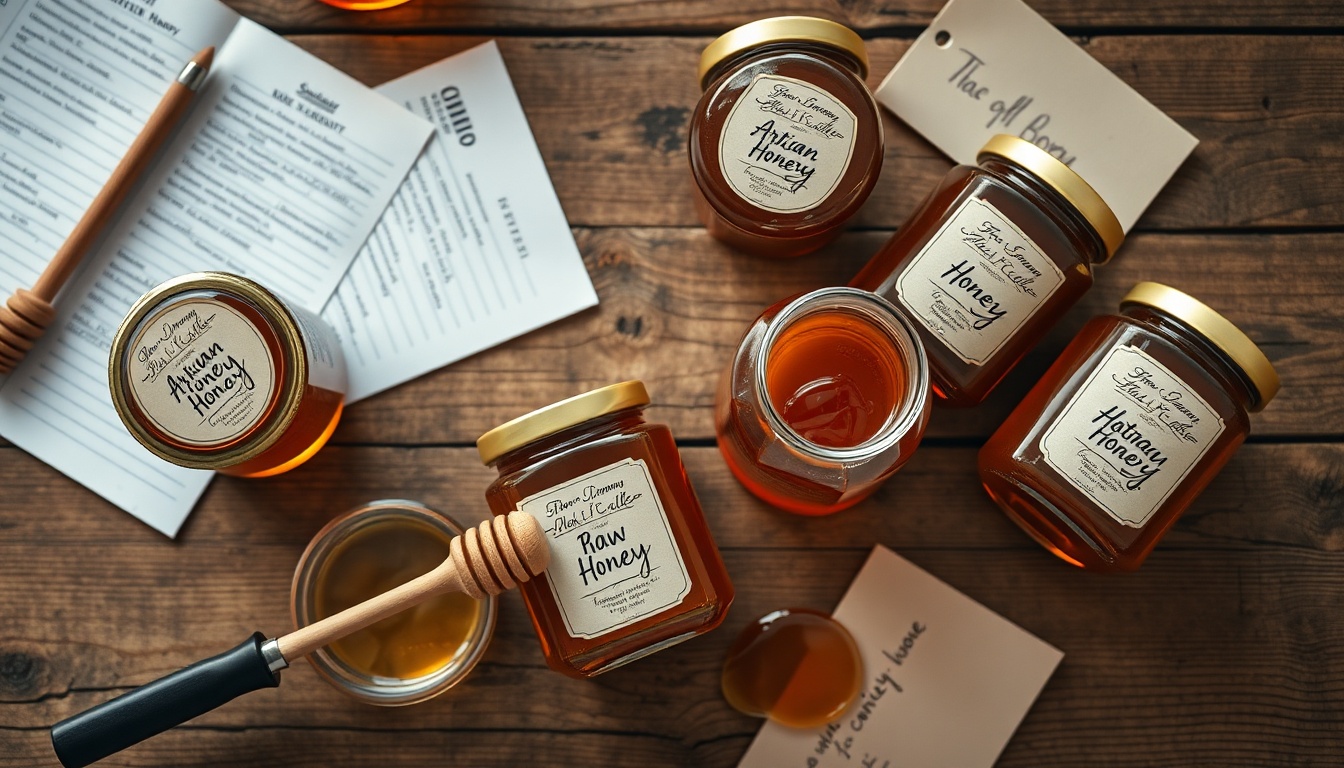
What Is Jarrah Honey?
Jarrah honey comes from the nectar of Eucalyptus marginata — the jarrah tree — a towering hardwood endemic to a narrow coastal strip of southwestern Western Australia called the Darling Range. The tree grows wild in the jarrah forest, one of the most biodiverse forest ecosystems in the world, stretching across Perth's inland hills and south through the karri country to Pemberton and Manjimup. Outside that specific region, jarrah does not grow, and jarrah honey cannot be made.
What makes jarrah exceptional starts with its scarcity. Unlike most commercially significant honey plants that bloom annually, the jarrah tree is biennial — it flowers only once every two years, in a spectacular October-to-December bloom when the forest turns white with cream-colored flowers. Beekeepers place their hives in the jarrah forest during these bloom windows and must wait another two years for the next significant crop. This structural scarcity, combined with the limited geographic range of the tree, means authentic jarrah honey is naturally limited in supply and commands a premium comparable to New Zealand manuka.
The resulting honey is dark amber to reddish-brown, with a rich, earthy flavor that carries caramel, eucalyptus, and dried fruit notes. It has a thick viscosity and a distinctive finish — slightly warm, mildly spiced — that sets it apart from most eucalyptus honeys. But jarrah honey's most remarkable qualities are not its flavor: they are its exceptional antibacterial activity and its extraordinarily low glycemic index, both of which have attracted scientific and commercial interest since Australian researchers began studying it systematically in the early 2000s.
Understanding the TA Rating System
When you buy jarrah honey, you will see a "TA" rating on the label — typically TA10+, TA20+, TA30+, or higher. TA stands for Total Activity, which measures the honey's combined antibacterial potency through a method called agar well diffusion: a disc of honey-treated agar is compared to an equivalent disc treated with hydrogen peroxide to produce a phenol equivalent. The number represents the concentration of phenol (a standard antiseptic) that would be needed to achieve the same bacterial growth inhibition. A TA30+ honey is, in this test, equivalent in antibacterial effect to a 30% phenol solution.
Crucially, TA measures two distinct types of antibacterial activity: hydrogen peroxide activity (H2O2, which nearly all honeys possess to varying degrees) and non-peroxide activity (NPA), which is independent of H2O2 and more stable under heat and light exposure. Jarrah honey is high in both. Research published by the University of Technology Sydney and the University of Western Australia has confirmed that high-TA jarrah honey possesses significant NPA — meaning its antibacterial effect does not rely solely on the enzymatic H2O2 system that is inactivated by catalase in human blood and tissue.
Manuka honey uses a different (and more heavily marketed) rating system — UMF (Unique Manuka Factor) and MGO (methylglyoxal mg/kg). Methylglyoxal is the specific compound responsible for manuka's NPA, and it can be measured precisely, making MGO labeling straightforward. Jarrah's NPA comes from a different chemical profile — phenolic compounds, particularly flavonoids and phenolic acids derived from the eucalyptus plant — rather than being dominated by a single compound like MGO. This makes direct comparison between jarrah TA ratings and manuka UMF/MGO ratings imprecise, though broadly comparable at equivalent numerical grades.
Pro Tip
When comparing jarrah TA to manuka UMF, they are roughly analogous in scale: TA20+ jarrah is broadly similar in antibacterial potency to UMF 20+ manuka. However, the chemical mechanisms differ, so the two honeys are not interchangeable for all applications — the research base for manuka in clinical wound care is larger.
Get the Honey Buyer's Cheat Sheet (free PDF)
16 varieties on one page — color, flavor, best use and what a fair price looks like — from the 304 honeys we track.
Carbohydrate and Batch Variability
Published measurements from selected jarrah samples do not establish the composition of every jar. Botanical mix, harvest and testing method can vary, and a variety name alone cannot predict an individual response.
Jarrah honey remains a fast-acting carbohydrate, and it is not medically preferred for diabetes. Use the honey carbohydrate and label guide to compare the product's serving-size total carbohydrate and added sugars within an individualized care plan.
Fructose-to-glucose composition can also affect crystallization, but that storage behavior is not a medical claim.
Antioxidant and Phenolic Profile
Jarrah honey's antibacterial NPA is partly explained by its phenolic compound profile. Research published in Food Chemistry and the Journal of Agricultural and Food Chemistry has identified several key phenolic acids and flavonoids in jarrah honey, including gallic acid, ellagic acid, caffeic acid, pinocembrin, and chrysin. Several of these compounds are shared with manuka honey and other premium medicinally active honeys; the specific combination and concentrations differ.
Ellagic acid is particularly notable — it is also found in pomegranates, red berries, and green tea, and has documented antioxidant, anti-inflammatory, and antiproliferative effects in cell culture and animal studies. Its presence in jarrah honey at measurable concentrations contributes to the honey's relatively high ORAC (Oxygen Radical Absorbance Capacity) score. Independent testing has placed high-TA jarrah honey in the same antioxidant tier as buckwheat honey and tualang honey — both dark, polyphenol-rich varieties at the high end of the honey antioxidant spectrum.
A 2009 study by Taormina, Niemira, and Burgeoning-Shaw in the International Journal of Food Microbiology compared antibacterial activity across 30 Australian honey varieties and found that jarrah honey ranked consistently among the top three for both H2O2 activity and NPA against Staphylococcus aureus, Escherichia coli, and Pseudomonas aeruginosa. Subsequent University of Western Australia research confirmed these findings with more refined analytical methods and established dose-response relationships at different TA grades.
Health Benefits: What the Evidence Supports
Jarrah honey shares the foundational health properties of all high-quality raw honey — prebiotic oligosaccharides supporting gut microbiome diversity, hydrogen peroxide activity providing broad antimicrobial protection, and viscous texture soothing irritated mucous membranes. Beyond these, its documented NPA and high antioxidant content give it an evidence profile closer to medical-grade honeys than to typical table honey.
- **Wound care:** Jarrah honey's dual antibacterial mechanism (H2O2 + NPA) makes it effective against common wound pathogens including S. aureus, MRSA, E. coli, and P. aeruginosa in laboratory studies. Australian practitioners have used it in wound care applications similar to manuka, and it is registered with the Therapeutic Goods Administration (TGA) in Australia for topical use. The research base is smaller than manuka's but growing
- **Oral health:** Honey's antibacterial properties are well-documented against Streptococcus mutans and other oral pathogens. High-TA jarrah honey has shown activity against these bacteria in vitro. A 2018 study in the European Journal of Oral Sciences found that MGO-active honeys significantly reduced S. mutans biofilm formation; the phenolic compounds in jarrah may produce similar effects through different pathways
- **Sore throat and cough:** The combination of thick viscosity, antimicrobial activity, and anti-inflammatory polyphenols makes jarrah honey a well-evidenced sore throat remedy. See our honey for sore throat guide for the full evidence review including the 2020 BMJ Evidence-Based Medicine meta-analysis supporting honey over some OTC cough suppressants
- **Gut health:** Raw honey's prebiotic activity is documented across multiple human RCTs. A 2020 study in Nutrients found that raw honey consumption significantly increased Bifidobacterium and Lactobacillus while decreasing potentially harmful species. Jarrah's phenolic profile may provide additional prebiotic benefit — gallic acid and ellagic acid are known to modulate gut microbiota composition in animal studies. See our honey and gut health guide
- **Skin care:** Anti-inflammatory and antimicrobial properties translate to documented topical benefit for acne-prone skin, minor burns, and eczema. Several Australian skincare brands use jarrah honey as an active ingredient. See our honey face mask guide for practical application guidance
- **Blood glucose management:** The low GI makes jarrah honey one of the most appropriate honey varieties for people managing blood sugar — a meaningful practical benefit compared to standard honey, though not a therapeutic treatment for diabetes or insulin resistance
Pro Tip
All health claims about jarrah honey should be understood as supportive evidence from laboratory and small clinical studies, not established medical treatments. For wound care, infection management, or any medical condition, consult a qualified healthcare provider. Do not replace prescribed medications with honey.
Flavor Profile and Culinary Uses
**Appearance:** Dark amber to reddish-brown, noticeably darker than wildflower honey or clover honey. Stays liquid and pourable for months to years due to high fructose content — a practical advantage for culinary use.
**Aroma:** Complex, warm, and resinous. Eucalyptus is present but subtle — more of a background earthiness than the medicinal sharpness of raw eucalyptus oil. Notes of dried fruit, dark caramel, and light wood smoke. Some tasters detect a faint floral quality from the jarrah blossom itself.
**Taste:** Rich, full-bodied sweetness with caramel and dark fruit (fig, prune, dried cherry) notes and a warm, slightly spiced finish. The eucalyptus note emerges as a pleasant mellow aftertaste rather than a dominant flavor. Lower in sharp sweetness than table sugar or mild honeys — the high fructose content creates a softer, rounder sweetness that is easier to use in quantity without becoming cloying.
**Texture:** Viscous and slow-pouring at room temperature. Honey-like in the truest sense — thick, with long threads. Stays liquid without heating.
- **Cheese boards:** Outstanding with aged sheep's milk cheese, blue cheese (stilton, roquefort), aged gouda, and strong cheddar. The dark fruit notes and eucalyptus warmth bridge savory and sweet better than mild honeys
- **Tea and hot drinks:** A tablespoon in black tea, green tea, or herbal infusions. The resinous complexity adds interest where mild honey would be unremarkable. Works particularly well with ginger tea, chai, and rooibos
- **Yogurt, smoothies, and breakfast:** High-fructose low-GI profile makes jarrah a natural fit for breakfast sweetening with lower blood sugar impact than standard honey. Stir into unsweetened yogurt or blend into a smoothie
- **Baking:** The pronounced flavor adds character to muffins, quick breads, and honey cakes. Works well in savory preparations (glazed roasted carrots, honey-mustard dressings) where its eucalyptus undertone contributes depth. See our honey baking substitution guide
- **Honey on toast:** The premium table use — jarrah honey at room temperature on good sourdough or rye bread is genuinely excellent. The flavor complexity holds up better than mild honey when eaten simply
- **Marinades and glazes:** Particularly good on lamb (eucalyptus + lamb is a classic Australian pairing), pork ribs, and roasted root vegetables. The dark caramel notes develop beautifully under heat
- **Direct health use:** Some jarrah honey users take it in warm water or directly from the spoon, similar to how manuka honey is used
Jarrah Honey vs Manuka Honey: A Direct Comparison
Jarrah and manuka honey are the two most studied "active" or "medicinal" honeys in the Southern Hemisphere, and they are frequently compared. Both have documented NPA (non-peroxide antibacterial activity), both command premium prices justified by science, and both come from limited geographical sources (Western Australia for jarrah; New Zealand and Australia's East Coast for manuka). Here's how they differ:
- **Antibacterial mechanism:** Manuka's NPA is driven primarily by methylglyoxal (MGO), which accumulates from dihydroxyacetone in manuka nectar and can be measured precisely. Jarrah's NPA comes from a broader phenolic compound profile without a single dominant active compound — this makes it harder to standardize but means the activity is less susceptible to defeat by any single mechanism
- **Rating systems:** Manuka uses MGO (mg/kg, tested by chemistry) and UMF (a bioactivity rating covering MGO, leptosperin, and DHA). Jarrah uses TA (Total Activity, tested by bioassay). These ratings are not directly interchangeable despite being numerically similar in marketing
- **Glycemic index:** Jarrah wins clearly — GI ~30-35 vs manuka's GI ~54-59. For blood glucose management, jarrah is significantly preferable
- **Antioxidant profile:** Both are high, but with different compound sets. Manuka contains leptosperin (unique to manuka), jarrah contains ellagic acid and gallic acid. Buckwheat honey outperforms both on raw ORAC score, but without the NPA
- **Availability and price:** Manuka has a much larger global supply chain, more brands, and better retail presence worldwide. Jarrah is less widely available outside Australia — mostly found through specialty importers and online retailers in the US and UK. Price per kg is similar for equivalent grades
- **Flavor:** Jarrah's eucalyptus and dark fruit notes vs manuka's earthy, herbal, slightly medicinal profile. Jarrah is generally considered more culinarily versatile; manuka's distinct flavor can be polarizing
- **Research base:** Manuka has a substantially larger clinical research base, including human trials and regulatory recognition for wound care. Jarrah research is robust at laboratory level but fewer human clinical trials exist to date
The Jarrah Forest: Origin and Ecology
The jarrah tree (Eucalyptus marginata) is an ecological keystone of southwestern Western Australia's unique biodiversity hotspot — one of only 36 recognized global biodiversity hotspots, a zone with extraordinary levels of plant endemism and concentrated species richness. The jarrah forest stretches approximately 600 km north-to-south through the Darling Ranges east of Perth, across a distinct lateritic soil type called "jarrah laterite" that the trees have adapted to over millions of years.
Jarrah trees grow to 40 meters, live for hundreds of years, and flower prolifically when they do bloom — but that biennial pattern is both ecologically significant and commercially constraining. The bloom produces abundant nectar in two-year cycles, with off-years seeing minimal flowering and nectar flow. Beekeepers who work the jarrah forest must plan around this rhythm, moving hives into position during bloom years and finding alternative forage between them.
The forest itself faces significant pressure from Phytophthora cinnamomi, a water mold (commonly called "jarrah dieback") that kills root systems and has affected large portions of the forest. Conservation efforts and careful management practices have become part of the jarrah honey industry's sustainability story — many producers explicitly manage hive placement to avoid spreading the pathogen and work with Western Australia's Department of Biodiversity, Conservation and Attractions on forest health monitoring.
This ecological context matters to buyers: genuine Western Australian jarrah honey is traceable to a specific, monitored forest ecosystem. Beekeepers who supply high-TA jarrah typically operate under strict practices that distinguish their product from lower-quality eucalyptus honeys produced elsewhere.
How to Buy Authentic Jarrah Honey
The limited supply and premium pricing of jarrah honey make it a target for adulteration and misrepresentation. Here's what to check:
- **Verified Western Australian origin:** Genuine jarrah honey must come from Western Australia — specifically the jarrah forest region of the Darling Ranges. Look for producer statements, not just "product of Australia." Several reputable brands (including Healthy Care, Wescobee, and smaller boutique producers) are verified WA jarrah honey suppliers
- **TA rating and laboratory certification:** Look for a TA rating tested by an accredited Australian laboratory. Legitimate jarrah honey producers provide batch-level TA certificates. High-quality jarrah typically starts at TA15+ and goes to TA35+. Very high TA (40+) exists but is uncommon and expensive
- **Color and consistency:** Should be noticeably dark — amber to reddish-brown, not golden or pale. Should stay liquid or be very slow to crystallize. If it looks like ordinary golden honey, question the sourcing
- **Price reality check:** in our catalogue, a Western Australian jarrah jar lists at $43-59 depending on size. Very cheap "jarrah honey" is likely mislabeled or blended with cheaper eucalyptus honey from other regions. Compare per-gram cost against a verified supplier before buying discounted options
- **Biennial batch notes:** Legitimate producers often note the harvest year (bloom year) on the label — a sign they are producing from actual jarrah forest harvests rather than blending year-round
- **TGA registration (for wound care use):** If purchasing for topical antibacterial application, look for TGA-registered products with appropriate TA certification. Not all jarrah honeys are registered for medical use
Safety, Dosage, and Precautions
Jarrah honey is safe for most adults and older children as part of a normal diet. Standard honey precautions apply:
- **Infants under 12 months:** Never give honey to infants under 12 months due to infant botulism risk. See our baby honey safety guide
- **Diabetes and blood sugar:** The low GI makes jarrah one of the more appropriate honey choices, but it is still predominantly sugar and must be accounted for in any diabetic or carbohydrate management plan. Consult your healthcare provider
- **Fructose sensitivity:** The high fructose content that gives jarrah its low GI can cause GI distress in people with fructose malabsorption or irritable bowel syndrome (IBS). Start with small amounts if you have these conditions
- **Pregnancy:** Safe in normal food amounts. See our honey during pregnancy guide
- **Drug interactions:** The phenolic compounds in jarrah honey (gallic acid, ellagic acid) may theoretically interact with CYP450 enzymes at high doses, similar to grapefruit juice effects. This is unlikely to be clinically significant at normal dietary amounts, but patients on narrow therapeutic index medications should mention honey supplementation to their pharmacist
- **Eucalyptus sensitivity:** While jarrah honey contains only trace quantities of eucalyptus volatile compounds compared to eucalyptus essential oil, people with severe eucalyptus hypersensitivity should approach cautiously