Thin crêpes with honey in the batter
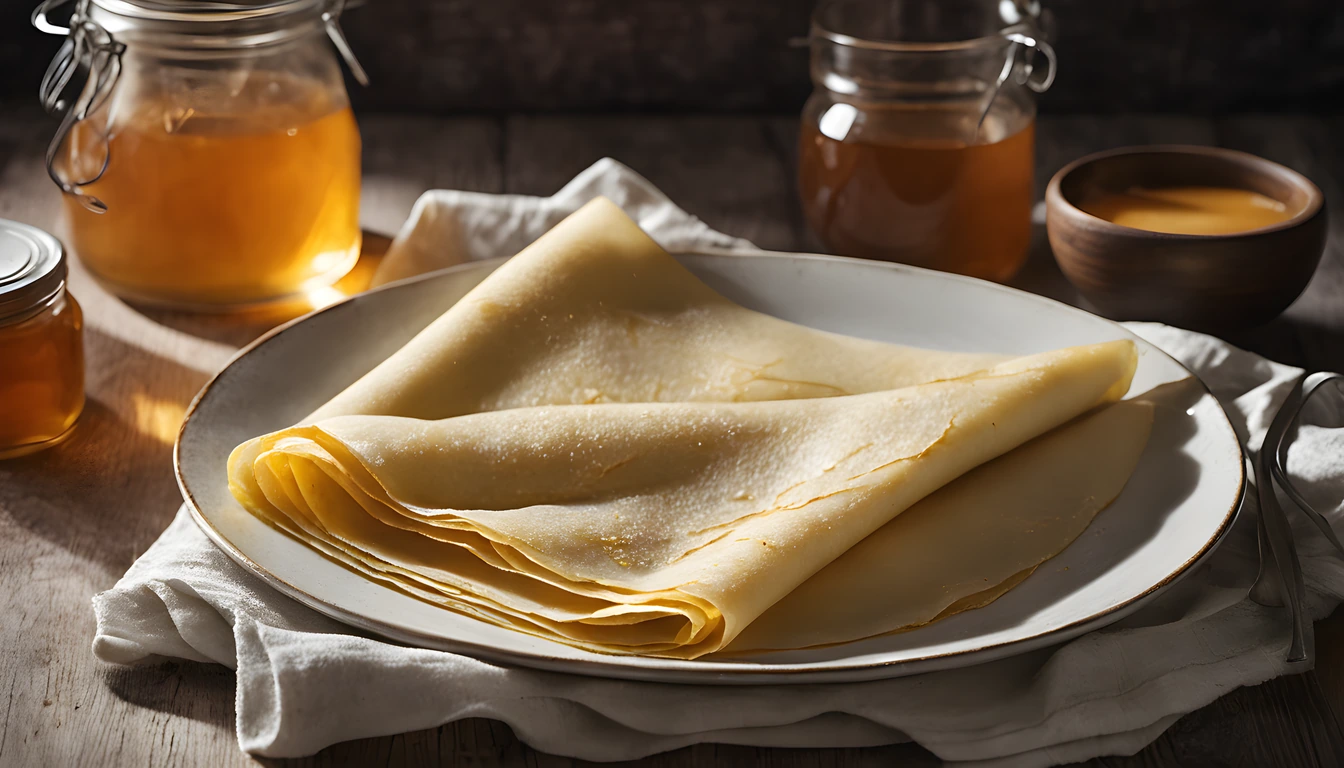
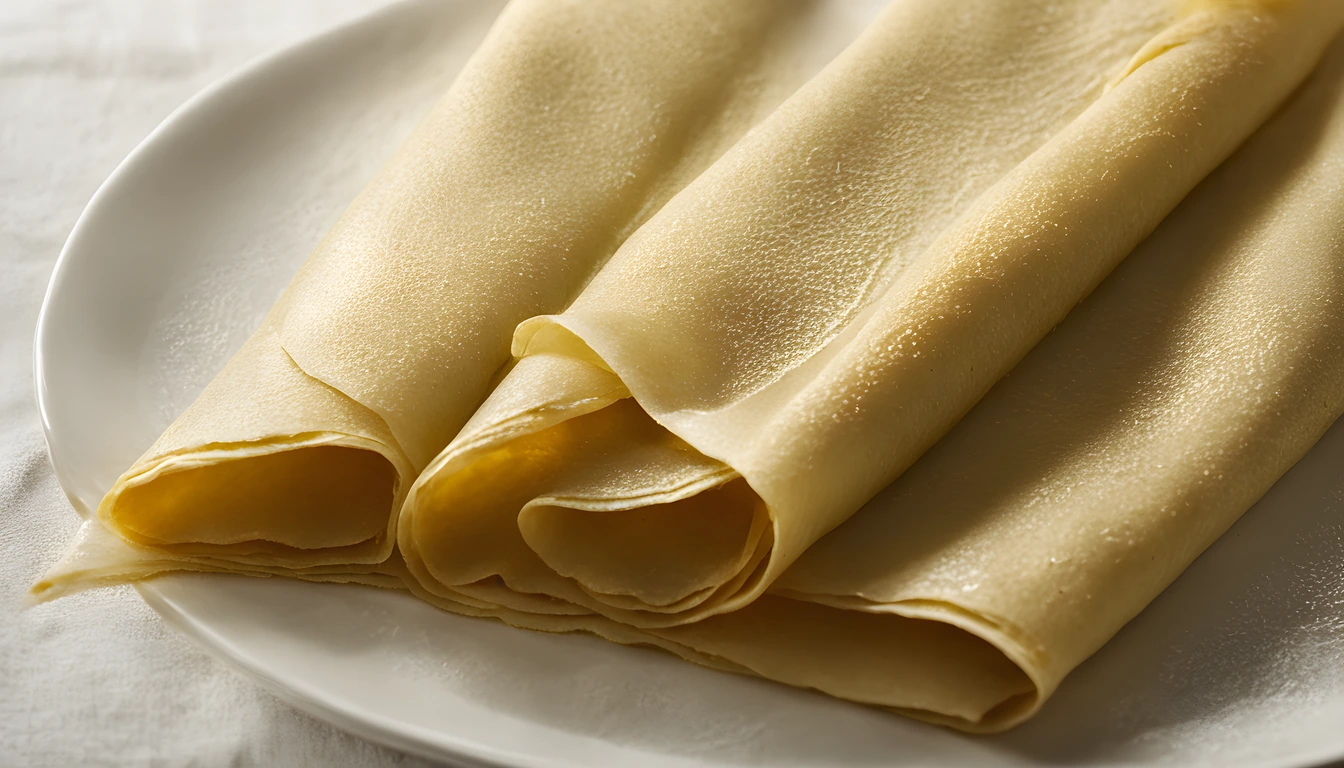
These crêpes are thin, flexible pancakes rather than a fluffy griddle stack. There is no baking powder or yeast. Half the measured honey goes into the batter; the rest becomes a lemon finish shared across the cooked batch.
The recipe makes about ten crêpes on an 8-inch cooking surface. Divide all of them into five portions, normally two per serving. There is no required fruit, cream, sugar dusting or other filling in this base.
Recipe
Honey Crêpes
Thin skillet crêpes with honey in the batter and a measured honey-lemon finish. Makes about ten crêpes, divided into five two-crêpe servings.
9Ingredients
Yield: 5 servings
- 120 g all-purpose flour
- 300 g whole milk
- 50 g water
- 2 large eggs
- 2 tablespoons clover honey (42 g), divided
- 28 g unsalted butter, melted and divided
- 1 teaspoon vanilla extract (4.2 g)
- 1.5 g table salt
- 30 g raw lemon juice
Ingredient amounts scale; instructions show the original batch. Cooking times and pan sizes may need adjustment. Season to taste. Honey grams use US measures at 20°C and 17.5% moisture, a density estimate; weigh your honey for precision.
Instructions
- 1Blend the batterBlend the flour, milk, water, eggs, 21 g honey, 14 g melted butter, vanilla and salt until smooth, about 30–45 seconds. Scrape the sides so no dry flour remains. Alternatively, whisk thoroughly, adding the liquids gradually to the flour to limit lumps.
- 2Rest and mix the finishCover the batter and leave it for about 20 minutes. Meanwhile, stir the remaining 21 g honey with all the lemon juice to make the finish. Set the remaining 14 g melted butter aside as the complete allowance for the pan.
- 3Heat and coat the panHeat a crêpe pan or nonstick skillet with an approximately 8-inch cooking surface over medium heat. Brush on a little of the reserved pan butter. Briefly stir the batter, then pour in about 60 g, roughly 1/4 cup, lifting and tilting the pan immediately to spread a thin even layer.
- 4Cook and turn the crêpesCook until the surface loses its wet shine and the edge releases, about 45–60 seconds. Turn carefully and cook the other side for about 20–30 seconds, until set with light brown spots. Lower the heat if the honey-rich batter browns before it sets. Stack on a plate and repeat, sharing the remaining measured pan butter across the batch. Use all the batter to make about ten thin crêpes; allow roughly 20–25 minutes including portioning and turning.
- 5Finish and serve five portionsShare the complete honey-lemon mixture across the warm crêpes, scraping out the bowl, then fold or roll them. Divide the entire batch into five equal portions, about two crêpes each, with one fifth of the finish per portion. The planning total includes 15 minutes preparation, 20 minutes batter rest and 25 minutes cooking. Different pan sizes or slower cooking change the count or timing; the five-way division still describes the full batch.
Estimated nutrition per serving
221.99 calories · 8.64 g fat · 28.78 g carbohydrate · 6.98 g protein · 172.57 mg sodium
Serving: 1 of 5 equal portions, about 2 crêpes with honey-lemon finish
Calculated from ingredient weights and USDA FoodData Central: 168894, 171265, 173647, 171287, 169640, 173430, 173471, 173468, 167747. Estimates use ingredient input weights; actual portions, brands and cooking losses vary. Omitted nutrient values are unavailable, not zero.
Rest, swirl and adjust the heat
The batter is much thinner than an ordinary pancake batter. A brief rest gives the flour time to take up liquid. Stir it before portioning, then tilt the pan as soon as the batter goes in so it spreads before setting.
An approximately 60 g portion is a starting point for the stated pan size. A larger cooking surface produces a thinner crêpe from that amount. Do not add extra unmeasured flour simply because the mixture looks unlike pancake batter.
Wait for the first face to set and release before turning. The honey can darken quickly, so lower the heat if the surface colors before the center loses its wet shine. A few light brown spots are enough; the edges should remain flexible.
Get the Honey Buyer's Cheat Sheet (free PDF)
16 varieties on one page — color, flavor, best use and what a fair price looks like — from the 304 honeys we track.
Choose the honey by flavor
Clover honey has a mild flavor, wildflower honey varies with its floral mix, and orange blossom honey brings citrus-floral aroma. Buckwheat honey has a stronger, malty flavor. The pancake and waffle pairing guide offers more choices.
The chart uses an editorial 1–5 flavor-intensity scale for pairing. Individual jars vary with floral source and harvest.
1 = mild, 5 = bold. Editorial pairing guidance, not laboratory measurements; jars vary.
- Clover
- Mild honey-lemon crêpes
- Wildflower
- Floral folded pancakes
- Orange blossom
- Citrus-floral lemon finish
- Buckwheat
- A bold malty honey finish
Keep the honey-lemon finish measured
Stir the remaining 21 g honey with 30 g raw lemon juice. Share the whole mixture over the batch before folding or rolling, and scrape the bowl. An extra serving drizzle is additional to these amounts.
The full 28 g butter allowance includes 14 g in the batter and 14 g used across the pan. The estimate counts all of it as an input. Residue left on the equipment is unmeasured; there is no invented absorbed-fat or recovered-butter figure.
For a different breakfast texture, honey pancakes make a thicker griddle cake, honey waffles use a waffle iron, and honey French toast starts with bread.
Serving, scaling and leftovers
Serve warm, folded or rolled. A torn first crêpe can be served as smaller cooked pieces with its portion.
Doubling means more separate pan batches. Keep the original size and thinness, and allow more cooking time. The stated cook time covers one batch of about ten crêpes.
Cool leftovers and refrigerate covered for about two days for best texture, or freeze with sheets of parchment between portions. Warm gently in a covered pan so the thin edges do not dry out.
Nutrition and source ingredients
One portion has an estimated 221.99 calories, 8.64 g fat, 4.61 g saturated fat, 28.78 g carbohydrate, 10.33 g sugars, 0.68 g fiber, 6.98 g protein and 172.57 mg sodium.
All measured flour, milk, water, eggs, honey, butter, vanilla, salt and lemon juice input is divided across five portions. Both honey allocations and the full pan-butter allowance are included. Equipment residue is unmeasured; no absorption, moisture-loss, recovery or cooked-yield factor is applied.
These values sum the USDA reference ingredients and divide them by the stated portions. They are estimates, not laboratory measurements of the finished crêpes. Cooking changes water content; no guessed cooking-loss or recovery factor has been applied.
- USDA FoodData Central 168894: Wheat flour, white, all-purpose, enriched, bleached.
- USDA FoodData Central 171265: Milk, whole, 3.25% milkfat, with added vitamin D.
- USDA FoodData Central 173647: Beverages, water, tap, drinking.
- USDA FoodData Central 171287: Egg, whole, raw, fresh.
- USDA FoodData Central 169640: Honey.
- USDA FoodData Central 173430: Butter, without salt.
- USDA FoodData Central 173471: Vanilla extract.
- USDA FoodData Central 173468: Salt, table.
- USDA FoodData Central 167747: Lemon juice, raw.