Why Honey Makes Better Pancakes
Most pancake recipes call for white sugar, but honey is a superior sweetener for pancakes — and the difference is more than just flavor.
Honey is hygroscopic, meaning it attracts and retains moisture. In pancakes, this translates to a softer, more tender crumb that stays moist longer. Sugar-sweetened pancakes dry out and turn rubbery as they cool; honey pancakes stay pillowy even at room temperature — a real advantage for brunch buffets, meal prep, or feeding kids who eat slowly.
Honey also brings over 180 flavor compounds to the batter, adding complexity that white sugar simply cannot provide. The floral notes, trace minerals, and natural caramel undertones from honey create pancakes with genuine depth of flavor, not just sweetness. And because honey is sweeter per tablespoon than sugar, you need less of it.
Classic Honey Pancakes: The Base Recipe
This recipe produces thick, fluffy pancakes with a tender crumb and golden-brown exterior. The key techniques: don't overmix the batter, and let it rest.
- **Ingredients (makes 8-10 pancakes):** 1.5 cups all-purpose flour; 1 tablespoon baking powder; 1/4 teaspoon salt; 1 cup milk (dairy or plant-based); 2 tablespoons raw honey; 1 large egg; 2 tablespoons melted butter (or neutral oil); 1 teaspoon vanilla extract.
- **Step 1: Mix dry ingredients** — Whisk together flour, baking powder, and salt in a large bowl.
- **Step 2: Combine wet ingredients** — In a separate bowl or measuring cup, whisk together milk, honey, egg, melted butter, and vanilla until the honey is fully dissolved.
- **Step 3: Combine (don't overmix)** — Pour the wet ingredients into the dry and stir with a spatula until just combined. The batter should be lumpy — overmixing develops gluten and produces tough, rubbery pancakes. A few small flour streaks are fine.
- **Step 4: Rest the batter** — Let the batter rest for 5 minutes. This allows the baking powder to activate and the flour to hydrate, producing fluffier pancakes.
- **Step 5: Cook** — Heat a nonstick skillet or griddle over medium heat. Lightly grease with butter or oil. Pour 1/4 cup of batter per pancake. Cook until bubbles form on the surface and the edges look set (about 2-3 minutes). Flip and cook 1-2 minutes more until golden brown.
Pro Tip
The griddle is ready when a drop of water sizzles and evaporates within 2 seconds. Too hot and the outside burns before the inside cooks; too cool and you get flat, dense pancakes.
Get the Honey Buyer's Cheat Sheet (free PDF)
16 varieties on one page — color, flavor, best use and what a fair price looks like — from the 304 honeys we track.
Choosing the Best Honey for Pancakes
Honey flavor survives the cooking process in pancakes better than in high-heat recipes, so the variety you choose affects both the batter and the final taste.
- **Clover honey** — The classic choice for universally appealing pancakes. Mild, clean vanilla-adjacent sweetness with subtle floral undertones that complement any topping without competition. Creates golden-brown pancakes with balanced sweetness ideal for everyday breakfast, feeding kids, or guests with varying taste preferences. The moderate fructose content promotes even browning through optimal Maillard reaction development.
- **Wildflower honey** — Multi-floral complexity adding sophisticated depth that elevates pancakes from simple to special. Complex botanical blend creates layered sweetness with subtle fruit and herb notes that pair beautifully with fresh berries, whipped cream, and seasonal fruit toppings. Best for weekend brunch when you want restaurant-quality flavor depth impossible to achieve through single-source honey varieties.
- **Buckwheat honey** — Bold malty intensity with deep molasses-like character creating pancakes with rustic sweetness and almost gingerbread complexity. Dark amber color and robust mineral-rich flavor profile perfect for whole wheat pancakes, banana walnut variation, and autumn breakfast presentations. Highest antioxidant content of common honey varieties providing superior nutritional value for health-conscious pancake preparation.
- **Orange blossom honey** — Delicate citrus-floral brightness that enhances fruit-forward pancake variations. Light sunshine-like character with gentle orange zest undertones creating perfect complementarity with blueberry pancakes, lemon poppy seed variation, and spring/summer breakfast menus. Citrus notes survive cooking process beautifully, brightening batter flavor without overwhelming pancake texture or other ingredients.
- Carbohydrate note — Honey remains an added-sugar carbohydrate. Include the amount used in this recipe when counting total carbohydrate per serving; the honey carbohydrate and label guide explains the jar-label workflow.
- **Tupelo honey** — Buttery-smooth Southern specialty with unique crystallization resistance creating pancakes that stay tender longer. Distinctive honey flavor with subtle pear-like undertones and silky texture that melts beautifully into batter, producing exceptionally moist pancakes perfect for meal prep and buffet serving where pancakes must maintain quality over extended periods.
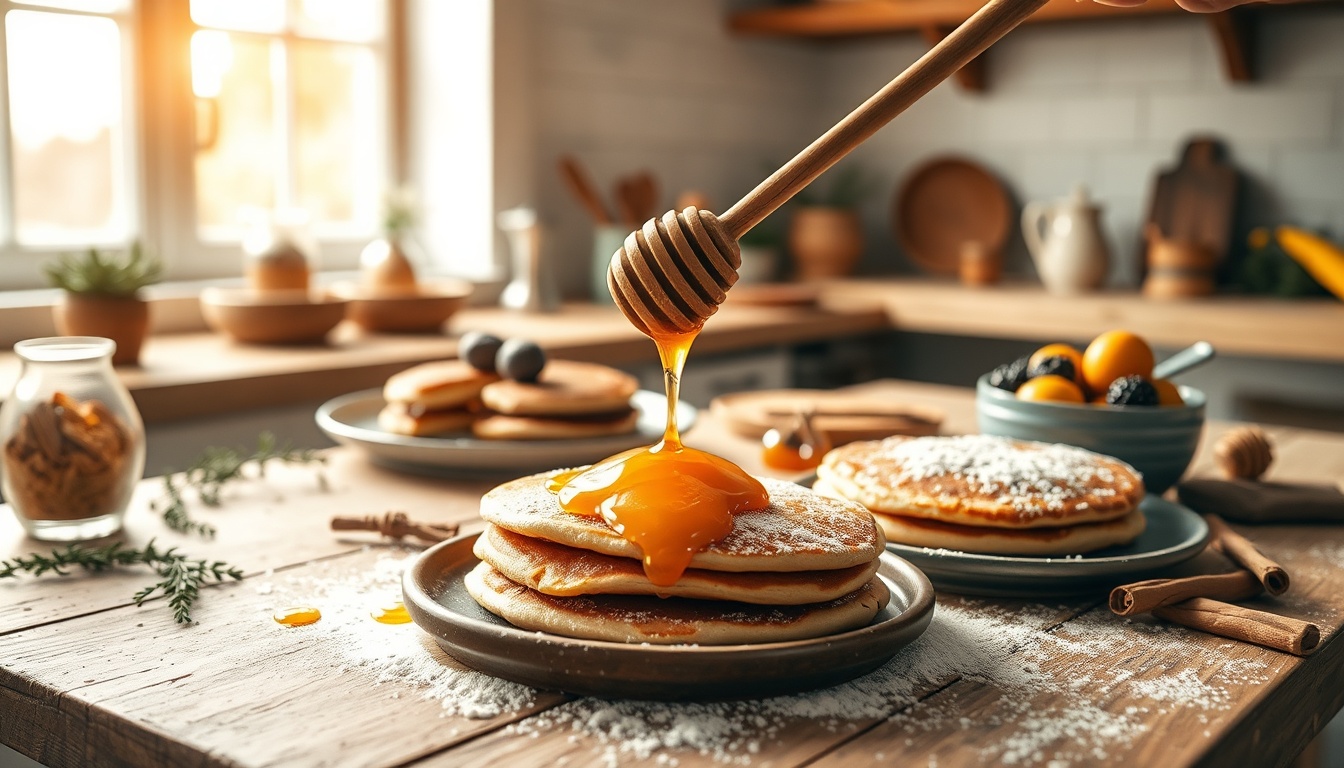
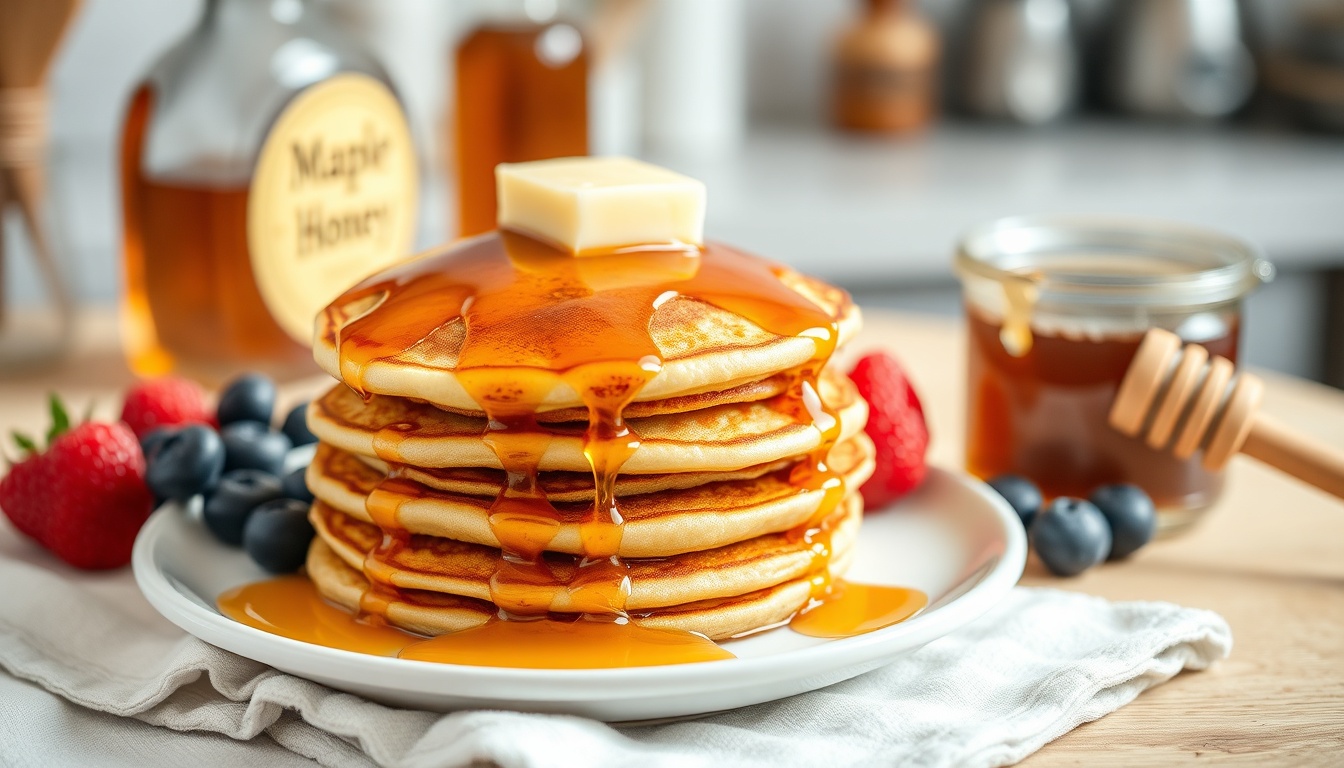
- **As a topping** — Drizzle warm honey directly over finished pancakes instead of (or alongside) maple syrup. Warm the honey gently for 10 seconds so it flows easily. A tablespoon per short stack is enough.
6 Honey Pancake Variations
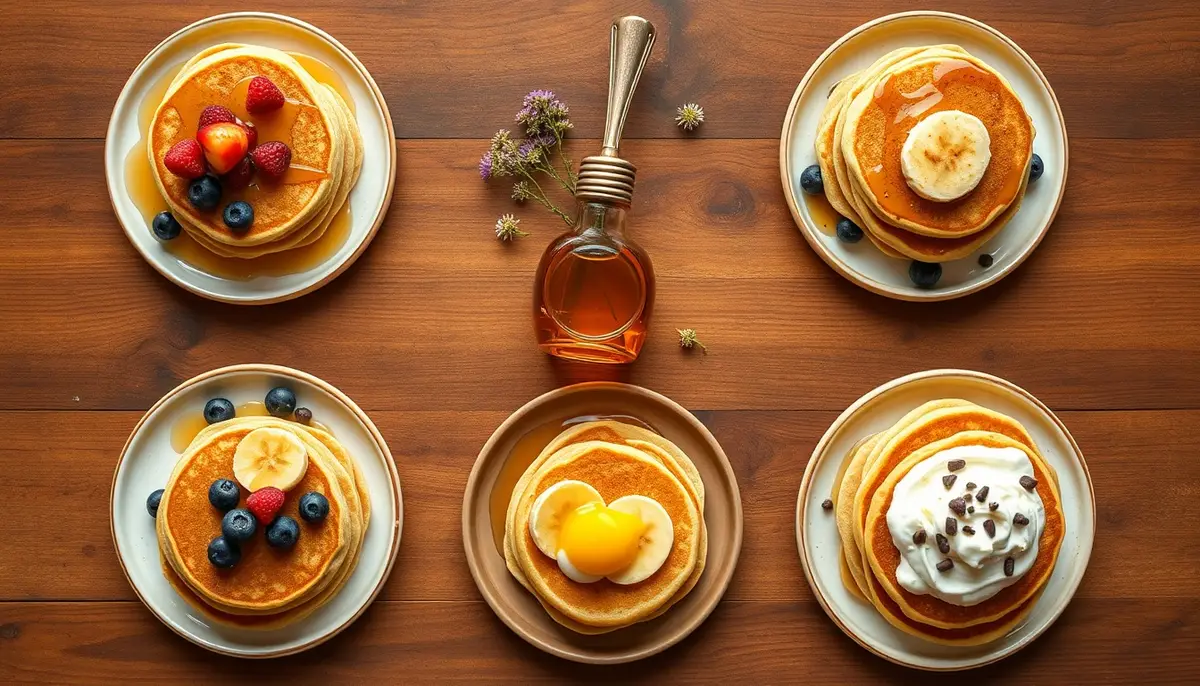
Each variation modifies the base recipe with a few additions. All produce approximately 8-10 pancakes.
- **1. Blueberry honey pancakes** — Fold 3/4 cup fresh or frozen blueberries (do not thaw frozen berries) into the batter after mixing. The berries release juice as they cook, creating sweet purple pockets. Top with more fresh blueberries and a drizzle of orange blossom honey.
- **2. Banana walnut** — Mash 1 ripe banana and add it to the wet ingredients. Fold in 1/3 cup chopped walnuts after mixing. The banana adds natural sweetness and moisture — reduce honey to 1 tablespoon. Top with sliced banana and buckwheat honey.
- **3. Cinnamon swirl** — Add 1 teaspoon ground cinnamon and 1/4 teaspoon nutmeg to the dry ingredients. After pouring batter onto the griddle, drizzle a thin line of honey mixed with cinnamon across the surface, then use a toothpick to swirl it. The honey caramelizes into sweet cinnamon ribbons.
- **4. Whole wheat honey** — Replace half the all-purpose flour with whole wheat flour (3/4 cup each). Increase milk to 1 cup plus 2 tablespoons (whole wheat absorbs more liquid). Add 1 extra tablespoon of honey to balance the nuttier flavor. These are denser and more filling — great for sustained energy.
- **5. Lemon poppy seed** — Add the zest of 1 lemon, 1 tablespoon lemon juice, and 1 tablespoon poppy seeds to the wet ingredients. Use acacia or orange blossom honey. Top with a honey-lemon glaze: whisk 2 tablespoons honey with 1 tablespoon lemon juice.
- **6. Chocolate chip** — Fold 1/2 cup mini chocolate chips into the batter after mixing. Use buckwheat honey in the batter for a deeper sweetness that complements chocolate. For a healthier version, use dark chocolate chips (70%+ cacao).
The Science of Fluffy Pancakes
Three factors determine whether your pancakes are fluffy or flat, and understanding them makes the difference between good and great.
First, gluten development. Flour contains glutenin and gliadin proteins that form gluten when mixed with liquid. In bread, you want strong gluten for chew. In pancakes, you want minimal gluten for tenderness. The rule: stir until the dry ingredients are just incorporated, then stop. Lumps are fine — they disappear during cooking.
Second, the leavening reaction. Baking powder is a double-acting leavener: it releases CO₂ when it gets wet (first rise) and again when heated (second rise). The 5-minute rest lets the first rise develop gas bubbles throughout the batter. The second rise happens on the griddle, expanding those bubbles into the airy pockets that make pancakes fluffy.
Third, honey's role in browning. Honey contains fructose, which undergoes the Maillard reaction at a lower temperature than sucrose. This means honey pancakes brown faster and more evenly, producing that desirable golden exterior. Watch the heat carefully — medium, not medium-high — to get even browning without burning.
Meal Prep and Storage
Honey pancakes are excellent for meal prep because honey's moisture-retaining properties keep them softer longer than sugar-sweetened pancakes.
- **Refrigerated (3-4 days)** — Stack cooled pancakes with parchment paper between each one to prevent sticking. Store in an airtight container or zip-lock bag. Reheat in a toaster (best for crispness), microwave (30 seconds, covered with a damp paper towel), or oven (350°F for 5-8 minutes).
- **Frozen (2-3 months)** — Flash-freeze individual pancakes on a baking sheet for 1 hour, then stack in a freezer bag with parchment between each one. Reheat directly from frozen in a toaster or microwave. This is the best method for weekday morning convenience.
- **Batter storage** — Pancake batter can be refrigerated for up to 24 hours, but it will deflate slightly as the baking powder loses its initial rise. Give it a gentle stir (don't re-whisk vigorously) and expect slightly less fluffy pancakes from stored batter.
Pro Tip
Make a double batch on Sunday and freeze individually. Pop 2-3 in the toaster on weekday mornings for a hot breakfast in under 3 minutes — faster than instant oatmeal and far more satisfying.
Honey Pancake Toppings Beyond Maple Syrup
While maple syrup is the default pancake topping, honey offers more variety and pairs with a wider range of flavors.
- **Warm honey drizzle** — Heat honey gently for 10 seconds so it flows like syrup. Drizzle 1-2 tablespoons per serving. Try different honey varieties for different pancake flavors.
- **Honey butter** — Mix equal parts softened butter and honey butter until fluffy. A pat on hot pancakes melts into a rich, sweet spread.
- **Fresh fruit + honey** — Top with mixed berries, sliced banana, or stone fruit, then drizzle with honey. The honey clings to the fruit better than syrup does.
- **Whipped cream + honey** — Fold 1 tablespoon of honey into freshly whipped cream for a naturally sweetened topping that doesn't deflate as quickly as sugar-sweetened cream.
- **Honey and cinnamon** — Mix 1 tablespoon honey with 1/4 teaspoon cinnamon for a simple spiced drizzle.
- **Savory contrast** — Pair honey pancakes with crispy bacon, sausage, or a fried egg. The sweet-savory combination is why chicken and waffles works — the same principle applies to honey pancakes.