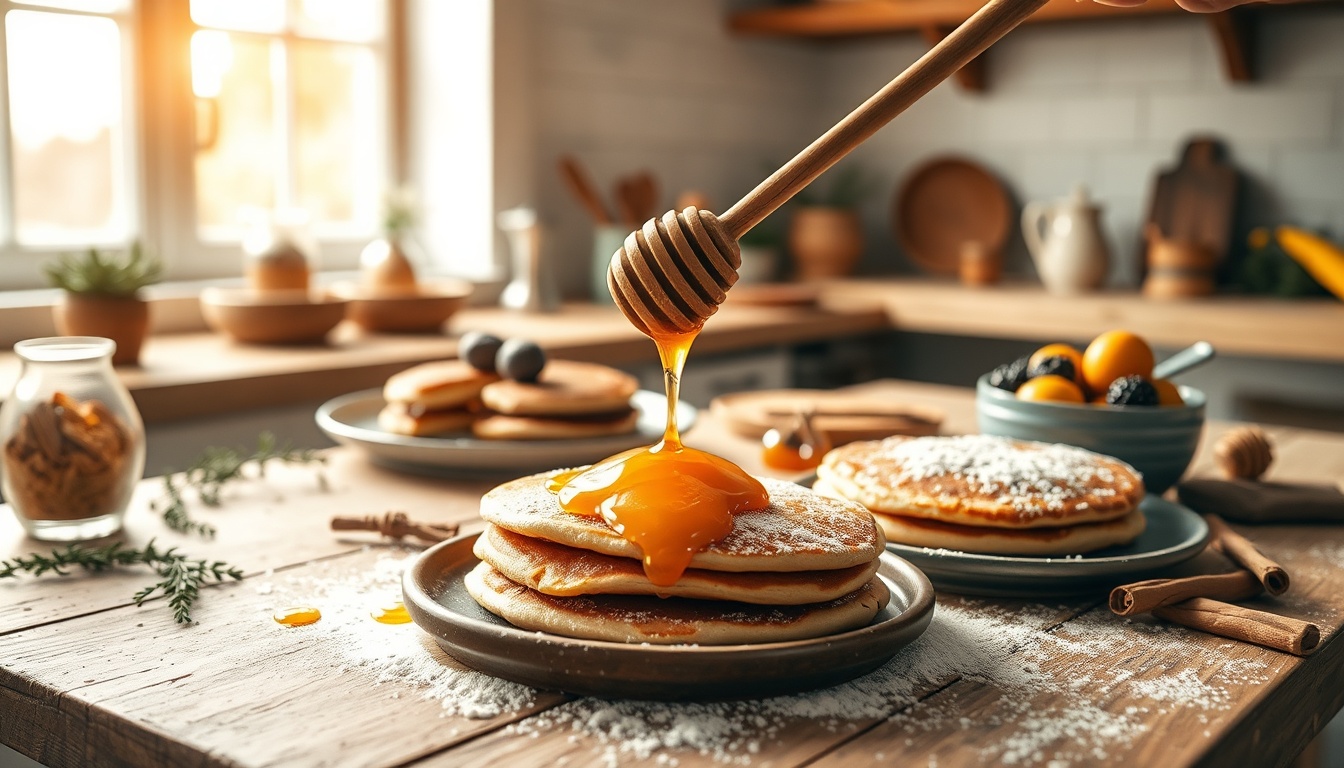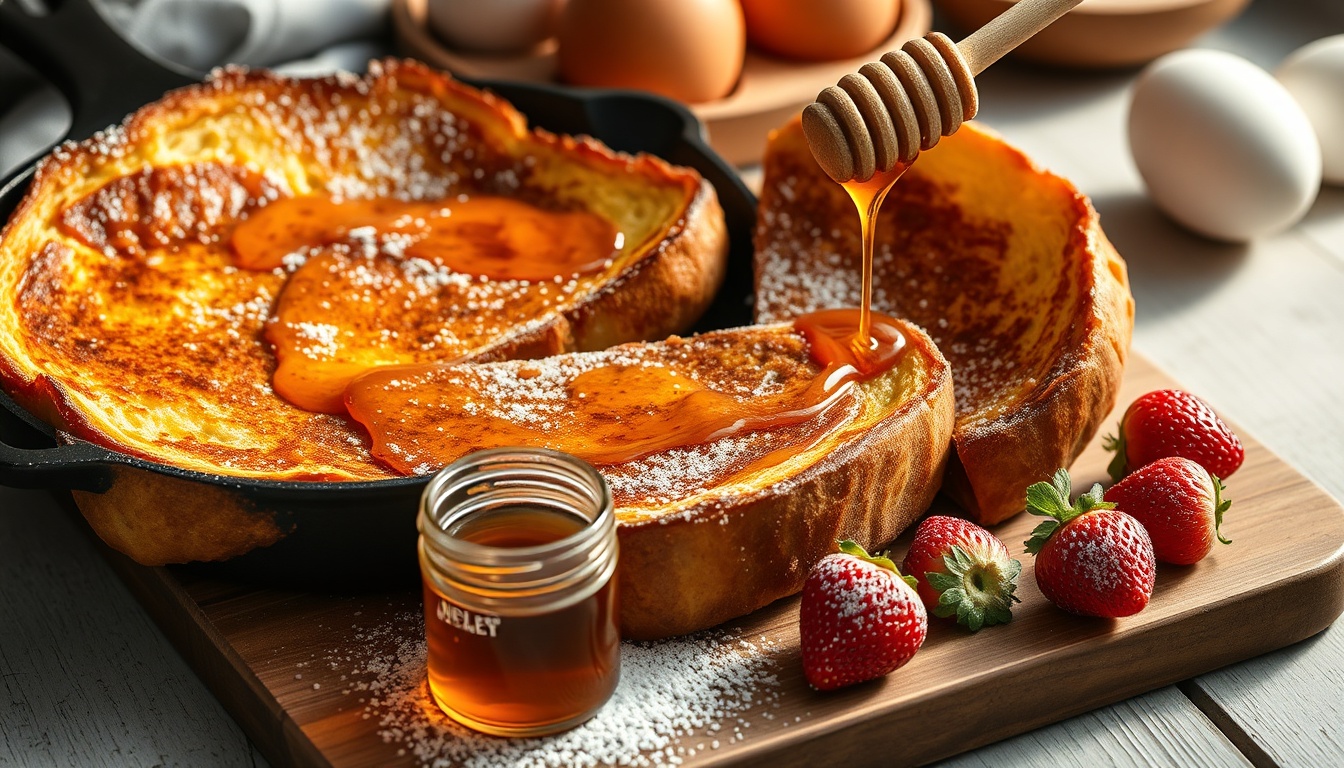
Why Honey Makes Better French Toast
Most French toast recipes use granulated sugar in the custard. Replacing it with honey changes the result in three meaningful ways.
First, flavor complexity. Granulated sugar is pure sucrose — one-dimensional sweetness. Honey contains over 180 aromatic compounds that add floral, caramel, and fruit notes depending on the variety. Your French toast goes from "sweet" to "interesting."
Second, superior caramelization. Honey's fructose begins caramelizing at around 230°F, lower than sucrose's 320°F. This means the surface of your French toast develops a golden, slightly crispy crust faster and at a gentler temperature, reducing the risk of burning while increasing the caramelized flavor.
Third, moisture retention. Honey is hygroscopic — it attracts and holds moisture. The custard stays slightly moister and more tender than sugar-based versions, even if you cook it a minute longer. This is the same property that makes honey baked goods stay fresh longer than their sugar counterparts.
Choosing the Right Bread
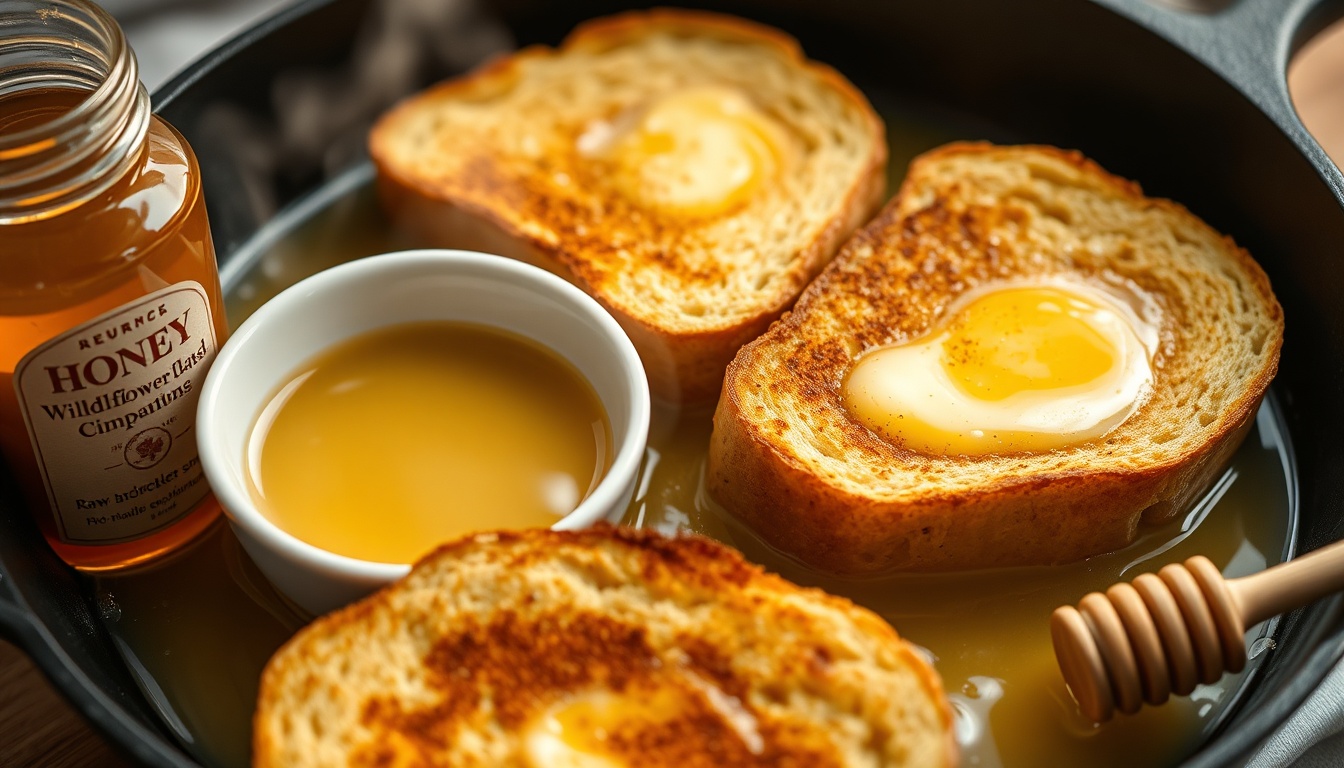
The bread is 50% of French toast success. Here is what works and why.
- Brioche — the gold standard. Its high egg and butter content creates a rich, tender French toast that pairs beautifully with honey. The slight sweetness of brioche amplifies the honey flavor. Slice 3/4 inch thick
- Challah — close second to brioche. Slightly less buttery but with a wonderful eggy richness and soft crumb. Takes custard absorption well without falling apart. The braided crust adds textural contrast
- Texas toast — the budget-friendly workhorse. Pre-sliced at the perfect thickness, widely available, and sturdy enough to handle soaking. Not as rich as brioche but produces consistent results every time
- Sourdough — adds a tangy counterpoint to the honey sweetness. The denser crumb means less custard absorption, so soak for 25-30 seconds per side instead of 15-20. Excellent with buckwheat honey ($9-23) for a more complex flavor
- Day-old bread is better than fresh. Slightly stale bread absorbs custard more evenly without becoming soggy. If your bread is fresh, lay slices on a wire rack for 30 minutes to dry the surface, or toast lightly in a low oven (250°F for 10 minutes)
Pro Tip
Avoid thin sandwich bread — it disintegrates in the custard and produces flat, soggy French toast. You need at least 3/4-inch thickness for the exterior-to-interior contrast that makes French toast satisfying.
Get the Honey Buyer's Cheat Sheet (free PDF)
16 varieties on one page — color, flavor, best use and what a fair price looks like — from the 304 honeys we track.
5 Flavor Variations
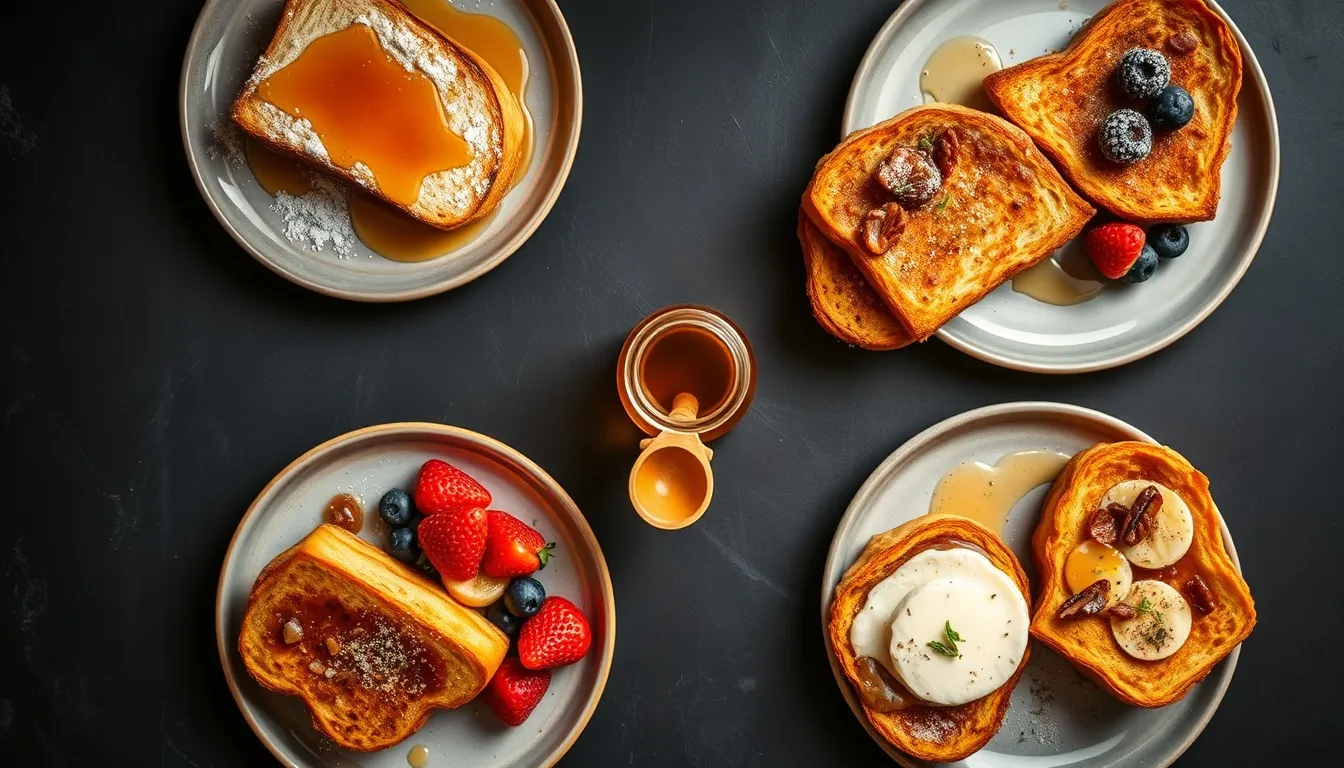
The base recipe is a versatile foundation. Each variation adds a distinctive character while keeping the honey French toast core intact.
- Honey cinnamon roll French toast — Increase cinnamon to 1 teaspoon, add 1/4 teaspoon nutmeg, and serve with honey cinnamon butter and a drizzle of cream cheese glaze (2 oz cream cheese + 2 tablespoons powdered sugar + 1 tablespoon milk, whisked smooth). Tastes like a cinnamon roll crossed with French toast
- Honey vanilla bean French toast — Replace vanilla extract with seeds scraped from 1/2 vanilla bean (or 1 teaspoon vanilla bean paste). Omit cinnamon entirely. The clean vanilla-honey combination is elegant and lets the honey variety shine. Best with orange blossom honey ($12-24) or lavender honey ($11-17)
- Honey banana French toast — Add 1 mashed ripe banana to the custard and swap the cinnamon for a pinch of nutmeg. Serve with sliced bananas sauteed in butter and honey for 2 minutes. The banana adds natural sweetness and a creamy texture to the custard
- Honey berry compote French toast — Make the base recipe and top with a quick berry compote: simmer 2 cups mixed berries with 2 tablespoons honey and 1 tablespoon lemon juice for 5 minutes until jammy. The warm, bright compote with cool honey whipped cream is brunch-worthy
- Savory honey French toast — Reduce honey to 1 tablespoon, omit cinnamon and vanilla, and add 1/4 teaspoon black pepper and a pinch of cayenne. Cook as directed and top with crispy honey glazed bacon, a fried egg, and a drizzle of hot honey. The sweet-savory combination is addictive
Best Honey Varieties for French Toast
Since honey is both in the custard and drizzled on top, the variety choice affects the final flavor significantly.
- Clover honey ($9-15) — clean, mild sweetness that lets the vanilla and cinnamon come through. The safest all-around choice, especially for kids. This is the "classic" French toast flavor
- Wildflower honey ($13-24) — complex floral notes that add depth and interest. The flavor varies by region and season, so each batch tastes slightly different. A step up from clover without being polarizing
- Orange blossom honey ($12-24) — delicate citrus notes that pair beautifully with berries and whipped cream. The floral brightness lifts the richness of the egg custard. Best for the vanilla bean and berry compote variations
- Buckwheat honey ($9-23) — deep, molasses-like richness that creates a more complex, almost gingerbread-like French toast. Pairs best with sourdough bread and the savory variation. Not for everyone, but buckwheat honey lovers swear by it
- Lavender honey ($11-17) — subtle floral aromatics that create a sophisticated, almost restaurant-quality French toast. Best with brioche and the vanilla bean variation. A small amount goes a long way — the delicate flavor can be overpowered by strong cinnamon
Tips for Perfect French Toast Every Time
These are the details that separate great French toast from mediocre.
- Medium heat is essential. Too high and the honey sugars burn before the custard cooks through. Too low and you get pale, soggy toast without caramelization. Adjust by watching the first batch — you want golden brown in 2-3 minutes
- Whisk the honey into the eggs first, then add milk. Cold honey can clump if added to cold milk. Whisking it directly into the eggs dissolves it more easily and distributes it evenly throughout the custard
- Do not over-soak. 15-20 seconds per side for thick bread is enough. The custard should penetrate about 1/4 inch into each side, leaving a dry center that steams and puffs during cooking. Over-soaked bread falls apart and cooks unevenly
- Use butter, not oil. Butter adds flavor and browns beautifully with the honey. Clarified butter or ghee works even better because it does not burn as quickly. Oil produces a different, less satisfying result
- Keep finished slices warm on a wire rack set over a baking sheet in a 200°F oven while cooking remaining batches. Do not stack them — stacking traps steam and makes the crispy exterior soggy
Topping Ideas Beyond Maple Syrup
Honey French toast deserves toppings that complement the honey flavor instead of masking it.
- Honey drizzle — the obvious choice. Use a different variety than the custard for layered honey flavor. Warm the honey for 10 seconds in the microwave for better drizzle consistency
- Fresh berries and honey whipped cream — blueberries, strawberries, or raspberries with a dollop of honey-sweetened whipped cream. The acidity of the berries balances the sweetness perfectly
- Honey butter — a pat of honey cinnamon butter melting over hot French toast is simple perfection. Make a batch ahead and keep it in the fridge
- Caramelized bananas — slice a banana, cook in 1 tablespoon butter and 1 tablespoon honey over high heat for 2 minutes. The banana slices get golden and caramelized, creating a warm, gooey topping
- Yogurt and honey granola — a lighter option. A spoonful of Greek yogurt adds protein and tanginess, while honey granola adds crunch. Makes the French toast feel more like a balanced breakfast
- Nut butter drizzle — warm 2 tablespoons almond or peanut butter with 1 tablespoon honey until drizzleable. The nut butter adds protein and richness that turns French toast into a more sustaining meal
Make-Ahead and Batch Cooking
French toast is ideal for feeding a crowd or prepping for the week.
- Overnight soak method: For extra-custardy French toast, arrange bread slices in a baking dish, pour the custard over them, cover with plastic wrap, and refrigerate overnight (8-12 hours). The bread absorbs the custard completely. Cook as directed but reduce cooking time slightly — the fully soaked bread cooks faster
- Sheet pan method for crowds: Preheat oven to 425°F, brush a sheet pan with melted butter, arrange soaked slices in a single layer, and bake for 10 minutes. Flip, brush with more butter, and bake 8-10 more minutes. Serves 8-12 without standing at a griddle
- Freezing cooked French toast: Cool completely on a wire rack, arrange in a single layer on a sheet pan, freeze for 1 hour, then transfer to zip-lock bags. Reheat directly from frozen in a 375°F oven for 8-10 minutes or in a toaster. Keeps for 2 months
- Prep the custard ahead: Mix the custard up to 24 hours in advance and store in the refrigerator. Whisk vigorously before using — the honey and eggs can separate slightly
Common Mistakes to Avoid
French toast seems simple, but these errors are surprisingly common.
- Using thin bread — the single most common mistake. Thin bread over-soaks instantly, tears when flipped, and produces flat, soggy results. Always use bread at least 3/4 inch thick
- Soaking too long — more is not better. Extended soaking turns the center into wet mush that will never cook through without burning the outside. Quick dips create the ideal ratio of custardy coating to fluffy interior
- Cooking at high heat — honey burns faster than sugar. High heat scorches the honey before the egg cooks, producing bitter black spots. Steady medium heat gives you even golden browning
- Skipping the salt — a pinch of salt in the custard is essential. It enhances the honey sweetness and vanilla flavor by contrast. Without salt, the custard can taste flat despite having plenty of honey
- Crowding the pan — overlapping slices steam instead of searing. Leave at least 1 inch between slices. A 12-inch skillet comfortably fits 2-3 slices depending on bread size