Why Honey Makes Better Biscuits
Most biscuit recipes rely on sugar for sweetness, but honey is the superior choice for three reasons. First, honey is hygroscopic — it pulls moisture from the air and holds onto it, keeping biscuits tender and soft even a day after baking. Sugar-based biscuits go stale and crumbly within hours.
Second, honey's fructose caramelizes at a lower temperature than sucrose, producing deeper golden browning and richer flavor without overbaking the interior. That's why baking with honey consistently produces more beautifully browned results.
Third, honey adds a subtle floral complexity that plain sugar simply cannot. Even two tablespoons in the dough creates a warm, rounded sweetness that makes people ask what your secret ingredient is.
Honey Buttermilk Biscuits Recipe
This recipe makes 8 tall, fluffy biscuits — enough for a family breakfast or a dinner side. The combination of cold butter, buttermilk's acidity, and a simple folding technique creates distinct flaky layers.
- 2 cups (240g) all-purpose flour, plus extra for dusting
- 1 tablespoon baking powder
- 1/2 teaspoon baking soda
- 1 teaspoon salt
- 6 tablespoons cold unsalted butter, cubed (freeze for 15 minutes for best results)
- 2 tablespoons honey — clover or wildflower work best
- 3/4 cup cold buttermilk
- For brushing: 1 tablespoon melted butter + 1 tablespoon honey
Pro Tip
Cold ingredients are the single most important factor. Cold butter creates steam pockets during baking, which form the flaky layers. If your kitchen is warm, freeze the cubed butter for 15 minutes and chill the buttermilk before starting.
Get the Honey Buyer's Cheat Sheet (free PDF)
16 varieties on one page — color, flavor, best use and what a fair price looks like — from the 304 honeys we track.
Step-by-Step Instructions
Total time: 25 minutes (10 minutes prep, 14 minutes baking). Work quickly to keep the butter cold throughout.
- Preheat and prep: Set your oven to 425°F (220°C) and line a baking sheet with parchment paper. This high temperature is essential for rapid rise and golden browning.
- Mix dry ingredients: Whisk together the flour, baking powder, baking soda, and salt in a large bowl. The baking soda reacts with buttermilk's acid for extra lift.
- Cut in butter: Add the cold cubed butter and cut it into the flour using a pastry cutter, two forks, or your fingertips. Work quickly — stop when the mixture resembles coarse crumbs with visible pea-sized butter pieces. These butter chunks create the flaky layers.
- Combine wet ingredients: Stir the honey into the cold buttermilk until dissolved. Pour it into the flour mixture and stir with a fork just until a shaggy dough forms. The dough should look rough and barely hold together — overmixing makes tough biscuits.
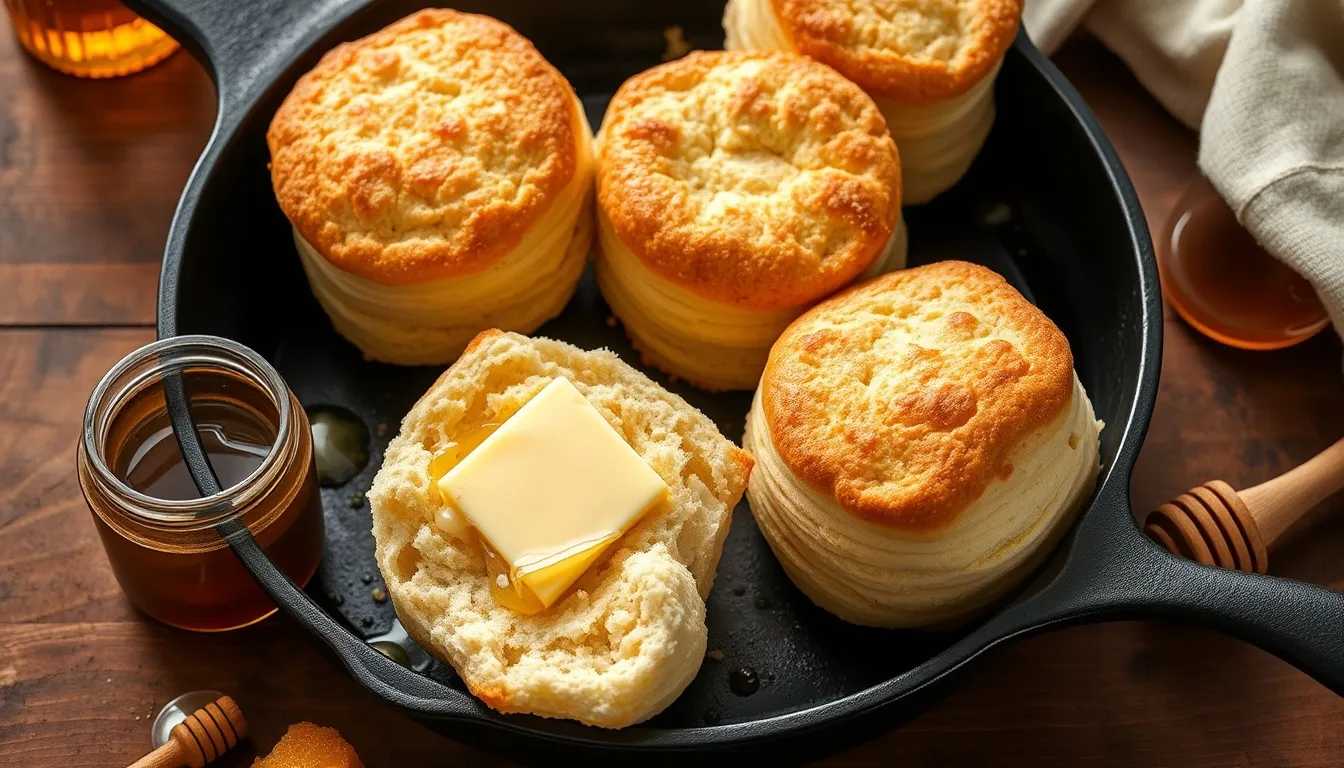
- Fold for layers: Turn the dough out onto a lightly floured surface. Pat it into a 1-inch thick rectangle. Fold it in thirds like a business letter, then pat it to 1-inch thickness again. Repeat this fold once more. This creates the laminated layers you see in a great biscuit.
- Cut biscuits: Pat the dough to 3/4-inch thickness. Dip a 2.5-inch round cutter in flour and press straight down — never twist, which seals the edges and prevents rising. Gather scraps gently, pat out, and cut the rest. You should get 8 biscuits.
- Bake: Place biscuits on the prepared sheet with their sides touching — this forces them to rise upward instead of spreading. Bake for 12–14 minutes until the tops are golden brown.
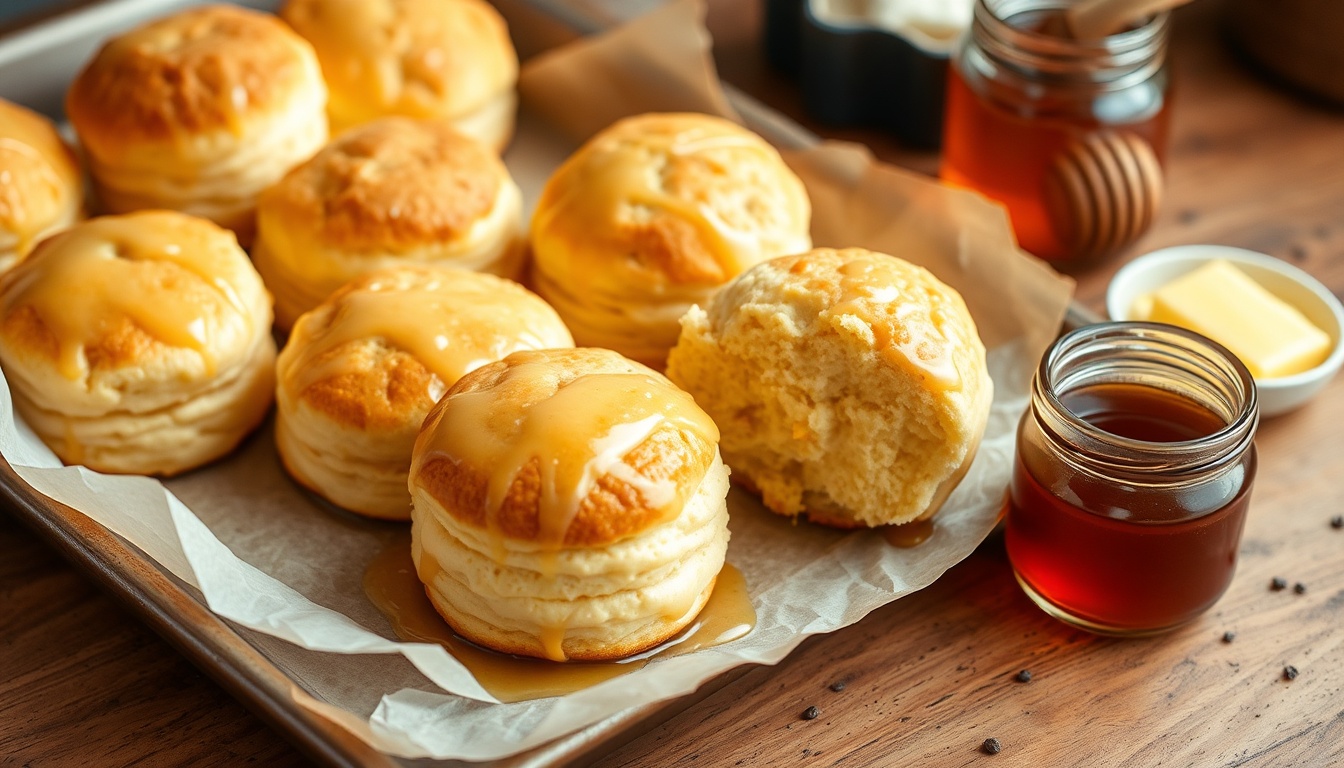
- Honey-butter brush: While biscuits bake, stir together 1 tablespoon melted butter and 1 tablespoon honey. Brush this mixture over the hot biscuits immediately out of the oven. The glaze soaks in and creates a slightly sweet, glossy finish.
Pro Tip
The "don't twist the cutter" rule matters more than any other biscuit tip. Twisting compresses the dough layers at the edges, creating a sealed rim that prevents the biscuit from rising fully. Press straight down, pull straight up.
Best Honey Varieties for Biscuits
The honey you choose affects both flavor and browning. Here are the best options for biscuit baking.
- Clover honey — mild, clean sweetness that lets the butter and buttermilk shine through. The most traditional choice and our top recommendation for a first batch
- Wildflower honey — adds subtle floral complexity without overpowering. Creates slightly darker golden browning
- Orange blossom honey — delicate citrus undertones that pair beautifully with honey butter or strawberry jam. Outstanding for brunch biscuits
- Acacia honey — very light and delicate, nearly transparent flavor. Best when you want the mildest possible honey presence
- Buckwheat honey — bold, almost molasses-like richness. Creates deeply browned biscuits with robust flavor — excellent for savory pairings like fried chicken or ham
- Lavender honey — floral elegance for afternoon tea biscuits. Particularly lovely with honey cream cheese frosting or clotted cream
5 Flavor Variations
Each variation uses the master recipe as a base. Add the extra ingredients where noted — no other changes needed.
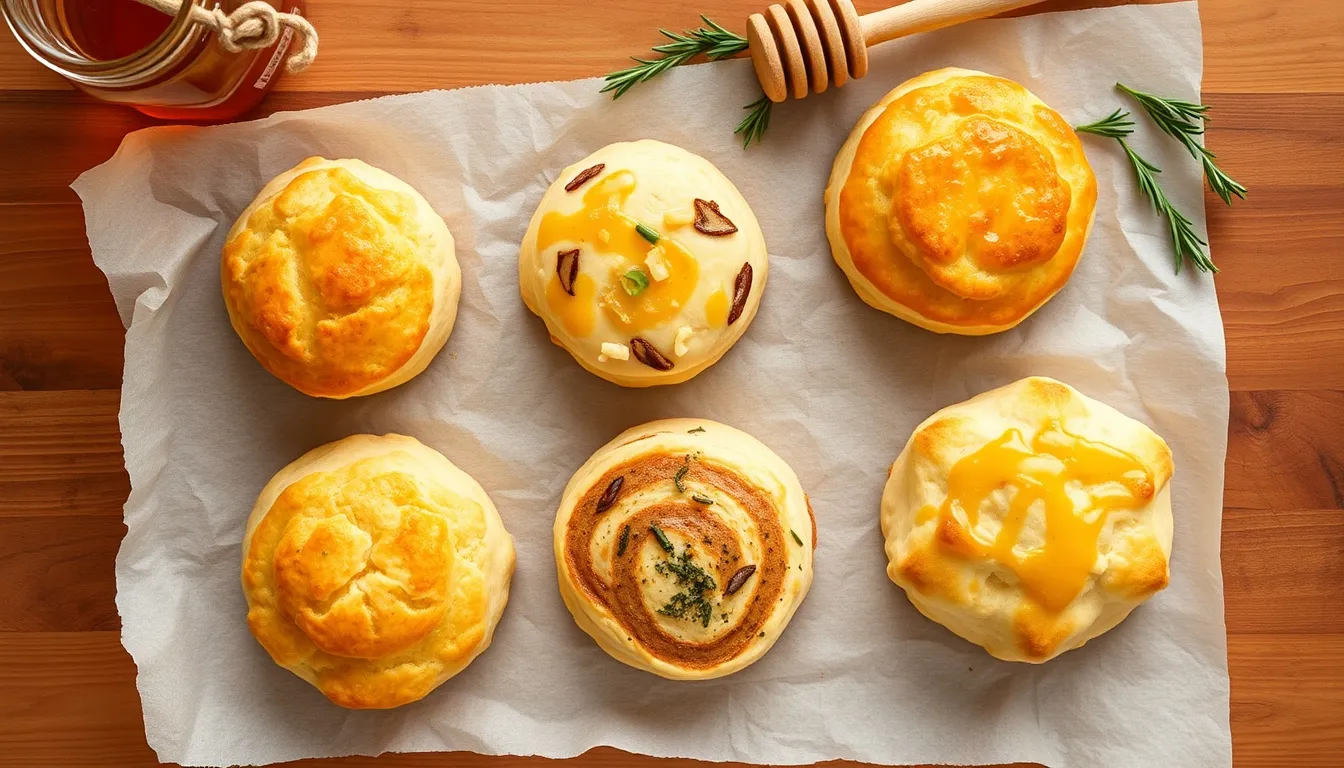
1. Classic Honey Buttermilk (Master Recipe)
The recipe above, perfected. Warm, tender, flaky, and subtly sweet. This is the biscuit you'll make every weekend once you try it. Serve with more honey cinnamon butter, jam, or gravy.
2. Honey Cheddar Biscuits
Add 1 cup (4 oz) shredded sharp cheddar cheese and 1/4 teaspoon garlic powder to the dry ingredients after cutting in the butter. The cheese melts into pockets of savory richness, and honey's sweetness creates an irresistible sweet-savory contrast. Outstanding with chili, soups, or alongside honey baked beans.
3. Honey Herb Biscuits
Add 2 tablespoons chopped fresh herbs (rosemary, thyme, and chives in equal parts) to the dry ingredients. The herbs infuse the dough with a savory, aromatic quality. Use wildflower honey to complement the herbal notes. Perfect as a dinner roll alongside honey glazed ham or roast chicken.
4. Honey Cinnamon Biscuits
Add 1 teaspoon ground cinnamon and increase the honey in the dough to 3 tablespoons. For the glaze, mix 1 tablespoon melted butter, 1 tablespoon honey, and 1/4 teaspoon cinnamon. These taste like a cross between a biscuit and a cinnamon roll — perfect for breakfast or dessert. Orange blossom honey is exceptional here.
5. Honey Drop Biscuits (No Rolling Required)
For the easiest possible version, increase the buttermilk to 1 cup. The dough will be too wet to roll — simply drop generous spoonfuls onto the baking sheet, spacing them 2 inches apart. They won't have the same laminated layers, but they're just as tender and delicious. This is the version to make when you want biscuits in 20 minutes with minimal cleanup.
Troubleshooting Common Biscuit Problems
Even experienced bakers run into biscuit issues. Here are the most common problems and their fixes.
- Biscuits are flat — Butter was too warm, or baking powder was expired. Test baking powder by dropping 1/2 teaspoon into hot water — it should fizz vigorously. If it doesn't, replace it
- Biscuits are tough — The dough was overworked. Mix just until the dough barely holds together, and stop folding after two folds
- Biscuits didn't rise — The cutter was twisted (sealing the edges), the dough was rolled too thin, or the oven wasn't hot enough. Use 425°F and press the cutter straight down
- Uneven browning — Rotate the baking sheet halfway through baking. Position biscuits in the center of the oven
- Dry or crumbly — Not enough buttermilk, or the dough was overworked. The dough should feel slightly sticky and shaggy, not smooth and clean
- Too sweet — Reduce the honey in the dough to 1 tablespoon. The honey-butter glaze provides most of the sweetness, so you can also skip the glaze for savory applications
Serving Ideas
These honey biscuits are versatile enough for any meal of the day.
- Breakfast — Split and top with fried eggs, bacon, and a drizzle of hot honey
- Brunch — Serve warm with honey cinnamon butter, fresh berries, and whipped cream
- Lunch — Use as the base for chicken biscuit sandwiches with honey mustard
- Dinner — Serve alongside fried chicken, honey BBQ wings, pot roast, or soup
- Dessert — Split, fill with macerated strawberries and whipped cream for honey biscuit shortcakes
Storage and Make-Ahead Tips
Biscuits are best eaten within a few hours of baking, but honey's hygroscopic properties help these stay softer longer than sugar-based versions.
- Room temperature — Store in an airtight container for up to 2 days. Reheat in a 350°F oven for 5 minutes to restore warmth and crispness
- Freezer (baked) — Cool completely, wrap individually in foil, and freeze for up to 2 months. Reheat from frozen at 350°F for 10–12 minutes
- Freezer (unbaked) — Cut biscuits but don't bake. Freeze on a sheet pan until solid, then transfer to a freezer bag. Bake from frozen at 425°F for 16–18 minutes (add 2–3 minutes to the normal time). No need to thaw first
- Make the dough ahead — Prepare through the cutting step, cover the baking sheet tightly, and refrigerate overnight. The cold rest actually improves flavor development. Bake cold, adding 1–2 minutes to the bake time
Pro Tip
The make-ahead freezer method is the most practical Sunday prep for weekday mornings. Cut a double batch of biscuits on Sunday, freeze them on a sheet pan, then bag them. On a busy morning, pull out however many you need and bake from frozen — fresh biscuits in under 20 minutes with zero prep.