Baked wings with honey BBQ sauce
The dry coating goes on before baking; the honey sauce goes on near the end so it can glaze the cooked wings without spending the whole bake in high heat. This recipe uses whole raw wings with their tips included in the purchase weight.
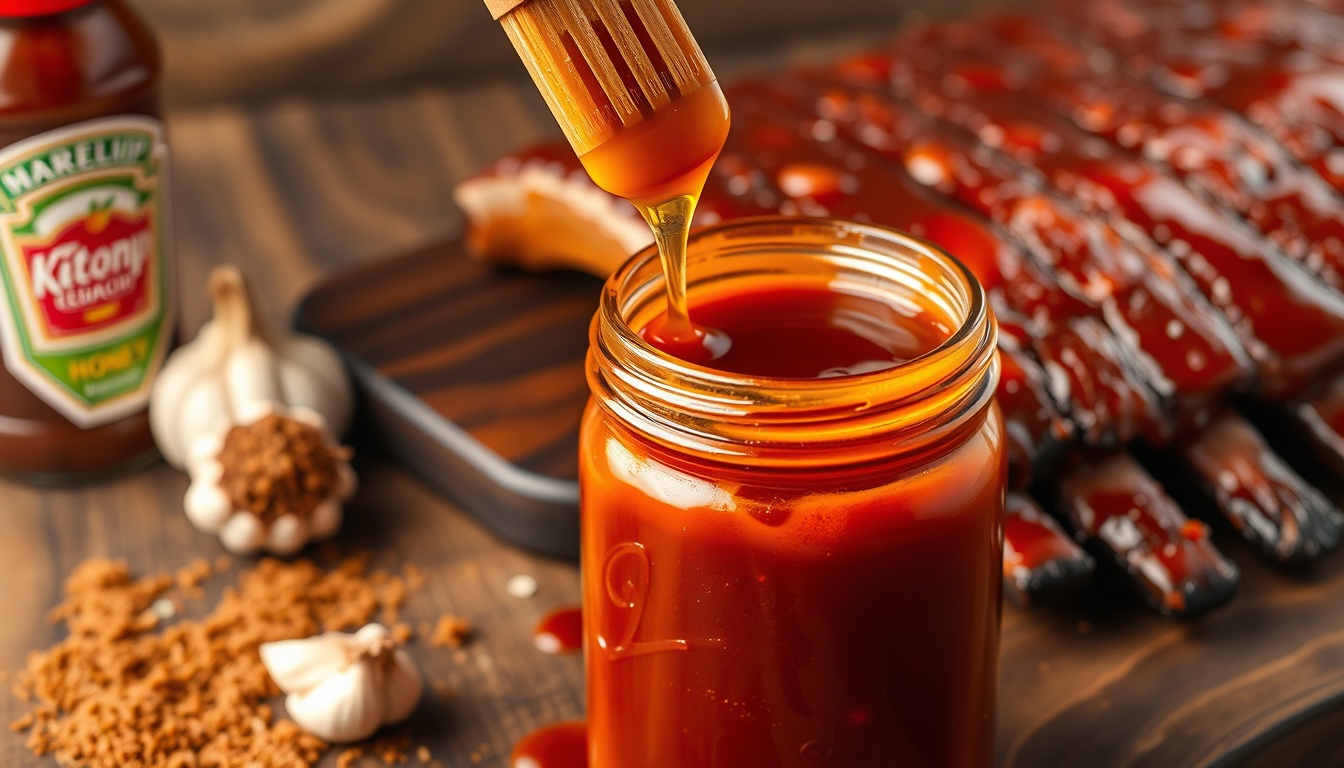
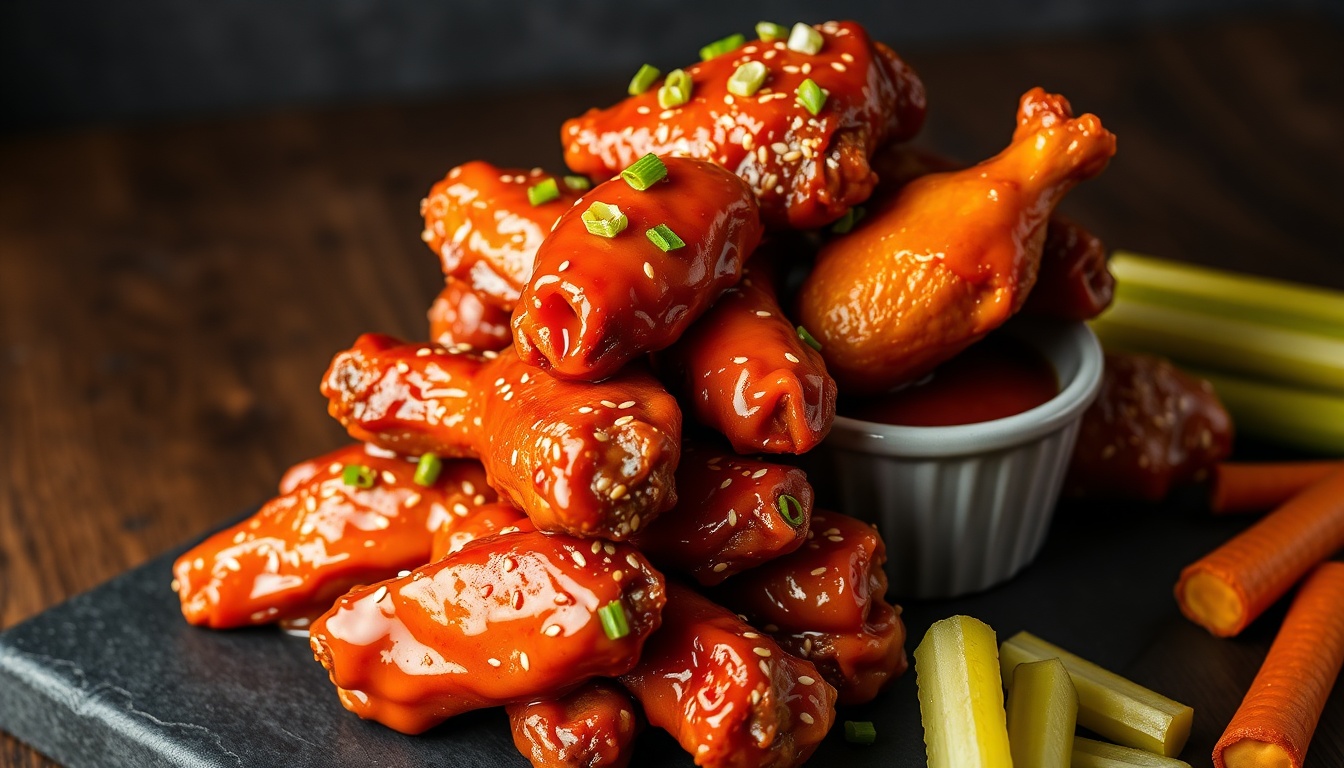
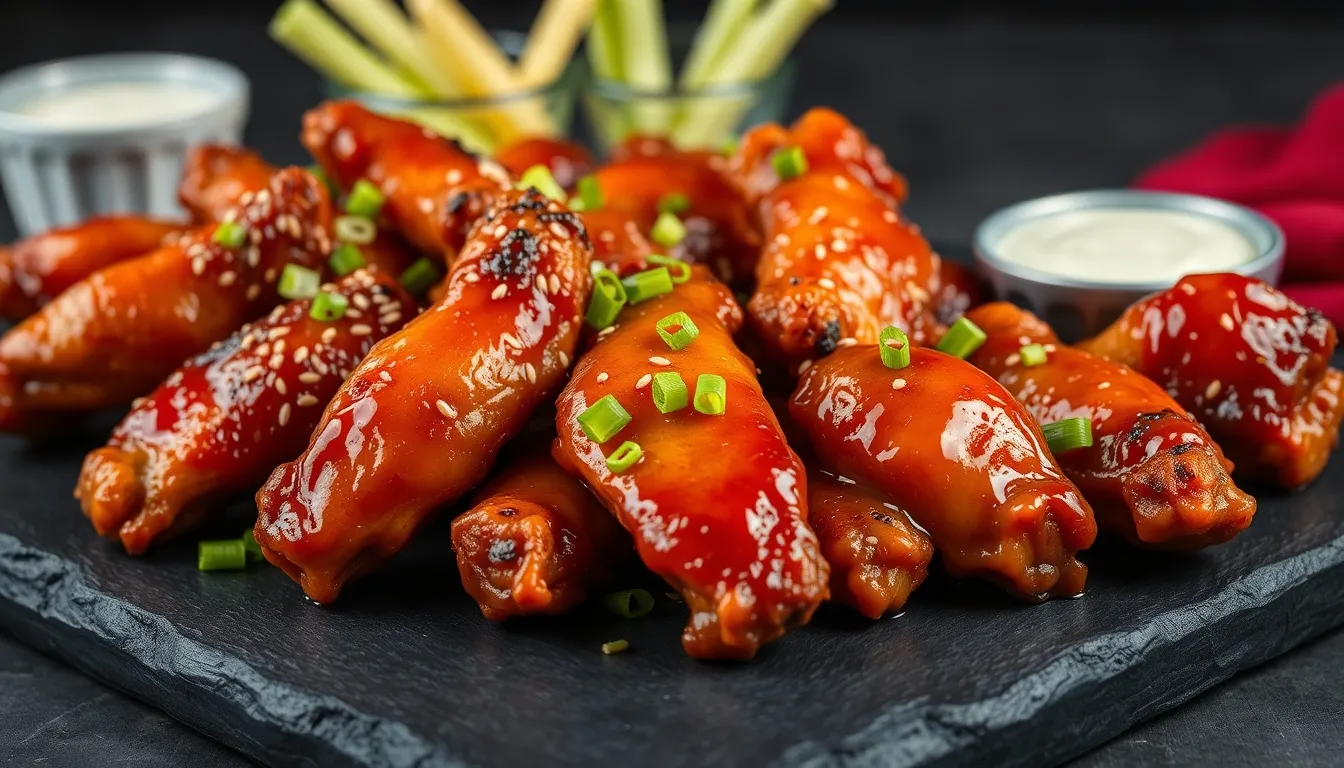
The sauce combines honey, ketchup and cider vinegar, with garlic and paprika for depth. Five variations below make it easy to adjust the heat or add citrus. The illustrated platter shows separated serving pieces; the card’s raw purchase basis remains whole wings.
Recipe
Honey BBQ Wings
Whole raw chicken wings baked and finished with honey BBQ sauce. Four portions in about 55 minutes; nutrition uses USDA’s raw refuse factor for the whole-wing purchase basis.
15Ingredients
Yield: 4 servings
- 3 lb raw whole chicken wings, including tips
- 1 tablespoon double-acting baking powder (13.8 g)
- 3 g fine sea salt
- 1 g ground black pepper
- 1.5 g garlic powder, for dry coating
- 1.2 g ground paprika, for dry coating
- 113 g wildflower honey
- 80 g ketchup
- 2 tablespoons cider vinegar (29.8 g)
- 1 tablespoon soy sauce (16 g)
- 1 tablespoon Worcestershire sauce (17 g)
- 2.3 g ground paprika, for sauce
- 3 g garlic powder, for sauce
- 1.2 g onion powder
- 0.5 g ground cayenne
Ingredient amounts scale; instructions show the original batch. Cooking times and pan sizes may need adjustment. Season to taste. Honey grams use US measures at 20°C and 17.5% moisture, a density estimate; weigh your honey for precision.
Instructions
- 1Prepare the oven and wingsHeat the oven to 425°F (220°C). Line a rimmed tray and set an oven-safe rack over it. Pat the whole wings dry and tuck the tips underneath. The weighed purchase basis includes the tips; do not apply that weight conversion to a different pre-trimmed product.
- 2Apply the dry coatingMix baking powder, salt, black pepper, dry-coating garlic powder and dry-coating paprika. Toss evenly with the wings and arrange in one layer on the rack. Use baking powder, not baking soda.
- 3BakeBake for about 25 minutes, turn the wings, then continue for about 15–20 minutes until the skin is golden and the thickest meat reaches 165°F (74°C) without the thermometer touching bone. Wing size and oven airflow change timing.
- 4Make the sauceWhile wings bake, simmer honey, ketchup, cider vinegar, soy sauce, Worcestershire sauce and remaining spices together for 3–4 minutes. Keep a clean serving portion separate before brushing food.
- 5Finish and portionBrush a thin coat onto the cooked wings near the end. If desired, watch closely under a broiler for a brief finish, then divide the wings and sauce into 4 portions. Cooked wings may be separated at the joints for serving; side dips and garnish are additional.
Estimated nutrition per serving
525.96 calories · 27.19 g fat · 32.55 g carbohydrate · 37.91 g protein · 1293.2 mg sodium
Serving: 1/4 whole-wing and sauce batch
Calculated from ingredient weights and USDA FoodData Central: 172390, 172803, 173468, 170931, 171325, 171329, 169640, 168556, 173469, 174277, 171610, 171327, 170932. Estimates use ingredient input weights; actual portions, brands and cooking losses vary. Omitted nutrient values are unavailable, not zero.
A USDA raw-refuse estimate, not a cooking-loss guess
USDA Standard Reference 28, NDB 05100 gives raw wing refuse as 38% bone and connective tissue, matching the description of FDC 172390. The model therefore uses 62% of the raw whole-wing purchase mass as edible raw meat and skin.
For the 3 lb base, that is 1360.78 g purchased and about 843.68 g modeled edible raw meat and skin. It is a source-based assumption, not a measurement of these cooked wings. Do not apply it unchanged to an already tip-removed or otherwise trimmed purchase weight.
Cooking changes water and fat, and sauce can remain on a brush or tray. Those losses are unmeasured. The USDA archive linked above documents the raw-refuse factor.
Get the Honey Buyer's Cheat Sheet (free PDF)
16 varieties on one page — color, flavor, best use and what a fair price looks like — from the 304 honeys we track.
Choose the honey for this sauce
Clover honey is mild, wildflower honey adds floral character, orange blossom honey gives a citrus-floral note, and buckwheat honey tastes darker and maltier. The pairing guide has more choices.
The chart uses an editorial 1–5 flavor-intensity scale. It is a pairing aid; the honey in a particular jar can taste different from another harvest.
1 = mild, 5 = bold. Editorial pairing guidance, not laboratory measurements; jars vary.
- Clover
- Mild barbecue sauce
- Orange blossom
- Citrus sauce variation
- Wildflower
- Classic honey BBQ
- Buckwheat
- A darker, bolder sauce
Matching a honey to another dish: the honey flavor map
Dry the wings and finish the sauce late
A dry surface and room around each wing help the skin color. Whole wings can be tucked so the thin tips are protected underneath. A crowded tray takes longer and can leave pale spots where pieces touch.
Use a thermometer for 165°F (74°C), the poultry minimum, checking the thickest meat without touching bone. Skin color alone is not a test of the center. Watch any broiler finish continuously; the sauce can darken quickly.
Keep the serving sauce separate from the brush bowl. If cooked wings are cut at the joints for serving, use a clean board and utensils. Serve a quarter of the batch per person; the number of pieces depends on wing size.
5 sauce variations
These changes are separate from the measured base nutrition. Taste the cooked sauce with a clean spoon before adding more seasoning.
- Extra hot: Add cayenne in small increments.
- Smoky: Replace part of the paprika with smoked paprika.
- Mustard: Whisk 2 teaspoons prepared mustard into the finished sauce.
- Citrus: Add finely grated orange or lemon zest at the end.
- Ginger sesame: Add 1 teaspoon finely grated ginger while simmering and offer sesame seeds separately for finishing.
Serving and leftovers
Serve the cooked wings with vegetables or dips prepared separately. Honey BBQ sauce, hot honey and honey mustard give other condiment options with their own amounts.
Refrigerate cooked leftovers promptly and use within 3–4 days under USDA guidance. Reheat until hot throughout; the skin will change after storage and sauce, so do not promise the texture of freshly baked wings.
Nutrition and ingredient evidence
One portion, 1/4 whole-wing and sauce batch, has an estimated 525.96 calories, 27.19 g fat, 7.5 g saturated fat, 32.55 g carbohydrate, 28.08 g sugars, 0.7 g fiber, 37.91 g protein, 1293.2 mg sodium. These are raw-ingredient input estimates divided by the recipe yield, not measurements of the plated food.
The wing input is 3 lb raw whole wings including tips, with 38% USDA raw refuse removed to model about 844 g edible raw meat and skin. All dry coating and sauce are then allocated across 4 portions. This does not measure cooked yield, rendered fat, sauce uptake, brush residue, dips or garnish.
- USDA FoodData Central 172390: Chicken, broilers or fryers, wing, meat and skin, raw.
- USDA FoodData Central 172803: Leavening agents, baking powder, double-acting, sodium aluminum sulfate.
- USDA FoodData Central 173468: Salt, table.
- USDA FoodData Central 170931: Spices, pepper, black.
- USDA FoodData Central 171325: Spices, garlic powder.
- USDA FoodData Central 171329: Spices, paprika.
- USDA FoodData Central 169640: Honey.
- USDA FoodData Central 168556: Catsup.
- USDA FoodData Central 173469: Vinegar, cider.
- USDA FoodData Central 174277: Soy sauce made from soy and wheat (shoyu).
- USDA FoodData Central 171610: Sauce, worcestershire.
- USDA FoodData Central 171327: Spices, onion powder.
- USDA FoodData Central 170932: Spices, pepper, red or cayenne.