Why Honey Makes the Best Marinade Base
A great marinade does three things: tenderizes, flavors, and browns. Honey does all three better than sugar, agave, or maple syrup — and the science explains why.
Honey's natural acidity (pH 3.2–4.5) gently breaks down surface proteins, allowing flavor compounds to penetrate deeper. Its fructose caramelizes at 230°F — about 30°F lower than sucrose — producing richer, more complex browning on the grill or in the pan. And because honey is hygroscopic (it attracts and holds moisture), meats marinated in honey stay juicier during cooking.
This universal honey marinade uses a simple formula you can memorize: 3 parts oil, 2 parts acid, 1 part honey, plus aromatics. Once you know the ratio, you can improvise endlessly.
The Universal Honey Marinade Recipe
This base recipe works for chicken, pork, beef, salmon, shrimp, tofu, and vegetables. Memorize the ratio and you'll never need a marinade recipe again.
- 3 tablespoons olive oil (or avocado oil for high-heat grilling)
- 2 tablespoons soy sauce (or coconut aminos for soy-free)
- 2 tablespoons honey (any variety — see pairing guide below)
- 1 tablespoon acid (lemon juice, lime juice, rice vinegar, or apple cider vinegar)
- 3 cloves garlic, minced
- 1 teaspoon Dijon mustard (emulsifier — holds the marinade together)
- 1/2 teaspoon black pepper
- 1/2 teaspoon salt
Pro Tip
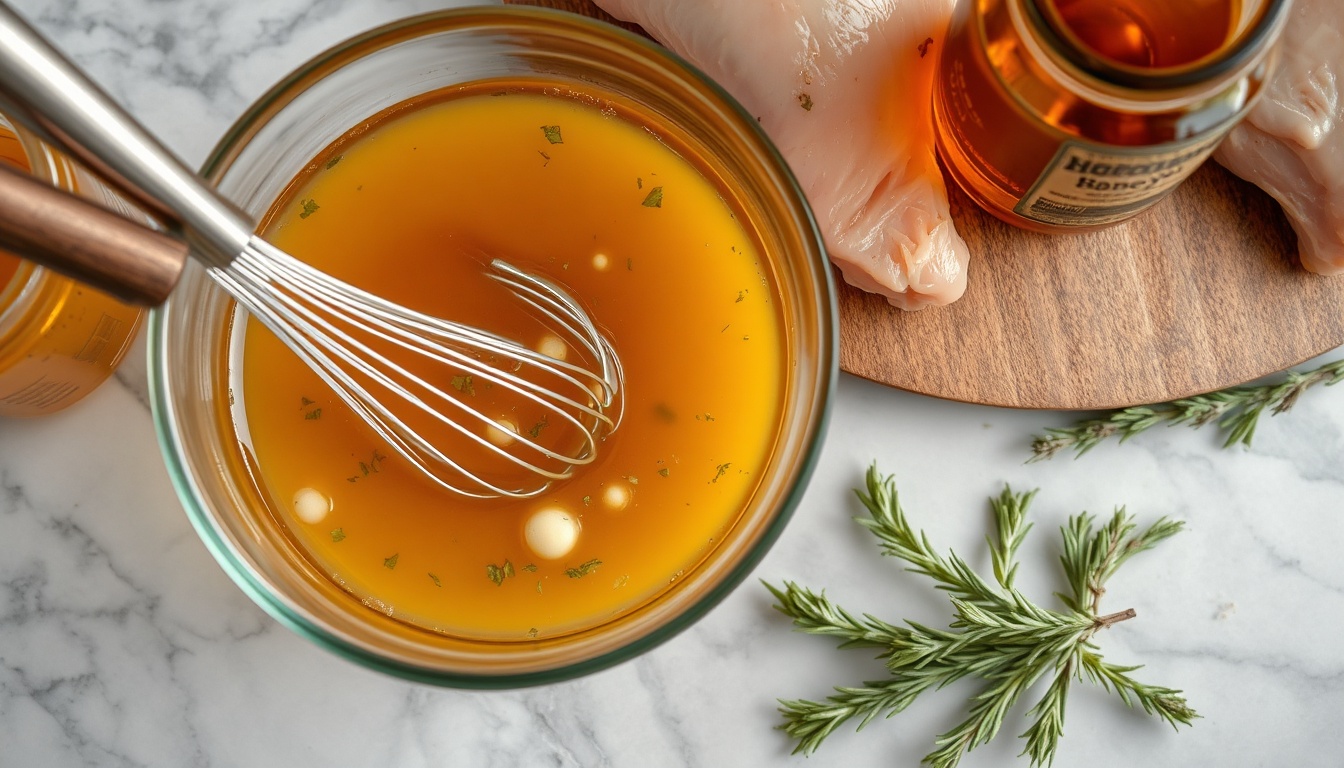
Whisk the honey into the acid first, then add oil. The acid thins the honey so it distributes evenly instead of clumping at the bottom of the bag.
Get the Honey Buyer's Cheat Sheet (free PDF)
16 varieties on one page — color, flavor, best use and what a fair price looks like — from the 304 honeys we track.
How to Use the Marinade
Place your protein in a zip-lock bag or shallow dish. Pour the marinade over, seal, and refrigerate. Turn the bag halfway through marinating for even coverage.
The key to a great honey marinade is matching the marinating time to the protein. Too short and the flavors stay on the surface. Too long and the acid can make the texture mushy.
- Chicken breasts or thighs: 2–8 hours (bone-in thighs can go up to 12)
- Pork chops or tenderloin: 2–8 hours
- Beef steak: 2–4 hours (longer makes the exterior mushy)
- Salmon or fish fillets: 30 minutes–1 hour (never longer — acid "cooks" the fish)
- Shrimp: 15–30 minutes (they're small and absorb fast)
- Tofu (pressed, extra-firm): 1–24 hours (no acid damage, longer is better)
- Vegetables: 30 minutes–2 hours
Pro Tip
Always reserve 2–3 tablespoons of marinade BEFORE adding raw protein. Use the reserved portion for basting or as a finishing sauce.
Best Honey Varieties for Marinades
Different honeys bring different flavor profiles to your marinade. Here's how to match honey to protein for the best results.
- Wildflower honey — the all-purpose choice, works with any protein. Balanced floral notes that enhance without competing with other marinade ingredients
- Clover honey — mild and sweet, ideal for chicken and fish where you want the other ingredients to shine. Perfect for Father's Day and Memorial Day grilling beginners
- Orange blossom honey — bright citrus notes, pairs beautifully with salmon, shrimp, and chicken. Outstanding in honey lime chicken or any citrus marinade
- Buckwheat honey — bold, molasses-like depth for beef and pork. Creates the deepest caramelization and richest color on the grill
- Acacia honey — light and delicate, best for fish and tofu where you want sweetness without strong honey flavor overwhelming delicate proteins
- Hot honey — adds a sweet-spicy kick to any protein. See our hot honey guide for making your own
8 Honey Marinade Variations
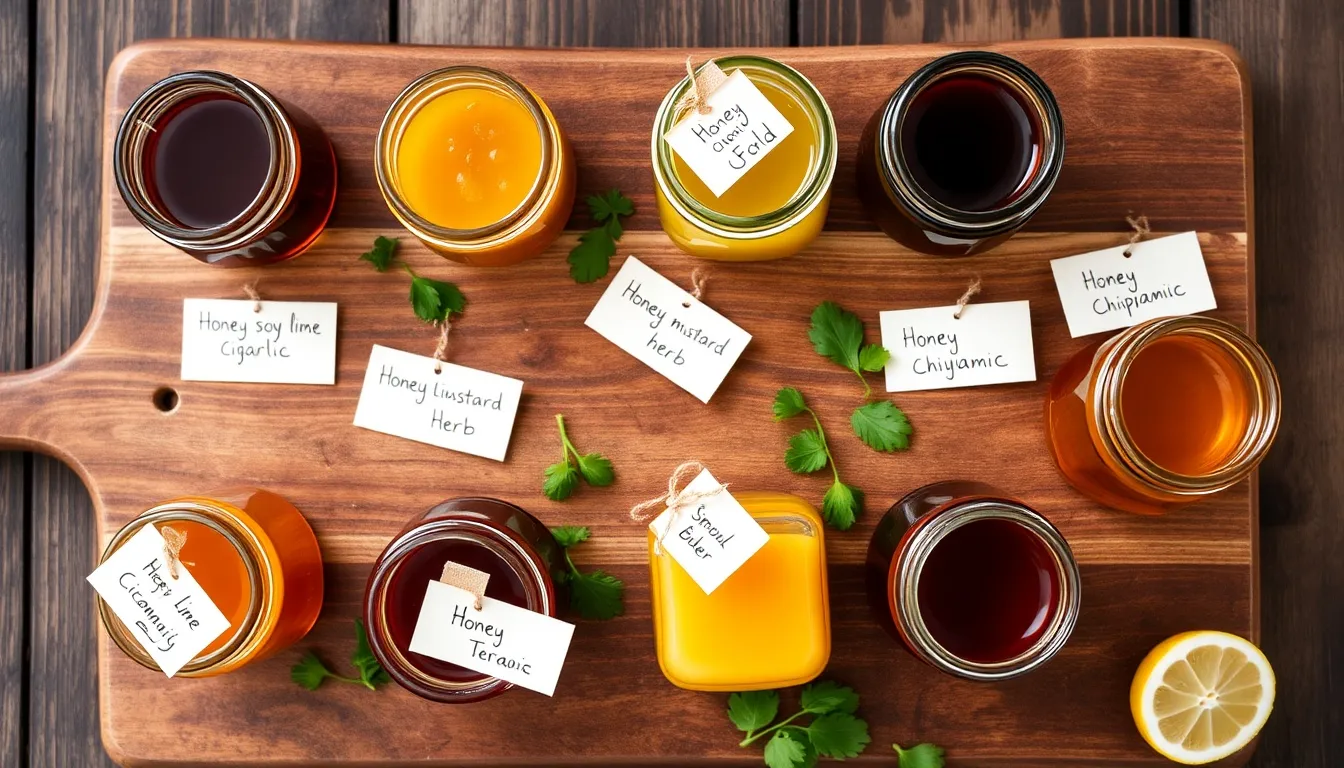
Start with the base recipe, then swap the acid, adjust the aromatics, and add the listed extras. Each variation is optimized for specific proteins.
1. Honey Soy Garlic (Asian-Inspired)
The most popular variation — sticky, savory, and deeply caramelized. Use soy sauce as both the salt and acid component. Wildflower honey or buckwheat honey work best here for their complex depth.
- Swap acid for 1 tablespoon rice vinegar
- Add 1 tablespoon sesame oil (reduce olive oil to 2 tablespoons)
- Add 1 teaspoon fresh grated ginger
- Add 1 teaspoon sesame seeds
- Best for: chicken thighs, honey soy chicken, pork chops, salmon
2. Honey Lime Cilantro (Tex-Mex)
Bright, zesty, and fresh — perfect for tacos, bowls, and grilled chicken salads. Orange blossom honey complements the citrus beautifully, while clover honey provides clean sweetness.
- Swap acid for 2 tablespoons fresh lime juice
- Add 2 tablespoons chopped fresh cilantro
- Add 1 teaspoon cumin
- Add 1/2 teaspoon chili powder
- Best for: chicken, shrimp, fish tacos, skirt steak
3. Honey Mustard Herb (Classic)
Tangy, herbaceous, and crowd-pleasing. The Dijon emulsifies the marinade while providing flavor.
- Increase Dijon to 2 tablespoons
- Add 1 tablespoon whole-grain mustard
- Add 1 teaspoon dried thyme or rosemary
- Swap acid for 1 tablespoon apple cider vinegar
- Best for: honey mustard chicken, pork tenderloin, salmon
4. Honey Balsamic (Mediterranean)
Rich, complex, and slightly sweet. The balsamic vinegar provides both acid and depth.
- Swap acid for 2 tablespoons balsamic vinegar
- Add 1 teaspoon dried Italian herbs (oregano, basil, thyme)
- Add 1/2 teaspoon red pepper flakes
- Best for: chicken, pork, vegetables, portobello mushrooms
5. Honey Teriyaki (Japanese)
A from-scratch teriyaki that's far better than bottled. The mirin adds authentic sweetness and sheen.
- Add 2 tablespoons mirin
- Swap acid for 1 tablespoon rice vinegar
- Add 1 tablespoon fresh grated ginger
- Add 1 teaspoon sesame oil
- Best for: honey teriyaki chicken, salmon, tofu, shrimp
6. Honey Chipotle (Smoky-Spicy)
Smoky, sweet, and deeply savory with adjustable heat. The chipotles in adobo do double duty as spice and acid.
- Add 1–3 chipotle peppers in adobo, minced (plus 1 tablespoon adobo sauce)
- Add 1 teaspoon smoked paprika
- Add 1/2 teaspoon cumin
- Swap acid for 1 tablespoon lime juice
- Best for: honey chipotle chicken, pork, beef, shrimp
7. Honey Bourbon (Southern)
The bourbon's vanilla and caramel notes complement honey beautifully. The alcohol evaporates during cooking, leaving behind complex flavor.
- Add 2 tablespoons bourbon
- Add 1 tablespoon Worcestershire sauce
- Add 1 teaspoon smoked paprika
- Add pinch of cayenne
- Best for: honey bourbon chicken, ribs, pork chops, steak
8. Honey Lemon Herb (Light & Fresh)
Bright and aromatic — the lightest variation, ideal for spring and summer grilling.
- Swap acid for 2 tablespoons fresh lemon juice + 1 teaspoon zest
- Add 2 tablespoons mixed fresh herbs (parsley, dill, chives)
- Add 1/2 teaspoon dried oregano
- Best for: honey lemon chicken, fish, shrimp, grilled vegetables
The Science Behind Honey Marinades
Understanding why honey marinades work helps you troubleshoot and improvise confidently.
- Tenderization — honey's natural acidity (gluconic acid, pH 3.2–4.5) and enzymes denature surface proteins, allowing flavors to penetrate. Honey is gentler than citrus juice, reducing the risk of over-marinating
- Caramelization — fructose in honey begins caramelizing at 230°F (110°C), about 30°F lower than table sugar. This produces the signature golden-brown color and complex bittersweet flavor when grilling or searing
- Maillard reaction — honey's amino acids react with its sugars during high-heat cooking, creating hundreds of new flavor compounds. This is why honey-marinated proteins taste more complex than sugar-marinated ones
- Moisture retention — honey is hygroscopic, meaning it binds water molecules. Proteins marinated in honey lose 15–20% less moisture during cooking compared to sugar marinades
- Emulsification — honey's viscosity helps oil and acid stay mixed together instead of separating. Combined with mustard's lecithin, honey marinades coat proteins more evenly than thin vinaigrettes
Grilling Tips for Honey-Marinated Proteins
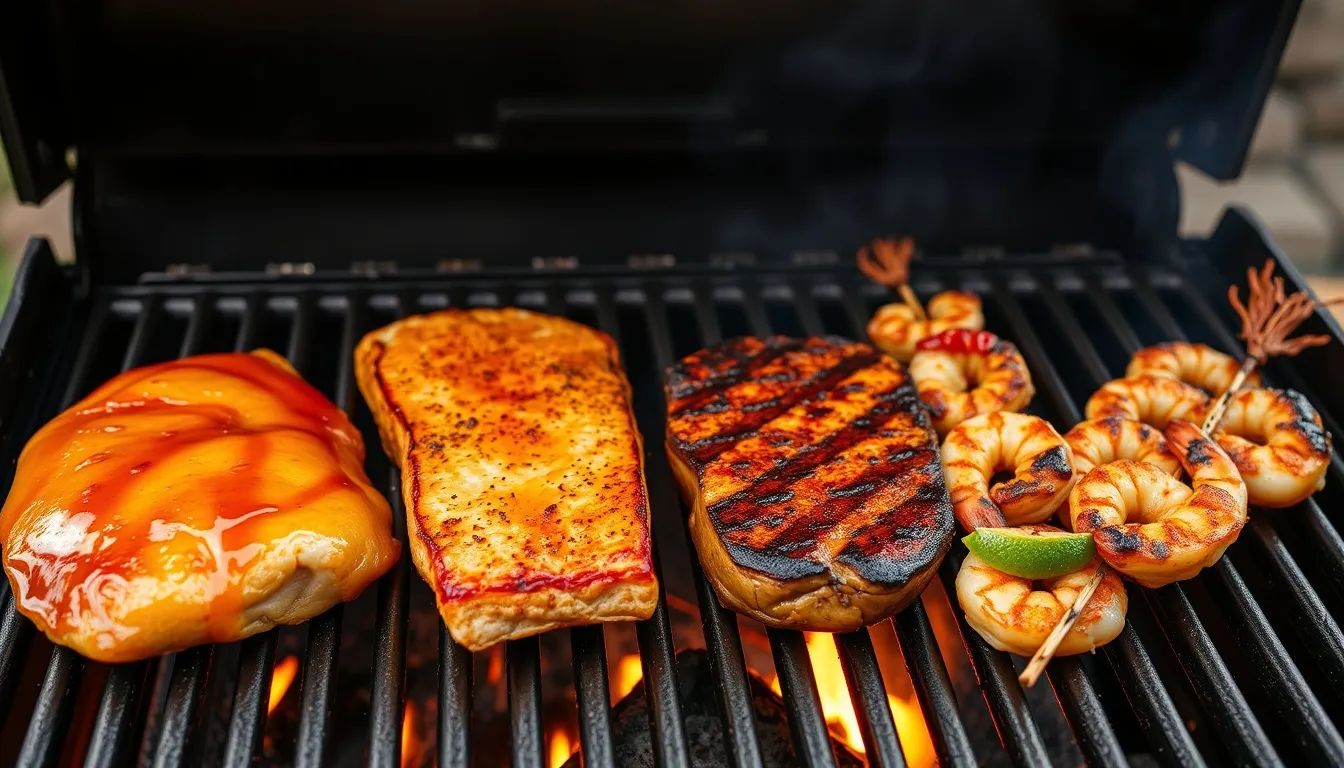
Honey's low caramelization point is a superpower, but it also means honey can burn if you're not careful. Here's how to get perfect char without bitter blackening.
- Pat dry before cooking — remove excess marinade so proteins sear instead of steam. The sugars that remain on the surface will caramelize beautifully
- Use medium to medium-high heat — never high. Fructose caramelizes at 230°F but carbonizes (burns) above 350°F on direct contact
- Move to indirect heat if flare-ups occur — honey drips cause flare-ups on charcoal grills. Keep a cool zone ready
- Baste with reserved marinade in the last 5 minutes — this builds layers of glaze. Never use marinade that touched raw meat
- Use a meat thermometer — pull chicken at 160°F (carryover to 165°F), pork at 140°F (carryover to 145°F), steak at desired temp minus 5°F
- Rest before slicing — at least 5 minutes for chicken, 8–10 minutes for pork and steak. Resting lets juices redistribute
Pro Tip
For the deepest color without burning, broil honey-marinated proteins for the last 2–3 minutes of oven cooking. Watch constantly — the line between perfectly caramelized and burnt is about 30 seconds.
Meal Prep and Storage Tips
Honey marinades are perfect for meal prep because the marinade doubles as a sauce.
- Make a double batch of any variation and store in a jar. The base keeps 2 weeks in the refrigerator
- Pre-marinate proteins in labeled zip-lock bags and freeze. They'll marinate as they thaw — double time savings
- Frozen marinated chicken thighs keep 3 months. Defrost overnight in the refrigerator
- The reserved sauce (the portion that never touched raw protein) keeps 2 weeks refrigerated. Heat before using as a glaze or dipping sauce
- Marinated tofu can be pressed, cubed, frozen on a sheet pan, then transferred to bags. Freezing improves tofu's texture by creating a chewier, more porous structure that absorbs even more flavor
Common Mistakes to Avoid
Even with a foolproof recipe, these mistakes can sabotage your results.
- Over-marinating fish and shrimp — acid "cooks" seafood (like ceviche). Stick to 30 minutes for fish, 15 minutes for shrimp
- Using the same marinade for raw and cooked — always reserve a portion before adding raw protein, or bring used marinade to a full rolling boil for 1 minute to kill bacteria
- Marinating at room temperature — always refrigerate. Room temperature is the danger zone (40–140°F) for bacterial growth
- Adding salt too early for beef — salt draws out moisture initially. For the juiciest steak, add salt to the marinade only if marinating less than 1 hour, or salt separately and let it rest 40+ minutes to reabsorb
- Cooking straight from the fridge — let marinated proteins sit at room temperature for 15–20 minutes before cooking for more even results
- Crowding the pan — proteins release steam, which prevents the honey from caramelizing. Cook in batches if needed