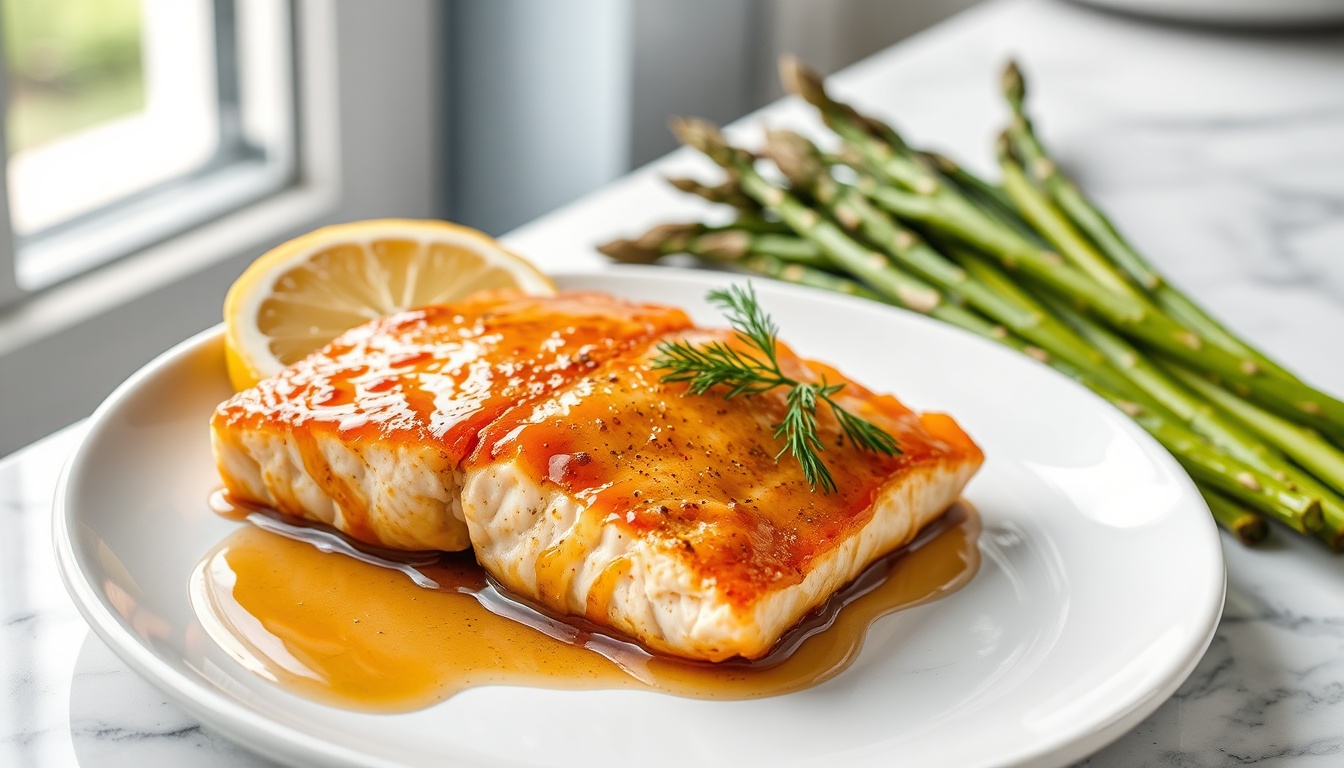
A Measured Honey Glaze
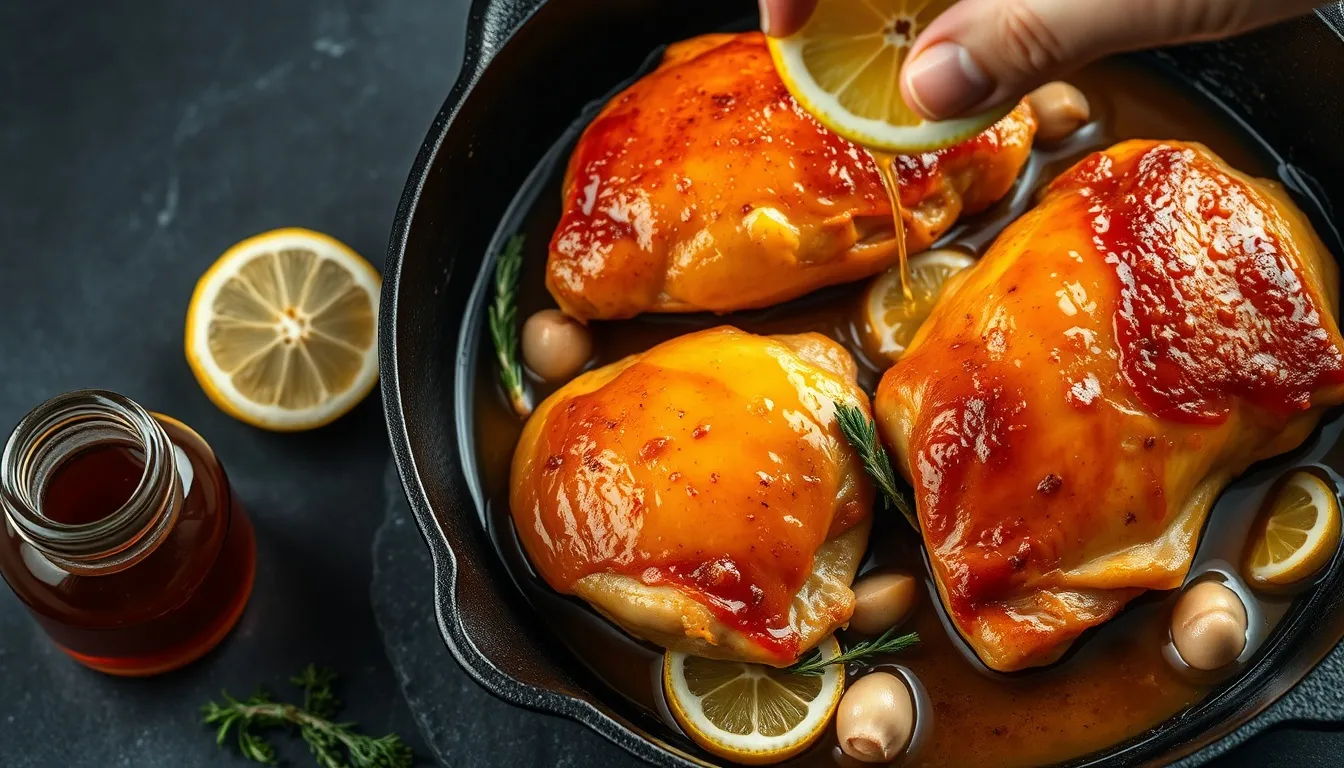
Lemon juice and zest give the honey sauce a bright finish. Brown the boneless thighs first, then build the sauce from the same pan with broth, butter and garlic.
The base uses 2 pounds of chicken and ¼ cup measured lemon juice. Lemon sizes vary, so measure the juice rather than assuming two fruits always yield the same amount.
Recipe
Honey Lemon Chicken
Skillet honey lemon chicken with a measured lemon-broth sauce and fresh thyme. Four portions in about 30 minutes, with extra time if the pan needs batches.
13Ingredients
Yield: 4 servings
- 2 pounds boneless, skinless chicken thighs
- 1/4 cup clover honey
- 1/4 cup fresh lemon juice
- 1 teaspoon grated lemon zest
- 4 cloves garlic, minced
- 1/2 cup low-sodium canned chicken broth
- 2 tablespoons unsalted butter
- 2 tablespoons chopped fresh thyme
- 8 g cornstarch
- 30 g water
- 1 tablespoon olive oil
- 1/2 teaspoon table salt
- 1/4 teaspoon ground black pepper
Ingredient amounts scale; instructions show the original batch. Cooking times and pan sizes may need adjustment. Season to taste. Honey grams use US measures at 20°C and 17.5% moisture, a density estimate; weigh your honey for precision.
Instructions
- 1PreparePat the thighs dry and season with the measured salt and pepper. Stir the cornstarch into the water separately.
- 2SearHeat olive oil in a large skillet over medium-high heat. Sear chicken 5–6 minutes per side, allowing extra time for batches. Check that each portion reaches 165°F (74°C); continue cooking as needed, then transfer to a clean plate.
- 3Start the sauceLower heat, melt butter and stir garlic for 30 seconds. Pour in broth and scrape the browned bits.
- 4Add lemon and honeyStir in honey, lemon juice and measured zest. Simmer 2–3 minutes. Stir the slurry again, add it and cook 1–2 minutes until the sauce thickens.
- 5Finish and serveReturn chicken and its juices to the sauce, heat through and add the thyme. Divide into 4 portions with all sauce. Side dishes and extra lemon are excluded.
Estimated nutrition per serving
441.63 calories · 18.74 g fat · 22.16 g carbohydrate · 45.74 g protein · 518.46 mg sodium
Serving: 1/4 of the chicken and lemon sauce; sides excluded
Calculated from ingredient weights and USDA FoodData Central: 173627, 169640, 167747, 167749, 169230, 171609, 173430, 173470, 169698, 173647, 171413, 173468, 170931. Estimates use ingredient input weights; actual portions, brands and cooking losses vary. Omitted nutrient values are unavailable, not zero.
Oven-Baked Method
If you prefer a hands-off approach, the oven method gives you tender, glazed chicken with minimal effort:
These are separate adaptations. Their cooking and marinating times differ from the card; check 165°F (74°C) in the thickest part without touching bone, following FDA guidance.
- Preheat oven to 400°F (200°C).
- Whisk together honey, lemon juice, zest, garlic, broth, and herbs in a bowl.
- Arrange chicken in a baking dish in a single layer. Pour honey lemon sauce over the chicken.
- Bake for 25-30 minutes, basting with pan sauce halfway through, until chicken reaches 165°F (74°C).
- Broil for 2-3 minutes at the end to caramelize the glaze (watch closely — honey burns fast under a broiler).
- Rest 5 minutes before serving, spooning the pan sauce over the chicken.
Get the Honey Buyer's Cheat Sheet (free PDF)
16 varieties on one page — color, flavor, best use and what a fair price looks like — from the 304 honeys we track.
5 Flavor Variations
The honey lemon base adapts easily to different flavor profiles:
1. Honey Lemon Garlic Chicken. Double the garlic to 8 cloves and add 1 tablespoon whole-grain mustard. Deeply savory with a tangy kick. Similar spirit to our honey garlic sauce.
2. Honey Lemon Herb Chicken. Add a full 1/4 cup of mixed fresh herbs — thyme, rosemary, oregano, and parsley. Toss in a few lemon slices to roast alongside the chicken for a Provençal feel.
3. Honey Lemon Butter Chicken. Double the butter to 4 tablespoons and add 2 tablespoons heavy cream at the end for a richer, silkier sauce. Restaurant-worthy indulgence.
4. Spicy Honey Lemon Chicken. Add 1/2 teaspoon red pepper flakes or 1 tablespoon hot honey to the sauce. The heat balances the sweet-tart glaze perfectly.
5. Honey Lemon Caper Chicken. Add 2 tablespoons drained capers and 2 tablespoons white wine to the sauce. Briny, bright, and Mediterranean-inspired — essentially a honey-kissed piccata.
These are separate adaptations. Their cooking and marinating times differ from the card; check 165°F (74°C) in the thickest part without touching bone, following FDA guidance.
Which Honey Works Best
The type of honey you choose affects the flavor profile significantly since lemon lets the honey's character shine through:
The chart gives editorial pairing suggestions on a 1 (mild) to 5 (bold) scale. It is not a laboratory measurement; harvests and jars vary.
- Orange blossom honey — The best match. Natural citrus notes harmonize with lemon for a seamless, floral-citrus glaze.
- Wildflower honey — Versatile and balanced. Adds floral complexity without competing with the lemon.
- Clover honey — Light and clean. Lets the lemon flavor lead. The most neutral option.
- Acacia honey — Delicate and mild. Creates a lighter, more elegant glaze that won't overpower subtle herbs.
- Lavender honey — Adds a floral, herbal dimension. Excellent with the herb variation for a Provençal-style dish.
Pro Tip
Avoid very dark honeys like buckwheat here — their molasses-like intensity can overpower the bright lemon flavor. Save those for honey soy chicken or honey BBQ sauce.
1 = mild, 5 = bold. Editorial pairing guidance, not laboratory measurements; jars vary.
- Clover
- Let lemon lead
- Orange blossom
- Citrus and thyme
- Acacia
- Mild lemon sauce
Matching a honey to another dish: the honey flavor map
Tips for the Perfect Honey Lemon Glaze
Getting the sauce right is the key to this dish:
- Don't skip the zest — Lemon zest contains aromatic oils that juice alone can't provide. It's the difference between a good glaze and a great one.
- Deglaze thoroughly — Those browned bits on the pan bottom (fond) are concentrated chicken flavor. The broth dissolves them into the sauce.
- Simmer, don't boil — High heat makes honey bitter and lemon juice harsh. A gentle simmer melds the flavors.
- Thicken gradually — Add the cornstarch slurry slowly and stir constantly. The sauce should coat a spoon but still flow easily.
- Add lemon juice off the heat — For maximum brightness, stir in half the lemon juice at the end, right before serving. Cooked lemon juice adds depth; fresh adds zing.
- Pat chicken dry — Moisture on the surface prevents browning. Dry chicken = better sear = better flavor.
Serving Suggestions
Honey lemon chicken pairs beautifully with sides that soak up the sauce:
- Classic: Steamed rice or couscous with honey roasted carrots — the carrots echo the honey sweetness
- Mediterranean: Orzo pasta with roasted vegetables, olives, and feta — perfect with the caper variation
- Light: Over arugula salad with shaved Parmesan and a honey balsamic dressing
- Comfort: Creamy mashed potatoes to catch every drop of the honey lemon sauce
- Roasted vegetables: Asparagus, broccoli, or honey roasted sweet potatoes on the same sheet pan
- Meal prep: Keeps 4 days in the fridge. Reheat gently in a skillet with a splash of broth to revive the sauce.
Storage and Reheating
Refrigerate cooked portions within 2 hours, using shallow covered containers and a refrigerator at 40°F (4°C) or below. Use within 3–4 days or freeze portions, following USDA leftover guidance.
Reheat leftovers throughout to 165°F (74°C), checked with a food thermometer, following USDA guidance. Honey does not establish a longer tested shelf life for this mixed dish.
Nutrition Basis
The card divides the measured ingredient inputs into 4 portions. USDA lacks a usable complete total sugars total for these inputs, so those fields are omitted rather than treated as zero.
The calculation counts the measured input ingredients, including sauce, oil and pan residue. It is not a measured finished-dish result.
Different brands, cuts, portion sizes, side dishes and variations change the estimate.