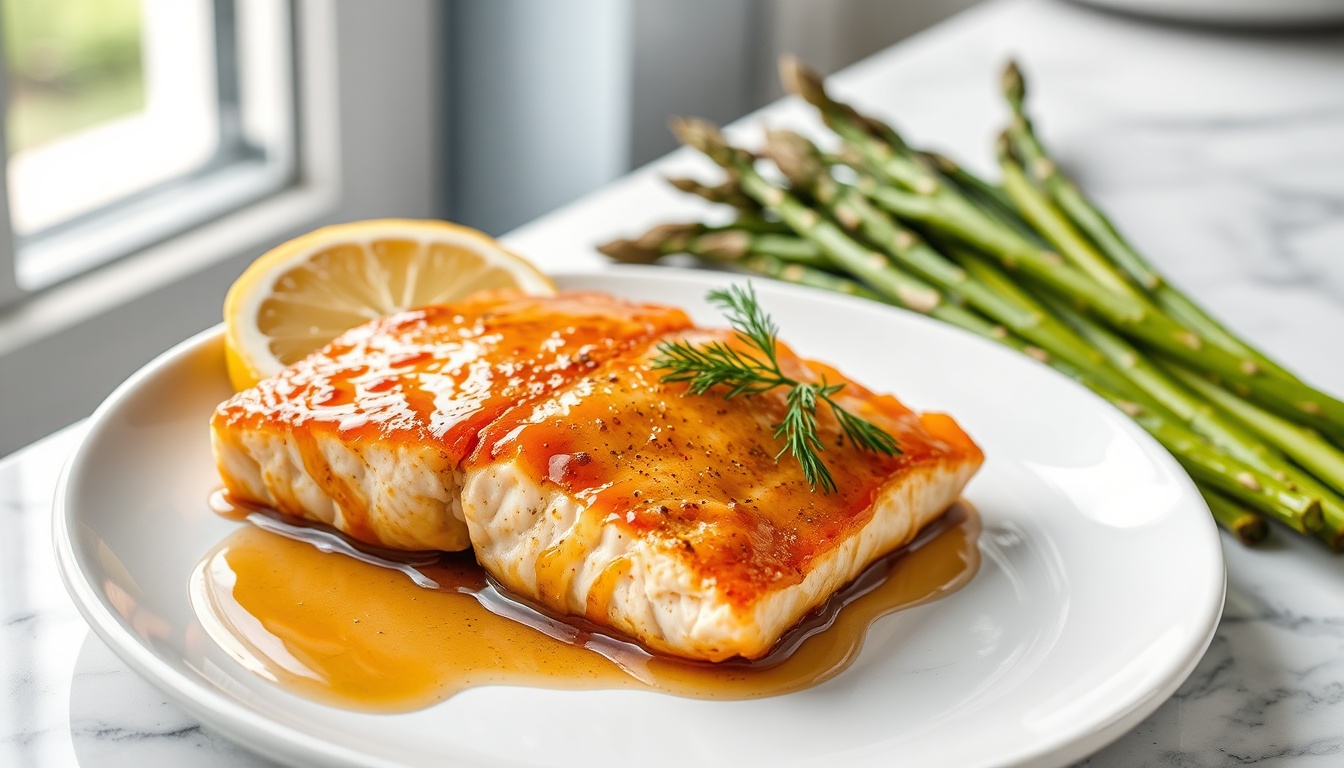
Honey soy chicken with a glossy pan sauce
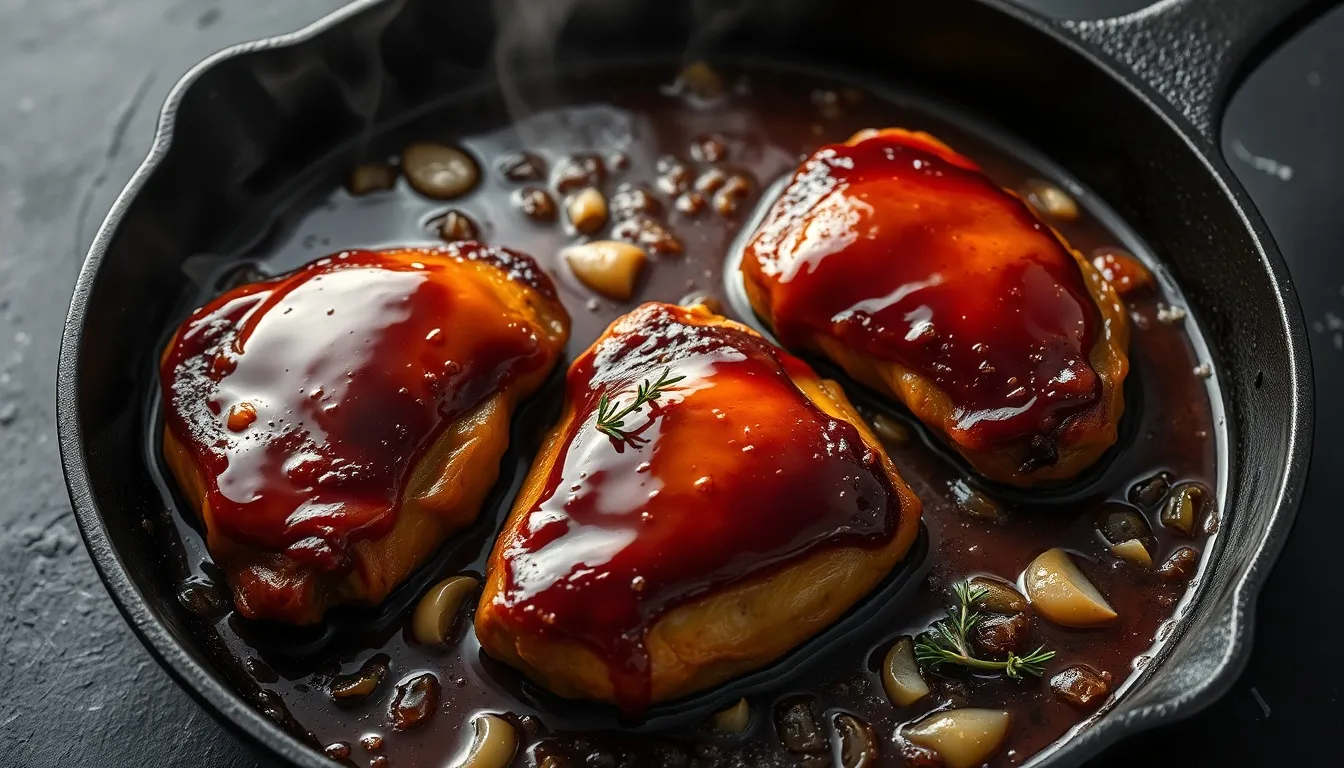
Honey and soy sauce make a sweet-savory glaze, with garlic, ginger and cider vinegar adding depth and tang. This base uses boneless skin-on thighs so the 800 g ingredient weight describes edible meat and skin, rather than including unmeasured bones.
Allow about 40 minutes for preparation, searing, simmering and a short rest. The original skin-on texture comes from drying and searing the chicken before the glaze goes in. The 5 variations below use the same sequence with different flavor accents.
Recipe
Honey Soy Chicken
Boneless skin-on chicken thighs seared, then gently simmered in a honey-soy glaze. Makes 4 servings in about 40 minutes, including a short rest.
8Ingredients
Yield: 4 servings
- 800 g boneless skin-on chicken thighs
- 113 g clover honey
- 64 g soy sauce
- 29.8 g cider vinegar
- 4 cloves garlic (12 g), minced
- 6 g fresh ginger, finely grated
- 1 teaspoon sesame oil (4.5 g)
- 1 tablespoon olive oil (13.5 g)
Ingredient amounts scale; instructions show the original batch. Cooking times and pan sizes may need adjustment. Season to taste. Honey grams use US measures at 20°C and 17.5% moisture, a density estimate; weigh your honey for precision.
Instructions
- 1Mix the glazeWhisk the honey, soy sauce, cider vinegar, minced garlic and grated ginger in a bowl. Set aside with a clean spoon.
- 2Sear the thighsPat the boneless skin-on thighs dry. Heat olive oil in a large skillet over medium-high heat. Cook skin-side down for about 6–8 minutes until golden, then turn and cook the second side for 2 minutes.
- 3Simmer with the sauceReduce heat to medium-low and pour in the glaze. Simmer gently, turning or spooning sauce over the chicken, for about 10–15 minutes, until the thickest part of each thigh reaches 165°F (74°C). Add a splash of water if the sauce thickens before the chicken is cooked.
- 4Finish the sauceMove cooked chicken to a clean plate. Stir sesame oil into the sauce and simmer briefly if it needs thickening. Return chicken to coat, then rest about 5 minutes before dividing chicken and sauce into 4 servings.
- 5ServeServe with rice or vegetables prepared separately. The 40-minute total allows 10 minutes preparation and about 30 minutes searing, simmering and resting; use the thermometer rather than the clock for doneness.
Estimated nutrition per serving
583.37 calories · 37.82 g fat · 25.9 g carbohydrate · 34.61 g protein · 1042.67 mg sodium
Serving: 1/4 chicken and sauce batch
Calculated from ingredient weights and USDA FoodData Central: 172385, 169640, 174277, 173469, 169230, 169231, 171016, 171413. Estimates use ingredient input weights; actual portions, brands and cooking losses vary. Omitted nutrient values are unavailable, not zero.
Sear first, glaze at a lower heat
Pat the skin dry so it can color in the pan. Start skin-side down and leave it in contact with the skillet until golden before turning. A pan crowded with overlapping thighs makes even browning harder; use a large skillet.
Reduce the heat before adding honey and soy. The sauce should simmer gently rather than boil hard. If it thickens too soon, add a little water and keep cooking the chicken until done. A shiny surface is a texture cue, not proof that the center is cooked.
Check the thickest part of each thigh with a food thermometer. USDA’s safe minimum for poultry is 165°F (74°C). Boneless and bone-in thighs need different handling and timing; the card is for boneless skin-on thighs.
Get the Honey Buyer's Cheat Sheet (free PDF)
16 varieties on one page — color, flavor, best use and what a fair price looks like — from the 304 honeys we track.
Choosing the honey
Use the honey pairing guide for this style of dish. This chart uses an editorial 1–5 flavor-intensity scale as a pairing guide; individual jars and harvests vary.
Clover honey gives mild sweetness. Wildflower honey adds floral depth, orange blossom honey brings citrus-floral notes, and buckwheat honey gives a darker, malty flavor.
1 = mild, 5 = bold. Editorial pairing guidance, not laboratory measurements; jars vary.
- Clover
- Classic honey soy glaze
- Orange blossom
- Citrus chicken
- Wildflower
- Garlic and ginger thighs
- Buckwheat
- Dark savory glaze
Matching a honey to another dish: the honey flavor map
5 flavor variations
These changes are separate from the base nutrition. Begin with a small addition, then taste the sauce with a clean spoon once it has cooked.
- Sesame: Sprinkle sesame seeds over the served chicken, keeping the measured sesame oil in the base sauce.
- Chili: Add a pinch of cayenne to the glaze for a hot version.
- Lemon: Add lemon zest and a squeeze of juice to the finished sauce.
- Orange: Replace the cider vinegar with the same weight of orange juice for a sweeter citrus version.
- Mustard: Whisk 1 teaspoon prepared mustard into the glaze for a tangier finish.
Serving and using different chicken cuts
Divide the cooked chicken and sauce evenly, then serve with rice, noodles or vegetables whose ingredients are measured separately. For another pan meal, try honey garlic chicken. Honey sesame chicken uses a different coating, and honey garlic sauce is useful when you only need a sauce.
Skinless thighs or breast pieces can be used in a separate adaptation, but their texture, fat content and cooking time differ. Bone-in thighs also add bone weight that is not part of the edible-meat amount used here. Adjust the method and check doneness rather than substituting a weight and keeping every other claim unchanged.
Store and reheat
Refrigerate cooked chicken and sauce in shallow covered containers and use within 3–4 days, following USDA’s leftovers guidance. Reheat with a splash of water to loosen the glaze, checking that it is hot throughout.
The nutrition estimate counts all measured meat, skin, oils and sauce as input. Some rendered fat or sauce may remain in the pan, and no unmeasured deduction has been made for it. Rice and garnish are separate from the base calculation.
Nutrition and ingredient evidence
One serving, 1/4 chicken and sauce batch, has an estimated 583.37 calories, 37.82 g fat, 9.68 g saturated fat, 25.9 g carbohydrate, 23.34 g sugars, 0.28 g fiber, 34.61 g protein, 1042.67 mg sodium. These are USDA ingredient-input calculations divided by 4 servings, rather than measurements of the finished food. Brands, portion sizes and cooking change the result.
The estimate includes the complete raw edible thigh weight, skin, both oils and all sauce, divided into 4 servings. It does not deduct rendered fat or sauce left in the pan and does not include rice or garnish.
- USDA FoodData Central 172385: Chicken, broilers or fryers, thigh, meat and skin, raw.
- USDA FoodData Central 169640: Honey.
- USDA FoodData Central 174277: Soy sauce made from soy and wheat (shoyu).
- USDA FoodData Central 173469: Vinegar, cider.
- USDA FoodData Central 169230: Garlic, raw.
- USDA FoodData Central 169231: Ginger root, raw.
- USDA FoodData Central 171016: Oil, sesame, salad or cooking.
- USDA FoodData Central 171413: Oil, olive, salad or cooking.