Why Honey, Lemon, and Ginger Work So Well Together
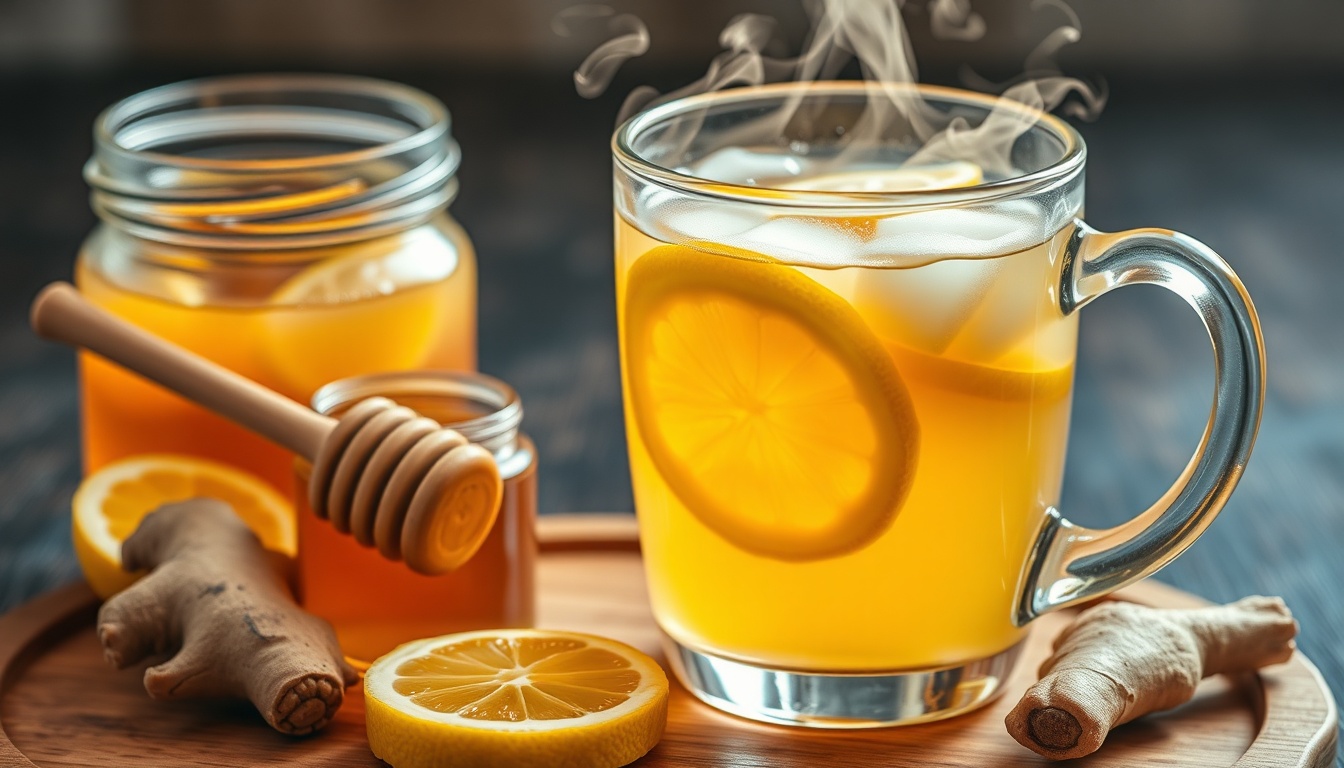
Honey, lemon, and ginger is one of the oldest and most popular beverage combinations in the world — and for good reason. Each ingredient brings distinct health benefits that complement one another, and their flavors balance perfectly: honey's sweetness, lemon's tartness, and ginger's warm spice.
This combination appears in traditional medicine systems from Ayurveda to Traditional Chinese Medicine to European herbal practice. Modern research has started catching up, with clinical studies supporting many of the traditional claims — particularly for sore throat and cough relief, digestive support, and anti-inflammatory effects.
The best part: honey lemon ginger tea takes under 10 minutes to make, costs pennies per cup, and tastes far better than most store-bought versions. Whether you're fighting a cold, soothing an upset stomach, or just want a warming drink on a chilly evening, this recipe has you covered.
How to Make Honey Lemon Ginger Tea: The Perfect Recipe
This recipe makes one large mug (about 12 oz). Scale up proportionally for multiple servings.
- **Ingredients:** 1-inch piece of fresh ginger root (about 1 tablespoon when sliced), 1 tablespoon raw honey, juice of half a lemon (about 1 tablespoon), 12 oz hot water (just off the boil, around 170-180°F / 77-82°C).
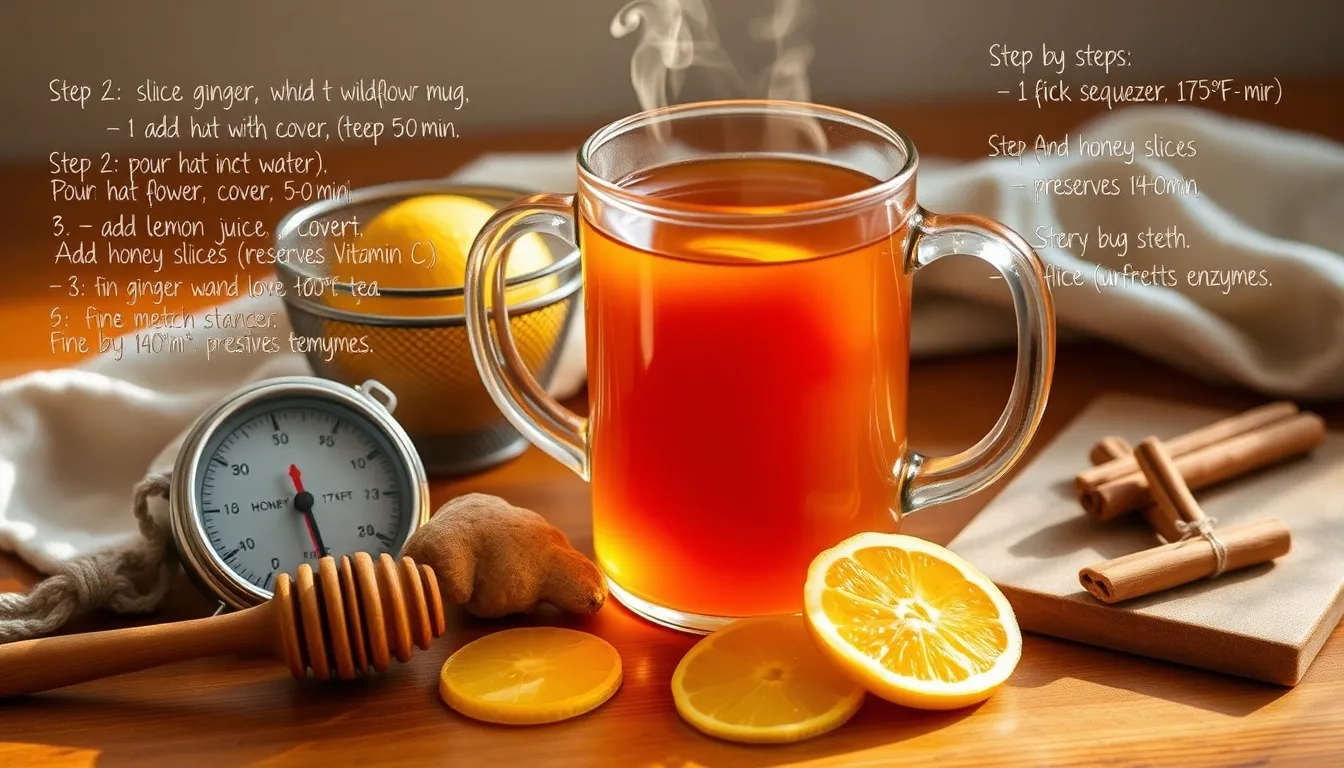
- **Step 1: Prepare the ginger** — Peel the ginger with a spoon (easier than a knife) and cut into thin coins or grate it. Thinner slices release more flavor. For maximum potency, grate the ginger finely — this releases more gingerols, the active compound.
- **Step 2: Steep the ginger** — Place ginger in your mug and pour hot water over it. Cover and steep for 5-10 minutes. Longer steeping = stronger ginger flavor and more gingerol extraction. Five minutes gives a mild, pleasant warmth; ten minutes creates a spicy, medicinal brew.
- **Step 3: Add the lemon** — Squeeze in the lemon juice after steeping, not during. Adding lemon to boiling water destroys some of the vitamin C. At 170-180°F, most of the vitamin C is preserved.
- **Step 4: Add the honey** — Stir in the honey after the tea has cooled slightly (below 140°F / 60°C). Very hot water can degrade some of honey's beneficial enzymes, though the sugars, minerals, and many antioxidants remain heat-stable. Stirring into warm (not boiling) liquid is the sweet spot for both dissolving and enzyme preservation.
- **Step 5: Strain and serve** — Strain out the ginger pieces if desired, or leave them in for continued steeping. Drink while warm.
Pro Tip
The water temperature matters. Let boiling water cool for 2-3 minutes before pouring over ginger. This gives you the ideal 170-180°F range — hot enough to extract ginger compounds but not so hot that it destroys lemon vitamin C or honey enzymes.
Get the Honey Buyer's Cheat Sheet (free PDF)
16 varieties on one page — color, flavor, best use and what a fair price looks like — from the 268 honeys we track.
6 Science-Backed Health Benefits
This isn't just a tasty drink — each ingredient contributes clinically studied health effects. Here's what the research actually shows.
- **1. Sore throat and cough relief** — Honey is the star here. A 2020 BMJ Evidence-Based Medicine systematic review of 14 studies found honey was superior to usual care for reducing cough frequency and severity. The demulcent effect — honey coating the throat — provides physical relief, while its antimicrobial properties address underlying irritation. Ginger adds anti-inflammatory support, and lemon's vitamin C aids immune function.
- **2. Digestive support** — Ginger is one of the most well-studied natural digestive aids. A 2019 Food Science & Nutrition review of 109 RCTs confirmed gingerols accelerate gastric emptying and reduce nausea. Honey's prebiotic oligosaccharides (FOS and GOS) feed beneficial gut bacteria, while lemon stimulates bile production for improved fat digestion.
- **3. Anti-inflammatory effects** — All three ingredients have demonstrated anti-inflammatory activity. Honey's polyphenols inhibit the NF-κB pathway, ginger's gingerols and shogaols suppress COX-2 and LOX enzymes (similar to NSAIDs), and lemon's flavonoids (hesperidin, naringenin) reduce inflammatory markers. A 2020 Nutrients meta-analysis found ginger supplementation significantly reduced CRP levels.
- **4. Nausea relief** — Ginger is one of the few natural remedies with strong evidence for nausea. A 2018 Nutrition Journal systematic review found ginger effective for pregnancy-related nausea (morning sickness), chemotherapy-induced nausea, and post-operative nausea. The warm liquid helps too — hot beverages relax the gastric muscles. This makes honey lemon ginger tea a safe choice during pregnancy.
- **5. Immune support** — Vitamin C from lemon supports white blood cell function. Honey's hydrogen peroxide production and antimicrobial peptide defensin-1 provide broad-spectrum antimicrobial activity. Ginger's gingerols stimulate immune cell proliferation. While no single cup of tea prevents illness, regular consumption supports baseline immune function.
- **6. Antioxidant intake** — A single cup combines polyphenols from honey (chrysin, quercetin, kaempferol), vitamin C and flavonoids from lemon, and gingerols and shogaols from ginger. This diverse antioxidant profile helps neutralize free radicals through multiple mechanisms — more effective than any single source alone.
Best Honey Types for This Tea
The honey variety you choose affects both flavor and the tea's therapeutic profile. Here are the best options for different situations.
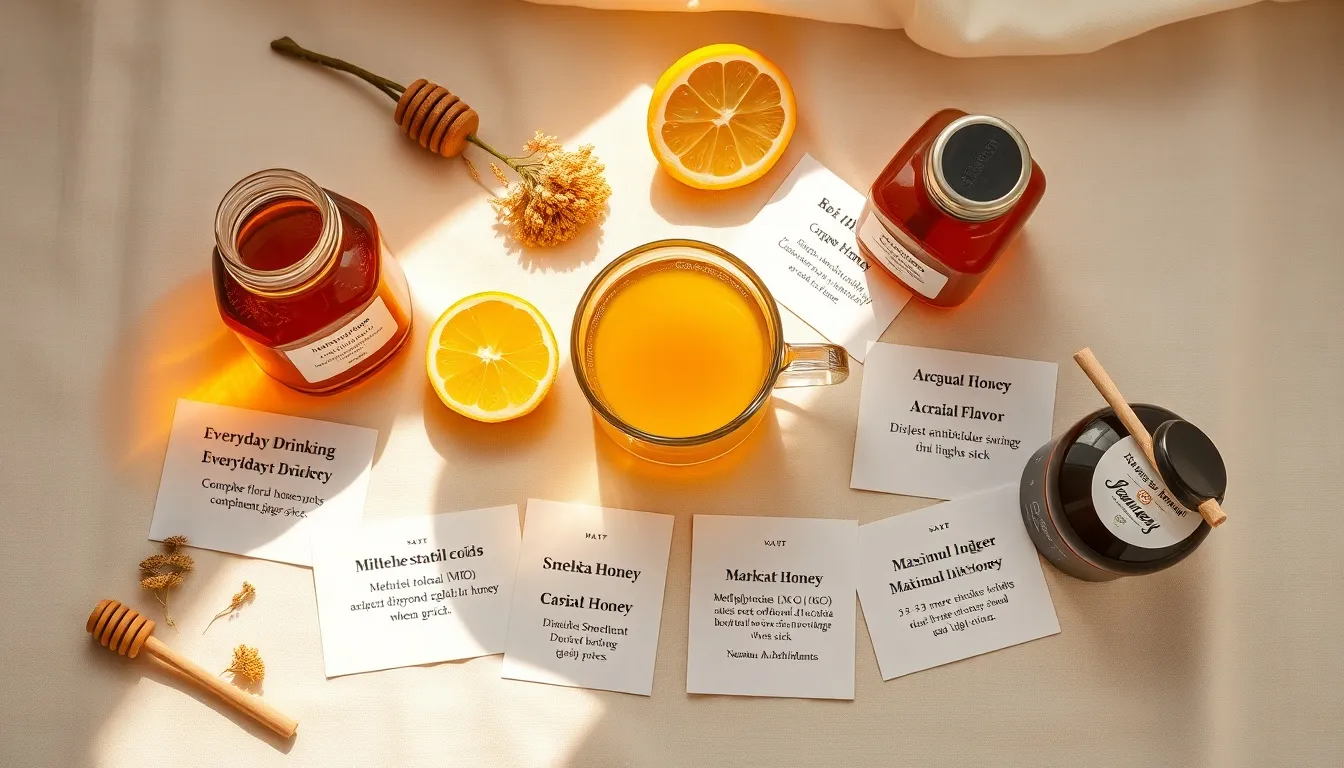
- **For everyday drinking:** Wildflower honey — Complex floral notes that complement ginger's spice without overpowering. Available everywhere and reasonably priced.
- **For sore throat and cold:** Manuka honey (UMF 10+) — The methylglyoxal (MGO) in manuka provides additional antibacterial activity beyond regular honey. Worth the higher price when you're actually sick.
- **For the mildest, smoothest flavor:** Acacia honey — Very mild and slow to crystallize, acacia honey dissolves cleanly and lets the ginger and lemon flavors lead.
- **For maximum antioxidants:** Buckwheat honey — Contains 3-9x more antioxidants than light honeys. The dark, malty flavor pairs surprisingly well with ginger, though it will change the tea's color to amber-brown.
- **For a floral twist:** Lavender honey or orange blossom — These add their own aromatic dimension that can make the tea feel like a spa beverage.
Pro Tip
Always use raw honey rather than processed. Raw honey retains the enzymes (glucose oxidase, diastase), bee pollen traces, and full polyphenol profile that processing destroys. For tea, this matters most when you add the honey at lower temperatures.
4 Variations for Every Situation
The basic recipe adapts easily to different needs and seasons.
- **Cold and flu fighter** — Double the ginger (2-inch piece), use manuka honey, add 1/4 teaspoon turmeric and a pinch of black pepper (piperine increases curcumin absorption). Steep for 10+ minutes for maximum potency. Many drink this at the onset of cold symptoms. This combination addresses multiple cold pathways: throat coating, antimicrobial action, anti-inflammatory support, and immune stimulation.
- **Iced honey lemon ginger tea** — Make the recipe as above with half the water (6 oz). After steeping and adding honey and lemon, pour over a glass full of ice. The concentrated brew dilutes to perfect strength as the ice melts. Garnish with a lemon wheel and fresh mint. This is excellent for summer hydration.
- **Bedtime relaxation blend** — Use the basic recipe but add 1 bag of chamomile tea during the ginger steep. The honey supports sleep through the liver glycogen mechanism, chamomile provides apigenin for mild sedation, and the warm liquid promotes relaxation. Skip this variation if you're sensitive to nighttime liquids.
- **Honey ginger lemon concentrate** — Combine 1 cup thinly sliced ginger, 1 cup honey, and juice of 4 lemons in a jar. Refrigerate for up to 2 weeks. To serve, add 2 tablespoons of concentrate to a mug of hot water. This is the fastest way to make the tea daily and makes a great homemade gift.
Common Questions About Preparation
Getting the details right makes a noticeable difference in both flavor and health benefits.
- Fresh and ground ginger differ in flavor and concentration; use either as a recipe ingredient, not as a treatment claim.
- Reusing ginger changes flavor strength but has no established health advantage.
- **Bottled lemon juice vs. fresh** — Fresh lemon juice is better. Bottled lemon juice is pasteurized, which destroys some vitamin C and all of the volatile oils that give fresh lemon its bright aroma. If using bottled, increase the amount slightly.
- The amount used in this recipe or serving describes that preparation, not a daily recommendation. Use the daily added-sugar guide to count honey with other added or free sugars.
Who Should Be Cautious
Honey lemon ginger tea is safe for most adults, but a few groups should take note.
- **Infants under 12 months** — Never give honey to infants under 12 months due to botulism risk. For toddlers, ask your pediatrician about an appropriate amount.
- **People on blood thinners** — Ginger has mild anticoagulant properties. If you take warfarin, aspirin, or other blood-thinning medications, consult your doctor before drinking ginger tea regularly. Occasional cups are generally fine.
- **Acid reflux sufferers** — While ginger can help some digestive issues, the lemon and ginger may worsen acid reflux symptoms in some people. Try reducing the lemon or removing it entirely if you experience heartburn.
- For diabetes, count the honey as carbohydrate and follow the plan made with the diabetes care team.
- During pregnancy, treat honey as a carbohydrate-containing sweetener and use guidance from the prenatal care team for symptoms and glucose management.