Why Honey Vinaigrette Is the Only Dressing You Need
A good vinaigrette is the most versatile thing in your kitchen. It dresses salads, marinates proteins, glazes roasted vegetables, and works as a dipping sauce — all from the same 5-minute recipe. And honey vinaigrette is the best version of it because honey does something no other sweetener can: it emulsifies.
The science is straightforward. Vinaigrettes are temporary emulsions — oil and vinegar don't naturally mix. Honey's high viscosity and natural sugars slow the separation, keeping the dressing blended 3-4 times longer than a vinaigrette made with sugar or agave. The fructose in honey also balances acidity more gently than granulated sugar, rounding out the vinegar's sharpness without the cloying sweetness that sugar creates.
It's the difference between a functional dressing and one with genuine nutritional value. This recipe uses the classic 3:1 oil-to-acid ratio with honey and Dijon mustard as the emulsifying bridge — the same ratio professional chefs use, scaled for a home kitchen.
Base Recipe Ingredients
Makes about ¾ cup of dressing — enough for 6-8 salad servings.
- **Extra virgin olive oil:** ½ cup (120ml) — use a good quality olive oil; you'll taste it. Light, fruity varieties work best for salads.
- **Raw honey:** 2 tablespoons (42g) — clover ($9-15) or wildflower ($13-24) are the most versatile choices
- **Apple cider vinegar:** 3 tablespoons (45ml) — or substitute red wine vinegar, white wine vinegar, or champagne vinegar depending on the salad
- **Dijon mustard:** 1 teaspoon — acts as a secondary emulsifier and adds depth; stone-ground Dijon works too
- **Fine sea salt:** ¼ teaspoon — adjust to taste
- **Freshly cracked black pepper:** a few grinds
Get the Honey Buyer's Cheat Sheet (free PDF)
16 varieties on one page — color, flavor, best use and what a fair price looks like — from the 304 honeys we track.
Best Honey Varieties for Vinaigrette
Your honey choice shapes the entire personality of the dressing — choose based on the salad you're pairing it with.
- **Clover honey ($9-15):** The all-purpose choice — clean, mild sweetness that works with any salad from mixed greens to grain bowls
- **Wildflower honey ($13-24):** Our top recommendation for versatile vinaigrettes — slightly more complex with floral and herbal undertones that create depth without overwhelming the vinegar's brightness. The varied nectar sources provide balanced sweetness that emulsifies beautifully while elevating simple green salads into something more interesting.
- **Orange blossom honey ($12-24):** Citrus brightness that pairs perfectly with arugula, goat cheese, and walnut salads
- **Lavender honey ($11-17):** Elegant floral notes for French-inspired salads with Brie, figs, and mixed greens
- **Acacia honey ($9-16):** Very mild and delicate — best when you want the other flavors (herbs, citrus, garlic) to take center stage
- **Buckwheat honey ($9-23):** Bold, almost molasses-like with — use sparingly (1½ tablespoons) for hearty fall salads with roasted beets, squash, and blue cheese
Pro Tip
For most salads, stick with lighter honeys. Save dark honeys like buckwheat for heartier autumn salads where their intensity complements bold ingredients like roasted vegetables and strong cheeses.
Step-by-Step Instructions
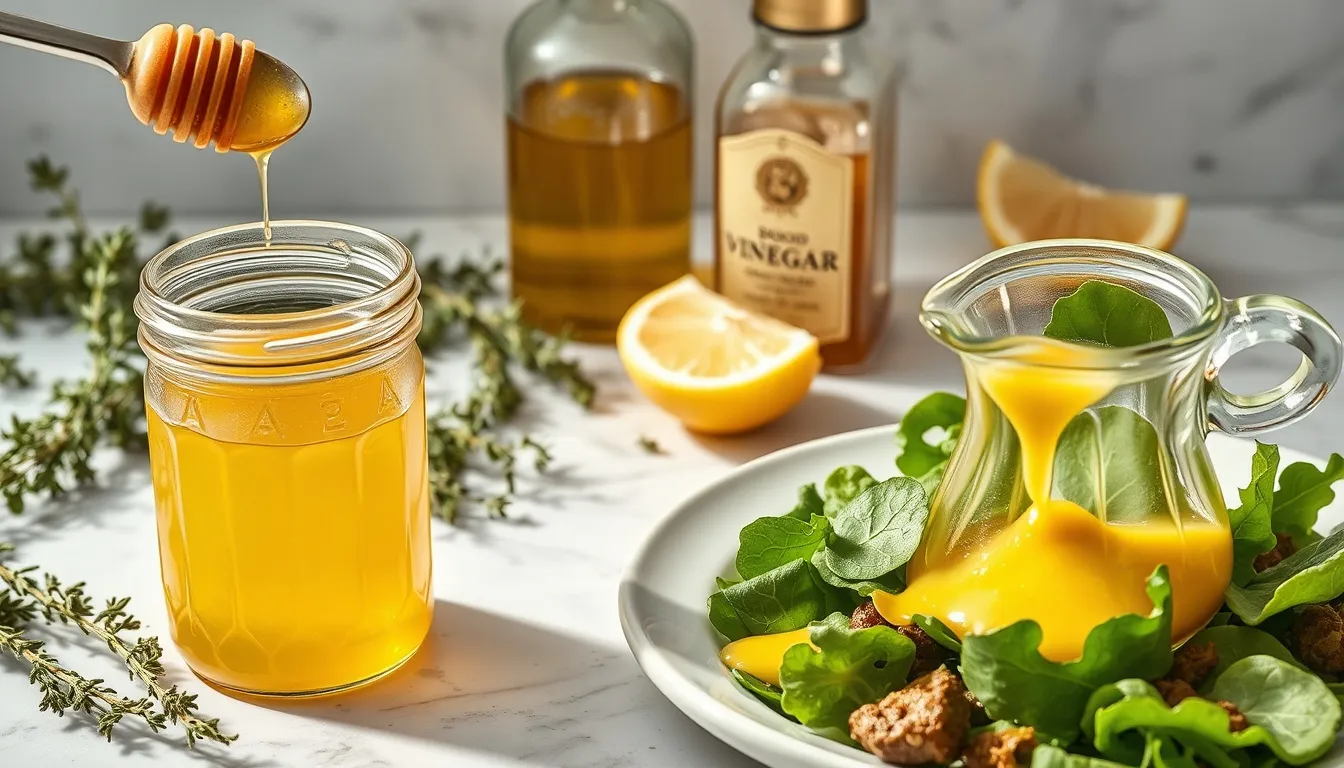
**Step 1: Dissolve honey in vinegar.** In a small bowl or jar, whisk together the honey and apple cider vinegar until the honey is fully dissolved. This step is key — if you add the oil first, the honey clumps and won't distribute evenly. Starting with acid dissolves the honey completely.
**Step 2: Add mustard and seasonings.** Whisk in the Dijon mustard, salt, and pepper. The mustard acts as an emulsifier (it contains mucilage that helps oil and water mix) and adds a subtle sharpness that balances the sweetness.
**Step 3: Stream in the olive oil.** While whisking constantly, drizzle the olive oil in a slow, thin stream. This gradual addition creates a stable emulsion — dumping in all the oil at once will leave you with a separated, oily mess. If using a jar, add all ingredients, seal tightly, and shake vigorously for 30-45 seconds.
**Step 4: Taste and adjust.** Dip a lettuce leaf or your finger in the dressing and taste. Too tart? Add honey ½ teaspoon at a time. Too sweet? Add vinegar ½ teaspoon at a time. Not enough punch? Add a pinch more salt. A good vinaigrette should have a balanced sweet-tart flavor with neither the honey nor vinegar dominating.
**Step 5: Store or serve.** Use immediately or transfer to a jar with a tight-fitting lid. The dressing will separate on standing — shake or whisk briefly before each use. This is normal and actually indicates a clean dressing with no artificial emulsifiers.
Pro Tip
The mason jar method is the fastest approach. Add all ingredients, seal, shake 30-45 seconds, and store in the same jar. No whisk, no bowl, no cleanup.
6 Flavor Variations
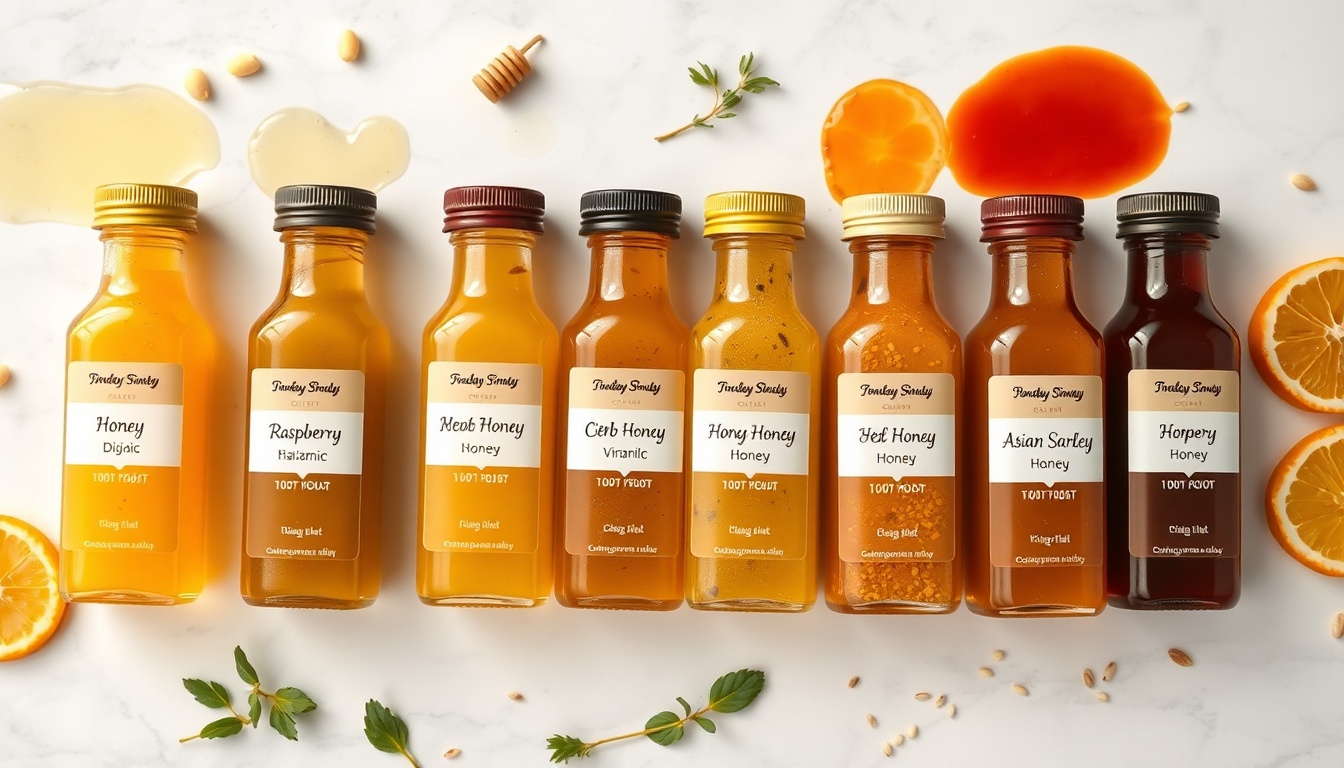
**1. Lemon Honey Vinaigrette:** Replace apple cider vinegar with fresh lemon juice (3 tablespoons) and add ½ teaspoon lemon zest. Lighter and brighter — perfect for spring salads, grilled chicken, and asparagus. The honey and lemon pairing is a classic for good reason.
**2. Honey Balsamic Vinaigrette:** Replace apple cider vinegar with balsamic vinegar and add 1 minced garlic clove. Richer and deeper — ideal for caprese salads, strawberry-spinach salads, and drizzling over roasted vegetables. Compared to our honey balsamic dressing recipe, this is a lighter, true vinaigrette ratio.
**3. Herbed Honey Vinaigrette:** Add 1 tablespoon each of finely chopped fresh basil, parsley, and chives to the base recipe. A garden-fresh dressing that's stunning on tomato salads and grain bowls. Use champagne vinegar for the most delicate herb pairing.
**4. Honey Lime Cilantro Vinaigrette:** Replace vinegar with fresh lime juice (3 tablespoons). Add 2 tablespoons chopped fresh cilantro, 1 minced garlic clove, and a pinch of cumin. Excellent on Mexican-inspired salads, taco bowls, and black bean salads. Swap cilantro for parsley if you have the soap-taste gene.
**5. Asian Honey Sesame Vinaigrette:** Replace olive oil with a mix of ¼ cup neutral oil and ¼ cup toasted sesame oil. Replace vinegar with rice vinegar. Add 1 tablespoon soy sauce and 1 teaspoon fresh grated ginger. Drizzle over Asian slaw, edamame salads, or honey sesame chicken.
**6. Warm Bacon Honey Vinaigrette:** Cook 4 slices of bacon until crisp. Reserve 2 tablespoons bacon fat and use it in place of 2 tablespoons of the olive oil. Crumble the bacon into the finished dressing. Toss over spinach salad with hard-boiled eggs, red onion, and mushrooms while the dressing is still warm — the heat wilts the spinach slightly.
Pairing Guide: Which Vinaigrette for Which Salad
Matching your vinaigrette to your salad ingredients makes the difference between a good salad and a great one.
- **Mixed greens + goat cheese + walnuts:** Base honey vinaigrette or lavender honey variation — the mild sweetness bridges the tangy cheese and bitter greens
- **Arugula + Parmesan + dried cranberries:** Lemon honey vinaigrette — the acidity complements the peppery arugula without overwhelming the cheese
- **Kale + roasted sweet potatoes + pecans:** Honey balsamic variation with buckwheat honey ($9-23) — hearty flavors need a bolder dressing
- **Spinach + strawberries + almonds:** Base recipe with orange blossom honey ($12-24) — the citrus notes echo the berry sweetness
- **Romaine + black beans + corn + avocado:** Honey lime cilantro variation — the lime and cumin pull the Southwestern flavors together
- **Napa cabbage + carrots + edamame + sesame seeds:** Asian honey sesame variation — the toasted sesame oil is essential for this combination
- **Grain bowls (quinoa, farro, rice):** Any variation works; grain bowls are forgiving. The herbed variation adds freshness to hearty grains.
Tips for the Best Honey Vinaigrette
These tips address the most common vinaigrette mistakes.
- **Stream the oil slowly.** This is the single most important step. Pouring oil in all at once creates a broken, separated dressing. A thin stream while whisking constantly creates a creamy, cohesive emulsion.
- **Use room-temperature ingredients.** Cold honey is thick and resists dissolving. Cold oil emulsifies poorly. Let everything sit at room temperature for 10 minutes before mixing.
- **Dissolve honey in acid first.** Honey dissolves easily in vinegar or citrus juice but clumps in oil. Always start with the acid-honey mixture, then add oil.
- **Don't overdress your salad.** Start with 1-2 tablespoons per serving and toss. You can always add more — you can't remove it. Overdressed salad is soggy and unpleasant.
- **Dress at the last minute.** Vinaigrette breaks down delicate greens quickly. Toss just before serving. For sturdy greens like kale, you can dress 15-30 minutes early — the acid tenderizes the leaves.
- **Shake before every use.** Separation is normal and expected. A 10-second shake re-emulsifies the dressing instantly. If it's been refrigerated and the honey has thickened, let it sit at room temperature for 5 minutes first.
Storage and Shelf Life
Homemade honey vinaigrette stores well because both honey and vinegar are naturally shelf-stable.
- **Refrigerator:** 2-3 weeks in a sealed glass jar. The olive oil will solidify slightly when cold — this is normal. Let the jar sit at room temperature for 5-10 minutes before using, then shake.
- **Room temperature:** 1 week if your kitchen stays below 75°F. The honey and vinegar create an environment that resists spoilage. However, variations with fresh garlic, herbs, or dairy should always be refrigerated.
- **Batch prep tip:** Make a double or triple batch of the base dressing and store in a mason jar. Add fresh herbs, citrus, or other variation ingredients in small portions as needed throughout the week — the base keeps longer than herbed versions.
- **Freezer:** Not recommended. The emulsion breaks permanently when frozen and thawed, and the olive oil texture changes.
Pro Tip
A wide-mouth 12 oz mason jar is the perfect vessel — it holds a double batch, fits a whisk handle for stirring, and seals tightly for shaking.