Why Honey Makes Better Baked Beans
Most baked bean recipes rely on brown sugar, molasses, or ketchup for sweetness. Honey does it better — and the science explains why.
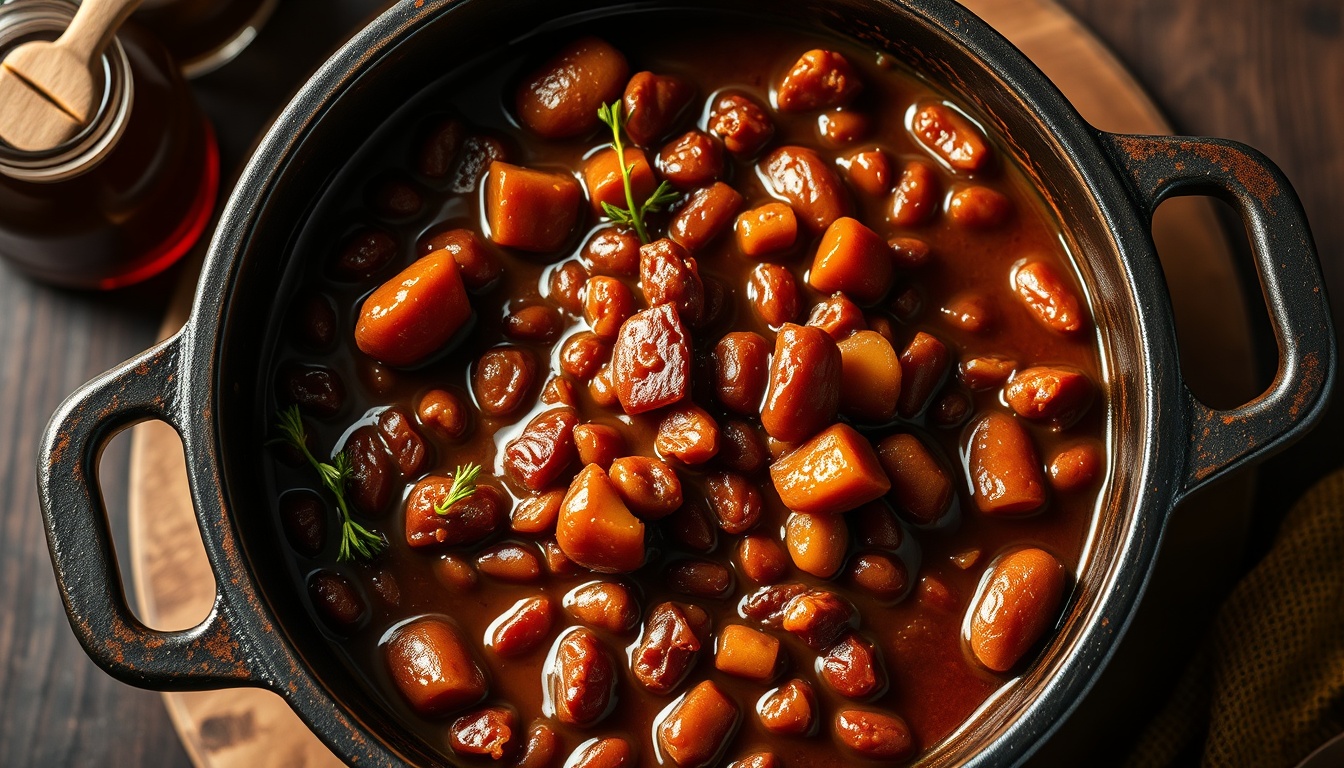
Honey's fructose caramelizes at 230°F, about 30°F lower than table sugar, producing deeper, more complex flavor during the long slow bake. Its natural acidity (pH 3.2–4.5) balances the richness of bacon and the smokiness of the spices without needing added vinegar. And honey's hygroscopic nature means it absorbs and retains moisture, keeping the beans saucy instead of drying out during hours in the oven.
The result: beans with a glossy, sticky glaze, complex sweetness with floral undertones, and a sauce that clings to every bean rather than pooling at the bottom of the dish. Whether you're firing up the grill for a summer cookout or bringing a dish to the neighborhood potluck, these beans belong on every BBQ spread from Memorial Day through Labor Day.
Honey Baked Beans Recipe
This recipe uses canned navy beans for convenience, but you can substitute dried beans soaked overnight (see tips below). The hands-on time is just 15 minutes — then the oven does the work.
- 4 cans (15 oz each) navy beans or Great Northern beans, drained and rinsed
- 6 slices thick-cut bacon, diced
- 1 medium yellow onion, diced
- 1/3 cup honey (wildflower or clover work best)
- 1/4 cup tomato paste
- 2 tablespoons yellow mustard
- 1 tablespoon apple cider vinegar
- 1 tablespoon Worcestershire sauce
- 1 teaspoon smoked paprika
- 1/2 teaspoon garlic powder
- 1/2 teaspoon black pepper
- 1/2 teaspoon salt (adjust to taste)
- 1 cup water or low-sodium chicken broth
Pro Tip
Use thick-cut bacon — thin slices render too fast and get lost in the beans. You want meaty chunks that hold their texture through the long bake.
Get the Honey Buyer's Cheat Sheet (free PDF)
16 varieties on one page — color, flavor, best use and what a fair price looks like — from the 304 honeys we track.
Step-by-Step Instructions
Preheat your oven to 325°F. This low-and-slow temperature gives the honey time to caramelize without scorching the edges.
- Cook the bacon: In a large oven-safe Dutch oven or deep oven-safe skillet, cook diced bacon over medium heat until crispy, about 8 minutes. Remove half the bacon and set aside for topping. Leave the fat in the pot.
- Sauté the onion: Add diced onion to the bacon fat. Cook until soft and translucent, about 5 minutes.
- Build the sauce: Stir in honey, tomato paste, mustard, apple cider vinegar, Worcestershire sauce, smoked paprika, garlic powder, pepper, and salt. Cook 1 minute until fragrant and combined.
- Add beans and liquid: Add drained beans and water (or broth). Stir gently to coat every bean in the sauce without breaking them.
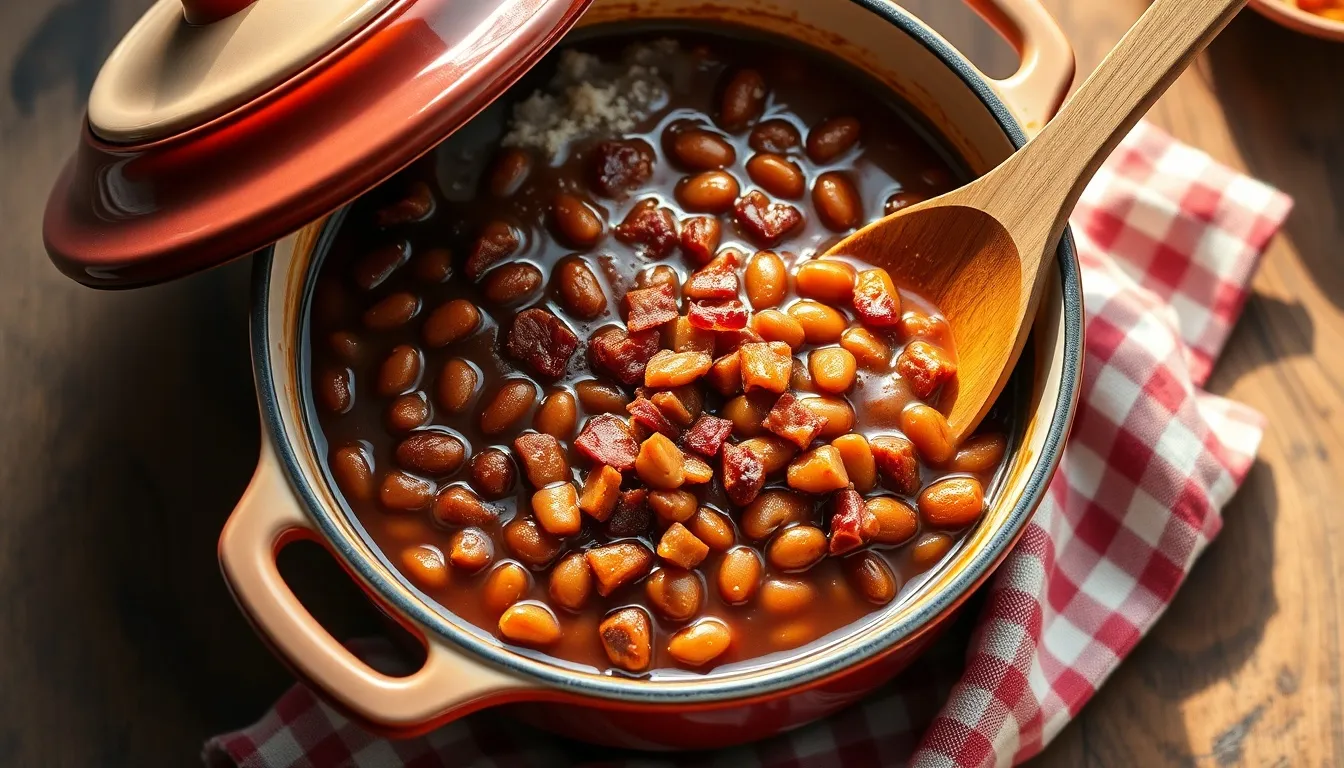
- Bake: Cover with lid and bake at 325°F for 2 hours. Remove lid and bake 30–45 minutes more uncovered, until the sauce is thick and glossy. The top should have a slightly caramelized crust.
- Finish: Remove from oven, top with reserved crispy bacon, and let rest 10 minutes. The sauce thickens as it cools.
Pro Tip
The uncovered baking at the end is essential — this is when the honey caramelizes on the surface and the sauce reduces to the perfect sticky consistency.
Best Honey Varieties for Baked Beans
The honey you choose affects the flavor profile of the finished dish. Here's how to match honey to your preferred style.
- Wildflower honey ($13-24) — the best all-around choice. Balanced floral notes complement smoky and savory flavors without competing. The go-to for summer cookouts
- Clover honey ($9-15) — mild and sweet, lets the bacon and spices take center stage. The most budget-friendly option for large-batch cookout beans
- Buckwheat honey ($9-23) — bold, molasses-like depth that rivals traditional honey vs molasses baked bean recipes. Creates the darkest, most complex sauce
- Orange blossom honey ($12-24) — adds subtle citrus brightness that cuts through the richness. Unexpected and excellent alongside grilled seafood
- Sourwood honey ($14-23) — tangy, caramel notes that complement the Appalachian BBQ tradition. A Southern specialty worth trying for competition-style beans
5 Flavor Variations
Start with the base recipe and modify as described. Each variation targets a different regional style or occasion.
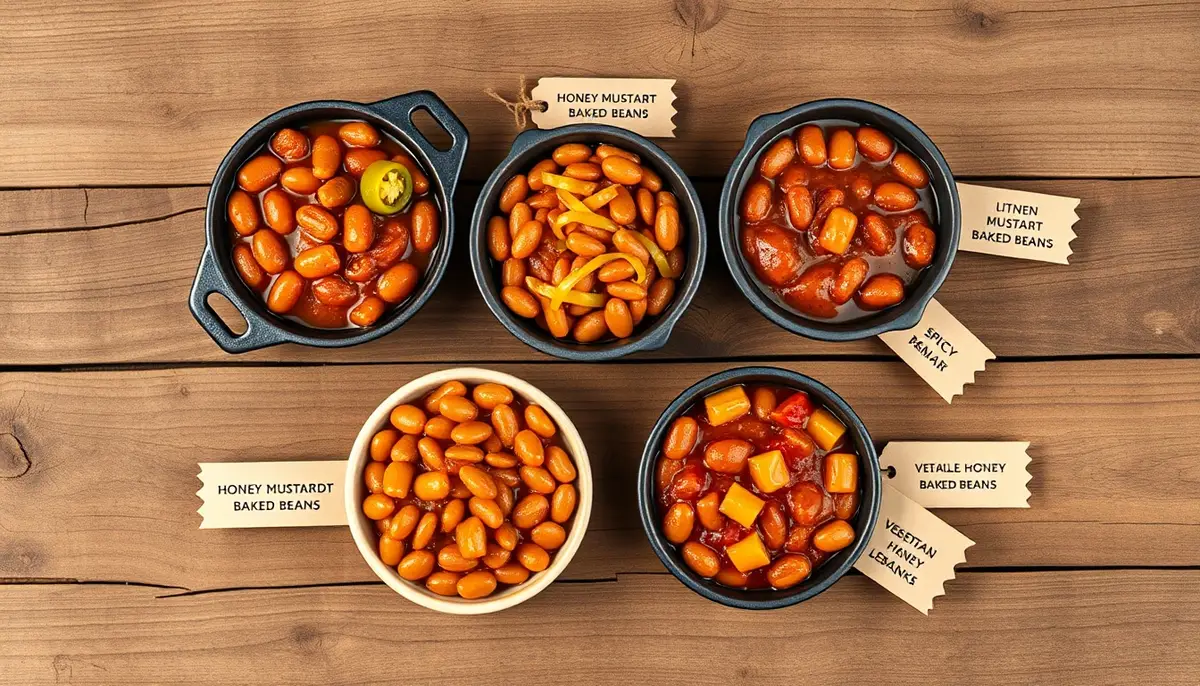
1. Honey BBQ Baked Beans
The cookout classic. Deeper, smokier, with a hint of heat.
- Add 1/4 cup honey BBQ sauce (or substitute 2 tablespoons ketchup + 1 teaspoon liquid smoke)
- Increase smoked paprika to 2 teaspoons
- Add 1/2 teaspoon chipotle powder
- Top with sliced jalapeños before serving
2. Honey Mustard Baked Beans
Tangy and bright. The mustard seeds add texture and pop.
- Increase yellow mustard to 3 tablespoons
- Add 1 tablespoon whole-grain mustard
- Add 1 tablespoon Dijon mustard
- Reduce tomato paste to 2 tablespoons
3. Maple-Honey Boston Style
The New England tradition with a honey twist. Rich, sweet, and deeply savory.
- Add 2 tablespoons maple syrup alongside the honey
- Replace bacon with salt pork (4 oz, diced)
- Add 1 teaspoon dry mustard powder
- Increase baking time to 3 hours total for the traditional texture
4. Spicy Honey Baked Beans
For heat lovers. The honey tames the spice just enough to keep you reaching for another spoonful.
- Add 1–2 diced jalapeños (seeds included for more heat)
- Add 1 teaspoon cayenne pepper
- Add 1 teaspoon hot sauce (such as Frank's)
- Substitute hot honey for regular honey for maximum sweet-heat
5. Vegetarian Honey Baked Beans
All the smoky depth without the bacon. Liquid smoke and smoked paprika do the heavy lifting.
- Omit bacon; sauté onion in 2 tablespoons olive oil
- Add 1 teaspoon liquid smoke
- Increase smoked paprika to 1 tablespoon
- Add 1 diced bell pepper for sweetness and texture
- Use vegetable broth instead of chicken broth
Slow Cooker and Stovetop Methods
The oven produces the best caramelized crust, but these alternative methods work when you need convenience.
- Slow cooker: Cook bacon and onion on the stove first, then transfer everything to the slow cooker. Cook on LOW for 6–8 hours or HIGH for 3–4 hours. Leave the lid cracked for the last 30 minutes to thicken the sauce
- Stovetop: After combining all ingredients, simmer uncovered on low heat for 45–60 minutes, stirring occasionally. The sauce won't develop the same caramelized crust, but the flavors meld beautifully
- Instant Pot: Sauté bacon and onion using the Sauté function, add everything else, and pressure cook on HIGH for 15 minutes with a natural release. Finish with 5 minutes on Sauté to reduce the sauce
Pro Tip
For the best of both worlds, use the slow cooker during the day, then transfer to a baking dish and broil for 5 minutes to develop a caramelized top.
Using Dried Beans Instead of Canned
Dried navy beans produce a creamier, silkier result because they absorb the honey sauce as they cook. The trade-off is planning ahead.
- Soak 1 pound dried navy beans in cold water for 8–12 hours (or quick-soak: boil 2 minutes, cover, let sit 1 hour)
- Drain and rinse the soaked beans
- Increase water/broth to 2 cups (dried beans need more liquid)
- Increase oven time to 3–3.5 hours total (beans need to soften and absorb)
- Check beans at the 2-hour mark — add more water if the sauce is too thick before the beans are tender
Perfect Pairings
Honey baked beans are the ultimate BBQ side dish. Here's what to serve them with.
- Honey garlic ribs — the classic pairing
- Honey cornbread — for scooping up every last drop of sauce
- Honey BBQ sauce pulled pork sandwiches
- Honey mustard chicken for a lighter main
- Honey roasted sweet potatoes for a full honey-themed spread
- Coleslaw for a cooling contrast to the sweet, smoky beans
Storage, Make-Ahead, and Freezing
Baked beans are one of the best make-ahead dishes — they actually improve overnight as flavors meld.
- Refrigerator: 5–7 days in an airtight container. Reheat in the oven at 325°F for 20 minutes (add a splash of water to loosen)
- Freezer: 3 months in freezer-safe containers. Leave 1 inch of headspace for expansion. Thaw overnight in the refrigerator
- Make ahead: Prepare the full recipe 1–2 days before serving. Reheat in the oven at 325°F for 30 minutes. The flavors deepen and the sauce becomes even more cohesive
- Potluck transport: Bake in the serving dish, cover with foil, and wrap in a towel. Beans hold temperature well for 1–2 hours
Pro Tip
Baked beans thicken significantly as they cool. When reheating, always add 2–3 tablespoons of water before covering with foil to restore the saucy consistency.
Common Mistakes to Avoid
These mistakes are the difference between great baked beans and mediocre ones.
- Skipping the uncovered baking — the last 30–45 minutes uncovered is when the magic happens. The honey caramelizes on the surface, creating a sticky glaze that defines great baked beans
- Using too much liquid — start with 1 cup. You can always add more, but you can't take it away. The sauce should just barely cover the beans when you start baking
- Not dicing the bacon small enough — you want 1/4-inch pieces that distribute evenly. Big chunks create pockets of too-much-bacon and too-little-bacon
- Stirring too often — let the beans develop a crust on top during uncovered baking. Stirring breaks the caramelized surface
- Using thin or cheap honey — highly processed honey lacks the enzymes and complex sugars that create rich caramelization. Use raw or minimally processed wildflower honey or clover honey for the best results