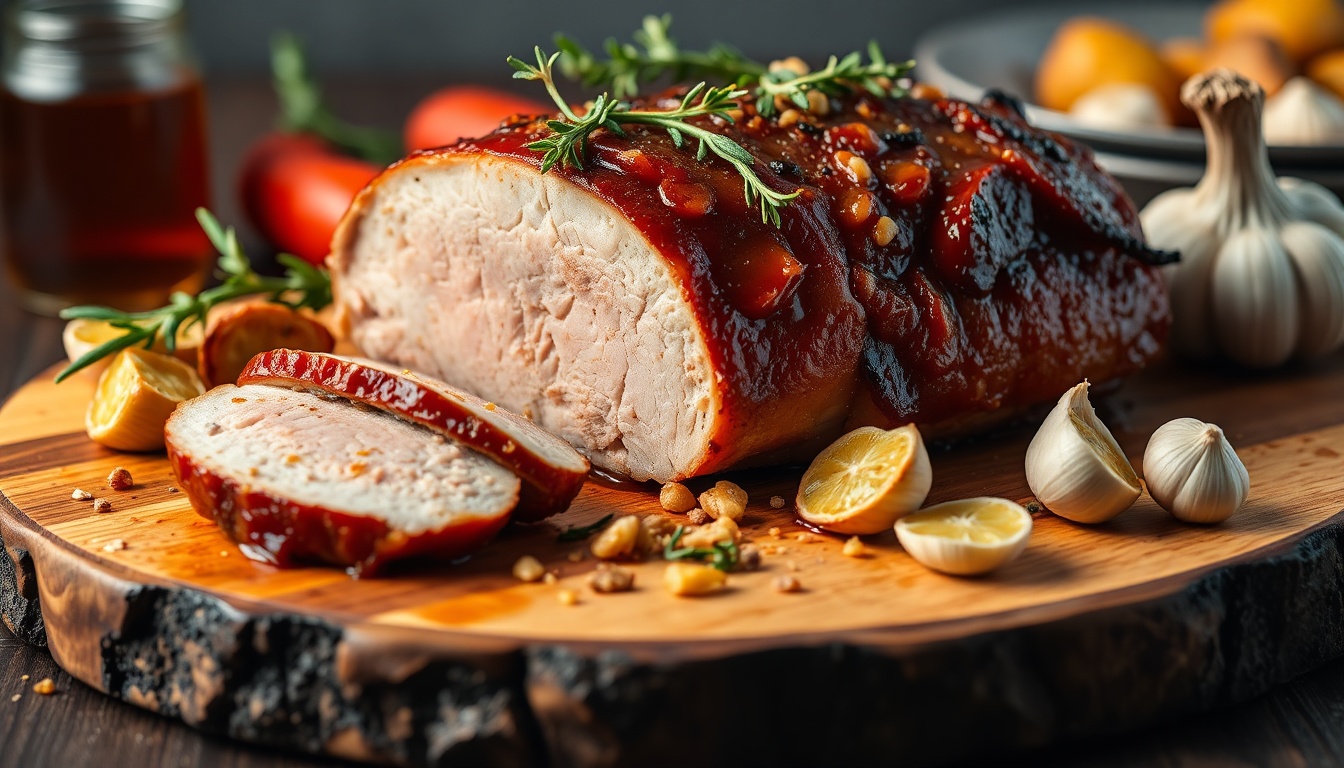
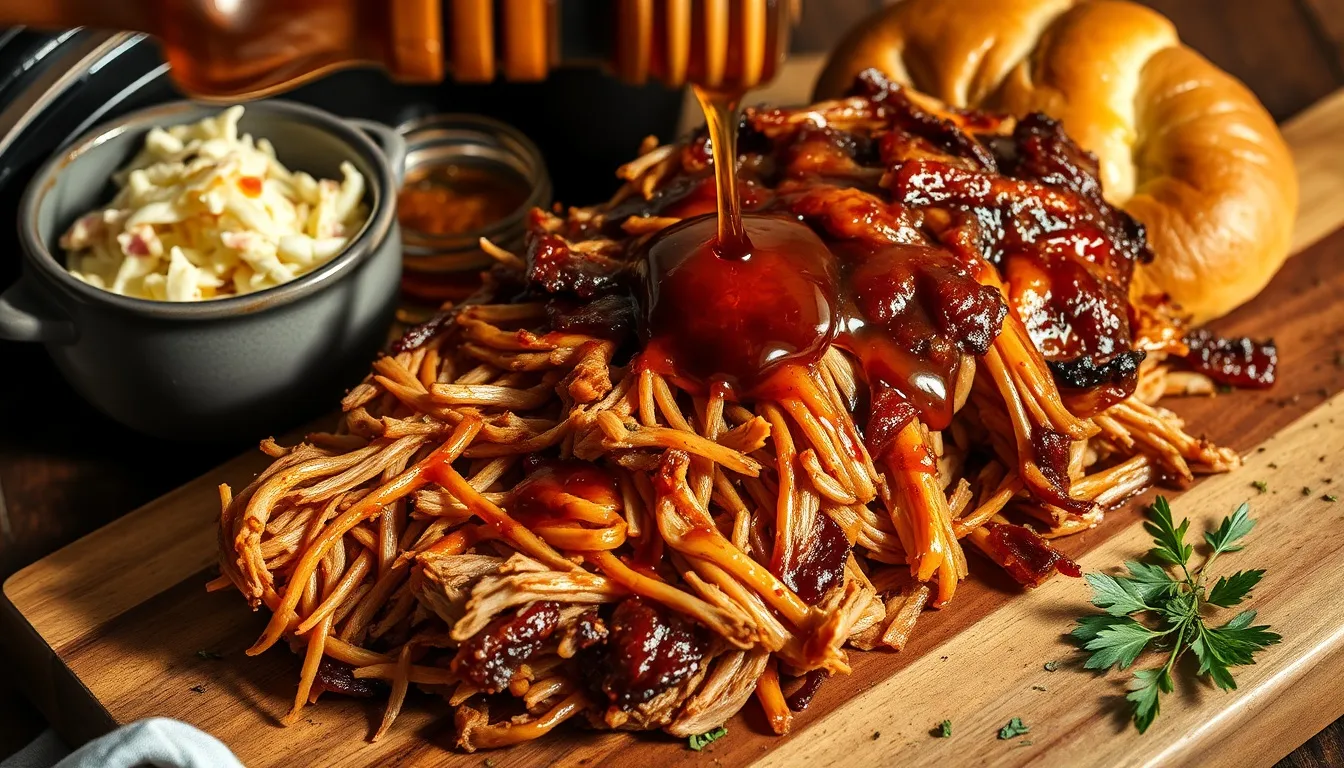
Honey pulled pork for the slow cooker or oven
Pork shoulder needs time to soften before it can be shredded. Honey, cider vinegar and soy make a sweet-tart cooking mixture, while onion and garlic give the sauce more body. The card uses a weighed boneless shoulder rather than counting a bone as edible meat.
The slow-cooker method is the measured base. A complete oven method follows, using the same food ingredients and extra water as needed for the pot. The 6 variations keep the honey central while changing the sauce flavor.
Recipe
Honey Pulled Pork, Slow Cooker
Boneless pork shoulder cooked until it shreds easily in a honey, vinegar and soy mixture. Eight portions; the slow-cooker method takes about 8 hours plus preparation and shredding.
10Ingredients
Yield: 8 servings
- 1600 g raw boneless pork shoulder, separable lean and fat
- 113 g clover honey
- 2 tablespoons cider vinegar (29.8 g)
- 2 tablespoons soy sauce (32 g)
- 150 g onion, chopped
- 4 cloves garlic (12 g), minced
- 120 g water
- 6 g fine sea salt
- 1 g ground black pepper
- 0.5 g ground cayenne
Ingredient amounts scale; instructions show the original batch. Cooking times and pan sizes may need adjustment. Season to taste. Honey grams use US measures at 20°C and 17.5% moisture, a density estimate; weigh your honey for precision.
Instructions
- 1Prepare the pork and sauceCut the boneless shoulder into 4 large pieces. Mix honey, vinegar, soy sauce, garlic, salt, black pepper and cayenne. Put chopped onion and measured water in a slow cooker sized according to its manufacturer’s fill guidance.
- 2Start the slow cookerAdd pork and pour the honey mixture over it. Cover and cook on LOW for about 8 hours, checking toward the end. A larger or thicker piece and different cookers can require longer.
- 3Check tendernessUse a thermometer and a fork. Whole pork must pass 145°F (63°C) with a 3-minute rest for the safety minimum, but pulled shoulder needs substantially more cooking to become fork-tender. Continue until the pieces shred easily; the minimum temperature alone does not mean the meat will pull.
- 4Shred and combineMove the cooked pork to a clean board and rest briefly. Shred with two forks, then return to the cooking liquid and onion. Stir to distribute the sauce. This base does not claim a measured fat-removal or cooking-loss factor.
- 5PortionDivide the full meat-and-sauce batch into 8 portions. Allow about 15 minutes after cooking for resting, shredding and portioning. Buns, rice and slaw are separate additions.
Estimated nutrition per serving
528.09 calories · 36.06 g fat · 14.23 g carbohydrate · 35.09 g protein · 643 mg sodium
Serving: 1/8 pork-and-sauce batch
Calculated from ingredient weights and USDA FoodData Central: 167843, 169640, 173469, 174277, 170000, 169230, 173647, 173468, 170931, 170932. Estimates use ingredient input weights; actual portions, brands and cooking losses vary. Omitted nutrient values are unavailable, not zero.
Slow cooking: tenderness matters as well as temperature
Follow the cooker’s fill instructions and keep the lid on during the main cooking period. Cut the shoulder into the stated large pieces so the starting shape is reasonably consistent. A single large roast can take longer than the card’s estimate.
The whole-pork minimum is 145°F (63°C) with a 3-minute rest, but shoulder at that point can still be too firm to shred. Keep cooking until a fork pulls the meat apart easily. The timer is a guide, not a replacement for those checks.
Get the Honey Buyer's Cheat Sheet (free PDF)
16 varieties on one page — color, flavor, best use and what a fair price looks like — from the 304 honeys we track.
Oven method with the same ingredients
Heat the oven to 300°F (150°C). Put the onion, measured water and pork pieces in a covered Dutch oven, pour over the honey mixture and cover tightly. Cook for about 3–4 hours, checking after about 2 hours that liquid remains around the meat; add water if the pot is drying out.
Continue until the pork shreds easily, then rest and shred as in the slow-cooker method. The oven, pot seal and piece size affect time and evaporation. Extra water changes sauce volume but adds no meaningful energy; measure the recovered sauce if an exact portion weight matters.
Choosing a honey for the flavor
The honey pairing guide covers the wider choice. Clover honey is mild, wildflower honey adds floral depth, orange blossom honey brings citrus-floral notes, and buckwheat honey is dark and malty.
The chart uses an editorial 1–5 flavor-intensity scale as a pairing aid. Jars and harvests vary, so taste the honey you have before changing the recipe.
1 = mild, 5 = bold. Editorial pairing guidance, not laboratory measurements; jars vary.
- Clover
- Mild pulled-pork sauce
- Orange blossom
- Citrus variation
- Wildflower
- Everyday pork shoulder
- Buckwheat
- Dark, smoky-style sauce
Matching a honey to another dish: the honey flavor map
6 flavor variations
These additions change the base ingredients and nutrition. Keep honey, acid and salt in balance by tasting the cooked sauce before adding more.
- Smoky paprika: Add 1 tablespoon smoked paprika to the seasoning mixture.
- Ginger: Add 1 tablespoon finely grated ginger with the garlic.
- Orange: Add orange zest and replace half the measured water with orange juice.
- Mustard: Stir 1 tablespoon prepared mustard into the cooked sauce.
- Hot: Increase cayenne a little at a time or serve a small drizzle of hot honey separately.
- Barbecue finish: Mix a portion with honey BBQ sauce, adding that sauce separately from the base estimate.
8 ways to serve the batch
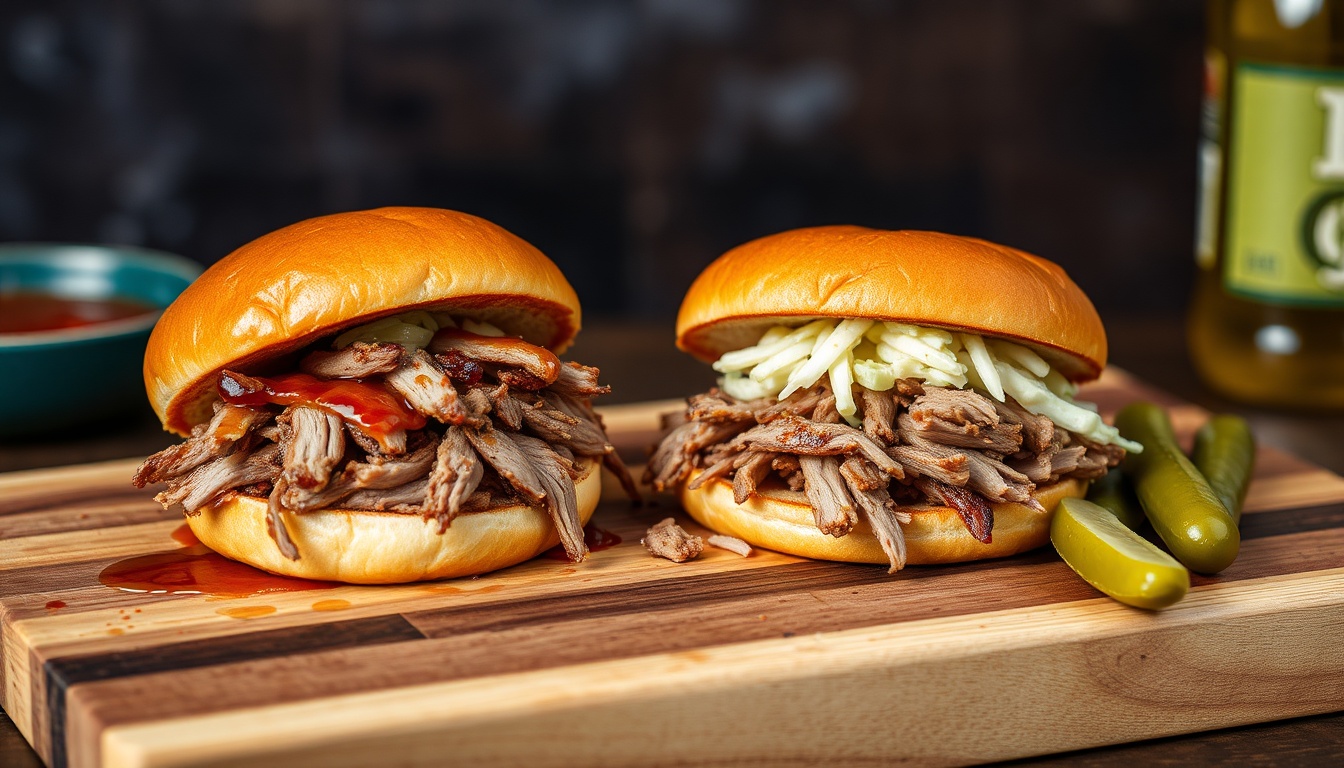
Serve in rolls with slaw, spoon over rice, fill tacos, add to a baked potato, tuck into a quesadilla, scatter over nachos, pair with roasted vegetables or make a small sandwich plate. The meat-and-sauce portion is the same starting point; the accompaniments change the meal.
If you want another slow-cooked honey dish, honey garlic ribs use a different cut and method. Do not transfer shoulder timing to ribs or lean pork chops.
Storage and the input estimate
Cool and refrigerate cooked portions promptly in shallow containers. USDA advises using refrigerated leftovers within 3–4 days. Freeze additional portions if needed and reheat with their sauce until hot throughout.
The nutrition counts all raw edible shoulder, sauce and onion as input. If you remove fat or leave cooking liquid in the pot, the amount eaten changes; no invented percentage has been deducted from the calculation.
Nutrition for the recipe card
The measured recipe makes 8 servings. One portion, 1/8 pork-and-sauce batch, contains an estimated 528.09 calories, 36.06 g fat, 12.5 g saturated fat, 14.23 g carbohydrate, 12.44 g sugars, 0.46 g fiber, 35.09 g protein, 643 mg sodium. These are USDA ingredient-weight estimates, not measurements of the finished food.
All measured raw edible pork, sauce and onion are allocated across 8 portions. Bones, deliberate fat removal, pan residue, evaporation and serving accompaniments are not measured finished-food corrections.
- USDA FoodData Central 167843: Pork, fresh, shoulder, whole, separable lean and fat, raw.
- USDA FoodData Central 169640: Honey.
- USDA FoodData Central 173469: Vinegar, cider.
- USDA FoodData Central 174277: Soy sauce made from soy and wheat (shoyu).
- USDA FoodData Central 170000: Onions, raw.
- USDA FoodData Central 169230: Garlic, raw.
- USDA FoodData Central 173647: Beverages, water, tap, drinking.
- USDA FoodData Central 173468: Salt, table.
- USDA FoodData Central 170931: Spices, pepper, black.
- USDA FoodData Central 170932: Spices, pepper, red or cayenne.