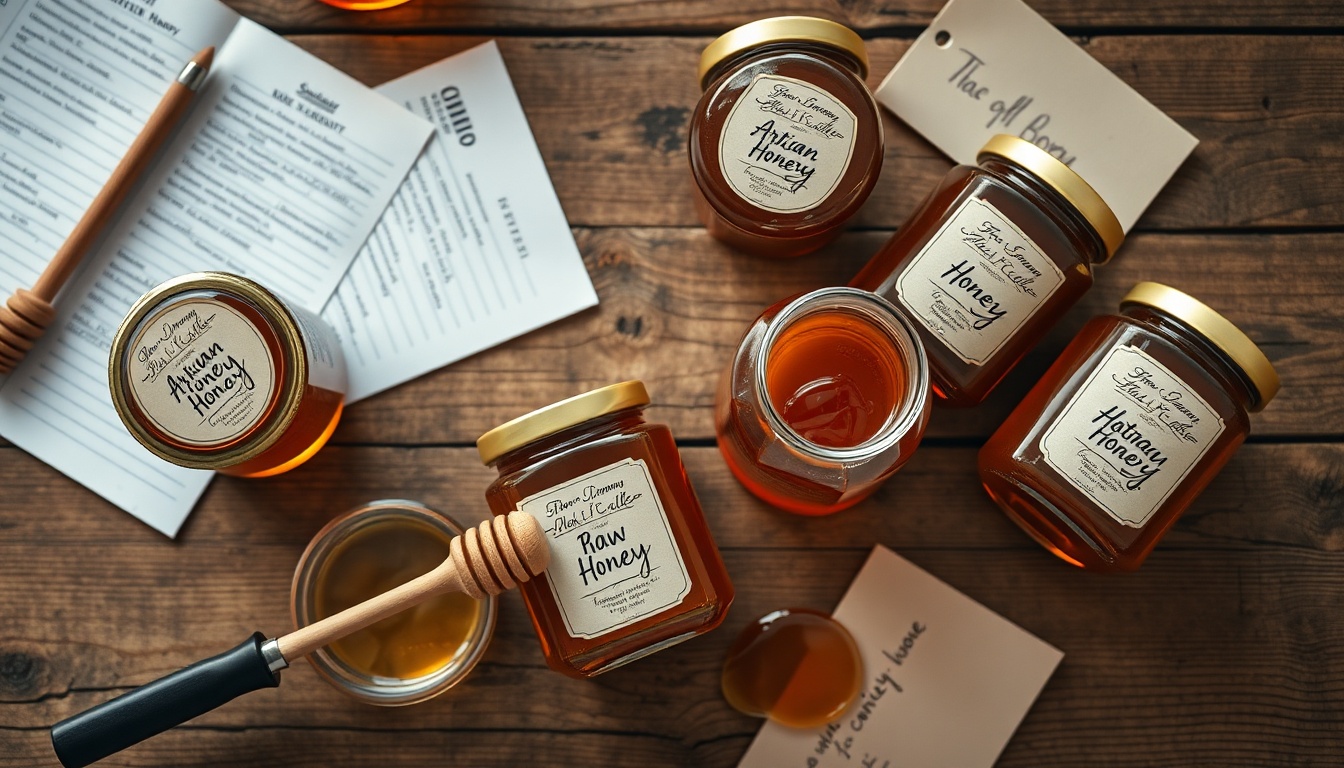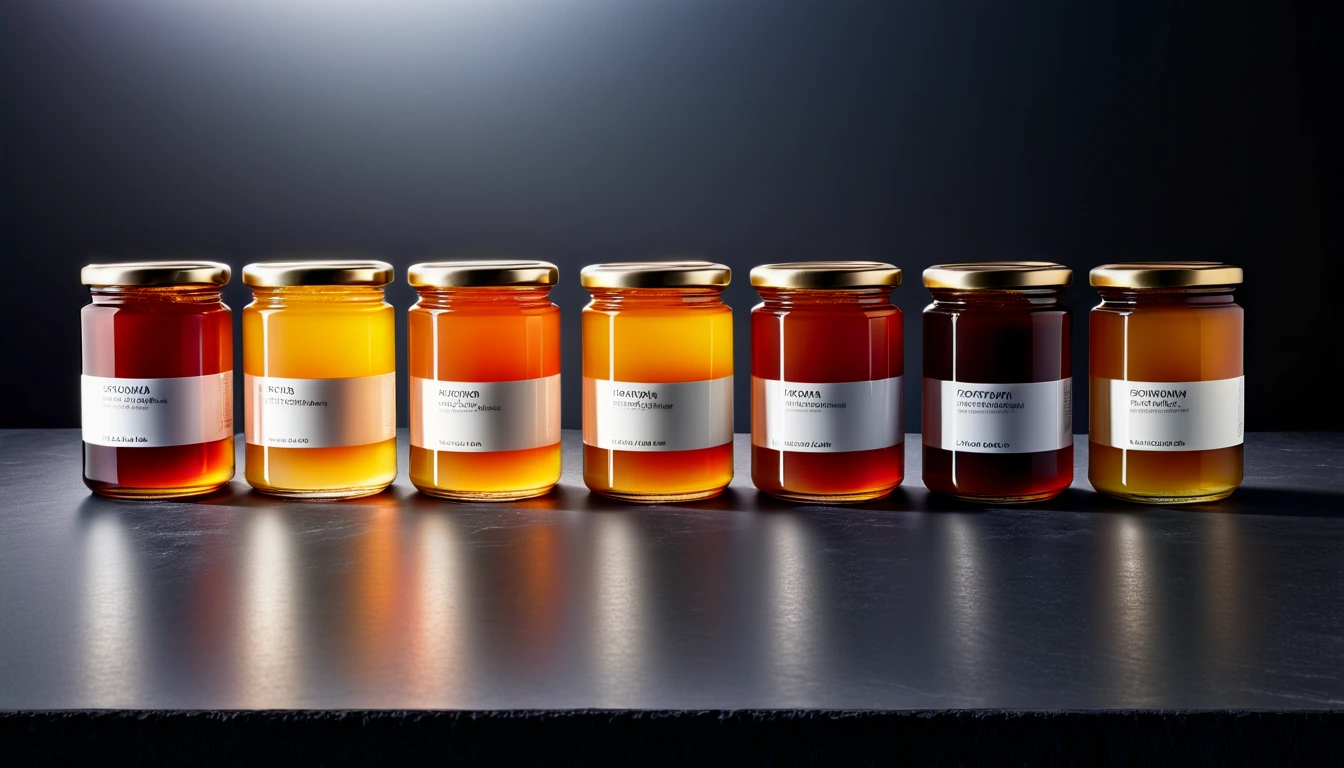
Color Is a Clue, Not a Lab Test
Honey color can suggest differences in minerals, phenolics, flavonoids, pollen traces, and aroma compounds. It cannot prove a specific nutrient value from the jar alone.
This content was not professionally fact checked. It is a conservative consumer guide. NEVER use it as health advice. Honey color should not be used to make medical or treatment decisions.
Use the honey microcompound mapper for a compound-by-compound view, and use this page as the shelf-level color guide.
Dark Honey
Dark honey usually has the strongest minor-compound signal. Buckwheat, chestnut, heather, avocado, and dark wildflower honeys often carry higher phenolic and mineral readings than pale honeys.
That pattern is covered in detail by the honey antioxidant index and honey mineral content index. It also overlaps with the sibling honey phenolic compounds article.
Dark honey also tends to taste stronger: malty, earthy, bitter, resinous, tannic, or molasses-like depending on source. That flavor intensity is a buying feature only if it fits your use case.
Get the Honey Buyer's Cheat Sheet (free PDF)
16 varieties on one page — color, flavor, best use and what a fair price looks like — from the 304 honeys we track.
Amber Honey
Amber honey is the broad middle. Orange blossom, eucalyptus, blueberry, manuka, wildflower, and many regional blends can sit here. Some amber honeys are chemically rich; others are moderate.
Amber is where labels matter most. A named floral source and producer history tell you more than the color alone. Manuka, for example, is not bought mainly for ordinary phenolic rank; its identity depends on specific New Zealand markers and grading systems.
For amino acid and enzyme context, read honey amino acids profile and honey organic acids and enzymes.
Pale Honey
Pale honey often has lower phenolic and mineral readings, but it can be excellent honey. Acacia, tupelo, light clover, and some sage honeys are valued for mild flavor, clarity, slow crystallization, and clean sweetness.
Pale does not mean fake. It means the source nectar usually carries less pigment, fewer phenolics, and a different sugar and aroma profile than dark honey. Authenticity should be judged with source records and testing, not color alone.
For the ordinary nutrition baseline, compare any color claim with USDA FoodData Central: https://fdc.nal.usda.gov/fdc-app.html#/food-details/169640/nutrients and https://api.nal.usda.gov/fdc/v1/food/169640?api_key=DEMO_KEY.
Pro Tip
Shelf rule: dark for stronger microcompound signal, pale for mild flavor and often slower crystallization, amber for source-specific evaluation.
Research Context and Limits
Honey reviews connect color with phenolic and antioxidant patterns, while also warning that processing, storage, and floral source complicate simple claims: https://pubmed.ncbi.nlm.nih.gov/34829570/ and https://pmc.ncbi.nlm.nih.gov/articles/PMC6225430/.
Additional review context is available at https://pmc.ncbi.nlm.nih.gov/articles/PMC9900486/. The conservative conclusion is that color is useful for comparison, not enough for a guaranteed nutrient number.
For related sibling detail, see honey flavonoids in honey and honey pollen and propolis traces.