The 14× Gap Nobody Mentions on the Honey Label
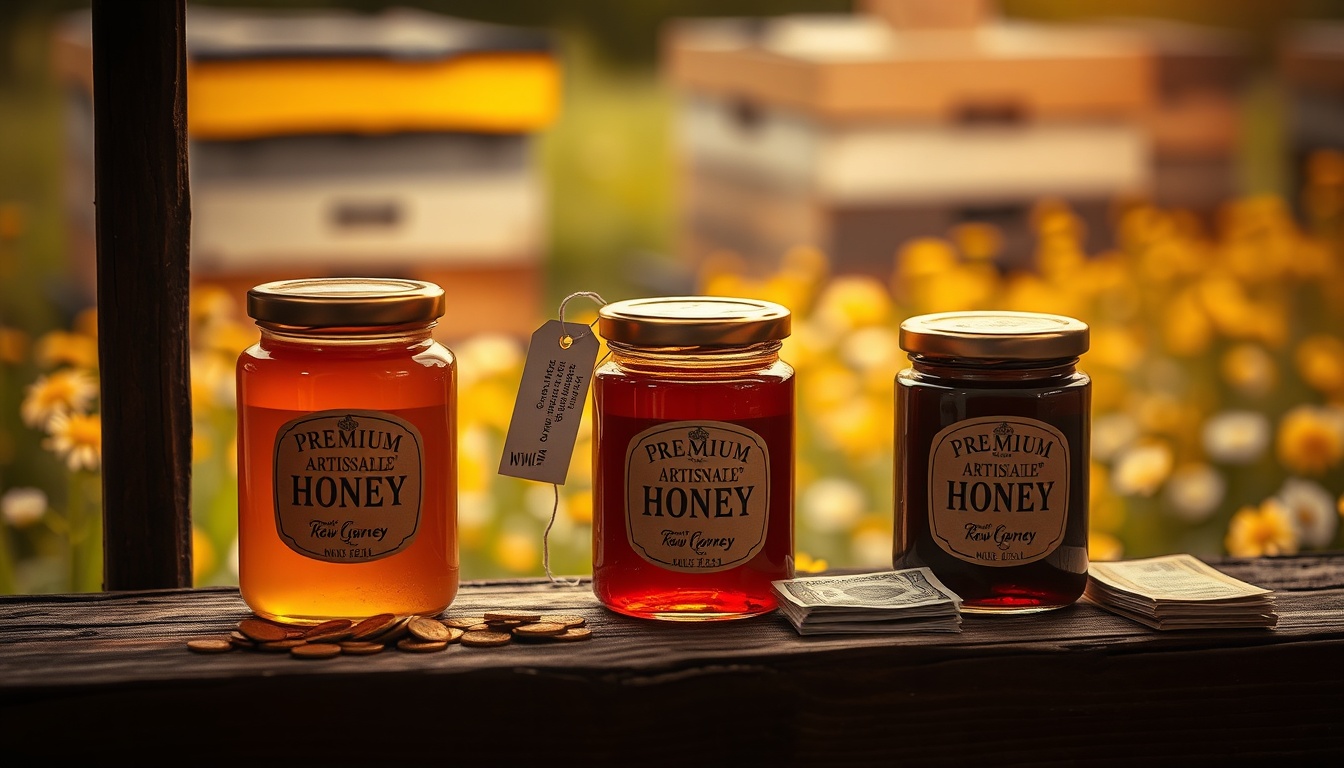
Pick up a jar of raw acacia honey and a jar of raw buckwheat honey. Both are labeled "raw." Both are 100% honey. Both sit on the same store shelf, probably within a few feet of each other. What the label does not tell you is that the buckwheat honey contains approximately 14 times more antioxidant activity per tablespoon than the acacia honey — measured by the same standardized assay, drawn from the same body of peer-reviewed research.
This is not a subtle difference. A 14× gap in a nutritional metric would prompt regulatory disclosures in every other food category. In honey retail, it goes largely unmentioned because "honey" is treated as a single ingredient rather than a diverse class of functional foods with measurable compositional variation.
The ranking below draws on oxygen radical absorbance capacity (ORAC) measurements and total phenolic content (TPC) data from four foundational studies: Gheldof and Engeseth (2002) in the Journal of Agricultural and Food Chemistry, Bertoncelj et al. (2007) in Food Chemistry, Alvarez-Suarez et al. (2010) in the Journal of Food Composition and Analysis, and Ouchemoukh et al. (2007) in Food Control. Together these studies cover the major commercial honey varieties under standardized extraction and assay conditions.
Methodology: ORAC, TPC, and Why Color Is the Proxy
Two complementary assays dominate the peer-reviewed literature on honey antioxidant activity. The first is ORAC — Oxygen Radical Absorbance Capacity — expressed in micromoles of Trolox equivalents per 100 grams of honey (μmol TE/100g). ORAC measures the capacity of honey to neutralize peroxyl radicals in a fluorescence-based assay; higher values indicate greater radical-scavenging activity. The second is TPC — Total Phenolic Content — expressed in milligrams of gallic acid equivalents per kilogram of honey (mg GAE/kg). TPC quantifies the total load of phenolic compounds (flavonoids, phenolic acids, and their derivatives) using the Folin-Ciocalteu colorimetric method.
ORAC and TPC are strongly correlated in honey (r² typically 0.75–0.88 across published studies), but they measure different things. ORAC captures radical-scavenging capacity from all active compounds including organic acids, amino acids, and reducing sugars — not just phenolics. TPC captures only the phenolic fraction. Together they give a more complete picture than either assay alone. Both are reported here where multiple published values exist; ORAC is used as the primary ranking metric because it captures the widest relevant antioxidant mechanism.
One practical proxy deserves emphasis: honey color. Gheldof and Engeseth (2002) found a correlation coefficient of r = 0.82 between honey color intensity (measured as mAU at 450 nm) and ORAC value across 19 honey varieties. Darker honey is substantially higher in antioxidants — not because darkness causes antioxidant activity, but because both are driven by the same underlying variable: phenolic compound concentration from the plant source. Lighter honeys (Acacia, Tupelo, Sage) are produced from plants with lower phenolic nectar. Darker honeys (Buckwheat, Chestnut, Heather) come from plants with higher phenolic loading. Color is an imperfect but genuinely useful screening heuristic when analytical data is not available.
Pro Tip
ORAC = Oxygen Radical Absorbance Capacity (μmol TE/100g honey) — higher is more antioxidant-active. TPC = Total Phenolic Content (mg GAE/kg honey). Both rise with color intensity: darker honey correlates strongly (r = 0.82) with higher antioxidant activity across varieties.
Get the Honey Buyer's Cheat Sheet (free PDF)
16 varieties on one page — color, flavor, best use and what a fair price looks like — from the 304 honeys we track.
The Rankings: 16 Honey Varieties from Highest to Lowest
Four tiers emerge from the published data. The gaps between tiers are larger than the gaps within tiers — Tier 1 occupies a distinct phenolic league compared to Tiers 3 and 4. Note that ORAC values are catalog medians with inherent variation by season, region, and processing — ranges of ±15–25% are typical for a given variety across published studies.
Tier 1 — High Antioxidant (ORAC ≥ 400 μmol TE/100g): These are uniformly dark honeys produced from plant sources with high phenolic nectar content. They carry a characteristic intensity of flavor — ranging from earthy to bitter to deeply malty — that is the sensory expression of the same compounds driving the antioxidant signal.
- Buckwheat (Fagopyrum esculentum) — ORAC ~796 μmol TE/100g | TPC ~780 mg GAE/kg | Color: very dark amber to nearly black | Source: Gheldof & Engeseth (2002), USDA honey phenolic database
- Chestnut (Castanea sativa) — ORAC ~620 μmol TE/100g | TPC ~590 mg GAE/kg | Color: dark amber | Source: Bertoncelj et al. (2007); Ouchemoukh et al. (2007)
- Heather (Calluna vulgaris) — ORAC ~490 μmol TE/100g | TPC ~460 mg GAE/kg | Color: amber to dark amber | Source: Alvarez-Suarez et al. (2010); Bertoncelj et al. (2007)
Tier 2 — Moderate-High (ORAC 200–399 μmol TE/100g)
This tier contains the most commercially variable honeys. Wildflower sits here as a median — but it is the most variable entry in the entire table. A wildflower honey dominated by buckwheat or phacelia bloom can approach Tier 1 values; one from a clover-heavy landscape can fall into Tier 3. The ORAC of wildflower depends almost entirely on which blooms dominated the foraging area in a given season.
- Wildflower / Polyfloral (mixed flora) — ORAC ~200–380 μmol TE/100g | TPC ~190–350 mg GAE/kg | Color: medium to dark amber (varies widely) | Median treated as ~290 for ranking; treat the range as structural, not measurement error
- Blueberry (Vaccinium spp.) — ORAC ~315 μmol TE/100g | TPC ~290 mg GAE/kg | Color: medium amber | Source: Gheldof & Engeseth (2002)
- Avocado (Persea americana) — ORAC ~245 μmol TE/100g | TPC ~225 mg GAE/kg | Color: dark amber | Source: Alvarez-Suarez et al. (2010); California avocado honey USDA analyses
- Manuka (Leptospermum scoparium, UMF 10+) — ORAC ~215 μmol TE/100g | TPC ~195 mg GAE/kg | Color: medium to dark amber | Source: Alvarez-Suarez et al. (2010); Mavric et al. (2008)
Tier 3 — Moderate (ORAC 100–199 μmol TE/100g)
Most widely sold commercial honeys fall in this range. They are not antioxidant-poor — per-tablespoon ORAC in this tier (roughly 200–400 μmol TE per 20g serving) is comparable to a single serving of many common fruits. But they are substantially below the Tier 1 leaders. Orange Blossom and Lavender are the most commonly purchased honeys in this tier; Sage and Sourwood are the most geographically exclusive.
- Orange Blossom (Citrus spp.) — ORAC ~155 μmol TE/100g | TPC ~140 mg GAE/kg | Color: light to medium amber
- Linden / Basswood (Tilia spp.) — ORAC ~145 μmol TE/100g | TPC ~130 mg GAE/kg | Color: light amber to pale yellow-green
- Eucalyptus (Eucalyptus spp.) — ORAC ~130 μmol TE/100g | TPC ~120 mg GAE/kg | Color: medium amber; strong medicinal-phenolic flavor note
- Lavender (Lavandula spp.) — ORAC ~105 μmol TE/100g | TPC ~95 mg GAE/kg | Color: pale to light amber
- Sage (Salvia mellifera/apiana, California) — ORAC ~105 μmol TE/100g | TPC ~90 mg GAE/kg | Color: very light amber to nearly white | Source: Gheldof & Engeseth (2002)
Tier 4 — Low (ORAC < 100 μmol TE/100g)
These are the lightest honeys by color — and by antioxidant content. They are not without value: Tupelo and Acacia have the lowest glycemic indices of any major commercial honey variety, and Sourwood is one of the most aromically complex honeys produced anywhere. But their antioxidant contribution per tablespoon is small — roughly equivalent to a half-serving of apple juice, not a functional antioxidant food in the dose-response sense. Their prolonged liquid stability — Acacia and Tupelo rank last for crystallization rate, effectively never setting at room temperature — is a genuine quality advantage in a different context.
- Sourwood (Oxydendrum arboreum) — ORAC ~90 μmol TE/100g | TPC ~80 mg GAE/kg | Color: very light amber
- Clover (Trifolium spp.) — ORAC ~80 μmol TE/100g | TPC ~70 mg GAE/kg | Color: pale to white | Source: Gheldof & Engeseth (2002); the most-studied single honey in the North American literature
- Tupelo (Nyssa ogeche) — ORAC ~63 μmol TE/100g | TPC ~55 mg GAE/kg | Color: very light, golden-green | Source: Gheldof & Engeseth (2002)
- Acacia / Black Locust (Robinia pseudoacacia) — ORAC ~55 μmol TE/100g | TPC ~48 mg GAE/kg | Color: nearly colorless to very pale yellow | Source: Gheldof & Engeseth (2002)
What Drives the Variation: Plant Phenolics, Not Bee Processing
The antioxidant content of honey is overwhelmingly determined by the source plant, not by the bee, the beekeeper, or the extraction method. Bees add enzymes (glucose oxidase, invertase, catalase) and some minor defensive compounds during nectar processing, but these are present in low enough concentrations that they do not meaningfully shift the ORAC ranking. The dominant variables are botanical.
Dark plant sources — buckwheat, chestnut, heather — produce nectars rich in quercetin, kaempferol, myricetin, caffeic acid, p-coumaric acid, and ellagic acid. These phenolic compounds survive the nectary-to-honey transit with limited degradation; they are the same compounds responsible for the characteristic bitterness and astringency of dark honeys. Light plant sources — robinia, nyssa ogeche, citrus — produce nectars with lower phenolic loading, resulting in bland-to-clean flavor profiles and correspondingly low antioxidant indices.
Heat degrades antioxidant capacity. Published studies comparing raw versus pasteurized versions of the same honey consistently show 10–30% ORAC reduction after standard pasteurization (63°C for 30 minutes). This is the main mechanistic reason that "raw" matters on the antioxidant axis — not because raw honey has active enzymes that drive antioxidant activity, but because heat denatures labile phenolic structures. The ranking above is for raw honey; pasteurized versions of the same varieties will sit 10–30% lower on the same scale.
Pro Tip
The Maillard reaction and non-enzymatic browning during honey aging also produce antioxidant compounds. This is why aged honey can show slightly higher ORAC than fresh honey from the same source — the reaction between amino acids and reducing sugars over months of storage generates melanoidins with measurable radical-scavenging activity.
The Manuka Paradox: High Price, Mid-Range Antioxidants
Manuka honey at UMF 10+ levels sits in Tier 2 at approximately 215 μmol TE/100g ORAC — a solid but unremarkable antioxidant position. It outperforms Clover and Acacia by a factor of roughly 3, but trails Buckwheat by a factor of nearly 4. This positioning surprises many buyers who assume that Manuka's premium price reflects broad nutritional superiority.
The confusion arises from category mixing. Manuka's marketable differentiation is its methylglyoxal (MGO) content and the associated antibacterial Unique Manuka Factor (UMF) — a mechanism entirely separate from conventional antioxidant chemistry. MGO is not an antioxidant compound; it is an aldehyde with direct antibacterial activity against Staphylococcus aureus, Escherichia coli, and Helicobacter pylori in laboratory conditions. The antioxidant phenolics (flavonoids, phenolic acids) and the MGO/antibacterial activity are driven by different chemical pathways and should not be conflated.
A buyer choosing Manuka specifically for antioxidant activity is paying a very large premium — often $29–$71 (middle half of 17 verified manuka jars, Oct 7, 2026) — to reach an antioxidant level that a $12 jar of raw buckwheat honey exceeds by nearly 4×. The inverse is also true: a buyer seeking antibacterial potency who purchases Buckwheat honey has bought something with none of the MGO chemistry that makes Manuka clinically relevant. The properties are genuinely orthogonal. See the Honey Fructose-to-Glucose Ratio guide for more on where Manuka and Buckwheat differ and agree chemically.
Wildflower's Hidden Range: The Most Variable Entry
Wildflower honey (also sold as "multifloral," "polyfloral," or "meadow honey") appears in Tier 2 with a median ORAC of approximately 290 μmol TE/100g — but this number is almost meaningless without knowing which wildflower. Published ORAC values for commercial wildflower honey span from roughly 200 to 380 μmol TE/100g depending on bloom composition. A wildflower from a phacelia- and buckwheat-rich Scottish meadow can approach Heather values; one from a clover-dominant New Zealand pasture can fall below Orange Blossom.
The practical implication for buyers: a generic "wildflower" label tells you almost nothing about antioxidant content. If you are buying wildflower specifically for antioxidant value, ask the producer for bloom composition information or region of origin. A dark-colored wildflower from a known biodiversity-rich area (Pyrenean meadow, Scottish upland, Appalachian mixed hardwood forest, New Zealand native bush) is a stronger antioxidant bet than a pale wildflower from an agricultural plain dominated by a single crop.
This is one of the few cases in nutrition where the more expensive product is not necessarily the better antioxidant choice. A $15 local wildflower from a diverse meadow can outperform a $45 certified-organic pale wildflower from a monoculture landscape. Color remains the most accessible proxy when no bloom data is available.
Pro Tip
A simple field test: if two wildflower honeys are the same price, choose the darker one for antioxidant-oriented use. The ORAC-color correlation (r = 0.82) is strong enough that color preference for antioxidant value is a data-backed rule, not just aesthetics.
Practical Guidance: Matching Honey to Purpose by Antioxidant Tier
The antioxidant hierarchy maps cleanly onto use cases. This is not a ranking of overall quality — Acacia's ultra-low glycemic index and prolonged liquid stability are real advantages in their relevant contexts. Antioxidant activity is one axis, not a universal score.
- Maximizing antioxidant intake per tablespoon: Buckwheat, then Chestnut. Switch any daily teaspoon of Clover or Acacia to Buckwheat and you increase your antioxidant intake by 10–14× at the same caloric cost.
- Antioxidant-rich baking (cookies, breads, granola bars): Buckwheat or Chestnut. Both survive mild oven temperatures better than their raw ORAC suggests — the Maillard products formed during baking add further radical-scavenging activity. Expect pronounced flavor; Buckwheat in particular has a distinctive earthy, molasses-like note.
- Hot-drink antioxidant boost: Heather or Chestnut. Both have enough heat-stable phenolic compounds that a tablespoon in tea (at drinking temperature, not boiling) retains meaningful antioxidant activity. Do not pour boiling water directly onto honey — let tea cool to ≤60°C before adding.
- Low-GI sweetening where antioxidants are a secondary benefit: Manuka (Tier 2). Useful compromise between glycemic modulation and antioxidant activity, though both are achieved better by combining Acacia (for low GI) with Buckwheat (for antioxidants) at separate uses rather than paying the Manuka premium.
- Antioxidant-rich honey for tasting flights: Build the flight from Tier 4 to Tier 1 — from Acacia (light, clean, lowest antioxidants) through Clover, Orange Blossom, Blueberry, to Chestnut and Buckwheat (dark, bitter, highest antioxidants). The progression makes the color-antioxidant relationship viscerally apparent without a laboratory.
- Honey in skincare applications (face masks, balms): Manuka or Buckwheat. Topical antioxidant effects are driven by phenolic penetration into the stratum corneum — Tier 1–2 honeys provide more phenolic substrate than Tier 4. Note that in vitro antioxidant assays do not directly translate to skin penetration and efficacy; dermatological evidence is limited and mostly observational.
Per-Serving ORAC in Context: What These Numbers Mean
Raw ORAC values in the hundreds of micromoles per 100g look large until put alongside other foods. A tablespoon of honey (21g) delivers the following ORAC per serving: Buckwheat ~167 μmol TE, Chestnut ~130 μmol TE, Heather ~103 μmol TE, Manuka ~45 μmol TE, Clover ~17 μmol TE, Acacia ~12 μmol TE.
For comparison: a half-cup of blueberries delivers approximately 3,200 μmol TE per serving; an apple delivers approximately 3,900 μmol TE. Honey, even at the Buckwheat peak, is not a high-ORAC food by serving size. Where it is interesting is as a sweetener substitute — replacing sugar with Buckwheat honey adds 167 μmol TE per tablespoon where table sugar adds zero. In that specific comparison, the antioxidant advantage is real and measurable.
The ORAC database maintained by the USDA (released 2007, officially deprecated 2012 for consumer guidance purposes, but still the reference for most honey research) cautioned against treating ORAC values as predictive of health outcomes because absorption, bioavailability, and metabolic fate vary widely by compound class. The honey phenolic literature largely confirms this: quercetin and kaempferol from honey are absorbed in human studies, but circulating plasma levels after a typical serving are small. The mechanism for any health benefit is likely cumulative — consistent, repeated exposure rather than acute high-dose ingestion.
Adulteration and Antioxidant Degradation: Two Quality Signals in One
Antioxidant capacity provides a secondary adulteration screen for dark honey varieties. Buckwheat honey adulterated with light syrup (corn syrup, rice syrup, or blended light honey) will show a dramatically lower ORAC than authentic buckwheat honey — the phenolic loading of the adulterant is essentially zero. A Buckwheat honey reading below 400 μmol TE/100g should prompt follow-up testing for sugar adulteration.
Heat damage from over-processing shows up on the same assay. Honey heated above 70°C for extended periods loses phenolic content measurably — both ORAC and TPC drop. This is why raw, minimally processed dark honeys command a premium among antioxidant-motivated buyers: they carry the full phenolic payload from the source plant. An ultra-filtered, flash-heated Buckwheat honey can show ORAC values 25–40% below a raw unfiltered version of the same floral variety.
For premium dark honeys — particularly Buckwheat and Chestnut — some producers now include TPC certificates from third-party labs (mg GAE/kg). This is the most direct quality signal available to buyers and worth requesting if the honey is being purchased for functional purposes. Any chestnut or buckwheat honey marketed as "premium" but with no TPC data available should be treated with mild skepticism if price is the primary quality signal.