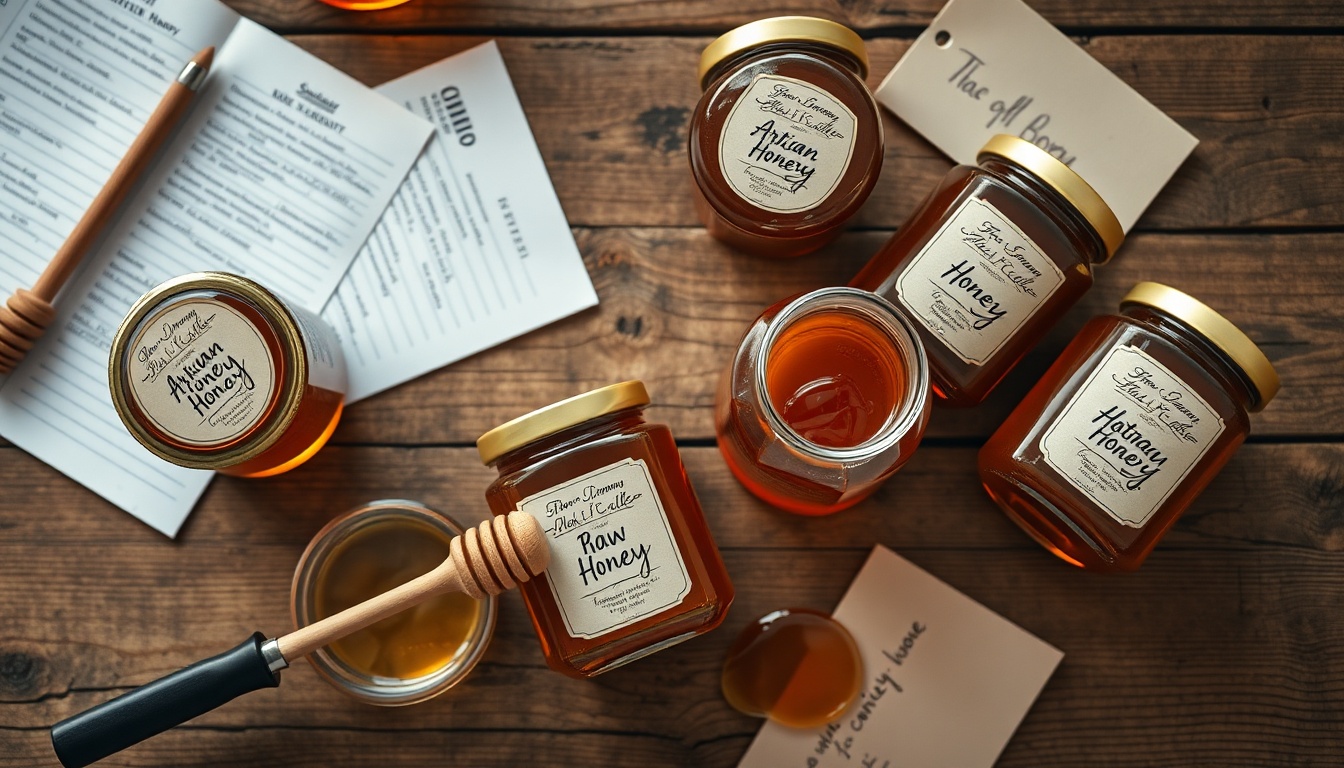
The Honey You Bought May Not Be What the Label Says
Honey is the third most adulterated food product in the world, behind only olive oil and milk, according to the United States Pharmacopeial Convention's Food Fraud Database. This is not a fringe concern: a 2017 European Commission Joint Research Centre (JRC) analysis of 893 honey samples from EU member states found that approximately 14% were suspected of adulteration or misrepresentation. A 2020 investigation by India's Centre for Science and Environment (CSE) tested 77 honey brands sold in Indian retail — 77% failed the nuclear magnetic resonance (NMR) test used to detect added syrups. A 2018 German analysis of honey samples from outside the EU found 46% had pollen profiles inconsistent with the declared origin.
The fraud takes several forms and differs dramatically by honey variety. Some of it is chemistry — adding sugar syrups to bulk up volume or replace expensive honey entirely. Some of it is geographic — stripping pollen to erase provenance, then relabeling Chinese honey as German wildflower. Some of it is botanical — calling cheap polyfloral honey "manuka" or "sidr" to capture a price premium that can reach 40× the commodity price. The risk is not uniform across all honeys: a jar of supermarket clover honey carries negligible adulteration risk (the economics don't support it), while a $60 jar of "100% authentic Yemeni Sidr honey" on a marketplace website has a very high probability of containing something quite different.
This guide maps the adulteration landscape with a risk framework — identifying which varieties are most frequently targeted, which fraud methods are hardest to detect, and what buyers can actually do with information that is publicly available.
The Four Fraud Methods: How Honey Gets Faked
Understanding adulteration starts with the mechanics. Honey fraud is not random — it follows the economics of detection difficulty vs. price premium, which means each fraud method is optimised for a specific cost and risk profile.
**Method 1: C4 Sugar Syrup Addition.** The oldest and originally most common method is blending honey with high-fructose corn syrup (HFCS), cane sugar syrup, or other C4-plant-derived sweeteners. These are cheap, abundant, and similar in composition to honey's fructose-glucose base. Detecting them relies on carbon isotope ratio analysis (IRMS): C4 plants (corn, sugarcane) have a distinct carbon-13 signature (δ¹³C ≈ –10 to –13‰) compared to the C3 plants that produce most honey florals (δ¹³C ≈ –23 to –27‰). EU customs require IRMS testing on all non-EU honey imports. This has largely suppressed the crudest HFCS adulteration in professional supply chains — but it remains common in domestic markets where testing is rare.
**Method 2: C3 Sugar Syrup Addition — The Rice Syrup Problem.** When IRMS testing became widespread, fraudsters switched to syrups from C3 plants. Rice syrup is the most widely used: its δ¹³C signature is indistinguishable from floral honey by IRMS. A 2020 analysis found that many honey brands failing NMR tests (including the CSE India study) were positive specifically for rice oligosaccharides — the fingerprint of rice syrup. Inulin syrup (from chicory, another C3 plant) is also used. These adulterants can only be detected by NMR profiling, which identifies the specific sugar-molecule ratio pattern of authentic honey versus various syrups. NMR testing requires expensive infrastructure (currently ~$500–2,000 per sample) and is not required by any major regulatory authority as a condition of routine domestic market entry.
**Method 3: Ultra-filtration to Remove Pollen.** Authentic honey contains pollen grains from the plants foraged by bees. Pollen analysis (melissopalynology) is the primary method for confirming geographic origin: pollen from Robinia pseudoacacia (false acacia) can only come from forests where that tree grows; sidr pollen (Ziziphus spina-christi) from the Hadhramaut plateau of Yemen. Ultra-filtration — passing honey through sub-micron filters under high pressure — removes most or all pollen, destroying the geographic fingerprint. Ultra-filtered honey is then commercially relabeled. This practice was at the center of major US honey import fraud cases in the 2000s (notably Operation Honeygate, 2011–2013), in which honey laundered through India and other countries to evade Chinese honey import duties entered US commerce after ultra-filtration removed its origin markers. EU regulations now require pollen content to be preserved — ultra-filtered honey is classified as not meeting the EU definition of honey — but enforcement is inconsistent at the member-state level.
**Method 4: Botanical Mislabeling.** The final method requires no chemical adulteration at all: it is simply calling one honey by another honey's name. This ranges from the mild (calling mixed-floral honey "wildflower premium" when it comes from intensive agricultural monocultures) to the severe (labeling Spanish thyme honey as Yemeni Sidr, or New Zealand non-manuka honey as UMF-grade manuka). Botanical mislabeling is estimated to be far more common than chemical adulteration on a volume basis, because it requires no manufacturing — just a printer and a label.
Pro Tip
The four fraud methods differ in detectability: C4 syrups are caught by routine IRMS (cheap, widely deployed); rice/inulin syrups require NMR (expensive, rarely mandated); ultra-filtration is caught by pollen analysis; botanical mislabeling requires targeted testing for variety-specific markers.
Get the Honey Buyer's Cheat Sheet (free PDF)
16 varieties on one page — color, flavor, best use and what a fair price looks like — from the 304 honeys we track.
The Adulteration Risk Matrix: Not All Honey Is Equally Faked
Fraud follows the price signal. The economics of honey adulteration depend on two variables: how large the price premium is over commodity honey, and how difficult the fraud is to detect. Plotting varieties on these two axes produces a risk matrix that explains which honeys are worth faking, and which are effectively self-protecting.
**Quadrant 1 — Low Premium / Easy Detection (Low Fraud Risk):** Commodity honeys — clover, alfalfa, wildflower from agricultural monocultures, pasteurised supermarket honey. These trade at at wholesale. The margin available for adulteration is too thin to justify the operational complexity. Additionally, these honeys have strong consumer expectations of mildness and neutrality; adding a cheap syrup that makes the honey taste different would produce obvious complaints. Fraud risk: minimal.
**Quadrant 2 — High Premium / Easy Detection (Moderate Fraud Risk):** Distinctive-character premium honeys — buckwheat, heather (Calluna vulgaris), chestnut, sourwood. These command wholesale and are among the most flavor-intense honeys. Buckwheat's deep molasses character, heather's characteristic gel-thixotropy (it solidifies in the jar but liquifies when stirred), and chestnut's persistent bitterness are difficult to replicate cheaply. A skilled honey buyer would immediately detect a blended fake. Fraud risk: moderate for mislabeling, low for chemical adulteration.
**Quadrant 3 — Low Premium / Hard Detection (Moderate-High Fraud Risk):** Mass-market "raw" and "local" honey. These retail at but carry consumer quality assumptions that incentivize labeling fraud. Shoppers paying a premium for "raw" or "local" are specifically seeking characteristics (unprocessed enzymes, local pollen, minimal heat treatment) that are invisible to sensory evaluation. A jar of cheap imported commercial honey, repackaged with artisan-local branding, is undetectable without laboratory testing. This category accounts for the highest fraud volume by absolute tonnage globally. The CSE India study and multiple US state agriculture department tests have found significant fraud rates in "local raw honey" sold at farmers' markets.
**Quadrant 4 — High Premium / Hard Detection (High Fraud Risk):** This quadrant contains manuka, Yemeni Sidr, genuine monofloral acacia (from specific European origins), jarrah, and a few other high-premium varietals that combine extreme price premiums with authentication requirements that most retail buyers cannot meet. This is where fraud is most concentrated, most sophisticated, and most profitable. A genuine MGO 400+ Mānuka honey sells at a high retail price; a bottle of regular honey with a manuka label costs the fraudster perhaps $4 in honey plus a label — a 20–40× margin. The fraud rate in this quadrant is not hypothetical: New Zealand industry estimates suggest that more "manuka honey" is sold globally each year than New Zealand's entire manuka production could supply.
The High-Risk Varieties: Where Fraud Is Most Prevalent
**Mānuka Honey.** The most aggressively counterfeited premium honey in the world. New Zealand's total manuka honey production is approximately 1,700–2,000 tonnes per year, but industry estimates of global "manuka" honey sales consistently exceed 10,000 tonnes annually — a gap of roughly 5–8×. The Mānuka Honey Science Definition, implemented by New Zealand's Ministry for Primary Industries in 2017, requires authentic New Zealand mānuka to test positive on five attributes: four chemistry markers (methylglyoxal/MGO, leptosperin, 4-hydroxyphenyllactic acid, 2-methoxybenzoic acid/2-MBA or its analogue) plus DNA from Leptospermum scoparium pollen. This 5-attribute test is required for export from New Zealand, which largely protects products actually leaving via official channels — but the label "manuka" carries no legal protection in the US, EU, or most other markets, and non-NZ honey labeled "manuka" faces no equivalent requirement. Australian manuka (from Australian Leptospermum species) is a legitimate separate product with its own chemistry profile, but mislabeling of non-manuka honey as manuka remains widespread in both markets.
**Yemeni Sidr Honey.** Sidr honey from the Hadhramaut plateau of Yemen — produced from Ziziphus spina-christi (nabq or jujube tree) — is sold as a premium honey. No dated retail price is cited here. Verified authentic product is scarce. The combination of extreme scarcity (Yemen's ongoing conflict has drastically reduced production and export capacity), very high prices, and consumer unfamiliarity with authentication creates ideal conditions for fraud. The primary markers of authentic Yemeni Sidr are: sidr pollen (Ziziphus spina-christi, identifiable by melissopalynology), NMR profile consistent with Ziziphus-source honey, very low moisture content (14–16%), extremely viscous body, and distinctive caramel-toffee flavor. Much commercially available "Sidr honey" on Western marketplace platforms fails on multiple criteria. For context on Yemen's honey culture and the legitimate trade in premium Sidr, see our Yemeni Honey Guide.
**Acacia Honey from Specific European Origins.** Robinia pseudoacacia honey from Romania, Hungary, and Germany commands significant premiums over Chinese acacia honey because of flavor quality, environmental standards, and EU production regulations. The gap in price between certified Hungarian acacia (at origin) and bulk Chinese acacia (CIF) creates incentive for origin mislabeling. The ultra-filtration method removes the pollen fingerprint that would identify the Chinese source; the product is then relabeled at an EU packing facility. EU rules (Council Regulation 2014/63/EU) require country of origin labeling, and single-origin products may not use blending labels — but enforcement requires melissopalynological testing that most buyers cannot access.
**Jarrah Honey from Western Australia.** A relatively recent entrant to the premium category, jarrah (Eucalyptus marginata) honey from Western Australia has generated significant interest for its very high total activity (TA) antimicrobial rating, driven by hydrogen peroxide rather than methylglyoxal. Jarrah TA ratings of 30+ (equivalent to strong medical-grade honey) are well-supported by University of Sydney research (Kwakman et al. studies). The market is smaller than manuka, but the price premium ($29–$71 (middle half of 17 verified manuka jars, Oct 7, 2026) for high-TA jarrah) combined with limited international consumer education about what authentic jarrah tastes and looks like creates fraud opportunity. Authentic jarrah honey is dark amber to reddish-brown, crystallises slowly, and has a rich, mildly medicinal-herbal character — considerably more distinctive than generic eucalyptus honey.
How Laboratories Detect Honey Fraud
Detection science has evolved significantly in response to increasingly sophisticated fraud. The current toolkit includes five major methods, each with different capabilities and limitations.
**1. Carbon Isotope Ratio Analysis (IRMS/SCIRA).** The δ¹³C stable isotope test distinguishes C4 plant sugars (corn, cane) from honey's C3 plant sugars. Methodology: individual honey proteins are isolated and their carbon isotope ratio compared to the bulk honey δ¹³C. If the protein fraction (which should match the honey's original plant source) diverges more than 1‰ from the bulk honey, C4 adulteration is indicated. This is required at EU and Canadian honey import controls. Limitation: does not detect C3 syrups (rice, beet, inulin).
**2. Nuclear Magnetic Resonance (NMR) Profiling.** Currently the most comprehensive adulteration screen available. NMR generates a full molecular fingerprint of the honey — specific ratios of fructose, glucose, sucrose, turanose, maltose, erlose, trehalose, isomaltose, and dozens of minor disaccharides and oligosaccharides. Authentic honey from any floral type has a characteristic signature; adulterated honey has anomalous ratios, additional peaks from syrup-derived oligosaccharides, or missing peaks that should be present. The German company Bruker and the consortium QSI have established large NMR honey databases. NMR correctly identified 95%+ of adulterated samples in the JRC 2017 study. Cost: ~€500–2,000 per sample. Availability: available through food testing laboratories including SGS, Eurofins, and QSI.
**3. Melissopalynology (Pollen Analysis).** Microscopic identification of pollen grains suspended in honey. The species composition of pollen in a genuine honey reflects the actual plants foraged by the bees: authentic Greek Hymettus honey contains Origanum, Thymus, and Satureja pollen; authentic Yemeni Sidr honey contains ≥45% Ziziphus spina-christi pollen. Ultra-filtered honey lacks pollen entirely (automatically suspicious). Limitation: requires a trained palynologist; takes 1–3 days per sample; cannot detect chemical adulteration independent of pollen evidence.
**4. Specific Marker Testing for High-Value Varieties.** For manuka, the MPI 5-attribute test (MGO, leptosperin, 4-HPLA, 2-MBA, Leptospermum DNA) provides legally recognised authentication. For Acacia honey in the EU, the AQS (Apiary Quality System) standard includes species-level pollen ID and IRMS. For Sidr/jujube honey, research groups in Germany and Qatar have identified specific alkaloid and phenolic markers from Ziziphus species. These targeted panels cost more than generic screening but provide stronger authentication for specific high-value products.
**5. Enzyme Activity Tests (Diastase / Invertase).** Diastase and invertase activity fall dramatically when honey is heated. An enzyme-free "raw" honey is almost certainly pasteurised. These tests are straightforward, inexpensive, and widely available — they are part of the EU Honey Directive requirements. They cannot detect cold-adulteration (adding raw syrup to raw honey at ambient temperature), but they effectively catch the most basic processing fraud. For full details on how enzyme tests work, see our HMF & Diastase Guide.
Pro Tip
No single test catches all fraud. A multi-test approach — IRMS + NMR + pollen + enzyme activity — provides comprehensive coverage. Reputable premium honey producers increasingly publish their certificates of analysis (CoAs) from accredited labs, particularly for manuka, sidr, and jarrah honey. If a producer cannot or will not provide a CoA, treat the provenance claim skeptically.
Certifications That Actually Help — and Ones That Don't
Consumer-facing certifications range from highly meaningful to essentially decorative. Understanding what each one actually verifies reduces both over-trust and under-trust.
**New Zealand Ministry for Primary Industries (MPI) Export Certificate:** The only government-backed certification that requires the full 5-attribute manuka test. All manuka honey legally exported from New Zealand must pass this test, certified by an MPI-approved laboratory. The CoA comes with a specific MPI certificate number. This is as close to guaranteed manuka authenticity as currently exists — for products actually exported through this channel. Limitation: does not cover honey labeled "manuka" in other countries.
**UMF (Unique Manuka Factor) Trademark:** A licensed New Zealand industry certification administered by the UMFHA (Unique Manuka Factor Honey Association). UMF testing includes MGO, HMF, leptosperin, and dihydroxyacetone (DHA) content, plus moisture and other quality indicators. A UMF rating of 10+ (MGO ~263+) through 25+ (MGO ~1200+) on a jar licensed by the UMFHA is strong evidence of authenticity for product from licensed producers. The UMFHA conducts annual compliance testing and has removed producers for non-compliance. The trademark is licensed not universally adopted — a producer can have authentic manuka without UMF certification.
**EU PDO / PGI Designations:** Protected Designation of Origin (PDO) and Protected Geographical Indication (PGI) under EU regulations are the strongest available origin guarantees for European honey. Greek Thyme Honey PDO, Miele della Lunigiana DOP (Italy), and Miel de Galicia IGP (Spain) each require compliance with production specifications enforced by competent certification bodies. These are meaningful — a jar with the EU PDO/PGI emblem has been audited. However, only a small fraction of European honey production carries these marks.
**USDA Organic:** Does NOT address adulteration. USDA Organic for honey covers hive management practices and foraging area (no pesticides within a certain radius). It does not require pollen testing, NMR profiling, IRMS testing, or any authentication of honey variety. An organic label means nothing about whether the honey variety is genuine. A fraudulent jar of "organic manuka honey" is still fraudulent.
**"Raw" and "Unpasteurised" labels:** These have no standardised legal definition in the US or most other markets. They signal producer intent (minimal processing) but cannot be independently verified without enzyme activity testing. They have no bearing on whether the honey variety or origin is authentic. A syrup-adulterated honey sold as "raw" is simply a doubly fraudulent product.
**QR-code traceability systems:** Several forward-thinking markets — Taiwan's TAP (Traceable Agricultural Products) system for longan honey, and some New Zealand manuka producers' batch-code databases — offer scan-to-trace provenance from hive to jar. These are among the most consumer-useful innovations in honey authenticity, as they allow verification of specific batch data without requiring the consumer to understand test methodology. The limitation is that the system's integrity depends on the honesty of the data entered. For background on Taiwan's QR system for longan honey, see our Taiwanese Honey Guide.
Buyer's Practical Checklist: Reducing Your Fraud Risk
Laboratory testing is not realistic for most honey purchases. The following checklist applies publicly available signals to meaningfully reduce adulteration risk without requiring specialist knowledge.
For **any premium honey variety** (or claims a specific variety/origin): Ask for or search for a published Certificate of Analysis. Authentic premium producers — particularly for manuka, jarrah, and Sidr — routinely publish batch CoAs. If a producer has nothing, treat the claim skeptically. For manuka specifically, verify the UMF license number at umf.org.nz/find-a-licensee or look for the MPI export certificate number. An MGO number without an accompanying leptosperin or DHA result is insufficient authentication.
For **Yemeni Sidr and similar ultra-premium honeys**: Verify through importers with documented producer relationships — not generic marketplace listings. Authentic Yemeni Sidr is extremely viscous (does not drip from an inverted spoon in under 30 seconds), pale amber to medium amber (not dark), and has a distinctive caramel-toffee aroma without bitterness. A low shelf price is not a test this guide can score. Ask for the producer name.
For **local and artisan raw honey**: Regional producers at farmers' markets face lower fraud incentive but are not immune. "Local" honey on a marketplace shipped from out-of-state is a red flag. Genuine farmers' market honey should come with a producer name, farm location, and ideally an opportunity to ask questions. A local beekeeper who can describe their apiary location, forage area, and extraction process provides a basic but useful provenance signal.
Physical indicators of processing fraud: Any raw honey with perfectly clear, water-like appearance and uniform color has almost certainly been ultra-filtered and heated, regardless of label claims. Authentic raw honey typically shows a natural turbidity, may have small wax or propolis particles, and crystallises at a variety-appropriate rate (acacia stays liquid for 18–36 months; rapeseed solidifies within weeks). Honey that should crystallise but doesn't may have been heated to prevent crystallisation — inconsistent with raw claims.
Price as a signal: Raw commodity honey (clover, wildflower, alfalfa) priced like other jars of that variety is consistent with genuine product. The same varieties priced far above that, for no reason the seller can name, deserve scrutiny. The middle half of 17 verified manuka jars cost $29 to $71 (Oct 7, 2026). A price under that band is not a lab result. For every variety, know the approximate authentic retail range: if the price is implausibly low for what is claimed, it probably is too good to be true.
- Manuka (UMF 10+, MGO 263+): the middle half of 17 verified manuka jars cost $29 to $71 (Oct 7, 2026)
- Manuka (UMF 20+, MGO 820+): the middle half of 17 verified manuka jars cost $29 to $71 (Oct 7, 2026). No separate dated price is cited for UMF 20+.
- Yemeni Sidr: no dated retail cutoff is cited. Ask for the producer and a pollen certificate.
- Jarrah TA 30+: ask for the activity grade and the producer. No dated retail cutoff is cited.
- Acacia (Romanian/Hungarian single-origin) and Chinese acacia are different products. Ask for the country and the producer.
- Raw local wildflower / clover: $9–$15 (middle half of 16 verified clover jars, Oct 7, 2026) depending on region and packaging
- Buckwheat (US): the middle half of 10 verified buckwheat jars cost $9 to $23 (Oct 7, 2026)
The Regulatory Gap and What Is Being Done
The honey fraud problem is partly a detection problem and partly a regulatory gap problem. In the US, honey labeling is regulated by the FDA, which requires accurate labeling but does not mandate specific adulteration tests. There is no federal requirement for NMR testing, pollen analysis, or enzyme activity testing. The USDA's Agricultural Marketing Service tests honey under its Market News program but does not have the enforcement authority to address routine adulteration. This leaves the US as a lower-standard market compared to the EU, where IRMS is required at import and the Honey Directive sets quality standards backed by member-state enforcement.
The most significant recent regulatory development is New Zealand's mandatory 5-attribute test for manuka honey exports (MPI 2017), which has materially reduced the volume of fake New Zealand manuka entering export channels. Australia followed with its own Leptospermum honey standard, anchored to NMR profiling, introduced by the Australian Honey Bee Industry Council in 2018. These have not eliminated fraud in domestic markets of destination countries, but they have raised the evidentiary bar considerably.
The European Honey Market Surveillance Programme (2015–2017, JRC Technical Report EUR 29234 EN) was the most comprehensive multi-country honey adulteration study ever conducted within the EU. Its finding — 14% suspected adulterated — resulted in updated import screening protocols, but NMR testing remains voluntary rather than mandated in the EU framework. A proposed revision to the EU Honey Directive (under discussion since 2022) would introduce mandatory country of origin labeling for all blended honey components (currently "blend of EU and non-EU honeys" is legally sufficient), which would meaningfully improve consumer information even without requiring additional lab tests.
For consumers: the practical implication is that you are, in most markets, buying premium honey varieties on trust. That trust can be informed by the signal framework above — producer transparency, lab certificates, price alignment, and physical characteristics — but it cannot be fully verified by a retail buyer without professional testing. The most fraud-resistant purchase remains buying from a named, local beekeeper with a verifiable operation, or from a premium producer who publishes batch-level CoA data.