The Same 14× Gap, This Time in Minerals
Pick up a jar of raw acacia honey and a jar of raw buckwheat honey. The antioxidant gap between them is 14× — measured by oxygen radical absorbance capacity, drawn from four peer-reviewed studies. What is less often noted is that the mineral gap is nearly identical. Buckwheat honey contains roughly 14 times more total mineral matter (by ash content) per 100g than Acacia honey. The potassium gap is approximately 15×. These are not different phenomena: they are the same underlying variable — phenolic and mineral loading from the source plant — expressing itself across two different analytical assays.
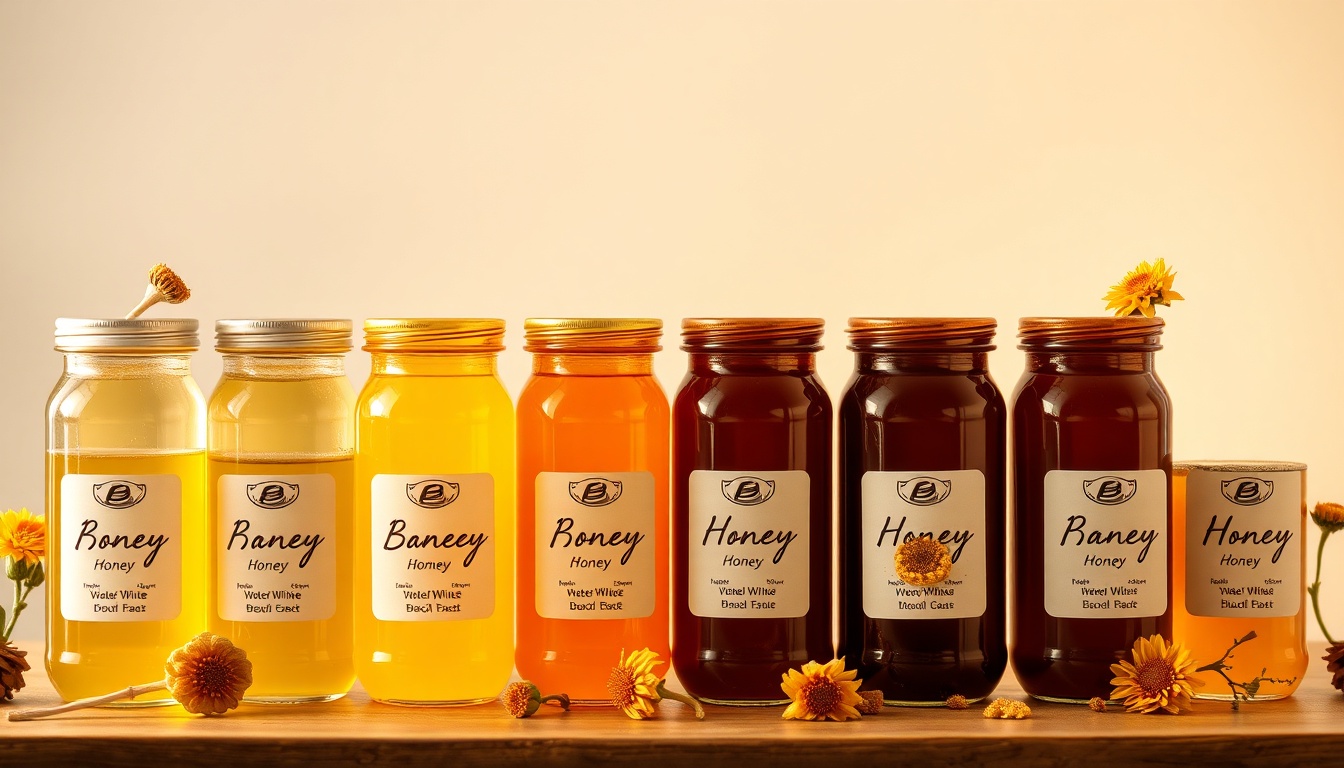
Honey mineral content is measured by ash analysis: the residue remaining after complete combustion of a honey sample at 600–650°C. Ash content is expressed as a percentage of fresh honey weight and captures the sum of all inorganic mineral constituents — potassium, calcium, magnesium, sodium, phosphorus, iron, copper, zinc, manganese. The EU Honey Directive sets a maximum ash content of 0.6% for most honey types (0.8% for declared heather and chestnut varieties as a codified acknowledgement of their naturally high mineral load). Published values for commercial honeys range from 0.02% (lightest acacia) to 0.45% (darkest buckwheat) — a range that maps almost exactly onto the color scale.
The data below draws on five primary sources: White (1979) USDA Technical Bulletin 1261 "Composition of American Honeys," Bogdanov et al. (2008) "Honey for Nutrition and Health" in the American Bee Journal, Escuredo et al. (2013) "Mineral Content of Honeys from Different Floral Origins" in Nutrients, Conti et al. (2007) "Trace Elements in Italian Honeys" in the Journal of Food Composition and Analysis, and Alvarez-Suarez et al. (2010) Italian floral honey analyses in Food and Chemical Toxicology. Together these cover the major commercial honey varieties under standardized ash and elemental analysis conditions.
Methodology: Ash, ICP-OES, and Why Potassium Dominates
Three analytical methods appear in the honey mineral literature. Ash content (gravimetric) measures total mineral mass by weight — the broadest and most commonly reported metric. Atomic Absorption Spectroscopy (AAS) and Inductively Coupled Plasma Optical Emission Spectrometry (ICP-OES) measure individual elements with high precision; ICP-OES has largely replaced AAS in post-2000 studies because it allows simultaneous multi-element analysis on a single digested sample. Values reported here combine ash content (from gravimetric analyses) with individual element concentrations (from ICP-OES/AAS studies) — both are reported per 100g of fresh honey weight.
One structural fact dominates the honey mineral profile regardless of variety: potassium accounts for approximately 60–75% of total ash mass in most honey types. In Buckwheat honey the figure is closer to 68%; in Acacia it is similar proportionally but the absolute values are much lower. Calcium is typically the second-most-abundant mineral at 10–20% of ash, followed by magnesium (5–10%), sodium (3–7%), and phosphorus (2–5%). Iron, copper, zinc, and manganese are trace elements present at less than 1% of ash mass — but their absolute concentrations still vary meaningfully by floral source.
The relationship between honey color and mineral content parallels the antioxidant-color correlation reported by Gheldof and Engeseth (2002). Both relationships reflect the same upstream variable: the phenolic and mineral loading of the source plant's nectar. Plants with deep root systems in mineral-rich soils — buckwheat, chestnut, heather — produce nectars with higher mineral concentrations; their honeys carry that mineral signature to the jar. Plants with shallow roots in mineral-poor agricultural soils — Robinia pseudoacacia, Nyssa ogeche, citrus — produce paler, mineral-sparse nectars.
Pro Tip
Ash content = total mineral mass per 100g honey (gravimetric). Potassium = dominant mineral, 60–75% of ash mass regardless of variety. Darker honey → higher ash → more potassium, iron, magnesium. The color-mineral correlation is real and driven by plant biochemistry, not measurement artifact.
Get the Honey Buyer's Cheat Sheet (free PDF)
16 varieties on one page — color, flavor, best use and what a fair price looks like — from the 304 honeys we track.
The Rankings: 16 Varieties from Highest to Lowest Mineral Content
Four mineral tiers emerge from the combined dataset, with tier boundaries at approximately the same percentile positions as the antioxidant rankings — an alignment that reflects their shared mechanistic driver. Ash values are catalog medians with typical variation of ±0.05–0.10 percentage points across published studies; individual element values carry similar proportional variance. Note that mineral content reflects seasonal and geographic variation: the same variety grown in different soil types can shift by 20–30% in total mineral load.
Tier 1 — Mineral-Rich (Ash ≥ 0.25%): Three varieties occupy this tier, and all three are the same dark honeys that lead the antioxidant rankings. The coincidence is not coincidental.
- Buckwheat (Fagopyrum esculentum) — Ash ~0.42% | K ~88 mg/100g | Fe ~1.18 mg/100g | Mg ~5.0 mg/100g | Source: White (1979) USDA Bulletin 1261; Escuredo et al. (2013)
- Chestnut (Castanea sativa) — Ash ~0.35% | K ~70 mg/100g | Fe ~0.85 mg/100g | Mg ~4.2 mg/100g | Source: Conti et al. (2007); Alvarez-Suarez et al. (2010)
- Heather (Calluna vulgaris) — Ash ~0.30% | K ~60 mg/100g | Fe ~0.62 mg/100g | Mg ~3.5 mg/100g | Source: Bogdanov et al. (2008); Escuredo et al. (2013)
Tier 2 — Moderate-High Mineral Content (Ash 0.15–0.25%)
Manuka and Wildflower both sit in this tier, though for different reasons. Manuka's moderate mineral content reflects Leptospermum scoparium's ecology — a pioneer shrub on New Zealand's acidic volcanic and peat soils, which extract a distinctive mineral profile from the substrate. Wildflower's position in this tier is a median; it is structurally the most variable entry in the table.
- Manuka (Leptospermum scoparium, UMF 10+) — Ash ~0.22% | K ~44 mg/100g | Fe ~0.40 mg/100g | Mg ~2.8 mg/100g | Source: Bogdanov et al. (2008); NZ honey compositional data
- Wildflower / Polyfloral (mixed flora) — Ash ~0.18% (range 0.06–0.35%) | K ~30 mg/100g (range 10–55) | Fe ~0.32 mg/100g | Mg ~2.2 mg/100g | Median treated as structural; treat the range as real, not measurement error
- Blueberry (Vaccinium spp.) — Ash ~0.17% | K ~32 mg/100g | Fe ~0.28 mg/100g | Mg ~2.0 mg/100g | Source: White (1979); Escuredo et al. (2013)
- Avocado (Persea americana) — Ash ~0.15% | K ~27 mg/100g | Fe ~0.24 mg/100g | Mg ~1.8 mg/100g | Source: Alvarez-Suarez et al. (2010)
Tier 3 — Moderate Mineral Content (Ash 0.08–0.15%)
Most widely sold commercial honeys land in this range. Orange Blossom and Lavender are common in this tier; Eucalyptus sits here despite its characteristically medicinal-phenolic flavor (flavor intensity is not the same as mineral richness). Linden honey is notably consistent in its mineral profile across European and North American samples.
- Eucalyptus (Eucalyptus spp.) — Ash ~0.13% | K ~23 mg/100g | Fe ~0.19 mg/100g | Mg ~1.6 mg/100g | Source: Conti et al. (2007); Alvarez-Suarez et al. (2010)
- Orange Blossom (Citrus spp.) — Ash ~0.11% | K ~18 mg/100g | Fe ~0.16 mg/100g | Mg ~1.4 mg/100g | Source: White (1979); Escuredo et al. (2013)
- Linden / Basswood (Tilia spp.) — Ash ~0.10% | K ~16 mg/100g | Fe ~0.14 mg/100g | Mg ~1.3 mg/100g | Source: Bogdanov et al. (2008)
- Lavender (Lavandula spp.) — Ash ~0.09% | K ~13 mg/100g | Fe ~0.12 mg/100g | Mg ~1.2 mg/100g | Source: Escuredo et al. (2013)
Tier 4 — Low Mineral Content (Ash < 0.08%)
The lightest-colored honeys are also the mineral-poorest. Clover, Sage, Sourwood, Tupelo, and Acacia all sit in this tier. Their low mineral content mirrors their low antioxidant content — both reflect the pale, low-phenolic nectars of plants that evolved in different ecological contexts from the mineral-rich, phenolic-heavy tier-1 sources. These are not nutritionally inferior honeys in all dimensions — Tupelo and Acacia lead on glycemic index, and Sourwood is among the most aromically complex honeys produced — but their mineral contribution per serving is modest.
- Clover (Trifolium spp.) — Ash ~0.07% | K ~11 mg/100g | Fe ~0.11 mg/100g | Mg ~1.0 mg/100g | Source: White (1979); the most-studied single honey in the North American literature
- Sage (Salvia mellifera/apiana, California) — Ash ~0.07% | K ~10 mg/100g | Fe ~0.10 mg/100g | Mg ~0.9 mg/100g | Source: White (1979)
- Sourwood (Oxydendrum arboreum) — Ash ~0.06% | K ~9 mg/100g | Fe ~0.09 mg/100g | Mg ~0.8 mg/100g | Source: White (1979); Escuredo et al. (2013)
- Tupelo (Nyssa ogeche) — Ash ~0.05% | K ~7 mg/100g | Fe ~0.08 mg/100g | Mg ~0.7 mg/100g | Source: White (1979)
- Acacia / Black Locust (Robinia pseudoacacia) — Ash ~0.03% | K ~6 mg/100g | Fe ~0.06 mg/100g | Mg ~0.5 mg/100g | Source: White (1979); Bogdanov et al. (2008)
The Potassium Pipeline: From Soil to Jar
Potassium's dominance in honey minerals is not accidental — it reflects potassium's biological role in plant cells. Potassium is the principal osmotic regulator in plant nectaries; nectar production is metabolically coupled to potassium transport across secretory cell membranes. Plants growing in potassium-rich soils or with deep root systems that access subsoil potassium reserves produce potassium-richer nectars. Buckwheat (Fagopyrum esculentum) is a particularly efficient potassium accumulator — it is cultivated as a cover crop partly for its ability to solubilize and mobilize soil potassium that other crops leave inaccessible.
The geographic mineral signal is real. Escuredo et al. (2013) found that Spanish polyfloral honeys from Atlantic northwest regions (Galicia) had significantly higher potassium than equivalent samples from the drier Mediterranean south — a soil-type effect visible in the honey's elemental composition. Conti et al. (2007) found that Italian Chestnut honey varied by approximately 30% in total mineral content between northern Alpine and southern Apennine samples. This is why the ranges in the table above are not error bars but genuine structural variation: geography and growing-season rainfall interact with floral source to shift the mineral profile.
Iron is the mineral most relevant to the honey-as-functional-food conversation, even though its concentrations are small. The daily adult RDA for iron is 8 mg (men) to 18 mg (women). A 100g serving of Buckwheat honey delivers ~1.18 mg iron — 7–15% of the RDA, which is nutritionally meaningful if buckwheat honey is used as a regular sweetener in a diet where other iron sources are limited. A 100g serving of Acacia delivers ~0.06 mg iron — less than 1% of the RDA. The difference is 20×, making iron the most variety-sensitive of the major minerals in honey.
Pro Tip
Buckwheat as a potassium accumulator: the same crop-science property (efficient subsoil K mobilization) that makes buckwheat useful as a cover crop is what concentrates potassium in its nectar. The mineral-rich honey is a direct output of the plant's root biochemistry.
The Regulatory Signal: What EU Ash Limits Reveal
The EU Honey Directive (Council Directive 2001/110/EC, updated 2014) sets a maximum ash content of 0.6% for most honey types but explicitly carves out exceptions for declared heather and chestnut honey, which may reach 0.8%. This is not a mere technicality — it is a regulatory acknowledgement that these two varieties sit in a structurally different mineral category from commodity honeys. The standard was written to prevent mineral-rich dark honeys from failing adulteration screens designed for light honey baselines.
The 0.6% maximum also serves as an authenticity threshold in the reverse direction. A sample of light acacia or clover honey with ash content approaching 0.6% is inconsistent with authentic floral composition and warrants follow-up testing — mineral loading can be a forensic signal for certain types of adulteration (mineral-fortified syrups) or mislabeling (passing off a darker honey as a light monofloral variety).
For consumers, the EU ash standard creates an indirect quality signal: any honey labeled as a heather or chestnut variety with ash content well below 0.2% is inconsistent with the published botanical profile and may represent either a mislabeled variety or a significant blend with lighter honey.
Honey as a Mineral Source: Context and Realistic Expectations
Honey is not a primary mineral source by any reasonable interpretation of dietary reference intakes. Even Buckwheat honey at 88 mg potassium per 100g delivers only 1.9% of the 4,700 mg adult adequate intake for potassium. A banana delivers 422 mg. A serving of white beans delivers over 1,000 mg. Honey is not nutritionally competitive with vegetables, legumes, or dairy on any individual mineral axis.
The relevant framing is not "honey as a mineral supplement" but "honey as a mineral-containing sweetener that replaces zero-mineral refined sugar." On that axis, the substitution math is favorable — particularly for iron and magnesium. A tablespoon of Buckwheat honey (~21g) delivers approximately 0.25 mg iron and 1.05 mg magnesium; a tablespoon of white granulated sugar delivers 0.0 mg of either. For populations where refined sugar is a significant caloric source and iron or magnesium status is marginal, systematic substitution with a dark honey can add meaningful cumulative mineral loading over weeks and months.
The comparison with processed sweeteners also favors honey broadly. High-fructose corn syrup, refined cane and beet sugar, and artificial sweeteners all deliver negligible minerals. Among natural sweeteners, blackstrap molasses outperforms all honeys on iron and potassium, but the flavor profile limits its use to a narrow range of applications. For a palatable, versatile sweetener that simultaneously delivers minerals, dark raw honey — particularly Buckwheat and Chestnut — occupies a genuine nutritional niche that lighter honeys do not.
Manuka's Position: Mineral Mid-Tier, Antibacterial Premium
Manuka honey (UMF 10+) sits in Tier 2 at approximately 0.22% ash and 44 mg potassium per 100g — a solid but unexceptional mineral position. It leads Acacia and Clover by roughly 7× on potassium, but trails Buckwheat by 2×. Its iron content (~0.40 mg/100g) is 3× higher than Acacia but 3× lower than Buckwheat.
As with the antioxidant story, Manuka's premium pricing is driven by its methylglyoxal (MGO) and Unique Manuka Factor (UMF) antibacterial properties — a mechanism entirely independent of its mineral profile. MGO-driven antibacterial activity and potassium content are orthogonal properties; a buyer choosing Manuka for mineral richness is paying a significant premium to reach a mineral level that Buckwheat exceeds at roughly one-fifth the price. The inverse also holds: Buckwheat's mineral richness does not confer the antibacterial potency that drives Manuka's clinical and wound-care applications. See the Honey Antioxidant Index for the same pattern in antioxidant data.
Wildflower's Structural Variance: Same Problem, Different Axis
Wildflower honey's mineral content is the widest single band in the table — ash from 0.06% to 0.35%, potassium from ~10 to ~55 mg/100g. The median (~0.18% ash, ~30 mg K/100g) places it in Tier 2 as a ranking entry, but this median conceals a genuine bimodal distribution. A dark wildflower from Pyrenean mountain bloom or Appalachian mixed hardwood is structurally closer to Heather on the mineral scale; a pale wildflower from a monoculture agricultural plain is structurally closer to Clover.
Color is the practical proxy here: a dark wildflower honey is almost always mineral-richer than a pale one, for the same soil-plant-nectar pipeline reason that applies to monofloral varieties. Ash content analysis would distinguish them definitively, but color provides a useful prior for consumers without access to lab data. For wildflower honey specifically, "pale and mild" is a signal of low mineral loading as reliably as it is a signal of low antioxidant activity.