About This Recipe
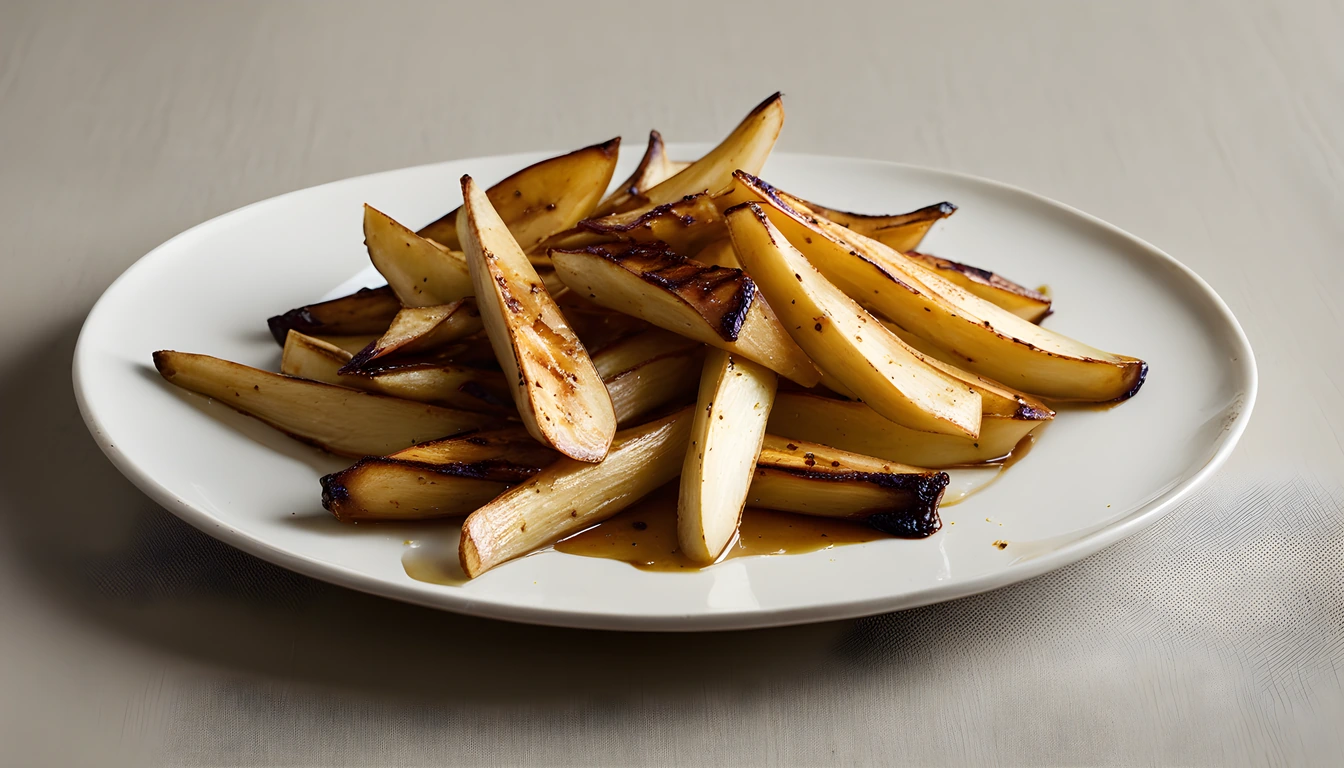
Roast the parsnips before adding the honey. This gives their edges time to brown; a short finish with honey, butter and lemon adds the glaze. The recipe makes four side servings with tender centers and browned tips.
Recipe
Honey Roasted Parsnips with a Late Butter Glaze
Roast evenly cut parsnips, then add a honey-butter glaze for the final minutes. Includes woody-core trimming, pan spacing and a weighed 4-serving formula.
7Ingredients
Yield: 4 servings
- 700 g parsnips, peeled and trimmed
- 2 tablespoons olive oil
- 2 tablespoons honey
- 1 tablespoon unsalted butter
- 15 g lemon juice
- 3 g table salt
- 0.5 g ground black pepper
Ingredient amounts scale; instructions show the original batch. Cooking times and pan sizes may need adjustment. Season to taste. Honey grams use US measures at 20°C and 17.5% moisture, a density estimate; weigh your honey for precision.
Instructions
- 1Heat the oven and size the parsnipsHeat the oven to 425 F (220 C). Peel and trim the parsnips, removing any hard woody center from large roots, then weigh 700 g of the edible pieces. Cut into roughly 7 cm (3 inch) batons about 1.5 cm (1/2 inch) thick at the broad end. Split thick pieces lengthwise so the tray cooks evenly.
- 2Coat and spread on the trayToss the parsnips with the olive oil, salt and pepper. Spread in one layer on a sturdy baking sheet lined with baking paper, leaving some space between pieces. Use a second tray if necessary rather than piling the roots on top of one another.
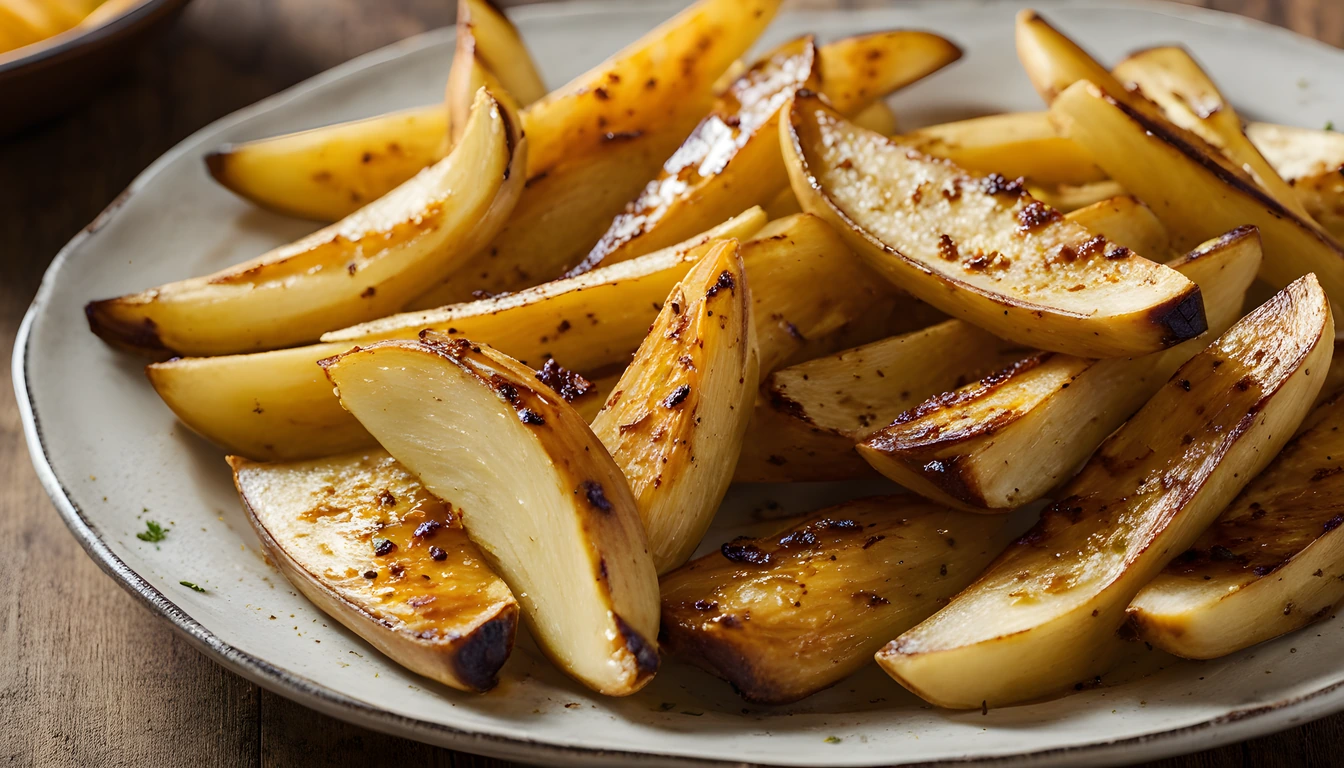
- 3Roast before adding honeyRoast for 25 to 30 minutes, turning once after about 15 minutes. The parsnips should be nearly tender with some browned edges before the glaze is added. If a fork still meets a hard center, give them a few more minutes at this stage.
- 4Mix the finishing glazeMelt the butter in a small bowl or pan and stir in the honey and lemon juice. Reduce the oven to 375 F (190 C). Drizzle the glaze over the nearly cooked parsnips and turn them carefully so they have a thin coating rather than a puddle underneath.
- 5Finish and serveReturn the tray to the oven for 8 to 10 minutes, turning once if needed. Watch the thin tips and any glaze on the tray; remove the parsnips when the centers are tender and the coating is glossy with browned, not blackened, edges. Divide into four side portions and spoon any soft glaze from the paper over them.
Estimated nutrition per serving
249.43 calories · 10.17 g fat · 40.49 g carbohydrate · 2.19 g protein · 309.51 mg sodium
Serving: 1 of 4 servings
Calculated from ingredient weights and USDA FoodData Central: 170417, 171413, 169640, 173430, 167747, 173468, 170931. Estimates use ingredient input weights; actual portions, brands and cooking losses vary. Omitted nutrient values are unavailable, not zero.
A Finishing Glaze, Not a Long Honey Bath
Honey is the main sweetener in this recipe, but it is added late. The first stage is for roasting the parsnips themselves; the short finishing stage is for coating them. The honey spends less time on the hot tray while the vegetables still get a chance to brown.
Clover gives a mild glaze, while wildflower adds a more floral flavor. Taste a little honey alongside a piece of cooked parsnip when choosing between jars. The lemon and butter are there to round out that honey flavor, rather than hide it.
Flavor intensity uses an editorial culinary scale: 1 is mild and 5 is bold. These are tasting suggestions, not laboratory measurements.
Sources: UC Agriculture and Natural Resources: Honey flavor and cooking; USDA: raw parsnips.
1 = mild, 5 = bold. Editorial pairing guidance, not laboratory measurements; jars vary.
- Clover
- Lemon-butter glaze
- Wildflower
- Roasted parsnips
- Buckwheat
- A darker roast-dinner glaze
Get the Honey Buyer's Cheat Sheet (free PDF)
16 varieties on one page — color, flavor, best use and what a fair price looks like — from the 304 honeys we track.
Trim Before You Weigh
The 700 g measurement means peeled, trimmed parsnips ready for the oven. Buy more than that to allow for the skins, ends and any woody centers you remove. Large roots are not automatically unusable, but a tough central core will not become the same texture as the softer flesh around it.
Keep the pieces broadly similar in thickness. A long, pencil-thin tip will darken before a thick top section becomes tender. Split the wide end again and leave naturally slender pieces larger; the aim is even cooking, not identical-looking batons.
Give the Tray Enough Room
The first roasting stage needs an uncrowded layer. Pieces touching occasionally are fine, but a heap of overlapping parsnips traps more steam and leaves the middle ones pale. If you use two trays, check both because the upper and lower rack positions may cook at different rates.
Turn the pieces once they have had time to develop some color. If they stick to the paper, use a thin spatula rather than scraping aggressively and tearing them apart. They should be almost tender before the honey mixture is added.
Adjust the Finish by Looking at the Pan
The honey mixture is intentionally small: two tablespoons for the full tray. Tossing well gives the roots a thin, shiny coat. If you pour it into one corner, the pooled glaze can scorch while the rest of the tray remains dry.
Lemon juice provides a little tartness beside the honey and butter. Don’t add liquid to stretch the glaze; it changes the finishing stage. Watch especially closely during the last few minutes, when the narrow tips and spilled honey can darken quickly.
Serving, Leftovers and Nutrition
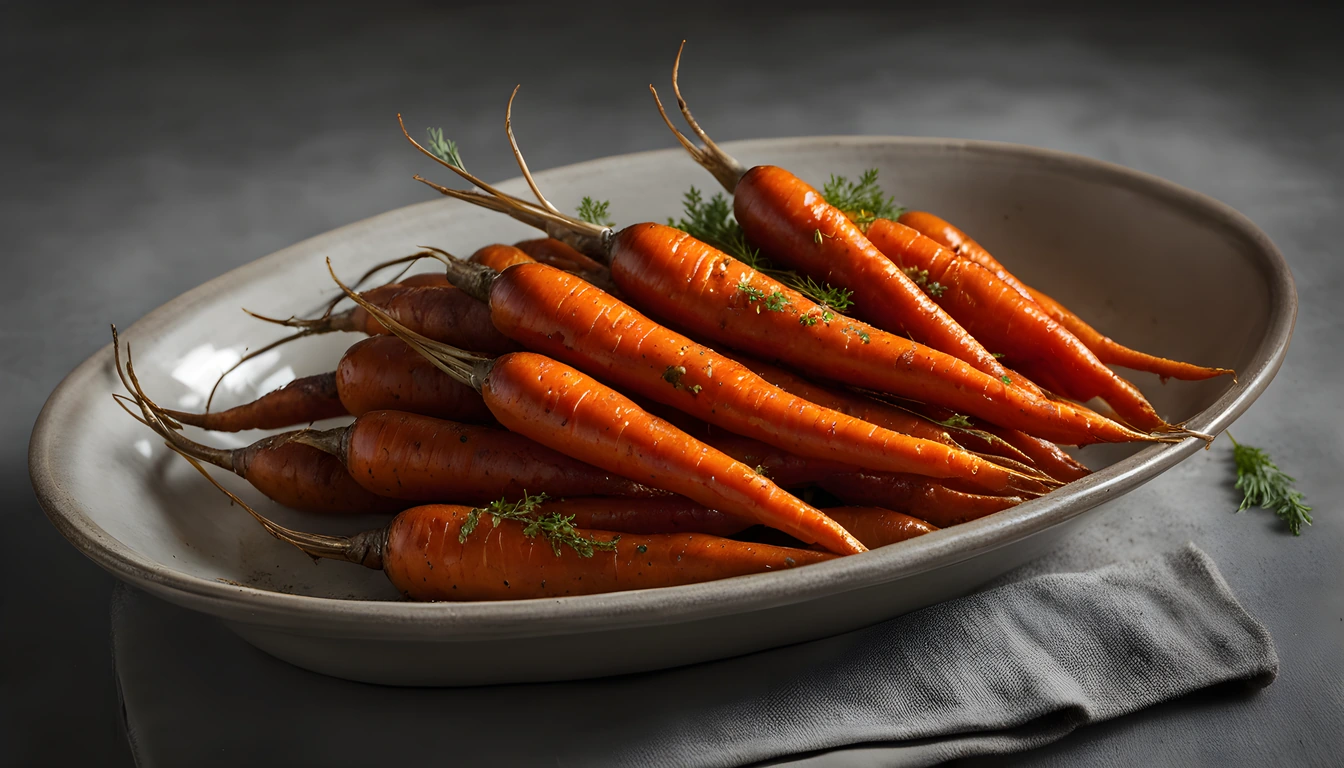
Serve with a roast dinner, honey cornbread, or a mixed tray of honey roasted carrots. The parsnips are easiest to handle straight from the oven after a brief rest. Refrigerate leftovers once cooled and reheat in a single layer so the edges can regain some texture.
The estimate uses 700 g edible raw parsnips and all the oil, butter and honey, divided by four. It assumes the glaze is served with the vegetables. Any coating left on the tray makes the actual serving differ from the ingredient-based estimate; no precise cooking-loss adjustment is implied.
Choosing the Honey
Use Clover Honey or Wildflower Honey for the flavor described in this recipe. See our honey selection guide for other culinary choices.