Why Honey Makes the Best Turkey Glaze
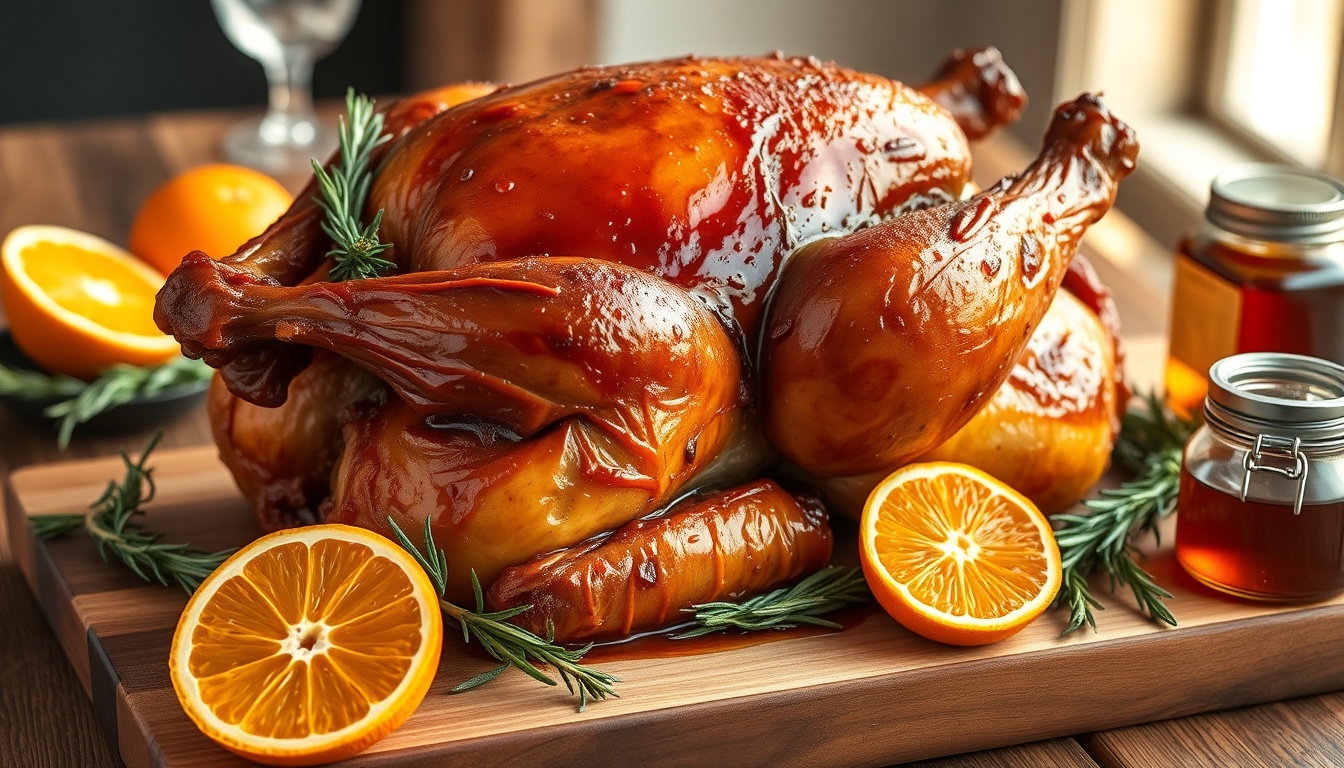
The reason honey produces a superior turkey glaze comes down to chemistry. Honey is roughly 38% fructose, and fructose caramelizes at a lower temperature than the sucrose in table sugar. This means your turkey starts building that gorgeous amber-bronze color earlier in the roasting process, and the caramelization deepens gradually instead of happening all at once in the final minutes.
Honey is also hygroscopic — it actively attracts and holds moisture from its surroundings. When brushed onto turkey skin, it pulls moisture to the surface during the first phase of roasting, which helps render the subcutaneous fat more efficiently. Once that fat renders out, the honey creates a tacky, lacquered coating that crisps beautifully in the oven heat. The result is skin that shatters when you bite into it, with a sweet-savory depth that butter alone cannot achieve.
Beyond color and texture, honey brings over 180 aromatic compounds to the table. These volatile molecules react with the proteins in the turkey skin during roasting through the Maillard reaction, generating complex flavors that taste roasted, toasty, and deeply savory. A plain butter-basted turkey tastes good. A honey-glazed turkey tastes like it came from a professional kitchen.
If you enjoy honey-forward main dishes, this approach shares the same caramelization principles as a honey glazed ham — but turkey skin, being thinner, develops an even crispier result.
The Science of Brining with Honey
Brining is the single most effective technique for preventing dry turkey, and adding honey to the brine amplifies the effect.
In a standard salt brine, the salt dissolves the protein strands in the surface meat through a process called denaturing. The loosened proteins trap and hold water, which means the meat retains more moisture during the long roasting time. A brined turkey can retain up to 10% more liquid than an unbrined bird.
Honey adds two advantages to this process. First, its sugars penetrate the surface of the meat alongside the salt, contributing a faint sweetness to the flesh itself — not just the skin. Second, the sugars on the surface of the brined turkey enhance browning during roasting. The turkey enters the oven already primed to caramelize, which means you get beautiful color even in the crevices and undersides that the glaze cannot reach.
The overnight brine time is important. Shorter brines (under 8 hours) only affect the outermost layer of meat. At 12-18 hours, the salt and honey penetrate deep into the breast and thigh, ensuring juicy results from the first slice to the last.
Pro Tip
If you are short on time, use a dry brine instead. Rub the turkey with a mixture of 1/4 cup kosher salt, 2 tablespoons honey, and herbs. Place uncovered on a rack in the refrigerator for 12-24 hours. The results are nearly as good, and you skip the large container of liquid.
Get the Honey Buyer's Cheat Sheet (free PDF)
16 varieties on one page — color, flavor, best use and what a fair price looks like — from the 304 honeys we track.
4 Glaze Variations
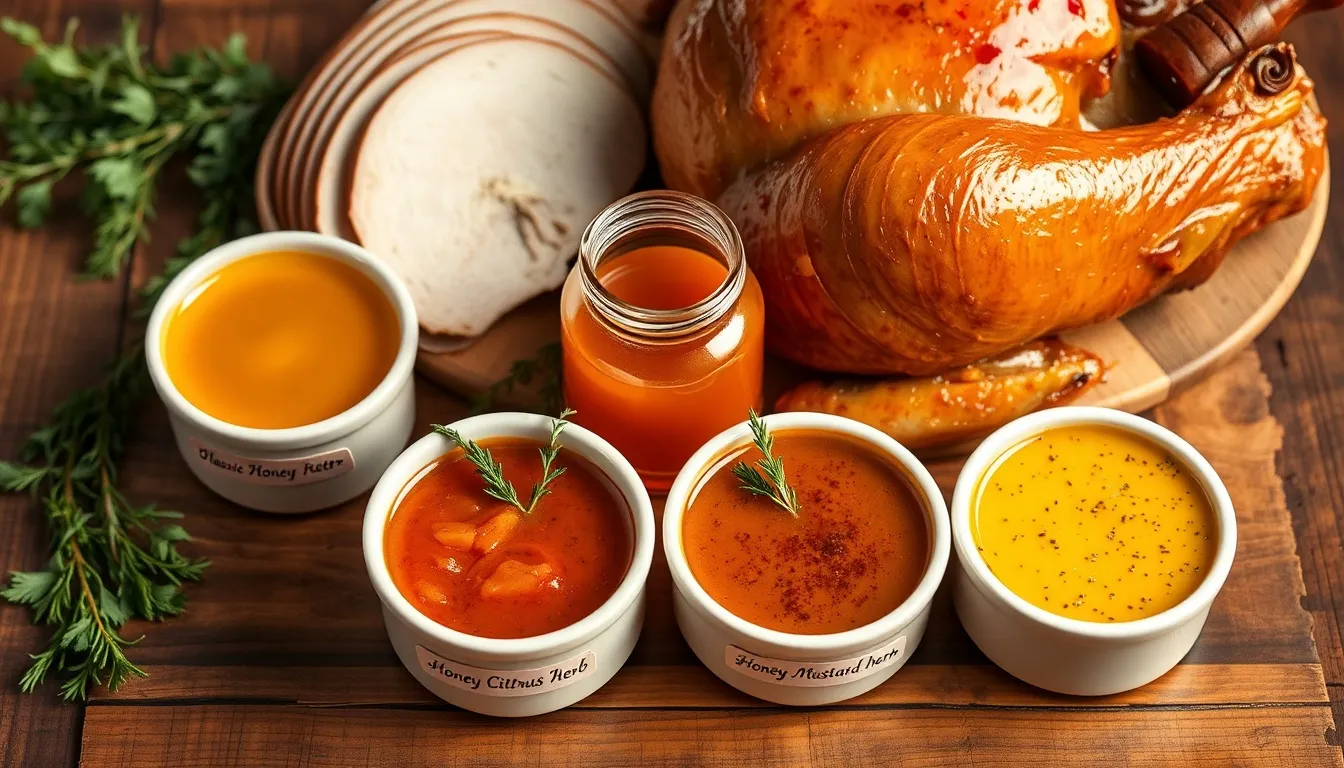
The base recipe uses a classic honey-herb-butter glaze. Here are four variations that work as direct substitutions — make any of these in place of the glaze in step three.
- Classic honey butter — the simplest version. Combine 1/2 cup honey with 4 tablespoons melted honey butter, 1 teaspoon salt, and 1/2 teaspoon black pepper. Nothing else. This lets the honey flavor shine through unobstructed and produces the most evenly golden skin. Ideal if you are using a high-quality varietal honey you want to showcase
- Honey citrus herb — whisk together 1/2 cup honey, 3 tablespoons melted butter, the zest and juice of one orange, 1 tablespoon fresh thyme, and 1 teaspoon Dijon mustard. The citrus cuts through the richness of the dark meat and adds a bright, aromatic note to the drippings. Excellent for making gravy from the pan juices afterward
- Honey maple bourbon — combine 1/3 cup honey, 3 tablespoons pure maple syrup, 2 tablespoons bourbon, 2 tablespoons melted butter, 1 teaspoon smoked paprika, and a pinch of cayenne. The alcohol evaporates in the oven heat, leaving behind a smoky, complex sweetness with subtle warmth. This variation builds the darkest, most dramatic lacquer on the skin
- Honey mustard herb — mix 1/2 cup honey, 3 tablespoons whole-grain mustard, 2 tablespoons melted butter, 1 tablespoon apple cider vinegar, and 1 tablespoon chopped fresh sage. The mustard seeds create a textured crust, and the vinegar balances the sweetness for a tangy, savory result. Pairs especially well with a honey marinade approach where you coat the bird the night before
Best Honey Varieties for Turkey
With a full 1/2 cup of honey in the glaze plus another 1/2 cup in the brine, the type of honey you choose makes a noticeable difference in the finished flavor.
- Wildflower honey — the best all-around choice. Its balanced floral and warm notes complement turkey without overpowering the natural meat flavor. Produces a rich golden-brown color. Most grocery store raw honey is wildflower and works perfectly here
- Clover honey — mild and neutral, this variety lets the herbs and butter carry the flavor. Choose clover if you want a traditional roast turkey taste with just a hint of sweetness and excellent browning. The most affordable option for a recipe that uses a full cup of honey
- Buckwheat honey — intensely dark and malty with molasses-like depth. Creates a dramatically deep mahogany crust and adds a robust, almost savory sweetness. Outstanding with the bourbon maple variation. Not for those who prefer subtle flavors
- Orange blossom honey — light, floral, and gently citrusy. A natural match for the citrus herb glaze variation. The delicate flavor works well with turkey breast, which has a milder taste than the dark meat
- Avoid heavily flavored or infused honeys for roasting — truffle honey, lavender honey, and similar specialty varieties can taste odd at high temperatures. Save those for finishing drizzles on cheese boards rather than the oven
Carving and Serving Tips
A beautifully glazed turkey deserves a proper carving technique to show it off at the table.
- Use a sharp carving knife and a sturdy fork — a dull blade tears the crispy skin instead of slicing cleanly through it. Sharpen your knife before you start
- Remove the legs and thighs first by cutting through the skin between the leg and body, then bending the leg back to pop the joint. Cut through the joint to separate. This exposes the breast for clean slicing
- Slice breast meat against the grain in 1/4-inch slices. Start from the outside and work toward the breastbone. Each slice should have a strip of lacquered honey skin on top
- Arrange slices on a warmed platter — a cold plate will cool the meat quickly. Spoon a few tablespoons of pan drippings over the sliced meat for extra moisture and a glossy finish
- Save the carcass for stock. A honey-brined turkey carcass makes an exceptionally rich and slightly sweet stock that is perfect for soups and gravies
Pro Tip
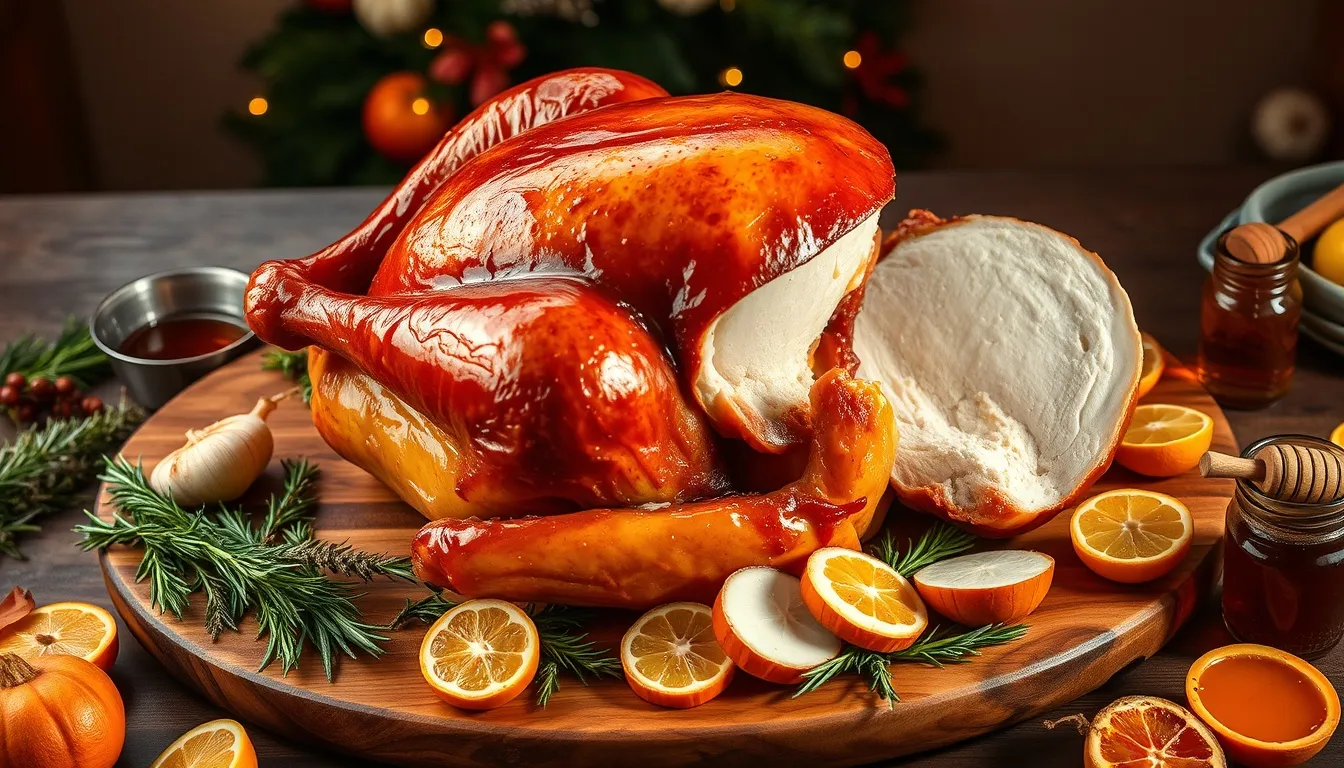
For the best presentation, let guests see the whole glazed bird before you carve it. The golden, lacquered skin is the visual payoff of all your work — do not hide it in the kitchen.
Storage and Leftover Ideas
Honey-brined turkey stores well because the brine helps the meat retain moisture even after refrigeration, when most roasted poultry dries out.
- Refrigerator — store carved turkey in an airtight container with a spoonful of pan drippings poured over the slices. Keeps well for 3-4 days. The honey in the meat helps it stay moist longer than a standard roast turkey
- Freezer — wrap portions tightly in plastic wrap, then aluminum foil, and freeze for up to 2 months. Thaw overnight in the refrigerator. Sliced breast freezes better than shredded dark meat, which can become mushy
- Reheating — warm slices in a 300°F oven covered with foil and a splash of turkey stock for 15-20 minutes. Avoid the microwave, which steams the skin and destroys the crispness. If making sandwiches, cold turkey from this recipe is excellent and needs no reheating
- Leftover ideas — honey-glazed turkey is outstanding in sandwiches with cranberry sauce and sharp cheddar, in turkey pot pie, shredded into turkey tacos, or diced into a turkey and wild rice soup. The subtle honey sweetness in the meat pairs well with acidic and spicy accompaniments