A Shrub Is Not a Fermented Beverage
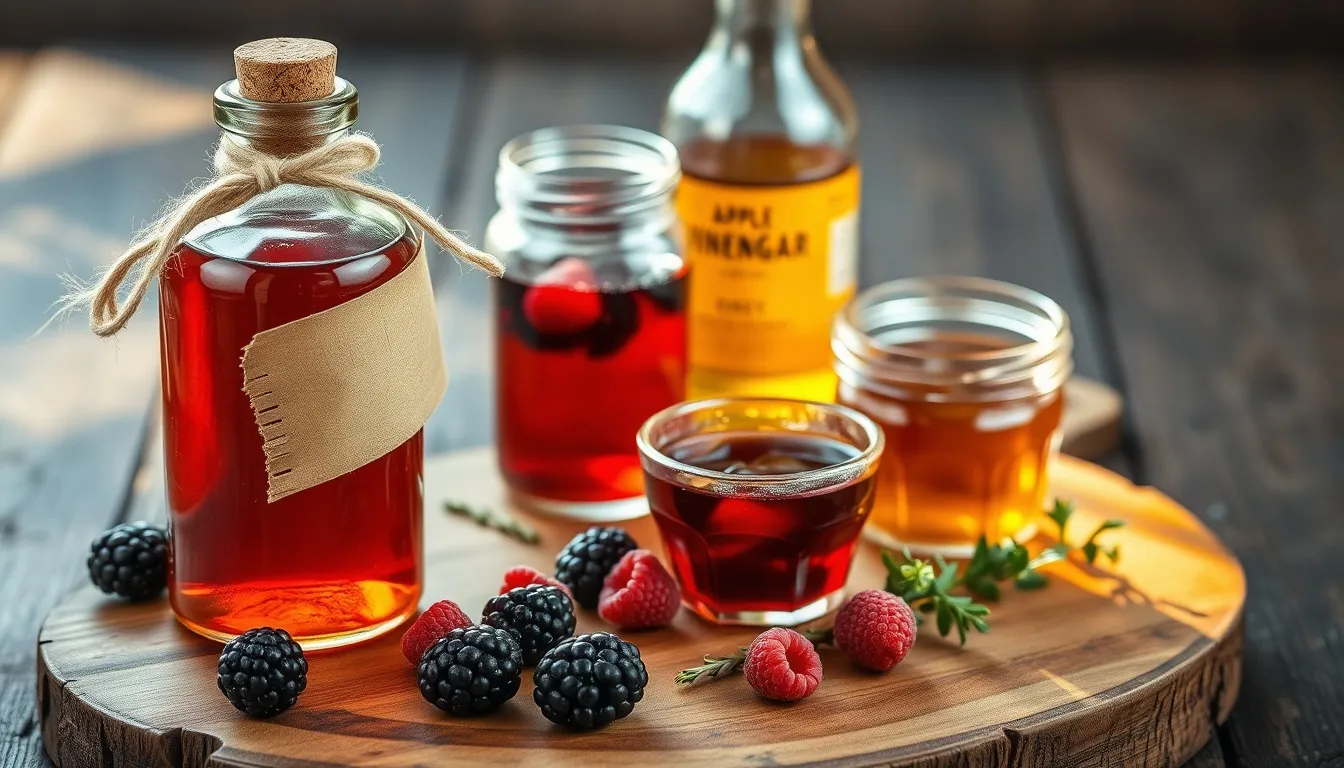
The first thing to clear up about shrubs is what they are not. A shrub — sometimes called a drinking vinegar — is a fruit syrup built on three ingredients: fruit, sweetener, and vinegar. It is mixed with sparkling water (or used as a cocktail modifier) and produces a tart, fruit-forward, lightly acidic drink that tastes alive without containing any live culture. There is no SCOBY, no wild-yeast starter, no primary fermentation. The acid backbone comes from vinegar that was fermented elsewhere; the syrup itself just macerates fruit in honey and lets the vinegar dissolve everything together.
This is a useful frame because it changes the brewing math entirely. With a kombucha or a ginger-bug soda you are running a live ferment, and the honey choice has to clear the antimicrobial floor that lets the microbes live. With a shrub the relevant variables are extraction efficiency, sweetness balance, and aromatic preservation — there is no microbe to feed, no temperature window to hit, no end-point pH to chase. The standard cocktail-bar working ratio (Dietsch 2014, Shrubs: An Old-Fashioned Drink for Modern Times) is 1:1:1 by mass — equal weights of fruit, sugar, and vinegar — and the entire recipe collapses into "macerate, strain, bottle, refrigerate."
Pro Tip
If you came here looking for a fermented honey beverage, you probably want a kombucha, jun, mead, or ginger-bug build. Shrubs sit in the cocktail / bar-program / soda-base lane: a syrup you keep in the fridge and pour an ounce of into a tall glass of soda water for a non-alcoholic drink, or stir into a whiskey sour as a flavor anchor. The free Honey Shrub-Vinegar Calculator runs the recipe math; this guide explains the why behind it.
The 1:1:1 by-Mass Anchor Explained
Dietsch (2014) is the most-cited modern source on home shrubs, and the working anchor across the bar-and-restaurant lane is 1:1:1 by mass: 500 g fruit, 500 g sugar, 500 g vinegar yields about 700–800 mL of finished syrup after the spent fruit solids are strained out. The reason it is by mass and not by volume is that fruit weight is reproducible while fruit volume depends on shape, ripeness, and how tightly you pack a measuring cup. A kitchen scale removes that variable entirely, and every modern bar-program recipe leans on the gram measurement for that reason.
Honey substitutes for sugar at roughly 0.75x by weight. This is not a tradition number — it comes out of nutritional chemistry. USDA FoodData Central entry 169640 (honey, 304 kcal/100 g, 82.4 g sugars/100 g) compared to entry 169655 (granulated sucrose, 387 kcal/100 g, 100 g sugars/100 g) shows honey is roughly 25% sweeter per gram of dry matter once you account for the fructose fraction (fructose is ~1.7× as sweet as sucrose by weight) and the 17% moisture displacement. Multiply through and the working substitution lands at about 0.75 g honey per 1 g sugar to deliver the same perceived sweetness in the finished drink. Three classic Dietsch tiers map cleanly onto this: Bright (0.55x honey, lighter and tarter), Classic (0.75x, the textbook anchor), Rich (0.95x, almost-1:1:1 with all the honey in).
Honey also brings flavor that sugar does not. Where a sugar shrub lets the fruit and vinegar carry the entire flavor load, a honey shrub adds floral phenolics, a slight wax-and-pollen warmth, and a longer aromatic tail in the glass. That is also why some honey choices are wrong for some fruits — buckwheat honey or chestnut honey with their bold molasses and tannic notes will steamroll a delicate strawberry; clover honey or orange blossom honey with their mild floral profiles will sit underneath the fruit and lift it. The pairing math matters more than for a sugar build.
Fruit Yields by Category
The 1:1:1 ratio is calibrated to whole fresh fruit by weight before any extraction loss. In practice the actual juice you recover from 500 g of fruit varies dramatically by fruit class. Berries (strawberry, raspberry, blackberry, blueberry) yield roughly 75% of their weight as extractable juice. Stone fruits (peach, plum, cherry, apricot) yield about 65% — the pit and the firmer flesh carry mass that does not break down in maceration. Pome fruits (apple, pear, quince) yield about 60% — the cell walls are sturdier and the flesh holds its water more tightly. Citrus yields about 80% by weight as juice when you supreme the segments and discard the membranes.
These yield percentages matter because they tell you how much liquid your finished shrub will actually contain. The companion calculator treats juice as fruit mass × yield at a 1.0 g/mL planning approximation, honey at 1.4204 g/mL, and vinegar millilitres 1:1 with fruit grams. A 500 g strawberry shrub at the Classic 0.75x honey ratio is then 375 mL juice + 264 mL honey + 500 mL vinegar ≈ **1,139 mL** of mixed liquid before straining losses. Using juice density 1.04 g/mL on the same 375 g of juice instead of the 1.0 g/mL approximation gives ≈**1,120 mL**. Neither figure is an observed bottle yield. The same recipe with 500 g apples (60% juice) is a smaller mix, which matters when you scale to 5 L for a bar-program shift.
- Berries (strawberry, raspberry, blackberry, blueberry): 75% juice yield
- Stone fruit (peach, plum, cherry, apricot): 65% juice yield — pit out before weighing
- Pome fruit (apple, pear, quince): 60% juice yield — slice thin to expose more surface
- Citrus (lemon, grapefruit, orange supremes): 80% juice yield — supreme and discard membranes
Cold Method vs Hot Method: Two Different Aromatic Profiles
There are two canonical methods for building a shrub. The cold method (sometimes called the Brooklyn method or the slow method) macerates the fruit with the sweetener for 48 hours in a refrigerator before the vinegar is added; after the vinegar comes in, the syrup rests for another full week to integrate. The hot method dissolves the sweetener in the fruit over heat for about 30 minutes, adds the vinegar after cooling, and stabilizes within 24 hours. Both work; they produce noticeably different drinks.
The cold method preserves volatile aromatics. Cellini et al. (2018, Molecular Plant Pathology 19:158–168) profiled the volatile compound landscape of fresh apple tissue and found that the dominant ester compounds (ethyl-2-methyl-butanoate, hexyl acetate, ethyl butanoate) are heat-labile and degrade above 50°C. A cold-macerated apple shrub keeps those esters intact and tastes brighter, more orchard-like, more recognizably "apple." The same is true for berry volatiles (hexenal, methyl jasmonate) and stone-fruit lactones (γ-decalactone is the dominant peach-aroma compound and degrades sharply at extended heat).
The hot method sacrifices some of those aromatics in exchange for a deeper, jammier, more cooked-fruit profile. For shrubs built around already-cooked-flavor fruits — quince, pear poached in syrup, roasted strawberry, mulled cherry — the hot method is the right call because the cooked-fruit chemistry is the point. For shrubs built around fresh-fruit aromatics — peach in July, raspberry off the cane, sun-warm strawberry — the cold method preserves what makes the fruit worth shrubbing.
Pro Tip
A reasonable working rule: if you would eat the fruit raw, build a cold shrub. If the fruit improves with cooking (apples in pie, quince in jam), build a hot shrub.
Vinegar Selection — pH, Density, and Aromatic Backbone
Vinegar is a fermented product (acetic-acid bacteria oxidize ethanol to acetic acid; Solieri & Giudici 2009 catalogue the Acetobacter and Komagataeibacter species that dominate commercial vinegar fermentations across cider, wine, rice, and balsamic-style products). Vinegar density across these products converges at roughly 1.01 g/mL, so volume-and-mass conversion in the recipe math holds across the whole vinegar lane. What differs sharply is the pH and the aromatic backbone the vinegar contributes to the finished shrub.
Apple cider vinegar finishes at pH 2.8–3.5, with 5–6% acetic acid by mass and a soft, apple-y aromatic that pairs cleanly with most fruits — it is the default-correct vinegar for a beginner shrub. Champagne vinegar finishes at pH 2.9–3.3 with a slightly higher acid content and a brighter, more wine-like aromatic that lifts citrus and stone fruit particularly well. Rice wine vinegar finishes at pH 4.0–4.5 — significantly less acidic — with a clean, almost neutral profile that lets delicate fruits (white peach, lychee, Asian pear) speak without competing aromatics. Balsamic vinegar finishes at pH 2.4–2.8 with a deep, caramelized, raisin-like backbone that pairs naturally with stone fruit, fig, and dark-fruit shrubs but overwhelms most berries.
For a first shrub, pick apple cider vinegar. For a second shrub paired with citrus or peach, try champagne. Save rice-wine vinegar for delicate-fruit experiments and balsamic for fall stone-fruit and fig builds. The vinegar choice changes the drink as much as the fruit choice does.
The Honey Choice — Pairing by Floral Source
Floral honey choice should track the fruit. Pairings that work in jam and pastry generally work in shrub: orange blossom honey with strawberry for bright citrus undertones, clover honey with raspberry for clean mild sweetness, wildflower honey with peach for complex floral depth, buckwheat honey with fig or dark cherry for bold molasses richness, lavender honey with stone fruit for sophisticated floral elegance, sage honey with citrus for herbal brightness. The principle is that fruit aromatics share volatile-compound families with the floral source the honey came from, and the pairing surfaces those shared notes in the glass.
Avoid high-grade Manuka honey in shrubs — but for a different reason than in ferments. In a kombucha or ginger bug, Manuka stalls the brewing because methylglyoxal is a non-peroxide antimicrobial that suppresses live yeast (Mavric et al. 2008, Mol. Nutr. Food Res. 52:483–489). In a shrub there is no live ferment to suppress, so the antimicrobial activity is not the issue. The issue is flavor: Manuka honey brings an intense throat-coating eucalyptol-and-medicinal note that overpowers fresh fruit. Reserve high-grade Manuka for tea, toast, and finishing — never for shrubs.
Pro Tip
A reasonable defaults table for first-time shrub builders: berry shrubs → clover honey or wildflower honey; stone-fruit shrubs → wildflower honey or lavender honey; pome-fruit shrubs → wildflower honey or buckwheat honey (apple+buckwheat is a strong fall pairing); citrus shrubs → orange blossom honey or sage honey.
Recipe Math: A Worked 500 g Strawberry Shrub
Build a 500 g strawberry shrub at the Classic 0.75x honey ratio with apple cider vinegar, cold method. Hull and weigh 500 g strawberries (about 3 cups whole). Add 375 g raw clover honey (500 × 0.75 = 375 g — **1.12 US cups**, 264 mL at 1.4204 g/mL; not 1¼ cups). Clover honey provides clean mild sweetness that complements strawberry without competing. Stir gently to coat, cover the bowl with plastic wrap, refrigerate 48 hours. The salt-and-honey draws juice out of the berries by osmosis; after 48 hours you should see a deep red, syrupy liquid pooled around the now-softened berries.
Add 500 g apple cider vinegar (about 495 mL given vinegar density 1.01 g/mL per Solieri & Giudici 2009). Stir to integrate. Cover and refrigerate 1 week. The acid backbone integrates over that week — at day 1 the shrub tastes harshly vinegar-forward; by day 7 the acidity has rounded into a balanced fruit-honey-vinegar trio. Strain through fine-mesh sieve into a swing-top bottle, pressing the spent fruit lightly to extract residual juice. Discard the spent solids (or freeze them for another use; strawberry shrub solids stirred into vanilla ice cream are excellent).
Model yield, not a measured bottle: about **1,139 mL** (≈38.5 US fl oz) of mixed liquid using the calculator's 1.0 g/mL juice approximation, or about **44** 0.875-US-fl-oz pours before real extraction and mixing losses. Pressing spent fruit harder or leaving pulp in the jar changes the bottle. A quart jar still covers a small dinner party; refrigerated, a finished shrub keeps three to six months without a quality claim beyond ordinary home-kitchen storage.
- 500 g hulled strawberries (~3 cups whole)
- 375 g raw clover honey (Classic 0.75x ratio)
- 500 g apple cider vinegar (~495 mL)
- Cold method: 48 h fruit + honey maceration, then add vinegar, then 1 week refrigerator rest
- Model yield: ~1,139 mL mixed liquid; ~44 cocktail-doses at 0.875 fl oz each, before straining losses
Serving Ratios — Soda, Cocktail, and Vinaigrette
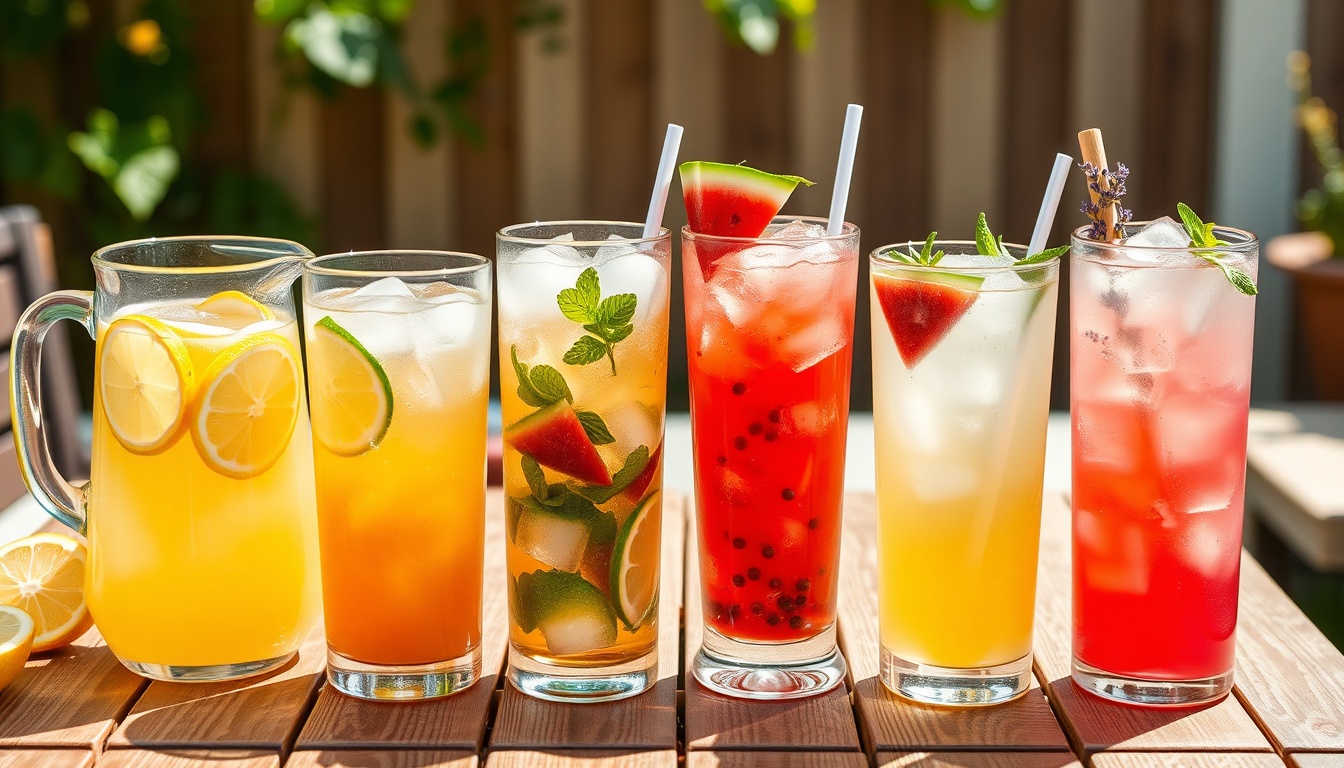
For a non-alcoholic shrub soda, pour 0.875 fl oz (about 26 mL) of shrub into a tall glass over ice, top with 4–6 fl oz of cold sparkling water, garnish with a sprig of mint or a slice of the source fruit. The final drink reads as fruit-tart-fizzy with the honey adding a soft floral tail. Adjust the shrub dose up to 1.5 fl oz for a more concentrated flavor or down to 0.5 fl oz for a lighter session-style drink.
For a cocktail, the shrub functions as both an acid component (replacing or augmenting citrus juice) and a sweetener (replacing or augmenting simple syrup). A starting build: 2 fl oz spirit + 0.875 fl oz shrub + 0.5 fl oz fresh lemon juice, shaken with ice, strained into a coupe. The combination produces a bright, fruit-forward sour without the sugary mouthfeel of a standard sour cocktail. Whiskey + peach shrub made with wildflower honey + lemon, gin + raspberry shrub with clover honey + lime, mezcal + apple shrub made with buckwheat honey + lemon are all excellent starting builds.
For a vinaigrette, the shrub is essentially a finished sweet-acid base. Whisk 1 part shrub with 2 parts neutral oil, season with salt and pepper, dress salads. The honey-fruit-vinegar combination is structurally identical to the standard "honey-mustard-vinaigrette" formula but with fruit aromatics replacing the mustard. Strawberry-balsamic shrub vinaigrette over arugula is the canonical use case.
Storage and Shelf Life
Refrigerated in a sealed glass bottle, a finished shrub keeps for three to six months without meaningful quality loss. The vinegar and the honey are both natural preservatives — vinegar via the acetic acid load (pH well below the 4.6 floor that supports most spoilage organisms; Solieri & Giudici 2009 cover the microbiology in detail) and honey via low water activity (a finished shrub at 1:1:1 sits at roughly aw 0.85, well below the 0.95 floor that most spoilage bacteria need). The combination is shelf-stable in cold storage on the order of months.
What does change over time is the aromatic profile. Fresh-fruit volatiles fade — a strawberry shrub at 6 months tastes more like "strawberry preserve" than "fresh strawberry," and a peach shrub at 3 months noticeably loses the green-grass top notes that made it distinctive at week 1. Plan your batch sizes for 2 to 3 months of comfortable use rather than building a years-supply jar. The recipe scales linearly so building a fresh batch every other month is more rewarding than building one big jar in summer that you sip through into winter.
Take-Aways for First-Time Shrub Builders
Start with a cold-method strawberry shrub at the 1:1:1 by-mass anchor with clover honey at 0.75x for sugar (375 g honey to 500 g strawberries to 500 g apple cider vinegar). Clover honey provides reliable mild sweetness perfect for beginners. Macerate fruit + honey 48 hours, add vinegar, rest 1 week, strain, refrigerate. Use 0.875 fl oz over ice with 4–6 fl oz sparkling water for the textbook drink. The recipe is forgiving — within ±20% on any of the three components the shrub works; outside that range it starts tasting unbalanced.
For batch math at any size — different fruit, different honey ratio, different vinegar choice, hot vs cold method — the Honey Shrub-Vinegar Calculator runs the numbers live. No account, no email, no tracking. The calculator is the working tool; this article is the why-it-works companion. Both are free to use indefinitely.
A note on what shrubs are not, one more time: shrubs are not fermented in your kitchen, do not contain live cultures, and are not a substitute for kombucha or jun. If you want a live-culture ferment, the Honey Kombucha Calculator and Honey Ginger-Bug Calculator cover those builds. Shrubs are a different lane — drinking-vinegar syrups in the bar-and-soda tradition — and they earn their place in a well-stocked refrigerator on flavor and shelf-life merit, not on probiotic claims.