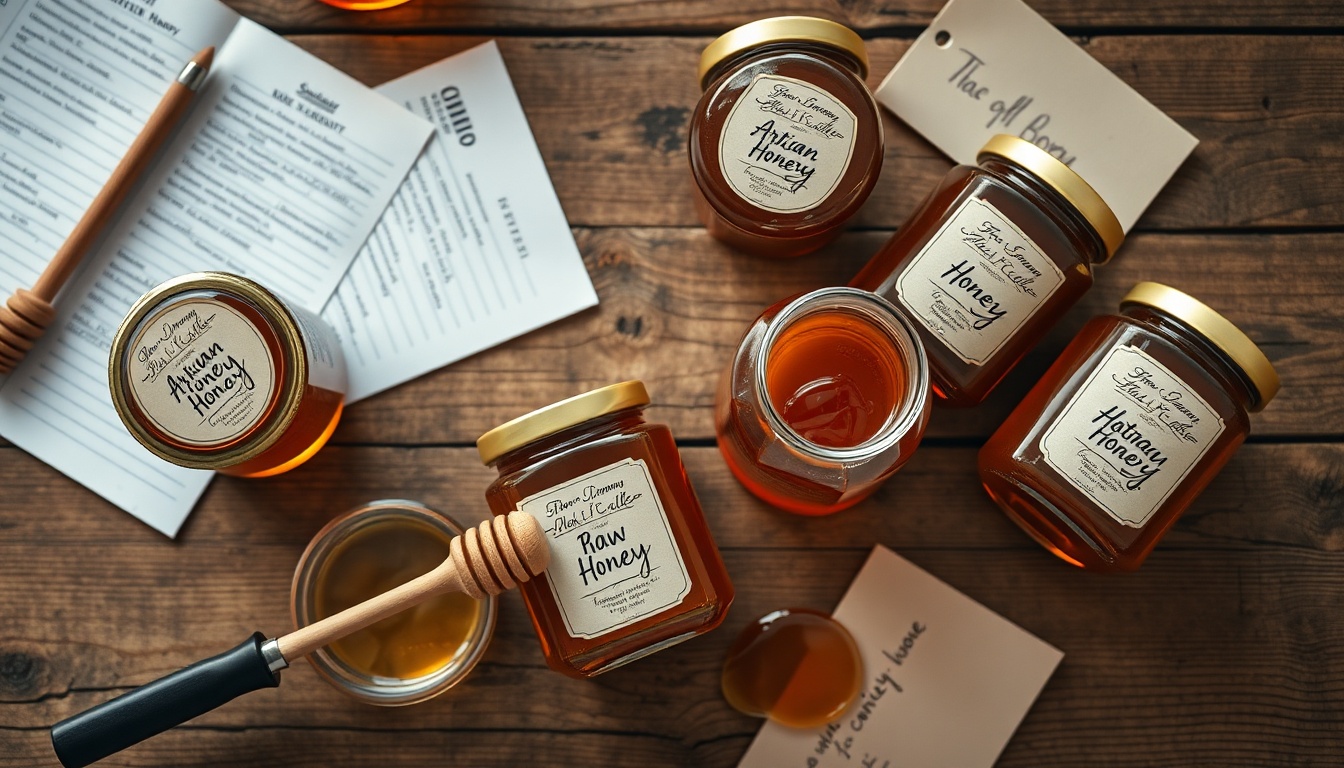
Saudi Arabia's Honey Geography: Three Production Zones
Saudi Arabia's 2.15 million square kilometres contain three ecologically distinct honey-production zones that produce fundamentally different honeys, sold at fundamentally different prices in a domestic market that is among the world's most sophisticated consumers of premium honey. The highland zone — the Asir and Hejaz mountains running along the southwestern and western edges of the Arabian Peninsula — is where the country's most prized honey originates. The Nejd plateau in the centre, the world's largest sand desert, produces desert wildflower honey from a sparse but botanically interesting flora. The Tihama coastal lowland, between the mountains and the Red Sea, produces a different category of agricultural honey where the temperature, humidity, and flora more closely resemble the Horn of Africa than the rest of Saudi Arabia.
The Asir highlands are the critical zone. The Asir escarpment — the southwesternmost edge of the Arabian Shield, where the plateau drops dramatically from 2,000–3,000 metres to the Tihama coastal plain in distances of less than 50 kilometres — creates one of the Arabian Peninsula's most biogeographically complex environments. The southwestern monsoon (the Khareef, reflected northward from the Gulf of Aden) brings 300–500 mm of annual rainfall to these highlands, transforming them seasonally into something unrecognisable to most visitors' image of Saudi Arabia: terraced agricultural villages on steep mountainsides, juniper forests at altitude, and flowering hillsides dense with Ziziphus spina-christi (the genuine lote tree of the Quran, the Arabian Sidr), Acacia gerrardii (talh), Acacia tortilis (samar), wild thyme, and dozens of endemic highland shrubs. The Al-Baha governorate — nestled in the northern Asir highlands at 1,500–2,500 metres — has historically been Saudi Arabia's most concentrated honey-production region, known as 'City of Honey' (مدينة العسل) in domestic marketing.
The Nejd plateau and its desert fringes — including the Rub' al Khali (the Empty Quarter), the An-Nafud desert, and the central Najd region — produce honey from desert flora that blooms briefly and unpredictably after winter rains. Acacia tortilis, Calotropis procera (osher, or milk bush), Ziziphus nummularia (sidr al-barr, the desert jujube), and various Salsola and Haloxylon desert shrubs provide erratic but distinctive nectar flows. Desert honey from the Nejd is typically pale to amber, crystallises moderately, and has a flat or mildly sweet character compared to the complexity of highland varieties — valued domestically as a commercial staple but not commanding the premium of Sidr or Talh from Asir or Al-Baha.
Saudi Sidr Honey: The Asir Lote Tree and the Ziziphus Distinction
Saudi Sidr honey derives from Ziziphus spina-christi — the Arabian lote tree, the genuine biblical and Quranic sidr (سدر) — and is botanically and historically distinct from the South Asian Sidr honey produced from Ziziphus mauritiana in Pakistan's KPK province or Afghanistan's Kunar valley. Ziziphus spina-christi is a slow-growing thorny tree native to the Arabian Peninsula, Egypt, and the Levant, reaching 5–8 metres in height with deeply ribbed bark and small, dark, olive-sized fruits that are a traditional food in Bedouin diet. It blooms in October through December in the Asir highlands — after the summer rains and the main agricultural season — producing a concentrated nectar flow that Apis mellifera colonies exploit almost exclusively when the bloom is at peak density. The resulting honey is dark amber to reddish-amber, with an exceptionally thick body (moisture content typically 14–16%, below the Codex Alimentarius maximum of 20%), a caramel-phenolic aromatic profile with underlying notes of dried fruit, molasses, and faint medicinal spice, and a smooth crystallisation into a firm, fine-grained paste that locals call asiyah (أسيئة) when fully set.
The Saudi Sidr premium in domestic markets is extraordinary even by the standards of global specialty honey. Authenticated Al-Baha or Asir highland Sidr honey is sold in the Riyadh, Jeddah, and Abha markets. No dated retail price is cited here. Rare single-source Sidr from named highland apiaries is bought as a gift. The premium reflects limited bloom windows, small colony populations, low yield per hive, and domestic demand. Saudi Sidr honey is a prestige commodity within Gulf culture in a way that has no direct analogue in Western honey markets.
The authentication problem with Saudi Sidr is severe. Because of the extraordinary price differential between authenticated highland Sidr and generic honey, adulteration is pervasive in Saudi markets. The Saudi Food and Drug Authority (SFDA) has documented widespread addition of sugar syrups, corn syrup, and the blending of imported bulk honey (from Argentina, Australia, and China) into domestic products sold as 'pure Saudi Sidr.' Genuine highland Sidr can be partially authenticated through: moisture content below 17% (adulterated honey typically shows higher moisture), pollen analysis confirming Ziziphus spina-christi pollen (distinctive trilateral aperture morphology), NMR profiling (the most robust fraud-detection method, now used by Saudi SFDA licensed labs), and the behaviour of crystallisation — authentic Sidr crystallises slowly and uniformly into a smooth cream, while adulterated products typically remain liquid (glucose syrup addition) or crystallise unevenly.
Pro Tip
Authentic Saudi Sidr honey is almost never available through international retail channels at honest prices — the market is too lucrative domestically. Honey sold online as 'Saudi Sidr' for $20–40 per jar on Western platforms is almost certainly not what it claims. When purchasing in Saudi Arabia, Al-Baha, or Jeddah specialty stores, look for SFDA-registered products with a traceable producer registration number, moisture content shown on the label (≤16% for premium Sidr), and physical appearance consistent with authentic dark amber, thick-bodied honey.
Get the Honey Buyer's Cheat Sheet (free PDF)
16 varieties on one page — color, flavor, best use and what a fair price looks like — from the 304 honeys we track.
Talh Honey: Acacia gerrardii and Saudi Arabia's Highland Premium
Talh honey (عسل الطلح) — produced from the blossoms of Acacia gerrardii, the Arabian highland acacia — is, by many measures, the most expensive honey in Saudi domestic markets and the most distinctively 'Saudi' of all the kingdom's honey varieties. The talh tree (طلح) is an Acacia species adapted to the rocky slopes and terraced agriculture of the Asir and Al-Baha highlands, growing at altitudes of 1,000–2,500 metres in association with juniper, wild olive, and the endemic Asir thyme. It blooms in March through May — after winter rains — with small, spherical, cream-coloured flower clusters that produce a short but intensely concentrated nectar flow lasting approximately 2–4 weeks. Managed Apis mellifera colonies placed at the edge of talh groves during this window can produce 10–20 kg of monofloral talh honey per hive in a single season, making the total available quantity from any given year extremely limited.
Talh honey is pale to light amber — striking because of the contrast with the much darker Sidr — with a creamy, buttery body that crystallises readily into a dense white paste with a distinctively aromatic, slightly sharp floral sweetness. Tasters with experience in European acacia honeys (Robinia pseudoacacia) often note surface similarities in the pale colour and creamy texture, but the aromatic profile is entirely different: Saudi talh has a spicy-herbal dimension — traces of thymol, cinnamaldehyde, and green-floral notes — absent from European acacia, reflecting the different Acacia species and the arid highland botanical context. In Saudi specialty markets, talh honey from authenticated Al-Baha highland producers is sold in Saudi specialty markets, and in some seasons is priced with Sidr — a reflection of the even shorter bloom window and lower per-hive yields rather than a consensus that talh outranks Sidr in therapeutic prestige (in Tibb al-Nabawi tradition, Sidr retains primacy as the Quranic lote tree honey).
The Asir region's talh honey has attracted academic attention. Research from King Khalid University in Abha (published in peer-reviewed journals of agricultural chemistry from 2015–2023) has documented the phenolic content, antimicrobial activity against Staphylococcus aureus and Escherichia coli, and antioxidant profiles of Al-Baha and Asir talh honey, finding phenolic concentrations comparable to or exceeding those of New Zealand manuka honey in some samples — though the mechanistic pathway (hydrogen peroxide-based for most honeys; non-peroxide methylglyoxal-based for manuka) differs and the comparative studies use different assay standards, making direct 'talh vs. manuka' comparisons contested. The research base is growing but not yet standardised to international clinical-trial quality, and claims of therapeutic equivalence with manuka should be treated with appropriate caution. What is not contested is the genuine bioactive interest: Asir highland honey samples from varied floral sources show substantially higher phenolic content and antimicrobial activity than commodity honeys from industrial apiaries, consistent with the documented diversity and secondary-metabolite richness of the highland flora.
Samar and Sumr: Desert Blossom Honeys of the Nejd
Beyond the highland premium varieties, Saudi Arabia's desert regions produce a category of honey that is essential to understanding the domestic market but largely invisible internationally: desert blossom honeys from Acacia tortilis (samar, سمر), Calotropis procera (osher, أشر or العشر), and mixed Nejd wildflower sources. Samar honey (عسل السمر) comes from Acacia tortilis — the characteristic umbrella-shaped thorn tree of the Arabian savanna and desert fringes, one of the most widely distributed Acacia species across the Arabian Peninsula, East Africa, and the Sahel. It blooms in spring (February–April in the Nejd and eastern regions) with small cream-yellow flowers that provide a nectar flow accessible to managed Apis mellifera colonies placed along wadis (seasonal riverbeds) and at desert-edge oases. Samar honey is pale amber to light golden, mildly crystallising, with a clean, sweet-floral character and moderate aromatic complexity. It is priced as a mid-market domestic variety — valued for its accessibility and the widespread cultural recognition of the samar tree as an intrinsically Arabian species.
Osher honey (عسل العشر) from Calotropis procera — the giant milkweed of the Arabian desert, a large shrub with distinctive greyish-green leaves and purple-tinged flowers — is a more unusual variety produced in limited quantities from apiaries placed in areas of dense Calotropis growth along the southern Tihama coastal plain and desert margins. The Calotropis flower produces an exceptionally sweet, high-sugar nectar with an unusual, slightly medicinal-floral aromatic profile (the plant's cardiac glycosides are present in the leaves and latex but not in the nectar at concentrations that would transfer significantly to honey). Osher honey is pale to white, with a clean but distinctively light aromatic character, and is used in traditional Tibb al-Nabawi frameworks as a digestive remedy and wound-dressing honey. Its production is limited, its documentation in international literature sparse, and its availability outside Saudi Arabia and the Gulf essentially nil — making it one of the Arabian Peninsula's most genuinely obscure honey varieties.
Mixed Nejd wildflower honey — the commercially dominant category in the kingdom's interior — blends nectar from desert flora that includes Salvia, Thymus, Origanum, various Centaurea species that bloom after winter rains, and the sparse perennial shrubs of the central plateau. It is the reference-standard commodity honey in most Saudi household use, priced for domestic consumption, and it accounts for the bulk of what is domestically produced (estimated 500–700 MT/year of total Saudi production, of which the high-value Sidr and Talh varieties represent a small fraction by volume). The gap in price and status between this commodity Nejd wildflower honey and the premium highland Sidr and Talh is larger in Saudi Arabia than the gap between commodity and specialty honey in almost any other country — a reflection of the extreme cultural and religious weight attached to the handful of varieties specifically associated with Prophetic tradition and Asir highland terroir.
Al-Baha: Saudi Arabia's Honey Capital
Al-Baha governorate — a relatively small administrative region of approximately 11,000 square kilometres nestled between the Asir mountains and the Tihama coastal plain, centred on the city of Al-Baha at 1,650 metres altitude — holds a place in Saudi honey culture disproportionate to its size. The region's terrain — steep terraced hillsides, deep wadis, juniper forests above 2,000 metres, and the dramatic Alhada and Shafa escarpment plateau overlooking the Tihama — provides concentrated access to Ziziphus spina-christi, Acacia gerrardii, and highland wildflower flora within limited horizontal distances. Al-Baha's beekeepers have historically used traditional cylindrical clay or wood hives (khalia, خلية) similar in concept to the log hives of Central Asian traditions — small, low-yield, but producing intensely concentrated honey from single-source floral areas that modern frame-hive beekeeping cannot replicate precisely because the small hive populations create a tighter relationship between colony and local flora.
The Al-Baha Honey Festival (مهرجان عسل الباحة) — held annually since the early 2010s under the auspices of the Saudi Ministry of Environment, Water, and Agriculture — is the kingdom's most prominent honey trade event, drawing several hundred exhibitors from across the Asir region and Gulf states, and attracting buyers from Saudi Arabia, UAE, Kuwait, Bahrain, and Qatar. The festival is part commercial market and part cultural event, celebrating beekeeping as a living tradition and providing a platform for small-scale highland beekeepers to sell directly to consumers without the adulteration risk of intermediary market channels. It is at Al-Baha festivals and in the city's dedicated honey markets (souk al-asal, سوق العسل) that the most credibly authenticated Al-Baha and Asir honey is available — though even here, vigilance about provenance documentation is warranted given the scale of the adulteration problem.
The government's role in Saudi honey promotion has expanded significantly under Vision 2030, the kingdom's economic diversification initiative. The National Centre for Beekeeping Development (under the Ministry of Environment, Water, and Agriculture) runs beekeeping subsidy programmes, SFDA-aligned quality certification schemes, and an export promotion initiative aimed at developing Saudi honey as a premium export product to Gulf markets and the global Islamic premium segment. As of 2026, Saudi honey exports remain small in absolute tonnage — perhaps 50–100 MT/year of documented export, primarily to UAE and Kuwait — but the policy direction is toward using highland honey as a premium identity product analogous to Manuka in New Zealand: a high-value niche with justified terroir and cultural premium that can sustain a modest export market at very high price points.
Honey in the Quran and Saudi Culture: Surah An-Nahl
No discussion of Saudi honey is complete without addressing the religious and cultural framework that makes honey uniquely significant in Saudi Arabia and across the Islamic world. Surah 16 of the Quran — An-Nahl, 'The Bee' — is the only chapter of the Quran named after an animal whose primary product (honey) is also explicitly described as therapeutically beneficial. Verses 68–69 read: 'And your Lord inspired to the bee, "Take for yourself among the mountains, houses, and among the trees and [in] that which they construct. Then eat from all the fruits and follow the ways of your Lord laid down [for you]" — there emerges from their bellies a drink, varying in colors, in which there is healing for people. Indeed in that is a sign for a people who give thought.' The Arabic verb translated as 'healing' (شفاء, shifa') is the same root used in Arabic for the concept of cure — not merely comfort or soothing — and its appearance in the Quran in connection with honey has been interpreted by Islamic scholars across fourteen centuries as a divine endorsement of honey's therapeutic properties.
Hadith literature amplifies this status. Multiple authenticated Hadiths (Sahih al-Bukhari 5684, Sahih Muslim 2217) record the Prophet Muhammad recommending honey for specific complaints — including a famous account of a man whose brother had persistent diarrhoea and was instructed to give him honey, with the Prophet responding to initial treatment failure with 'the Quran speaks truth and your brother's stomach has lied' before subsequent doses produced recovery. Whether interpreted literally or as an instructive narrative, these Hadiths have shaped a deep cultural and medical tradition (Tibb al-Nabawi, Prophetic Medicine) in which honey is not a luxury food item but a therapeutic substance with divine endorsement. In Saudi Arabia — where Islamic practice is most intensively integrated into social and commercial life — this framework is not academic; it actively shapes consumer behaviour, pricing, and the social meaning of honey exchange.
Honey as a gift in Saudi culture carries specific weight that has no Western analogue. Presenting a jar of authenticated Al-Baha Sidr or talh honey to a host, elder, or business associate signals care, generosity, and spiritual intention in a way that a bottle of wine would signal in European hospitality culture. Honey is given at weddings, at Eid, during Ramadan, at the completion of the Hajj or Umrah pilgrimage, and as a diplomatic gift between Gulf heads of state — documented instances of heads of government exchanging authenticated Saudi highland honey as official gifts are numerous in Gulf diplomatic practice. This gifting culture drives the upper segment of the Saudi honey market toward gift packaging of extraordinary quality: ceramic and crystal containers, gold-foil labels, box sets with multiple variety samples, and personalised apiary-traceable jars that function as luxury goods in a market where alcohol gifts are prohibited and honey occupies the prestige gifting niche that champagne and cognac hold in Western commerce.
Saudi Arabia as a Honey Importer: The Gulf Premium Market Dynamic
Saudi Arabia's domestic honey production — estimated at 500–700 MT per year of total output, of which perhaps 50–100 MT represents authenticated highland premium honey — is dramatically insufficient to meet the kingdom's consumption, estimated at 25,000–40,000 MT per year. This 40–80× gap between production and consumption makes Saudi Arabia the world's single largest honey import market relative to domestic production, and one of the largest import markets in absolute volume, sourcing honey from over 30 countries. The structure of this import market is unusual: Saudi Arabia imports large volumes of commodity honey (from Argentina, Australia, China, India) for industrial food use and general domestic consumption, while simultaneously importing premium honeys from Yemen, Pakistan, Turkey, Ethiopia, and New Zealand at the high end of the price range — often at prices above what those honeys command in their countries of origin, because the Gulf premium market, driven by the cultural and religious framework described above, is the most remunerative market in the world for authenticated specialty honey.
Yemeni Sidr honey — specifically from Wadi Do'an and the Hadramawt highlands — is the single most prestigious imported honey in Saudi markets, commanding for authenticated Wadi Do'an Sidr in Riyadh and Jeddah specialty stores. The extraordinary prices of Yemeni Sidr in the Gulf market are partly a scarcity premium (the civil war severely disrupted production and export logistics), partly a provenance premium (Wadi Do'an has a centuries-old reputation among Arabic-speaking honey buyers as the world's finest Sidr-producing location), and partly a certification premium (some Wadi Do'an producers have invested in NMR profiling and other authentication tools that make their provenance claims defensible). The dominance of Yemeni Sidr in the ultra-premium Gulf segment means that Saudi Sidr, despite sharing the same botanical source (Ziziphus spina-christi) and comparable quality parameters, typically trades at a 30–60% discount to Yemeni equivalents in international Gulf market comparisons — not because the honey is inferior, but because Yemeni Sidr has more established provenance recognition in the culture.
Pakistan's KPK Sidr honey (from Ziziphus mauritiana, botanically a related but distinct species) also reaches Saudi markets in significant volume, priced and sometimes marketed as 'pure Sidr' without clear species disclosure — a practice that, while not technically false (Ziziphus mauritiana honey is legitimately a form of Sidr honey in Islamic terminology), obscures the botanical and quality differences from authenticated Z. spina-christi highland honey from Asir or Yemen. The Saudi market's sophistication means that experienced buyers can often distinguish Pakistani from Saudi/Yemeni Sidr by taste, crystallisation behaviour, and pollen analysis — but unsophisticated buyers (a large population given the prestige and price attached to all Sidr honey) are frequently misled by Pakistani Sidr marketed under generic 'Sidr' branding without clear origin.
SFDA Standards and Buying Authentic Saudi Honey
Saudi honey quality is regulated by the Saudi Food and Drug Authority (SFDA) under SFDA Standard 1016/2017, which broadly follows Codex Alimentarius parameters with additional provisions reflecting the domestic market context: moisture ≤20% for general honey (≤18% for Sidr), HMF ≤40 mg/kg (consistent with EU standard), diastase activity ≥8 Schade Units, electrical conductivity limits consistent with Codex, and specific provisions for monofloral honey labelling — requiring minimum pollen count thresholds for varieties like Sidr and Talh to substantiate monofloral claims. The SFDA has been expanding its honey fraud enforcement since 2020, deploying NMR profiling (nuclear magnetic resonance spectroscopy, the most robust available honey-authentication technology) at central laboratories and implementing a QR-code traceability system for registered Saudi highland honey producers that allows consumers to verify producer registration numbers.
Buying honey in Saudi Arabia requires distinguishing between three market channels. The informal/traditional market — dedicated honey shops (محلات العسل) in city souks, Al-Baha festival stands, highland village producers — offers the highest probability of genuine locally-produced honey but limited documentation. The formal retail market (supermarkets, hypermarkets, pharmacy chains) carries SFDA-registered products with barcode traceability but often blends or imports from multiple origins. The direct-producer/cooperative channel — SFDA-registered highland beekeeping cooperatives in Al-Baha, Asir, and Jizan with traceable apiaries — is the most reliable route to authenticated Saudi highland honey for sophisticated buyers. Several Al-Baha cooperatives have established direct-to-consumer online sales within Saudi Arabia and to UAE and Kuwait, and a small number have begun export sales to the UK and USA through specialty food distributors.
For international buyers seeking authentic Saudi honey, the reality is that very little authenticated Saudi highland Sidr or Talh honey reaches Western markets at honest prices. Most 'Saudi honey' sold outside the Gulf is either repackaged imports (Yemeni or Pakistani honey relabelled), commodity blend, or genuine Saudi honey of the Nejd wildflower category at prices that reflect its actual mid-market status. The genuine premium highland varieties — Al-Baha Sidr, Asir Talh, Jizan highland wildflower — are almost entirely consumed domestically or exported in small volumes to Gulf neighbours. The most practical advice for non-Gulf buyers interested in authentic Arabian Peninsula Sidr honey is to look for authenticated Yemeni Wadi Do'an Sidr (which has better international documentation and is more frequently traded through verified specialty channels despite higher prices) or for SFDA-registered Saudi products purchased directly from registered producers with verifiable apiary addresses, moisture content ≤17%, and NMR or pollen analysis documentation.
Pro Tip
The single most reliable indicator of authentic Saudi highland honey — Sidr or Talh — is moisture content. Authenticated highland honey from Al-Baha and Asir typically shows 14–17% moisture due to the region's low humidity during harvest and traditional cold-extraction methods. Any 'Saudi Sidr' or 'Saudi Talh' honey showing moisture above 19% is almost certainly diluted or of lowland/imported origin.