Iran in the World Honey Map: The Invisible Giant Paradox
Iran is one of the world's most important honey-producing countries — and one of the least known to Western buyers. FAOSTAT data consistently places Iran among the five largest honey producers globally, with annual production figures typically reported in the range of 70,000–80,000 tonnes, behind China and ahead of or comparable to Argentina, Ukraine, and the United States in various years. Iran has approximately 9–10 million managed honey-bee colonies, a figure that reflects both the country's size and its extraordinary botanical diversity across seven distinct climatic zones — from the temperate Caspian forests in the north to the hyperarid Persian Gulf lowlands in the south, from the snowbound Zagros and Alborz mountain ranges to the steppe grasslands of Khorasan and the semi-desert of the central plateau. By any objective measure of production volume, bee-colony count, or floral diversity, Iran belongs in the first tier of global honey geography.
The paradox is that this production is virtually invisible in Western premium honey markets. Iranian honey does not appear on the shelves of London or New York specialty shops alongside Turkish Anzer, New Zealand mānuka, or Yemeni sidr. There are no major Western-market Iranian honey brands, no influential quality certifications that have broken through to international consciousness, no equivalent of the UMF rating system or the Greek PDO framework creating a premium market identity. The reason is straightforward: decades of comprehensive US sanctions and EU restrictive measures on Iran have created a trade barrier that effectively excludes Iranian agricultural products from most Western markets. Iranian honey reaches the Gulf states (Saudi Arabia, UAE, Kuwait), parts of Asia, and the Iranian diaspora market, but it does not reach the premium consumer market that has driven international interest in Yemeni sidr, Moroccan euphorbia, and Turkish pine honeydew. The honey geography is there. The market infrastructure is not.
Understanding this gap is essential context for evaluating Iranian honey. The quality of the product is not the limiting factor — Iran's premium monoflorals (the bidmeshk jujube honey of the south, the Zagros mountain savory honey, the coriander honey of Isfahan province, the Damask rose honey of Kashan) are genuinely excellent by any objective tasting standard, and several have attracted the attention of food scientists and ethnobotanical researchers. The limiting factor is market access and consumer awareness. This guide is an attempt to partially address that awareness gap — to describe what Iran's honey geography actually contains, what the premium varieties are and why they matter, and how the historical and cultural context of Iranian honey compares to the better-known traditions of its Middle Eastern neighbours. See our Turkish honey guide and Yemeni honey guide for the adjacent Middle East cluster.
The Persian Honey Tradition: Avicenna, Ancient Medicine & 3,000 Years of Documented Use
Iran's relationship with honey predates Islam, predates the Achaemenid Persian Empire, and stretches back to the Bronze Age settlements of the Iranian plateau. Archaeological evidence from Hasanlu, Marlik, and other excavated sites documents honey use in ritual, burial, and medicinal contexts from at least the second millennium BCE. In the Avestan texts — the sacred literature of Zoroastrianism, composed in stages from approximately 1500 to 500 BCE — honey (madu in Old Iranian, a cognate of the Sanskrit madhu and Greek methy) appears as a ritual offering and a symbol of sweetness, prosperity, and the divine order. The connection between honey and the sacred was embedded in Persian culture long before the earliest surviving written medical texts.
The peak of Persian honey scholarship arrived in the 11th century CE with Ibn Sina — known in the West as Avicenna — whose Al-Qanun fi al-Tibb (The Canon of Medicine), composed primarily in Isfahan and Hamadan between approximately 1012 and 1025 CE, became the defining medical textbook of the Islamic world and remained in use in European medical schools until the 17th century. The Canon dedicates substantial treatment to honey ('asal, عسل) as a therapeutic substance, covering its properties by floral source, its preparation methods, its medicinal applications for wound treatment, digestive disorders, respiratory conditions, and the ageing of the body, and its interactions with other substances in compound preparations. Avicenna classified honeys by botanical origin — distinguishing mountain herb honeys from lowland florals, recognising that the medicinal properties varied significantly by source — in a taxonomic approach that anticipates the modern concept of monofloral honey authentication. The practical reasoning was empirical rather than biochemical, but the framework was sophisticated: a physician in 11th-century Hamadan could specify mountain thyme honey for one condition and lowland flower honey for another, and his colleagues across the Islamic world would understand the distinction.
This medical tradition continued through the centuries of Persian medicine that followed Avicenna, through the Safavid period (16th–18th centuries) when Isfahan served as both the imperial capital and a centre of medical learning, and into the contemporary Iranian system of traditional medicine (Tebb-e Sonnati, طب سنتی) that remains officially recognised and practised alongside modern medicine in Iran. Iranian traditional medicine practitioners today distinguish among honey varieties by floral source with a specificity that most Western consumers do not apply — prescribing mountain herb honeys (particularly savory and thyme from the Zagros) for respiratory and digestive conditions, bidmeshk jujube honey as a general tonic, and sour stingless bee honey (from the limited Meliponini populations in southern Iran) for specialised applications. The continuity between Avicenna's medieval taxonomy and contemporary Iranian traditional medical practice is one of the longest continuous medical-honey traditions anywhere in the world.
Get the Honey Buyer's Cheat Sheet (free PDF)
16 varieties on one page — color, flavor, best use and what a fair price looks like — from the 304 honeys we track.
Apis mellifera meda: Iran's Native Honeybee
Iran is the homeland of Apis mellifera meda, the Iranian or Persian honeybee — one of the easternmost subspecies of the Western honeybee and the native bee of the Iranian plateau and its surrounding highlands. A. mellifera meda is distributed across Iran, Iraq, much of the Caucasus, and parts of Central Asia, and has been extensively studied by apiculturalists and geneticists because it represents an evolutionarily distinct lineage from the European and African subspecies that dominate commercial beekeeping globally. Morphometrically, meda bees are medium-sized, moderately dark in color (darker than Italian A. mellifera ligustica, lighter than the Carniolan A. mellifera carnica), and behaviorally characterised by relatively high defensive responses — a trait developed in the context of the Iranian plateau's diverse predator community — and strong foraging efficiency in the flowering-steppe and mountain environments where they evolved.
The practical significance of A. mellifera meda for Iranian honey is that the subspecies is well-adapted to the specific climatic patterns of the Iranian plateau: short, intense bloom periods in mountain environments (Zagros thyme, savory, astragalus) followed by dry hot summers that require efficient nectar processing and moisture reduction; winter confinement in mountainous regions with significant cold periods that require good overwintering stores; and foraging across vertical elevation gradients as nomadic beekeepers follow the seasonal bloom from lowland florals in early spring to mountain herbs in summer. A meda colony managed by an experienced Zagros nomadic beekeeper is operating in its evolved ecological context — the same environment that shaped the subspecies over thousands of years. This is different from, for example, Italian bees managed in Tuscany, which are also in a historically-appropriate environment but represent a subspecies whose managed commercial history has modified it significantly from its pre-commercial ancestor.
Genetic research on A. mellifera meda has also documented that the Iranian honeybee is under pressure from admixture with imported European subspecies — particularly ligustica (Italian) and carnica (Carniolan) bees introduced to Iran's commercial beekeeping sector in the 20th century for their higher honey yield and milder temperament. This admixture is most pronounced in the commercial sector of the northwestern and central plateau regions; the native meda population persists in greatest genetic purity in more remote mountain areas (parts of the Zagros, Alborz, and Khorasan highlands) where imported bees have not penetrated as deeply. The conservation of pure A. mellifera meda is now a concern for Iranian apicultural authorities and has been noted in international bee genetics literature — a parallel to the conservation concern for Apis cerana japonica in Japan or Apis mellifera iberiensis in Portugal, where native subspecies are under genetic pressure from imported commercial stocks.
Zagros Mountain Honey: Bakhtiari Savory, Thyme & the Nomadic Beekeeping Tradition
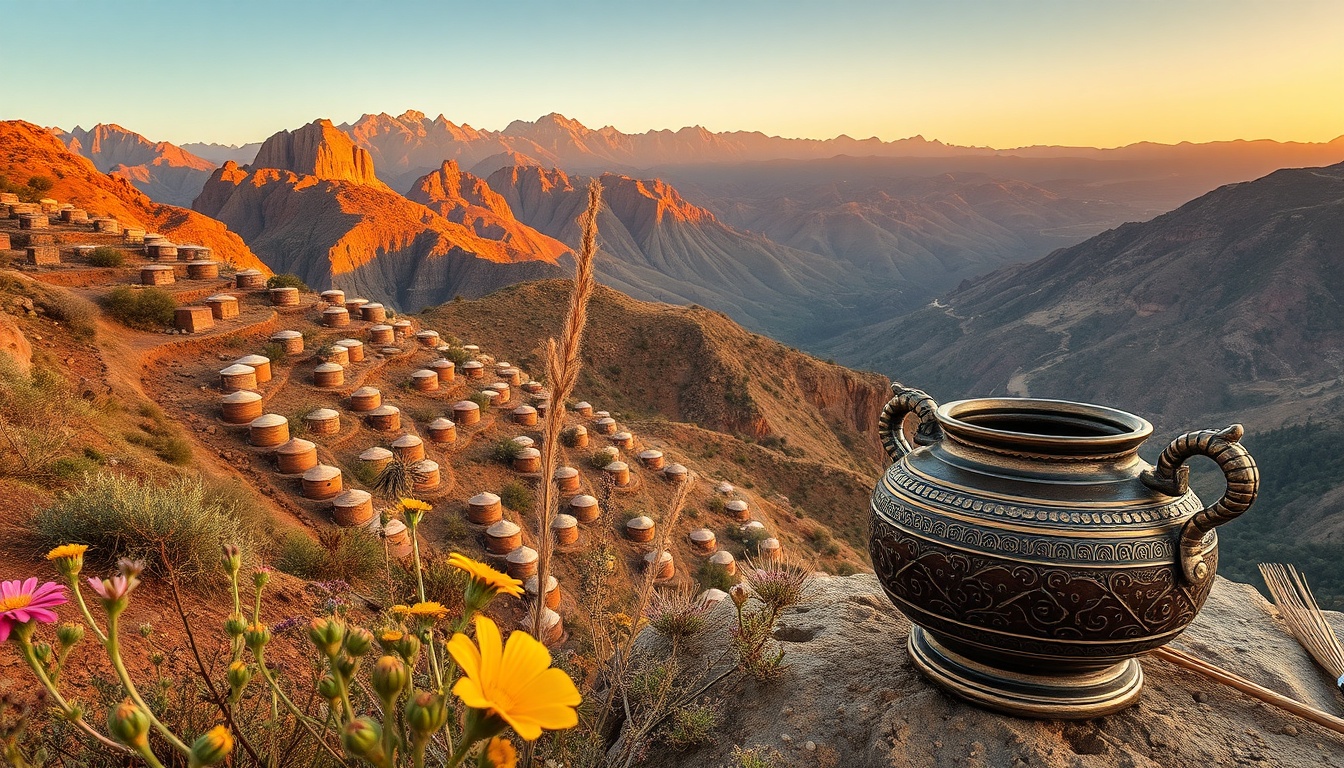
The Zagros mountain range — running 1,500 kilometres from northwestern Iran southeastward through Kurdistan, Kermanshah, Lorestan, Chaharmahal and Bakhtiari, Kohgiluyeh and Boyer-Ahmad, and Fars provinces — is the ecological foundation of Iran's premium honey geography. The Zagros rises from the Persian plateau to peaks above 4,000 metres (Zard Kuh, Dena), with a complex geology of folded limestone ridges creating thousands of north-facing and south-facing micro-valleys with different moisture, temperature, and botanical profiles. This topographic complexity supports an exceptional diversity of flowering plants including several Iranian endemic species that produce honey varieties found nowhere else: Satureja bachtiarica (Bakhtiari savory), the primary source of Iran's most celebrated mountain herb honey; Thymus daenensis (Dena thyme) and related Thymus kotschyanus; Stachys inflata (Iran woundwort); Astragalus species from dozens of endemic steppe-adapted plants; and Echium amoenum (borage family, the "chuchmeh" plant, used both as a medicinal herb and honey source in Lorestan and Fars).
Bakhtiari savory honey (عسل مرزه بختیاری, 'asal-e marzeh-ye Bakhtiyari) is regarded by Iranian honey specialists as the country's most distinguished mountain honey. Satureja bachtiarica is an aromatic perennial of the Lamiaceae (mint) family that grows at elevations of 1,500–3,000 metres in the Zagros highlands of Chaharmahal and Bakhtiari and neighbouring provinces, flowering in July and August and providing a brief but intensely productive nectar flow during the summer mountain bloom. The honey produced is dark amber, with a pronounced aromatic complexity — the characteristic sharp-sweet-herbal quality of savory honey, simultaneously pungent and smooth, with a warming finish reminiscent of wild thyme but more resinous and herbal. It is high in antimicrobial activity, reflecting the same phenolic compound concentration that makes savory (Satureja spp.) honeys elsewhere in the Mediterranean and Middle East sought after for therapeutic use. No dated retail price is cited for authenticated Bakhtiari savory honey in Tehran specialty markets. The rial's exchange rate moves the dollar price of any jar.
The beekeeping tradition of the Zagros is fundamentally nomadic. The Bakhtiari and Lur pastoral communities of the central Zagros have practiced transhumance for centuries — seasonal vertical migration between lowland winter pastures and high mountain summer pastures — and have integrated beekeeping into this pattern of movement. Beekeeper families (many still operating within tribal social structures) move their hives southward and to lower elevations in autumn and northward and upward in spring, following the bloom calendar from the Khuzestan plain coriander and citrus in March and April, up through the mid-Zagros oak woodland wildfloral in May, to the high-mountain savory, thyme, and astragalus bloom in July and August. This vertical nomadic beekeeping system is deeply knowledge-intensive: the optimal movement calendar, the best placement sites in each micro-valley, the identification of plant species by bloom timing, and the management of meda colonies in challenging mountain conditions are all transmitted through family and community knowledge networks that have developed over generations. Several ethnobotanical researchers have documented this system (including Ghazanfar 1995 on Zagros botanicals and Azizi et al. on Iranian endemic Satureja), noting that the botanical knowledge embedded in Zagros nomadic beekeeping represents a significant repository of traditional ecological knowledge.
Bidmeshk Honey (عسل بیدمشک): Iran's Jujube Desert Crown
Iran's equivalent of Yemeni sidr and Egyptian nabk honey is bidmeshk (بیدمشک) — the Persian name for jujube (Ziziphus species), and the honey produced from jujube nectar in Iran's southern and southwestern provinces. The primary Ziziphus species in Iran are Z. spina-christi (the same Christ's thorn jujube that produces Yemeni and Egyptian sidr, growing in Khuzestan, Hormozgan, and Sistan and Baluchestan provinces in the south) and Z. mauritiana (Indian jujube / ber, growing in hotter and more arid zones), along with Z. nummularia in the most extreme desert areas. Jujube flowers in late summer and autumn (August–November in most Iranian locations), producing a nectar flow in the hot, dry lowland environments of southwestern and southern Iran — a landscape of date palms, citrus groves, and ancient irrigation systems that have supported agriculture for over 5,000 years.
Authentic Iranian bidmeshk honey is one of the country's most prestigious domestic varieties, used primarily in traditional medicine applications and sold in Tehran and provincial specialty honey shops at prices several times higher than standard polyfloral. The honey is characterised by its slow crystallisation rate (jujube honeys, like other Ziziphus-source honeys, maintain a high fructose:glucose ratio that keeps them liquid for twelve months or more), dark amber to reddish-brown color, and complex flavour profile: butterscotch and dried dates are the most commonly noted primary descriptors, with a warm, lingering sweetness and none of the sharp acidic brightness of lighter honeys. The antimicrobial activity of bidmeshk honey has been studied by Iranian food scientists (including work published in Iranian Journal of Medical Sciences and Iranian Food Science and Technology Research Journal), and the findings mirror the general pattern seen for Ziziphus-source honeys globally: above-average antibacterial activity compared to clover or sunflower benchmarks, attributed to low water activity, high phenolic compound content, and hydrogen peroxide-generating enzyme activity.
The comparison to Yemeni Wadi Doan sidr is the central marketing challenge for Iranian bidmeshk. Both are Ziziphus honeys from the same geographical corridor — the Arabian Peninsula–Persian Gulf arc where Z. spina-christi grows in its most productive conditions — but the premium positioning is completely asymmetric. Yemeni sidr from Wadi Doan commands on international markets and has attracted serious ethnobotanical and food-science research attention; Iranian bidmeshk is largely unknown outside Iran and stands out in the Iranian domestic premium market (where rial-denominated pricing and exchange-rate volatility make stable USD comparisons difficult). The quality gap is not this large — authentic Iranian bidmeshk from the Khuzestan lowlands or the Hormozgan date-palm groves is a genuine premium honey comparable in character to Egyptian Sinai sidr. The price gap reflects trade access and brand development, not botanical inferiority. Buyers who can access Iranian bidmeshk through diaspora channels or specialised importers in the Gulf states are getting exceptional value for a variety that would command two to three times its current price if it were traded freely on Western markets.
Regional Monoflorals: Coriander, Damask Rose, Sunflower & the Full Iranian Honey Calendar
Iran's honey calendar extends well beyond the Zagros mountain herbs and southern bidmeshk, encompassing a remarkable breadth of regional monoflorals tied to the country's exceptional agricultural and botanical diversity. Coriander honey from Isfahan and Hamadan provinces is one of the most technically interesting: Iran is among the world's leading coriander (Coriandrum sativum) producers, and the vast coriander cultivation zones of the central plateau create a substantial nectar flow in May and June. Coriander honey is pale, crystallises rapidly to a fine-grained cream (the glucose-rich nectar of Apiaceae family plants drives quick crystallisation), and has a distinctive flavour: clean floral sweetness with a subtle herbal undertone — milder than the strongly aromatic savory or thyme honeys, and better suited to general culinary use. It is well established in the Iranian domestic market and has the production scale to potentially support export if trade barriers were reduced.
The most romanticised Iranian monofloral is Damask rose honey from the rose-growing region centred on Kashan and Ghamsar in Isfahan Province. The Kashan region has produced Damask rose (Rosa damascena) attar and rose water for over a thousand years, supplying perfumers, food manufacturers, and traditional medicine practitioners across the Islamic world. The rose harvest season (May–June) coincides with the blossom period, and beekeepers who position hives in the rose fields produce a pale, fragrant honey with a genuine rose-petal aromatic note — subtle but unmistakable, distinct from the generic floral character of polyfloral spring honeys. Kashan rose honey is not available at commercial scale; the rose bloom period is brief (approximately two weeks), the nectar yield per flower is modest, and the hives are competing with the primary commercial crop of the rose-oil distillers. It is sold primarily at the Kashan farmer's market and through the network of traditional medicine shops in Iranian cities. Its rarity gives it a premium positioning in Iranian specialty markets equivalent to, though distinct from, Bulgarian Rosa damascena honey (which comes from the same species but the Bulgarian Rose Valley system).
Northwestern Iran — the provinces of West Azerbaijan, East Azerbaijan, and Ardabil, bordering Turkey and the Republic of Azerbaijan — supports a large sunflower honey production zone, with sunflower cultivation in the Aras River valley and the Urmia plain producing pale, rapidly crystallising honey during July and August. This region also produces substantial acacia honey (from Robinia pseudoacacia plantations in the Caspian coastal lowlands and Alborz foothills), cotton honey (from Gossypium hirsutum cultivation in Golestan and Mazandaran), and a range of highland polyfloral honeys from the Alborz range. The Caspian coastal lowlands of Gilan and Mazandaran — Iran's most biodiverse forests, a temperate relict ecosystem with alder, chestnut, hornbeam, and box tree — support a wildfloral honey with botanical complexity comparable to the Balkan mountain honeys of Romania or Bulgaria. In the east, the Khorasan plateau produces astragalus honey (from the endemic Astragalus species of the steppe) that is used primarily in traditional medicine applications. Iran's geographical span from Mediterranean to semi-tropical, from alpine to hyperarid desert, means that its honey calendar runs essentially year-round across the country's different climate zones.
ISIRI 2252, Quality Standards & the Export Barrier
Iran's honey standard is administered by the Institute of Standards and Industrial Research of Iran (ISIRI, موسسه استاندارد و تحقیقات صنعتی ایران), with the current honey standard designated ISIRI 2252. The standard sets compositional parameters broadly aligned with Codex Alimentarius CXS 12-1981: moisture content (≤20% for most honeys), reducing sugars (minimum fructose + glucose), sucrose ceiling (≤5% for most types), diastase activity minimum (not less than 8 on the Schade scale), hydroxymethylfurfural (HMF) maximum (≤40 mg/kg for standard honey, ≤80 mg/kg in climatic conditions of tropical/desert origin), and sensory requirements. The standard distinguishes between Apis mellifera honey and wild honey sources, and has been updated in recent years to reflect international developments in honey authentication methodology. Iranian university food-science departments (particularly at Tehran University, Isfahan University of Technology, and Shiraz University) have published research on the physicochemical properties and pollen profiles of Iranian monoflorals, providing the scientific basis for quality characterisation that any future export certification would need.
The export barrier is not primarily a quality-standard issue. Iranian honey meets or exceeds Codex parameters and is regularly verified by ISIRI certification for domestic and regional markets. The barrier is geopolitical: comprehensive US sanctions (maintained under various statutes since 1979, with the OFAC Iranian Transactions Regulations as the primary legal framework) effectively prohibit US-registered companies from importing Iranian goods; EU restrictive measures (less comprehensive than US sanctions but substantial) similarly limit EU-market entry for Iranian agricultural products. The effect is that the Gulf Cooperation Council states (Saudi Arabia, UAE, Kuwait, Bahrain, Qatar, Oman) are the primary international market for Iranian honey export, and the GCC honey market — while significant in volume — does not offer the premium positioning that Western specialty food markets could. Some Iranian honey also reaches Turkey, Russia, and parts of Central Asia, and reaches the Iranian diaspora in the US, EU, and Canada through grey-market channels or via third-country processing, but this trade is small relative to domestic production.
The practical implication for the honey enthusiast is that Iranian honey is most accessible today through three channels: the Iranian diaspora food retail network in cities with large Iranian communities (Los Angeles, Toronto, London, Frankfurt, Dubai, Stockholm), which imports through Gulf-state intermediaries or third-country processors; direct purchase during travel to Iran, where the Tehran Grand Bazaar and the specialty honey shops of Lalehzar and Tajrish Bazaar offer extensive and well-curated selections from all major producing regions; and, for bidmeshk and savory honey specifically, occasional availability through Gulf-state specialty honey traders who source directly from Iranian producers and export to third-country buyers. The quality of what is available through these channels is generally excellent — Iranian beekeepers and honey processors operate in a sophisticated domestic market with demanding quality expectations — but verification of floral source and origin requires the same provenance-documentation approach appropriate for any premium honey without a mature Western-market certification infrastructure.
Buying Authentic Iranian Honey: What to Know
In Iran itself, the best channel for premium honey is the specialist honey shop (عسل فروشی) network in Tehran and provincial cities. Tehran's Lalehzar and Tajrish bazaar areas, Isfahan's Bazar-e Bozorg, Shiraz's Vakil Bazaar, and Mashhad's Imam Reza Shrine precinct all have well-established honey retailers who source from identified producers and can describe the floral source, region, and harvest year of their products. The Tehran honey market is significantly more sophisticated than most Western consumers would expect: high-end retailers routinely present ten to fifteen varieties with detailed provenance information, charging premium prices for authenticated mountain honeys. Zagros savory and thyme from named mountain beekeepers, bidmeshk from Khuzestan or Hormozgan producers, and Kashan Damask rose honey all command significantly higher prices than the generic polyfloral or sunflower varieties. Laboratory authentication (pollen analysis, sugar profile, physicochemical parameters) is available from ISIRI and private certified laboratories and is used by serious buyers to verify premium claims.
Outside Iran, the most reliable source for premium Iranian honey is the diaspora Iranian grocery and specialty food market. In Los Angeles (which has one of the world's largest Iranian communities outside Iran), Westwood and Encino Iranian grocery stores regularly stock bidmeshk and mountain herb honeys imported through Gulf-state channels. In London (Kensington, Edgware Road), Toronto, Stockholm, and Frankfurt, similar Iranian specialty food retailers serve diaspora communities. These channels are not perfect in provenance transparency — the intermediary supply chain from Iranian producer through Gulf-state handler to diaspora retailer is not always fully documented — but for buyers within the diaspora community who have the cultural knowledge to evaluate what they are purchasing, these are the most accessible premium options. Online purchasing from Gulf-state honey retailers (UAE and Kuwait-based) is increasingly possible for international buyers, with some retailers explicitly identifying Iranian bidmeshk and savory honey in their catalogues.
The verification approach for Iranian honey in practice combines three elements: floral-source declaration (bidmeshk / Ziziphus; savory / Satureja bachtiarica; thyme / Thymus daenensis; coriander / Coriandrum sativum) with named province of origin; a floral-source price that matches a named origin and a named province; and where available, basic physicochemical confirmation (moisture ≤20%, absence of unusual sucrose spikes that would indicate adulteration). The sanctions-driven opacity of the supply chain means that provenance documentation for international buyers is less robust than for Turkish, Greek, or New Zealand honey — this is not a reflection on Iranian honey quality but on the absence of the market infrastructure that generates transparent documentation. Buyers who understand the context and can work within it have access to some of the world's most distinctive and least-explored honey terroir. See our world honey comparison guide for where Iranian honey sits in the global premium landscape alongside Turkey, Yemen, and Egypt.