Honey and Apple Cider Vinegar: Benefits, Recipes & Best Time to Drink
The honey and apple cider vinegar combination is an ancient wellness tonic with growing scientific support. Here is what the research actually shows — plus easy recipes, the best time to drink it, which types to use, and important safety precautions.
Last updated:
Mix 1 tablespoon of raw apple cider vinegar (with the mother) and 1 tablespoon of raw honey in 8 ounces of warm water — a popular way to enjoy the combination is in the morning or before meals. Some research suggests ACV may support blood sugar regulation, digestion, and modest weight management, though individual results vary. Always dilute ACV to protect tooth enamel, use a straw, and never give honey to infants under 12 months.

Why Do People Combine Honey and Apple Cider Vinegar?
Honey and apple cider vinegar (ACV) is one of the oldest folk remedy pairings, with roots in ancient Greek, Chinese, and Ayurvedic medicine. Hippocrates reportedly prescribed a mixture of honey and vinegar called oxymel for coughs and respiratory ailments around 400 BCE. The combination works because the two ingredients complement each other both nutritionally and in terms of taste — honey's natural sweetness makes the sharp acidity of ACV palatable, while ACV's acetic acid provides health benefits that honey alone does not offer. Raw apple cider vinegar contains the "mother" — a colony of beneficial bacteria and enzymes formed during fermentation — which provides probiotics and acetic acid. Raw honey contributes its own enzyme profile, including glucose oxidase and catalase, along with flavonoids, phenolic acids, and trace minerals. Together they create a functional tonic that delivers prebiotics from honey and probiotics from ACV's mother culture. The combination has seen a resurgence in modern wellness culture, with millions of social media posts and a growing body of scientific research examining its effects on blood sugar, digestion, weight management, and cardiovascular health.
Key Takeaways
- Ancient remedy dating back to Hippocrates — oxymel (honey + vinegar) prescribed for respiratory ailments
- Honey sweetens the sharp acidity of ACV, making it palatable as a daily tonic
- Raw ACV contains the "mother" — a colony of beneficial bacteria and acetic acid
- Raw honey contributes enzymes (glucose oxidase, catalase), flavonoids, and trace minerals
- Prebiotics from honey and probiotics from ACV create a synergistic gut health duo
- Modern research examines effects on blood sugar, digestion, weight, and heart health
What Are the Evidence-Based Benefits of Honey and Apple Cider Vinegar?
The health benefits of honey and apple cider vinegar are supported by research on both individual ingredients. For blood sugar management, a 2024 meta-analysis published in BMJ Nutrition, Prevention & Health found that regular vinegar consumption was associated with significant reductions in fasting blood glucose and HbA1c levels in people with type 2 diabetes. Acetic acid slows gastric emptying and improves insulin sensitivity, while honey — despite containing sugar — has a variety-dependent glycemic index ([acacia honey](/honey/acacia-honey) GI ~32; [clover honey](/honey/clover-honey) ~69, near table sugar at 65) and contains compounds that may improve pancreatic beta-cell function; low-GI varieties like [acacia honey](/honey/acacia-honey) and [tupelo honey](/honey/tupelo-honey) are the most blood-sugar-friendly choices. For digestion, ACV's acetic acid stimulates digestive enzyme production and may help with bloating and indigestion, while honey's oligosaccharides act as prebiotics that feed beneficial Bifidobacterium and Lactobacillus species. A 2023 systematic review in the European Journal of Nutrition found that vinegar consumption improved markers of cardiovascular health, including modest reductions in total cholesterol and triglycerides. Honey's antioxidants — particularly the flavonoids chrysin, pinocembrin, and galangin — help prevent LDL oxidation, a key step in atherosclerosis. For immune support, raw honey provides antimicrobial hydrogen peroxide while ACV's organic acids create an environment that discourages pathogenic bacteria. For weight management, a 2024 randomized controlled trial in BMJ Nutrition found that participants consuming 2 tablespoons of ACV daily for 12 weeks lost an average of 6-8 pounds more than the placebo group, with reductions in waist circumference, body fat percentage, and blood triglycerides.
Key Takeaways
- Blood sugar: daily ACV significantly reduced fasting glucose and HbA1c in meta-analysis
- Digestion: acetic acid stimulates digestive enzymes; honey prebiotics feed beneficial gut bacteria
- Heart health: vinegar improved cholesterol and triglycerides; honey antioxidants prevent LDL oxidation
- Immune support: honey provides antimicrobial hydrogen peroxide; ACV discourages pathogenic bacteria
- Weight management: a 2024 RCT found ACV drinkers lost more weight than a placebo group over 12 weeks
- Low-GI honey varieties ([acacia honey](/honey/acacia-honey) ~32, [tupelo honey](/honey/tupelo-honey) ~45) help moderate blood sugar more than sugar; [clover honey](/honey/clover-honey) (~69) is near sugar's GI
How Do You Make a Honey and Apple Cider Vinegar Drink?
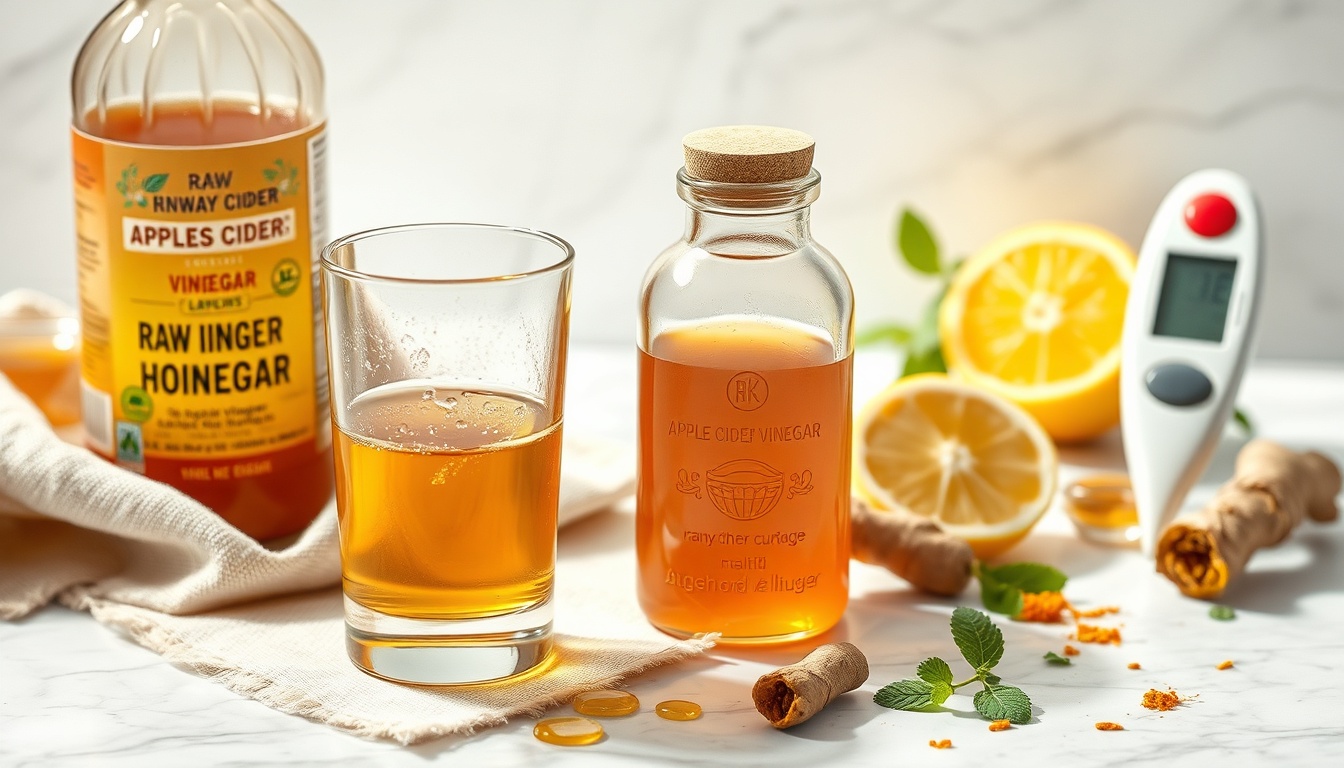
The classic honey and apple cider vinegar tonic is simple to prepare. The basic recipe: mix 1 tablespoon of raw, unfiltered apple cider vinegar and 1 tablespoon of raw honey into 8 ounces (1 cup) of warm water. Stir until the honey dissolves completely. The water should be warm but not hot — temperatures above 104°F (40°C) can damage the beneficial enzymes in both ingredients. For a stronger tonic, some people prefer up to 2 tablespoons of ACV, adjusting to their own taste. For a honey ginger ACV drink, add a 1-inch piece of freshly grated ginger and steep for 5 minutes before adding the honey and ACV — ginger adds warmth and settles the stomach. For a cold refresher, mix 1 tablespoon each of honey and ACV in 12 ounces of cold water with ice, a squeeze of fresh lemon, and a pinch of cayenne pepper for a summer drink. For a bedtime variation, use warm water with 2 teaspoons of honey and 1 tablespoon of ACV. For a throat-soothing variation, use extra honey with the ACV in warm water, sipped slowly. Always use raw, unfiltered ACV with the mother visible as sediment in the bottle, and always use raw honey for maximum enzyme and antioxidant content.
Key Takeaways
- Basic recipe: 1 tbsp raw ACV + 1 tbsp raw honey in 8 oz warm water (under 104°F/40°C)
- Ginger variation: add 1-inch grated ginger, steep 5 minutes, then add honey and ACV
- Cold refresher: ACV + honey in cold water with lemon, ice, and a pinch of cayenne
- Bedtime variation: 2 tsp honey + 1 tbsp ACV in warm water
- Throat-soothing variation: 2 tbsp honey + 1 tbsp ACV in warm water, sipped slowly
- Always use raw, unfiltered ACV with the mother and raw honey for maximum benefits
When Is the Best Time to Drink Honey and Apple Cider Vinegar?
Timing affects how your body responds to honey and apple cider vinegar. Morning on an empty stomach (15-30 minutes before breakfast) is the most popular time — ACV's acetic acid primes digestive enzyme production for the day, and the combination may help regulate post-breakfast blood sugar spikes. A 2005 study in the European Journal of Clinical Nutrition found that vinegar consumed with a high-carb meal reduced post-meal blood glucose by 31%. Before meals is recommended for weight management — drinking the tonic 20-30 minutes before eating may increase satiety and reduce total calorie intake at the meal. Research suggests acetic acid activates AMPK, an enzyme that promotes fat burning and suppresses fat storage. After meals, the tonic can help with bloating and indigestion — the acetic acid supports stomach acid production if you experience sluggish digestion. Before bed, a warm honey-ACV drink can support sleep — honey triggers a small insulin release that helps tryptophan cross the blood-brain barrier (promoting melatonin production), while ACV may help stabilize overnight blood sugar, preventing the cortisol spikes that cause middle-of-the-night waking. During illness (colds, sore throat, cough), some people enjoy the warm tonic for its soothing qualities — talk to your doctor about managing symptoms that last more than a few days. Avoid drinking it immediately after brushing teeth, as the acid can interact with weakened enamel.
Key Takeaways
- Morning (empty stomach): primes digestion, may reduce post-breakfast blood sugar spikes by 31%
- Before meals: increases satiety, activates AMPK enzyme for fat burning
- After meals: helps with bloating and indigestion by supporting stomach acid production
- Before bed: honey promotes melatonin via tryptophan; ACV stabilizes overnight blood sugar
- During illness: some people find the warm tonic soothing — see a doctor for symptoms lasting more than a few days
- Avoid drinking immediately after brushing teeth — acid can damage weakened enamel

Which Honey and Apple Cider Vinegar Should You Use?
The quality of your ingredients matters significantly for both taste and health benefits. For apple cider vinegar, always choose raw, unfiltered, unpasteurized ACV with the mother — the cloudy strands of proteins, enzymes, and beneficial bacteria visible in the bottle. Pasteurized, clear ACV has been heat-treated and filtered, removing the probiotic benefits and most of the enzymes. Popular quality brands include Bragg, Dynamic Health, and Vermont Village. The ACV should be 5% acidity (standard for culinary vinegar) — higher concentrations are unnecessarily harsh on the throat and enamel. For honey, raw and unfiltered is essential. Raw [wildflower honey](/honey/wildflower-honey) is the best all-purpose choice — it contains diverse pollen, active enzymes, and a balanced flavor that complements ACV's tartness. Raw [clover honey](/honey/clover-honey) offers a milder, lighter sweetness if you find wildflower too bold. [Manuka honey](/honey/new-zealand-manuka-umf-15) (UMF 5+ to 10+) adds extra antimicrobial properties through methylglyoxal (MGO), making it ideal for sore throat or immune support tonics — though its medicinal taste and higher price make it less practical for daily use. [Buckwheat honey](/honey/buckwheat-honey) provides the highest antioxidant content of any honey variety (ORAC 16,000+, 9× more than [clover honey](/honey/clover-honey)) and pairs well with ACV's boldness, though its malty, molasses-like flavor is not for everyone. For blood sugar management, [acacia honey](/honey/acacia-honey) (GI ~32) is the best choice for diabetics and weight watchers. Avoid pasteurized, ultra-filtered, or blended commercial honeys — these have lost most of their beneficial enzymes, pollen, and antioxidants through processing.
Key Takeaways
- ACV: must be raw, unfiltered, unpasteurized with the mother visible in the bottle
- Pasteurized ACV lacks probiotics and enzymes — always check for cloudy strands
- Standard 5% acidity ACV is ideal — higher concentrations are unnecessarily harsh
- Raw [wildflower honey](/honey/wildflower-honey): best all-purpose choice with balanced flavor and active enzymes
- [Manuka honey](/honey/new-zealand-manuka-umf-15) (UMF 5-10+): extra antimicrobial punch for sore throat tonics
- [Buckwheat honey](/honey/buckwheat-honey): highest antioxidants (ORAC 16,000+) but bold malty flavor — pairs well with ACV's tartness
- [Acacia honey](/honey/acacia-honey): best for blood sugar management (GI ~32) and diabetics
What Are the Side Effects and Safety Precautions?
Honey and apple cider vinegar is generally safe for most adults when consumed in moderate amounts, but there are important precautions. The most common concern is tooth enamel erosion — ACV's acetic acid (pH 2.5-3.0) can weaken tooth enamel over time. Always dilute ACV in water (never drink it straight), use a straw to minimize tooth contact, and wait at least 30 minutes after drinking before brushing your teeth. Rinse your mouth with plain water after drinking the tonic. People with gastroesophageal reflux disease (GERD), stomach ulcers, or chronic heartburn should be cautious — the acidity may worsen symptoms in some individuals. Talk to your doctor before adding ACV to your routine if you have one of these conditions, or if you take any prescription medication — ACV may not be appropriate to combine with certain treatments, including those for diabetes. Never give honey to infants under 12 months due to the risk of infant botulism — Clostridium botulinum spores in honey can germinate in an infant's immature digestive system. The "apple cider vinegar detox" trend has no scientific basis — your liver and kidneys handle detoxification, and consuming large amounts of vinegar over long periods has been associated with low potassium levels and weakened bones in case reports. If you have diabetes, talk to your doctor before adding ACV to your routine, since it may affect blood sugar.
Key Takeaways
- Tooth enamel: always dilute ACV, use a straw, wait 30 min before brushing, rinse with water
- GERD/ulcers: acidity may worsen symptoms in some people — talk to your doctor before adding ACV to your routine
- Taking medication? Ask your doctor before adding ACV to your routine, since it may not be appropriate alongside certain treatments
- NEVER give honey to infants under 12 months — risk of infant botulism
- "ACV detox" is not scientifically supported by research
- Diabetics: talk to your doctor before adding ACV to your routine
Frequently Asked Questions
What are the benefits of drinking honey and apple cider vinegar?
Honey and apple cider vinegar together may help regulate blood sugar (ACV reduced fasting glucose in meta-analysis; use [acacia honey](/honey/acacia-honey) GI ~32 for best blood sugar control), support digestion (acetic acid stimulates enzymes, honey feeds gut bacteria), aid weight management (a 2024 RCT found ACV drinkers lost more weight than a placebo group over 12 weeks), improve heart health markers (reduced cholesterol and triglycerides), and support antimicrobial activity through honey's defensin-1 and hydrogen peroxide and ACV's acetic acid. [Buckwheat honey](/honey/buckwheat-honey) provides maximum antioxidants (ORAC 16,000+), while [Manuka honey](/honey/new-zealand-manuka-umf-15) UMF 10+ offers therapeutic antimicrobial benefits.
How do you make a honey and apple cider vinegar drink?
Mix 1 tablespoon of raw, unfiltered apple cider vinegar and 1 tablespoon of raw honey into 8 ounces of warm water (under 104°F/40°C). Stir until honey dissolves. For variety, add fresh ginger, lemon juice, or a pinch of cayenne. Use [wildflower honey](/honey/wildflower-honey) for all-purpose tonics, [acacia honey](/honey/acacia-honey) for blood sugar management (GI ~32), [Manuka honey](/honey/new-zealand-manuka-umf-15) for sore throat relief, or [buckwheat honey](/honey/buckwheat-honey) for maximum antioxidants. Always use raw ACV with the mother and raw honey for maximum benefits.
When is the best time to drink apple cider vinegar and honey?
The best time depends on your goal: morning on an empty stomach for digestion and blood sugar regulation, 20-30 minutes before meals for weight management and satiety, after meals for bloating relief, or before bed for sleep support. During illness, some people find the warm tonic soothing for sore throat comfort.
Is it safe to drink apple cider vinegar and honey every day?
Yes, for most adults, 1-2 tablespoons of diluted ACV with honey daily is safe. Always dilute in water to protect tooth enamel, use a straw, and wait 30 minutes before brushing teeth. Consult your doctor if you take diabetes medication, diuretics, or digoxin. Never give honey to infants under 12 months.
Which apple cider vinegar is best for health benefits?
Choose raw, unfiltered, unpasteurized apple cider vinegar with the mother — the cloudy strands of beneficial bacteria and enzymes visible in the bottle. Standard 5% acidity is ideal. Pasteurized or clear ACV has been heat-treated, removing probiotic benefits and most enzymes.
Can apple cider vinegar and honey help you lose weight?
Research suggests modest benefits. A 2024 randomized controlled trial found that 2 tablespoons of ACV daily for 12 weeks led to 6-8 pounds more weight loss than placebo, with reduced waist circumference and body fat. ACV's acetic acid activates AMPK, an enzyme that promotes fat burning. For weight management, use [acacia honey](/honey/acacia-honey) (GI ~32) to avoid blood sugar spikes, or [tupelo honey](/honey/tupelo-honey) (GI ~45) for mild flavor. However, it is not a magic solution — results require consistent use alongside a balanced diet.
Which honey varieties should I choose for different health goals with apple cider vinegar?
Choose honey varieties based on your health goals: For blood sugar management and weight loss, use [acacia honey](/honey/acacia-honey) (GI ~32) or [tupelo honey](/honey/tupelo-honey) (GI ~45) to avoid glucose spikes. For maximum immune support and sore throat relief, use [Manuka honey](/honey/new-zealand-manuka-umf-15) UMF 10+ for proven antimicrobial properties. For highest antioxidant benefits, use [buckwheat honey](/honey/buckwheat-honey) with exceptional ORAC 16,000+ levels (9× more than [clover honey](/honey/clover-honey)). For everyday use and balanced nutrition, [wildflower honey](/honey/wildflower-honey) provides diverse botanical compounds at excellent value. For digestive support, [clover honey](/honey/clover-honey) offers gentle sweetness with reliable enzyme activity. Always choose raw, unfiltered varieties for maximum health benefits.
Edited by Sam French · Raw Honey Guide Editorial Team
Source reviewed against primary literature and official guidance where available. Health content is educational, not medical advice, and does not replace a licensed clinician.
Get the Honey Buyer's Cheat Sheet (free PDF)
16 varieties on one page — color, flavor, best use and what a fair price looks like — from the 268 honeys we track.
Related Guides
Honey and Lemon
Benefits, recipes, and best practices.
Read GuideHealth Benefits
Nutritional and therapeutic benefits of honey.
Read GuideHoney for Weight Loss
What the research actually shows.
Read GuideRelated Articles
Honey and Apple Cider Vinegar: Benefits, Recipes, and What Science Says
Does drinking honey and apple cider vinegar actually work? Review the evidence on blood sugar, digestion, weight, and immunity — plus 5 ACV honey recipes.
Read ArticleHoney for Weight Loss: What Science Actually Says
Can honey aid weight loss? Clinical research on metabolism, honey vs sugar vs sweeteners, and practical substitution tips.
Read ArticleHoney and Gut Health: How Raw Honey Supports Your Microbiome
How raw honey supports gut health: prebiotic oligosaccharides, antimicrobial action, and anti-inflammatory effects reviewed.
Read ArticleReady to find the perfect raw honey for your ACV tonic?