Honey and Milk: Benefits, Recipes & Best Practices
Warm milk and honey has been a cherished remedy for thousands of years — from Biblical references to Ayurvedic medicine to your grandmother's kitchen. Here is what modern science says about this timeless pairing, with recipes, timing tips, and the best varieties to use.
Last updated:
Warm milk and honey is a traditional bedtime combination many people find comforting, especially for sleep and sore throat relief. Milk provides tryptophan (the precursor to sleep-regulating melatonin), and honey's glucose may help transport it to the brain. Some people warm milk and stir in raw honey shortly before bed. Never give honey to infants under 12 months.


Why Do People Combine Honey and Milk?
Honey and milk is one of the oldest comfort food pairings in human history, referenced in the Bible's "land of milk and honey," ancient Egyptian papyri, and Ayurvedic texts dating back over 3,000 years. The combination endures because honey and milk have complementary nutritional and bioactive properties. Milk provides tryptophan, an essential amino acid that serves as the precursor to serotonin and melatonin — the neurotransmitters that regulate mood and sleep. Honey's natural sugars (primarily glucose and fructose) trigger a modest insulin release that helps transport tryptophan across the blood-brain barrier more efficiently, a mechanism described in nutritional biochemistry research published in the American Journal of Clinical Nutrition. Warm milk itself activates thermoregulatory responses that promote drowsiness, while honey's viscous texture coats and soothes the throat. Together, the pair delivers protein (8g per cup of whole milk), calcium (300mg, 25% DV), B vitamins, and honey's 200+ bioactive compounds including flavonoids, phenolic acids, and enzymes. Cleopatra reportedly bathed in milk and honey for skin health — a practice now supported by research showing milk's lactic acid and honey's humectant properties work synergistically for skin hydration and gentle exfoliation.
Key Takeaways
- Referenced in the Bible, Egyptian papyri, and Ayurvedic texts for over 3,000 years
- Milk provides tryptophan — the amino acid precursor to sleep-regulating melatonin
- Honey's glucose triggers insulin that helps transport tryptophan to the brain
- One cup of whole milk delivers 8g protein, 300mg calcium (25% DV), and B vitamins
- Honey adds 200+ bioactive compounds including flavonoids and phenolic acids
- Cleopatra's milk-and-honey baths now supported by dermatological research on synergistic skin hydration
What Are the Evidence-Based Health Benefits of Honey and Milk?
The health benefits of honey and milk span sleep, bone health, respiratory relief, and immune support. For sleep, a 2018 study published in the Iranian Journal of Nursing and Midwifery Research found that warm milk with honey significantly improved sleep quality in coronary care patients compared to controls. The mechanism is well-understood: milk's tryptophan (46mg per cup) converts to serotonin and then melatonin, while honey's glycemic effect facilitates this conversion. For bone health, milk provides calcium and phosphorus while honey contains boron — a trace mineral shown in a 2020 review in the Journal of Trace Elements in Medicine and Biology to reduce calcium excretion and support vitamin D metabolism, both critical for preventing osteoporosis. For respiratory health, a 2020 systematic review in BMJ Evidence-Based Medicine found honey superior to conventional treatments for upper respiratory tract infections, and warm milk thins mucus and soothes inflamed airways. The combination also supports gut health: honey's oligosaccharides act as prebiotics that increase beneficial Bifidobacteria by up to 10-fold (BMC Complementary Medicine 2006), while milk's lactoferrin has antimicrobial properties. For immune function, honey provides hydrogen peroxide and methylglyoxal (in Manuka varieties) while milk delivers immunoglobulins, lysozyme, and lactoferrin. A 2019 study in the journal Nutrients found that regular honey consumption was associated with improved inflammatory markers including C-reactive protein.
Key Takeaways
- Sleep improvement: 2018 Iranian study showed warm milk with honey significantly improved sleep quality in patients
- Bone health: milk's calcium + honey's boron reduces calcium excretion and supports vitamin D metabolism
- Respiratory relief: honey outperformed conventional treatments for URIs (BMJ Evidence-Based Medicine 2020)
- Gut health: honey's prebiotics increase Bifidobacteria 10-fold; milk's lactoferrin fights pathogens
- Immune support: honey provides antimicrobial compounds while milk delivers immunoglobulins and lysozyme
- Anti-inflammatory: regular honey consumption linked to improved CRP markers (Nutrients 2019)

What Are the Best Honey and Milk Recipes?
The classic warm milk and honey recipe is simple but technique matters. Heat one cup of whole milk to 140-150°F (60-65°C) — warm enough to be comforting but below the 150°F threshold that damages honey's beneficial enzymes like diastase and glucose oxidase. Remove from heat and stir in 1-2 teaspoons of raw honey until dissolved. For a honey cinnamon milk, add 1/4 teaspoon of Ceylon cinnamon before heating for extra warmth and flavor. For golden milk with honey, warm the milk with 1/2 teaspoon turmeric, 1/4 teaspoon black pepper, a pinch of ginger, and stir in honey after removing from heat. For a honey vanilla milk, scrape half a vanilla bean or add 1/2 teaspoon pure extract with honey — vanilla's vanillin compound has calming properties studied for anxiety reduction. For an iced honey milk latte, dissolve honey in a small amount of warm milk first, then pour over ice and top with cold milk — honey won't dissolve well in cold liquids directly. For a honey milk face mask, mix 1 tablespoon raw honey with 2 tablespoons whole milk and apply for 15-20 minutes — the lactic acid gently exfoliates while honey draws moisture into skin.
Key Takeaways
- Classic: heat 1 cup milk to 140-150°F, stir in 1-2 tsp raw honey after removing from heat
- Cinnamon milk: add 1/4 tsp Ceylon cinnamon before heating for extra warmth and flavor
- Golden milk: 1/2 tsp turmeric + 1/4 tsp black pepper + ginger + honey (add honey off heat)
- Honey vanilla milk: 1/2 tsp pure vanilla extract — vanillin has calming properties
- Iced version: dissolve honey in warm milk first, then pour over ice and add cold milk
- Face mask: 1 tbsp honey + 2 tbsp whole milk applied 15-20 min for gentle exfoliation and hydration
When Is the Best Time to Drink Honey and Milk?
Timing matters for maximizing the benefits of honey and milk. Before bed (30-60 minutes) is the most popular and well-supported timing. The tryptophan-to-melatonin conversion takes approximately 20-45 minutes, so drinking warm honey milk 30-60 minutes before your target bedtime allows melatonin levels to peak as you settle in. The warmth itself triggers parasympathetic nervous system activation, lowering heart rate and blood pressure. During illness, some people find warm honey milk soothing for a sore throat or cough — the honey coats the throat while the milk provides hydration and calories when appetite is reduced. There's no set frequency; have it as often as feels comfortable, and see a doctor for symptoms that are severe or don't improve. In the morning, honey milk can serve as a gentle way to break an overnight fast, providing sustained energy from milk's protein and fat combined with honey's quick-release glucose. Post-exercise, the combination offers a favorable recovery profile: milk's whey and casein proteins support muscle repair, while honey replenishes depleted glycogen stores. A 2006 study in the International Journal of Sport Nutrition found honey performed comparably to glucose gels for post-exercise glycogen replenishment. For children over 12 months experiencing nighttime cough, some pediatric guidance lists honey as an option before bed — warm milk makes it easier to give and adds nutritional value. Talk to your pediatrician about what's appropriate for your child.
Key Takeaways
- Before bed: drink 30-60 min before sleep to allow tryptophan-to-melatonin conversion
- During illness: some people find warm honey milk soothing for a sore throat — honey coats the throat while milk hydrates
- Morning: gentle fast-breaking with sustained energy from protein, fat, and glucose
- Post-exercise: milk protein for muscle repair + honey for glycogen replenishment
- For children (1+): ask your pediatrician about honey for nighttime cough — warm milk makes it easy to take
- Warmth triggers parasympathetic activation, lowering heart rate and blood pressure
Which Honey and Milk Types Work Best Together?
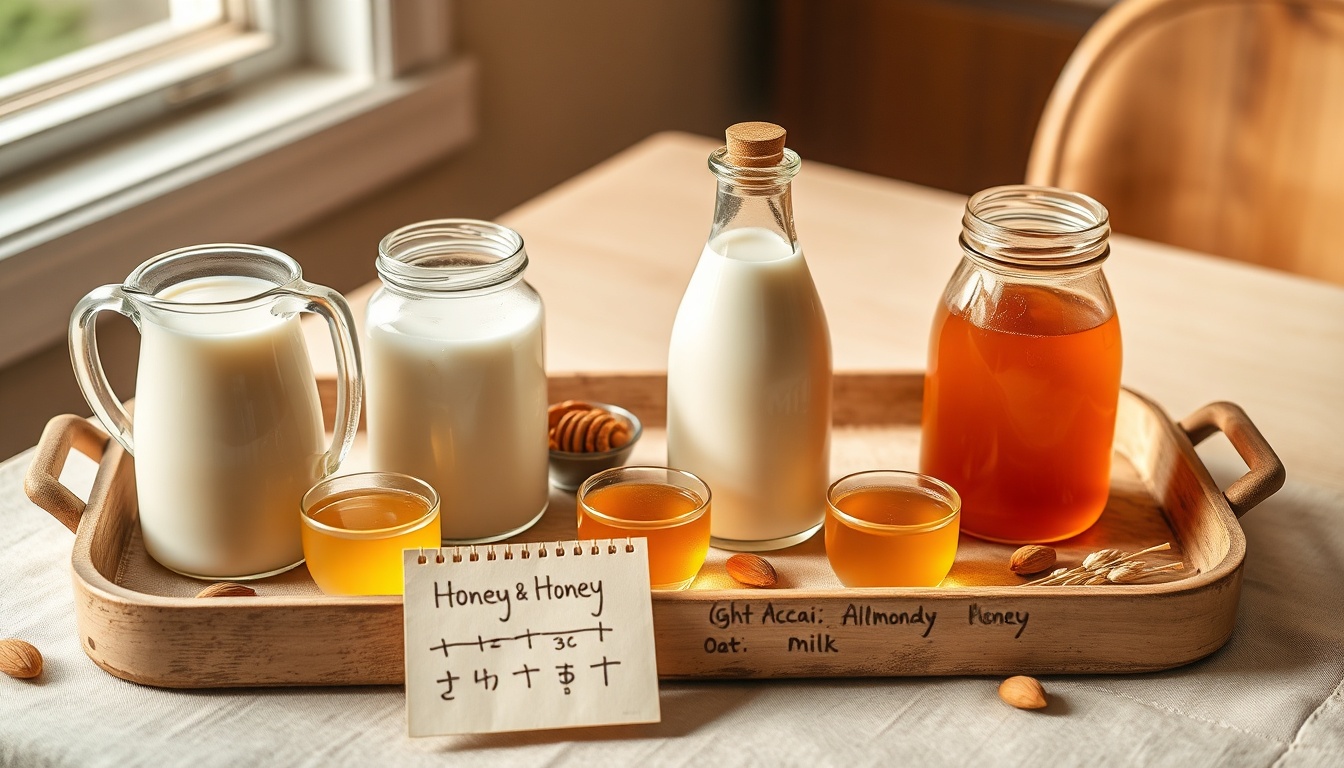
The best honey for milk depends on your goal. [Raw wildflower honey](/honey/wildflower-honey) is the everyday choice — it retains all enzymes, pollen, and propolis with a balanced floral flavor that complements milk's creaminess at $8-15 per pound. For sore throat relief, [Manuka honey](/honey/new-zealand-manuka-umf-15) (UMF 10+ or MGO 263+) provides the strongest antibacterial activity through its unique methylglyoxal compound, though it costs $30-60+ per jar. [Buckwheat honey](/honey/buckwheat-honey)'s malty, molasses-like flavor and high antioxidant content (ORAC 16,000+ vs 1,500 for [clover honey](/honey/clover-honey)) pairs well with warm milk for a robust nightcap. [Acacia honey](/honey/acacia-honey)'s mild, delicate sweetness and low glycemic index (GI 32, the lowest of any honey) makes it ideal for those monitoring blood sugar. [Clover honey](/honey/clover-honey), the most widely available variety (50-70% of US honey), offers clean sweetness that disappears into milk. For milk type, whole dairy milk provides the most tryptophan (46mg/cup), protein (8g), and fat for satiety and nutrient absorption. Oat milk is the best plant-based alternative — its natural sweetness and creamy texture complement honey, and it provides beta-glucan fiber shown to lower cholesterol. Almond milk works but is thinner and lower in protein (1g vs 8g). Coconut milk adds lauric acid with antimicrobial properties. Avoid ultra-pasteurized milk if possible — standard pasteurized retains more bioactive whey proteins including immunoglobulins.
Key Takeaways
- [Wildflower honey](/honey/wildflower-honey): best everyday choice — full enzyme and pollen content, $8-15/lb
- [Manuka honey](/honey/new-zealand-manuka-umf-15) UMF 10+: strongest antibacterial for sore throat, but $30-60+/jar
- [Buckwheat honey](/honey/buckwheat-honey): malty flavor with highest antioxidants (ORAC 16,000+) for nightcap
- [Acacia honey](/honey/acacia-honey): lowest GI (32) of any honey, ideal for blood sugar management
- Whole dairy milk: most tryptophan (46mg/cup) and protein (8g) for sleep and recovery
- Oat milk: best plant-based option — creamy texture, beta-glucan fiber, natural sweetness
What Are the Safety Precautions for Honey and Milk?
Never give honey to infants under 12 months old — this is the most important safety rule. Honey can contain Clostridium botulinum spores that cause infant botulism, a potentially fatal condition. An infant's immature gut microbiome cannot prevent the spores from germinating and producing botulinum toxin. After 12 months, the gut is mature enough to handle these spores safely. Milk alone should not be given as a primary drink to infants under 12 months either, as it lacks sufficient iron and can cause microscopic intestinal bleeding. For adults with lactose intolerance (affecting approximately 68% of the global population), use lactose-free dairy milk or plant-based alternatives — the benefits still apply with any milk type. Be mindful of calories: one cup of whole milk with 2 teaspoons of honey provides approximately 190 calories, so account for this in your daily intake, especially before bed. Never heat honey above 150°F (65°C) — higher temperatures destroy the enzyme diastase (used as a quality marker in the Codex Alimentarius honey standard) and degrade glucose oxidase, which produces the hydrogen peroxide responsible for honey's antimicrobial activity. People with dairy allergies (distinct from lactose intolerance — this is an immune reaction to casein or whey proteins) should use plant-based milks. People taking blood thinners should ask their doctor before making honey and milk a regular part of their diet. Honey's GI varies by variety (~69 for common clover, ~32 for acacia) — people with diabetes should monitor blood sugar response, though the protein and fat in milk help moderate the glucose spike compared to honey in water alone.
Key Takeaways
- Never give honey to infants under 12 months — risk of fatal infant botulism
- Lactose intolerance (68% globally): use lactose-free or plant-based milk alternatives
- Calorie awareness: whole milk + 2 tsp honey = ~190 calories per serving
- Never heat honey above 150°F — destroys diastase enzyme and antimicrobial glucose oxidase
- Dairy allergy (immune reaction): distinct from lactose intolerance — use plant-based milks only
- Diabetes: milk's protein and fat moderate honey's glucose spike better than water does
Related Remedy Guides
Frequently Asked Questions
Does warm milk and honey really help you sleep?
Yes, there is evidence supporting this traditional remedy. Milk contains tryptophan, the amino acid precursor to melatonin, and honey's glucose triggers an insulin response that helps transport tryptophan across the blood-brain barrier. A 2018 study in the Iranian Journal of Nursing and Midwifery Research found warm milk with honey significantly improved sleep quality. Drink it 30-60 minutes before bed.
Can I use plant-based milk instead of dairy with honey?
Yes, plant-based milks work well with honey. Oat milk is the best alternative due to its creamy texture and natural sweetness. Almond milk works but has less protein (1g vs 8g per cup). Coconut milk adds antimicrobial lauric acid. However, dairy milk provides the most tryptophan (46mg per cup) for sleep benefits.
How much honey should I add to milk?
There is no required amount — most people use 1-2 teaspoons (5-10ml) of raw honey per cup of milk, to taste, keeping added sugar moderate. Add honey after heating the milk below 150°F to preserve its beneficial enzymes.
Is honey and milk good for skin?
Yes, the combination has well-documented skincare benefits. Milk's lactic acid provides gentle chemical exfoliation, while honey is a natural humectant that draws moisture into the skin. As a face mask (1 tbsp honey + 2 tbsp milk for 15-20 minutes), the pair exfoliates, hydrates, and soothes skin. Cleopatra famously bathed in milk and honey.
Can babies have honey and milk?
Never give honey to infants under 12 months old due to the risk of infant botulism from Clostridium botulinum spores. Cow's milk should also not be a primary drink before 12 months. After 12 months, warm milk with a small amount of honey is safe and can be a comforting bedtime routine.
What is the best honey for warm milk?
Raw [wildflower honey](/honey/wildflower-honey) is the best everyday choice, retaining all enzymes and pollen at $8-15/lb. For sore throats, [Manuka honey](/honey/new-zealand-manuka-umf-15) (UMF 10+) offers the strongest antibacterial properties. [Buckwheat honey](/honey/buckwheat-honey)'s malty flavor makes a rich nightcap with high antioxidants. [Acacia honey](/honey/acacia-honey) has the lowest glycemic index (32) for blood sugar management.
Which honey varieties should I choose for different milk goals?
For sleep and relaxation: [wildflower honey](/honey/wildflower-honey) $8-15 balanced flavor, [clover honey](/honey/clover-honey) $8-15 mild sweetness, [acacia honey](/honey/acacia-honey) $12-20 delicate taste with GI ~32 blood sugar benefits. For sore throat and immunity: [Manuka honey](/honey/new-zealand-manuka-umf-15) UMF 10+ $30-60 exceptional antibacterial MGO compounds, [buckwheat honey](/honey/buckwheat-honey) $15-25 ORAC 16,000+ antioxidants. For rich nightcap flavor: [buckwheat honey](/honey/buckwheat-honey) molasses depth, [chestnut honey](/honey/chestnut-honey) $20-35 complex bitter notes. For budget-conscious daily use: [clover honey](/honey/clover-honey) $8-15 reliable sweetness, [wildflower honey](/honey/wildflower-honey) $10-18 seasonal variety.
Edited by Sam French · Raw Honey Guide Editorial Team
Source reviewed against primary literature and official guidance where available. Health content is educational, not medical advice, and does not replace a licensed clinician.
Get the Honey Buyer's Cheat Sheet (free PDF)
16 varieties on one page — color, flavor, best use and what a fair price looks like — from the 268 honeys we track.
Related Guides
Honey for Sleep
How honey may help you rest better.
Read GuideHoney Water Benefits
Evidence-based benefits of honey water, easy recipes, best time to drink, and which honey to use.
Read GuideHoney & Cinnamon Benefits
What science says about this combination.
Read GuideRelated Articles
Honey and Milk: A Simple Warm Drink, Evidence and Safety
Drinking warm milk with honey at night: a 1-cup recipe with 1–2 tsp honey, what the 105-child cough trial showed, what is unproven for sleep, and dairy swaps.
Read ArticleHoney Before Bed: Can It Really Help You Sleep?
Can honey before bed improve sleep? The science on liver glycogen, melatonin pathways, best types, and safety notes.
Read ArticleHoney for Colds and Flu: Your Complete Natural Remedy Guide
Honey for colds and flu: cough suppression, sore throat relief, immune support. Best types, 5 remedies, and usage guide.
Read ArticleReady to find the perfect honey for your bedtime milk?