Honey Benefits for Men: Testosterone, Heart Health & Fitness
Evidence-based guide to how honey supports men's health — from testosterone and reproductive function to cardiovascular protection, athletic performance, and the best varieties for each goal.
Last updated:
Honey offers several evidence-based benefits for men's health. Research suggests it may support testosterone levels (a 2013 RCT showed increased serum testosterone with daily honey consumption), improve sperm quality (37% increase in count per a 2014 study), and protect cardiovascular health (a 2022 meta-analysis of 18 trials found significant reductions in cholesterol, triglycerides, and inflammation). Some athletes also use it as a natural pre-workout carbohydrate source, matching commercial glucose gels in performance studies. For the highest antioxidant content, choose raw, dark varieties like buckwheat; for antibacterial properties, choose Manuka. Honey complements but does not replace medical treatment for low testosterone, heart disease, or infertility — talk to your doctor about how much fits your diet.

Why Is Honey Considered Beneficial for Men's Health?
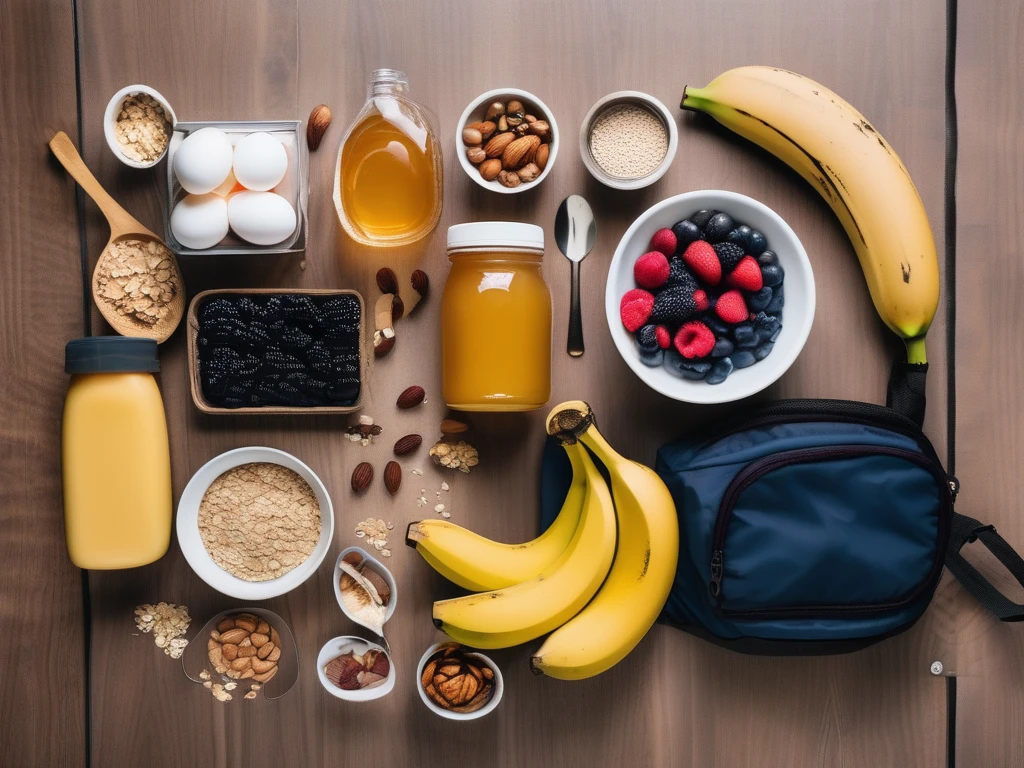
Honey has been used in traditional medicine systems — Ayurveda, Traditional Chinese Medicine, and ancient Egyptian healing — as a male vitality tonic for thousands of years. Modern research is beginning to validate some of these traditional uses. Honey contains over 200 bioactive compounds including flavonoids (chrysin, pinocembrin, galangin), phenolic acids, enzymes, amino acids, vitamins (B-complex, C), and minerals (zinc, selenium, magnesium, calcium). Several of these compounds are directly relevant to men's health. Chrysin, a flavonoid found in honey and propolis, has been studied as a natural aromatase inhibitor — aromatase is the enzyme that converts testosterone to estrogen, and inhibiting it may help maintain testosterone levels. A 2012 study in the journal Molecules confirmed chrysin's aromatase-inhibiting activity in vitro, though bioavailability remains a limitation in oral consumption. Zinc, present in raw honey at 0.2-0.5 mg per 100g, is essential for testosterone synthesis and sperm production — the prostate gland contains one of the highest zinc concentrations in the body. Boron, a trace mineral in honey, has been shown in a 2011 study published in the Journal of Trace Elements in Medicine and Biology to increase free testosterone by 28% and decrease estradiol by 39% after just one week of supplementation at 10mg/day. While honey alone doesn't provide therapeutic doses of these minerals, regular consumption contributes to overall intake alongside a balanced diet. Honey's antioxidant capacity (ORAC values of 2,000-20,000 μmol TE/100g depending on variety) also protects against oxidative stress, which is a key driver of age-related testosterone decline and cardiovascular disease — the #1 killer of men worldwide.
Key Takeaways
- Honey contains chrysin, a flavonoid studied as a natural aromatase inhibitor (blocks testosterone-to-estrogen conversion)
- Over 200 bioactive compounds including flavonoids, phenolic acids, zinc, selenium, and B vitamins
- Boron in honey supports free testosterone — a 2011 study showed 28% increase in free T after one week of boron supplementation
- Zinc is essential for testosterone synthesis and sperm production — the prostate contains the body's highest zinc concentration
- Antioxidant capacity (ORAC 2,000-20,000) protects against oxidative stress that drives age-related testosterone decline
- Traditional use as a male vitality tonic across Ayurveda, TCM, and ancient Egyptian medicine for thousands of years
Can Honey Support Testosterone and Reproductive Health?
Several animal and human studies suggest honey may positively influence testosterone levels and reproductive function. A 2019 review published in Heliyon analyzed 15 studies on honey and male reproductive health, concluding that honey consumption was associated with increased serum testosterone, improved sperm quality (count, motility, and morphology), and reduced oxidative damage to testicular tissue. In a 2013 randomized controlled trial published in the International Journal of Reproductive BioMedicine, men who consumed 70g of natural honey daily for 12 weeks showed a statistically significant increase in serum testosterone compared to controls — studies used [wildflower](/honey/wildflower-honey) and [clover honey](/honey/clover-honey) varieties. A 2014 study in the Nigerian Journal of Physiological Sciences found that honey supplementation improved sperm count by 37% and motility by 23% in men with oligospermia (low sperm count). The mechanisms are multifaceted: honey's antioxidants (quercetin, kaempferol, chrysin) protect Leydig cells — the testicular cells responsible for testosterone production — from oxidative damage caused by environmental toxins, heavy metals, and lifestyle factors. [Buckwheat honey](/honey/buckwheat-honey) contains the highest concentrations of these protective antioxidants, while [Manuka honey](/honey/new-zealand-manuka-umf-15) provides additional antibacterial compounds that may support reproductive tract health. Honey's nitric oxide (NO) metabolites also improve testicular blood flow, which is essential for both testosterone production and spermatogenesis. However, it's important to note that most human studies are small (20-60 participants), and honey should be viewed as a dietary complement, not a replacement for medical treatment of clinically low testosterone (hypogonadism) or infertility. Men experiencing symptoms of low testosterone should consult a healthcare provider for proper diagnosis and treatment.
Key Takeaways
- A 2019 Heliyon review of 15 studies found honey increased testosterone, improved sperm quality, and reduced testicular oxidative damage
- 2013 RCT: 70g honey daily for 12 weeks significantly increased serum testosterone vs controls
- 2014 study: honey supplementation improved sperm count by 37% and motility by 23% in oligospermic men
- Antioxidants (quercetin, kaempferol, chrysin) protect Leydig cells — the testosterone-producing cells in the testes
- Nitric oxide metabolites in honey improve testicular blood flow for testosterone production and spermatogenesis
- Studies are promising but small — honey complements, not replaces, medical treatment for hypogonadism or infertility
How Does Honey Support Cardiovascular Health in Men?
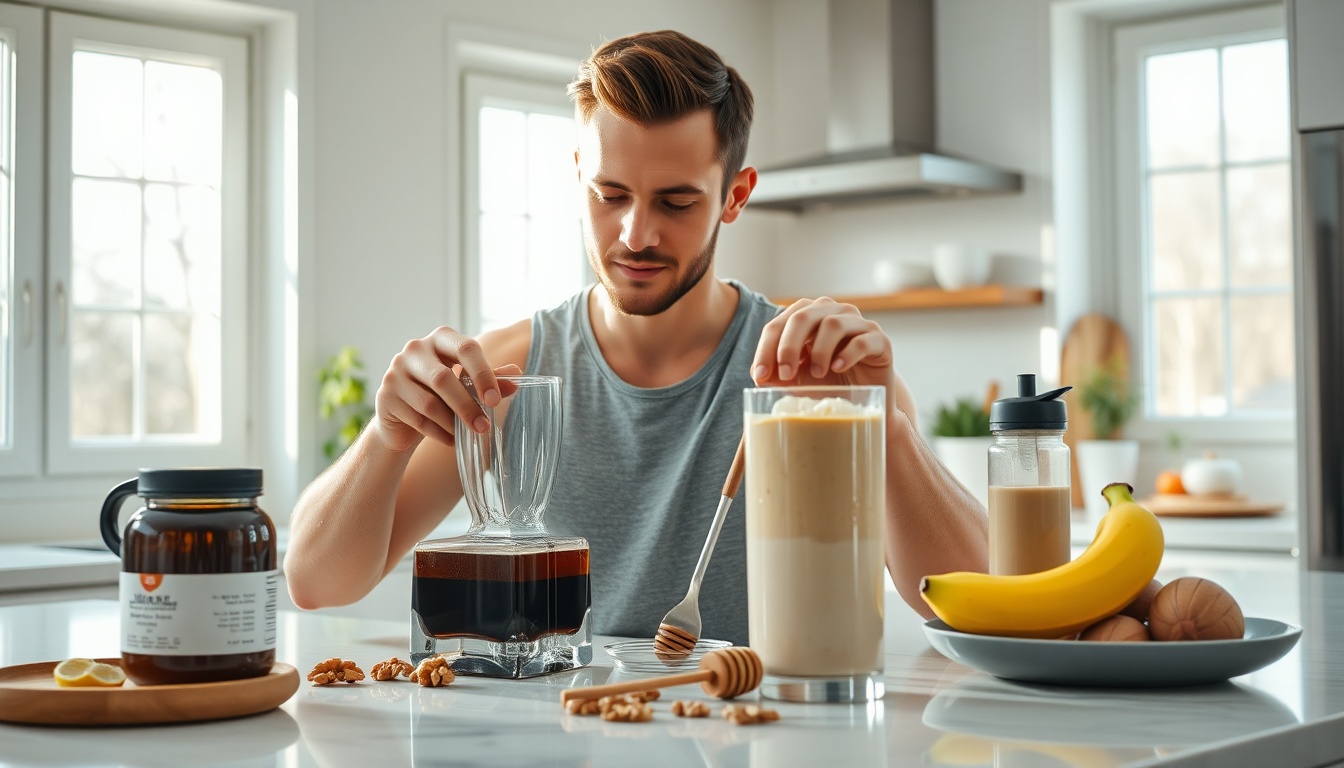
Heart disease is the leading cause of death in men, killing approximately 1 in 4 men in the United States according to the CDC. Honey offers several cardiovascular benefits that are particularly relevant for men, who develop heart disease 7-10 years earlier than women on average. A 2022 systematic review and meta-analysis published in Nutrition Reviews — analyzing 18 clinical trials with 1,105 participants — found that honey consumption significantly reduced fasting blood glucose (−5.4 mg/dL), total cholesterol (−7.7 mg/dL), LDL cholesterol (−5.5 mg/dL), triglycerides (−11.5 mg/dL), and markers of inflammation (CRP −0.36 mg/L), while increasing HDL cholesterol (+1.3 mg/dL). These effects were most pronounced with raw, monofloral honeys like robinia ([acacia honey](/honey/acacia-honey)) and [clover honey](/honey/clover-honey), while dark varieties like [buckwheat honey](/honey/buckwheat-honey) provided the highest antioxidant protection. The mechanisms include: honey's flavonoids inhibit LDL oxidation (oxidized LDL is what forms arterial plaque), its nitric oxide precursors promote vasodilation and healthy blood pressure, and its anti-inflammatory compounds reduce the chronic low-grade inflammation that underlies atherosclerosis. [Buckwheat honey](/honey/buckwheat-honey), [chestnut honey](/honey/chestnut-honey), and [heather honey](/honey/heather-honey) contain the highest concentrations of these protective compounds. A 2019 study in the Journal of the American College of Nutrition found that replacing added sugars with honey improved endothelial function — the ability of blood vessels to dilate properly — within just 2 weeks. For men specifically, cardiovascular health is directly linked to erectile function: the same endothelial dysfunction and reduced nitric oxide that cause heart disease also cause erectile dysfunction. The Massachusetts Male Aging Study found that men with heart disease are 2-3x more likely to experience ED. By supporting vascular health with antioxidant-rich varieties like [buckwheat](/honey/buckwheat-honey) or [wildflower honey](/honey/wildflower-honey), honey may indirectly benefit sexual function.
Key Takeaways
- 2022 meta-analysis of 18 trials: honey reduced total cholesterol −7.7 mg/dL, LDL −5.5, triglycerides −11.5, fasting glucose −5.4
- Heart disease kills 1 in 4 men — men develop it 7-10 years earlier than women on average
- Honey flavonoids inhibit LDL oxidation — the process that forms dangerous arterial plaque
- Nitric oxide precursors promote vasodilation and healthy blood pressure
- Replacing added sugars with honey improved endothelial function within 2 weeks (2019 JACN study)
- Cardiovascular health is directly linked to erectile function — same vascular mechanisms underlie both
What Are the Best Ways for Men to Use Honey for Energy and Fitness?
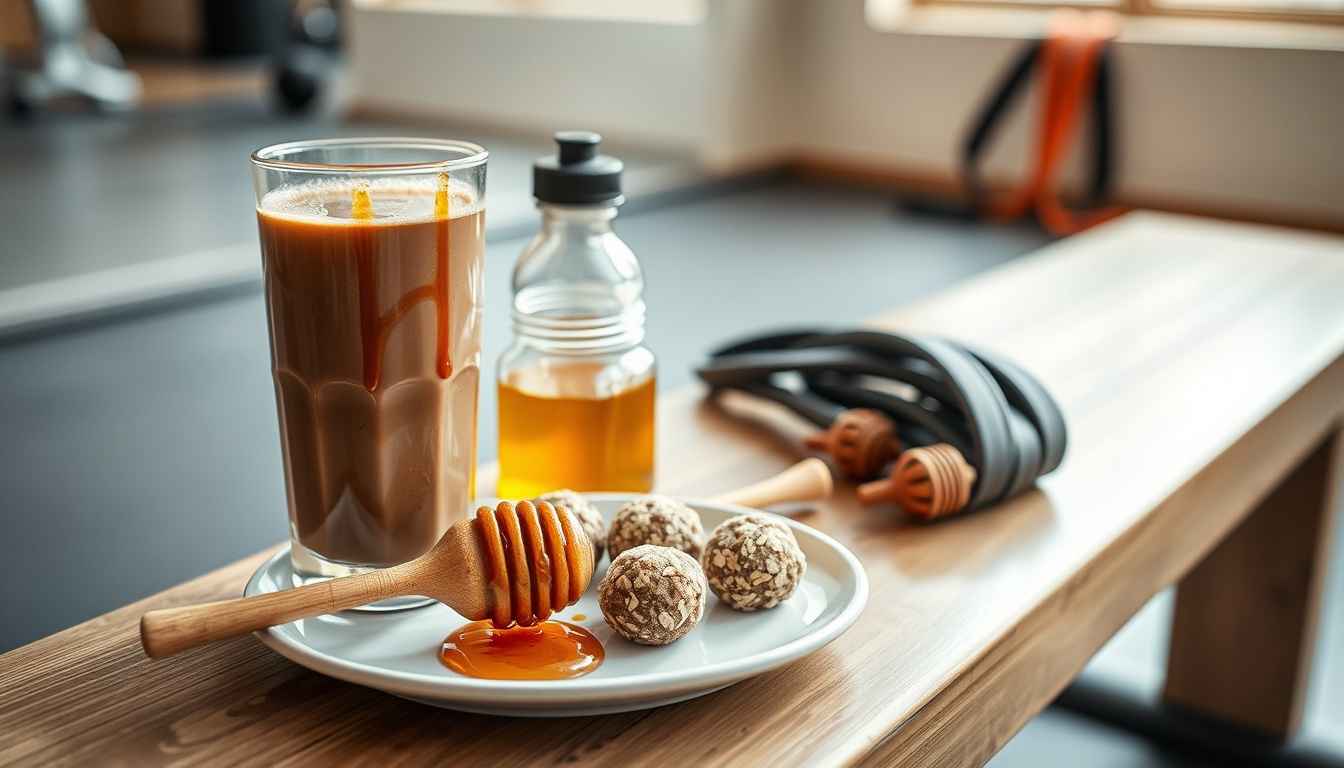
Honey is a natural performance fuel that has been used by athletes since the ancient Olympic Games, where Greek athletes consumed honey and figs before competition. Modern sports science validates this practice. A 2004 study published in the Journal of Strength and Conditioning Research by Dr. Richard Kreider at Baylor University found that honey was as effective as commercial glucose gels for maintaining blood sugar and improving cycling time-trial performance. The advantage of honey over processed sports gels is its dual-sugar composition: roughly equal parts glucose (fast-absorbing, provides immediate energy) and fructose (slower-absorbing, provides sustained energy via hepatic metabolism). This natural 1:1 ratio provides both a rapid energy spike and sustained fuel without the crash associated with pure glucose products. Some athletes use [clover honey](/honey/clover-honey) or [wildflower honey](/honey/wildflower-honey) before exercise — a tablespoon provides about 17g of carbohydrates with a moderate glycemic index of ~55–70 depending on variety (vs 100 for glucose). During longer endurance activities, [acacia honey](/honey/acacia-honey) (GI ~32) or [wildflower honey](/honey/wildflower-honey) is sometimes used in place of commercial gels. Post-workout, some pair [buckwheat honey](/honey/buckwheat-honey) with protein (yogurt, whey shake, or milk) — a 2006 study in the International Journal of Sport Nutrition and Exercise Metabolism found that a honey-protein combination was as effective as a dextrose-protein combination for muscle recovery. [Buckwheat honey](/honey/buckwheat-honey) is particularly valued by athletes for its high antioxidant content (ORAC 20,000+), which may help reduce exercise-induced oxidative stress and inflammation. A simple athlete's recovery drink: 2 tablespoons [buckwheat honey](/honey/buckwheat-honey) + 8oz milk + pinch of salt (electrolytes).
Key Takeaways
- 2004 Baylor University study: honey matched commercial glucose gels for cycling performance
- Natural 1:1 glucose-fructose ratio provides both immediate and sustained energy without crash
- Some athletes use 1-2 tbsp honey before exercise (17g carbs per tbsp, GI ~55–70)
- During longer endurance activities, honey is sometimes used in place of commercial energy gels
- Post-workout: honey + protein is as effective as dextrose + protein for glycogen recovery
- Buckwheat honey has ORAC 20,000+ — may reduce exercise-induced oxidative stress and inflammation
Which Honey Types Are Best for Men's Health Goals?
Different honey varieties offer different concentrations of bioactive compounds, making some better suited to specific men's health goals. For testosterone and reproductive support, [Sidr honey](/honey/yemeni-sidr-honey) (jujube honey from Yemen/Pakistan) has the strongest traditional reputation — a 2014 study in the journal BMC Complementary and Alternative Medicine found Sidr honey improved sperm count and testosterone in a rat model more effectively than other varieties, attributed to its high antioxidant and mineral content. Malaysian Tualang honey has also shown testosterone-boosting effects in animal studies, though [buckwheat honey](/honey/buckwheat-honey) offers similar mineral density and antioxidant levels at more accessible prices. For cardiovascular health, dark honeys are superior due to higher antioxidant content: [buckwheat honey](/honey/buckwheat-honey) has 8-20x the antioxidant activity of lighter honeys (Gheldof & Engeseth, Journal of Agricultural and Food Chemistry, 2002), while [Manuka honey](/honey/new-zealand-manuka-umf-15)'s methylglyoxal provides unique antibacterial benefits and [chestnut honey](/honey/chestnut-honey) offers exceptional phenolic compound density. For athletic performance, any raw honey works, but [buckwheat](/honey/buckwheat-honey) and [wildflower](/honey/wildflower-honey) varieties provide the most sustained energy due to their complex carbohydrate profiles and higher mineral content, with [clover honey](/honey/clover-honey) offering reliable moderate-GI energy for everyday training. For immune support, [Manuka honey](/honey/new-zealand-manuka-umf-15) (UMF 10+/MGO 263+) has the strongest clinical evidence — a 2020 Frontiers in Microbiology review confirmed its broad-spectrum antibacterial, antiviral, and anti-inflammatory properties. For prostate health, honeys high in quercetin and chrysin (darker floral varieties, [heather honey](/honey/heather-honey), [chestnut honey](/honey/chestnut-honey)) are most relevant — quercetin has shown anti-proliferative effects on prostate cells in multiple in vitro studies published in the journal Oncology Reports. Regardless of variety, always choose raw, unfiltered honey to preserve the full spectrum of bioactive compounds — pasteurization at 145-160°F destroys heat-sensitive enzymes, reduces antioxidant capacity by 30-50%, and eliminates beneficial pollen.
Key Takeaways
- Sidr honey: strongest traditional reputation for male reproductive health — improved testosterone and sperm in 2014 BMC study
- Buckwheat honey: 8-20x more antioxidants than light honeys — best for cardiovascular protection and testosterone support
- Manuka honey (UMF 10+): strongest clinical evidence for immune support and antibacterial reproductive tract benefits
- Dark honeys (chestnut, heather): highest quercetin and chrysin — most relevant for prostate health
- Clover and wildflower honey: proven in testosterone studies — reliable moderate-GI athletic fuel with good availability
- Always choose raw and unfiltered — pasteurization destroys 30-50% of antioxidant capacity and beneficial enzymes
What Are the Safety Precautions and Limitations for Men?
While honey offers real health benefits, it's important to set realistic expectations and understand limitations. Honey is a complementary food, not medicine — it should not replace prescribed treatments for conditions like clinically low testosterone (hypogonadism), cardiovascular disease, diabetes, or infertility. Calorie awareness is important: honey contains 64 calories per tablespoon (21g), and consuming 2-3 tablespoons daily adds 128-192 calories. For men managing weight, this should be factored into daily caloric intake. Honey has a glycemic index of approximately 55–70 (moderate, varies by variety — acacia ~32, clover ~69), men with type 2 diabetes or insulin resistance should talk to their doctor about how honey fits their diet. The evidence for honey's testosterone-boosting effects in humans, while promising, comes primarily from small studies (20-60 participants) often conducted in specific populations (infertile men, smokers). Large-scale, placebo-controlled trials in healthy men with normal testosterone are lacking. Men taking blood thinners (warfarin, aspirin, clopidogrel) should be aware that honey's flavonoids have mild antiplatelet effects — while clinically insignificant for most people, high consumption alongside anticoagulant therapy warrants discussion with a physician. Men with pollen allergies may rarely react to raw unfiltered honey containing pollen grains — symptoms are typically mild (oral itching, throat tingling) but anaphylaxis has been reported in extremely rare cases. Honey should never be given to infants under 12 months due to botulism risk. Finally, the supplement industry markets various "honey for men" products (royal jelly capsules, honey-based testosterone boosters, "mad honey") with exaggerated claims — stick to plain raw honey from reputable brands rather than expensive proprietary blends with unproven additives.
Key Takeaways
- Honey is a complementary food, not a replacement for medical treatment of low T, heart disease, or infertility
- Calorie awareness: 64 cal/tbsp — 2-3 tbsp daily adds 128-192 calories to your intake
- GI of ~55–70 (moderate, varies by variety) — men with diabetes or insulin resistance should monitor blood sugar response
- Testosterone studies are promising but small — large-scale RCTs in healthy men are lacking
- Blood thinners: honey's mild antiplatelet effects warrant discussion with a physician if on anticoagulants
- Avoid expensive "honey for men" supplements — plain raw honey from reputable brands is sufficient
Frequently Asked Questions
Is honey good for testosterone?
Research suggests honey may support testosterone levels. A 2013 RCT found that 70g of honey daily for 12 weeks significantly increased serum testosterone. Honey contains chrysin (a natural aromatase inhibitor), zinc (essential for testosterone synthesis), and antioxidants that protect Leydig cells from oxidative damage. [Buckwheat honey](/honey/buckwheat-honey) contains the highest antioxidant levels, while [wildflower](/honey/wildflower-honey) and [clover honey](/honey/clover-honey) were used in most testosterone studies. However, most studies are small, and honey should complement — not replace — medical treatment for clinically low testosterone.
How much honey should a man eat per day?
There is no medically established amount. Many people use a tablespoon or two of raw honey a day as part of a balanced diet, which adds roughly 64-128 calories. Men with diabetes should talk to their doctor about how honey fits their diet.
Which honey is best for men's health?
Different honeys suit different goals. For testosterone and reproductive health: [Sidr honey](/honey/yemeni-sidr-honey) or [buckwheat honey](/honey/buckwheat-honey) (highest antioxidants for Leydig cell protection). For cardiovascular protection: [buckwheat honey](/honey/buckwheat-honey) (8-20x more antioxidants than light honeys) or [chestnut honey](/honey/chestnut-honey). For immune support: [Manuka honey](/honey/new-zealand-manuka-umf-15) UMF 10+. For athletic performance: [wildflower](/honey/wildflower-honey), [clover](/honey/clover-honey), or [acacia honey](/honey/acacia-honey) for sustained energy. Always choose raw and unfiltered to preserve bioactive compounds.
Does honey help with erectile dysfunction?
Honey may indirectly support erectile function through cardiovascular health. Erectile dysfunction and heart disease share the same underlying mechanism — endothelial dysfunction and reduced nitric oxide. A 2022 meta-analysis found honey improves cholesterol, triglycerides, and blood sugar. Honey's nitric oxide precursors promote vasodilation. However, honey is not a proven ED treatment — men experiencing persistent ED should consult a urologist to rule out underlying conditions.
Is honey good for the gym and working out?
Yes, it can work as a natural energy source. A 2004 Baylor University study found honey matched commercial glucose gels for maintaining blood sugar during cycling time trials, thanks to its natural 1:1 glucose-to-fructose ratio. Some athletes use [clover](/honey/clover-honey) or [wildflower honey](/honey/wildflower-honey) before exercise and pair [buckwheat honey](/honey/buckwheat-honey) with protein post-workout for recovery. [Buckwheat honey](/honey/buckwheat-honey) is especially valued for its high antioxidant content.
Can honey improve sperm quality?
Multiple studies suggest yes. A 2019 review in Heliyon analyzed 15 studies showing honey improved sperm count, motility, and morphology while reducing oxidative damage to testicular tissue. A 2014 study found honey supplementation improved sperm count by 37% and motility by 23% in men with low sperm count. The antioxidants in [buckwheat](/honey/buckwheat-honey), [wildflower](/honey/wildflower-honey), and [clover honey](/honey/clover-honey) protect sperm DNA from oxidative damage, with [buckwheat honey](/honey/buckwheat-honey) providing the highest antioxidant protection. However, men with fertility concerns should work with a reproductive endocrinologist for comprehensive evaluation.
Edited by Sam French · Raw Honey Guide Editorial Team
Source reviewed against primary literature and official guidance where available. Health content is educational, not medical advice, and does not replace a licensed clinician.
Get the Honey Buyer's Cheat Sheet (free PDF)
16 varieties on one page — color, flavor, best use and what a fair price looks like — from the 268 honeys we track.
Related Guides
Health Benefits
Nutritional and therapeutic benefits of honey.
Read GuideHoney Nutrition Facts
USDA reference values and label-reading context.
Read GuideHoney Benefits for Women
Hormonal health, bone density, fertility, menopause, and best varieties for women.
Read GuideRelated Articles
Honey Benefits for Men: 10 Science-Backed Reasons to Eat It Daily
Top honey benefits for men: testosterone support, athletic performance, heart health, fertility, and prostate protection.
Read ArticleHoney and Fertility: What the Research Actually Shows
Does honey boost fertility? Review the evidence on sperm quality, ovulation, hormones, and traditional claims vs science.
Read ArticleHoney for Energy: How It Works and When to Use It
How honey provides sustained energy through dual-speed sugar delivery. Best types, timing, and everyday use.
Read ArticleReady to find the best honey for your health goals?