Why Men Should Pay Attention to Honey
Honey has been used as a male health tonic for centuries — from ancient Egyptian fertility remedies to Greek Olympic athletes eating honey before competition. Modern research is beginning to validate some of these traditional uses, revealing mechanisms that are particularly relevant to men's health concerns.
This guide focuses specifically on the benefits most relevant to men: testosterone and reproductive health, cardiovascular protection (heart disease is the #1 killer of men), athletic performance, prostate health, and metabolic function. Every claim is grounded in published research, and we are honest about where the evidence is strong versus preliminary.
While honey benefits everyone regardless of gender — see our raw honey benefits guide for the complete picture — these 10 benefits address health priorities that disproportionately affect men or where male-specific research exists.
1. Testosterone and Reproductive Health Support
Perhaps the most compelling male-specific benefit of honey relates to testosterone production and reproductive health. Several animal and human studies suggest honey may support healthy testosterone levels through multiple pathways.
**The research:** A 2019 study published in Biomolecules reviewed the effects of honey on male reproductive hormones and found that honey consumption was associated with increased serum testosterone levels in both animal models and limited human trials. The proposed mechanisms include antioxidant protection of Leydig cells (the testosterone-producing cells in the testes), improved testicular blood flow, and reduced oxidative damage to reproductive tissues.
A 2014 study in the International Journal of Molecular Sciences found that Tualang honey supplementation in rats exposed to cigarette smoke — a known testosterone suppressor — restored testosterone levels to near-normal. While animal studies don't directly translate to humans, the consistency of findings across multiple honey types and study designs is notable.
**Chrysin and aromatase inhibition:** Honey contains chrysin, a flavonoid that has demonstrated aromatase-inhibiting properties in laboratory studies. Aromatase is the enzyme that converts testosterone to estrogen — inhibiting it could theoretically preserve testosterone levels. However, chrysin has poor oral bioavailability, so the practical significance of honey's chrysin content at dietary doses remains debated.
Pro Tip
The testosterone research is promising but mostly preclinical. Honey is not a replacement for medical treatment of clinically low testosterone. However, as part of a healthy diet, it may support hormonal health through its antioxidant and anti-inflammatory effects on reproductive tissues.
Get the Honey Buyer's Cheat Sheet (free PDF)
16 varieties on one page — color, flavor, best use and what a fair price looks like — from the 268 honeys we track.
2. Fertility and Sperm Quality
Oxidative stress is one of the leading causes of male infertility, contributing to DNA fragmentation in sperm, reduced motility, and abnormal morphology. Honey's concentrated antioxidant content directly addresses this.
A 2015 systematic review in the Journal of Evidence-Based Complementary and Alternative Medicine examined multiple studies on honey and male fertility. The review found that honey supplementation improved sperm count, motility, and morphology in several trials, with the most pronounced effects in men with pre-existing oxidative stress from smoking or environmental toxin exposure.
A 2008 study in the International Journal of Food Sciences and Nutrition found that 4 weeks of honey supplementation (70g daily) in healthy men produced modest but statistically significant improvements in seminal antioxidant markers. The prebiotic effects of honey on gut health may also play a role — emerging research links gut microbiome composition to male reproductive hormone regulation.
3. Cardiovascular Protection
Heart disease kills more men than any other condition, and men develop cardiovascular disease on average 10 years earlier than women. Honey's cardiovascular benefits are particularly relevant here.
The 2022 Nutrition Reviews meta-analysis of 18 randomized controlled trials found that honey consumption reduced total cholesterol, LDL ("bad") cholesterol, triglycerides, fasting blood glucose, and the inflammatory marker C-reactive protein (CRP) — all major cardiovascular risk factors. See our honey and blood pressure guide for the complete cardiovascular evidence.
Honey's polyphenols — particularly quercetin, kaempferol, and caffeic acid — promote nitric oxide production, which relaxes blood vessels and improves blood flow. This vasodilatory effect benefits not just heart health but also exercise performance and, according to some researchers, erectile function. Buckwheat honey contains 3-9x more of these polyphenols than lighter varieties like clover or wildflower honey, while chestnut honey and heather honey also provide exceptional antioxidant densities for cardiovascular protection.
4. Athletic Performance and Recovery
Honey has been studied as a natural sports fuel with results competitive with commercial energy gels and sports drinks. This is relevant to men given higher average athletic participation rates and muscle mass.
A 2004 study at the University of Memphis Exercise and Sport Nutrition Laboratory found that honey was as effective as glucose for sustaining power output during endurance exercise. The dual-sugar composition — roughly 38% fructose and 31% glucose — provides both rapid and sustained energy, similar to the carbohydrate ratios in expensive sports nutrition products.
For recovery, honey's anti-inflammatory polyphenols reduce exercise-induced muscle inflammation and oxidative stress. A 2020 study in Nutrients found that honey supplementation reduced post-exercise inflammatory markers (IL-6, CRP) compared to sugar-matched placebo. Combined with its glycogen-replenishing properties, honey supports faster muscle recovery between training sessions.
Practical application: 1-2 tablespoons of honey 30 minutes before exercise for energy, and 1-2 tablespoons within 30 minutes post-exercise mixed with protein for recovery. Wildflower honey provides balanced sustained energy for endurance activities, clover honey offers reliable quick-absorbing carbohydrates for high-intensity training, while buckwheat honey delivers maximum anti-inflammatory support for recovery. See our honey for athletes guide for complete protocols.
5. Prostate Health
Prostate conditions affect the majority of men over 50. Emerging research suggests honey's anti-inflammatory and antioxidant properties may benefit prostate health — though this is an area where the evidence is still developing.
Chrysin and caffeic acid phenethyl ester (CAPE) — both found in honey and propolis — have demonstrated anti-proliferative effects on prostate cancer cells in laboratory studies. A 2009 study in Cancer Science found that CAPE inhibited androgen receptor signaling in prostate cancer cell lines. Multiple in vitro studies have shown that Tualang and Manuka honey extracts reduce prostate cancer cell viability through apoptosis induction.
For benign prostatic hyperplasia (BPH), honey's anti-inflammatory effects (NF-kB pathway inhibition) may reduce prostate inflammation that contributes to urinary symptoms. However, clinical trials specifically testing honey for BPH are lacking. Honey for inflammation covers the anti-inflammatory mechanisms in detail.
Pro Tip
Prostate health research on honey is primarily laboratory-based (cell studies and animal models). Do not use honey as a substitute for prostate screening or medical treatment. The evidence supports honey as part of an anti-inflammatory diet that may benefit prostate health long-term.
6. Liver Protection
Men are significantly more likely than women to develop liver disease, partly due to higher average alcohol consumption and metabolic syndrome rates. Several studies suggest honey has hepatoprotective properties.
A 2012 study in the World Journal of Gastroenterology found that honey supplementation in rats with liver damage reduced liver enzymes (ALT, AST), oxidative stress markers, and histological damage scores. The mechanism involves honey's antioxidants neutralizing reactive oxygen species that drive liver cell death.
For men who drink alcohol, honey may offer modest support. Its fructose content supports NAD+ regeneration for alcohol metabolism, while its polyphenols reduce alcohol-induced inflammation in liver tissue. See our honey for hangover guide for more on honey and alcohol metabolism. This does not mean honey prevents liver damage from chronic heavy drinking — moderation remains essential.
7. Carbohydrate and Metabolic Context
Honey is a fast-acting carbohydrate for men and women alike. Sex-specific wellness framing does not make honey a diabetes treatment or support a preferred variety or serving.
Use the honey carbohydrate and label guide to compare serving-size total carbohydrate and added sugars. Diabetes targets, medication and meal planning remain individualized.
8. Sleep Quality Improvement
Poor sleep is epidemic among men and directly impacts testosterone production — studies show that sleeping 5 hours per night reduces testosterone by 10-15% compared to 8 hours. Honey may help through its unique liver glycogen and tryptophan mechanisms.
Honey replenishes liver glycogen stores, preventing the cortisol spike that occurs when glycogen runs low overnight. Cortisol is a testosterone antagonist — elevated nighttime cortisol suppresses both sleep quality and testosterone production. Honey also provides tryptophan, the amino acid precursor to serotonin and melatonin.
The practical approach is simple: raw honey before bed, either straight, in warm milk, or in chamomile tea. Acacia honey provides gentle sweetness without overwhelming flavor for bedtime beverages, clover honey offers mild, pleasant flavor, while wildflower honey delivers diverse compounds from multiple floral sources. See our complete honey before bed guide for the full sleep mechanism and research.
9. Wound Healing and Skin Health
Men are more likely to sustain workplace injuries and less likely to use skincare products. Honey's wound-healing properties — validated by a 2015 Cochrane review of 3,011 participants — make it a practical topical treatment.
Medical-grade manuka honey promotes wound healing through osmotic fluid draw, hydrogen peroxide generation, low pH environment, anti-biofilm activity, and collagen synthesis stimulation. It is FDA-cleared for wound care (Medihoney, Activon products). See our honey wound healing guide for application protocols.
For everyday skin maintenance, honey face masks provide natural moisturizing, antibacterial, and anti-inflammatory benefits. See our honey face mask guide for simple recipes.
10. Immune System Support
Men have measurably weaker immune responses than women — a phenomenon called "immune dimorphism" attributed to testosterone's immunosuppressive effects and X-chromosome-linked immune genes that women carry two copies of. This makes immune support particularly important for men.
Honey supports immunity through multiple pathways: prebiotic oligosaccharides feed beneficial gut bacteria (70% of immune cells reside in the gut), polyphenol antioxidants reduce chronic low-grade inflammation that weakens immune surveillance, and honey's antibacterial compounds (hydrogen peroxide, methylglyoxal in manuka) directly combat pathogens.
For acute respiratory illness, honey is as effective as dextromethorphan (DM) for cough suppression according to a 2020 BMJ Evidence-Based Medicine systematic review — see our honey for cough guide. For chronic immune support, regular consumption of raw honey as part of your diet provides ongoing antioxidant and prebiotic intake.
Best Honey Types for Men's Health
Different honey varieties offer distinct advantages depending on your health priorities:
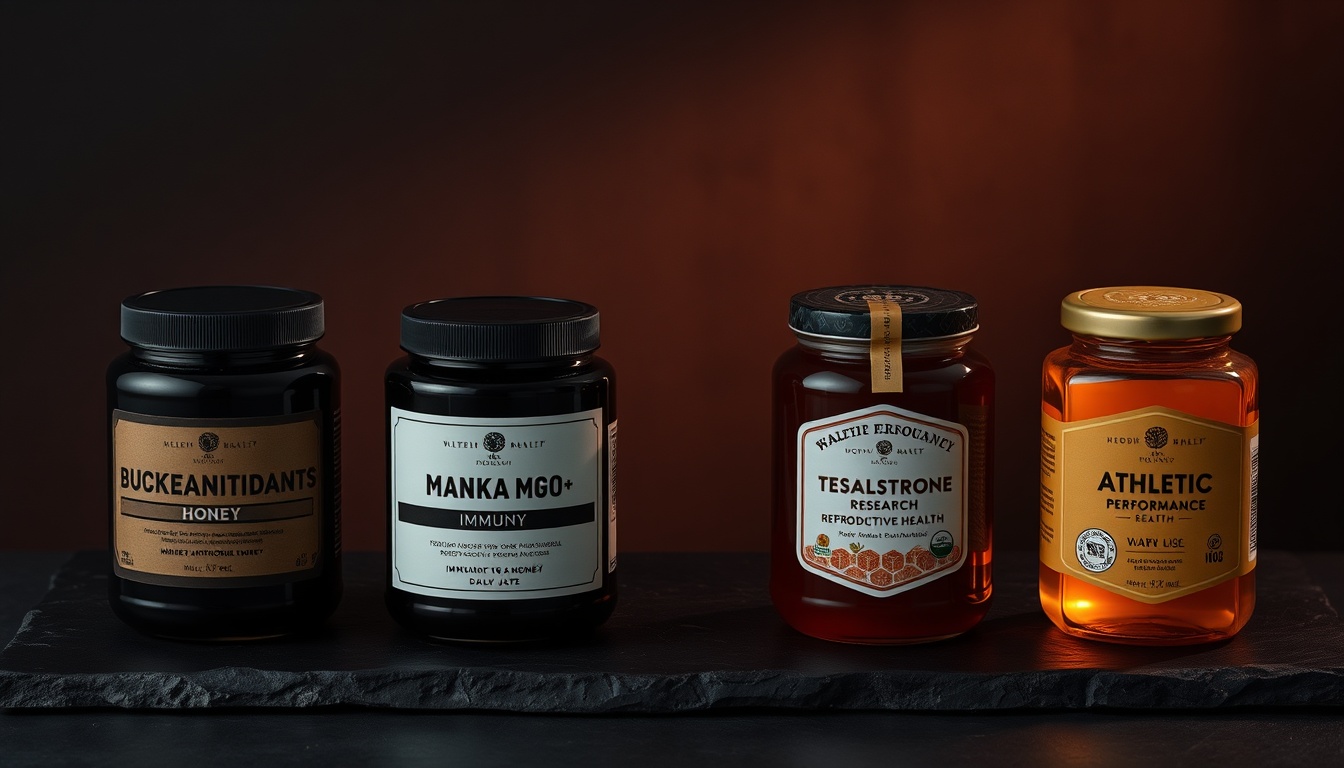
- **Buckwheat honey — best for cardiovascular and antioxidant support:** Highest antioxidant content of any common honey (3-9x more polyphenols than clover honey), making it ideal for heart health, testosterone protection, and anti-inflammatory goals
- **Manuka honey — best for immunity and wound healing:** Contains methylglyoxal (MGO) for potent antibacterial activity supporting immune system and prostate health. UMF 10+ for general health, UMF 15+ for therapeutic applications
- **Wildflower honey — best daily all-rounder:** Broad spectrum of antioxidants from multiple floral sources supporting fertility, athletic performance, and general men's health. Widely available and reasonably priced for everyday use
- **Acacia honey — best for blood sugar management:** Lowest glycemic index (32-35) of common honeys due to high fructose-to-glucose ratio, ideal for men managing metabolic health, weight control, or diabetes risk
- **Chestnut honey — best for testosterone and male vitality:** High polyphenol density supporting reproductive health with traditional European use for male strength and stamina. Dark color indicates exceptional antioxidant activity
- **Sourwood honey — best for sophisticated health support:** Premium Appalachian variety with unique antioxidant profile supporting cardiovascular health and athletic recovery. Prized for its complex flavor and health properties
- **Orange blossom honey — best for stress and sleep:** Citrus-derived compounds supporting relaxation and sleep quality, crucial for testosterone production and recovery. Natural choice for bedtime consumption
- **Always choose raw over processed:** Pasteurization destroys the enzymes, antioxidants, and prebiotic compounds that drive most of these benefits. See our raw vs organic guide for buying advice
Honey and Mens Health: Evidence Boundaries
Being male does not create a distinct honey requirement; the relevant context is the overall diet and any individual health condition.
- Honey is not required for general health; dietary variety matters more than a special honey routine.
- Honey can supply carbohydrate during exercise, but training and fueling needs are individualized.
- Evidence does not support honey as a sleep aid.
- Honey has not been shown to improve male fertility; concerns warrant specialist evaluation.
- Honey is not cardiovascular treatment and should not replace established risk reduction or prescribed care.
- **Calorie awareness:** Each tablespoon contains ~64 calories. Substitute for other sweeteners rather than adding on top of existing sugar intake
Pro Tip
This section does not establish a universal or medical honey dose for this purpose. Use the daily added-sugar guide to count honey with other added or free sugars.
Honey vs Supplements for Men's Health
How does honey compare to popular men's health supplements?
- **Honey vs testosterone boosters:** Most OTC testosterone supplements (tribulus, fenugreek, D-aspartic acid) have weak or mixed evidence. Honey's testosterone support is also preliminary, but honey provides additional cardiovascular, anti-inflammatory, and metabolic benefits that isolated supplements cannot. Honey is also far less likely to cause side effects
- **Honey vs pre-workout supplements:** Commercial pre-workouts rely on caffeine, beta-alanine, and creatine — different mechanisms from honey's carbohydrate fuel. They are not interchangeable, but honey is a cleaner energy source without the jitters, crash, or artificial ingredients. Consider honey as a natural complement to your existing routine
- **Honey vs multivitamins:** Honey provides antioxidants, trace minerals, and prebiotics that multivitamins lack, while multivitamins provide vitamins in doses honey cannot match. They serve different purposes and can be combined
- **Honey vs fish oil (omega-3s):** Both reduce inflammation but through different pathways. Fish oil targets prostaglandin production; honey targets NF-kB and COX-2. They are complementary, not competitive
Safety and Precautions
Honey is extremely safe for most adult men, but keep these considerations in mind:
- Honey remains a fast-acting carbohydrate; this general safety section does not establish a diabetes protocol.
- **Weight management:** At 64 calories per tablespoon, honey should substitute for other sweeteners, not be added on top. Men actively trying to lose weight should keep an eye on total intake — see our honey for weight loss guide
- **Allergies:** Rarely, honey can trigger allergic reactions in people with severe pollen allergies. Start with a small amount if you have known pollen sensitivities — see our honey for allergies guide
- **Drug interactions:** Honey may potentiate the effects of blood-thinning medications (warfarin) due to its coumarin content in some varieties. Consult your doctor if you take anticoagulants
- **Not a medicine replacement:** Honey supports health but does not replace medication for conditions like clinical hypogonadism, diagnosed heart disease, or diabetes. Use it as a dietary complement, not an alternative to medical care