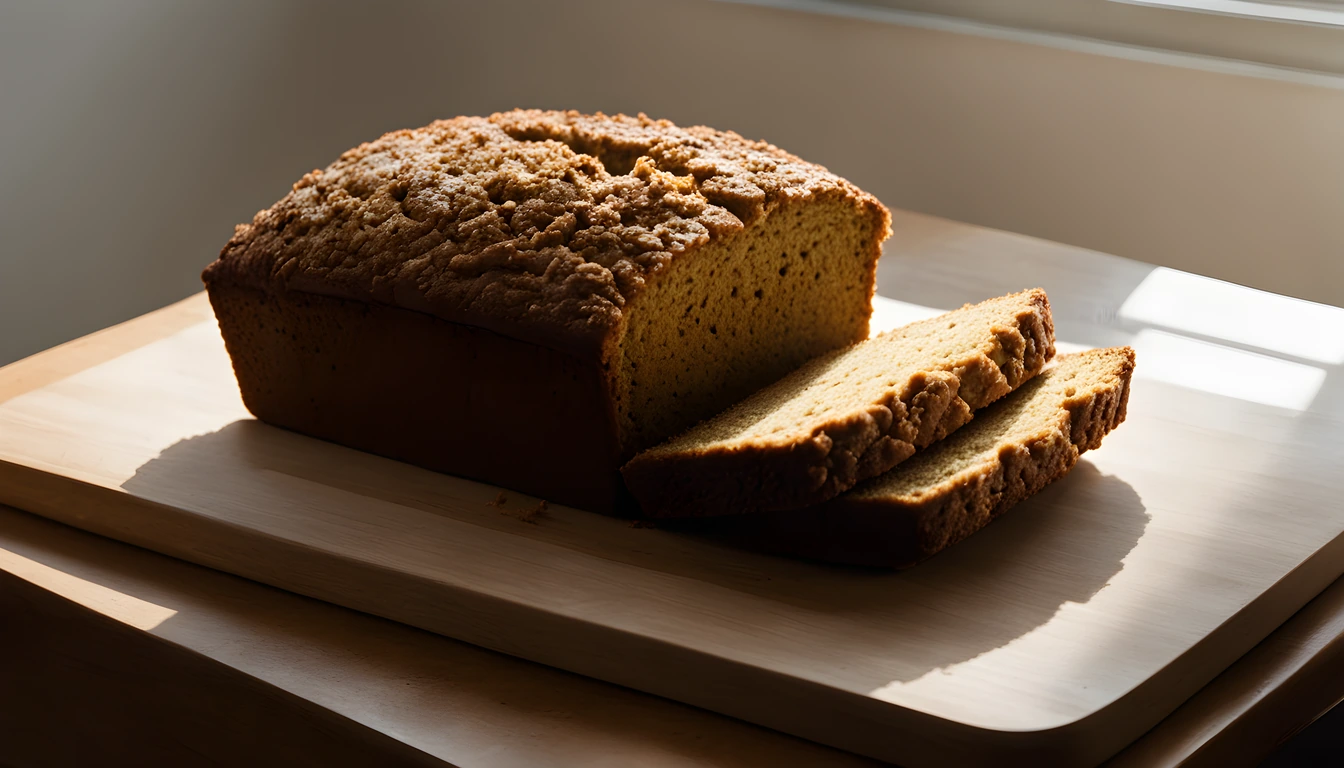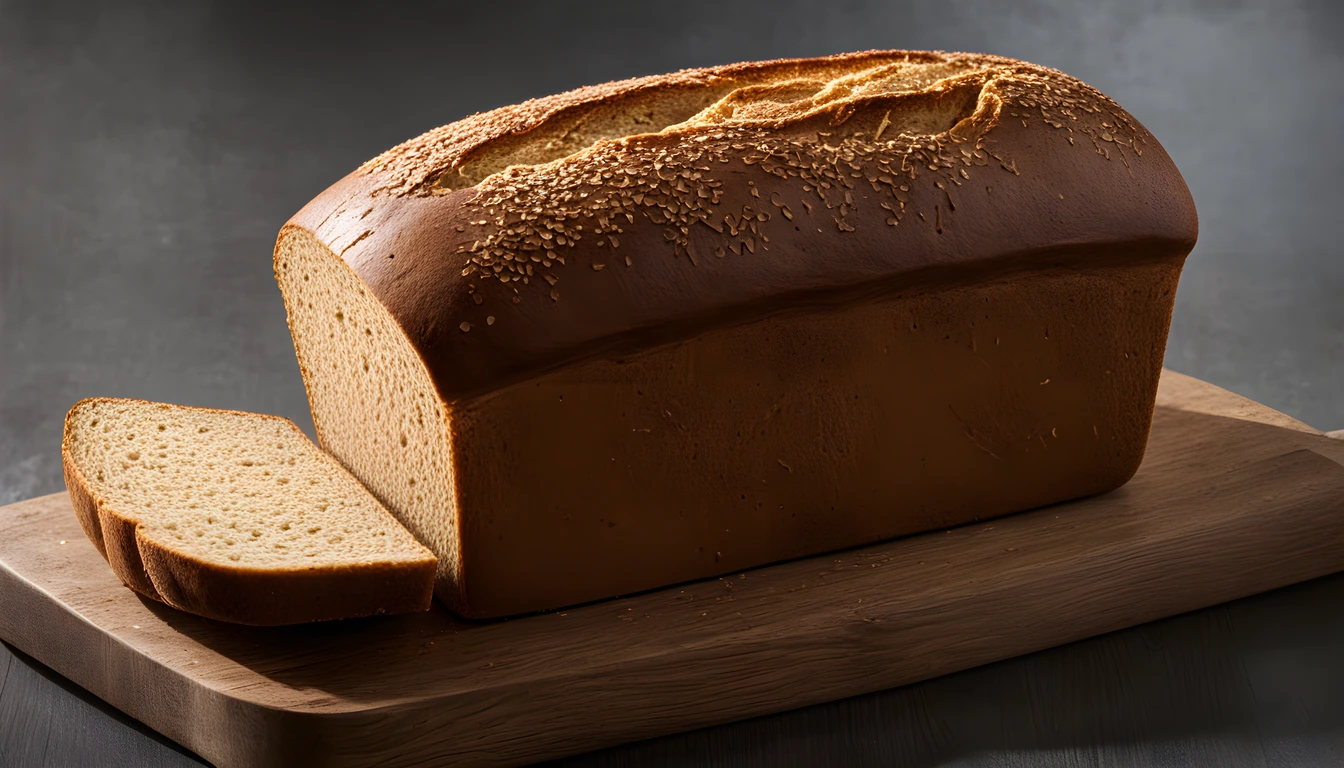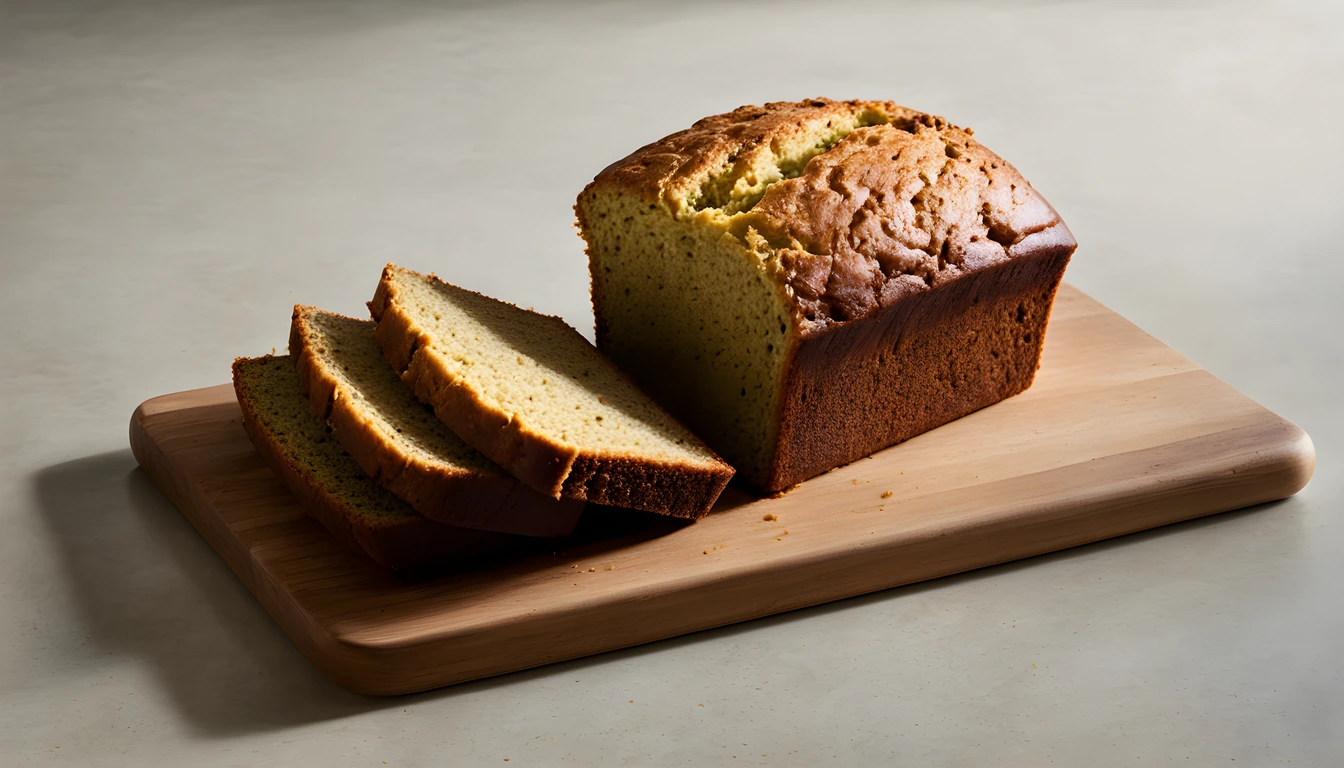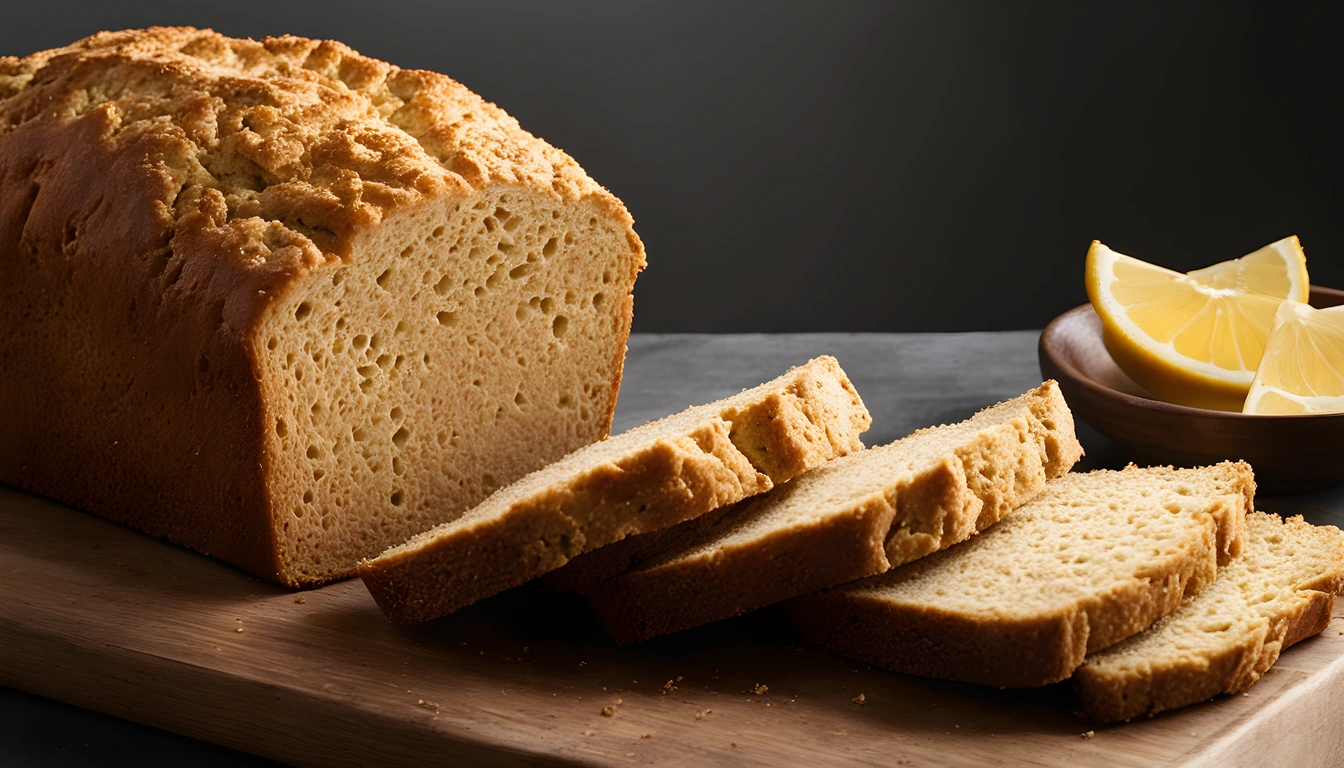
A stirred loaf with honey and beer
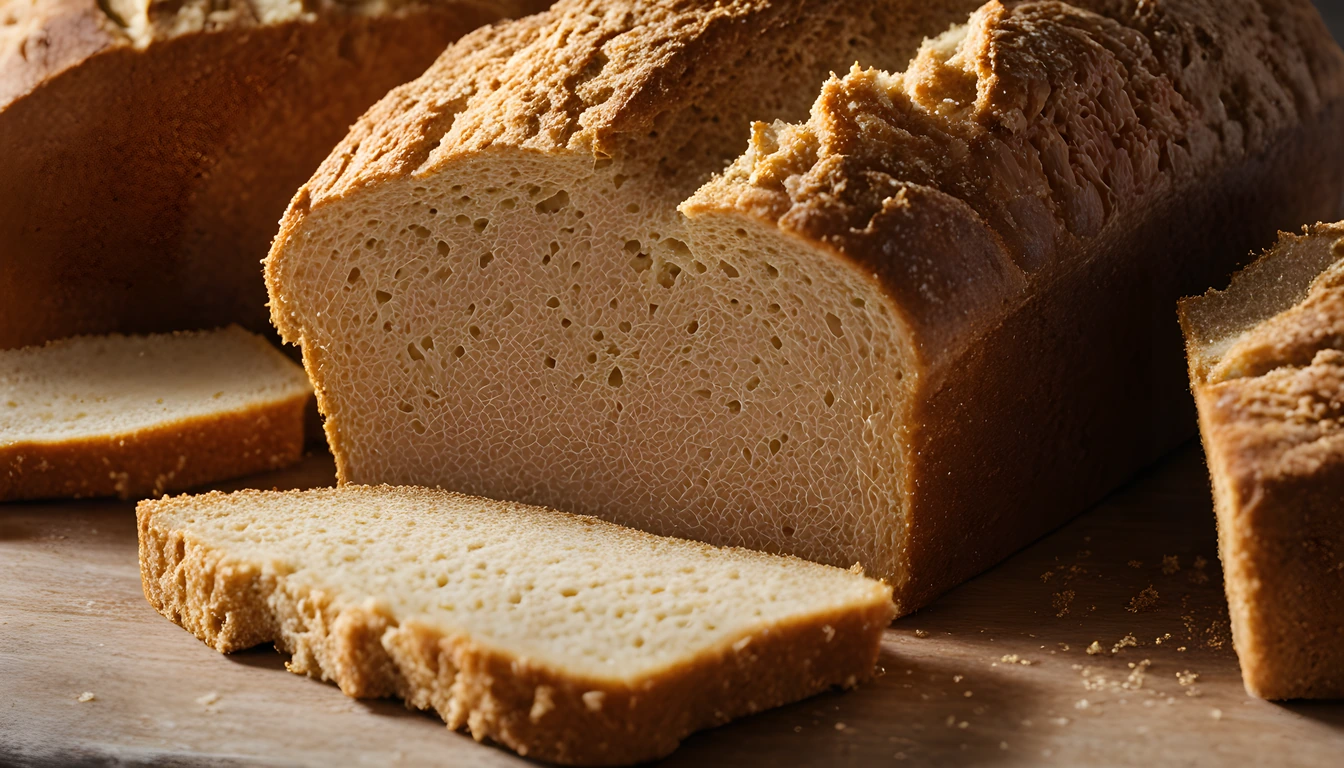
This beer bread is mixed as a thick batter and baked straight away. Double-acting baking powder provides the leavening; there is no yeast proofing, kneading or rising stage.
Honey sweetens the loaf and softens the beer’s flavor. Half the measured butter goes into the batter and half goes over the top for a craggy crust. The batch is divided into ten slices after cooling.
Recipe
Honey Beer Bread
A no-proof quick loaf with regular beer, measured honey and a buttery crust. Makes ten slices; the input estimate includes all beer energy with no alcohol-loss adjustment.
6Ingredients
Yield: 10 servings
- 360 g all-purpose flour
- 12 g double-acting baking powder
- 5 g table salt
- 350 g regular beer
- 1/4 cup clover honey (84.75 g)
- 56 g unsalted butter, melted and divided
Ingredient amounts scale; instructions show the original batch. Cooking times and pan sizes may need adjustment. Season to taste. Honey grams use US measures at 20°C and 17.5% moisture, a density estimate; weigh your honey for precision.
Instructions
- 1Heat the oven and prepare the panHeat the oven to 375°F (190°C). Line a 9-by-5-inch loaf pan with parchment, leaving enough overhang to lift the loaf. Melt the butter gently and divide it into two 28 g portions. Weigh the beer rather than treating a bottle’s nominal volume as its mass.
- 2Mix the dry and wet ingredientsWhisk the flour, baking powder and salt thoroughly in a large bowl. In a separate bowl, stir the honey into the measured regular beer, then stir in one 28 g portion of melted butter. The beer mixture may foam.
- 3Fold and fill the panPour the wet mixture into the dry ingredients. Fold just until the flour is moistened; the batter will be thick and uneven. Scrape it into the prepared pan without kneading or proofing. Spread it into the corners and pour the remaining 28 g melted butter evenly over the surface.
- 4Bake until the center setsBake for about 50–60 minutes, until the crust is golden and a skewer inserted into the center comes out without wet batter. Start checking at 50 minutes. Tent loosely with foil if the top colors before the middle sets, and add time if needed; the planning cook time is 55 minutes.
- 5Cool before slicingLeave the loaf in the pan for 15 minutes, then lift it onto a rack and cool for about another 45 minutes before slicing into ten portions. Give a still-hot center more time rather than compressing the crumb. The planning total includes 15 minutes preparation, 55 minutes baking and one hour cooling.
Estimated nutrition per serving
212.64 calories · 4.89 g fat · 36.03 g carbohydrate · 3.94 g protein · 324.27 mg sodium
Serving: 1 of 10 equal portions
Calculated from ingredient weights and USDA FoodData Central: 168894, 172803, 173468, 168746, 169640, 173430. Estimates use ingredient input weights; actual portions, brands and cooking losses vary. Omitted nutrient values are unavailable, not zero.
Use a weighed regular beer input
Choose a regular pale or amber lager for a relatively mild starting flavor. Very bitter or strongly flavored beers change the result. The nutrition source is USDA’s generic regular-beer reference, not a measured profile of a particular brand.
Weigh 350 g beer. A container’s fluid-ounce or milliliter label is a volume, and is not an instruction to substitute the same number of grams. No density conversion is needed when weighing it directly.
Stir only until the flour is wet. Repeated beating develops more structure than this quick loaf needs. Transfer the batter to the lined pan and bake without holding it for a rise.
Get the Honey Buyer's Cheat Sheet (free PDF)
16 varieties on one page — color, flavor, best use and what a fair price looks like — from the 304 honeys we track.
Choose the honey by flavor
Clover honey has a mild flavor, wildflower honey varies with its floral mix, and orange blossom honey brings citrus-floral aroma. Buckwheat honey has a stronger, malty flavor. The baking pairing guide offers more choices.
The chart uses an editorial 1–5 flavor-intensity scale for pairing. Individual jars vary with floral source and harvest.
1 = mild, 5 = bold. Editorial pairing guidance, not laboratory measurements; jars vary.
- Clover
- Mild honey and lager loaf
- Wildflower
- Floral beer bread
- Orange blossom
- Citrus-floral bread aroma
- Buckwheat
- Bold malt-like honey flavor
Alcohol and the input estimate
The regular-beer reference reports 3.9 g alcohol and 43 calories per 100 g. The measured 350 g input therefore contributes 13.65 g alcohol before baking. Its complete reported energy is included in this recipe’s ingredient estimate.
No alcohol evaporation or retention factor has been applied. That input figure is not a measurement of alcohol remaining in the finished loaf, and this recipe is not an alcohol-free bread.
For a different bread method, honey cornbread uses a cornmeal batter and honey butter rolls use a yeasted dough. Their ingredients and timing are separate recipes.
Serving and keeping the loaf
Let the center cool before cutting the ten portions. A very hot loaf can compress under the knife even when it is fully baked. Extra honey butter, cheese or another topping is additional to the stated estimate.
To double the recipe, use two original-size loaf pans and check each center. A single larger loaf does not share the same bake time. Nut, cheese or herb additions are variations outside this base.
Once completely cool, wrap the loaf and use within about two days for best texture, or freeze individual slices. Thaw slices while wrapped, then warm gently if desired.
Nutrition and source ingredients
One portion has an estimated 212.64 calories, 4.89 g fat, 2.88 g saturated fat, 36.03 g carbohydrate, 7.06 g sugars, 0.99 g fiber, 3.94 g protein and 324.27 mg sodium.
All measured flour, leavener, salt, regular beer, honey and butter are allocated across ten slices. The complete beer energy, including its alcohol contribution, remains in this input estimate. No alcohol-retention, moisture-loss or cooked-weight factor is invented.
These values sum the USDA reference ingredients and divide them by the stated portions. They are estimates, not laboratory measurements of the finished bread. Baking changes water content; no guessed cooking-loss or recovery factor has been applied.
- USDA FoodData Central 168894: Wheat flour, white, all-purpose, enriched, bleached.
- USDA FoodData Central 172803: Leavening agents, baking powder, double-acting, sodium aluminum sulfate.
- USDA FoodData Central 173468: Salt, table.
- USDA FoodData Central 168746: Alcoholic beverage, beer, regular, all.
- USDA FoodData Central 169640: Honey.
- USDA FoodData Central 173430: Butter, without salt.