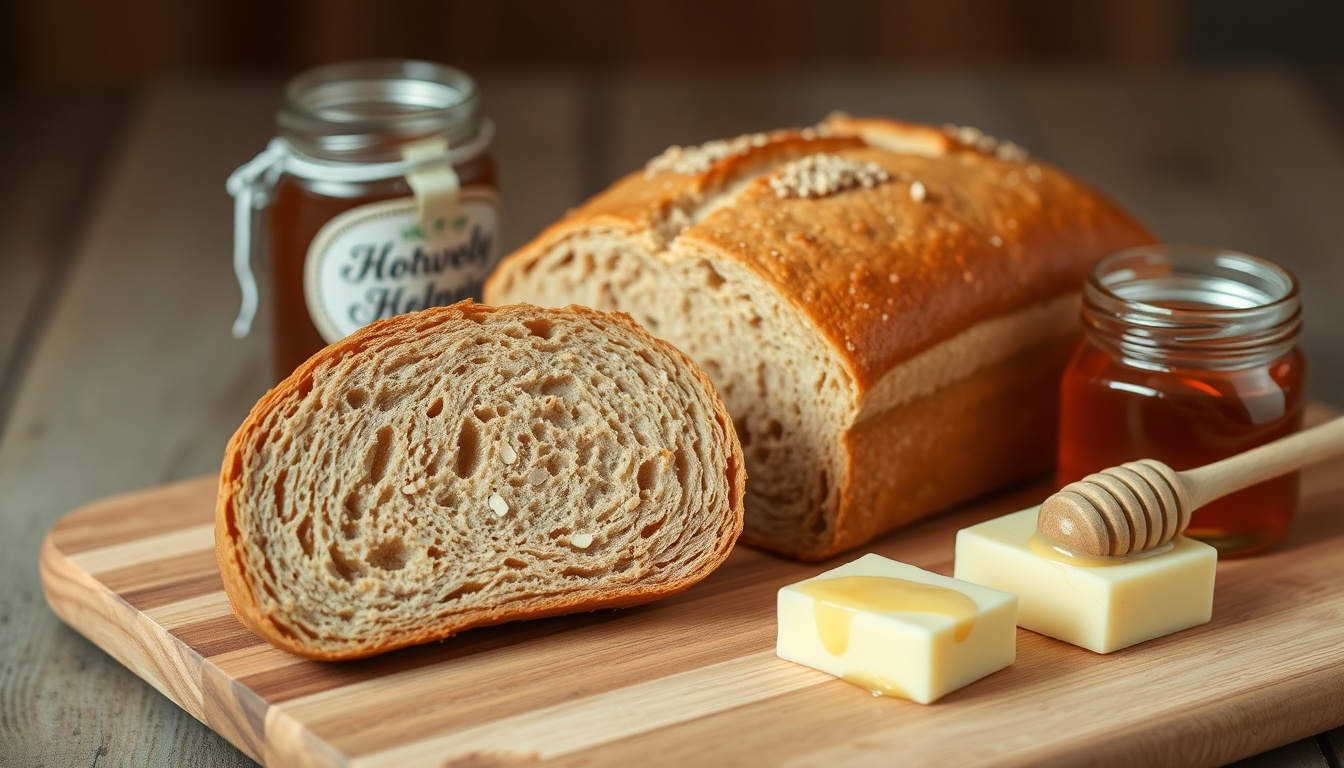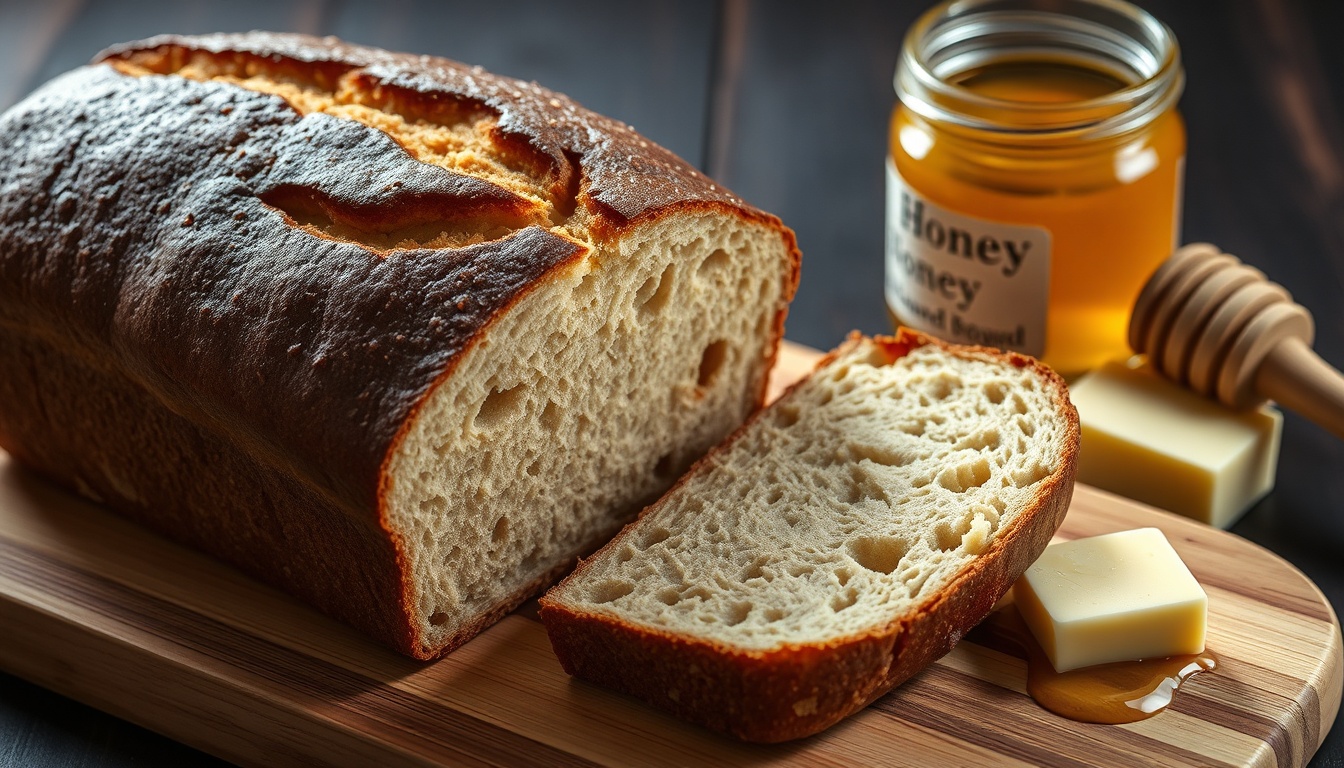
A wheat-and-rye loaf with gentle sweetness
This loaf blends 150 g medium rye flour with 300 g bread flour. The wheat flour supplies much of the structure, while the rye gives the crumb a darker color and a distinct grain flavor. It is a blend, not a 100% rye loaf.
Honey rounds out the flavor without turning the dough into a sweet quick bread. Active dry yeast and two rises make this a different method from honey cornbread.
Recipe
Honey Rye Bread
A yeasted pan loaf blending medium rye and bread flour, with a little honey. Makes ten slices; the planning time includes two rises and cooling.
7Ingredients
Yield: 10 servings
- 300 g bread flour, divided
- 150 g medium rye flour
- 300 g water, warmed to about 100°F (38°C)
- 2 tablespoons clover honey (42 g)
- 7 g active dry yeast
- 14 g canola oil
- 8 g table salt
Ingredient amounts scale; instructions show the original batch. Cooking times and pan sizes may need adjustment. Season to taste. Honey grams use US measures at 20°C and 17.5% moisture, a density estimate; weigh your honey for precision.
Instructions
- 1Prepare the yeast mixtureStir the honey into the measured water at about 100°F (38°C). Sprinkle the active dry yeast over it and leave for 5–10 minutes, following the yeast packet’s temperature instructions if they differ. The mixture should show activity; if it does not, check the yeast and water temperature before proceeding.
- 2Mix the doughReserve 10 g of the bread flour for shaping. Whisk the remaining 290 g bread flour with the rye flour and salt. Add the yeast mixture and canola oil, then mix with a sturdy spoon or dough hook until no dry flour remains.
- 3Knead and allow the first riseKnead for about 8–10 minutes until cohesive and elastic, using the reserved flour sparingly if needed. A rye blend remains tackier than a white-flour dough. Put it in a bowl, cover and let rise in a comfortably warm place until puffy and roughly doubled, about 60–90 minutes. Use the dough’s expansion rather than the clock alone.
- 4Shape and allow the second riseLine a 9-by-5-inch loaf pan with parchment. Press the dough gently into a rectangle, roll into a log that fits the pan and pinch the seam closed. Set seam-side down, cover and let rise until visibly puffy, about 45–60 minutes. Heat the oven to 375°F (190°C) during this rise.
- 5Bake the loafBake for about 35–40 minutes, until well browned and the center is around 200°F (93°C) if checked with a probe thermometer. Tent loosely with foil if the crust darkens before the center finishes. Pan size and the dough’s temperature can change the timing.
- 6Cool and sliceLift the loaf from the pan and cool on a rack for about one hour before cutting into ten slices. The planning total uses 25 minutes active preparation, about two hours of rising, 40 minutes baking and one hour cooling. Slower rises or additional baking extend that total.
Estimated nutrition per serving
188.07 calories · 2.18 g fat · 36.81 g carbohydrate · 5.53 g protein · 313.02 mg sodium
Serving: 1 of 10 equal portions
Calculated from ingredient weights and USDA FoodData Central: 168896, 168886, 173647, 169640, 175043, 172336, 173468. Estimates use ingredient input weights; actual portions, brands and cooking losses vary. Omitted nutrient values are unavailable, not zero.
Expect tackiness and give the dough time
Medium rye flour absorbs water differently from bread flour and does not develop the same elastic network. A slightly tacky dough is expected. The reserved 10 g bread flour is part of the stated 300 g amount; adding extra handfuls changes the formula.
The 100°F water is a starting point for the yeast mixture, not a required room temperature for the whole rise. Follow the yeast package’s preparation guidance and judge the dough’s expansion. A cool kitchen may need more time.
Shape a log that fits the lined 9-by-5-inch pan. Let it become puffy before baking, and start heating the oven during that second rise. A tighter, under-risen loaf will not become airy simply by leaving it in the oven longer.
Get the Honey Buyer's Cheat Sheet (free PDF)
16 varieties on one page — color, flavor, best use and what a fair price looks like — from the 304 honeys we track.
Choose the honey by flavor
Clover honey has a mild flavor, wildflower honey varies with its floral mix, and orange blossom honey brings citrus-floral aroma. Buckwheat honey has a stronger, malty flavor. The baking pairing guide offers more choices.
The chart uses an editorial 1–5 flavor-intensity scale for pairing. Individual jars vary with floral source and harvest.
1 = mild, 5 = bold. Editorial pairing guidance, not laboratory measurements; jars vary.
- Clover
- Mild rye sandwich bread
- Wildflower
- Floral rye loaf
- Orange blossom
- Citrus-floral bread aroma
- Buckwheat
- A bold malty rye loaf
Slicing, serving and optional changes
Let the loaf cool for about an hour before slicing. A very warm rye-blend crumb can compress under the knife. Cut into ten portions for the nutrition estimate; butter, cheese and sandwich fillings are separate additions.
Caraway seeds, nuts or fruit are optional variations, not ingredients in this base. They change the flavor and nutrient total. For another soft loaf, honey wheat bread uses a different flour balance.
For a spread, use honey butter. If doubling this recipe, divide the dough between two original-size pans and check each loaf; the stated timing does not describe one oversized loaf.
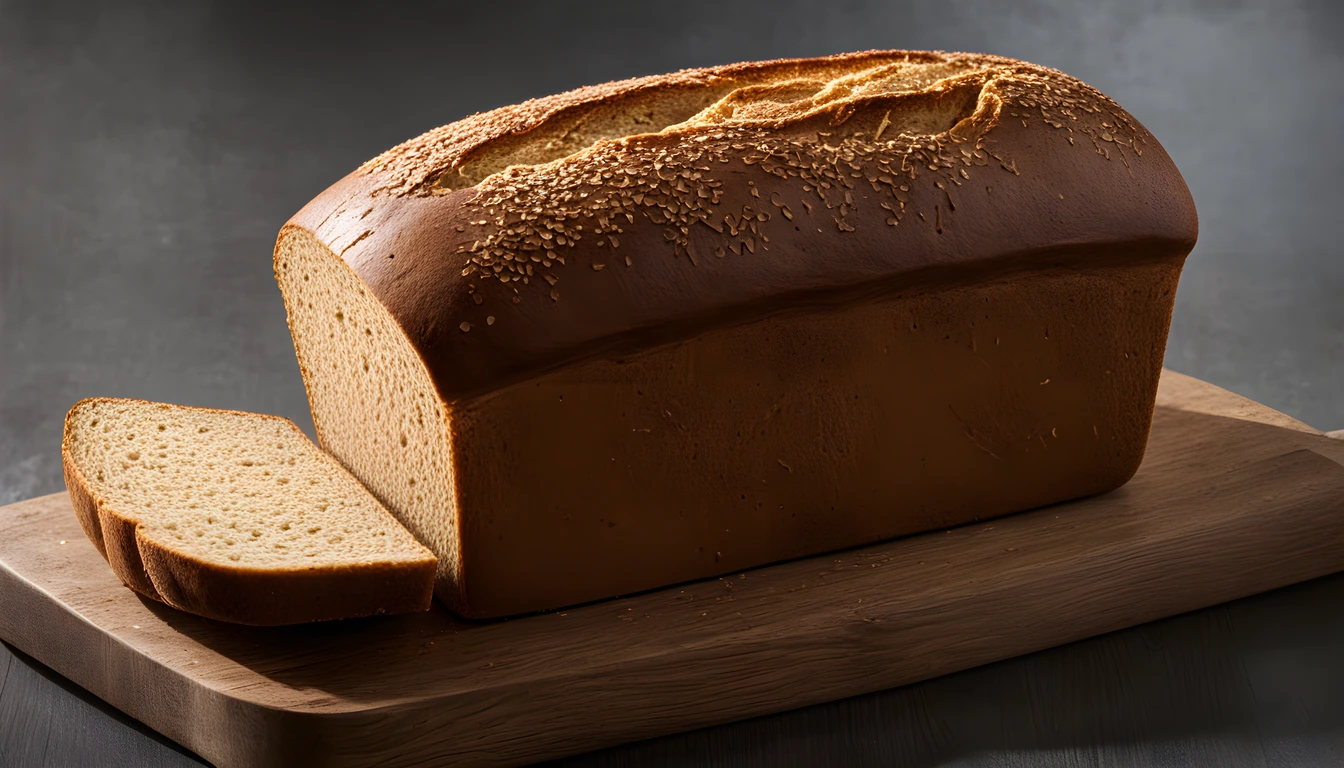
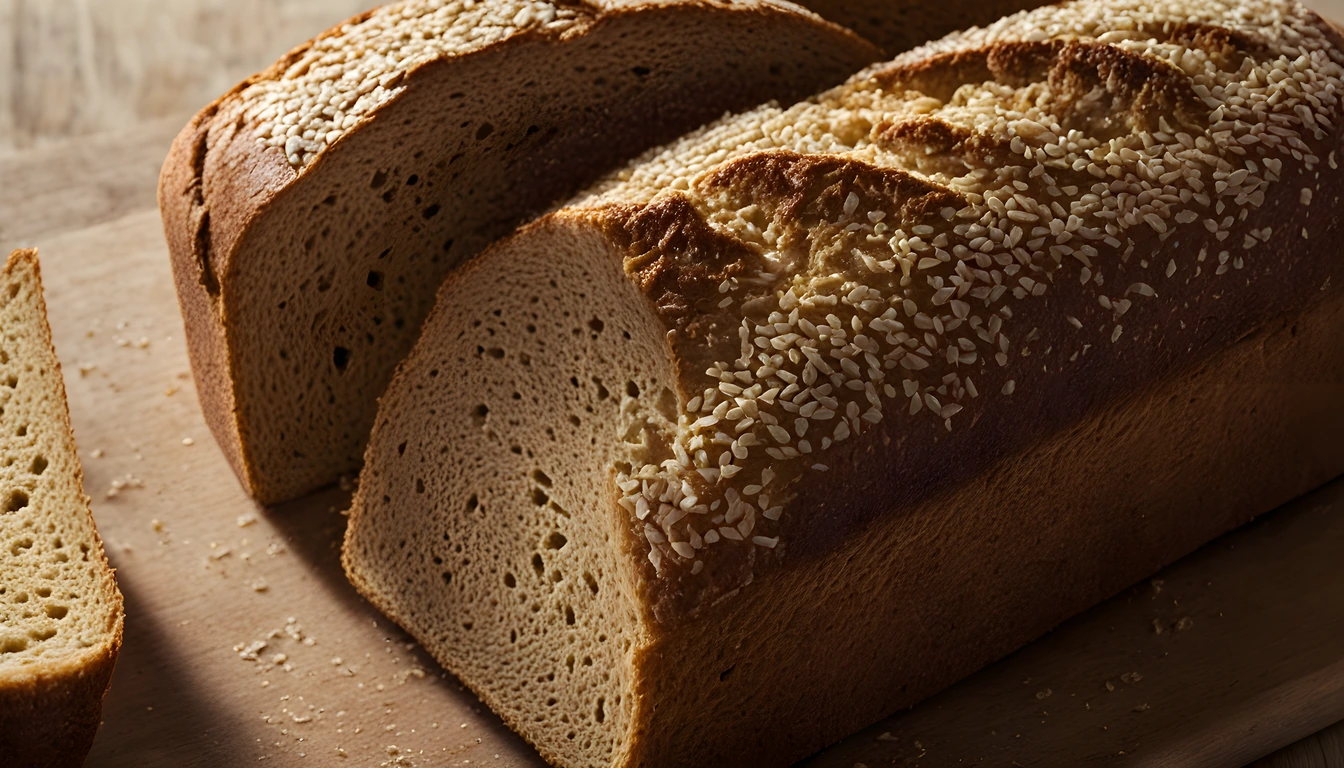
The section illustration shows a seed-topped serving variation. The measured loaf has no seeds, and the nutrition estimate describes that plain base. Any seeds added as a variation are additional to the stated ingredients.
Keeping the loaf
Once completely cool, wrap the loaf so its cut surface is protected. Use it within about two days for best texture, or freeze individual slices for longer keeping.
Thaw slices while wrapped, then warm or toast them if desired. Cool the loaf before wrapping rather than trapping steam against the crust.
Nutrition and source ingredients
One portion has an estimated 188.07 calories, 2.18 g fat, 0.21 g saturated fat, 36.81 g carbohydrate, 3.71 g sugars, 2.69 g fiber, 5.53 g protein and 313.02 mg sodium.
The calculation allocates the complete measured flour, water, honey, yeast, oil and salt input across ten slices. It makes no invented fermentation, cooking-loss or discarded-flour adjustment. Toppings and fillings are additional.
These values sum the USDA reference ingredients and divide them by the stated portions. They are estimates, not laboratory measurements of the finished bread. Baking changes water content; no guessed cooking-loss or recovery factor has been applied.
- USDA FoodData Central 168896: Wheat flour, white, bread, enriched.
- USDA FoodData Central 168886: Rye flour, medium.
- USDA FoodData Central 173647: Beverages, water, tap, drinking.
- USDA FoodData Central 169640: Honey.
- USDA FoodData Central 175043: Leavening agents, yeast, baker's, active dry.
- USDA FoodData Central 172336: Oil, canola.
- USDA FoodData Central 173468: Salt, table.