A bubbly batter, not a kneaded dough
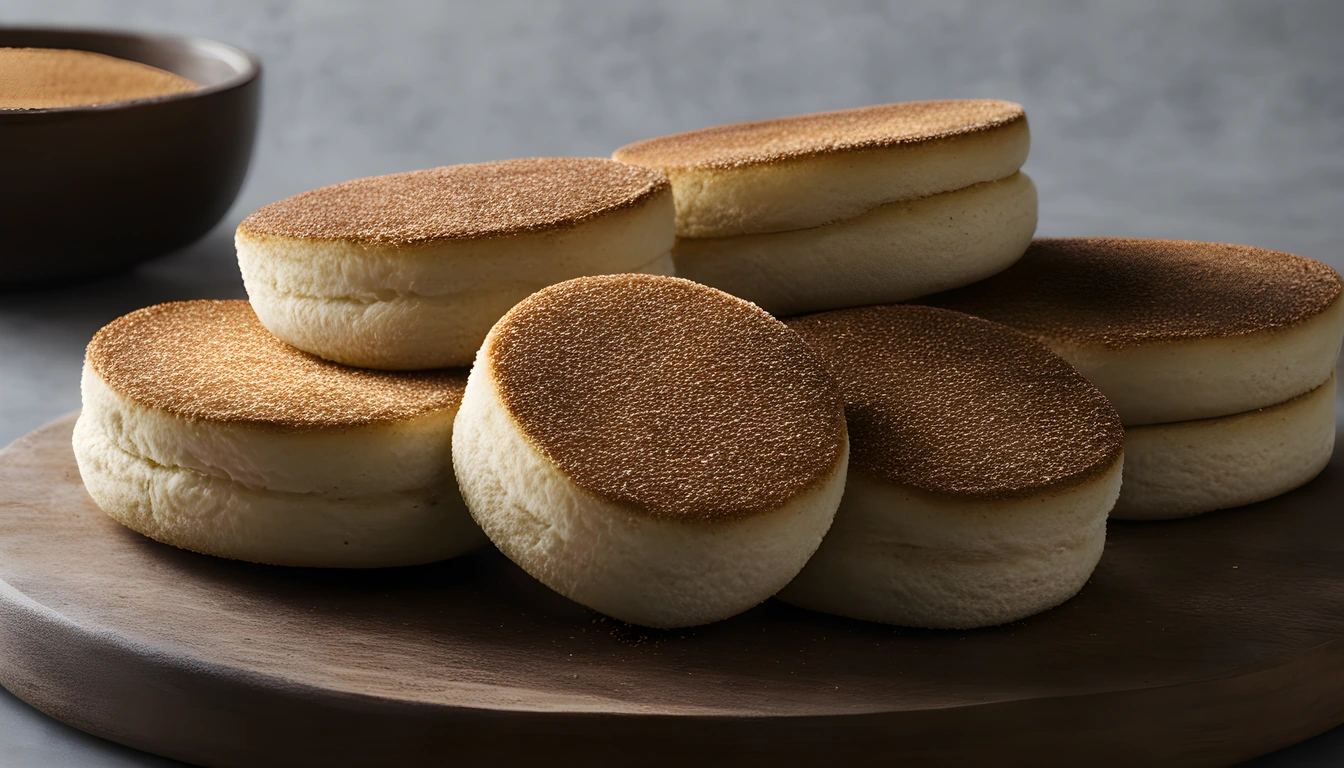
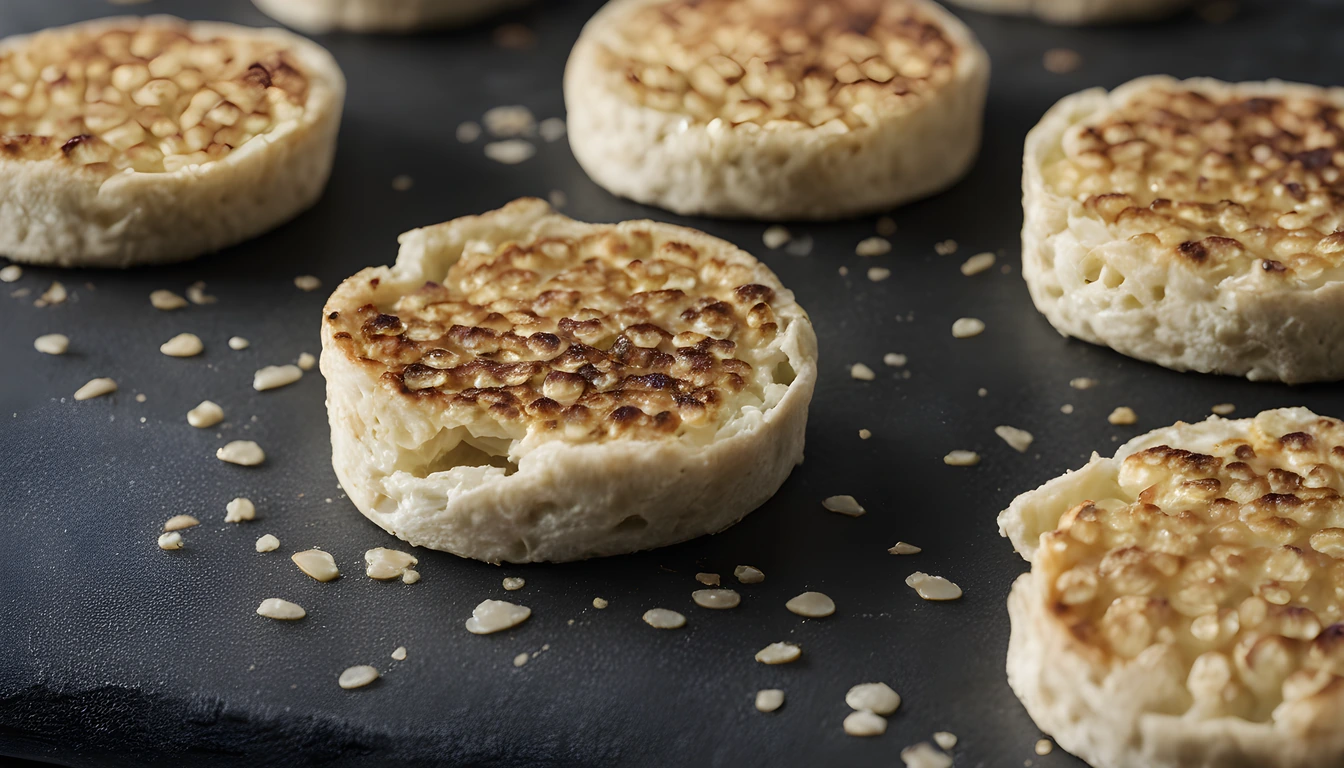
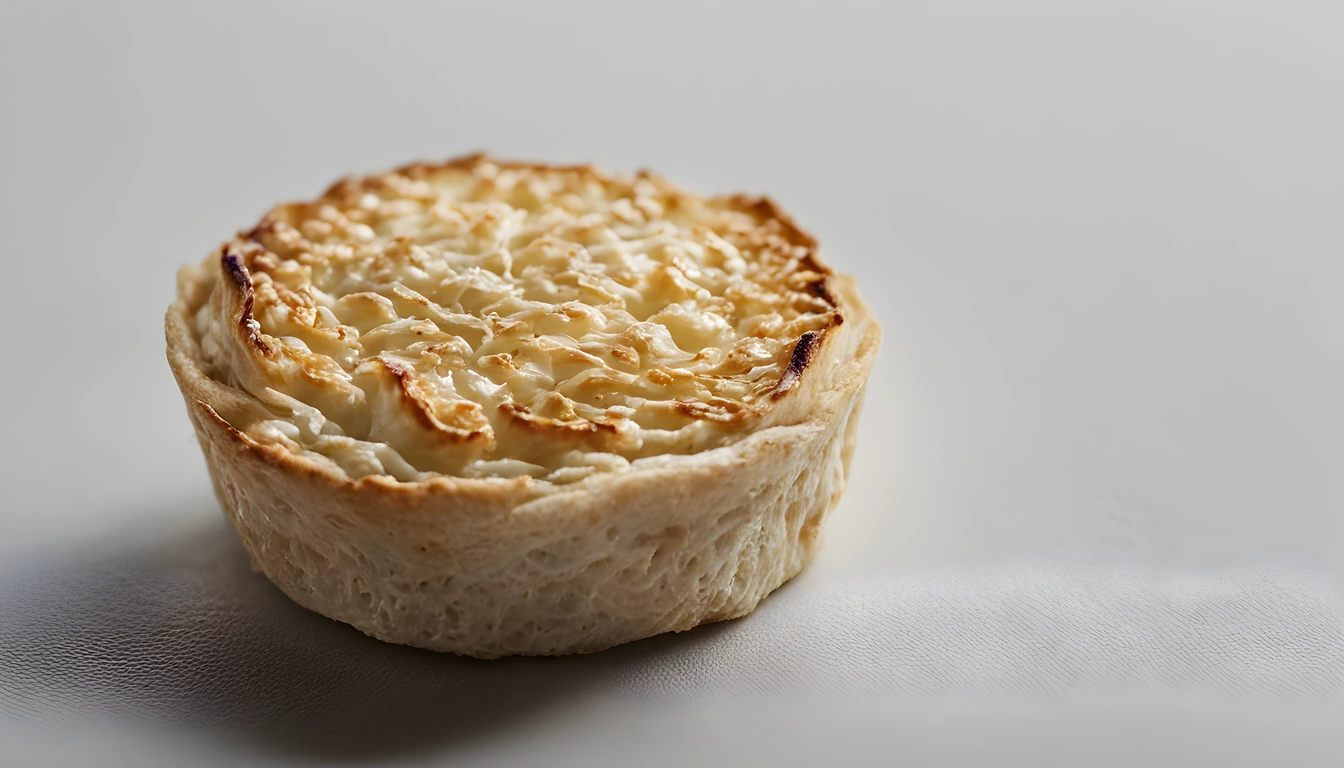
Crumpets have small holes open at the top, ready to catch the honey-butter finish. This version uses a little honey in the batter as well as on the cooked rounds. It makes ten small crumpets.
The base is a yeasted milk-and-water batter with baking powder. It rests until bubbly, then cooks gently in rings. It is a different method from a rolled flatbread or a split English muffin.
Recipe
Honey Crumpets
Ten small yeasted crumpets with open surface holes, honey in the batter and a measured honey-butter finish. Includes the batter rise and three griddle batches.
9Ingredients
Yield: 10 servings
- 250 g all-purpose flour
- 200 g water, warmed to about 100°F (38°C)
- 140 g whole milk, lukewarm
- 5 g active dry yeast
- 2 tablespoons clover honey (42 g), divided
- 28 g unsalted butter, melted and divided
- 4 g double-acting baking powder
- 5 g table salt
- 7 g canola oil, for the rings and griddle
Ingredient amounts scale; instructions show the original batch. Cooking times and pan sizes may need adjustment. Season to taste. Honey grams use US measures at 20°C and 17.5% moisture, a density estimate; weigh your honey for precision.
Instructions
- 1Start the yeast mixtureStir 21 g honey into the measured warm water. Sprinkle the yeast over it and leave for 5–10 minutes, following the packet’s preparation temperature if it differs. Check for activity before continuing.
- 2Beat the batterWhisk flour, baking powder and salt in a bowl. Add the yeast mixture, lukewarm milk and 14 g melted butter. Beat with a sturdy whisk or mixer for about 2 minutes until smooth. This is a thick, pourable batter, not a dough to knead.
- 3Let the batter become bubblyCover and leave at room temperature for about one hour, until expanded and visibly bubbly. A cool room may need longer. Near the end, heat a griddle or broad skillet over medium-low heat, around 325°F (163°C) on an electric griddle.
- 4Prepare the rings and portion the batterUse the measured canola oil to lightly grease the cooking surface and the insides of four heat-safe crumpet rings about 3 3/4 inches (9.5 cm) across. Set the rings on the griddle. Divide the batter into ten portions, approximately 60–65 g each, and put one portion in each ring for the first batch. Keep the rest for later batches.
- 5Cook until the centers setCook gently for about 10 minutes on the first side. The tops should develop open holes and lose their wet shine while the bases turn light golden. Remove the rings carefully with tongs once the sides hold their shape. Flip and cook for about 3–5 minutes to set the centers. Reduce heat if the bases brown while the tops remain wet. Repeat in three batches, reapplying the remaining measured oil as needed. Check the center of one crumpet for raw batter and extend cooking if necessary.
- 6Finish with honey butterStir the remaining 21 g honey into the remaining 14 g melted butter off the heat. Share the complete mixture across the ten warm crumpets, scraping the bowl. Serve whole with the holes uppermost; there is no need to split them. One crumpet with one tenth of the finish is one serving. The plan includes 20 minutes preparation, one hour rising and 45 minutes for three cooking batches; slower rising or cooking extends it.
Estimated nutrition per serving
140.41 calories · 3.71 g fat · 23.53 g carbohydrate · 3.25 g protein · 244.45 mg sodium
Serving: 1 of 10 equal portions
Calculated from ingredient weights and USDA FoodData Central: 168894, 173647, 171265, 175043, 169640, 173430, 172803, 173468, 172336. Estimates use ingredient input weights; actual portions, brands and cooking losses vary. Omitted nutrient values are unavailable, not zero.
Give the holes time to open
Use heat-safe rings around 3 3/4 inches across. Their diameter and the measured batter portions keep the crumpets shallow enough to set before the bases become too dark. Larger portions or smaller rings need different timing.
Medium-low heat matters. A hot pancake pan can brown the underside while leaving a wet middle. Watch the top lose its wet shine and the sides firm up before removing a ring; handle hot rings with tongs.
Our honey adaptation follows the yeasted-batter and gentle griddle approach described by King Arthur Baking’s crumpet method. The honey quantities, serving finish and nutrition calculation here belong to this formula.
Get the Honey Buyer's Cheat Sheet (free PDF)
16 varieties on one page — color, flavor, best use and what a fair price looks like — from the 304 honeys we track.
Choose the honey by flavor
Clover honey has a mild flavor, wildflower honey varies with its floral mix, and orange blossom honey brings citrus-floral aroma. Buckwheat honey has a stronger, malty flavor. The baking pairing guide offers more choices.
The chart uses an editorial 1–5 flavor-intensity scale for pairing. Individual jars vary with floral source and harvest.
1 = mild, 5 = bold. Editorial pairing guidance, not laboratory measurements; jars vary.
- Clover
- Mild crumpet finish
- Wildflower
- Floral honey butter
- Orange blossom
- Citrus-floral crumpets
- Buckwheat
- Bold malty honey finish
The measured finish and cooking fat
Half the honey is mixed into the batter and half is stirred into the remaining butter after melting. Share all the finishing mixture across the cooked batch rather than adding an unmeasured drizzle.
The 7 g oil is the complete allowance for the rings and griddle across three batches. The nutrition estimate includes all of that measured input; any residue left on the equipment is unmeasured, with no invented absorption or recovery factor.
Honey pancakes use a quicker batter, while honey waffles cook in a waffle iron. Honey butter is a separate spread if you want to prepare it another day.
Serving and later batches
Serve the crumpets whole, with their holes facing up. A cut through the center is useful for checking the first batch, but splitting every crumpet before serving removes the surface that holds the finish.
If scaling up, keep the original ring size and batter depth. More portions mean more cooking batches; multiplying the ingredients does not leave the griddle time unchanged.
Cool leftovers, refrigerate covered and use within about two days for best texture, or freeze separated crumpets. Rewarm gently. An extra honey drizzle or other topping is additional to the measured base.
Nutrition and source ingredients
One portion has an estimated 140.41 calories, 3.71 g fat, 1.77 g saturated fat, 23.53 g carbohydrate, 4.22 g sugars, 0.82 g fiber, 3.25 g protein and 244.45 mg sodium.
The full flour, water, milk, yeast, honey, butter, leavener, salt and 7 g greasing oil input is divided across ten portions. Both honey allocations and the complete finish are included. Equipment residue is unmeasured; no absorption, fermentation or cooking-loss factor is applied.
These values sum the USDA reference ingredients and divide them by the stated portions. They are estimates, not laboratory measurements of the finished bread. Cooking changes water content; no guessed cooking-loss or recovery factor has been applied.
- USDA FoodData Central 168894: Wheat flour, white, all-purpose, enriched, bleached.
- USDA FoodData Central 173647: Beverages, water, tap, drinking.
- USDA FoodData Central 171265: Milk, whole, 3.25% milkfat, with added vitamin D.
- USDA FoodData Central 175043: Leavening agents, yeast, baker's, active dry.
- USDA FoodData Central 169640: Honey.
- USDA FoodData Central 173430: Butter, without salt.
- USDA FoodData Central 172803: Leavening agents, baking powder, double-acting, sodium aluminum sulfate.
- USDA FoodData Central 173468: Salt, table.
- USDA FoodData Central 172336: Oil, canola.