About This Recipe
This garlic-honey glaze is thickened just enough to cling to cooked chicken wings. Cider vinegar sharpens the honey-soy base, and a small amount of cayenne adds warmth. Make the sauce separately, then toss with wings immediately before serving. The nutrition covers six portions of glaze alone.
Recipe
Honey Glaze for Chicken Wings: Clinging Garlic Sauce
Simmer honey, garlic and low-sodium soy sauce, then thicken lightly for tossing with cooked wings. Six portions count the glaze ingredients only.
7Ingredients
Yield: 6 servings
- 84 g honey
- 30 g low-sodium soy sauce
- 50 g water, divided
- 15 g apple cider vinegar
- 6 g garlic, finely grated
- 4 g cornstarch
- 0.3 g ground cayenne pepper
Ingredient amounts scale; instructions show the original batch. Cooking times and pan sizes may need adjustment. Season to taste. Honey grams use US measures at 20°C and 17.5% moisture, a density estimate; weigh your honey for precision.
Instructions
- 1Simmer the garlic baseCombine honey, low-sodium soy sauce, cider vinegar, grated garlic, cayenne and 30 g water in a small saucepan. Bring to a gentle simmer over medium-low heat and cook for 5 minutes, stirring often.
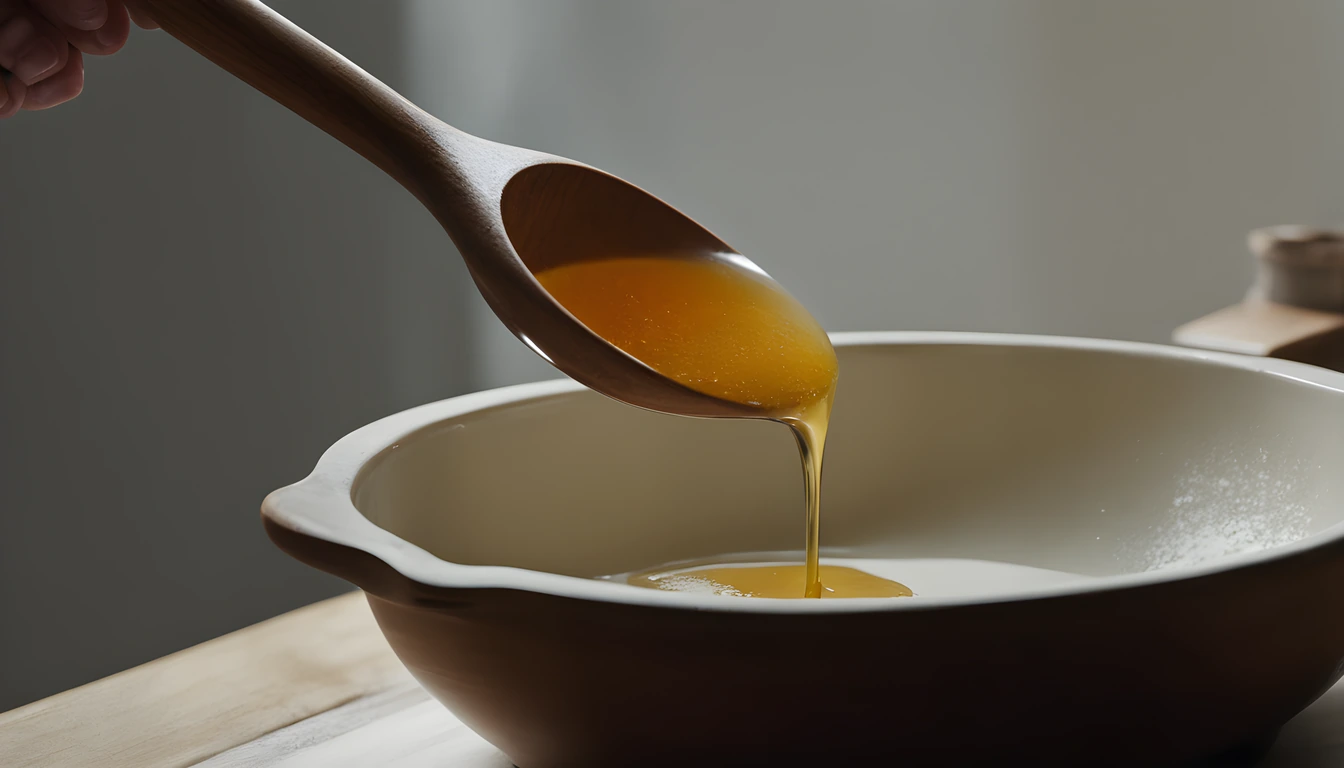
- 2Add the slurryMix cornstarch with the remaining 20 g cold water until smooth. Stir it again immediately before adding to the simmering sauce. Stir gently for 1 to 2 minutes, until glossy and thick enough to leave a light coating on a spoon.
- 3Rest and portionRemove from the heat and let stand for 2 minutes. Stir and divide the complete batch into six equal glaze portions, by finished weight if needed. The 14-minute total covers preparing the glaze, simmering and the short rest.
- 4Toss with cooked wingsCook chicken wings separately by a complete recipe. Put fully cooked wings in a large dry bowl and add warm glaze a portion at a time. Turn gently until a thin coat clings to the surface, then serve promptly. Keep any clean unused glaze separate from the working bowl.
Estimated nutrition per serving
50.12 calories · 0.03 g fat · 12.81 g carbohydrate · 0.57 g protein · 181.26 mg sodium
Serving: 1 of 6 servings
Calculated from ingredient weights and USDA FoodData Central: 169640, 172473, 173647, 173469, 169230, 169698, 170932. Estimates use ingredient input weights; actual portions, brands and cooking losses vary. Omitted nutrient values are unavailable, not zero.
Enough Body to Cling
The cornstarch is mixed with cold water before it enters the simmering honey-soy base. That keeps it dispersed instead of forming dry lumps. Argo's cooking guidance describes the same cold-liquid mixing technique.
Cook the slurry gently until the sauce turns glossy, then stop rather than reducing it to jelly. The measured garlic remains in the sauce. The cayenne amount gives a warm accent and can vary in perceived strength between jars.
Flavor intensity uses an editorial culinary scale: 1 is mild and 5 is bold. These are tasting suggestions, not laboratory measurements.
Sources: UC Agriculture and Natural Resources: cooking with honey; USDA FoodData Central: Garlic, raw; Argo: mixing a cornstarch slurry; FoodSafety.gov: refrigerating leftovers; FoodSafety.gov: reheating leftovers.
1 = mild, 5 = bold. Editorial pairing guidance, not laboratory measurements; jars vary.
- Clover
- Garlic and soy on wings
- Wildflower
- Garlic and cayenne glaze
- Buckwheat
- A bold savory coating
Get the Honey Buyer's Cheat Sheet (free PDF)
16 varieties on one page — color, flavor, best use and what a fair price looks like — from the 304 honeys we track.
Toss Just before Serving
Use a dry bowl and fully cooked wings. Add glaze a little at a time, turning to spread a thin coat. A long soak in sauce softens a crisp wing surface, so toss close to serving time.
For the wings themselves, see honey garlic wings or honey hot wings. Their full cooking method and chicken quantities are separate from this sauce card. This page's time covers the glaze.
Six Glaze-Only Portions
The estimate counts all honey, soy sauce, vinegar, garlic, starch and cayenne, divided into six equal portions. It excludes chicken, bones, breading, frying oil and sides. There is no assumed amount absorbed by a wing.
If you use only part of the batch, measure that fraction instead of treating the whole glaze as consumed. Pan and bowl residue have not been subtracted. Honey soy glaze is another brushable sauce with a different ginger-garlic balance.
Keep Unused Sauce Clean
Reserve clean sauce before tossing. Do not return a working portion from the wing bowl to the unused batch. Cool clean leftovers in a shallow container and refrigerate within 2 hours, or 1 hour above 90 F (32 C).
Reheat leftovers to 165 F (74 C), stirring through the center, and loosen with plain water if needed. Clover keeps the honey mild beside garlic; wildflower gives the glaze a stronger honey note.
Choosing the Honey
Use Clover Honey or Wildflower Honey for the flavor described in this recipe. See our honey selection guide for other culinary choices.
For a jar to give alongside a cooking gift, see the Christmas honey gift guide.